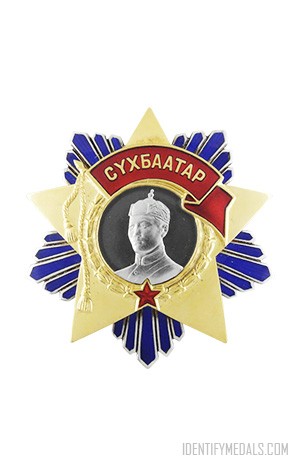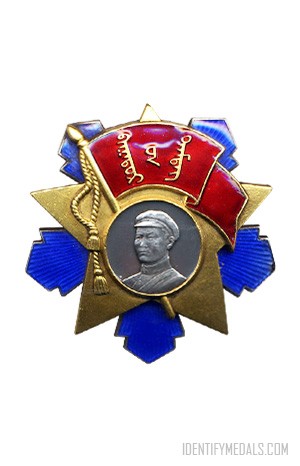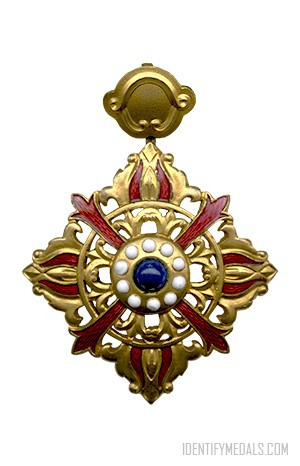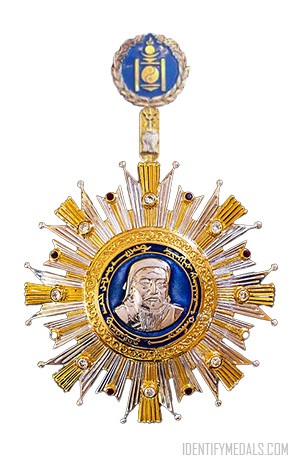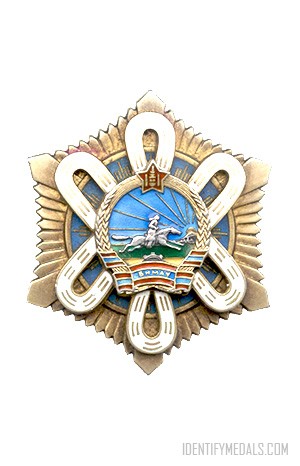
The Order of the Polar Star (Алтан гадас одон, Altan Gadas Odon) is a long-standing state award of Mongolia, first instituted in 1936 and formally regulated by resolution of the Presidium of the Small Khural and the Council of Ministers of the Mongolian People’s Republic on 16 May 1941.
It remains an active honour today, with tens of thousands conferred since its creation. The award is given to both Mongolian and foreign nationals in recognition of special merits to society, which can include contributions to public life, international cooperation, cultural achievement, economic development, and other services benefiting Mongolia. The Order is placed directly below the Order of the Precious Wand in the nation’s order of precedence.
Unlike some medals that are limited to citizens, the Polar Star is frequently presented to foreign recipients for their work strengthening diplomatic, cultural, scientific, or economic ties with Mongolia; past awardees include international politicians, academics, diplomats, and organizational leaders, reflecting its role as one of Mongolia’s highest civilian honours.
The Mongolian Order of the Polar Star Medal Design
The obverse (front) of the Order of the Polar Star medal is visually striking and rich in symbolic detail, representing both Mongolia’s national identity and the prestige of the award.
At its core, the medal generally takes the form of a multi-pointed starburst with layered rays emanating from the center, often executed in gilded metal and enamel. Superimposed on this backing is a circular central medallion that features a horseman motif, usually depicting a rider across the Mongolian landscape — a common symbol of Mongolian heritage and the nation’s historic ties to horsemanship and freedom. Around this central scene, an enamelled ring and decorative elements (often in colors like blue and red) accentuate the medal’s focal imagery. Interlaced with the star’s rays are curved, repeating shapes — sometimes appearing as enamelled loops — that give the medal a distinctive, almost floral or astral appearance, aligning with the notion of the Polar Star as a guiding light. Many preserved examples show the medal finished with a high level of enamelling and metalwork detail, characteristic of both Soviet-era production and later variations.
The overall aesthetic combines geometric star forms and natural symbolism — encapsulating Mongolia’s cultural legacy and the honour’s role in recognizing exceptional contributions to society.