
Veteran Badges & Decorations

Medals, Badges & Awards from Veterans’ Organizations

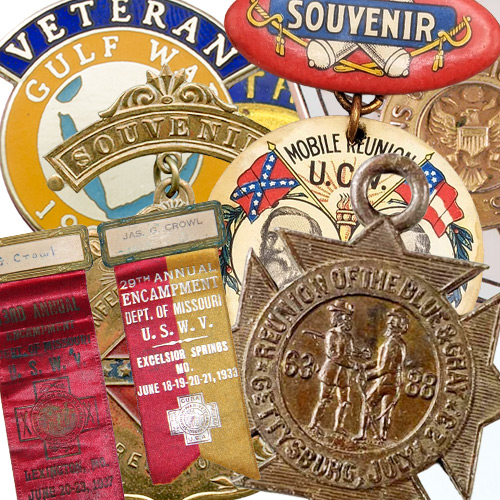
Veterans’ organization badges are not normally official military decorations. They were issued by private associations created by former service personnel, their relatives, or supporters. Depending on the organization, a badge might indicate membership, office, attendance at a reunion, participation in a memorial ceremony, or service to fellow veterans.

These objects can reveal more than military medals alone. A numbered membership badge may connect its wearer to a local post, while a convention badge can place a veteran in a particular city on a particular date. Officer bars, ribbons, and attachments can also document the wearer’s role inside the organization.

This section identifies veterans’ badges and medals by country, organization, period, and purpose. It also distinguishes original veterans’ issues from auxiliary, hereditary, commemorative, and modern reproduction pieces.

The Medals and Badges That Kept Veterans’ Stories Alive

When a war ends, the medals do not stop appearing.

The familiar campaign stars, gallantry decorations and service medals may have already been awarded, but veterans continue to commemorate their experiences for decades. They form associations, establish local branches, attend reunions and return to old battlefields. Along the way, they create a remarkable range of badges, pins, ribbons and commemorative medals.

These pieces were seldom official military awards. A veteran did not receive one from the government for bravery or participation in a campaign. Instead, they were produced by veterans’ organizations: private associations founded to preserve comradeship, support former service personnel and commemorate those who did not return.

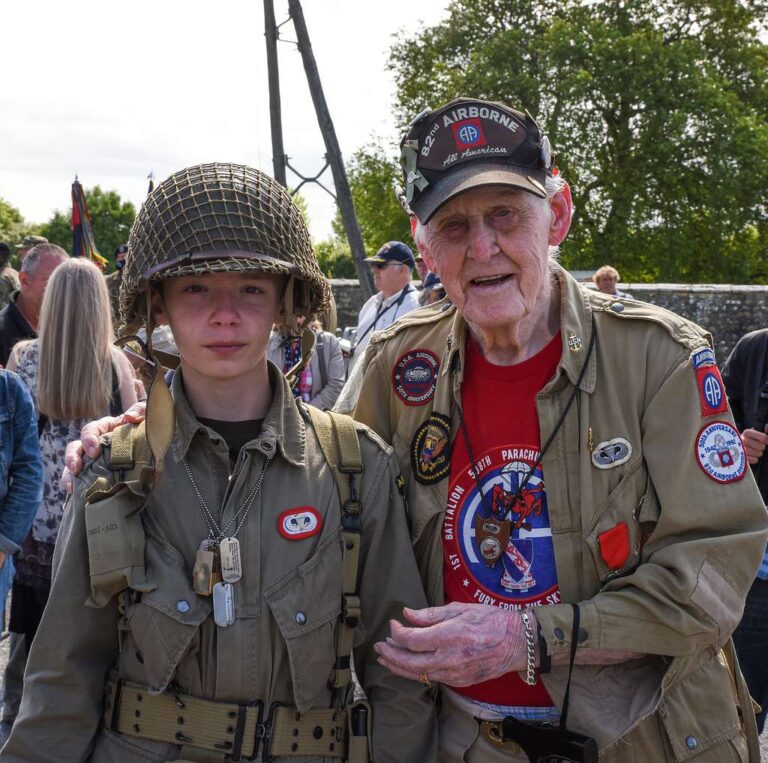
World War II veteran Ernie Lamson, 95. Image courtesy of NARA and DVIDS Public Domain Archives.

From Soldiers to Association Members

For many former soldiers, sailors and airmen, returning to civilian life did not mean leaving military friendships behind. Veterans established organizations at national, regional and local levels. Some represented everyone who had served in a particular conflict; others were restricted to a regiment, ship, battlefield or type of service.

A local branch might be called a post, camp, lodge or chapter. Members met socially, marched in parades, raised money for disabled veterans and widows, assisted former comrades in financial difficulty and campaigned for pensions and medical care. They also organized funerals, monument dedications and annual remembrance ceremonies.

Badges helped give these organizations a visible identity. Worn on civilian jackets, hats or convention ribbons, they identified the wearer as a member of a particular community. Some were simple enamel lapel pins. Others were elaborate multi-part badges featuring flags, eagles, portraits, crossed weapons and colored ribbons.

Rank Without Military Rank

Veterans’ organizations developed their own hierarchies. A former private might become president of his local post, while a retired officer might attend simply as an ordinary member. Organizational titles therefore should not be confused with the military rank once held by the wearer. Badges and suspended bars may carry titles such as commander, president, adjutant, quartermaster, chaplain, surgeon, secretary, treasurer, color bearer or sergeant-at-arms. National and regional officers could receive more elaborate insignia, sometimes made from precious metal or decorated with additional ribbon attachments.

Types of Veteran Decorations: Membership Badges

The standard membership badge was often the most important emblem of a veterans’ organization. It could be worn at meetings, parades, funerals and public ceremonies. In some associations, every member received the same basic design; in others, the badge changed according to rank or responsibility.

The front might display the organization’s initials, the dates of a war or the image of a famous commander. National symbols were common, as were references to loyalty, sacrifice and comradeship. The reverse could carry a manufacturer’s mark, patent information or an individually stamped membership number.

Not every numbered badge can be traced, however. Registers were sometimes destroyed, dispersed among local archives or never preserved in the first place. Even when no name can be found, the style of the number and fastening may help establish the period in which the badge was produced. Here are some examples of Membership Badges from the United Kingdom and the United States:

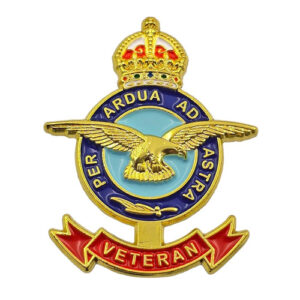
RAF Veteran Pin Badge
RAF Veteran Pin Badge. showing the RAF emblem and the official motto 'Per ardua ad astra' ("through adversity to the stars").
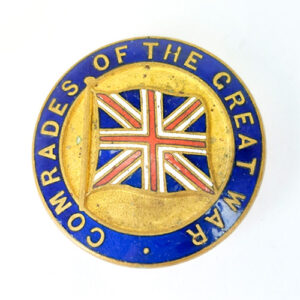
Comrades of the Great War Veterans Membership Lapel Badge.
An enamelled lapel badge from the Comrades of the Great War Veterans Membership, made by J.R. Gaunt London.
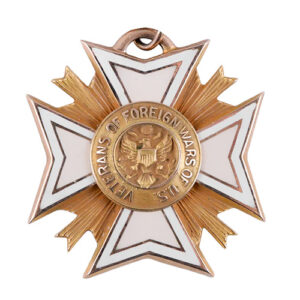
A Veterans Of Foreign Wars Of The United States Membership Badge struck in gold.
A Veterans Of Foreign Wars Of The United States Membership Badge struck in gold. The medal was created in 1939.
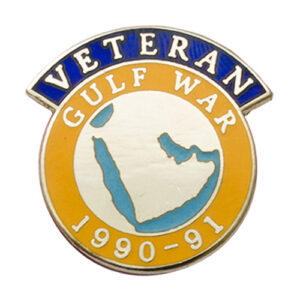
An enamelled badge for Gulf War Veterans.
An enamelled badge for Gulf War Veterans. This badge is approximately 2.3 cm in height and 2 cm in width.

Types of Veteran Decorations: Reunion Badges

Among the most colorful veterans’ pieces are the badges produced for reunions, encampments and national conventions. These gatherings brought together former comrades who might not have seen one another for years. Towns competed for the honor of hosting major events, decorating their streets with flags, banners and temporary arches. There were speeches, parades, dinners, memorial ceremonies and visits to former battlefields.

A new badge was often created for each gathering. It might show the host city’s coat of arms, a local monument, the portrait of a military leader or the dates and location of the event. Larger examples could have several suspended sections: a pin bearing the wearer’s role, a decorative ribbon and a medal carrying the principal design. Different versions might also be issued to delegates, officers, guests, members of the press and organizing committees. 

Because designs changed from year to year, reunion badges offer collectors an almost unlimited field. They also provide excellent material for local historians. A single badge can connect military history with the history of a particular hotel, railway station, meeting hall or civic monument.

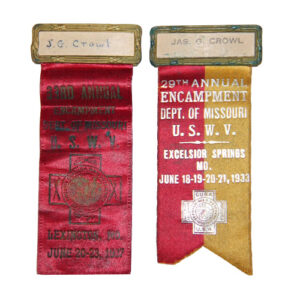
A couple of Missouri United Spanish War Veteran Reunion Badges.
A couple of Missouri United Spanish War Veteran Reunion Badges. Seen in B & B Militaria.
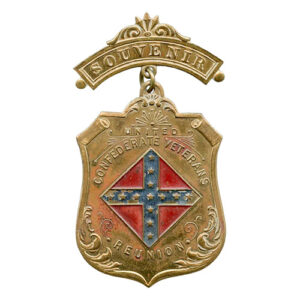
A Confederate Veterans Reunion Badge from 1890s.
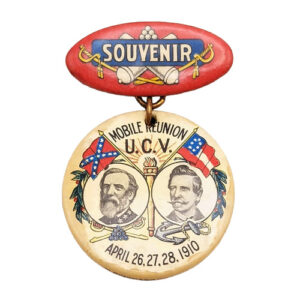
A 1917 United Confederate Veterans Reunion Washington DC souvenir badge.
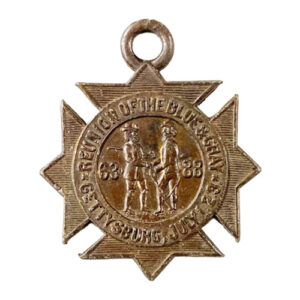
A Gettysburg Reunion Medal.
A Gettysburg Reunion Medal from 1888. Dimensions: 1.75 × 1.5 in. (4.4 × 3.8 cm).

U.S. Veterans: The Grand Army and Its Successors

The United States produced an especially rich variety of veterans’ badges following the Civil War. The Grand Army of the Republic, founded for Union veterans, became one of the country’s most influential veterans’ organizations. Its familiar membership badge was accompanied by insignia for officers, delegates and national encampments. Local posts also produced their own ribbons and commemorative pieces.

Confederate veterans organized their own associations, most notably the United Confederate Veterans. Its reunions generated a wide variety of badges, often bearing Confederate leaders, battle flags, monuments and host-city designs. Here are some Veteran organizations from the United States:

  • Grand Army of the Republic: Union veterans of the American Civil War. Its membership badges, officer insignia, encampment badges, and local-post pieces form a large collecting field.
  • United Confederate Veterans: Confederate veterans’ organization known for reunion and convention badges.
  • Sons of Union Veterans of the Civil War: A hereditary successor organization with its own membership and office insignia.
  • Sons of Confederate Veterans: Another hereditary organization whose badges must be distinguished from original veterans’ material.
  • United Spanish War Veterans: Associated with veterans of the Spanish–American War, Philippine–American War, and related service.
  • Veterans of Foreign Wars: Membership, convention, auxiliary, leadership, and commemorative items (VFW website).
  • American Legion: An enormous field covering national conventions, local posts, officers, anniversaries, youth programs, and auxiliaries (American Legion website).
  • Disabled American Veterans: Membership and service-related insignia (DVNF website).
  • Marine Corps League: Membership, office, convention, and detachment badges.
    Jewish War Veterans of the United States: Organizational, convention, and membership material.
  • American Ex-Prisoners of War: Membership and commemorative insignia (website).
  • Vietnam Veterans of America: Chapter, convention, commemorative, and membership items (website).

Europe: From the World Wars to the Local Legion Hall

The enormous mobilizations of the twentieth century led to an equally large veterans’ movement. Organizations such as the American Legion, Veterans of Foreign Wars and Royal British Legion developed national identities while maintaining extensive networks of local branches.

Their material ranges from modest membership pins to elaborate convention badges. Local posts commissioned anniversary pieces, officers wore insignia identifying their positions and national gatherings produced souvenirs in large quantities. Regimental old-comrades associations formed another important category. Particularly common in Britain and the Commonwealth, these organizations allowed veterans of a particular regiment or corps to maintain contact after leaving military service. British organizations include:

  • Royal British Legion (website)
  • British Limbless Ex-Service Men’s Association (website)
  • Old Contemptibles’ Association
  • Dunkirk Veterans Association
  • Burma Star Association
  • Royal Air Forces Association (website)
  • Royal Naval Association (website)
  • Regimental old-comrades associations
  • Australian Returned and Services League
  • Returned and Services Association in New Zealand
  • Canadian Legion and Royal Canadian Legion
  • South African veterans’ associations

Medals of Memory

Lastly, it’s also important to consider that not every veterans’ piece indicated membership. Many were made to commemorate an anniversary, pilgrimage or memorial dedication.

Veterans returned to battlefields to unveil monuments and visit cemeteries. Associations marked the twenty-fifth, fiftieth and sometimes later anniversaries of important events. Medals were struck for parades, memorial services and the opening of veterans’ homes or meeting halls.

The distinction between an award and a souvenir can be difficult to establish. Some commemorative medals were presented only to eligible veterans. Others could be purchased by relatives, supporters or members of the public. Contemporary programs, newspaper reports and association records may reveal how a particular piece was distributed. Collectors should therefore be cautious with phrases such as “awarded to veterans.” In many cases, “issued for” or “produced to commemorate” is more accurate.

More Stories About American Military History

A collection of articles about American military history, including the Civil War, the World Wars, Vietnam, and other conflicts, and war stories.