The Armed Forces Service Medal

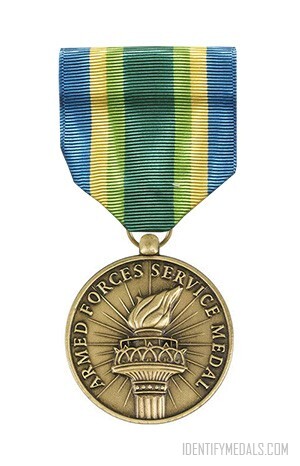
The Armed Forces Service Medal is a military award presented for significant activity for which no other U.S. medal is authorized.

The Armed Forces Service Medal (AFSM) is a prestigious military award within the United States military, established on January 11, 1996, by President Bill Clinton through Executive Order 12985.

This medal is designated as a deployed service award and is presented to service members who participate in “significant activity” operations that do not qualify for any other U.S. campaign or service medal. The AFSM recognizes the efforts and commitment of those who engage in important missions or operations, highlighting their contributions to national and international objectives where specific campaign medals are not applicable.

The Armed Forces Service Medal is the non-combat equivalent of the Armed Forces Expeditionary Medal, which is typically awarded for combat operations and associated combat support missions.

The Armed Forces Service Medal Design

The Armed Forces Service Medal is a round bronze medal measuring 1+1⁄4 inches (32 mm) in diameter.

The obverse of the medal features a half-torch, reminiscent of the Statue of Liberty’s torch, with rays emanating from behind it. The inscription “ARMED FORCES SERVICE MEDAL” encircles the top. The reverse side displays the eagle from the United States Department of Defense seal, with a laurel wreath below and the inscription “IN PURSUIT OF DEMOCRACY” at the top.

The suspension and ribbon of the medal are 1+3⁄8 inches (35 mm) wide and include several edge stripes from the outside to the center: 1⁄16 inch (1.6 mm) goldenlight, 1⁄8 inch (3.2 mm) jungle green, 1⁄8 inch (3.2 mm) green, 1⁄8 inch (3.2 mm) mosstone green, and 1⁄8 inch (3.2 mm) goldenlight. The center stripe is 1⁄4 inch (6.4 mm) wide in bluebird.

Find This Medal Online

Right Now on eBay 
Clicking a link to eBay may result in a referral commission being paid if a purchase is made.
Loading...

Exploring the Pulitzer Prize Medal

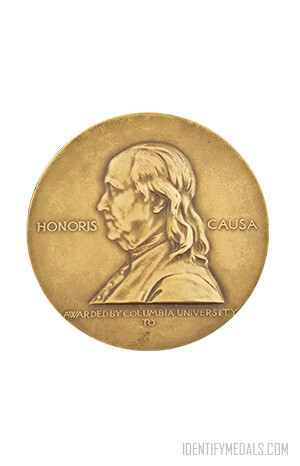
The Pulitzer Prize medal, established in 1917, consists of two-dozen annual awards given by Columbia University in New York.

The Pulitzer Prize Medal is an esteemed award presented to honor outstanding achievements in journalism, literature, and musical composition in the United States.

The Pulitzer Prize Medal is one of the most prestigious awards in the fields of journalism and the arts, recognizing excellence and integrity. In fact, winning a Pulitzer can significantly boost a recipient’s career, bringing widespread recognition and often leading to broader dissemination of their work.

Winning a Pulitzer Prize is a mark of high distinction, often significantly enhancing the careers of journalists, writers, and composers. The awards serve as a benchmark for excellence in journalism and the arts, encouraging high standards and recognizing the profound impact of investigative reporting and storytelling on society. The Pulitzer Prize continues to honor excellence and innovation, upholding the legacy and vision of its founder, Joseph Pulitzer.

The Importance of the Pulitzer Prize Award

The Pulitzer Prizes were established in 1917 by provisions in the will of Joseph Pulitzer, a Hungarian-American journalist and newspaper publisher who left funds to Columbia University upon his death to establish the award and the School of Journalism.

Columbia University in New York City administers the Pulitzer Prizes, with a board of jurors, known as the Pulitzer Prize Board, overseeing the selection of winners. This board includes esteemed journalists, academics, and notable figures from various artistic disciplines. The number of categories has grown to 21, reflecting a broad range of journalistic writing and reporting, as well as recognizing achievements in books, drama, and music. The inclusion of the music category in 1943 marked a significant expansion, honoring distinguished musical compositions by American composers.

Today, the Pulitzer Prize Medal not only honors exceptional work but also serves to uphold high standards in journalism and the arts, encouraging future generations to strive for excellence in these fields.

Awards are given in various categories such as Public Service, Breaking News Reporting, Investigative Reporting, Explanatory Reporting, and Feature Writing. Categories include Fiction, Drama, History, Biography or Autobiography, Poetry, General Nonfiction, and Music (more information on categories below).

The Pulitzer Prize Medals
The Pulitzer Prize Medal.

A Short History of the Pulitzer Prize

The Pulitzer Prize has a rich history dating back to the early 20th century. Its origins trace back to Joseph Pulitzer, a Hungarian-American journalist and newspaper publisher who played a significant role in the development of modern journalism through his ownership of the New York World and the St. Louis Post-Dispatch. Upon his death in 1911, Pulitzer bequeathed a substantial portion of his estate to Columbia University with the intent of establishing a School of Journalism and funding the Pulitzer Prizes.

The inaugural Pulitzer Prizes were awarded on June 4, 1917, initially comprising four journalism awards and four literary awards, along with a scholarship for journalism students. The original categories included Public Service, Reporting, History, Biography, and Novel. Over the years, the scope of the prizes has expanded significantly to accommodate the evolving landscape of journalism and the arts.

In recent years, the Pulitzer Prizes have adapted to the digital age by recognizing achievements in online journalism and multimedia storytelling. Among the most prestigious awards is the Public Service Pulitzer, which is given to a news organization for meritorious public service through extensive use of journalistic resources.

Pulitzer Prize Awardees

Here are some examples of Pulitzer Prize winners across different categories:

Journalism

Public Service

  • The New York Times (2021): For its coverage of the COVID-19 pandemic.
  • The Washington Post (2014): For its extensive revelations of the NSA’s surveillance activities, based on the work of Edward Snowden.

Breaking News Reporting

  • The Staff of the Los Angeles Times (2020): For its coverage of the mass shooting in San Bernardino, California.
  • The Staff of The New York Times (2019): For coverage of the Trump administration and its implications.

Investigative Reporting

  • The Wall Street Journal Staff (2019): For its coverage of President Trump’s secret payoffs to two women during his campaign.
  • Jodi Kantor and Megan Twohey of The New York Times, and Ronan Farrow of The New Yorker (2018): For their reporting on Harvey Weinstein’s sexual abuse allegations.

Music

  • Kendrick Lamar (2018): For his album “DAMN.,” the first non-classical, non-jazz work to win the Pulitzer Prize for Music.
  • Du Yun (2017): For “Angel’s Bone,” an opera about human trafficking.

Literature

Fiction

  • Colson Whitehead (2020): For “The Nickel Boys,” a novel about reform schools in Jim Crow-era Florida.
  • Donna Tartt (2014): For “The Goldfinch,” a novel about a boy who survives an explosion at a museum.

Drama

  • Michael R. Jackson (2020): For “A Strange Loop,” a musical that explores the thoughts of a Black, gay writer.
  • Martyna Majok (2018): For “Cost of Living,” a play examining the interactions between able-bodied and disabled individuals.

History

  • David W. Blight (2019): For “Frederick Douglass: Prophet of Freedom,” a biography of the former slave turned abolitionist.
  • T.J. Stiles (2016): For “Custer’s Trials: A Life on the Frontier of a New America,” a biography of George Armstrong Custer.

Biography or Autobiography

  • Les Payne and Tamara Payne (2020): For “The Dead Are Arising: The Life of Malcolm X,” a comprehensive biography of the civil rights leader.
  • Caroline Fraser (2018): For “Prairie Fires: The American Dreams of Laura Ingalls Wilder,” a biography of the “Little House on the Prairie” author.

The Pulitzer Prize Medal Design

The Pulitzer Prize Medal features a relief of Benjamin Franklin, who is considered one of the founding figures of American journalism, on its obverse side. The reverse side typically shows a classical figure holding a tablet inscribed with the words “For Excellence in Journalism and the Arts.”

The medal is traditionally made of gold.

Find More About This Medal Online

Right Now on eBay 
Clicking a link to eBay may result in a referral commission being paid if a purchase is made.
Loading...

Why Are People Given Medals? WW1 and WW2 Examples

People are given medals for various reasons, but often to recognize and honor their bravery, service, and sacrifices during conflict.

Medals are awarded to people for a variety of reasons, typically as a form of recognition and honor for their achievements, service, and contributions in different fields. This article covers the different motives for awarding medals and orders, and examples of their stories.

Today, medals are awarded by governments, international organizations, and institutions worldwide. They serve to honor military personnel, civilians, and organizations for a wide range of achievements and contributions. In all cases, medals serve as a tangible symbol of recognition, appreciation, and encouragement.

A Short History of (All) Medals

The origin of medals dates back to ancient times, with their evolution shaped by cultural, military, and societal developments. 

In ancient Rome, soldiers were often rewarded with military decorations called “phaleras,” which were large metal discs worn on the chest. Similarly, in ancient Greece, wreaths and other tokens were awarded for military and athletic achievements.

During the Middle Ages, medals began to take a form closer to what we recognize today. Knights and nobles were awarded medals and badges of honor for bravery in battle or loyalty to a sovereign. These often took the form of ornate, jeweled pieces that were symbols of status and valor.

Medals in the Renaissance and Early Modern Period

The Renaissance period saw a resurgence in the arts and culture, leading to the creation of more artistic and finely crafted medals. These were often commissioned by royalty and nobility to commemorate significant events, achievements, or alliances.

During the 16th and 17th centuries, medals became more standardized as awards for military and civil service. Monarchs and states began issuing medals to recognize battlefield bravery, loyalty, and other meritorious actions.

The 18th and 19th Centuries

The Napoleonic Wars marked a significant development in the awarding of medals. Napoleon Bonaparte established several orders and medals to reward his soldiers, setting a precedent for modern military honors.

The 20th century, particularly during and after the World Wars, saw a dramatic increase in the issuance of medals. Medals were awarded not only for bravery and combat service but also for contributions on the home front, medical services, and other support roles.

The Reasons Why Medals Are Awarded (and Examples)

Medals for Bravery and Heroism

Medals are often awarded to individuals who demonstrate extraordinary courage and bravery in the face of danger. This is common in military contexts but can also apply to civilians who perform heroic acts.

Sergeant Alvin York received the Medal of Honor for his actions during World War I. On October 8, 1918, in the Meuse-Argonne Offensive, York led an attack on a German machine gun nest. Despite being vastly outnumbered, he killed 25 enemy soldiers and captured 132 others, displaying extraordinary bravery.

Captain Noel Chavasse is one of only three people to have been awarded the Victoria Cross twice, known as a “double VC.” During the Battle of Guillemont, in August 1916, Chavasse displayed extraordinary bravery and, despite being wounded himself, he continued to attend to and rescue wounded soldiers under heavy fire. In July 1917, during the Third Battle of Ypres (Passchendaele), Chavasse again showed incredible courage. He led stretcher-bearers to recover the wounded from the battlefield, working tirelessly for 48 hours without rest.

Examples of bravery and heroism medals:

  1. Medal of Honor (USA)
  2. Victoria Cross (UK and Commonwealth)
  3. Hero of the Russian Federation (Russia)
Great Britain Medals: The Victoria Cross

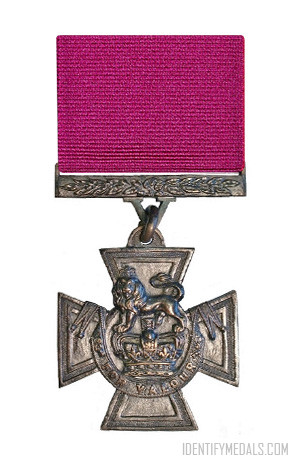
The Victoria Cross

The Victoria Cross (VC) is the highest United Kingdom honors system award. It is given for gallantry in the presence of the enemy.

Medals for Distinguished Service

Recognizing outstanding service in various fields, including military, public service, community work, and professional sectors. This includes long-term dedication and exceptional contributions.

General Douglas MacArthur was awarded the Distinguished Service Cross for his extraordinary heroism in World War I. He led a daring reconnaissance mission in the Verdun sector, exposing himself to heavy fire to gather critical intelligence.

Admiral Sir Bertram Ramsay was awarded the Order of the Bath for his distinguished service during World War II. Ramsay played a crucial role in planning and executing Operation Dynamo, the evacuation of over 338,000 Allied soldiers from Dunkirk in 1940. His effective leadership and strategic planning were instrumental in this massive and successful evacuation under dire circumstances.

Examples of distinguished service medals:

  1. Distinguished Service Cross (USA)
  2. Order of the Bath (UK)
  3. Legion of Honor (France)
The Order of the Bath Medal - British Military Medals from Pre-WW1

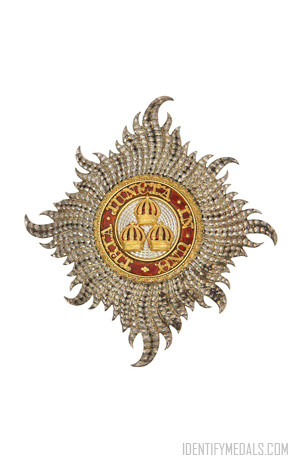
The Order of the Bath Medal

The Most Honorable Order of the Bath is a British order of chivalry founded by King George I in 1725 and turned into a Military Order.

Medals for Achievement and Excellence

Individuals who achieve significant milestones or display excellence in their field, such as sports, academics, arts, and sciences, are often awarded medals. These medals celebrate their accomplishments and inspire others.

Malala Yousafzai received the Nobel Peace Prize in 2014 for her struggle against the suppression of children and young people and for the right of all children to education. She survived a Taliban assassination attempt and continued her advocacy for girls’ education.

David Zucchino won the Pulitzer Prize for Feature Writing in 1989. He was awarded for his vivid and compassionate series on a Philadelphia neighborhood’s struggle against the crack cocaine epidemic, published in the Philadelphia Inquirer. His in-depth reporting highlighted the human toll of the drug crisis, bringing attention to the plight of the residents and the broader social issues at play.

Examples of achievement and excellence medals:

  1. Nobel Prize Medals (International)
  2. Pulitzer Prize Medals (USA)
  3. Fields Medal (International, Mathematics)
The Pulitzer Prize Medals
The Pulitzer Prize Medal.

Medals for Sacrifice and Commitment

Medals can honor those who have made significant personal sacrifices or shown unwavering commitment to a cause, such as humanitarian efforts, social justice, or public safety.

Private First Class Charles George, a Cherokee Native American, was posthumously awarded the Purple Heart for his actions during the Korean War. He threw himself on a grenade to save his fellow soldiers, sacrificing his life.

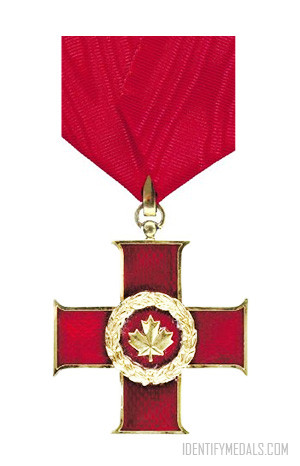
Corporal Frederick Fisher was posthumously awarded the Cross of Valour for his extraordinary sacrifice and commitment during World War I. In April 1915, during the Second Battle of Ypres, Fisher led his machine gun team to cover the retreat of Canadian soldiers in the face of a German gas attack. Despite the extreme danger and heavy enemy fire, Fisher and his team held their position, allowing many of his comrades to escape to safety.

Examples of sacrifice and commitment service medals:

  1. Purple Heart (USA)
  2. Cross of Valour (Canada)
  3. Order of Military Merit (South Korea)
The Cross of Valour - Canadian Medals, Awards & Honors

The Cross of Valour (Canada)

The Cross of Valour (CV) is a Canadian honor that recognizes acts of the most conspicuous courage in circumstances of extreme peril.

Medals for Participation in Significant Events

Medals commemorate participation in important events or milestones, such as military campaigns, international competitions, and major projects or initiatives.

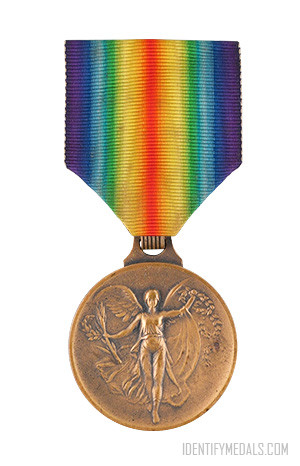
Over 2 million American soldiers received this medal for their participation in World War I. One notable recipient was General John J. Pershing, who led the American Expeditionary Forces and played a crucial role in the Allied victory.

Sergeant First Class Paul R. Smith was posthumously awarded the Armed Forces Service Medal, among other honors, for his participation in the Battle of Baghdad Airport during the Iraq War in April 2003. During the battle, Smith’s unit was tasked with constructing a prisoner of war holding area when they came under attack by a large Iraqi force. Smith manned a .50 caliber machine gun on an armored vehicle, exposing himself to heavy enemy fire to cover the evacuation of wounded soldiers and to defend the position. His actions were pivotal in repelling the enemy assault, but he was fatally wounded during the engagement.

Examples of participation in significant events medals:

  1. World War I Victory Medal (Allies)
  2. Armed Forces Service Medal (USA)
  3. Gulf War Medal (UK)

Medals for Meritorious Conduct

Recognizing exemplary behavior, leadership, and integrity, medals can be awarded to individuals who serve as role models and uphold high standards in their actions.

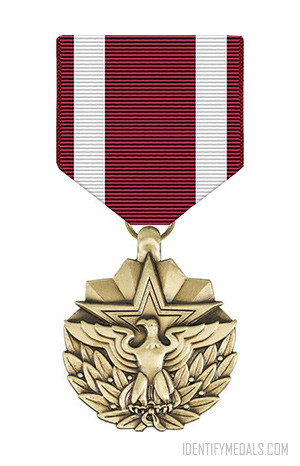
Colonel Gail Halvorsen, known as the “Berlin Candy Bomber,” received the Meritorious Service Medal for his efforts during the Berlin Airlift. He dropped candy to children in Berlin, uplifting spirits during the Soviet blockade.

Sir Winston Churchill was awarded the Order of Merit in 1946 for his extraordinary contributions to the United Kingdom, particularly during World War II. As Prime Minister, Churchill led the country through one of its darkest periods, demonstrating unwavering resolve and exceptional leadership. His speeches and strategic decisions were crucial in maintaining British morale and securing Allied victory. The Order of Merit recognized his meritorious conduct and lifelong dedication to public service and the nation.

Examples of meritorious conduct medals:

  1. Meritorious Service Medal (USA)
  2. Order of Merit (UK)
  3. Bharat Ratna (India)

Medals for Innovation and Creativity

Individuals or teams who develop groundbreaking innovations, creative works, or technological advancements may receive medals as a form of acknowledgment and encouragement.

Tim Berners-Lee, the inventor of the World Wide Web, received the National Medal of Technology and Innovation for his pioneering work in developing the web, which revolutionized information sharing and communication globally.

Dr. Frances Arnold received the National Medal of Technology and Innovation in 2011 for her pioneering work in the field of directed evolution, a method she developed to engineer enzymes for new and useful functions. Her innovative approach has had a profound impact on industrial processes, making them more environmentally friendly and efficient. Arnold’s work has led to advancements in the production of biofuels, pharmaceuticals, and other chemicals, showcasing her exceptional creativity and contribution to science and technology.

Examples of innovation and creativity medals:

  1. National Medal of Technology and Innovation (USA)
  2. Queen Elizabeth Prize for Engineering (UK)
  3. Breakthrough Prize (International)

Medals for Community and Civic Contributions

Medals can honor those who make significant contributions to their communities or society, such as volunteers, philanthropists, and activists.

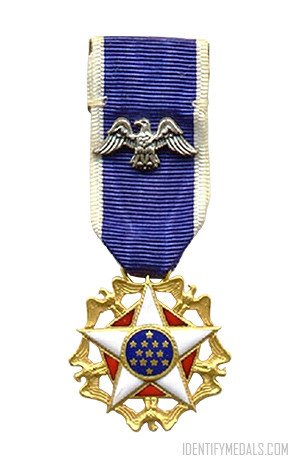
Maya Angelou was awarded the Presidential Medal of Freedom in 2011 for her contributions to literature and civil rights. As an acclaimed poet, author, and activist, Angelou used her powerful voice and writings to advocate for social justice, equality, and human rights. Her works, such as “I Know Why the Caged Bird Sings,” have inspired and uplifted countless individuals, making significant impacts on American culture and civil rights.

Captain Sir Tom Moore was awarded the Order of the British Empire in 2020 for his extraordinary fundraising efforts during the COVID-19 pandemic. At 99 years old, he walked 100 laps around his garden with the goal of raising £1,000 for NHS Charities Together. His efforts captured the hearts of the nation and beyond, ultimately raising over £32 million and providing vital support to healthcare workers and patients during a critical time.

Examples of community and civic contributions medals:

  1. Presidential Medal of Freedom(USA)
  2. Queen’s Service Medal (New Zealand)
  3. Order of the British Empire(UK)
The Presidential Medal of Freedom - AmericanMedals, Badges & Awards Post-WW2

The Presidential Medal of Freedom

The Presidential Medal of Freedom is an award bestowed by the President of the United States. It is the highest civilian award of the USA.

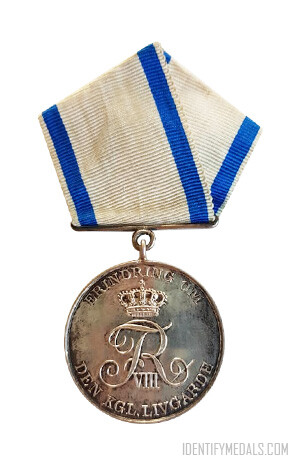
The Royal Life Guard’s 350th Anniversary Medal

The Royal Life Guards Medal 350th anniversary medal was awarded to members of the mechanized infantry regiment of the Danish Army.

The Royal Life Guards 350th Anniversary Commemorative Medal was created in 2008 to celebrate the 350th anniversary of the Danish Royal Life Guards. This prestigious medal honors the long-standing history and distinguished service of the Royal Life Guards, who have been a vital part of Denmark’s military and royal protection since their establishment in 1658.

This commemorative medal was awarded to members of the Royal Life Guards, recognizing their dedication, loyalty, and service to the Danish monarchy. It serves as a token of appreciation for the guards’ unwavering commitment to protecting the royal family and the nation over three and a half centuries.

The Medal Design

The medal typically features symbols associated with the Royal Life Guards and Denmark, such as the Danish crown and the regiment’s emblem.

The reverse side often commemorates the anniversary with the years “1658-2008” prominently displayed.

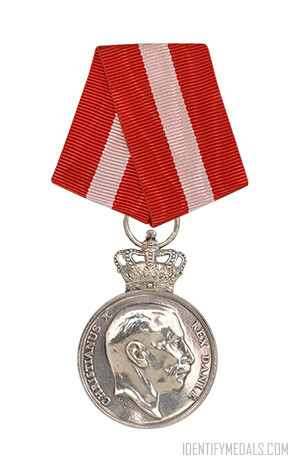
The Defense Medal for Bravery

The King Christian X’s Liberty Medal was a commemorative decoration awarded for special services to Denmark during the Second World War.

King Christian X’s Liberty Medal (or Kong Christian den Tiendes frihedsmedaille in Danish) was a commemorative decoration established by King Christian X of Denmark. It was awarded to individuals who provided exceptional services to Denmark during World War II, reflecting their significant contributions to the nation’s resistance and liberation efforts.

The medal honored those who displayed outstanding bravery, dedication, and service in support of Denmark’s fight against occupation. It symbolized national gratitude and recognition of the sacrifices made by these individuals to ensure Denmark’s freedom and sovereignty.

The Defense Medal for Bravery Design

The medal typically featured the likeness of King Christian X and was suspended from a ribbon representing Denmark’s national colors.

The design elements highlighted the valor and dedication of the recipients, serving as a lasting tribute to their heroic actions during a critical period in Danish history.

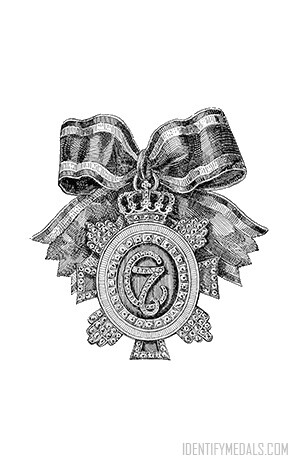
The Order of Christian VII

The Order of Christian VII was a Danish order of knighthood established in 1774 and designed to replace the Order of Mathilde.

The Order of Christian VII, also known as “Tessera Concordiæ” or “Christian VIIs Orden” in Danish, was a knighthood order established on October 21, 1774, by King Christian VII of Denmark. It was created to replace the Order of Mathilde after Queen Caroline Mathilde’s banishment in 1772.

This order was exclusively for the Danish royal family, awarded to both men and women.  The order fell into disuse after the death of Queen-Dowager Juliana Maria in 1796.

The Order of Christian VII Design

Men wore the insignia on the left breast, while women wore it on a bow on their left shoulder. Notably, Danish Princess Louise Augusta was depicted wearing it in a 1784 portrait by Jens Juel.

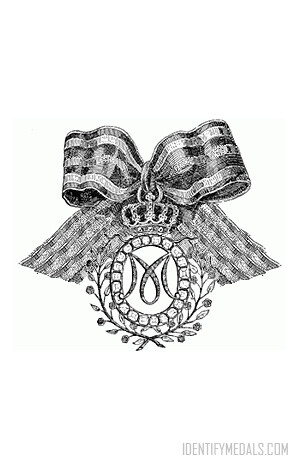
The Order of Mathilde

The Order of Mathilde was created in 1771 by the queen of Denmark-Norway, Caroline Matilda, on the birthday of Christian VII of Denmark.

The Order of Mathilde (or Mathildeordenen in Danish) was a Danish royal order established by Queen Caroline Matilda of Denmark-Norway on January 29, 1771, coinciding with King Christian VII’s birthday.

Named after the queen, the order ceased to be used following her banishment the next year. It was awarded to members of the royal family and close associates, including followers of the queen and her lover Johann Friedrich Struensee.

Eleven of the twelve recipients received it on the day of its creation, with Louise von Plessen being awarded in her absence while in exile at Celle.

The Ordre de l’Union Parfaite

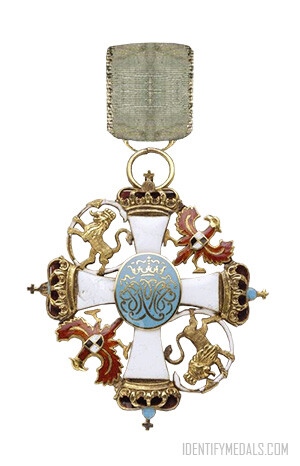
The Ordre de l’Union Parfaite was established in 1732 and given to women to celebrate the tenth anniversary of Sophie Magdalene’s marriage.

The Ordre de l’Union Parfaite was established by Queen consort Sophie Magdalene of Denmark and Norway on 7 August 1732 to mark the tenth anniversary of her marriage to King Christian VI. 

The French name translates to the Order of the Perfect Union or Order of Friendship, reflecting the common use of French in royal courts of the time.

This order, awarded to both men and women, bore the motto “In felicissimæ Unionis Memoriam” (“In Commemoration of the Happiest [Marital] Union”). Conferral of the Order ceased after the Queen’s death on 7 May 1770.

The Ordre de l’Union Parfaite Design

The badge or “jewel” of the Order was a white enamelled cross with each arm capped by a golden crown. Between the arms were alternating golden Norwegian lions holding a halberd and red-enamelled, golden-headed Brandenburg eagles.

The center featured a blue oval medallion, encircled by diamonds, displaying the crowned intertwined monograms of Sophie Magdalene and Christian VI.

The dark blue silk ribbon, edged with silver, was worn differently by gender: gentlemen wore the cross in a left buttonhole of their coats, while ladies wore it on their left breasts.

The Order of the Armed Arm

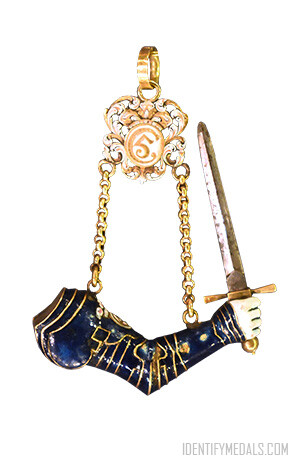
The Order of the Armed Arm was an order of chivalry of Denmark established in 1616 and later merged with the Order of the Elephant.

The Danish Order of the Armed Arm (or den Væbnede Arms Orden in Danish) was a chivalric order established by Christian IV of Denmark in 1616, with the knighting of twelve noblemen.

It was created to honor those who had distinguished themselves in the Kalmar War and was first and only bestowed on 2 December 1616 during celebrations in Kolding for the enfeoffment of Slesvig to Frederick III, Duke of Holstein-Gottorp.

The order was later merged with the Order of the Elephant in 1633-1634 and is considered a predecessor of the Order of the Dannebrog. The badges of the Order of the Elephant issued in 1633 were augmented on the reverse with the badge of the Order of the Armed Arm. This addition was removed in the following year’s issue. In 1634, Christian IV offered the two surviving knights, Christen Friis and Albret Skeel, the option to exchange their Armed Arm badges for the Elephant. There exists a specimen with the monogram of Christian V, indicating he considered reviving the order, but he ultimately established the Order of the Dannebrog in 1671.

The Order of the Armed Arm Design

The badge of the Order was worn around the neck on a blue ribbon and featured two chains hanging from a clasp. At the ends of the chains was a diamond-studded, armor-plated arm holding a drawn sword, earning the order the names “Order of the Drawn Sword” or “Order of the Sword.”

It bears the year 1617, marking the centenary of Martin Luther’s 95 Theses, symbolizing the struggle for Protestantism. 

The Peace Prize Medal (Denmark)

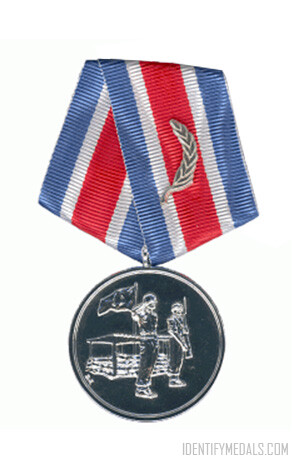
The Peace Prize Medal was established in 1995 by Queen Margrethe II and is awarded Danes who completed a tour of duty on a UN mission.

The Peace Prize Medal (or De Blå Beretters Fredsprismedalje in Danish) was established in 1995 by Queen Margrethe II. It is awarded to Danish individuals who have completed a UN mission tour and received a corresponding medal.

Unique among Danish medals, recipients can apply for it themselves. The medal honors the United Nations Department of Peacekeeping Operations personnel who received the 1988 Nobel Peace Prize. Those who served before 1988 can attach a silver laurel branch to the ribbon, marking their early contributions.

The Peace Prize Medal Design

The Peace Prize Medal features a distinguished design to honor Danish UN peacekeepers. The medal itself is typically circular, displaying relevant imagery such as the emblem of the United Nations or other peacekeeping symbols.

The obverse side often includes a representation of the Nobel Peace Prize, reflecting the 1988 award given to UN peacekeeping forces. The reverse side may carry inscriptions denoting the medal’s purpose and the recipient’s service details.

The ribbon is adorned with a silver laurel branch for those who served before 1988, symbolizing their early contributions to peacekeeping efforts.