The Order of St. Gregory the Great

The Order of St. Gregory the Great is one of the five orders of knighthood of the Holy See and was established in 1831 by Pope Gregory XVI.

The Order of St. Gregory the Great (or Pontifical Equestrian Order of St. Gregory the Great, known in Latin as Ordo Sancti Gregorii Magni and in Italian as Ordine di San Gregorio Magno), was founded on September 1, 1831, by Pope Gregory XVI, following his ascent to the papacy seven months prior.

This order stands among the five orders of knighthood of the Holy See. It is conferred upon Catholic individuals, as well as certain distinguished non-Catholics, in acknowledgment of their personal dedication to the Holy See and the Catholic Church. This recognition is granted for their exceptional service, unwavering support of the Holy See, and the positive influence they exert in their communities and countries.

The inaugural statement affirms that individuals honored with the Order of St. Gregory the Great are recognized for their loyalty to the Holy See, noble lineage, noteworthy deeds, or charitable contributions. Recipients must uphold their reputation through ongoing meritorious actions and demonstrate unwavering fidelity to God and the Pope.

The award imposes no specific obligations on recipients towards the Catholic Church beyond the general expectations outlined above.

The Order of St. Gregory the Great Design

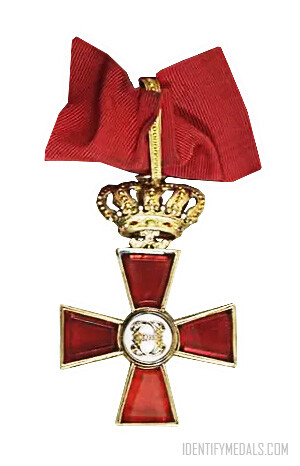
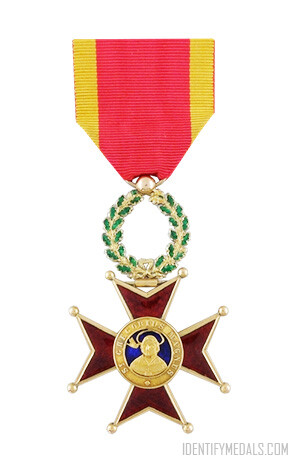
The insignia of the order is an eight-pointed cross, featuring a depiction of St. Gregory on the front and the motto “Pro Deo et Principe” (For God and Ruler) on the back. This cross is suspended from a ribbon in red and gold.

In ecclesiastical heraldry, individuals honored with the prestigious rank of Grand Cross may exhibit a red and gold ribbon encircling the shield in their personal coats of arms. However, recipients of lower ranks typically display an appropriate ribbon beneath the shield.

The civilian and military insignia differ in their presentation. Civilian recipients wear the cross suspended from a laurel wreath, while military recipients wear it suspended from a trophy of arms.
Star Trek Medals & Awards: Starfleet Decorations and More

A complete guide to all the medals, awards, and decorations mentioned or shown in Gene Roddenberry’s science fiction world.

In the Star Trek universe, various military medals and decorations are used to honor the bravery, service, and achievements of characters serving in Starfleet. These medals often play significant roles in the narrative, reflecting the values and principles upheld by Starfleet personnel.

But that’s not all. Vulcans, Klingons, Romulans, and many others also have their own commendations and awards. So, let’s take a look at the different designs and symbolisms of Star Trek medals!

The Most Popular Star Trek Decorations

One of the most iconic fictional medals in Star Trek is the Starfleet Medal of Honor, awarded for acts of exceptional valor and heroism in the face of danger. Recipients of this prestigious medal are often celebrated as heroes within the Star Trek universe, and the award ceremony for the Starfleet Medal of Honor is a recurring motif in several Star Trek series and films.

Other fictional military medals and decorations in Star Trek include the Starfleet Decoration for Gallantry, the Starfleet Citation for Conspicuous Gallantry, and the Starfleet Cross. These medals are awarded for acts of bravery, courage, and self-sacrifice in the line of duty, and they serve as symbols of honor and recognition within the Starfleet hierarchy.

The series and movies also mention quite a few Old Earth Decorations (the period from 1901 to the year 2000). For example, several awards from the United States military, medals from Nazi Germany, and of course, the Nobel Prize.

Star Trek's Vulcan Decorations

Vulcans are known for their logical and stoic demeanor, as well as their commitment to a philosophy of non-emotion and rationality. They originate from the planet Vulcan and are characterized by their distinctive pointed ears and arched eyebrows.

Central to Vulcan culture is the concept of “Surak’s teachings,” which advocate for the suppression of emotions in favor of logic and reason. Surak, a revered Vulcan philosopher, taught his people to embrace the principles of logic, discipline, and self-control in order to overcome their violent and volatile past.

Throughout the Star Trek series and films, Vulcans are depicted as valuable members of the United Federation of Planets, contributing their advanced scientific knowledge and expertise in various fields. We also learn of two Vulvan medals: The IDIC and the Vulcanian Scientific Legion of Honor.

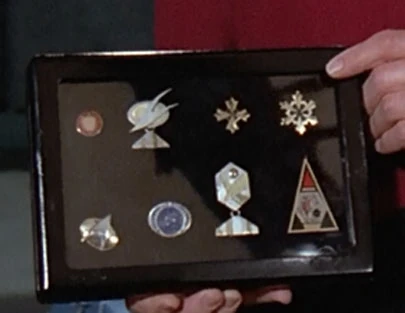
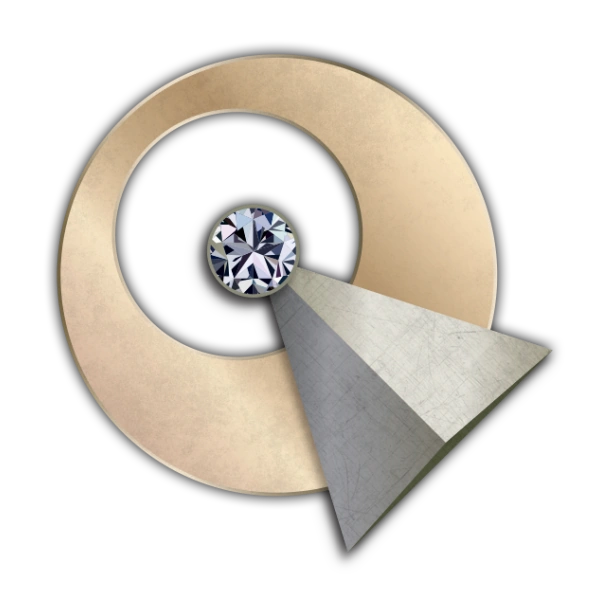
  1. IDIC stands for “Infinite Diversity in Infinite Combinations,” which serves as the foundation of Vulcan philosophy — which honors the immense diversity present in the universe. This philosophy, along with the Vulcan culture, was symbolized by a triangle-over-circle emblem commonly known as “IDIC.” These symbols appear as early as in the 4th century AD (as shown in Surak’s katric ark). Michael Burnham and fellow graduates from the Vulcan Science Academy proudly adorned IDIC badges during their graduation ceremony on Vulcan.
  2. We have less information about the Vulcanian Scientific Legion of Honor, also known as the Vulcan Scientific Legion of Honor. However, we know it is a distinguished accolade granted on Vulcan to honor exceptional scientific achievements. Prior to 2256, Michael Burnham was honored with this prestigious medal, as noted in “The Butcher’s Knife Cares Not for the Lamb’s Cry” episode of DIS. Similarly, Commander Spock received this accolade at some point during his career before 2267, as referenced in the “Court Martial” episode of TOS.
Vulcan IDIC in the 2260s
Vulcan IDIC in the 2260s. Image courtesy of Memory Alpha.

Star Trek's Starfleet Decorations

Starfleet, the exploratory and defensive organization in the Star Trek universe, bestows various decorations and medals. There are, in fact, more Starfleet awards from Starfleet than any other organization. 

Here are some of the notable awards and recipients:

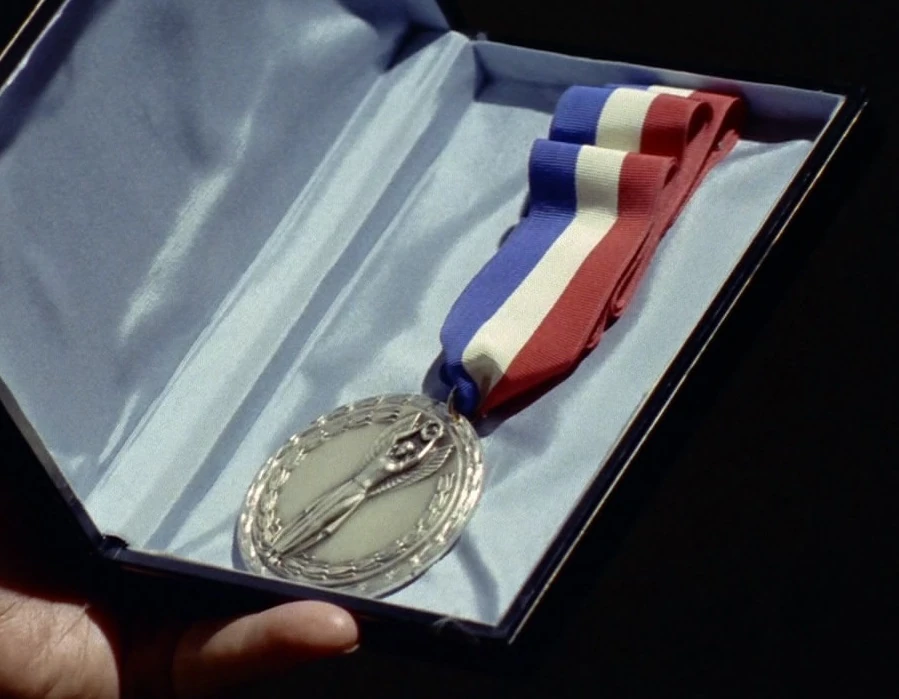
Captain James T. Kirk contemplates his Starfleet Medal of Honor in 2267. (TOS-R: "This Side of Paradise")
Captain James T. Kirk contemplates his Starfleet Medal of Honor in 2267. (TOS-R: "This Side of Paradise") Image courtesy of Memory Alpha.
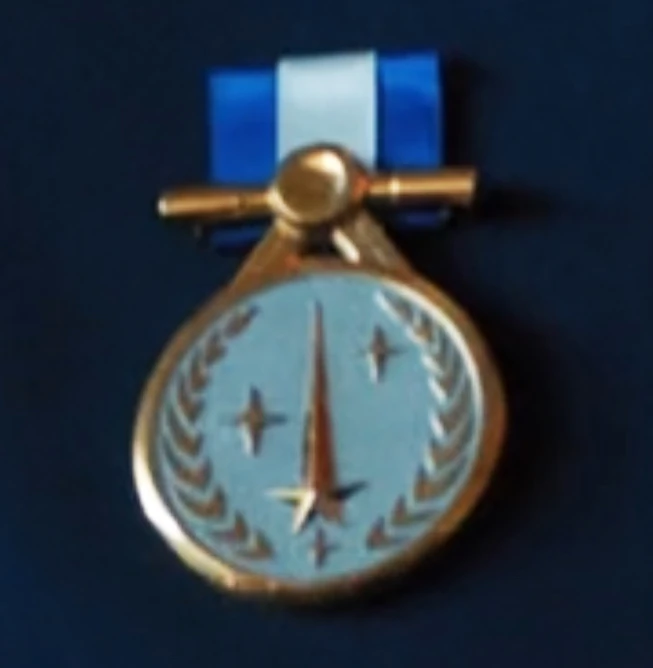
Paul Stamets's Starfleet Medal of Honor in 2257. (DIS: "Will You Take My Hand?")
Paul Stamets's Starfleet Medal of Honor in 2257. (DIS: "Will You Take My Hand?") Image courtesy of Memory Alpha.
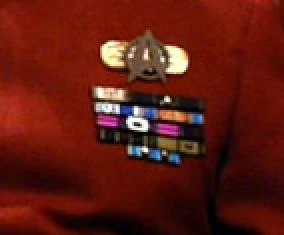
Fleet Admiral Cartwright's ribbons. (Star Trek VI: The Undiscovered Country)
Fleet Admiral Cartwright's ribbons. (Star Trek VI: The Undiscovered Country) Image courtesy of Memory Alpha.
  • Starfleet Award of Valor: Awarded to Captain James T. Kirk, Lieutenant Commander Leonard McCoy, and Lieutenant Commander Spock for their remarkable courage and heroism during various missions.

  • Christopher Pike Medal of Valor: Recognizes acts of extraordinary bravery and valor in the face of danger. Awarded to Captain Benjamin Sisko and Captain Solok for their exceptional leadership and bravery in critical situations.

  • Cochrane Medal of Excellence: Presented to Ensign Harry Kim in an alternate reality, symbolizing excellence in service and dedication to Starfleet’s principles.

  • Grankite Order of Tactics: Acknowledges strategic brilliance and tactical prowess. Awarded to Captain James T. Kirk for his exceptional command abilities.

  • Karagite Order of Heroism: Honors acts of heroism and selflessness. Awarded to Captain James T. Kirk for his courageous actions in the line of duty.

  • Legion of Honor: Recognizes outstanding service and dedication to Starfleet’s ideals. Awarded to Lieutenant Commander Leonard McCoy and Lieutenant Commander Data for their exemplary contributions.

  • Palm Leaf of Axanar Peace Mission: Awarded to Captain James T. Kirk for his role in fostering peace during the Axanar Peace Mission.

  • Preantares Ribbon of Commendation: Presented to Captain Jonathan Archer and Captain James T. Kirk for their commendable service and leadership.

  • Star Cross: Acknowledges exceptional valor and service to Starfleet. Awarded to Captain Jonathan Archer, Captain Philippa Georgiou, and Lieutenant Commander Data for their outstanding contributions.
  • Starfleet Citation for Conspicuous Gallantry: Recognizes acts of conspicuous gallantry and valor in combat. Awarded to Captain James T. Kirk for his extraordinary bravery.

  • Starfleet Decoration for Gallantry: Honors individuals who have shown exceptional courage and bravery. Awarded to Lieutenant Commander Data for his selfless actions.

  • Starfleet Extended Tour Ribbon: Recognizes extended service and dedication to duty. Awarded to several Starfleet officers for their prolonged commitment to their assignments.

  • Starfleet Medal of Commendation: Awarded to The Doctor for his exceptional contributions and service to the crew of the USS Voyager.

  • Starfleet Medal of Honor: The highest honor bestowed by Starfleet, recognizing acts of exceptional courage and valor. Awarded to various notable individuals, including Captain James T. Kirk, Captain Philippa Georgiou, and Commander Saru.

  • Starfleet Medal of Valor: Recognizes acts of extraordinary bravery and heroism. Awarded to Captain Jonathan Archer for his valorous actions.

  • Starfleet Silver Palm: Presented for acts of bravery and gallantry in hazardous situations.

Star Trek's Klingon Decorations

The Klingon Empire also awards several prestigious decorations and honors upon its warriors and leaders. Among these are the Order of the Bat’leth, the Star of Kahless, and the Order of Kahless.

  1. The Order of the Bat’leth is one of the highest honors awarded by the Klingon Empire. It is named after the traditional Klingon weapon, the bat’leth, symbolizing martial prowess and honor in battle. This decoration is typically awarded to warriors who have demonstrated exceptional courage, skill, and valor on the battlefield. Recipients of the Order of the Bat’leth are esteemed among Klingon society and are revered as champions of the Empire’s martial traditions.

  2. The Star of Kahless is a prestigious decoration awarded to Klingon leaders and heroes who have distinguished themselves in service to the Empire. Named after Kahless the Unforgettable, a legendary figure in Klingon history, this honor symbolizes leadership, honor, and unity. The Star of Kahless is typically presented to individuals who have demonstrated exceptional leadership, strategic prowess, and devotion to the ideals of the Klingon Empire.

  3. The Order of Kahless is a revered decoration awarded for acts of extraordinary bravery and sacrifice in defense of the Klingon Empire. Established in honor of Kahless the Unforgettable, this order is bestowed upon warriors who have displayed unwavering loyalty, resilience, and selflessness in the face of adversity. Recipients of the Order of Kahless are celebrated as exemplars of Klingon valor and tradition, embodying the highest ideals of honor and duty.

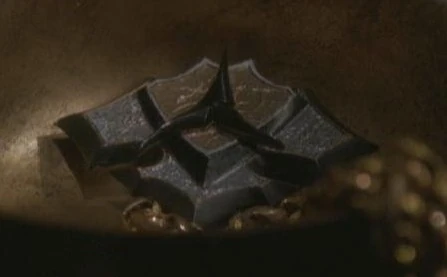
The Star of Kahless, a Klingon medal. (DS9: "When It Rains...")
The Star of Kahless, a Klingon medal. (DS9: "When It Rains...") Image courtesy of Memory Alpha.
The Order of the Bat'leth awarded to honorable Klingons. (DS9: "Apocalypse Rising").
The Order of the Bat'leth awarded to honorable Klingons. (DS9: "Apocalypse Rising"). Image courtesy of Memory Alpha.

Star Trek's United Federation of Planets Decorations

The United Federation of Planets is Star Trek’s interstellar government. It bestows various medals and honors to recognize exceptional contributions and achievements of its citizens and allies. Three notable medals within the Federation are the Carrington Award, the Federation Citation of Honor, and the Zee-Magnees Prize:

  1. The Carrington Award is a prestigious honor given by the United Federation of Planets to individuals who have made outstanding contributions to diplomacy and peacekeeping efforts. Named after Ambassador Robert Carrington, who played a key role in Federation-Klingon relations, this award symbolizes the Federation’s commitment to fostering peaceful relations among different species and civilizations.
  2. The Federation Citation of Honor is a distinguished medal awarded to individuals who have demonstrated exceptional bravery, leadership, and service to the United Federation of Planets. Recipients of this citation are recognized for their acts of valor and selflessness in the face of adversity, embodying the highest ideals of the Federation and serving as role models for others.
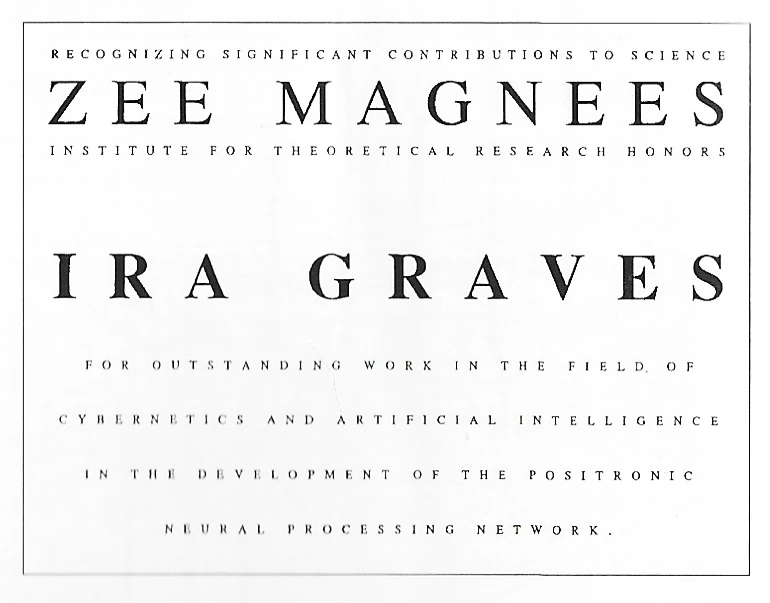
  3. Lastly, the Zee-Magnees Prize is a prestigious scientific award presented by the United Federation of Planets to honor breakthroughs and advancements in the field of astrophysics and space exploration. Named after renowned scientist Zee-Magnees, this prize recognizes individuals or teams who have made significant contributions to our understanding of the universe, pushing the boundaries of scientific knowledge and innovation.
A certificate from the Zee Magnees Institute for Theoretical Research honoring Ira Graves, designed for TNG: "The Schizoid Man".
A certificate from the Zee Magnees Institute for Theoretical Research honoring Ira Graves, designed for TNG: "The Schizoid Man". Image courtesy of Memory Alpha.

Star Trek's Cardassian Decorations

The Cardassian Union, known for its authoritarian regime and militaristic society, bestows various awards and commendations upon its citizens and military personnel, too. These Cardassian awards and commendations reflect the values and priorities of the Cardassian Union, emphasizing loyalty, duty, and excellence in service to the state. Two notable decorations within the Cardassian Union are the Legate’s Crest of Valor and the Proficient Service Medallion:

  1. The Legate’s Crest of Valor is one of the highest honors awarded by the Cardassian Union, typically bestowed upon military officers and high-ranking officials who have demonstrated exceptional bravery and leadership in service to the state. This prestigious decoration symbolizes courage, loyalty, and devotion to the Cardassian Union, and it is often presented by high-ranking officials, such as legates or members of the Central Command. Recipients of the Legate’s Crest of Valor are revered as heroes within Cardassian society and are celebrated for their unwavering dedication to the state and its principles.

  2. The Proficient Service Medallion is a commendation awarded to Cardassian citizens and military personnel for meritorious service and exemplary performance of duty. This decoration recognizes individuals who have demonstrated exceptional skill, diligence, and dedication in their respective roles within the Cardassian Union. Whether in military service, government administration, or civilian professions, recipients of the Proficient Service Medallion are esteemed for their contributions to the prosperity and security of the Cardassian Union. The medallion serves as a symbol of recognition and appreciation from the state for their valuable service and commitment.

Star Trek's Romulan Decorations

The Romulan Star Empire, known for its secretive and militaristic nature, has two notable decorations: the Praetor Colius Award and the Sotarek Citation. These Romulan awards and citations reflect the values and priorities of the Romulan Star Empire, emphasizing loyalty, duty, and excellence in service to the state. They serve to reinforce the authoritarian structure of Romulan society, rewarding adherence to the empire’s principles and fostering a culture of honor and recognition among its citizens and military personnel.

  1. The Praetor Colius Award is one of the highest honors bestowed by the Romulan Star Empire, typically awarded for acts of exceptional bravery, leadership, and loyalty to the state. Named after a revered Romulan leader, this prestigious decoration symbolizes courage, devotion, and service to the empire. Recipients of the Praetor Colius Award are esteemed within Romulan society and are recognized as exemplars of the empire’s values and principles. This award is often presented by high-ranking officials, such as the Praetor or members of the Romulan Senate, and carries significant prestige and honor.

  2. The Sotarek Citation is a commendation awarded to Romulan citizens and military personnel for outstanding service and meritorious conduct in the service of the Romulan Star Empire. This citation recognizes individuals who have demonstrated exemplary dedication, skill, and performance of duty in their respective roles within the empire. Whether in military service, government administration, or civilian professions, recipients of the Sotarek Citation are honored for their contributions to the security and prosperity of the Romulan Star Empire. The citation serves as a symbol of recognition and appreciation from the state for their valuable service and commitment.

Other Star Trek Decorations

In the expansive Star Trek universe, various honors and awards exist beyond those bestowed by specific civilizations or factions. Here are brief descriptions of some of these other honors:

  1. Christopher Pike Medal of Valor: Named after the renowned Starfleet captain, this medal is awarded for acts of exceptional bravery and valor in service to Starfleet and the United Federation of Planets.

  2. Campbell Award: This award recognizes outstanding achievements and contributions in the fields of science and exploration, reflecting the spirit of discovery and innovation.

  3. Daystrom Award: Named after Dr. Richard Daystrom, a pioneering scientist, this award is presented for groundbreaking advancements and excellence in technology and engineering.

  4. Gold star: A symbol of recognition for exemplary service or performance, often awarded to individuals who have demonstrated exceptional dedication and merit.

  5. Jalhal Award: An honor bestowed for exceptional leadership and strategic acumen in military or diplomatic endeavors.

  6. J. Bruce Award: Recognizing exceptional contributions and achievements in cultural and artistic fields, such as literature, music, and visual arts.

  7. Kerry Award: Presented for acts of compassion, humanitarianism, and service to others, reflecting the values of empathy and kindness.

  8. Kliever Citation: Awarded for acts of ingenuity, resourcefulness, and problem-solving, highlighting creative solutions to complex challenges.

  9. Okuda Award: Named after renowned technical advisor Michael Okuda, this award recognizes excellence in graphic design, visual effects, and production craftsmanship.

  10. Rigel Cup: A prestigious honor bestowed upon individuals or teams for exceptional achievements in athletic competitions or physical endeavors.

  11. Scholarship: Recognizing academic excellence and intellectual achievement, awarded to individuals who have demonstrated outstanding scholarship and learning.

  12. Tolley Citation: Presented for acts of heroism and selflessness in the face of danger, honoring individuals who have shown remarkable courage and bravery.

  13. Trophy: A tangible symbol of accomplishment and achievement, awarded in various fields and endeavors to commemorate success and excellence.

The Swedish Armed Forces Medal of Merit

The Swedish Armed Forces Medal of Merit is a military decoration awarded for action during combat or during war-like situations.

The Swedish Armed Forces Medal of Merit (or Försvarsmaktens förtjänstmedalj in Swedish; FMGM and FMSM) is a prestigious decoration established by the Swedish Armed Forces and conferred in recognition of exceptional actions undertaken during combat or war-like situations. The decision to bestow this medal is made by the Supreme Commander and may be granted to both Swedish nationals and foreign personnel.

Originally, this medal was formed through the amalgamation of two previous honors: the Swedish Armed Forces International Service Medal of Reward, awarded in silver or gold with a blue ribbon adorned with a silver sword; and the Swedish Armed Forces Medal of Merit, bestowed for commendable efforts, presented in silver or gold with a yellow ribbon (sometimes featuring a sword in each denomination). These aforementioned medals are no longer presented.

The medal may be granted for national or international operations, actions undertaken during war-like conditions, or other commendable personal endeavors. The criteria for receiving this medal apply even in times of armed conflict. Eligibility also extends to individuals both within and outside the Swedish Armed Forces, regardless of nationality.

The Swedish Armed Forces Medal of Merit Design

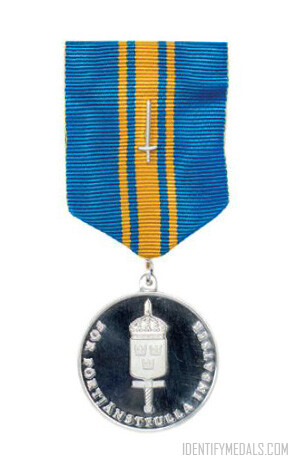
The medal is available in two classes: gold and silver. Crafted from gilded hallmarked silver or hallmarked silver with a diameter of 31 mm, the medal features the Swedish Armed Forces heraldic arms on the obverse side, encircled by the inscription “FOR MERITORIOUS SERVICES” (FÖR FÖRTJÄNSTFULLA INSATSER).

The reverse side showcases a laurel wreath along the outer edge and remains smooth, allowing for the recipient’s name, year of awarding, and, if applicable, country to be engraved. Additionally, a miniature version of the medal is available, and it is accompanied by a diploma.

The medal is worn suspended from a blue ribbon with a broad yellow stripe in the center and narrow ones on each side. If the medal is awarded for actions in combat or during war-like situations, a gold or silver upright sword is displayed on the ribbon. Alternatively, a service ribbon with a horizontal gold or silver sword is worn in lieu of the medal for such action.

The Medal For Valor in the Field / At Sea

The Medal For Valor in the Field/Sea is a Swedish military decoration awarded to officers and soldiers of the Swedish Armed Forces.

The Medal For Valor in the Field (or För tapperhet i fält in Swedish) and Medal For Valor at Sea (För tapperhet till sjöss) are esteemed military decorations of Sweden, honoring the courage and bravery demonstrated by officers and soldiers of the Swedish Armed Forces during wartime engagements, whether on land or at sea.

Instituted by Gustav III on May 28, 1789, amid conflicts with Russia, these medals were conceived to complement the Order of the Sword, which, since its establishment on February 23, 1748, had been exclusively bestowed upon officers for acts of valor on land or at sea.

These two medals, along with the various grades of the Order of the Sword, hold the distinction of being designated as Swedish war decorations (Svenska krigsdekorationer).

Through royal decrees issued on March 24, 1807, and June 10, 1809, it was decided to institute two distinct decorations: För tapperhet i fält (abbreviated Mtf) to recognize valor in the field and För tapperhet till sjöss (Mts) to honor acts of bravery at sea. Each of these awards has gold variants (prefixed with G, such as GMtf) reserved for officers and silver variants (prefixed with S, such as SMts) designated for non-commissioned officers and privates.

The Medal For Valor in the Field / At Sea Design

Initially crafted in silver, the medal was intended solely for non-commissioned officers and privates. However, in 1806, a gold version was introduced exclusively for higher-ranking officers.

The design of the medal is characterized by its simplicity, featuring a circular shape consistent with the modern size 8 of the Swedish medal scale established in 1773, known as Mensura magnitudinis Nummorum, with a diameter of 31 mm.

On the obverse side, the medal bears the inscription “FÖR TAPPERHET I FÄLT” or “FÖR TAPPERHET TILL SJÖSS” (or for older medals “[…] TILL SIÖS”), encircled by a wreath. Since 1809, the reverse side has been adorned with the symbol of the Order of the Sword. Prior to this, it depicted a portrait of Gustav III alongside the text “GUSTAV III SVERIGES KONUNG” (“Gustav III King of Sweden”). 

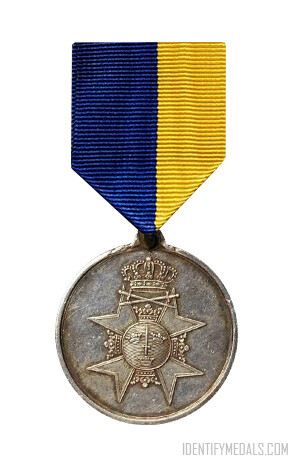
The ribbon is blue and yellow and has been presented with the award since 1819.

The Prince Eugen Medal

The Prince Eugen Medal is a Swedish decoration conferred by the King of Sweden for outstanding artistic achievement.

The Prince Eugen Medal (or Prins Eugen-medaljen in Swedish) is a distinguished honor bestowed by the King of Sweden in recognition of outstanding artistic achievement.

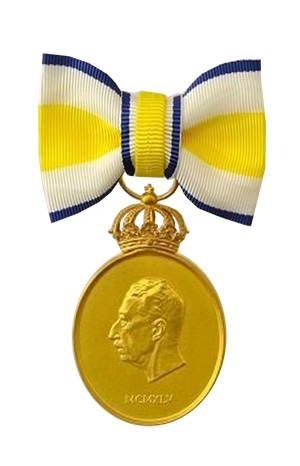
Established in 1945 by Gustaf V, the King of Sweden at the time, the medal commemorates the eightieth birthday of Prince Eugen, a renowned painter and art collector, and the King’s brother.

Annually awarded on November 5th, which coincides with Eugen’s name day, the medal ceremony takes place at the Royal Palace in Stockholm. Recipients are celebrated for their remarkable contributions to the arts. This prestigious accolade symbolizes the enduring legacy of Prince Eugen and the Swedish monarchy’s commitment to honoring excellence in artistic endeavors.

The Litteris et Artibus Medal

The Litteris et Artibus Medal is a Swedish royal decoration awarded to people who have made important contributions to culture.

The Litteris et Artibus Medal is a distinguished Swedish royal decoration established in 1853 by Charles XV of Sweden during his tenure as crown prince.

This prestigious accolade is bestowed upon individuals who have made significant and noteworthy contributions to the realm of culture, particularly in the domains of music, dramatic art, and literature.

The Litteris et Artibus Medal Design

The obverse side of the medal features the likeness of the reigning monarch, while the reverse side bears the inscription “Litteris et Artibus,” which translates to “Letters and Arts” in Latin.

This emblematic representation serves as a testament to the enduring commitment of the Swedish monarchy to honor and celebrate excellence in cultural achievements.

The H. M. The King’s Medal (Sweden)

The H. M. The King’s Medal is a Swedish honor established in 1814 and awarded to Swedish and foreign citizens for special merits.

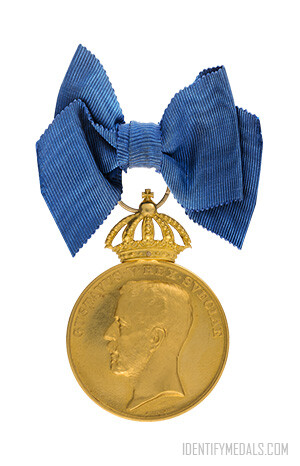
The H.M. King’s Medal (H.M. Konungens medalj in Swedish), previously known as the Court Medal (or Hovmedaljen), is a prestigious honor bestowed upon both Swedish and foreign nationals.

Established in 1814, this medal is not classified into classes but rather awarded based on size. The 12th size is the largest and is typically worn around the neck on a chain or ribbon, while the 8th and 5th sizes are worn suspended from the left breast by a ribbon, following the Seraphim Medal.

Recipients of the King’s Medal include individuals who have demonstrated exceptional merits and officials serving at the royal court. This practice became particularly common after 1975, when the conferral of Swedish Orders of Chivalry to non-royal Swedish citizens ceased, until the Orders were reopened to Swedish citizens on February 1, 2023.

The H. M. The King’s Medal Design

The King’s Medal is available in different sizes, crafted from both gold and silver, and can be worn suspended from either a ribbon or chain.

Unlike traditional classifications, Swedish medals are not divided into classes but rather into sizes. These sizes are determined by the Berch’s Scale, an 18th-century scale that assigns specific dimensions to each medal. For instance, the 12th size medal has a diameter of 43 mm, while the 8th size measures 31 mm in diameter.

The Order of Charles XIII

The Order of Charles XIII is a Swedish order of merit established in 1811 and awarded to Freemasons of the Protestant faith.

The Royal Order of Charles XIII (Kungliga Carl XIII in Swedish) is a distinguished Swedish order of merit established by King Charles XIII in 1811.

Membership of the order is limited to Freemasons of the Protestant faith. The King of Sweden, currently King Carl XVI Gustaf, serves as the Lord and Master of the Order. The order’s membership is structured as follows:

  • Thirty lay members, with a maximum of seven non-Swedish members, each holding the XI (highest) degree of the Swedish Rite of Freemasonry, such as regional or national heads.
  • Three clerical members, typically priests or bishops of the Church of Sweden.
  • All princes of the Royal House of Sweden are born members but only wear the insignia if they hold the Knight and Commander rank of the Red Cross of the Swedish Order of Freemasons. As a result, the King and the Duke of Värmland, both born Knights of the Order, do not wear the insignia.
  • Foreign princes of royal lineage may be granted honorary membership if they are senior Freemasons, regardless of their affiliation with the Swedish Order or another. While they enjoy full membership rights, they are not included in the order’s membership limits. Prince Edward, Duke of Kent (United Kingdom), was admitted to the Order on November 6, 2000.

The total membership cannot exceed 33 individuals concurrently. Members of royal descent are automatically included in the count but do not consume slots from the allotted 33.

The Order of Charles XIII Design

The insignia of the order features a red St. George cross, with a white globe at its center bearing the monogram of the founder, consisting of two letters “C” surrounding “XIII” in gold.

On the reverse side of the globe, there is a gold letter “B” within an equilateral triangle bordered in black and gold. A closed golden crown is mounted atop the cross. The insignia is worn around the neck on a red ribbon. Additionally, there exists a red breast cross, making the insignia equivalent to that of a Commander 1st Class, and recipients are ranked accordingly following the Commanders 1st Class of the Swedish Royal Orders.

The ribbon is red.

The Order of Vasa

The Order of Vasa is a Swedish order of chivalry awarded to citizens of Sweden for service to the state and society.

The Royal Order of Vasa (or Kungliga Vasaorden in Swedish) is an order of chivalry bestowed upon citizens of Sweden in recognition of their contributions to the state and society, particularly in fields such as agriculture, mining, and commerce.

Instituted by King Gustav III on May 29, 1772, the Order of Vasa was unique in its inclusivity. It was unrestricted by birth or education and thus open to anyone deserving of recognition. Unlike the Order of the Polar Star, which primarily honored individuals in the learned professions, the Order of Vasa had a broader scope.

In 2019, a parliamentary committee was tasked with devising guidelines for the reintroduction of the Swedish orders, including the Order of Vasa, into the national honors system and for the reappointment of Swedish citizens to these orders. The committee presented its recommendations in September 2021 and a new regulation was issued on December 20, 2022, revoking the 1974 restriction and once again permitting Swedish citizens to receive the Royal Orders.

The Order had five classes:

  • Commander Grand Cross 
  • Commander 1st Class 
  • Commander 
  • Knight 1st Class (Member 1st Class for women and clergymen) 
  • Knight (Member for women and clergymen) 

The Order of Vasa Design

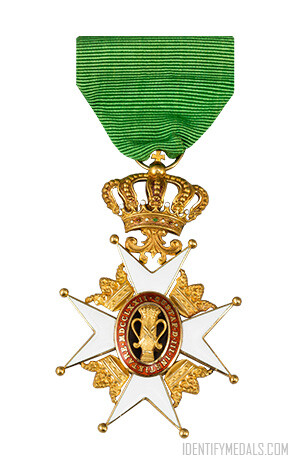
The badge of the Order is crafted as a white-enameled Maltese Cross, fashioned in silver for the Knight class and in gilt for Knight 1st Class and higher ranks, with crowns adorning the spaces between the arms of the cross. The central oval disc, which is identical on both sides, features a golden sheaf against a black enamel background, encircled by a red enamel ring bearing the inscription “Gustaf 3. Instiktare 1772″ (Instituted by Gustaf III, 1772). The badge is suspended from a royal crown.

The Badge of Vasa resembles the silver badge of the Order for knights, but lacks white enamel on the cross. The star of the Order takes the form of a silver Maltese Cross with a silver sheaf at the center. For the Grand Cross, the star additionally features the aforementioned nettle leaf emblem in silver between the arms of the cross.

The ribbon of the Order is green.

The Order of the Polar Star

The Order of the Polar Star is a Swedish order of chivalry established in 1748 as an award for civic merits, devotion to duty, science, etc.

Established on February 23, 1748, by King Frederick I, the Royal Order of the Polar Star (or Kungliga Nordstjärneorden in Swedish), alternatively known as the Royal Order of the North Star, stands as a Swedish order of chivalry.

Alongside the Order of the Sword and the Order of the Seraphim, it was introduced to honor individuals for their contributions to civic society, dedication to duty, advancements in science, literary accomplishments, scholarly pursuits, and the establishment of beneficial institutions, both within Sweden and internationally.

The Order has five degrees:

  1. Commander Grand Cross (KmstkNO) 
  2. Commander 1st Class (KNO1kl) 
  3. Commander (KNO) 
  4. Knight 1st Class (RNO1kl/LNO1kl
  5. Knight (RNO/LNO

The Order of the Polar Star Design

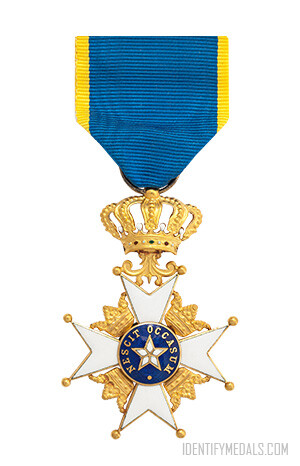
The Order’s badge features a white enamelled Maltese Cross, rendered in silver for a Knight and gilt for a Knight 1st Class and higher ranks, with crowns adorning the spaces between the arms of the cross. The central disc, identical on both sides, showcases a blue enamel background with a white-enamelled five-pointed star encircled by the Order’s motto, Nescit occasum (“It knows no decline”). The badge is suspended from a royal crown.

The star of the Order takes the form of a silver Maltese cross, with a silver five-pointed star positioned at its center. For the Grand Cross, straight silver rays extend between the arms of the cross.

The ribbon of the Order is black. However, from 1975 to 2023, it featured a blue color with yellow stripes near its borders. From 2023 onwards, the black ribbon was reinstated.