
Maintaining and Cleaning Your Military Medal Collection

Guidance on how to clean and maintain medals without damaging them, including the use of non-abrasive materials and gentle cleaning solutions.

Maintenance and cleaning are essential aspects of caring for your medals and ensuring they remain in pristine condition for years to come. However, it’s crucial to approach these tasks with caution and a gentle touch to avoid inadvertently causing damage. 

This article hopes to provide you with a detailed guide on how to clean and maintain your medals without harming them, including which supplies to use, the different cleaning steps, and how to store and display the results. With proper care and attention, your medals will not only retain their intrinsic value but also continue to tell their remarkable stories for years on end.

Step 1: Gather Your Medal Cleaning Supplies

Gathering your cleaning supplies is a pivotal initial step in the process of maintaining and preserving the condition of your medals because it ensures that you are well-prepared to undertake this crucial task with care and precision. 

So, let’s quickly go through the main elements and what they entail.

Soft Cloth or Microfiber Towel

Selecting the right cloth is paramount. A soft cloth or microfiber towel is essential because it won’t scratch or harm the medal’s surface during cleaning. This cloth acts as the primary tool for removing dust and loose particles from the medal. It’s the first line of defense against potential abrasions.

Mild Cleaning Solution

The choice of cleaning solution is critical. Opt for a mild, pH-neutral dish soap to ensure that it effectively cleans without causing any damage or chemical reactions with the medal’s surface. The mild cleaning solution serves as the agent that loosens and dissolves dirt, grime, or tarnish on the medal, making it easier to clean without harsh scrubbing.

Soft Bristle Brush

A soft bristle brush, such as a soft toothbrush, is valuable for cleaning medals with intricate details or hard-to-reach areas that may be difficult to address with a cloth alone. The soft bristle brush allows for more precise and delicate cleaning, especially in crevices, around edges, or on textured surfaces of the medal.

Cotton Swabs

Cotton swabs are handy for cleaning tiny, delicate areas and reaching tight spots that may be inaccessible with a cloth or brush. They provide precision and gentleness, ensuring that you can clean even the smallest and most intricate parts of the medal without the risk of causing damage.

Distilled Water

Using distilled water is advisable, especially if you’re concerned about mineral deposits present in tap water, which can leave residue on the medal’s surface. Distilled water is used for rinsing the medal after cleaning, ensuring that no soap residue remains and that the water itself won’t introduce any impurities or contaminants.

Step 2: Clean Your Medals

The next step is the pivotal phase where you begin the actual process of caring for your medals. It typically involves a series of carefully executed actions to ensure that your medals are cleaned effectively and with utmost care, preserving their historical significance, aesthetic beauty, and structural integrity.

Here’s a more detailed exploration of each aspect of this essential step.

Assess the Medal's Condition

Before you start cleaning, take a moment to examine the medal closely. Assess its condition to determine the extent of cleaning required and identify any specific areas of concern. This initial assessment helps you tailor your cleaning approach to the medal’s unique needs. It ensures that you don’t overclean or inadvertently damage delicate features.

Dust Removal

The first action in cleaning your medal is removing loose dust and particles. Dust can contain abrasive substances that may scratch the medal’s surface during the cleaning process. Gently dusting the medal with a soft cloth or microfiber towel eliminates surface debris, creating a clean canvas for the subsequent cleaning steps.

Prepare the Cleaning Solution

The choice of cleaning solution is pivotal in ensuring that the cleaning process is effective without causing harm. A mild, pH-neutral dish soap mixed with warm water is typically safe for most medals. The cleaning solution serves as the active agent that loosens and dissolves dirt, tarnish, and contaminants from the medal’s surface, making them easier to remove without causing damage. In some cases, you can also consider using a mild silver cleaning foam (see below). 

Spot Test

Conducting a spot test is a precautionary measure to ensure that the cleaning solution you’ve prepared does not negatively impact the medal’s finish or patina. By applying a small amount of the cleaning solution to an inconspicuous area, you can gauge its compatibility with the medal’s material and surface. This helps prevent any unintended consequences.

Soak and Clean

Soaking the medal briefly in the cleaning solution can help loosen stubborn grime or tarnish, making it easier to clean. Gently clean the medal’s surface with the soft cloth, brush, or cotton swabs, using the cleaning solution. Avoid abrasive scrubbing, as it can harm the finish or patina. Instead, employ gentle, circular motions to clean the medal thoroughly.

Rinse

Rinsing the medal with clean, distilled water is crucial to remove any remaining cleaning solution, preventing soap residue from affecting the medal’s surface. Ensure that you rinse the medal completely, removing all traces of the cleaning solution. This step is essential for preventing future corrosion or discoloration due to residual chemicals.

Dry Carefully

Proper drying is the final step to prevent water spots or mineral deposits from forming on the medal’s surface. Use a soft, absorbent cloth to gently pat the medal dry, ensuring there is no moisture left behind. Avoid rubbing, as it can cause friction and potential damage.

Step 3: Store and Display Your Medals

Storing and displaying is the final phase in your journey of caring for your medals, where you focus on preserving the medals’ condition and ensuring they remain a source of pride and inspiration.

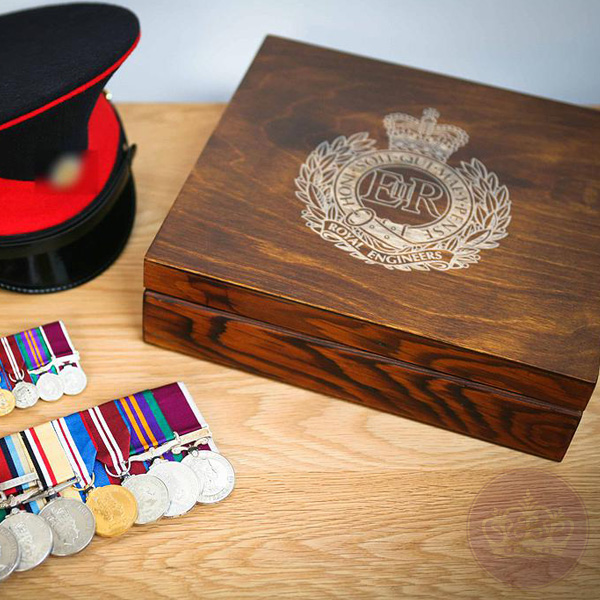
This step involves selecting appropriate storage and display methods that shield your medals from harm, whether it be dust, moisture, or physical damage, while still allowing you to showcase their beauty and historical significance. 

Choose the Right Storage Containers

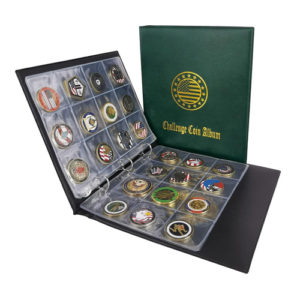
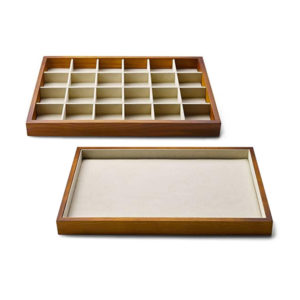
Selecting the right storage containers is paramount to protect your medals from environmental threats like dust, moisture, and oxidation. Ensure that your chosen containers, such as coin capsules, acid-free folders, or airtight boxes, provide a secure and protective environment for your medals. These containers act as the first line of defense against potential damage.

Consider Anti-Tarnish Measures

Anti-tarnish materials, such as anti-tarnish strips or pouches, are valuable additions to your storage containers. They neutralize tarnish-causing agents, adding an extra layer of protection. Anti-tarnish measures help prevent tarnishing and discoloration over time, preserving the medals’ original luster and appeal.

Organize and Label

Efficient organization ensures that you can easily locate and access your medals when needed. Labeling can provide context and historical information. Organize your medals in a logical order, perhaps by theme, date, or significance. Labeling containers or folders with details about each medal enhances their historical and personal value.

Protect from Light and UV Radiation

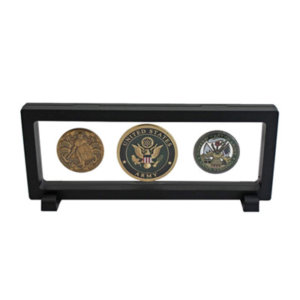
Direct sunlight and UV radiation can cause fading and deterioration of medals over time. When displaying your medals, consider using UV-protective display cases or shadow boxes. These shield your medals from harmful light exposure while allowing you to showcase them with pride.

Regular Inspection

Regularly inspect your stored and displayed medals to ensure their condition remains pristine. Inspection helps you detect any signs of damage, tarnishing, or deterioration early on. Prompt attention can prevent further harm and the need for extensive restoration.

Maintain a Controlled Environment

Ensure that the environment in which you store and display your medals is controlled for temperature and humidity. Controlling the environment minimizes the risk of moisture-related damage and corrosion. Consider using humidity control products in your storage areas.

Rotate Displays

Medals displayed for extended periods may be exposed to environmental elements. Regularly rotating your displays can ensure that all medals receive equal care and protection. Rotation helps distribute the potential effects of light and air exposure more evenly among your collection.

Choosing the Right Storage Method For Your Military Medals

Protecting your medal collection from dust, moisture, and oxidation is essential. Explore storage options like capsules, sleeves, and folders.

Selecting the appropriate storage method for your collection of medals, awards, and badges is one of the most crucial aspects of preserving their condition and value. Proper storage helps protect these valuable items from potential threats like dust, moisture, and oxidation, ensuring they remain in pristine condition for generations to come. So, here’s all you shoudl know about choosing the right storage method, including the various options available.

By keeping these aspects of choosing the right storage method in mind, you will be able to better understand the significance of safeguarding your medals make informed decisions regarding storage solutions to ensure the longevity and integrity of their valuable.

Dust and Debris Protection

Dust and debris can accumulate on medals over time, affecting their appearance and potentially scratching their surfaces. The main problem, in this case, is that dust particles may contain abrasive materials that can mar the delicate details of a medal.

There are two solutions I find quite helpful for storing medals and protect them from dust and debris. These are coin capsules and acid-free paper.

Store Medals Using Coin Capsules

These clear, plastic capsules provide individual protection for each medal. They shield medals from dust, moisture, and physical contact while allowing you to view the item without removing it from the capsule.

These capsules, in essence, combine functionality with the privilege of admiring your medals’ intricate details, ensuring your prized possessions remain as captivating as ever.

> Get coin capsules

Store Medals Using Acid-Free Tissue Paper

Wrapping your medals in acid-free tissue paper can add an extra layer of protection, especially when storing multiple medals together in a display case or folder.

This precaution proves particularly invaluable when you gather multiple medals, uniting them within a display case or a meticulously organized folder.

> Get acid-free archival tissue paper

Moisture Protection

Moisture can lead to corrosion, tarnishing, and irreversible damage to medals, particularly if they are made of metals susceptible to oxidation, such as copper or bronze. This insidious menace, if left unchecked, can unleash a cascade of destructive processes that compromise the appearance, historical significance, and monetary value of these precious keepsakes.

Protecting Medals From Corrosion, Tarnishing, and Irreversible Damage

Moisture is a catalyst for corrosion, a process by which metals react with oxygen and water to form oxides or hydroxides. In the case of medals made from copper or bronze, exposure to moisture initiates a chemical reaction that gradually eats away at the surface of the metal. This corrosion manifests as unsightly green or brownish patches, commonly known as patina. Now, the worst thing about corrosion is that it not only mars the aesthetic appeal of the medal but also weakens its structural integrity over time.

Tarnish, often synonymous with discoloration or dullness, is another adverse effect of moisture on medals. When water vapor in the air combines with sulfides or other contaminants present on the medal’s surface, it forms compounds that result in tarnish. The outcome is a loss of the medal’s original shine and brilliance, as well as the potential for a less attractive appearance overall.

However, the most concerning consequence of moisture exposure is the potential for irreversible damage. Over time, the corrosive effects of moisture can penetrate deep into the metal, causing pitting, surface erosion, and structural weakening. Once these damages occur, they are often challenging, if not impossible, to reverse or repair. 

Store Medals Using Silica Gel Packets

Placing silica gel packets within your storage containers can help absorb excess moisture and maintain a controlled humidity level.

These small but mighty agents of moisture management tirelessly engage in the task of absorbing any unwelcome moisture, ensuring that your stored items remain shielded from the ravages of dampness and subsequent deterioration.

> Get silica gel packs

Store Medals Using Desiccant Boxes

These boxes are specifically designed to regulate humidity and protect items from moisture damage. Remarkably, these boxes not only prioritize humidity control but also frequently incorporate airtight seals, creating an impervious barrier that steadfastly safeguards your items from the perilous effects of environmental moisture.

In essence, they are the vanguards of preservation, fortifying the longevity and integrity of your valuable belongings.

> Get desiccant boxes

Oxidation Prevention

Oxidation is a natural chemical process that takes place when metals, particularly those containing elements like copper or bronze, interact with oxygen and moisture from the surrounding environment. This reaction, while often gradual, can have profound consequences for the appearance and longevity of medals, making it a significant concern for collectors and enthusiasts.

Protecting Medals From Discoloration and Deterioration

One of the most immediate and visually noticeable effects of oxidation is discoloration. When medals react with oxygen and moisture, they often develop an undesirable patina. This patina can appear in various colors, such as green, brown, or blue, depending on the type of metal and the specific conditions of exposure. This discoloration can significantly detract from the medal’s original luster and visual appeal.

Beyond discoloration, the oxidation process can lead to the physical deterioration of the medal’s surface. As metals react with oxygen, they form metal oxides or hydroxides, which can weaken the structure of the medal over time. This weakening can manifest as pitting, cracking, or surface erosion, all of which compromise the medal’s integrity.

Store Medals Using Anti-Tarnish Strips

These strips contain chemicals that absorb airborne contaminants, including sulfur compounds, which can accelerate oxidation. 

When strategically positioned within your storage containers, these indispensable anti-tarnish strips become vigilant sentinels, tirelessly working to thwart the insidious advance of tarnish, thereby playing a pivotal role in the prevention and mitigation of this undesirable effect.

> Get anti-tarnish strips

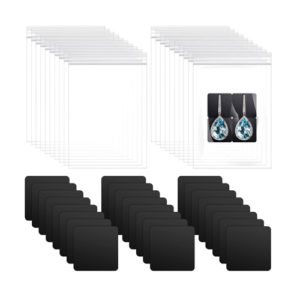
Store Medals Using Zip-Lock Bags with Anti-Tarnish Lining

These bags combine the benefits of airtight sealing and anti-tarnish protection, making them an excellent choice for small collections or individual medals.

This combination makes them a superlative choice, particularly well-suited for accommodating small collections or safeguarding individual medals.

> Get silver storage bags

Other Considerations

Handling medals with clean hands or gloves is vital to avoid transferring oils and contaminants. Periodic cleaning using mild, non-abrasive methods can also help maintain the condition of your medals and collectibles.

Always try to store your medals in a stable environment, away from direct sunlight, extreme temperatures, and humidity fluctuations, as these can accelerate deterioration.

Lastly, keep in mind that, while protective storage is essential for long-term preservation, you may also want to consider display options that allow you to enjoy their collection while keeping the medals safe. For example, display cases

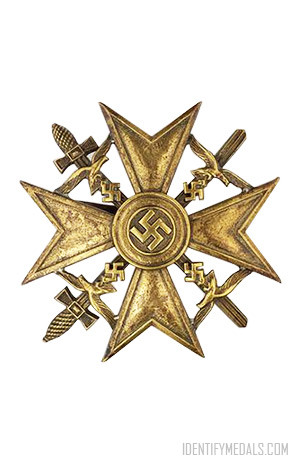
The Spanish Cross (Nazi Germany)

The Spanish Cross was a military decoration awarded by Nazi Germany to members of the German Condor Legion in the Spanish Civil War.

The German Spanish Cross (Spanienkreuz) was a military decoration awarded by Nazi Germany to members of the German Condor Legion who had served in the Spanish Civil War, which took place from 1936 to 1939. The Condor Legion was a unit of the German Luftwaffe (air force) that provided support to Francisco Franco’s Nationalist forces during the conflict.

The German Spanish Cross came in two classes:

  1. Spanish Cross in Bronze (Spanienkreuz in Bronze): This version of the award was given for service in Spain without combat action. It featured a Maltese cross with a central swastika and a laurel wreath. The cross had a bronze finish.

  2. Spanish Cross in Silver with Swords (Spanienkreuz in Silber mit Schwertern): This higher-class version was awarded for actual combat action in Spain. It featured the same design as the bronze cross but had a silver finish, and crossed swords were added behind the swastika to denote combat service.

The Spanish Cross Design

The Spanish Cross had a Maltese cross shape, which is a type of cross characterized by arms of equal length that widen as they extend outward from the center. This shape is often associated with military medals.

In the center of the cross, there was a black swastika, which was a prominent symbol of the Nazi regime.

Surrounding the central swastika, there was a laurel wreath. Laurel wreaths are traditional symbols of victory and honor, and they were often used in military decorations to signify achievement.

In the Spanish Cross in Silver with Swords, two crossed swords were positioned behind the swastika. These crossed swords indicated that the recipient had been awarded the medal for combat service in Spain.

The cross itself had a silver finish, which distinguished it from the lower-ranking Spanish Cross in Bronze, which had a bronze finish.

The 5 Most Expensive Nazi / Third Reich Medals from WW2 Germany

The value of military medals varies depending on rarity, historical significance, and condition. Here are the most sought-after German ones.

Several factors contribute to the varying prices of military medals, including rarity, historical significance, provenance, condition, and also the individuals associated with them. In the case of the Third Reich, the German state between 1933 and 1945 (when Adolf Hitler and his Nazi party controlled the country under a totalitarian regime), military medals awarded during the time can reach very high prices. 

In this article, we will delve into the five most expensive military medals and awards from Nazi Germany / Third Reich Germany and explain why they these WW2 badges and awards tend to sell for much more than your usual medal at auction.

Before We Start: A Note About The Time Period

I believe it’s important to clarify that the purpose of this page is educational only. As the creator of this page, I aim to display all military medals regardless of their origin. However, in this case, the origin is hard to ignore. The Third Reich ended in May 1945, after 12 years, when the Allies defeated Germany and ended World War II in Europe. Racism, Nazi eugenics, antisemitism, and anti-Slavism (as well as genocide, mass-murder, and large-scale forced labor) were central features of the regime and all equally monstrous.

What Makes a Medal Expensive?

As we mentioned, there ar several factors that contribute to the varying prices of military medals, including Nazi military medals or those from other periods and countries. Some key reasons include:

  1. Rarity: Medals that were awarded in limited quantities or that were discontinued after a short time are often rarer and, consequently, more valuable and sought-after by collectors. 

  2. Historical Significance: Medals associated with significant historical events or figures tend to be more valuable. For example, those awarded to high-ranking officers or recipients who played pivotal roles in important battles or campaigns.

  3. Condition: The condition of a medal can also significantly affect its value. Well-preserved, unaltered medals with minimal wear and damage are generally more valuable than those in poor condition.

  4. Provenance: The history or provenance of a medal can influence its value, too. If a medal can be traced back to a famous or historically significant individual, its value may increase. Documentation that authenticates the medal’s history can also add to its value.

  5. Type and Design: Different types of medals were awarded for various achievements and roles within the military. Some medals, like those for bravery or long service, may be more valuable due to their prestige and design.

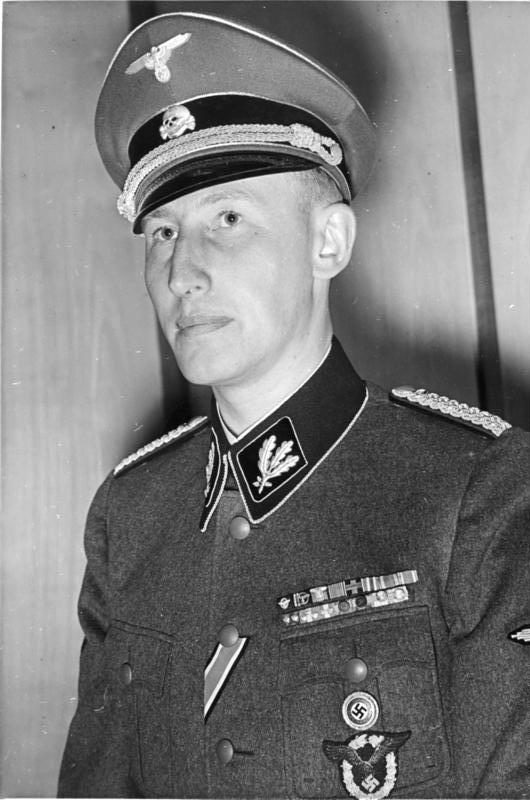
Reinhard Heydrich in 1940.
Reinhard Heydrich in 1940. Image courtesy of German Federal Archives / Wikipedia.

The 5 Most Expensive Nazi Medals

While it’s difficult to provide an exact ranking of the five most expensive Nazi military medals, below you will find five notable examples from this time period (and why they fetch the prices they do).

It’s important to mention, again, that the association with the Nazi regime and the atrocities committed during the war make these medals controversial, and their sale and display are subject to legal restrictions in some countries.

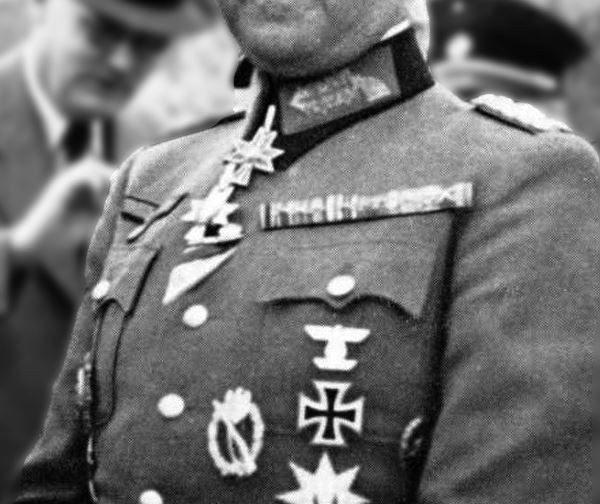
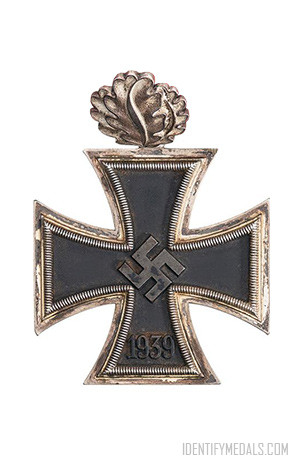
The Knight’s Cross (Ritterkreuz des Eisernen Kreuzes) was one of the highest military decorations awarded by Nazi Germany during World War II. It was instituted by Adolf Hitler on September 1, 1939, shortly after the outbreak of the war, and it remained in use until the end of the conflict in 1945.

The Knight’s Cross was awarded for exceptional acts of bravery, leadership, or achievement on the battlefield. Recipients of the Knight’s Cross were often prominent figures in the German military, including generals, high-ranking officers, and skilled combatants. It was a prestigious award and represented a significant honor within the Nazi regime.

After World War II, the Knight’s Cross and its variations are considered historical artifacts, and they are of interest to military historians and collectors.

Price:
~$10,000 – $75,000

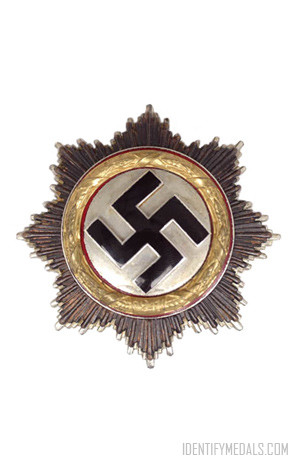
Nazi Germany Medals and Awards: The German Cross
The German Cross during the Third Reich regime (WW2). Obverse.

The German Cross in Gold (Deutsches Kreuz in Gold) was a high-ranking and prestigious military decoration awarded by Nazi Germany during World War II.

It was instituted on September 28, 1941, by Adolf Hitler to recognize outstanding bravery and exceptional military leadership on the battlefield. The German Cross in Gold was primarily awarded to officers and senior non-commissioned officers.

The German Cross in Gold was unique in that it was not a traditional medal but rather a cloth badge with a metallic component. The badge featured a large eight-pointed star with a black swastika in the center, surrounded by a gold wreath. The star was made of a silver-gray metal, and the wreath was made of gold. The reverse of the badge had a round black cloth backing with a central metal plate featuring a maker’s mark and the recipient’s unique identification number.

Price:
~$2,500

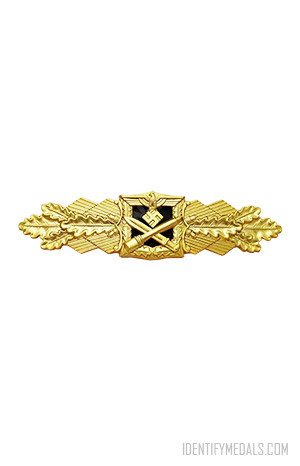
Close Combat Clasp in Gold

The Close Combat Clasp in Gold (Nahkampfspange in Gold) was a military decoration awarded by Nazi Germany during World War II. It was instituted on November 25, 1942, by Adolf Hitler to recognize and honor German military personnel who had demonstrated exceptional bravery and skill in close combat situations.

The Close Combat Clasp was not a traditional medal but rather a distinctive badge worn on the uniform. It was issued in three grades:

  • Bronze: Awarded for 15 days of close combat.
  • Silver: Awarded for 30 days of close combat.
  • Gold: Awarded for 50 days of close combat.

Price:
~$3,000

German Medals WW2: Spanish Cross in Gold with Swords
The Spanish Cross in Gold with Swords - Obverse.

The Spanish Cross in Gold with Swords (Spanienkreuz in Gold mit Schwertern) was a military decoration awarded by Nazi Germany to members of the German Condor Legion who had served in the Spanish Civil War. The Condor Legion was a unit of the German Luftwaffe (air force) that provided support to Francisco Franco’s Nationalist forces during the conflict, which took place from 1936 to 1939.

The Spanish Cross in Gold with Swords was instituted on April 14, 1939, by Adolf Hitler to recognize the contributions of the Condor Legion in Spain. This decoration was specifically awarded for outstanding combat achievements and leadership during the Spanish Civil War.

The design of the Spanish Cross in Gold with Swords featured a Maltese cross with a central swastika, similar in appearance to the German Iron Cross. Two crossed swords were positioned behind the swastika, and a laurel wreath encircled the cross. The Gold version had a gold finish.

Price:
~$3,000

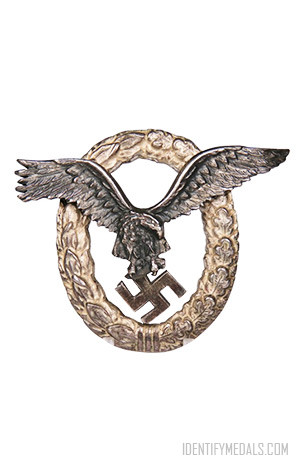
The Luftwaffe Pilot’s Badge, known as the “Flugzeugführerabzeichen,” was a German military decoration awarded to qualified pilots of the German Luftwaffe (air force) during World War II. It was instituted on January 19, 1935, by Reichsmarschall Hermann Göring, the commander-in-chief of the Luftwaffe.

The Luftwaffe Pilot’s Badge was awarded to both officers and enlisted personnel who met specific criteria for flight training, flight hours, and combat missions. The badge featured a stylized eagle in flight clutching a swastika in its talons. Below the eagle was a wreath with oak leaves and acorns, and a half-wing motif was situated beneath the wreath.

The Luftwaffe Pilot’s Badge was highly regarded within the German military, and it symbolized a pilot’s skill and service to the Luftwaffe. The design was typical of German military badges of the time, although the quality of the badge could vary depending on the manufacturer.

Price:
~$5000 – $9,500

Find German Medals Online

Right Now on eBay 
Clicking a link to eBay may result in a referral commission being paid if a purchase is made.
Loading...
]

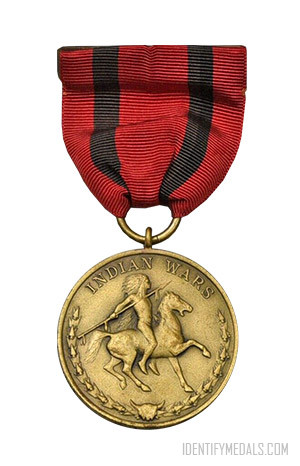
The Indian Wars Campaign Medal

The Indian Campaign Medal was a decoration established in 1907 for participants of the American Indian Wars against the Native Americans.

The Indian Campaign Medal is a distinguished decoration that was established through War Department General Orders 12 in 1907. This medal was bestowed retrospectively upon U.S. Army soldiers who had actively served in the American Indian Wars, engaging in conflicts with Native American tribes from 1865 to 1891. It recognizes the contributions and sacrifices made by those individuals during this significant period of American history.

Originally, the medal featured an all-red ribbon; however, in December 1917, two black stripes were added to avoid confusion with the ribbon of the French Legion of Honor, which bore a similar appearance.

In addition to the medal itself, campaign streamers were authorized for units that participated in Indian Wars as early as 1790. These streamers, bearing the same design as the service ribbon, are displayed as recognition of a unit’s campaign credit. The inscriptions on the streamers that are displayed on the organizational flag correspond to the unit’s lineage and honors. For the Army flag, there are 14 prescribed inscriptions for the campaign streamers, which can be found in AR 840-10 and AR 600-8-22.

The Indian Campaign Medal Design

The bronze medal measures 1 ¼ inches in diameter. The obverse side showcases a mounted Indian facing to the left, adorned with a war bonnet and holding a spear in his right hand. Positioned above the horseman are the words “Indian Wars,” while below, a buffalo skull is flanked by arrowheads arranged in a conventional manner to complete the circle.

On the reverse side, a trophy is depicted, featuring an eagle perched on a cannon supported by crossed flags and rifles. Additional elements of the trophy include an Indian shield, spear, and quiver of arrows, a Cuban machete, and a Sulu kriss. Below the trophy, the words “For Service” are inscribed. Surrounding the design is a circular border with the words “United States Army” in the upper half, while the lower half is adorned with thirteen stars.

The medal is suspended by a ring and is worn with a silk moire ribbon measuring 1 ⅜ inches in length and 1 ⅜ inches in width. The ribbon consists of a red stripe measuring ¼ inch, followed by a black stripe measuring 3/16 inch. Next is a red band measuring ½ inch, again followed by a black stripe measuring 3/16 inch, and finally, a red stripe measuring ¼ inch.

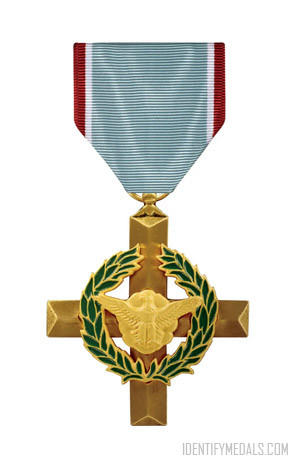
The Air Force Cross

The Air Force Cross is the United States Air Force and the United States Space Force’s second-highest military decoration.

The Air Force Cross is a prestigious military decoration awarded by the United States Air Force. It is presented to members of the U.S. Air Force who have demonstrated extraordinary heroism and valor in combat situations. Established in 1960, the Air Force Cross is the second-highest military award specifically for Air Force personnel, ranking below the U.S. Medal of Honor.

The Air Force Cross recognizes acts of exceptional courage and bravery performed by individuals while involved in military operations against an enemy force. It honors those who have displayed selflessness, dedication, and extraordinary leadership in the face of great danger. The recipients of the Air Force Cross have often risked their lives above and beyond the call of duty to protect their fellow servicemembers and achieve mission objectives.

The Air Force Cross Medal Criteria

The criteria for receiving the Air Force Cross are stringent, requiring evidence of extraordinary heroism that is not quite at the level required for the Medal of Honor. The actions for which the Air Force Cross is awarded must be of great significance and involve personal risk, demonstrating bravery and valor beyond what is expected in the normal course of duty.

Similar to other military awards, the Air Force Cross is usually accompanied by a citation that describes in detail the recipient’s heroic actions. These narratives serve to honor the individual’s extraordinary deeds and provide a lasting tribute to their courage and commitment to duty.

The Air Force Cross Medal Design

The Air Force Cross is composed of a bronze cross featuring an oxidized satin finish. Adorning the center of the cross, on the obverse, is a gold-plated American bald eagle, its wings displayed against a backdrop of clouds inspired by the crest of the Department of the Air Force Seal. The eagle is encompassed by a laurel wreath, delicately finished with green enamel. On the reverse side of the medal, there is no design, allowing for personalization through engraving. Recipients’ rank (abbreviated), first name, middle initial, last name, and branch of service can be engraved in capital letters.

The ribbon associated with the Air Force Cross, serving as both the decoration’s ribbon and service ribbon, displays a vibrant Brittany blue hue. The edges of the ribbon are adorned with a striking red border, while a slim white vertical stripe resides within the red edges. The ribbon closely resembles the one used for the Army’s Distinguished Service Cross, with the exception of a lighter blue center stripe. This subtle variation in color signifies the close connection between these distinguished awards.

Right Now on eBay 
Clicking a link to eBay may result in a referral commission being paid if a purchase is made.
Loading...

What’s the Most Expensive Military Medal?

Medals symbolize honor, bravery, sacrifice, and service to one’s country. Some of them can reach impressively high prices in auctions.

Medals symbolize honor, bravery, sacrifice, and service to one’s country. The value of military medals can vary significantly depending on factors such as rarity, historical significance, provenance, condition, and the individuals associated with them. 

So, what’s the most expensive medal ever sold, and why did it command such a high price in the collector’s market?

Why Are Some Military Medals So Expensive?

There are several essential factors that can contribute to the high prices of specific medals in the collector’s market. The main ones include rarity, historical significance, provenance, condition, and market trends. let’s go through each of these in some more detail. 

Rarity

Medals with scarce or limited numbers in circulation tend to be more valuable. This can be due to a specific time period of issuance, a small number of recipients, or a discontinued design.

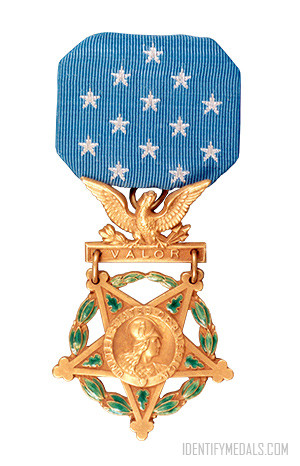
As you might suspect, the rarity of a medal increases its desirability and drives up its price. For example, a medal that is expensive due to its rarity is the Congressional Medal of Honor (the highest military decoration awarded by the United States government and one presented to members of the U.S. Armed Forces who have displayed extraordinary valor and bravery in combat). 

Here are some other examples medals that are scarce or limited in number, making them highly valuable:

  • Victoria Cross (UK): Awarded for exceptional valor in combat, with only 1,358 issued since 1856. Typically ranges from $125,000 to $500,000, depending on provenance.
  • Blue Max (Germany): The Pour le Mérite, awarded to German officers for military excellence during WWI, was limited and discontinued post-1918. Price: Approximately $25,000 to $60,000.
  • Waterloo Medal (UK): Issued in 1816 to veterans of the Battle of Waterloo, a one-time event tied to a specific historical moment. Average Price: Around $2,000 to $6,000.
  • Knight’s Cross with Oak Leaves, Swords, and Diamonds (Germany): Rare WWII decoration with only 27 awarded to military officers. This medal’s price exceeds $125,000.
  • Royal Order of Kalākaua I (Hawaii): Discontinued after Hawaii’s monarchy ended in 1893, with few in existence. Valued at approximately $6,000 to $12,000.

Historical Significance

Medals associated with significant historical events, influential military figures, or pivotal moments in history often carry a higher price tag. The historical context and the story behind the medal can elevate its value, especially if it represents a notable act of heroism, bravery, or a significant military campaign.

For instance, The George Cross, a prestigious British military decoration awarded for acts of exceptional bravery, carries significant historical significance due to its association with remarkable acts of heroism.

Provenance and Association

A medal’s ownership history or provenance can impact its value. Medals associated with well-known military figures, famous battles, or historical events tend to be more sought after.

For example, the Medal of Honor awarded to Sergeant Alvin C. York 🔗, a renowned World War I hero, is an example of a military medal with a high price due to its connection to a distinguished individual and an iconic battle. Other examples include:

  • Lord Nelson’s Chelengk (UK): This diamond-encrusted medal, gifted by the Sultan of Turkey to Admiral Lord Nelson for his victory at the Battle of the Nile in 1798, was sold for £350,000 in 2010. 
  • George Washington’s Badges of Military Merit (USA): A rare surviving example of this early precursor to the Purple Heart, linked to George Washington himself, sold for over $300,000.
  • Victoria Cross of Lieutenant Colonel John Gough (UK): Awarded to Gough for bravery in the Second Boer War, this medal sold for £500,000 in 2012.
  • The Nazi Gold Party Badge (Germany): Once belonging to Adolf Hitler, this badge was sold for $100,000 at auction in 2019.
  • Medal of Honor of Captain Charles Lindbergh (USA): Lindbergh’s Medal of Honor for his transatlantic flight was sold for over $500,000.
  • The Order of the White Eagle (Poland): A set belonging to Tsar Nicholas II of Russia, awarded during his reign, sold for over $200,000.

Condition and Authenticity

The condition of a medal plays a role in determining its value, too. Well-preserved medals with minimal wear or damage are generally more valuable. Additionally, proper documentation and provenance are crucial to its value. An example is the Victoria Cross which once belonged to a famous military leader and commands a premium price in the collector’s market due to its exceptional ownership history. Other examples:

  • Victoria Cross of Captain Noel Chavasse: Captain Noel Chavasse 🔗, a British Army medical officer in World War I, is one of only three people to receive a Victoria Cross and Bar, meaning he was awarded the medal twice for acts of extraordinary bravery. His medals were well-preserved, displayed with official documentation and provenance tied to his heroic actions during the Battle of Passchendaele in 1917. In 2009, Chavasse’s Victoria Cross and accompanying medals sold at auction for $2 million.
  • Medal of Honor of Captain Charles Lindbergh: Charles Lindbergh, the famed aviator who completed the first solo transatlantic flight in 1927, was awarded the Medal of Honor for his aviation achievement. While this medal is traditionally a military decoration, Lindbergh’s receipt of it as a civilian is unique and historically significant. The medal, along with Lindbergh’s flight memorabilia, was meticulously preserved and accompanied by extensive documentation, including official citations and personal items linked to the achievement. In 1999, his Medal of Honor and related items sold for $550,000 at auction.

Demand and Market Forces

The laws of supply and demand affect the prices of medals as well. High demand for a specific one, coupled with limited availability, can escalate its price. The collector’s market can be, for example, influenced by the interests of individuals, museums, and institutions. The Distinguished Flying Cross, in high demand among collectors due to a growing fascination with aviation history, has seen its price rise in response to current market trends.

The Most Expensive Medal Ever Sold

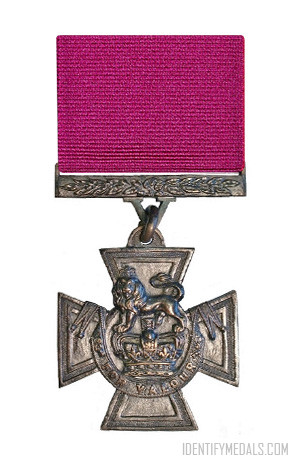
The most expensive military medal ever sold at auction is the Victoria Cross (VC). The Victoria Cross is a prestigious British military decoration awarded for acts of valor and courage in the face of the enemy. It was first introduced in 1856 and remains one of the highest honors bestowed upon members of the British and Commonwealth armed forces.

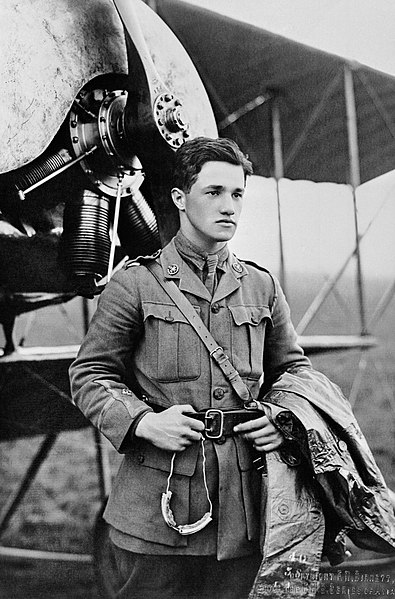
While the Victoria Cross is priceless in terms of its historical and symbolic value, the highest price ever paid for a Victoria Cross at auction was £1.5 million (approximately $2.02 million USD) in 2017. The medal, awarded to First World War pilot Captain Albert Ball 🔗, was sold by his family to a private collector.

It is worth noting that the value of military medals can vary significantly depending on factors such as rarity, historical significance, provenance, condition, and the individuals associated with them. Medals associated with well-known military figures or extraordinary acts of bravery tend to command higher prices in the collector’s market.

Ball with an obsolete Caudron G.3, widely used as a trainer in 1915–16
Ball with an obsolete Caudron G.3, widely used as a trainer in 1915–16.

What's The Most Expensive Medal on eBay Today?

Right Now on eBay 
Clicking a link to eBay may result in a referral commission being paid if a purchase is made.
Loading...

The Best Podcasts About WW2 and Where to Listen

Are you looking for unique WW2 history podcasts featuring historians, writers, and military experts? Here are the top ones.

Podcasts are an excellent way to bring history to life. Through expert storytelling, interviews, and immersive sound design, podcasts can transport us to the events and experiences of the past. If you’re interested in learning more about the Second World War, there are plenty of WW2 podcasts you can listen to online. Here are my top picks.

Podcasts about World War II often feature interviews with veterans, historians, scholars, and eyewitnesses who offer firsthand accounts, personal stories, and unique perspectives. This multiplicity of voices helps to paint a more comprehensive picture of the war, considering the different experiences, cultures, and nationalities involved.

Are There Good Podcasts About WW2?

The short answer is: Yes! There are many excellent podcasts that revolve around the events of the Second World War, including military strategies, key battles, significant events, and the social and cultural impact of the conflict. 

You can listen to podcasts while commuting, doing household chores, or during your free time, making it easier to incorporate historical learning into your daily routine. With a wide range of podcasts available, covering different aspects and perspectives of World War II, you can choose topics that align with your interests and preferences.

What’s more, many podcasts have dedicated communities of listeners who engage in discussions, share additional resources, and exchange ideas related to World War II. Participating in these communities provides an opportunity to connect with like-minded individuals who share a passion for history, further enhancing your experience.

Top World War II Podcasts

Here is my list of highly regarded podcasts about World War II (I’ve based this ‘ranking’, although there’s no particular order, on their popularity and positive reception among audiences). 

"History of WWII Podcast" by Ray Harris Jr.

The History of WWII Podcast, hosted and narrated by Ray Harris Jr., is the culmination of Ray’s passion for the events and individuals of World War II, which sparked when he first discovered them. This bi-weekly podcast covers the entire history of this conflict.

With a degree in history from James Madison University, Ray’s deep knowledge and unwavering fascination with the war led him to embark on this podcasting journey. Driven by his longing for a comprehensive WWII podcast, Ray decided to take matters into his own hands, bringing his years of anticipation to fruition and offering listeners an engaging and long-awaited exploration of the war.

Where to Listen: https://worldwariipodcast.net/

History of WWII Podcast

"Hardcore History: Blueprint for Armageddon" by Dan Carlin

“Hardcore History: Blueprint for Armageddon” is an extraordinary podcast series by the renowned storyteller and historian Dan Carlin. With a distinct and captivating narrative style, Carlin takes listeners on an epic journey through the tumultuous years of World War I in a way that is both informative and emotionally gripping.

What sets “Hardcore History” apart is its lengthy and in-depth episodes, often spanning several hours. This WW2 podcast also stands out for its meticulous research, attention to detail, and immersive storytelling. Carlin dives deep into the complex causes and consequences of the Great War, exploring the political tensions, military strategies, and human experiences that defined this global conflict.

Where to Listen: https://open.spotify.com/playlist/4xxH6u4O4DN4x7bsNnIMFA

Hardcore History: Blueprint for Armageddon

"The WW2 Podcast" by The History Network

This captivating series explores the military history, social dynamics, epic battles, strategic campaigns, formidable weaponry including tanks and guns, the intricate politics, and the influential figures who shaped the course of the war. 

With meticulous research and engaging storytelling, this podcast presents a holistic view of World War II, allowing you to unravel the interconnectedness of events and understand the multifaceted nature of the war. Whether you are a history enthusiast, a military buff, or simply curious about the human stories behind the headlines, this podcast offers a captivating exploration of one of the most significant periods in our shared history.

Where to Listen: https://ww2podcast.com/category/ww2-podcast/

The WW2 Podcast

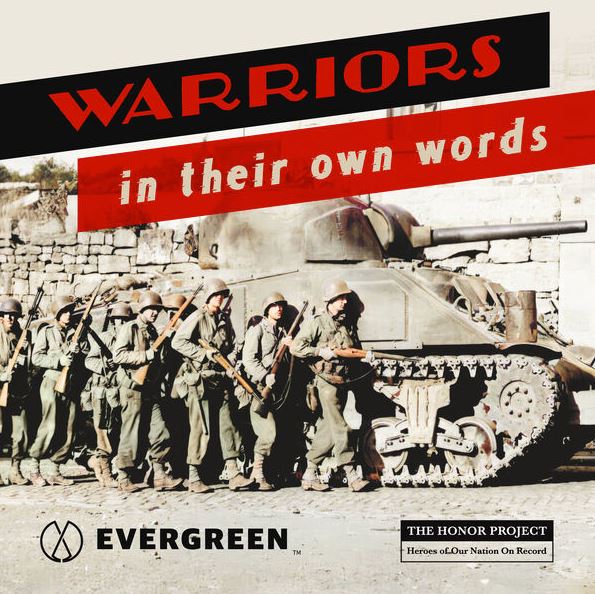
"Warriors In Their Own Words - First Person War Stories"

Embark on a compelling journey through the annals of history as brave warriors recount their extraordinary tales of war. In this podcast, the remarkable stories unfold through the very voices of those who courageously fought for their proud nation. Immerse yourself in the firsthand accounts that capture the essence of their experiences and the indomitable spirit that propelled them forward.

The initial episodes of this podcast unveil riveting narratives from the monumental chapters of World War II, transporting listeners back in time to witness the triumphs, struggles, and sacrifices of those who lived through this defining era. But the journey doesn’t end there. Beyond World War II, the podcast delves into the Vietnam War and other dramatic conflicts, unearthing untold stories that shed light on the complexities and realities of warfare.

Where to Listen: https://evergreenpodcasts.com/warriors-in-their-own-words

Warriors in their Own Words - First Person War Stories

Peace In Their Time

“Peace In Their Time” is a captivating history podcast that aims to unravel the intricate causes behind World War II, shedding light on how it evolved into the most monumental conflict ever witnessed by humanity. Prepare for immersive explorations into the global and local events that unfolded throughout the 1920s and 1930s, ultimately culminating in the intense period of conflict that shaped the world.

Delve deep into the historical context as this podcast takes you on a fascinating journey, examining the factors and forces that contributed to the eruption of war. From geopolitical dynamics to socio-economic pressures, each episode offers a meticulous analysis of the complex web of events that set the stage for the war’s escalation.

Where to Listen: https://peaceintheirtime.podbean.com/

Peace In Their Time

"World War II Movie Night" by J. Byron

Join host J. Byron on a captivating journey through the world of cinema as he explores the extensive collection of movies dedicated to World War II, the most significant conflict in human history. In the enthralling podcast series, “World War II Movie Night,” discover how the portrayal of this monumental event on the silver screen can deepen our understanding of the war and its impact.

Through engaging discussions and thought-provoking analysis, J. Byron invites listeners to ponder the question: What can we truly learn about World War II from the lens of film? Can movies help us make sense of the vast complexities of this historic event and provide a more accessible entry point to its vast narrative? These inquiries set the stage for a stimulating exploration of the intersection between entertainment and education.

Where to Listen: https://worldwartwomovienight.libsyn.com/website

World War II Movie Night

"The Silver King's War" by Michael G. Sievers

Inspired by true events, this collection includes four poignant plays: “The Silver King,” “Marauder Men,” “Serviceman,” and “Who Is Della.” These powerful dramas revolve around the experiences of a young man named Stanley Silverfield, who bravely enlists in the United States Army Air Corps as an aviator, driven by his deep desire to serve his country.

Throughout the war, Stanley maintained a heartfelt correspondence with his family, chronicling his journey and sharing his innermost thoughts. These war letters, collectively known as “Dearest Ones,” provide a profound exploration of his experiences and serve as the foundation for the four compelling plays.

Where to Listen: https://thesilverkingswar.buzzsprout.com/

The Silver King's War

The Best Books About The Battle of Stalingrad

If you want to learn more about the Battle of Stalingrad during WW2, here are the most highly regarded and influential books.

The Battle of Stalingrad remains a significant symbol of Soviet resistance and a testament to the human cost of war. It is also remembered as a turning point in World War II and a pivotal moment in the history of the 20th century. In this article, I will share of highest-regarded books about the Battle of Stalingrad and why you should consider reading them.

The Battle of Stalingrad resulted in immense human losses and widespread devastation. Estimates suggest that the combined casualties, including military personnel and civilians, exceeded two million. However, the Soviet Union emerged victorious, demonstrating its resilience and determination to repel the German invasion. Let’s explore this major military battle in some detail though the top books that cover the topic, shall we?

What's the Battle of Stalingrad?

The Battle of Stalingrad was a major military confrontation during World War II that took place from August 23, 1942, to February 2, 1943, between Nazi Germany and the Soviet Union. It was a critical turning point in the war and is widely considered one of the deadliest and most decisive battles in history.

The battle was fought over the control of the city of Stalingrad (now Volgograd) located on the western bank of the Volga River. Adolf Hitler 🔗 sought to capture the city not only for its strategic location but also for its symbolic value, as it was named after Soviet leader Joseph Stalin 🔗. The Soviet Union, however, was determined to defend the city at all costs.

The fighting in Stalingrad soon turned into a brutal and protracted urban warfare, with both sides engaging in intense street-to-street combat. The Soviet forces utilized a strategy of encirclement, gradually surrounding the German troops and cutting off their supply lines. The Germans found themselves trapped in a desperate situation, facing harsh winter conditions, dwindling supplies, and relentless Soviet attacks.

The battle of Stalingrad had profound strategic implications, as it not only halted the German advance into the Soviet Union but also boosted Soviet morale and marked the beginning of a series of Soviet offensives that would ultimately lead to the defeat of Nazi Germany.

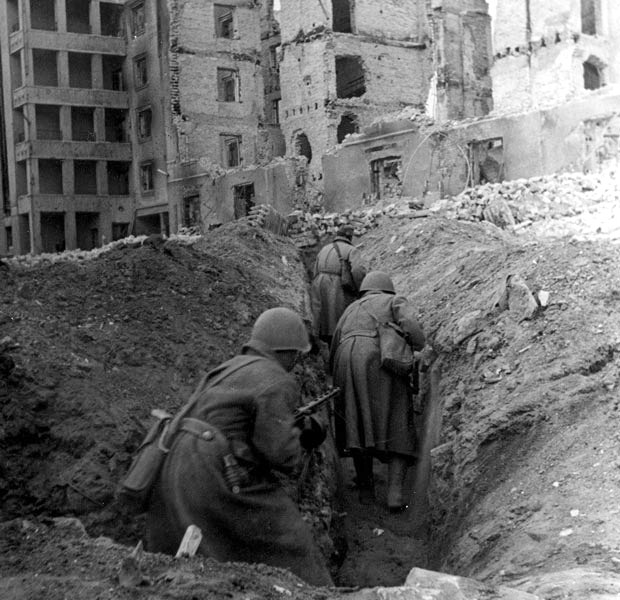
Soviet soldiers running through trenches in the ruins of Stalingrad.

The Best Books About The Battle of Stalingrad

If you’re looking for various perspectives about this essential battle of World War II, it can be a good idea to take a look at some of these books. By engaging with them, you will be able to gain a deeper appreciation for the sacrifices, the heroism, and the human drama that unfolded during the Battle of Stalingrad. 

#1

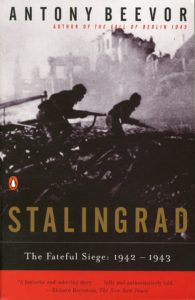
Stalingrad: The Fateful Siege 1942-1943 by Antony Beevor

4.3 on Goodreads
Rated 4.3 out of 5

This book provides a comprehensive and gripping account of the Battle of Stalingrad, capturing the strategic maneuvers, personal experiences, and the sheer brutality of the conflict.

Beevor’s meticulous research and vivid storytelling transport readers to the harrowing and brutal realities of the Battle of Stalingrad. With a keen eye for detail, he presents a comprehensive narrative that encompasses the strategic maneuvers, personal experiences, and the monumental human cost of the conflict.

The author weaves together the perspectives of soldiers, commanders, and civilians, providing a multifaceted view of the battle. His writing captures the sheer scale of the struggle, from the initial German advances to the Soviet counteroffensive that encircled and ultimately defeated the German Sixth Army. 

Stalingrad: The Fateful Siege: 1942-1943
#2

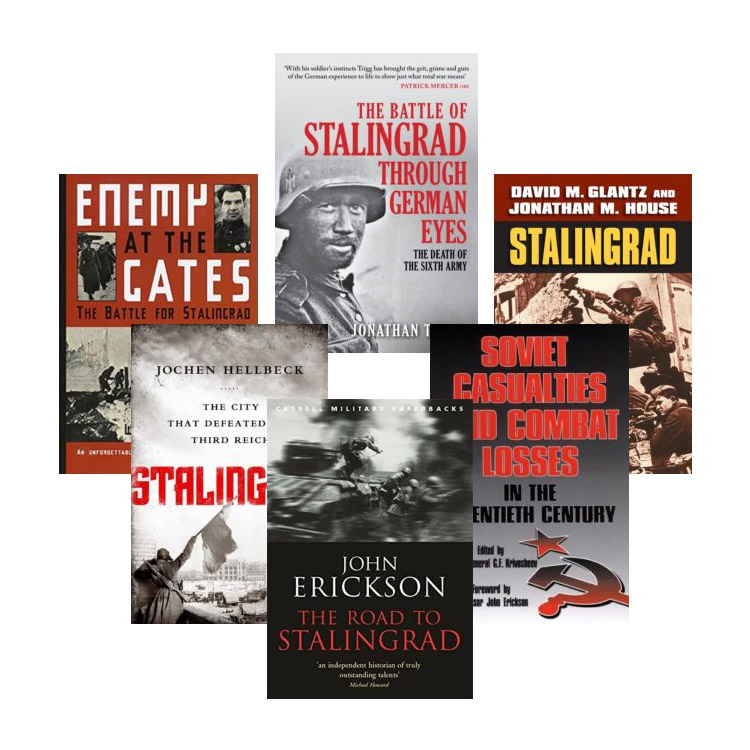
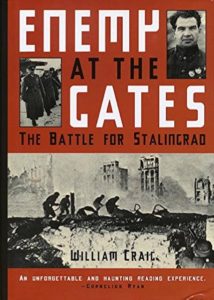
Enemy at the Gates: The Battle for Stalingrad by William Craig

4.2 on Goodreads
Rated 4.2 out of 5

This book offers a detailed narrative of the battle, drawing from firsthand accounts and interviews to provide a vivid portrayal of the intense fighting.

What sets “Enemy at the Gates” apart is its ability to immerse readers in the chaos and horror of the battle. Craig’s narrative style keeps readers on the edge of their seats, transporting them to the front lines and conveying the sheer terror and sacrifice endured by those involved. The book does not shy away from the grim realities of war, providing a visceral and unflinching look at the ravages of combat.

In addition to its captivating storytelling, “Enemy at the Gates” offers valuable insights into the strategies and tactics employed by both the German and Soviet forces. Craig provides a balanced view of the battle, drawing from a wide range of sources to present a comprehensive and nuanced analysis of the conflict.

#3

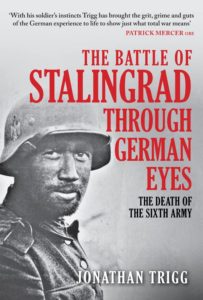
The Battle of Stalingrad Through German Eyes: The Death of the Sixth Army

4.5 on Goodreads
Rated 4.5 out of 5

The Battle of Stalingrad Through German Eyes: The Death of the Sixth Army offers a unique and insightful perspective on the Battle of Stalingrad. This book presents firsthand accounts and personal testimonies from German soldiers, providing a glimpse into their experiences, emotions, and the ultimate defeat of the Sixth Army.

With a focus on the German perspective, the book offers valuable insights into the challenges, hardships, and disillusionment faced by the German forces during this critical battle. It serves as a valuable addition to the extensive literature on the Battle of Stalingrad, shedding light on the human side of the conflict from the German standpoint.

#4

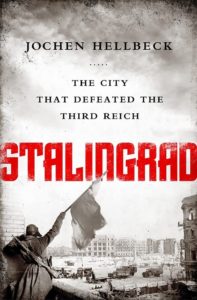
Stalingrad: The City that Defeated the Third Reich by Jochen Hellbeck

3.9 on Goodreads
Rated 3.9 out of 5

Hellbeck examines the battle from the perspective of ordinary Soviet citizens, drawing on diaries, letters, and interviews to portray the human experiences and resilience during the siege.

This book is a compelling and thought-provoking book that explores the human dimension of the Battle of Stalingrad. Hellbeck delves into the experiences of the city’s residents, soldiers, and political operatives, offering a unique perspective on their contributions to the Soviet victory. By delving into personal diaries, letters, and interviews, Hellbeck paints a vivid picture of the collective resistance and determination displayed by the people of Stalingrad. 

#5

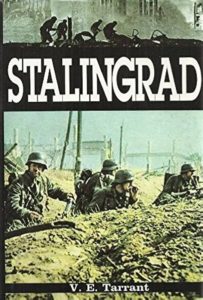
Stalingrad: Anatomy of an Agony by V.E. Tarrant

4.1 on Goodreads
Rated 4.1 out of 5

This book offers a detailed analysis of the battle, including the military strategies, leadership decisions, and the psychological aspects that shaped the outcome.

In this book, the author delves into the strategic, operational, and human aspects of the conflict, providing a thorough analysis of the factors that shaped the battle’s outcome. With meticulous research and insightful narrative, the book dissects the key events, military tactics, and the experiences of soldiers on both sides. It offers a balanced perspective, shedding light on the immense suffering and sacrifices endured by all those involved. 

#6

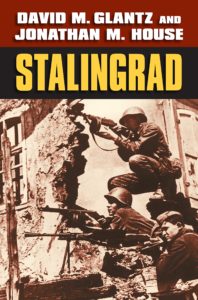
The Battle of Stalingrad: The Definitive Documentary History by David M. Glantz and Jonathan House

4 on Goodreads
Rated 4 out of 5

This meticulously researched book provides a comprehensive and objective analysis of the battle, drawing from archival sources and Soviet records.

This documentary history presents an extensive collection of primary sources, including official documents, letters, diaries, and firsthand accounts from participants on both sides of the conflict. Through these authentic sources, readers gain unparalleled insights into the strategic decisions, tactical engagements, and the human experiences that shaped the battle. The meticulous curation of these documents provides a comprehensive and objective perspective on the events leading up to the battle, the course of the conflict, and its aftermath. 

Stalingrad (Modern War Studies)
#7

To the Gates of Stalingrad: Soviet-German Combat Operations, April-August 1942 by David M. Glantz

4.7 on Goodreads
Rated 4.7 out of 5

This book focuses on the military operations leading up to the Battle of Stalingrad, providing valuable insights into the Soviet and German strategies.

Focusing on the military operations from April to August 1942, Glantz delves into the strategic maneuvers, command decisions, and the evolving dynamics between the Soviet and German forces. With a wealth of archival sources and detailed analysis, the book offers a comprehensive understanding of the military campaigns and the factors that shaped the battle.

Glantz’s expertise in Soviet military history shines through as he provides a balanced and thorough examination of the Soviet-German combat operations during this crucial phase.

To the Gates of Stalingrad: Soviet-German Combat Operations
#8

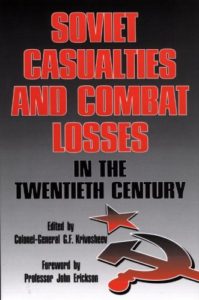
Soviet Casualties and Combat Losses in the Twentieth Century by G.F. Krivosheev

4.1 on Goodreads
Rated 4.1 out of 5

While not solely focused on Stalingrad, this book provides statistical data and analysis of the losses suffered by the Soviet Union during World War II, including the Battle of Stalingrad.

Krivosheev’s work draws from extensive archival sources, official records, and statistical analysis to provide a comprehensive and accurate account of the Soviet Union’s military losses.
This book serves as a valuable resource for researchers, historians, and anyone seeking a deeper understanding of the human cost of war and the sacrifices made by the Soviet military during the turbulent twentieth century.

#9

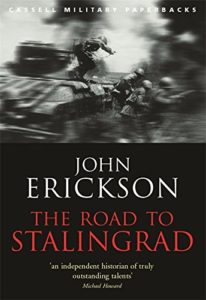
The Road to Stalingrad by John Erickson

4.4 on Goodreads
Rated 4.4 out of 5

This book offers a comprehensive analysis of the political, military, and social factors that led to the Battle of Stalingrad, providing a broader context for understanding the conflict.

Erickson’s meticulous research and scholarly approach provide readers with a deep understanding of the complex political, strategic, and military developments that shaped the path to Stalingrad. The book not only focuses on the military aspects but also delves into the broader context, including the political dynamics, social factors, and the experiences of both the Soviet and German forces. Erickson’s writing is engaging and accessible, making this historical narrative a captivating read.

#10

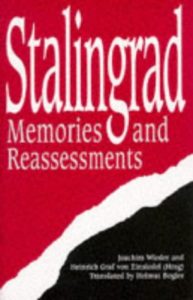
Stalingrad: Memories and Reassessments edited by Joachim Wieder and Günther W. Gellermann

3.8 on Goodreads
Rated 3.8 out of 5

This compilation of essays and personal accounts offers diverse perspectives on the battle, providing a nuanced understanding of its impact on individuals and nations.
Through a collection of firsthand testimonies from veterans, civilians, and historians, this book offers a diverse range of perspectives that shed light on the multifaceted aspects of the battle. The editors have skillfully curated these accounts to provide a nuanced and comprehensive understanding of the human experiences, emotional impact, and historical significance of Stalingrad. The book invites readers to delve into the memories and reflections of those who lived through this monumental battle, fostering a deeper appreciation for the complexities and lasting effects of the conflict.
Conclusion: Reading About The Battle of Stalingrad

Whether it’s delving into the military strategies, understanding the personal experiences of soldiers and civilians, or exploring the wider impact of the battle, these books will provide you with a multifaceted and comprehensive understanding of Stalingrad.

From Antony Beevor’s gripping and meticulously researched account to personal memoirs and eyewitness testimonies, these books illuminate the complexities of the conflict, the experiences of those involved, and the broader historical context surrounding the battle. 

Top Must-Read Books About World War II (WW2)

If you want to learn more about the Second World War, here are the most highly regarded and influential books for understanding the conflict.

World War II stands as one of the most significant and transformative periods in human history. if you want to understand the complexities, sacrifices, and enduring legacies of this monumental conflict, a great gateway to do so is through books. There are countless works of literature dedicated to World War II, so let’s embark on a journey to delve into the depths of this pivotal moment.

From personal narratives to historical accounts, these powerful WW2 books will shed light on the triumphs, tragedies, and human resilience that defined the Second World War. So, let’s navigate through a few odf the most captivating narratives of then and now, uncovering the profound stories that capture the essence of WW2 and its impact on our world.

Why is it Important to Learn (and Read) About WW2?

World War II was a deeply defining moment in global history. On the one hand, studying it can allow us to reflect on the devastating consequences of intolerance, hatred, and the dangers of unchecked nationalism. WW2 is, after all, a stark reminder of the importance of promoting peace, tolerance, and understanding among nations and peoples.

The development of this conflict also saw immense sacrifices by millions of individuals, including soldiers, civilians, and resistance fighters. So, learning about the war helps us appreciate the bravery, resilience, and selflessness of those who fought and suffered during the Second World War, ensuring that their sacrifices are remembered and honored.

The consequences of WW2 are far-reaching and continue to shape our world today. Plus, by examining the causes and consequences of the war, we can identify patterns and factors that contribute to conflicts and work towards preventing similar catastrophic events in the future.

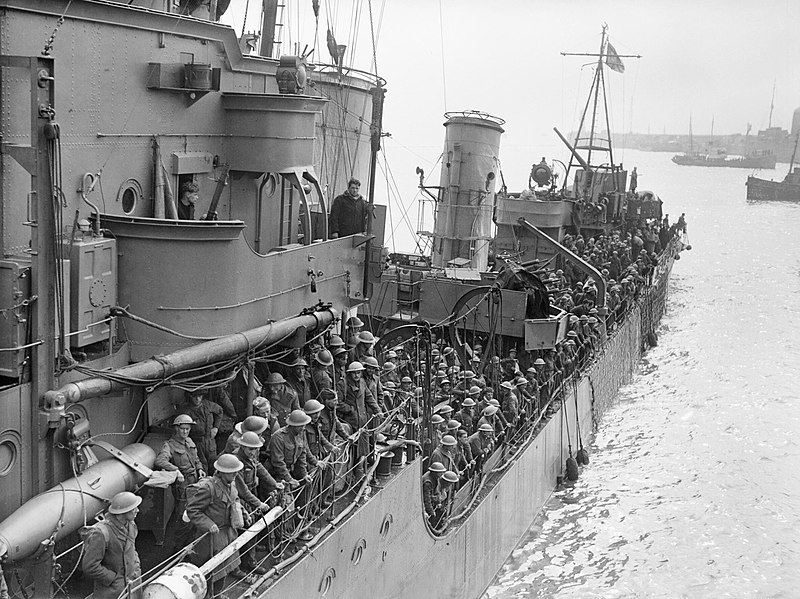
Troops evacuated from Dunkirk on a destroyer about to berth at Dover, 31 May 1940.

The Best Books About World War II

World War II has left an indelible mark on literature, art, and popular culture. As a consequence, you can find many perspectives and approaches to understanding this significant period.

In the list below, you will find books in the following categories: Historical Accounts, Personal Memoirs, and Biographies.

Although there are other ways to classify WW2 books (for example, by focusing on Holocaust literature, fictional WW2 literature, resistance and espionage, military strategy, or home front and civilian experience, we’ll cover these in more detail in upcoming articles. 

WW2 Books: Top 5 Historical Accounts

These books provide in-depth analyses of the war’s causes, significant events, and outcomes and offer a comprehensive overview of the military strategies, political developments, and social implications of the conflict.

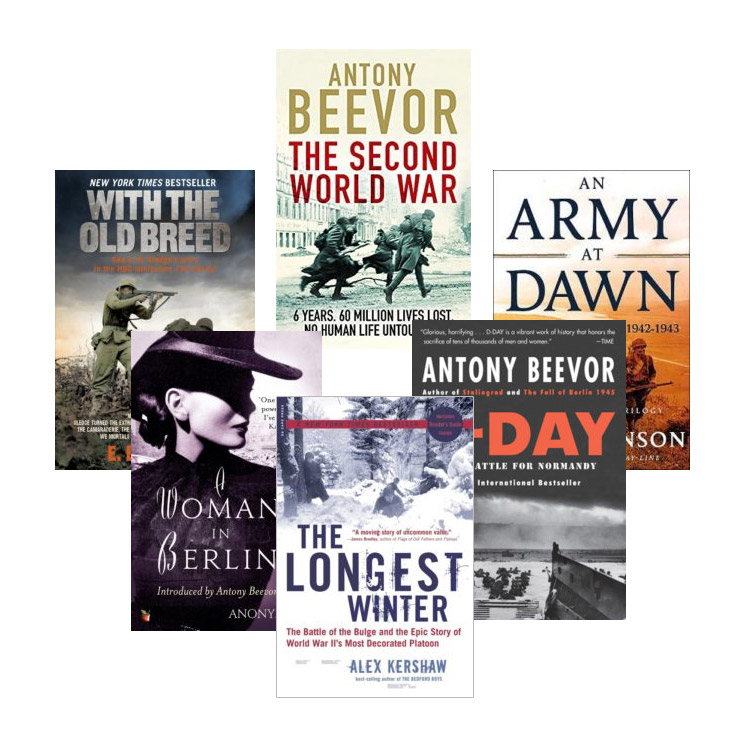
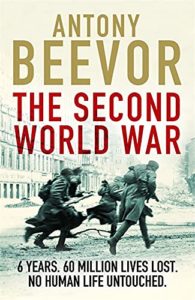
The Second World War by Anthony Beevor

4.4 on Goodreads
Rated 4.4 out of 5

This comprehensive and meticulously researched book offers a panoramic view of the war, covering both the European and Pacific theaters. Beevor combines strategic analysis with personal stories, presenting a vivid and compelling narrative of the conflict’s major events, military campaigns, and the experiences of soldiers and civilians.

This book is an absolute must-read for anyone seeking a comprehensive understanding of World War II.

"The Second World War" by Antony Beevor

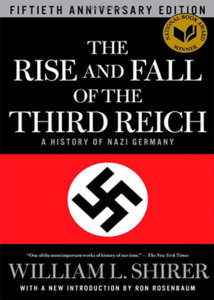
The Rise and Fall of the Third Reich by William L. Shire

4.6 on Goodreads
Rated 4.6 out of 5

Considered a seminal work, this authoritative account by journalist William L. Shirer chronicles the rise of Adolf Hitler and the Nazi regime, as well as the subsequent events leading to their downfall. Shirer’s firsthand experiences as a correspondent in Nazi Germany provide unique insights into the political, social, and ideological forces that shaped the war.

This book is an indispensable resource for anyone interested in understanding the darkest chapters of human history.

The Rise and Fall of the Third Reich: A History of Nazi Germany

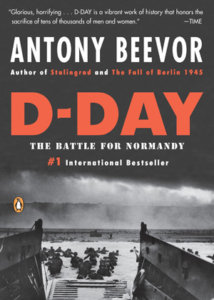
D-Day: The Battle for Normandy by Antony Beevor

4.2 on Goodreads
Rated 4.2 out of 5

Focusing on the pivotal D-Day invasion of June 6, 1944, Beevor meticulously examines the planning, execution, and aftermath of this monumental operation. Drawing from a wide range of sources and interviews, the book vividly portrays the intense struggles faced by the Allied forces as they sought to establish a foothold in Nazi-occupied Europe.

This book is a must-read for anyone seeking a deeper understanding of the monumental events of D-Day and their significance in shaping the outcome of the war.

D-Day: The Battle for Normandy

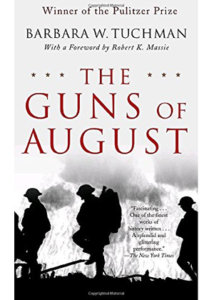
The Guns of August by Barbara W. Tuchman

4.2 on Goodreads
Rated 4.2 out of 5

While primarily focused on the events leading up to World War I, this Pulitzer Prize-winning book also provides valuable insights into the political and diplomatic landscape that set the stage for World War II. Tuchman meticulously examines the military strategies, key decisions, and political dynamics of the war’s early stages, offering a gripping narrative that sheds light on the complex origins of the conflict.

“The Guns of August” is an absolute must-read for anyone interested in understanding the origins and early stages of World War I – and its relaiton to WW2.

The Guns of August

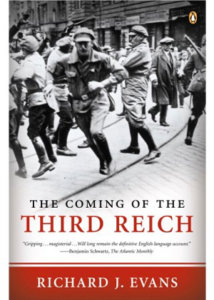
The Third Reich Trilogy by Richard J. Evans

4.3 on Goodreads
Rated 4.3 out of 5

This comprehensive trilogy includes three books: “The Coming of the Third Reich,” “The Third Reich in Power,” and “The Third Reich at War.” Spanning the entire history of the Nazi regime, Evans provides a detailed and authoritative account of Hitler’s rise to power, the consolidation of Nazi control, and the progression of the war. The trilogy offers a comprehensive and well-researched exploration of the political, social, and military aspects of the Third Reich.

Evans’ writing is accessible yet scholarly, making this trilogy an essential resource for those seeking a comprehensive study of the Third Reich. Evans’s work is a remarkable achievement that sheds light on one of the darkest periods in human history.

The Coming of the Third Reich

WW2 Books: Top 5 Personal Memoirs

Personal accounts, diaries, and memoirs offer firsthand perspectives on the experiences of individuals who lived through World War II. These intimate narratives provide insights into the daily lives, struggles, and triumphs of soldiers, civilians, resistance fighters, and Holocaust survivors.

These personal memoirs offer intimate and personal narratives, allowing readers to connect with the individual experiences, emotions, and challenges faced by ordinary people during World War II. They also provide a humanizing and profound perspective on the impact of the war on individuals and communities.

The Diary of a Young Girl by Anne Frank

4.8 on Goodreads
Rated 4.8 out of 5

Anne Frank’s poignant diary, written while she and her family hid from the Nazis in Amsterdam, captures the personal struggles, hopes, and fears of a young Jewish girl during the war. It serves as a powerful testament to the human spirit and a stark reminder of the atrocities committed during the Holocaust.

The Diary of a Young Girl: The Definitive Edition

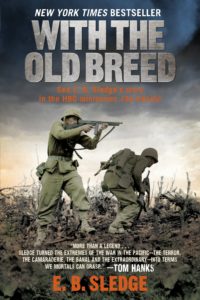
With the Old Breed: At Peleliu and Okinawa by E.B. Sledge

4.5 on Goodreads
Rated 4.5 out of 5

This memoir provides a raw and gripping firsthand account of the Pacific War. Sledge, a Marine, vividly describes the brutal combat experiences, camaraderie, and the psychological toll of the battles at Peleliu and Okinawa, offering a deeply personal perspective on the war in the Pacific.

With the Old Breed WW2

The Hiding Place by Corrie Ten Boom

4.8 on Goodreads
Rated 4.8 out of 5

Corrie ten Boom, a Dutch Christian, recounts her family’s experiences as they sheltered Jews and resisted the Nazis in occupied Holland. This memoir chronicles their courageous efforts, their arrest, and their subsequent imprisonment in concentration camps, showcasing the resilience and power of faith during times of adversity.

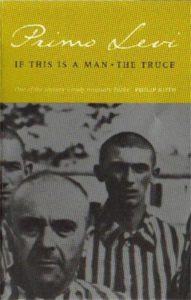
If This Is a Man by Primo Levi

4.8 on Goodreads
Rated 4.8 out of 5

Primo Levi, an Italian Jewish chemist, shares his harrowing experiences as a Holocaust survivor in this memoir. Levi’s powerful account delves into the dehumanizing conditions of Auschwitz and the psychological impact of the Holocaust, offering profound reflections on human nature and the capacity for both cruelty and resilience.

A Woman in Berlin: Eight Weeks in the Conquered City by Anonymous

4.8 on Goodreads
Rated 4.8 out of 5

This anonymous memoir provides a unique perspective on World War II from a German woman living in Berlin during the final weeks of the war. The author chronicles the challenges, hardships, and struggles for survival in a city ravaged by war and occupied by Soviet forces, offering a personal and often overlooked viewpoint.

A Woman in Berlin: Eight Weeks in the Conquered City

WW2 Books: Top 5 Biographies

Biographies focus on the lives and contributions of key figures during World War II, such as political leaders, military commanders, resistance leaders, and ordinary individuals who played significant roles. These books provide insights into their motivations, actions, and the impact they had on the course of the war.

The Longest Winter: The Battle of the Bulge and the Epic Story of WWII's Most Decorated Platoon by Alex Kershaw

4.2 on Goodreads
Rated 4.2 out of 5

This gripping biography follows the story of a group of American soldiers who fought in the Battle of the Bulge. Kershaw provides a vivid and personal account of their experiences, hardships, and remarkable bravery in one of the war’s most significant battles.

The Longest Winter

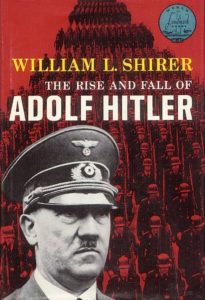
Rise and Fall of Adolf Hitler by William L. Shirer

4.2 on Goodreads
Rated 4.2 out of 5

In this biography, Shirer delves into the life and career of Adolf Hitler, tracing his rise to power, the establishment of the Nazi regime, and the subsequent events leading to its downfall. Shirer’s comprehensive research and firsthand experiences as a journalist in Nazi Germany provide valuable insights into Hitler’s personality, motivations, and impact on World War II.

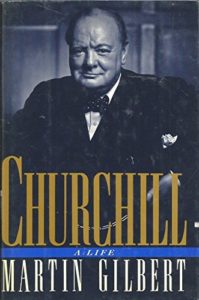
Churchill: A Life by Martin Gilbert

4.1 on Goodreads
Rated 4.1 out of 5

Martin Gilbert’s biography offers a comprehensive exploration of the life and leadership of Winston Churchill, one of the central figures of World War II. This meticulously researched work delves into Churchill’s political career, his wartime decisions, and his influential role in shaping the outcome of the conflict.

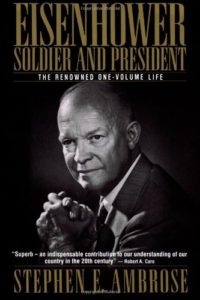
Eisenhower: Soldier and President by Stephen E. Ambrose

4 on Goodreads
Rated 4 out of 5

This biography delves into the life of General Dwight D. Eisenhower, who played a pivotal role as the Supreme Commander of the Allied Expeditionary Force during World War II and later served as the President of the United States. Ambrose’s book explores Eisenhower’s military leadership, strategic decisions, and his transition to politics.

Eisenhower: Soldier and President (The Renowned One-Volume Life)

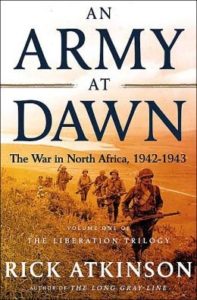
An Army at Dawn: The War in North Africa, 1942-1943 by Rick Atkinson

5 on Amazon
Rated 5 out of 5

While not a traditional biography, this Pulitzer Prize-winning book provides a detailed and engrossing account of the Allied campaign in North Africa during World War II. Atkinson weaves together the stories of various military leaders, including General Dwight D. Eisenhower, as they strategize and lead their forces in the challenging desert terrain. The book offers a comprehensive examination of the personalities, decisions, and challenges faced by these leaders in a critical theater of the war.

Conclusion: Reading About World War II

From gripping historical accounts and personal memoirs to illuminating biographies, the books I’ve selected provide invaluable insights into the causes, events, and lasting impacts of the Second World War. 

Whether you’re seeking a gripping narrative, a scholarly analysis, or a personal connection to the people and events of WW2, these books will offer an immersive and enlightening journey. So, engage with the triumphs and tragedies, the heroes and villains, and the profound human experiences that defined this transformative period.