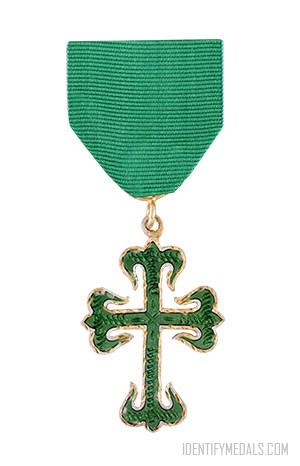
Imperial Order of St. Benedict of Avis

The Imperial Order of St. Benedict of Avis is a Brazilian military order established in 1843 and awarded in three grades.

  • Time Period: Pre-WW1
  • Institution: 9 September 1843
  • Country: Brazil

The Imperial Order of St. Benedict of Avis (or Imperial Ordem de São Bento de Avis in Portuguese) is a military order established on 9 September 1843 and awarded in three grades. 

It’s believed this order originates from the Portuguese Military Order of Aviz – which, in turn, dates back to medieval times. Other theories inlve a Spanish origin based on the Order of Calatrava.

The Order of Avis had a religious character, which was deprived in September 1843 when the Republic was proclaimed. 

Since the deposition of Emperor Pedro II (the last Brazilian monarch), the order continues to be used as a house order awarded by the Heads of the House of Orleans-Braganza. The Grand Mastership of the order is disputed between the Petrópolis and Vassouras branches of the Imperial family. 

Classes of the Order of Avis

The Order of Avis has the following classes:

  • Grand Cross (Grã-Cruz)
  • Commander (Comendador)
  • Knight (Cavaleiro)

The Order of Avis Medal Design

The obverse of the Order of Avis’ insignia is a white star with five forked tips and doorknobs. It sits on a garland of tobacco and coffee branches, and the pendant has an imperial crown. In the center is a white medallion with a florid green cross embroidered in gold. 

The Knight’s insignia is a green enamelled florid cross.
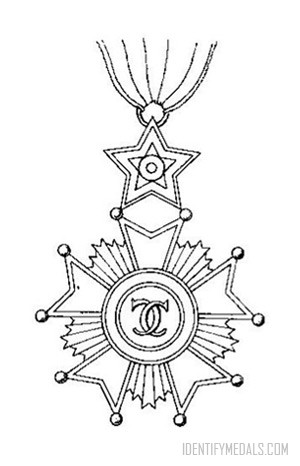
Order of Columbus

The Order of Columbus was a Brazilian order of merit instituted in 1890, right after the abolition of Imperial Brazilian Orders.

The Order of Columbus (or Ordem de Colombo in Portuguese) was a Brazilian order of merit instituted on 6 June 1890, right after the abolition of all the Imperial Brazilian Orders. 

When the first constitution of the Brazilian republic was created, the Order of Columbus was abolished (24 February 1891).

Classes of the Order of Columbus

The Order of Columbus had the following grades:

  • Grandmaster
  • Grand Cross (12 real and 24 honorary)
  • Grand Officer (50 dignataries)
  • Officer (150 of them)
  • Knights (An unlimited number)

Order of Cultural Merit

The Order of Cultural Merit is a Brazilian honor established in 1991 and bestowed by the Ministry of Culture for contributions to culture.

The Order of Cultural Merit (or Ordem do Mérito Cultural in Portuguese) is a Brazilian honor established in 1991 and bestowed by the Ministry of Culture for contributions to Brazilian culture. The order can be given to national and foreign personalities and bodies, private and public.

The recipients of the Order of Cultural Merit are selected by a Council composed of the Minister of State for Culture (as Chancellor) and the Ministers of State for Education, Science, Technology and Innovation, and Foreign Affairs. 

Since 1995, over 500 personalities have been honored in the three classes of the Order of Cultural Merit (60 institutions have also received the medal without grade classes).

Classes of the Order of Cultural Merit

The Order of Cultural Merit has three ranks of merit:

  • Order of Cultural Merit - Grand Cross (Brazil) - ribbon bar.png Grand Cross (Grã-Cruz)
  • Order of Cultural Merit - Commander (Brazil) - ribbon bar.png Commander (Comendador)
  • Order of Cultural Merit - Knight (Brazil) - ribbon bar.png Knight (Cavaleiro)

The National Order of Cultural Merit Medal Design

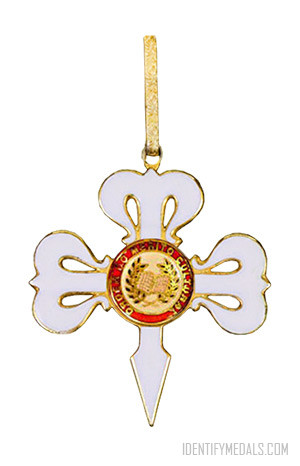
The insignia of the Order of Cultural Merit is a cross of St. James of the Sword enameled and profiled in white gold. In the center is an open book carved gold over a laurel wreath surrounded by the legend “Ordem do Mérito Cultural”.

The Grand Cross of the order is a purple band with the insignia on the loop and a gold glow under the banner. The commander’s insignia hangs on the center and the Knight’s has a ribbon with the insignia on the tip end. 

Order of Rio Branco

The Order of Rio Branco is a Brazilian award established in 1963 and named in honor of the Brazilian Baron of Rio Branco.

The Order of Rio Branco (or Ordem de Rio Branco in Portguese) is a Brazilian award established on 5 February 1963 and named in honor of Brazilian diplomat José Paranhos, Baron of Rio Branco.

The Order of Rio Branco is usually granted to personnel of the Brazilian Foreign Ministry or to foreigners for achievements in diplomacy.

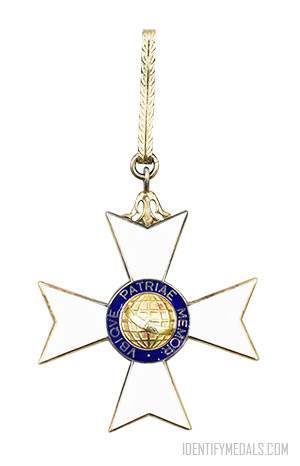
The Grand Master of the Order is the President of Bazil, and the order’s Chancellor is the Minister of Foreign Affairs. The motto of the order is “UBIQUE PATRIAE MEMOR”.

Classes of the Order of Rio Branco

The Order of Rio Branco has six ranks of merit:

  • BRA Ordem de Rio Branco Gra-Cruz BAR.svg Grand Cross (Grã-Cruz)
  • BRA Ordem de Rio Branco Grande Oficial BAR.svg Grand Officer (Grande-Oficial)
  • BRA Ordem de Rio Branco Comendador BAR.svg Commander (Comendador)
  • BRA Ordem de Rio Branco Oficial BAR.svg Officer (Oficial)
  • BRA Ordem de Rio Branco Cavaleiro BAR.svg Knight (Cavaleiro)
  • BRA Medalha do Merito de Rio Branco BAR.svg Medal 

The National Order of Rio Branco Medal Design

The ribbon of the Brazilian Order of Rio Branco is blue with white eddes.

Order of Aeronautical Merit (Brazil)

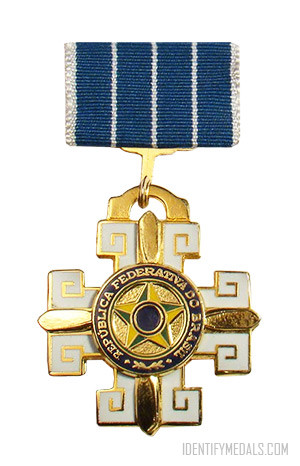
The Order of Aeronautical Merit is a Brazilian award established in 1943 and presented for distinguished service in the Air Force.

The Order of Aeronautical Merit (or Ordem do Mérito Aeronáutico in Portuguese) is a Brazilian award established in 1943 and presented for exceptional contributions and distinguished service in the Brazilian Air Force.

Classes of the Order of Aeronautical Merit

The Order of Aeronautical Merit has five grades:

  • BRA Ordem do Mérito Aeronáutico Grã-Cruz.png Grand Cross (Grã-Cruz)
  • BRA Ordem do Mérito Aeronáutico Grande Oficial.png Grand Officer (Grande-Oficial)
  • BRA Ordem do Mérito Aeronáutico Comendador.png Commander (Comendador)
  • BRA Ordem do Mérito Aeronáutico Oficial.png Officer (Oficial)
  • BRA Ordem do Mérito Aeronáutico Cavaleiro.png Knight (Cavaleiro)

The National Order of Aeronautical Merit Medal Design

The ribbon of the Order of the Aeronautical Medal is blue with white edges and three thin white lines.

Order of Naval Merit (Brazil)

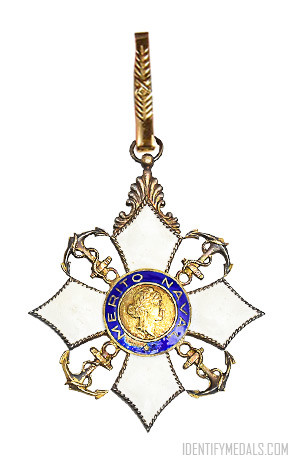
The Order of Naval Merit is a Brazilian award established in 1934 and presented for distinguished service and contributions.

The Order of Naval Merit (or Ordem do Mérito Naval in Portuguese) is a Brazilian award established on 4 July 1934 by president Getúlio Vargas and presented to those who have served with distinction in the Brazilian Navy or have contributed in some way to it.

Classes of the Order of Naval Merit

The Order of Naval Merit has five grades:

  • Order of Naval Merit - Grand Cross (Brazil) - ribbon bar.png Grand Cross (Grã-Cruz)
  • Order of Naval Merit - Grand Officer (Brazil) - ribbon bar.png Grand Officer (Grande-Oficial)
  • Order of Naval Merit - Commander (Brazil) - ribbon bar.png Commander (Comendador)
  • Order of Naval Merit - Officer (Brazil) - ribbon bar.png Officer (Oficial)
  • Order of Naval Merit - Knight (Brazil) - ribbon bar.png Knight (Cavaleiro)

The National Order of Naval Merit Medal Design

The obverse of the Order of Naval Merit medal bears the effigy of the republic surrounded by a circle of blue enamel. On it is the inscription “Naval Merit”.

The reverse shows the word “Brasil” inscribed in the same blue circle.

The ribbon consists of a red grosgrain chamalotada with a light blue stripe in the center.

Order of Military Merit (Brazil)

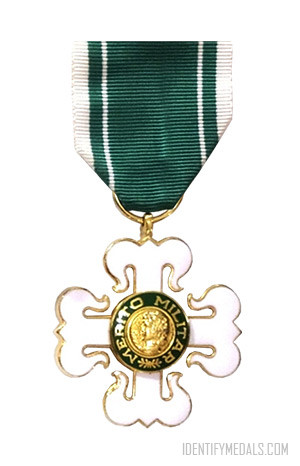
The Order of Military Merit is a Brazilian award established in 1934 and presented for distinguished service and contributions.

The Order of Military Merit (or Ordem do Mérito Militar in Portuguese) is a Brazilian award established in 1934 and presented for distinguished service and exceptional contributions to the country. 

It can be awarded to members of the Brazilian army and friendly nations’ armies.

Classes of the Order of Military Merit

The Order of Defence Merit has five grades:

  • BRA Ordem do Merito Militar Gra-cruz.png Grand Cross (Grã-Cruz)
  • BRA Ordem do Merito Militar Grande Oficial.png Grand Officer (Grande-Oficial)
  • BRA Ordem do Merito Militar Comendador.png Commander (Comendador)
  • BRA Ordem do Merito Militar Oficial.png Officer (Oficial)
  • BRA Ordem do Merito Militar Cavaleiro.png Knight (Cavaleiro)

The National Order of Military Merit Medal Design

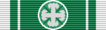
The ribbon of the Brazilian Order of Defence Merit is green with outer white stripes and edges. 

Order of Defence Merit (Brazil)

The Order of Defence Merit is a Brazilian award established in 2002 and presented for exceptional military service.

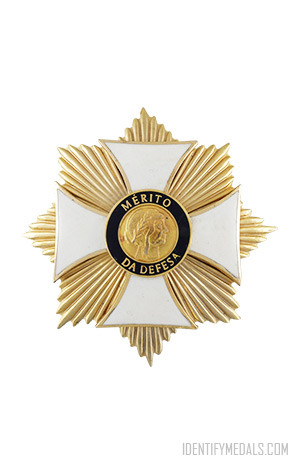
The Order of Defence Merit (or Ordem do Mérito da Defesa in Portuguese) is a Brazilian award established on 10 June 2002 and presented for exceptional military service and contributions to the country. The Order of Defence Merit was presented by presidential decree to replace the Order of Merit of the Armed Forces.

The award can be given to members of the Brazilian Military and friendly nations’ armies. In some cases, it’s also been awarded to civilians, institutions, and organizations.

In order of precedence, the Order of Defence Merit is the second-most important award in the country.

Classes of the Order of Defence Merit

The Order of Defence Merit has five grades:

  • BRA OMFA - OMD Gra-Cruz BAR.svg Grand Cross (Grã-Cruz)
  • BRA OMFA - OMD Grande-Oficial BAR.svg Grand Officer (Grande-Oficial)
  • BRA OMFA - OMD Comendador BAR.svg Commander (Comendador)
  • BRA OMFA - OMD Oficial BAR.svg Officer (Oficial)
  • BRA OMFA - OMD Cavaleiro BAR.svg Knight (Cavaleiro)

The National Order of Defence Merit Medal Design

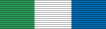
The ribbon of the Brazilian Order of Defence Merit has three equal bars in green, white, and blue.

Types and Shapes of Military Crosses Used in Medals (Pattée, Maltese, Latin…)

Civilian and military medals and their different crosses: Maltese, Pattée, Latin, and more. Description, differences, and examples.

Many civilian and military medals feature crosses. There are several different types, so not all of them can sound familiar to someone not used to collecting medals. In this article, I will share what the different types of crosses used in medals are (for example, Maltese Cross, Cross Pattée, Greek Cross, and others) and how you can easily identify them. 

The Different Shapes of Military Medals

Many medals are cross-shaped. For example, the British Military Cross, the Prussian Military Merit Cross, or the American Distinguished Service Cross. However, not all crosses used in insignia are the same. 

The Cross Pattée, for example, has arms that are narrower at the center and broader at the perimeter. This type of cross was popular in medieval times (for instance, it was used by the Knights Templar) and can be seen in metalwork as old as 1,500 years. The Maltese Cross, on the other hand, has four arrowheads that converge in a central vertex, while the Latin Cross has a longer bottom arm and is often associated with Christianity. 

Most Common Cross Types Used in Medals

Let’s go through the most common types of military crosses, how they originated, and how they are used in heraldry and medal design.

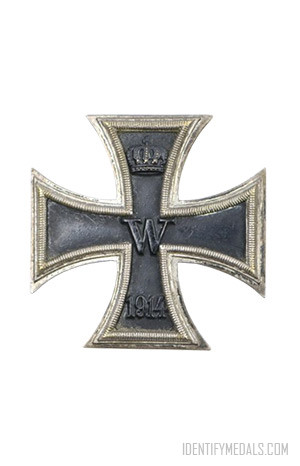
German Medals: The Iron Cross (EK 1914)
German Medals: The Iron Cross (EK 1914), obverse.

The Cross Pattée

The Cross Pattée (also referred to as cross patty, or cross paty, from the French croix pattée, meaning “footed cross“. In German, it’s called Tatzenkreuz, where Tatze also means foot) was originally a Christian cross. 

It’s relatively easy to distinguish this cross from others: The arms are narrow at the center and get broader as they reach the perimeter. The same components are also usually flared in a curve, although they can be straight too. For example, the Order of the Iron Cross is shaped like a cross pattée.

The cross pattée has also been used by many monarchs and is often associated with crowns in Christian countries. It was also used by the Crusaders, Prussians, and Germans.

> Learn more about the Cross Pattée

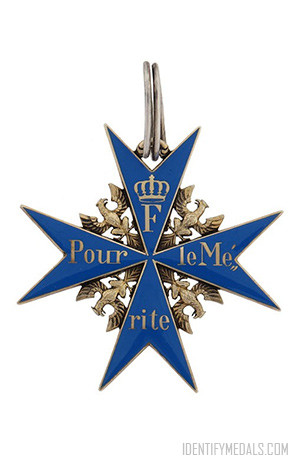
Orden of Merit Pour le Mérite - Kingdom of Prussia (Germany) Medals Pre-WW1
The Orden of Merit Pour le Mérite - Kingdom of Prussia. Obverse.

The Maltese Cross

The Maltese Cross consists of four “V”s or arrowheads that converge in a central vertex. This type of heraldic cross developed from earlier crosses that had eight points (often used during the 16th century). 

The Maltese cross is associated with the Knights Hospitaller or the Order of St John and the island of Malta. The use of the Maltese cross is thought to have begun in the 16th century and continued through the crusades – although there are crosses of this type also associated with the coastal town of Amalfi in the 11th century (it’s believed the Duchy of Amalfi used it then for his minted coins). In the early 16th century, the Rhodian Cross had almost achieved this look. 

The eight points of the Maltese cross have been given a number of symbolic interpretations. Many experts believe that they refer to the eight Langues of the Knights Hospitaller: Auvergne, Provence, France, Aragon, Castille and Portugal, Italy, Germany, and the British Isles.

Since then, it’s become a popular choice for various entities, including several military orders. 

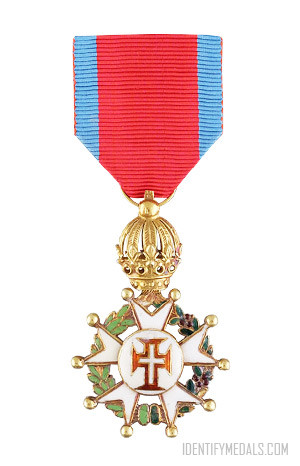
Imperial Order of Christ - Brazilian Medals, Orders & Awards
Imperial Order of Christ, Knight grade. Obverse.

The Latin Cross

The Latin Cross is a type of cross in which the vertical beam is longer than the crossbeam (typically with a much longer bottom arm). In a broad sense, the Latin cross has been used to represent Christendom (as it symbolizes Jesus’ sacrifice for humanity). 

Throughout history, the Latin Cross has been revered as a sacred symbol of faith and devotion. It adorns churches, cathedrals, and religious artifacts, serving as a visual representation of the Christian belief in salvation through Christ’s death and resurrection. For believers, the cross serves as a source of strength, hope, and spiritual renewal, inspiring reverence and contemplation of Jesus’ sacrifice and victory over death.

Beyond its religious significance, the Latin Cross has found its way into various aspects of art, culture, and everyday life. Still, when used in heraldry and medal design, the Latin cross is often also associated with Christianity. For example, as seen in the image, it’s used in the Brazilian Imperial Order of Christ

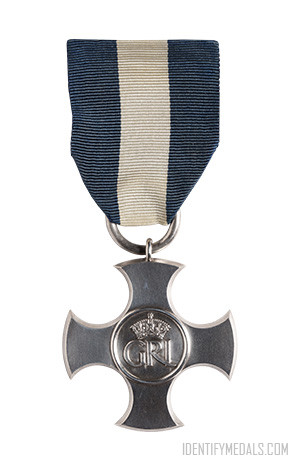
The Distinguished Service Cross
The Distinguished Service Cross. Obverse.

The Cross Patonce

A Cross Patonce is a style of cross typically found in heraldry and religious iconography. The term “patonce” comes from the French word “patte,” meaning “paw,” and describes the arms of the cross as ending in a rounded or floriated shape resembling the spread foot of an animal or the petals of a flower.

The cross patonce is characterized by arms that narrow towards the center and end in a distinct fleur-de-lis or trefoil shape. This design gives the cross a distinctive and elegant appearance, often associated with chivalry and heraldic symbolism.

In the context of military decorations, such as the Distinguished Service Order (DSO) described earlier, the cross patonce is a common design element, reflecting its heritage in heraldic tradition and its association with honor, valor, and distinguished service.

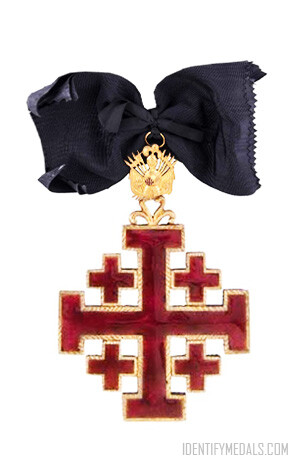
The Order of the Holy Sepulchre - Vatican Medals & Awards
The Order of the Holy Sepulchre - Knight of the Grand Cross, Obverse.

The Cross Potent

The Cross Potent, commonly recognized as the Jerusalem Cross, serves as a distinctive variation of the traditional Christian cross symbol. Its design comprises a cross with each arm culminating in three smaller crosslets, creating a visually striking and intricately layered emblem.

The term “potent” derives from the unique shape of the cross’s arms, evoking images of crutches or the sturdy handles akin to those of a walking stick. This distinctive feature not only adds a symbolic depth to the cross but also imbues it with a sense of resilience and support.

Historically, the Cross Potent holds profound significance, particularly in the context of the Crusades. As Crusaders embarked on their holy quests to reclaim Jerusalem and defend Christian lands, the Jerusalem Cross became a potent symbol of their faith and mission. Its presence on banners, shields, and armor served as a rallying point for Crusaders, inspiring courage and fortitude in the face of formidable challenges.

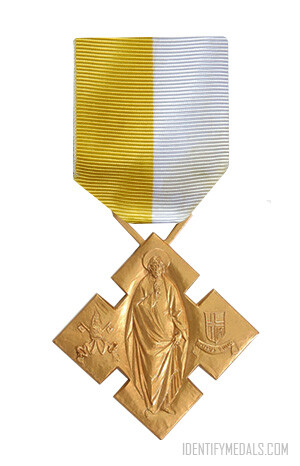
The Benemerenti Medal - Vatican Medals & Awards
The Order of the Holy Sepulchre - Knight of the Grand Cross, Obverse.

The Greek Cross

The Greek cross, also referred to as the crux immissa quadrata, is a distinctive variation of the Christian cross symbol. Characterized by its four arms of equal length, each intersecting at right angles, it presents a visually balanced and symmetrical form reminiscent of a plus sign (+). This cross design holds significant cultural and religious importance, particularly within the context of the Greek Orthodox Church, where it has been deeply ingrained in both architecture and religious iconography for centuries.

In architectural marvels of Byzantine origin, such as churches and monasteries, the Greek cross often takes center stage, adorning facades, domes, and interior spaces with its elegant simplicity. Its symmetrical layout, with each arm extending in cardinal directions, evokes a sense of harmony and equilibrium, reflecting the divine order and balance sought by believers.

Within religious iconography, the Greek cross holds profound symbolism, representing the fundamental tenets of Christianity.

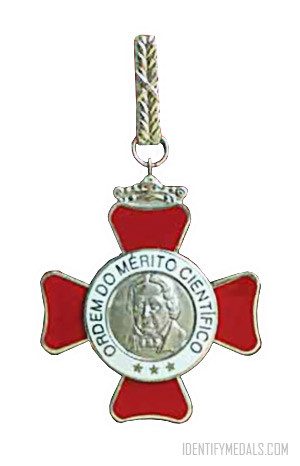
National Order of Scientific Merit (Brazil)

The National Order of Scientific Merit is a Bazilian honor bestowed upon personalities recognized for scientific and technical contributions.

The National Order of Scientific Merit (or Ordem Nacional do Mérito Científic in Portuguese) is a Bazilian honor bestowed upon personalities recognized for scientific and technical contributions. It was  instituted on March 16, 1993, by Decree no. 772 and updated on February 6, 2002, by Decree no. 4.115. 

The order can be awarded to Brazilian and foreign personalities that have helped the cause and development of science in Brazil. 

The honor is given by the Grand Master of the Order on 13 June of each year. The date celebrates the birth of José Bonifácio de Andrada e Silva, a Brazilian statesman, professor, and poet and one of the most important mentors of Brazil’s independence.

Classes of the National Order of Scientific Merit

The Order of Scientific Merit has just two grades:

  • National Order of Scientific Merit - Grand Cross (Brazil) - ribbon bar.png Grand Gross (Grã-cruz or GCOMNC)
  • National Order of Scientific Merit - Commander (Brazil) - ribbon bar.png Commander (Comendador or COMNC)

The National Order of Scientific Merit Medal Design

The ribbon of the Brazilian Order of Scientific Merit is red with white edges.