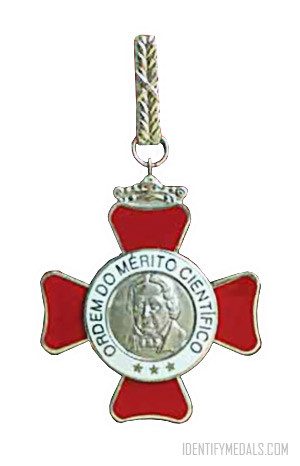
National Order of Scientific Merit (Brazil)

The National Order of Scientific Merit is a Bazilian honor bestowed upon personalities recognized for scientific and technical contributions.

The National Order of Scientific Merit (or Ordem Nacional do Mérito Científic in Portuguese) is a Bazilian honor bestowed upon personalities recognized for scientific and technical contributions. It was  instituted on March 16, 1993, by Decree no. 772 and updated on February 6, 2002, by Decree no. 4.115. 

The order can be awarded to Brazilian and foreign personalities that have helped the cause and development of science in Brazil. 

The honor is given by the Grand Master of the Order on 13 June of each year. The date celebrates the birth of José Bonifácio de Andrada e Silva, a Brazilian statesman, professor, and poet and one of the most important mentors of Brazil’s independence.

Classes of the National Order of Scientific Merit

The Order of Scientific Merit has just two grades:

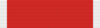
  • National Order of Scientific Merit - Grand Cross (Brazil) - ribbon bar.png Grand Gross (Grã-cruz or GCOMNC)
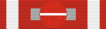
  • National Order of Scientific Merit - Commander (Brazil) - ribbon bar.png Commander (Comendador or COMNC)

The National Order of Scientific Merit Medal Design

The ribbon of the Brazilian Order of Scientific Merit is red with white edges. 

Imperial Order of Christ (Brazil)

The Imperial Order of Christ is a Brazilian order of chivalry instituted in 1822 and awarded for notable services to religion.

The Imperial Order of Christ (also known as The Imperial Order of Our Lord Jesus Christ or Imperial Ordem de Nosso Senhor Jesus Cristo in Portuguese) is a Brazilian order of chivalry established on 7 December 1822 and awarded for notable services to religion.

The Order of Christ was instituted by emperor Pedro I of Brazil and is based on the Portuguese Order of Christ, which was founded in 1316-1319 by King Dom Dinis and Pope John XXII. 

Classes of the Order of Christ

The Order of Christ has three grades. These are:

  • Grand Cross: The badge is worn on a sash on the right shoulder.
  • Commander: The badge is worn o a necklet.
  • Knight: The badge is worn on a ribbon on the left side of the chest.

The Order of Christ Medal Design

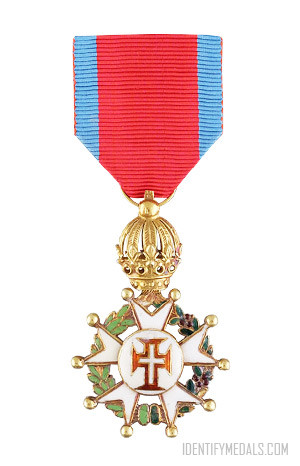
The Brazilian Order of Christ is based on the Portuguese order carrying the same name, with one difference: The badge had an added Imperial Crown of Brazil and the ribbon is different.

The obverse of the insignia for Civil Knights is a Latin cross with silver gilt and red enamel. The border is chiseled and has insets of white enamel. Military Knights is a Maltese cross with ball-tipped finials and a laurel wreath between the arms.

The star of the order has 22 asymmetrical arms of rays and a central white enamel disc with a miniature cross above it. On top of the star is the Sacred Heart of Christ. 

The ribbon of the Order of Christ is red with small blue stripes on each side.

Imperial Order of the Rose

The Imperial Order of the Rose was a Brazilian order of chivalry created by Emperor Pedro I of Brazil in 1829 to commemorate his marriage.

The Imperial Order of the Rose was a Brazilian order of chivalry created by Emperor Pedro I in 1829 to commemorate his marriage to Amélie of Leuchtenberg. 

The order was canceled in 1890 by the interim government of the First Brazilian Republic. When Emperor Pedro II was deposed in 1889, the order continued as a house order being awarded by the Heads of the House of Orleans-Braganza (pretenders of the throne). 

Today, the Grand Mastership of the Order is disputed between the two branches Petrópolis and Vassouras of the Brazilian Imperial family. 

Classes of the Order of the Rose

The Order of the Rose had six degreed:

  • Grand Cross: Limited to 16 recipients and styled “Excellency”.
  • Grand Dignitary: Limited to 16 recipients and styled “Senhor”.
  • Dignitary: Limited to 32 recipients and styled “Senhor”.
  • Commander: With an unlimited number of recipients and styled “Senhor”
  • Official: With an unlimited number of recipients and styled “Honorary Colonel”.
  • Knight: With an unlimited number of recipients and styled “Honorary Captain”.

The Order of the Rose Medal Design

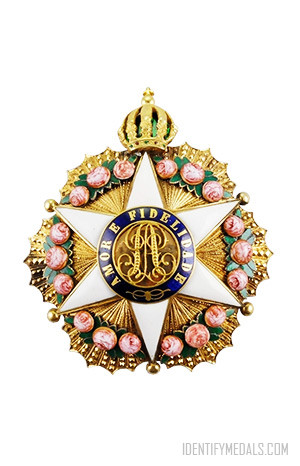
The obverse of the insignia consists of a white star with six-pointed tips joined by a garland of roses. In the center is a medallion with the interlaced letters P and A embossed and surrounded y a blue ferret border that rad “Love and Fidelity”. 

The reverse is the same but with the inscription “2-8-1829” and the legend “PEDRO AND AMÉLIA”.

National Order of Merit (Brazil)

The National Order of Merit is a Brazilian decoration awarded to those who have rendered services relevant to the nation of Brazil.

The National Order of Merit (or Ordem Nacional do Mérito in Portuguese) is a Brazilian decoration awarded to those who have rendered services relevant to the nation of Brazil (both Brazilian citizens over 25 years old and foreigners considered worthy of the distinction).

The Order of Merit was established on 4 September 1946 during the government of President Eurico Gaspar Dutra. The Grand Master of the order is the President of Brazil, and the necklace is always transferred to their successor.

Classes of the National Order of Merit

The Order of Merit has five grades. The number of awards is limited for each of them.
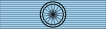
  • National Order of Merit - Grand Cross (Brazil) - ribbon bar.png Grand Cross: 45 awards at a time.
  • National Order of Merit - Grand Officer (Brazil) - ribbon bar.png Grand Officer: 150 awards at a time.
  • National Order of Merit - Commander (Brazil) - ribbon bar.png Commander: 350 awards at a time.
  • National Order of Merit - Officer (Brazil) - ribbon bar.png Officer: 650 awards at a time.
  • National Order of Merit - Knight (Brazil) - ribbon bar.png Knight: Unlimited awards at a time.

The National Order of Merit Medal Design

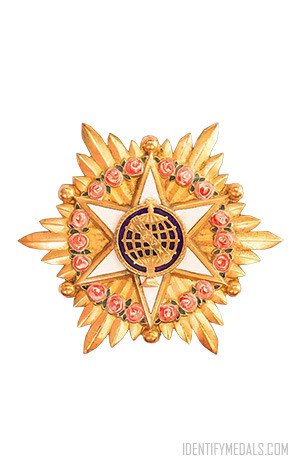
The Order of Merit’s insignia is a gold star with six beams, enameled in white with a wreath of roses. On the obverse, the center is an armillary sphere, also made of gold, in a blue field. The reverse reads the caption: “National Order of Merit“.

The design was inspired by the Imperial Order of the Rose, created by Jean-Baptiste Debret in 1829.

The necklace is made of two chains alternately ornamented with allegorical armillary and pink spheres. 

Order of the Southern Cross

The Order of the Southern Cross is a Brazilian order of chivalry established in 1822 for the coronation of Pedro I.

The Order of the Southern Cross (or Ordem Nacional do Cruzeiro do Sul in Portuguese) is a Brazilian order of chivalry established on 1 December 1822 for the coronation of Pedro I of Brazil, the empire’s first monarch. 

The order is awarded “as a token of gratitude and recognition for those who have rendered significant service to the Brazilian nation”. The Grand Master of the Order of the Southern Cross is the President of Brazil. 

Originally known as the Imperial Order of the Cross (or Ordem Imperial do Cruzeiro in Portuguese), the first knights were also appointed when the monarch was crowned. Although Brazil had shared orders of chivalry with Portugal before the country’s independence, the Order of the Cross was the first purely Brazilian order.

From the proclamation of the Republic until the revolution of 1930 (what’s known as the Old Republic), national orders ceased to exist. This changed when, in 1832, the Order of the Southern Cross was the first to be re-established. Today, it’s considered the senior Brazilian National Order. 

The order continues to be used by both branches of the Brazilian Imperial family, but it’s no longer recognized by the Republic of Brazil. 

Classes of the Order of the Southern Cross

In 1932, the republican version of the Order had the same five grades as the old imperial version. The Order of the Southern Cross is now awarded in six classes:

  • BRA - Order of the Southern Cross - Grand Cross BAR.svg Grand Collar: The highest rank, usually restricted to foreign Heads of State.
  • BRA - Order of the Southern Cross - Grand Cross BAR.svg Grand Cross
  • BRA - Order of the Southern Cross - Grand Officer BAR.svg Gand Officer
  • BRA - Order of the Southern Cross - Commander BAR.svg Commander
  • BRA - Order of the Southern Cross - Officer BAR.svg Officer
  • BRA - Order of the Southern Cross - Knight BAR.svg Knight

The Order of the Southern Cross Medal Design

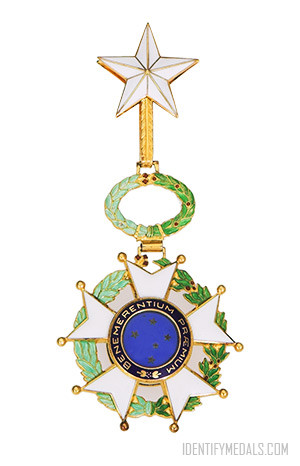
The insignia of the Order of the Southern Cross is a five-point white enamelled star edged with golden silver. It seats on a crown and is surmounted by a garland made of coffee and tobacco leaves. In the obverse, in the center is a blue sky field with the constellation of the Southern Cross, and in the circumference is the inscription “Benemerentium Premium” (“an award for merit”). The reverse shows the effigy of the Republic in gold and the inscription “Federative Republic of Brazil” (Art. 2 of the Regulations).

The Grand Collar of the Order of the Southern Cross is a chain from which the badge of the order is suspended.

The Star of the Order is a plaque modelled after the badge of the Order and is worn on the left breast.

The Inter Allied Victory Medal (Brazil)

The Brazilian Victory Medal was established in January 24, 1919 and awarded to all military personnel or civilians employed in war service.
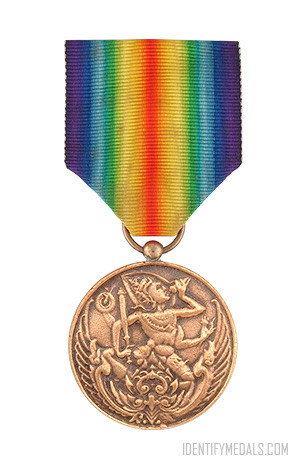
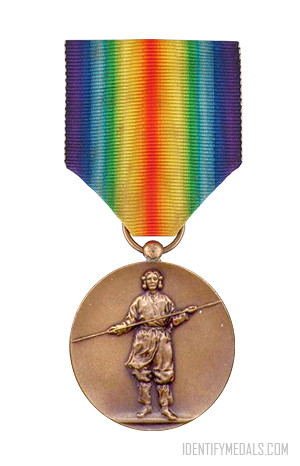
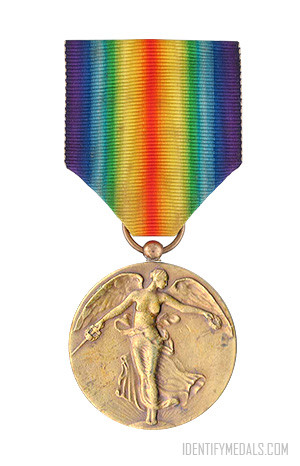
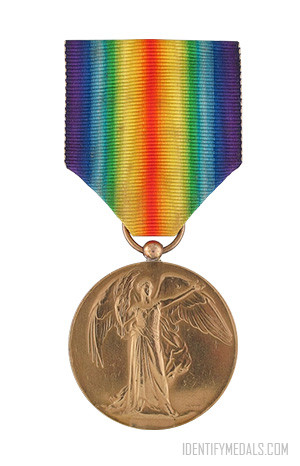
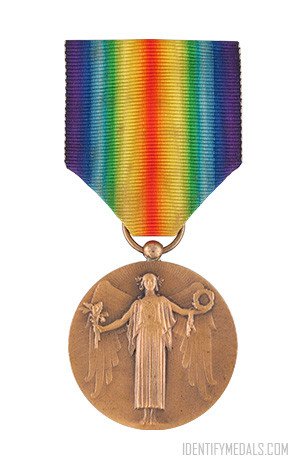
The Allied Victory Medal was recommended by an inter-allied committee in March 1919. Fourteen victorious countries finally awarded the medal after World War I, and each allied nation would design a ‘Victory Medal’ for award to their own nationals. Certain features were to be shared: a winged figure of Victory on the obverse and the same ribbon.

The President of the United States of Brazil, adopted the proposal of Marshal Foch in January 24, 1919 so that all the fighters of the Great War received a commemorative medal. Brazil had a sizable merchant fleet and had lost a number of ships to German submarines when it joined the allies in October 1917, contributing with two cruisers and two destroyers and their crews placed under command of the British Admiralty.

Brazilians also sent a medical mission to Europe and a number of soldiers to set up several field medical stations and a 300-bed hospital near Paris. Approximately 2,500 medals were produced for these sailors, soldiers and medical personnel.

The Brazil Inter Allied Victory Medal Design

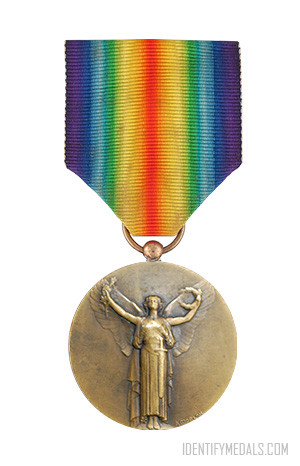
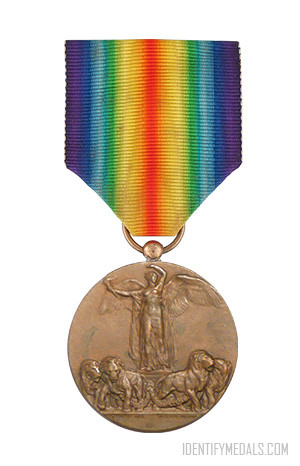
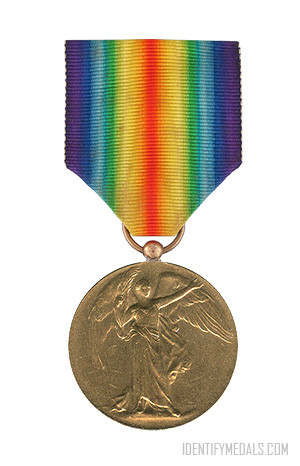
The Victory Medal measures 36 millimetres (1.4 in) in diameter and was designed by William McMillan. The design and ribbon was also adopted by Belgium, Brazil, Cuba, Czechoslovakia, France, Greece, Italy, Japan, Portugal, Romania, Siam, Union of South Africa and the USA. Each allied nation would design a ‘Victory Medal’ for award to their own nationals, all issues having certain common features, including a winged figure of victory on the obverse and the same ribbon.

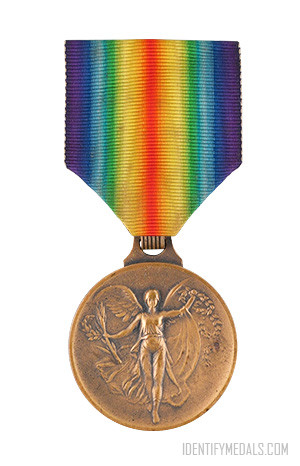
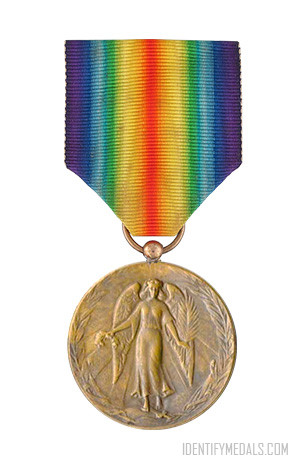
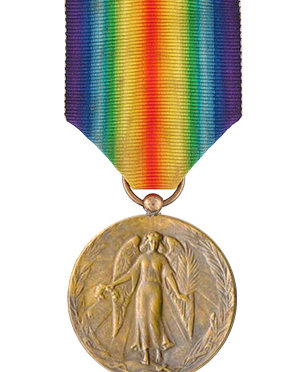
The obverse of the Brazilian Victory Medal featured a symbolic figure of Victoria fringed with two palms on a plain background.

The reverse shows the words ‘THE GREAT / WAR FOR / CIVILISATION / 1914-1919’ surrounded by a laurel wreath.

The 39 millimeters (1.5 in) wide watered ribbon has an iridescent color scheme, with the violet moving through to a central red stripe where both schemes meet. It attaches to the medal through a ring suspender. The recipient’s name, rank, service number and unit were impressed on the edge of the medal. The name of the regiment or corps was omitted on medals awarded to Army officers.

All the Inter-Allied Victory Medal Variations

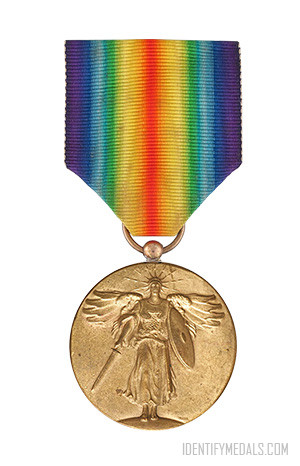
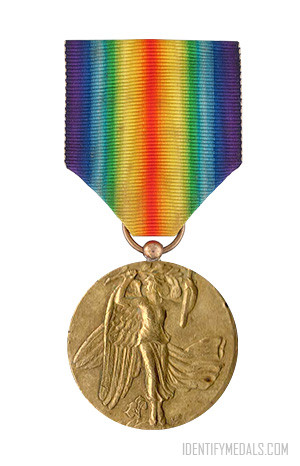
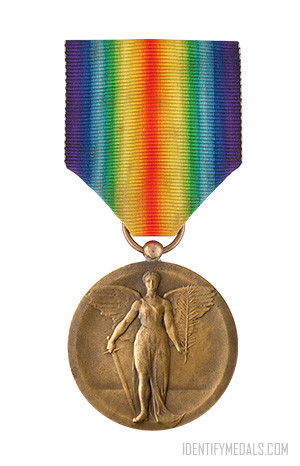
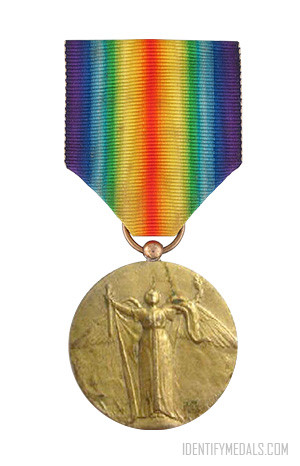
Although each country designed its own version of the Inter-Allied Victory Medal, all of them shared some common elements, such as a winged victory figure on the obverse and a similar ribbon with rainbow colors symbolizing unity among the Allies. Here are the versions for all countries:

Find an Inter-Allied Victory Medal Online

Right Now on eBay 
Clicking a link to eBay may result in a referral commission being paid if a purchase is made.
Loading...