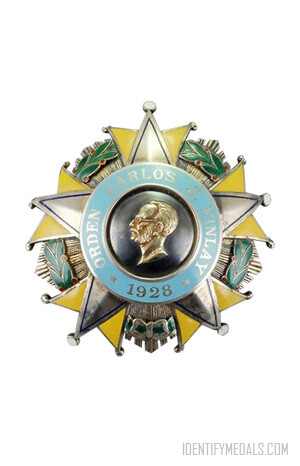
The Order of Carlos J. Finlay

The Order of Carlos Juan Finlay honors Cuban and foreign citizens for their contributions to science, research, and public health.

  • Time Period: Post-WW2
  • Institution: 21 January 1928
  • Country: Cuba

The Order of Carlos Juan Finlay was initially instituted by Decree No. 77 on January 21, 1928, and later ratified with a new design by Decree-Law No. 30 on December 10, 1979. This prestigious order honors both Cuban and foreign citizens for their exceptional contributions to the advancement of science, research, and public health.

The Order of Carlos J. Finlay Criteria

The order is granted to individuals who have demonstrated extraordinary merits in:

  • Advancing natural or social sciences.
  • Conducting scientific research or activities that significantly contribute to the progress of knowledge.
  • Promoting health and well-being, benefiting humanity at large.
  • Efforts in preserving and improving public health.

The award specifically recognizes achievements that contribute to the development of science in ways that improve societal welfare, enhance health systems, and lead to global benefits.

Carlos Juan Finlay: The Namesake

Carlos Juan Finlay (1833–1915) was a renowned Spanish-Cuban physician and epidemiologist. He is celebrated for his groundbreaking research on yellow fever, where he identified mosquitoes as the primary vector for its transmission. Finlay’s work paved the way for effective disease control measures and has saved countless lives. His contributions to epidemiology earned him recognition as one of the most influential figures in the history of public health.
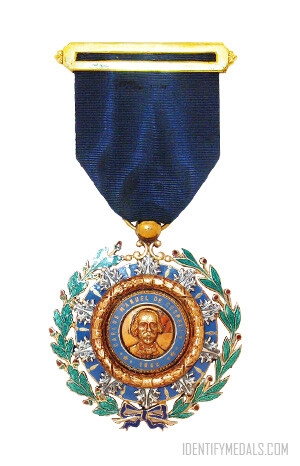
The Order of Carlos Manuel de Céspedes

The Order of Carlos Manuel de Céspedes is a prestigious decoration of the Republic of Cuba, named after the independence leader.

The Order of Carlos Manuel de Céspedes is a prestigious decoration of the Republic of Cuba, named after the independence leader Carlos Manuel de Céspedes (1819–1874).

Established in 1926 by Presidential Decree No. 486 under Gerardo Machado, it recognized services to Cuba or humanity, often in diplomatic or eminent capacities. The President of Cuba served as the order’s Master, with high-ranking officials as Chancellor and Vice Chancellor.

Post-1959, after the Cuban Revolution, the government annulled awards from the Batista era and re-evaluated recipients. Reorganized under Law No. 17, the order honors Cuban and foreign leaders, Heads of State, or individuals contributing to national liberation, international solidarity, or peace.

The Order of Carlos Manuel de Céspedes Criteria

Ranks included Grand Cross (for presidents and heads of state), Grand Officer, Commander, Officer, and Knight or Lady, with specific criteria for diplomats and officials.

The Order of Carlos Manuel de Céspedes Design

The medal consists of a white-enamelled five-point star with a turquoise blue crown, featuring Céspedes’ effigy and the inscription “1868.” The reverse displays the Cuban Coat of Arms. It hangs from a ribbon with turquoise blue, red, and white stripes.

The Hero of Labor of the Republic of Cuba Medal

This medal is awarded by the Council of State to Cuban and foreign citizens in recognition of extraordinary achievements in creative work.

  • Time Period: Post-WW2
  • Institution: 10 December 1979
  • Country: Cuba

The Hero of Labor of the Republic of Cuba (Héroe del Trabajo de la República de Cuba) is an honorary title of the Republic of Cuba, established by Decree-Law No. 30 on December 10, 1979. It is awarded by the Council of State to Cuban and foreign citizens in recognition of extraordinary achievements in creative work or struggles for the advancement and defense of the achievements and interests of the working class, as well as for consistent practice and valuable contributions to proletarian internationalism.

The title can also be awarded posthumously. 

The Hero of Labor of the Republic of Cuba Medal Criteria

Presented to Cuban and foreign citizens in recognition of exceptional achievements in productive labor, efforts in advancing and defending the accomplishments and interests of the working class, and steadfast dedication with significant contributions to proletarian internationalism.

The Hero of the Republic of Cuba Medal

The Hero of the Republic of Cuba is the nation’s highest honorary title, symbolizing extraordinary achievement and dedication.

  • Time Period: Post-WW2
  • Institution: 10 December 1979
  • Country: Cuba

The Hero of the Republic of Cuba (Héroe de la República de Cuba) is the nation’s highest honorary title, symbolizing extraordinary achievement and dedication to the ideals of the Cuban Revolution. Equivalent to similar titles awarded within the Socialist Bloc, this prestigious distinction recognizes individuals who have made exceptional contributions to Cuba’s national interests, socialist development, and the global working-class struggle. 

This prestigious title underscores Cuba’s commitment to recognizing those who embody the principles of socialism, whether through domestic contributions or international solidarity. Its recipients include revolutionary leaders, military figures, and foreign allies who have played pivotal roles in supporting Cuba’s ideals and sovereignty.

The Hero of the Republic of Cuba Medal Criteria

Established by Decree-Law Number 30 on December 10, 1979, the title is granted to both Cuban and foreign citizens. Its purpose is to acknowledge extraordinary merits achieved in various domains, including:

  • Productive Labor: Outstanding contributions to the advancement of Cuba’s economic, scientific, or industrial sectors.
  • Defense of Socialist Ideals: Acts of valor or leadership in protecting the achievements and interests of the Cuban Revolution and the working class.
  • Proletarian Internationalism: Significant support or actions promoting solidarity among socialist nations or advancing global socialist ideals.

The Hero of the Republic of Cuba Medal Design

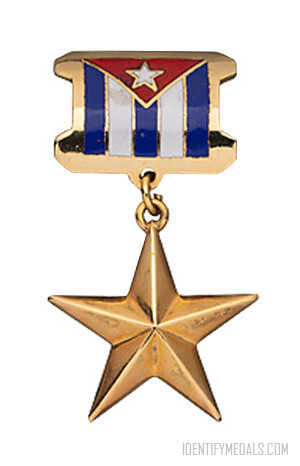
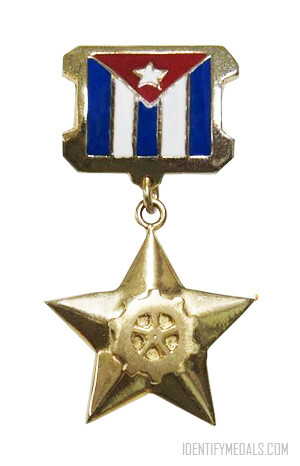
Recipients of this honor are presented with the Gold Star Medal (Medalla Estrella de Oro), a beautifully crafted award featuring a gold plaque enameled with the vibrant colors of Cuba’s national flag.

The Inter Allied Victory Medal (Cuba)

The Cuban Victory Medal was awarded to all military personnel or civilians who have been employed in war service between 1917 and 1919.

The Allied Victory Medal was recommended by an inter-allied committee in March 1919. Fourteen victorious countries finally awarded the medal after World War I, and each allied nation would design a ‘Victory Medal’ for award to their own nationals. Certain features were to be shared: a winged figure of Victory on the obverse and the same ribbon.

The President of the United States of Brazil, adopted the proposal of Marshal Foch in January 24, 1919 so that all the fighters of the Great War received a commemorative medal.

The Cuba Inter-Allied Victory Medal Design

The Victory Medal measures 36 millimetres (1.4 in) in diameter and was designed by William McMillan. The design and ribbon was also adopted by Belgium, Brazil, Cuba, Czechoslovakia, France, Greece, Italy, Japan, Portugal, Romania, Siam, Union of South Africa and the USA. Each allied nation would design a ‘Victory Medal’ for award to their own nationals, all issues having certain common features, including a winged figure of victory on the obverse and the same ribbon.

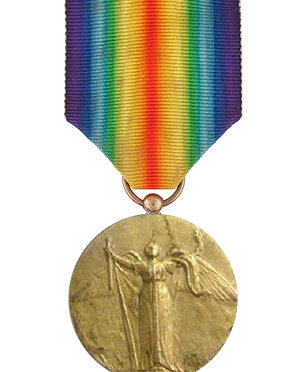
The obverse of the Cuban Victory Medal featured a symbolic figure of Victoria with her hands up on a plain background.

The reverse shows the words ‘THE GREAT / WAR FOR / CIVILISATION / 1914-1919’ surrounded by a laurel wreath.

The 39 millimeters (1.5 in) wide watered ribbon has an iridescent color scheme, with the violet moving through to a central red stripe where both schemes meet. It attaches to the medal through a ring suspender. The recipient’s name, rank, service number and unit were impressed on the edge of the medal. The name of the regiment or corps was omitted on medals awarded to Army officers.

All the Inter-Allied Victory Medal Variations

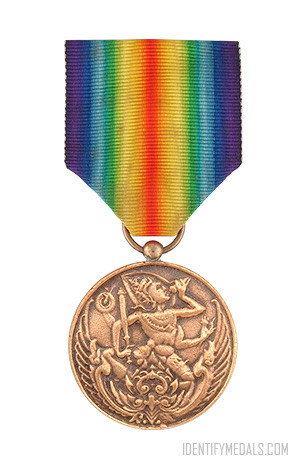
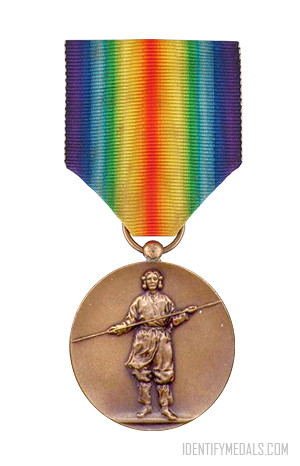
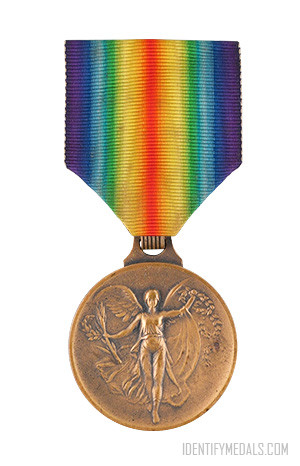
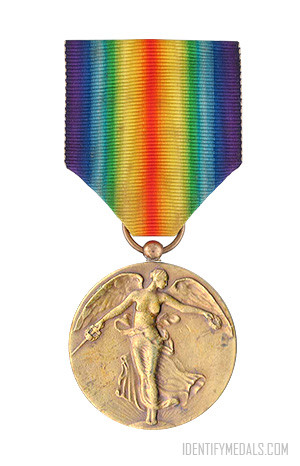
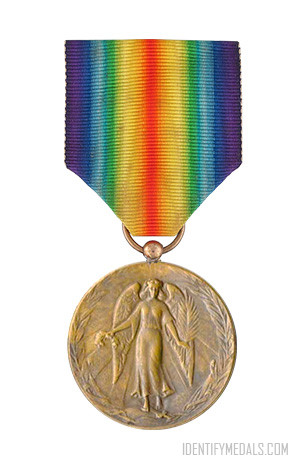
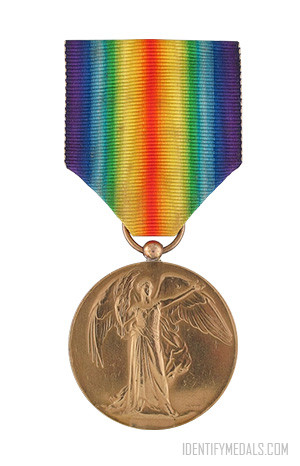
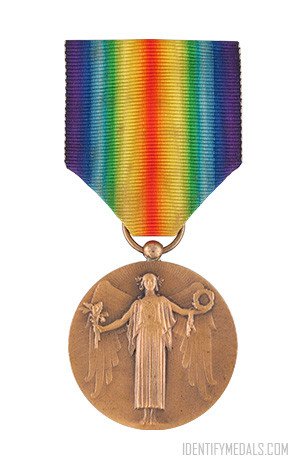
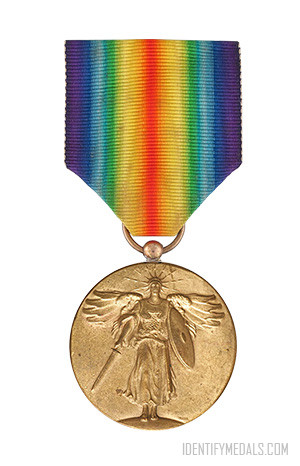
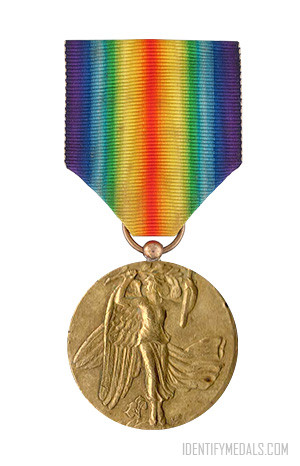
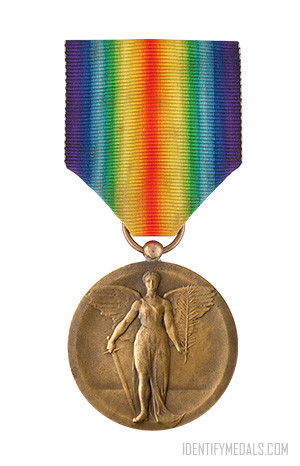
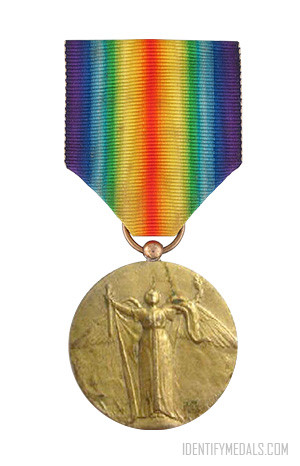
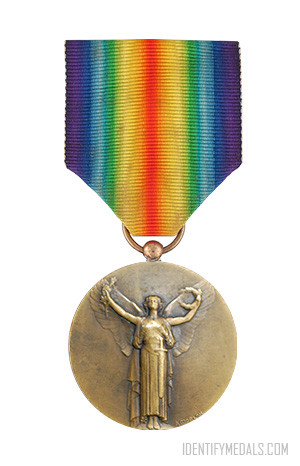
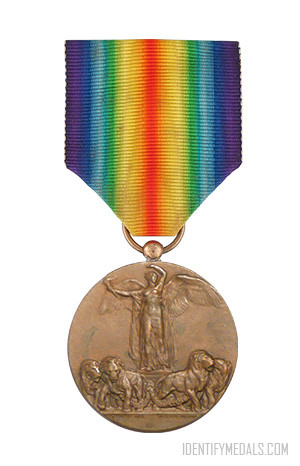
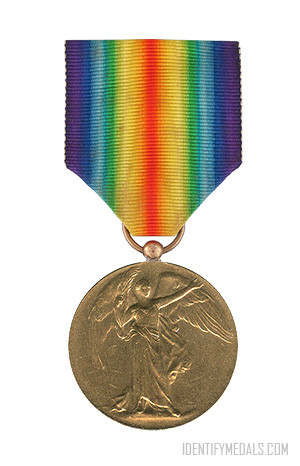
Although each country designed its own version of the Inter-Allied Victory Medal, all of them shared some common elements, such as a winged victory figure on the obverse and a similar ribbon with rainbow colors symbolizing unity among the Allies. Here are the versions for all countries:

Find an Inter-Allied Victory Medal Online

Right Now on eBay 
Clicking a link to eBay may result in a referral commission being paid if a purchase is made.
Loading...