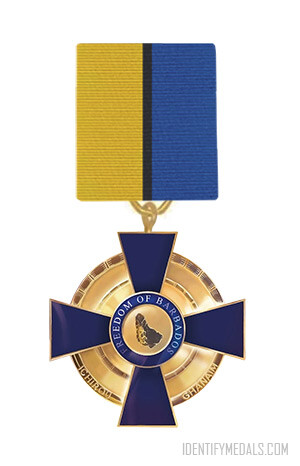
The Order of Freedom of Barbados

The Order of Freedom of Barbados is a national honor established in 2019 by the Parliament of Barbados. It has one class.

  • Time Period: Post-WW2
  • Institution: 19 August 2019
  • Country: Barbados

The Order of Freedom of Barbados is a national honor established by the Parliament of Barbados through the Order of Freedom of Barbados Act 2019. It is part of the broader Order of Barbados, ranking above the Order of the Republic but below the supreme Order of National Heroes.

Officers and Classes

The Order consists of a single class, unnamed in the Act. There is no annual limit on appointments to this class, except for honorary members, which are capped at two per year. Appointments are made by the president on the advice of the Prime Minister and announced annually on Independence Day (30 November).

Recipients of the Order are entitled to use the post-nominal letters “FB” (Freedom of Barbados) and the honorific style “The Most Honourable.” The insignia of the Order is determined by the Prime Minister.

Eligibility for Conferment of Order

A person who:

  • was born in Barbados;
  • is a citizen of Barbados;
  • or is entitled to be registered as a citizen of Barbados

and who has distinguished himself by extraordinary service to Barbados, the Caribbean, the Caribbean Diaspora or to humanity at large is eligible to be
conferred with the Order of Freedom of Barbados.

The Family Order of Laila Utama

The Most Esteemed Family Order of Laila Utama is an order of Brunei established on 1 March 1954 by Sultan Omar Ali Saifuddien III.

  • Time Period: Post-WW2
  • Institution: 1 March 1954
  • Country: Others (Brunei)

The Most Esteemed Family Order of Laila Utama (or Darjah Kerabat Laila Utama Yang Amat Dihormati in Malay) is a prestigious order of Brunei, established on 1 March 1954 by Sultan Omar Ali Saifuddien III.

Recipients of this order are entitled to use the post-nominal letters “DK” or “DK I” and the honorary title “Dato Laila Utama.”

The Family Order of Laila Utama Design

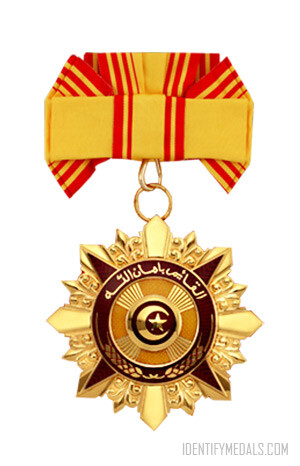
Initially, the order’s design featured a painted bust of Sultan Omar Ali Saifuddien III. However, since 1975, this has been replaced by a star and crescent moon motif.

The emblems of the order are crafted from gold or silver with enamel accents. The order confers the right to use the post-nominal letters “DK I” and the title “Dato Laila Utama.

The NATO Medal

The NATO Medal is an international military decoration awarded to militaries under the authority of the North Atlantic Treaty Organization.

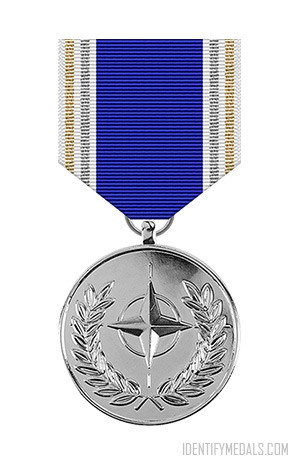
The NATO Medal is an international military decoration established in 1996 and awarded to various militaries under the authority of the North Atlantic Treaty Organization (NATO).

The medal was instituted to recognize individuals who had served in Former Yugoslavia in the Implementation Force (IFOR) as part of Operation Joint Endeavor. In 1999, a new ribbon was introduced for participants in Operation Allied Force in Kosovo and, later, further ribbons were established for each NATO operation as they became more common.

The NATO Medal Design

There are currently 14 versions of the NATO Medal:

  • One medal design for service in the former Yugoslavia, Kosovo, and North Macedonia.
  • Two medal designs for service during Article 5 operations (Eagle Assist, Active Endeavour).
  • Eight medal designs for Non-Article 5 NATO operations (International Security Assistance Force Afghanistan or ISAF, Resolute Support, Balkans, NATO Training Mission-Iraq or NTM-I, Africa, AMIS, OUP-Libya, and Pakistan).

NATO settled on three ribbon styles in early 2003. There is one for the NATO Meritorious Service Medal, one for Article 5 operations, and one for non-Article 5 operations.

Find NATO Medals Online

The Royal Household Order for Ladies

The Royal Household Order for Ladies is a Hawaiian order is awarded by Princess Owana Ka’ohelelani in honor of her mother.

The Royal Household Order for Ladies is a Hawaiian order is awarded by Princess Owana Ka’ohelelani in honor of her mother.

As senior heir to the ruling House of Keoua Nui, Princess Owana has placed the royal orders under her patronage. Because these orders were never nationalized, they are recast as House Orders and awarded at the pleasure of its head.

Princess Owana has established the House Order of Ka’ohelelani in honor of her mother.  It exists in seven classes and is given only to members of the Royal Family.[

The Royal Order of the Star of Oceania

The Royal Order of the Star of Oceania is a Hawaiian order instituted on 16th December 1886 for the recompense of distinguished services.

The Royal Order of the Star of Oceania was founded by King Kalakaua I on 16th December 1886 and awarded for distinguished services rendered in advancing his plan for a confederation of Polynesian nations, islands of the Pacific and Indian Oceans, and on contiguous Continents. In anticipation of Samoa joining the confederation, King Malietoa was awarded the Grand Cross.

The Royal Order of the Star of Oceania is highly awarded to the head of states/dynasties, also as awards of merit to loyal supporters of the royal family and those who provide excellent services in the field of cultural achievement and education throughout the Pacific.

The Order has five classes:

  • Grand Cross – Limited to 15 recipients at any one time
  • Grand Officer – Limited to 30
  • Commander – Limited to 45
  • Officer – Limited to 60
  • Companion (gold and silver medals)

It was re-established and amended by HRH Princess Owana Ka`ohelelani La`anui Salazar,  the “de jure” and “fons honorum” head of the royal house and Grandmaster of the order.

The Royal Order of the Star of Oceania Design

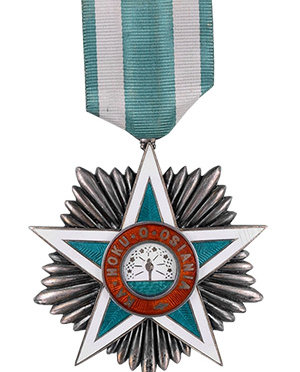
The Grand Cross Star is worn on the breast and the design speaks elements of the sea and sky. It is worn on a cordon or sash of pale green with a white stripe near each edge.

The Commander insignia is suspended from the bow of the cordon. KA HOKU O OSIANIA is inscribed around the shield, translating to ‘The Star of Oceania.’ 

The Royal Order of the Crown of Hawaiʻi

The Royal Order of the Crown of Hawaiʻi is an order instituted in 1848 and awarded to the head of states and supporters of the royal family.

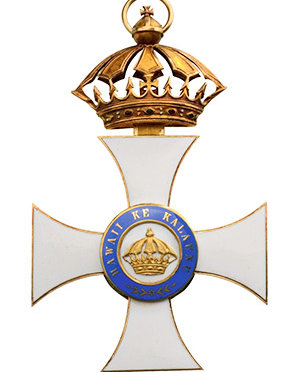
The Royal Order of the Crown of Hawaiʻi is a Hawaiian order instituted in July 1848 and is awarded to the head of states/dynasties, as awards of merit to loyal supporters of the royal family and those who provide excellent services in the field of cultural achievement and education.

The Order was first introduced and created as the Order of the Crown and Cross by H.M. King Kamehameha III in July 1848, on the advice of his Minister of Foreign Affairs, Robert C. Wyllie. In 1883, H.M. King Kalākaua created the Order of the Crown and its statutes written with the motto “Hawaiʻi Ke Kalaunu”, and the ribbon colors of blue and white.

The Royal Order of the Crown of Hawaiʻi Design

The insignia of the Order bears the motto “Hawaiʻi Ke Kalaunu” on the obverse.

The ribbon of the order is blue and white. The revised 2016 order installs the ribbon colors of gold with purple edges; the shield has a purple ring surrounding the Hawaiian crown with the motto “Onipaʻa“.

The Royal Order of Kapiolani

The Royal Order of Kapiolani was instituted in 1880 by King Kalākaua to recognize services in the cause of humanity, science and the arts.

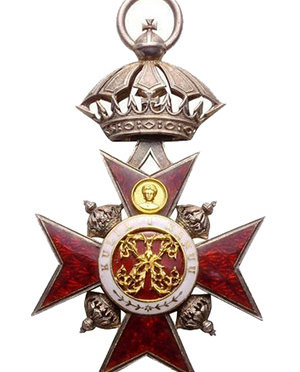
The Royal Order of Kapiolani is a Hawaiian order instituted in 1880 by King Kalākaua to recognize services in the cause of humanity, Science and the Arts, or for special services rendered to the Kingdom of Hawaiʻi.

The Order is named in honor of his ancestor High Chiefess Kapiʻolani the Great, an early exponent of Christianity in the Hawaiian Islands. It also honored his wife Queen Kapiʻolani, the namesake of the first Kapiʻolani.

The Royal Order of Kapiolani was awarded 177 times in all grades during Kalākaua’s reign, and three more times by his successor, Queen Liliʻuokalani. The last award of the Order took place on June 2, 1892.

The Order was awarded in six grades:

  • Grand Cross – 12 recipients
  • High Grand Officer – 15 recipients
  • Grand Officer – 20 recipients
  • Commander – 30 recipients
  • Officer – 50 recipients
  • Companion (Knight) – 60 recipients
  • Medal of Honor – no limit to recipients, 1st (silver) and 2nd-degree (bronze)

In 1893 the Order became obsolete.

The Royal Order of Kapiolani Design

The insignia of the Grand Cross includes a badge, a breast star and grand cordon.

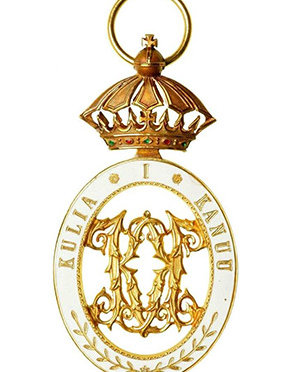
The badge comprises a red enamelled gold Maltese cross, surmounted by a gold Hawaiian crown. Between the arms of the cross are gold Hawaiian crowns in angles. A center disc of red and white enamel displays a gold double-K monogram, surrounded by a white enamel band, on which is inscribed “KULIA I KANUU” or  “Strive to Reach the Summit“. At end of the cross is a small, gold locket with the portrait of Queen Kapiʻolani. On the reverse is a single red disc, with the motto “KULIA”.

The star of the Grand Cross of Order is an octagonal silver star, on which is superimposed the badge without the surmounted crown.

The grand cordon is yellow, bordered by narrow stripes of the colors the Hawaiian flag: white, red and dark-blue. The badge is fastened to the sash’s bow and rests on the hip.

For High Grand Officers, the badge is not worn on a sash but on a neck ribbon of alternating yellow and red strips. Grand Officers wear only the breast star. The Commander wears only the sash the crowns between the arms of the cross on the badge are silver, not gold. The Officer and Companion cross use a smaller badge. The Medals of Honor lack the crowns between the arms of the cross and the badge’s crown surmounting the cross. The medal of the 1st-degree is made of silver, and the 2nd-degree of bronze.

The Royal Order of Kalākaua I

The Royal Order of Kalākaua I is a Hawaiian order instituted in 1874 by King Kalākaua I to commemorate his accession to the throne.

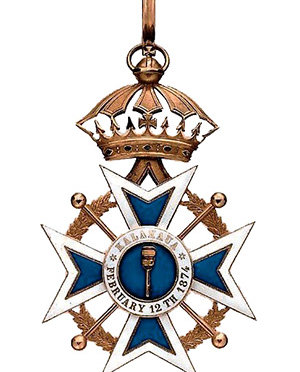
The Royal Order of Kalākaua I is a Hawaiian order instituted on 28 September 1874 by King Kalākaua I to commemorate his accession to the throne of the Kingdom of Hawaiʻi on 12 February 1874.

This order was granted to both native Hawaiians and foreigners for superlative service to the monarch and to the kingdom. It was last conferred by Queen Liliʻuokalani on 1 August 1892.

In the duration of the Order, it was granted 239 times by King Kalākaua I, and 15 times by his sister Queen Liliʻuokalani. In 1893, the Order became abeyant.

The Order was awarded in four grades:

  • The Royal Order of Kalakaua I Grand Cross.gif Knights Grand Cross with Collar (only given for head of states)
  • The Royal Order of Kalakaua I Grand Cross.gif Knights Grand Cross – 12 individuals
  • Order of Kalakaua Companion.gif Grand Officer – 20 individuals
  • Order of Kalakaua Companion.gif Commander – 50 individuals
  • Order of Kalakaua Companion.gif Companion – 60 individuals

The Royal Order of Kalākaua I Design

The badge of the order is a Maltese cross in gold or silver.

The obverse is decorated with Prussian blue and white enamel, surmounted by a Hawaiian crown. The arms of the cross have a border strip of white enamel, with a blue centre separated by a thin band of gold or silver. There is a gold or silver wreath and a pūloʻuloʻu (kapu sticks – ball and stick insignia) between the arms connecting them. On the cross is a blue and white enamel locket. On a white stripe, the inscription KALAKAUA FEBRUARY 12 1874 circles a kāhili (feathered standard of royalty) on a background of blue.

The reverse comprises a locket of blue and white. At the centre of the locket is the date 1874, surrounded by the inscription KEOLA (eternal life) – both in gold.

The insignia for the Knights Grand Cross with Collar is a collar chain composed of alternating monograms “K.I.K.” and kahili of red and yellow enamel and a breast star. The breast star is identical to that of the Knights Grands Cross – an octagonal silver star to which is affixed the badge of Order without the crown and struck in gold. The sash is deep blue. The badge of the Order is fastened to a bow on the sash on a bow, resting on the left hip.

The insignia of Grand Officer Star is only a breast star. The wreath of Grand Officer Star is silver. The insignia of the Commander Cross is identical to that of the Grand Officer Star, except it is worn on a neck ribbon of five alternating white and blue stripes. The Companion Cross comprises a breast badge suspended by a ribbon of white and blue stripes.

The Royal Order of Kamehameha I

The Order of Kamehameha I is an order of knighthood established by Kamehameha V in 1865 to promote and defend the sovereignty of Hawaiʻi.

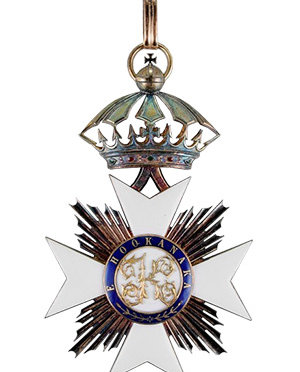
The Order of Kamehameha I is an order of knighthood established by Kamehameha V in 1865 to promote and defend the sovereignty of the Kingdom of Hawaiʻi.

After Lot Kapuāiwa took the throne as King Kamehameha V, he established the Order of Kamehameha I by special decree on April 11, 1865. The name is in recognition of his grandfather Kamehameha I, who was the founder of the Kingdom of Hawaii and the House of Kamehameha. The Order was awarded 57 times by King Kamehameha V, and 82 times by King Kalākaua.

Both native Hawaiians and foreigners could be appointed to the Order. Its purpose ise to promote and defend the sovereignty of the Kingdom of Hawaii.

The grades of the Order were determined by the number of living members in each of them. At any given time there could only be:

  • Royal Order of Kamehameha I Grand Cross.gif Knight Grand Cross with Collar (CGCOK) – Only for heads of state.
  • Royal Order of Kamehameha I Grand Cross.gif Knight Grand Cross (KGCOK) – 10 individuals.
  • Royal Order of Kamehameha I Commander and Companion.gif Knights Commander (KCOK) – 30 individuals.
  • Royal Order of Kamehameha I Commander and Companion.gif Knights Companion (KOK) – 50 individuals.

The Royal Order of Kamehameha I Design

The badge/medal is a Maltese cross in gold or silver with white enamel, surmounted by the Hawaiian crown. Rays of gold or silver are placed between the arms of the cross.

A white-enamelled disc imposed upon the cross bears an elaborate golden “K” at its centre; the blue-enamelled band surrounding the disc is inscribed “KAMEHAMEHA I” in golden letters, together with two golden laurel branches. A comparable disc on the reverse of the badge is inscribed “E HOOKANAKA” (“Order of Fraternity”, in Hawaiian).

Members of this grade wore the badge of the Order attached to a golden collar, the decorative links of which alternated the monogram “K”, surrounded by a green-enamelled laurel crown, with the royal crown and a small enamelled badge of the Order. The breast star was identical to that worn by Knights Grands Cross, suspended from a broad red sash edged by a narrow white stripe on each side.

The sash is worn over the bearer’s right shoulder, its bow (from which the badge, sometimes decorated with brilliants, depended) resting on his left hip. The breast star was an octagonal silver star bearing the uncrowned badge of Order in gold and enamels.

Knights Commander wore the badge of the Order dependent from a red neck ribbon, which was edged in white and bore three white stripes. Knights of the Order wore the badge on the left breast, suspended from a ribbon of red and white stripes.

The King Hussein Medal

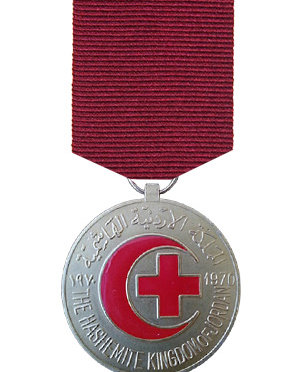
The King Hussein Medal is a medal awarded to British and American personnel involved in relief operations codenamed Operation Shoveller during and after the Civil War of September 1970. All personnel was presented with the medal by King Hussein at the end of the deployment.

Permission to wear this medal was never issued for Great Britain.

The King Hussein Medal Design

The medal is circular and struck in silver with a red enamel emblem.

The obverse bears the emblem of the Red Cross and Red Crescent and the inscription “THE HASEMITE KINGDOM OF JORDAN” and its Arabic equivalent, with the date 1970 and Arabic equivalent on both sides. The reverse has a seven-line inscription across the center.

The ribbon is plain crimson.