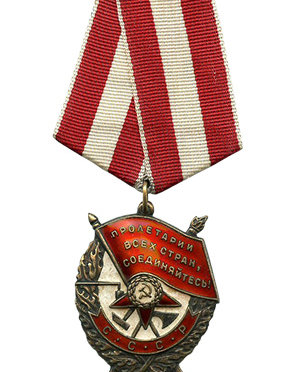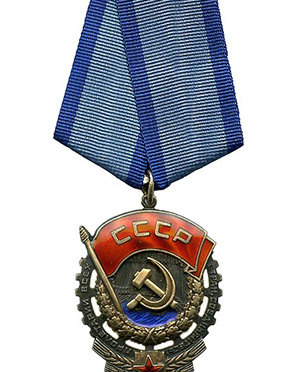
The Order of the Red Banner of Labor

The Order of the Red Banner of Labor was an order of the Soviet Union established to honor great deeds and services to the state and society

The Order of the Red Banner of Labor (or Орден Трудового Красного Знамени in Russian) was an order of the Soviet Union established to honor great deeds and services to the Soviet state and society in the fields of production, science, culture, literature, the arts, education, health, social and other spheres of labor activities.

It is the labor counterpart of the military Order of the Red Banner. A few institutions and factories, being the pride of Soviet Union, also received the order. The Order of the Red Banner of Labor could be awarded multiple times to the same recipient for successive deeds and long time merit

The Order of the Red Banner of Labor Design

The “type 1” Order consisted of a 38 mm wide by 43 mm high silver badge in the shape of a cogwheel, at center, a disc bordered along its entire outer diameter by panicles of wheat. Protruding from under the lower half of the central disc, a red enameled triangle pointing downwards. On the central disc in the background, a hydro electric dam, at center, a gilded hammer and sickle, at the top, a waving red banner bearing the inscription “Пролетарии всех стран, соединяйтесь!”, “Proletarians of the World, unite!”. At the very bottom of the cogwheel, the relief inscription “USSR” (“СССР”) on a stylized horizontal shield bisected by a smaller cogwheel meshing into the larger one.

On the otherwise plain reverse, a recess at center bearing a threaded post, two rivets used to secure the hammer and sickle and the award serial number engraved on the lower portion opposite the “USSR” inscription. The Order was secured to clothing with a threaded screw and nut arrangement. The earlier nuts were 28 mm in diameter, later ones measured 32 mm.

The “type 2” Order also consisted of a silver badge in the shape of a cogwheel, it measured 38 mm wide by 44 mm high. At the center, a disc surrounded by a gilded wreath of oak leaves bearing the relief image of a hydro electric dam, below the dam, blue enameled water, at the center of the disc, the gilded hammer and sickle, from the inner left side of the disc, a gilded mast bearing a waving red enameled banner protruding from the central disc, covering the upper portion of the cogwheel and protruding past its outer upper edge on which “USSR” (“СССР”) is inscribed in gilded letters.
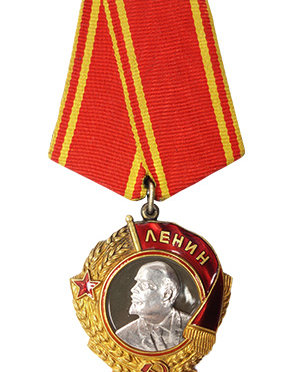
The Order of Lenin

The Order of Lenin (or Орден Ленина in Russian) was the highest civilian decoration bestowed by the Soviet Union. It was established in 1930.

The Order of Lenin (or Орден Ленина, Orden Lenina in Russian) was the highest civilian decoration bestowed by the Soviet Union. It was named after the leader of the Russian October Revolution and established by the Central Executive Committee on April 6, 1930. The Order of Lenin was awarded:

  • To civilians, for outstanding services provided to the State.
  • To members of the armed forces, for exemplary service.
  • To those who strengthened peace and promoted friendship and cooperation between peoples.
  • To those with meritorious services to the Soviet state and Soviet society.
  • From 1944 to 1957, the Order of Lenin was also used to reward 25 years of conspicuous military service.

The first Order of Lenin was awarded on 23 May 1930 to the newspaper Komsomolskaya Pravda. The Order could also be bestowed on cities, companies, factories, regions, military units, and ships – something that allowed them to apply the name of the Order into their official titles. The initial recipients also included three pilots, five industrial companies, and the Secretary to the Central Executive Committee Avel Enukidze. The first person to receive the Order was the test pilot Valery Chkalov in 1936. Among the first foreign recipients were a German and four US citizens, who received the Order of Lenin for helping in the reconstruction of Soviet agriculture and industry.

The Order of Lenin could be awarded multiple times. For example, Nikolay Patolichev, longtime Minister for Foreign Trade of the USSR, and Dmitriy Ustinov, Defence Minister in 1976–1984, received it 11 times.

Notable Recipients of the Order of Lenin

The Order of Lenin was awarded to the following notable individuals:

  • Fidel Castro (President of Cuba)
  • Yuri Gagarin (Cosmonaut, first human being in outer space)
  • Kim Il-sung (President of North Korea, awarded 2 times)
  • Nelson Mandela (Mandela, who led South Africa into democracy and out of apartheid, was awarded the Order of Lenin in 1990, the same year he was released from prison)
  • Ramón Mercader (Spanish NKVD agent who assassinated Leon Trotsky)
  • Joseph Stalin (1949)

The Order of Lenin Medal Design

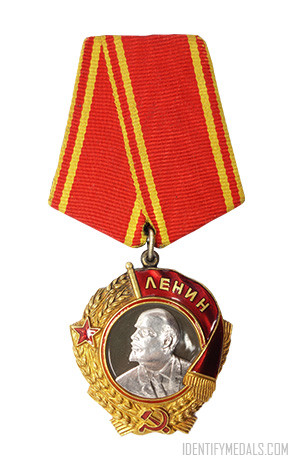
The Order of Lenin badge was originally worn by screwback on the left chest and without a ribbon. From 943 on, it was worn as a medal suspended from a red ribbon with pairs of yellow stripes at the edges. There are four designs for the Order of Lenin medal:

Order of Lenin First Design (1930-1932)

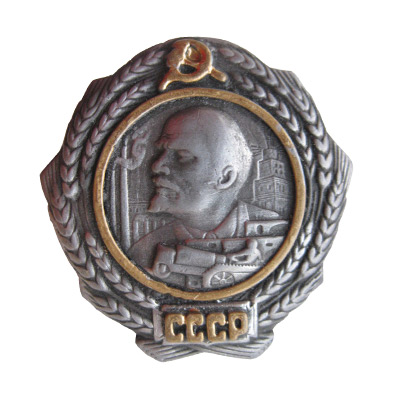
The first design of the Order of Lenin (awarded between 1930–1932) is a round badge with a central disc featuring Vladimir Lenin‘s profile surrounded by smokestacks, a tractor, and a building, possibly a power plant. It was sculpted by Pyotr Tayozhny and Ivan Shadr based on sketches by Ivan Dubasov. It was made by Goznak of silver with some lightly gold-plated features. A thin red-enameled border and a circle of wheat panicles surround the disc. At the top is a gold-plated hammer and sickle emblem, and at the bottom are the Russian initials for “USSR” (СССР) in red enamel. There were only about 800 of this design minted.

USSR Order of Lenin Type 1

Order of Lenin Second Design (1934-1936)

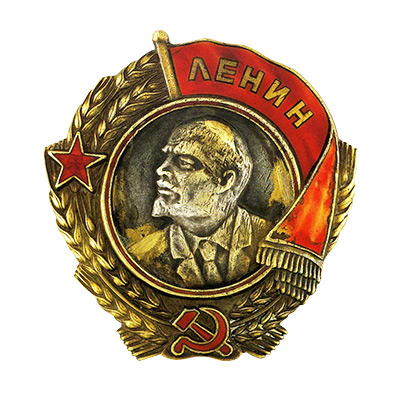
The second design of the Order of Lenin was awarded from 1934 until 1936. This design consists of a solid gold badge, featuring a silver-plated disc bearing Lenin’s portrait. The disc is surrounded by two golden panicles of wheat, and a red flag with the inscription “LENIN” in Cyrillic script (ЛЕНИН). On the left is a red star and at the bottom is the “hammer and sickle” emblem. Both are done in red enamel.

USSR Order of Lenin Type 2

Order of Lenin Third Design (1936-1943)

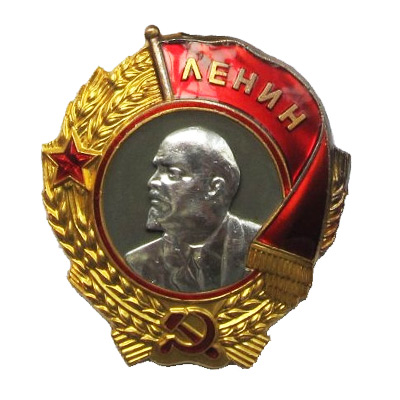
The third design of the Order of Lenin was awarded from 1936 until 1943. The design is the same as the second type, except that the central disc is enameled gray and Lenin’s portrait is made with a separate piece of platinum.

USSR Order of Lenin Type 3

Order of Lenin Fourth Design (1943-1991)

The fourth design of the Order of Lenin was awarded from 1943 until 1991. This version maintained the visual design elements of the third model, featuring the portrait of Vladimir Lenin. However, a significant change was the method of wearing the medal. While all previous versions were attached to clothing via a screwback mechanism, the fourth design was suspended from a ribbon, making it more adaptable and easier to wear on various types of clothing.

The ribbon used for the Order of Lenin was a red silk moiré ribbon, reflecting the symbolic color of the Soviet Union and its Communist Party. The medal itself retained its distinctive features: a gold badge with a platinum portrait of Lenin, surrounded by a wreath of wheat ears, a red banner, and a hammer and sickle at the bottom. This design was meant to symbolize the unity of the Soviet people and their dedication to the principles of communism.

USSR & Russian Medals and Awards - The Order of Lenin

What's the Value and Price of The Order of Lenin?

The Order of Lenin is a very rare and well-respected award. As such, prices for this medal can range from U$ 1000 for types 4 and 5, to over U$ 50,000 for type 1. These prices can get higher too if the medals come with the accompanying documents.

The Order of the Red Star

The Order of the Red Star (or Орден Краснoй Звезды in Russian) was a military decoration of the Soviet Union established on 6 April 1930.

The Order of the Red Star (or Орден Краснoй Звезды in Russian) was a military decoration of the Soviet Union established on 6 April 1930 by decree of the Presidium of the Supreme Soviet of the USSR.

It was awarded to soldiers of the Soviet Army, Navy, border and internal security forces, employees of the State Security Committee of the USSR, as well as NCOs and officers of the bodies of internal affairs; to units, warships, associations, enterprises, institutions and organizations; as well as to military personnel of foreign countries.

It was common for individuals to receive this prestigious award multiple times, with many being honored two, three, four, five, or even six times.

The Order of the Red Star Medal Criteria

The Order was awarded for personal courage and bravery in battle, successful operations of military units and formations, outstanding service in ensuring public safety and the security of the State Border of the USSR, exemplary performance of special command tasks and other outstanding deeds committed in peacetime, merit in the development of military science and technologies used in training of the Armed Forces of the USSR or merit in strengthening the defense capabilities of the socialist community.

In some cases, the Order of the Red Star was also used as a long service award (from 1944 to 1958) to mark fifteen years of service in the military, state security, or police.  Its statute was only defined on May 1930, amended on 7 May 1936, 19 June 1943, 26 February 1946, 15 October 1947, 16 December 1947 and by decree No 1803-X of 28 March 1980.

Between 1930 and 1941, the Order of Lenin was awarded approximately 22,000 times. However, during the four years of the Great Patriotic War, the number of awards surged dramatically to nearly 3,000,000. In total, from its inception in 1930 until the dissolution of the Soviet Union in 1991, the Order of Lenin was conferred around 3,870,000 times.

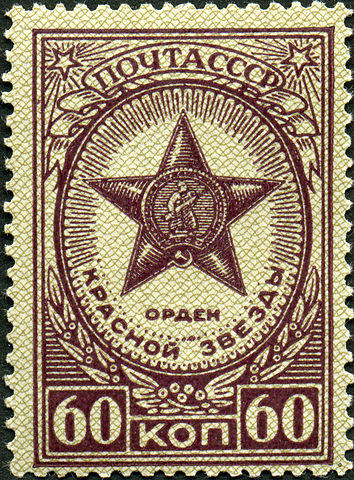
A 1946 Soviet 60 kopek stamp featuring the Order of the Red Star.
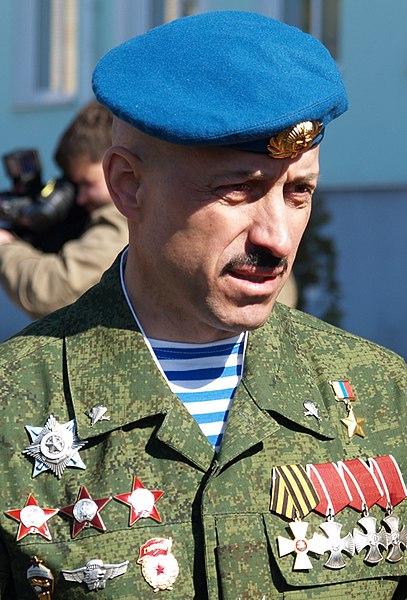
Lieutenant Colonel Anatoly Lebed, pictured wearing his three Orders of the Red Star earned during his service in Afghanistan.
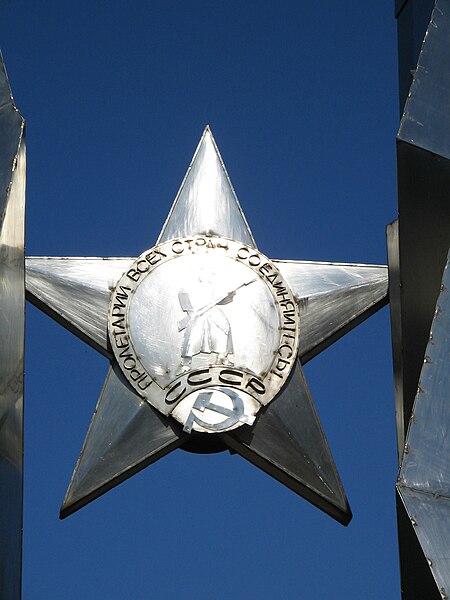
Fragment of the memorial to internationalist soldiers (Mykolaiv).

The Order of the Red Star Medal Design

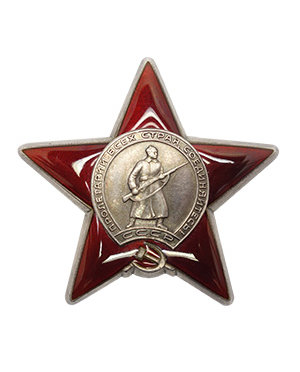
The Order of the Red Star is a red enameled 47mm to 50mm wide (depending on the variant) silver five pointed star. It was designed by artist Vasily Kupriyanov and sculptor Vladimir Golenetsky. 

In the center of the obverse is an oxidized silver shield bearing the image of a Red Army soldier wearing an overcoat and carrying a rifle, along the shield’s entire circumference, a narrow band bearing the Communist motto in relief, «Пролетарии всех стран, соединяйтесь!» Workers of the world, unite!“, the band below the soldier bore the relief inscription “USSR” («СССР»). Below the shield, the hammer and sickle also of oxidized silver.

The otherwise plain reverse bore the maker’s mark and the award serial number. The Order was attached to clothing by a threaded stud and screw attachment.

The ribbon of the Order of the red Star was a 24mm wide silk moiré dark red with a 5mm wide central silver stripe.

Find This Medal

Right Now on eBay 
Clicking a link to eBay may result in a referral commission being paid if a purchase is made.
Loading...

The Cross of St. George (Russia)

The Cross of Saint George is a state decoration of the Russian Federation initially established by Imperial Russia between 1807 and 1913.

The Cross of Saint George (or Георгиевский крест in Russian) is a state decoration of the Russian Federation initially established by Imperial Russia between 1807 and 1913.

The award was intended as a reward for “undaunted courage” by the lower ranks (soldiers, sailors and NCOs) of the military. There was only a single class with no restriction as to the number of awards per person. The first soldier to be awarded the Cross of Saint George was a cavalry non-commissioned officer named Yegor Ivanovich Mitrokhin. He received the award for distinction in the battle against the French at Friedland on 2 June 1807.

Over two million Saint George Crosses were distributed during the Great War and before the abdication of the tsar. They went to soldiers, nurses and members of the Red Cross. An enlisted man or NCO could be awarded the 4th class cross for his first brave act. A second notable act could then bring him the 3rd class cross, etc.

The Cross of Saint George could be awarded to foreigners. For example, the cross was awarded to the surviving Prussian veterans of the Napoleonic wars 1813/1815. 4500 decorations were made, although only 4264 were issued and about 1765 were returned to the Chancellery of Russian Orders after the death of their recipients and melted down.

The Cross of Saint George was reinstated into the Russian awards system in 1992.

The Cross of St. George Design

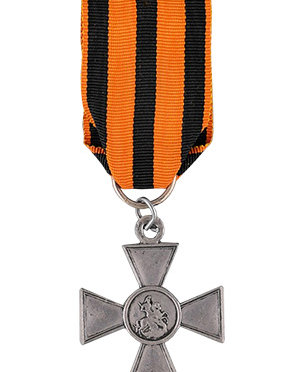
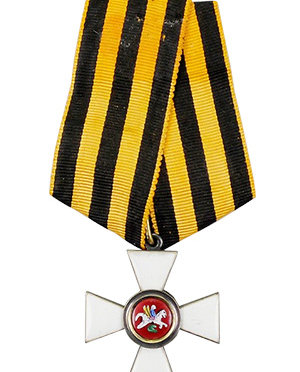
The modern Cross of Saint George is virtually identical to the imperial variant, a 34mm wide cross pattée worn on the left side of the chest with other medals. The first class and second class were struck in gold, the first class with a bow on the ribbon. The third and fourth classes were struck in silver, with the third class marked by a bow.

The obverse has a central medallion bearing the right-facing image of Saint George on horseback slaying the dragon. The reverse of the central medallion bears the Cyrillic monogram of the Order of Saint George “SG” (Russian: «СГ»). The reverse of the two lateral arms of the cross bears the serial number of the award, the left arm having an embossed letter “N” at its left extremity. The class of the cross is embossed on the reverse of the lower arm, “1-я степ” for the first class, “2-я степ” for the second class, “3-я степ” for the third class and “4-я степ” for the fourth class.

All four crosses hang from the standard Russian pentagonal mount covered with an overlapping 24mm wide silk moiré ribbon of Saint George (black and orange bicolor pattern, with three black and two orange stripes). When the cross is not worn, a ribbon bar is worn on the uniform. The ribbon bar is 8mm high by 24mm wide, it bears a 7mm high golden metallic Roman numeral denoting the class of the award.

The Order of St. George (Russia)

The Order of Saint George is the highest military decoration of the Russian Federation and was originally established 26 November 1769.

Time Period: Pre-WW1
Year of Institution: 26 November 1769
Country: Russia & USSR

The Order of Saint George (or Орден Святого ГеоргияOrden Svyatogo Georgiya in Russian) is the highest purely military decoration of the Russian Federation. It was originally established 26 November 1769 as the highest military decoration of the Russian Empire by Empress Catherine the Great.

The current Order of Saint George is awarded to highest and senior military officers for the conduct of military operations to protect the Fatherland from attack by an external enemy which resulted in the complete defeat of the enemy, for the execution of combat and other operations in other states aimed at restoring international peace and security, or for being a model of military science with feats that exemplify military prowess; the Order is also conferred upon officers who were previously awarded state awards of the Russian Federation for distinction in combat.

The order was revived in the Russian Federation on 8 August 2000 by Decree №1463 of the President of Russia. The current award criteria were amended on 7 September 2010 by Presidential Decree 1099.

The Order of St. George Design

The Cross is a white enameled cross pattée with a central medallion bearing the image of Saint George on horseback slaying the dragon. The cross measures 60mm across in the case of the Order first class (50mm for third class and 40mm for the fourth) and is worn on a sash in the colours of Saint George (orange and black).

The Star is a four-pointed silver gilt star with a gold central medallion bearing the cipher of Saint George “SG” topped by a crown and surrounded by a black enamelled band bearing the motto of the order “For Service and Bravery” (“Za Sluzhbu i Khrabrost“). The star is worn on the left breast for both the Order first and second classes.

The ribbon of the Order of Saint George is orange with three black stripes, commonly called “George’s Ribbon”. It symbolizes fire and gunpowder: the Russian “colors of military glory”, and is also thought to be derived from the colors of the original Russian imperial coat of arms (black eagle on a golden background). It was subsequently associated to the colors of the Russian Guard units.

The Order of Saint Andrew the Apostle

The Order of St. Andrew is the highest order of the Russian Federation. It was established in 1698 and the motto is “For Faith and Loyalty”.

The Order of St. Andrew the Apostle the First-Called (or Орден Святого апостола Андрея Первозванного in Russian) is the highest order of the Russian Federation. Established as the first and highest order of chivalry of the Russian Empire in 1698, it was abolished under the USSR before being re-established as the top Russian order in 1998.

The Order was established in 1698 by Tsar Peter the Great, in honor of Saint Andrew, the first apostle of Jesus and patron saint of Russia. It was bestowed in a single class and was only awarded for the most outstanding civilian or military merit.  Saint Andrew’s Cathedral in Saint Petersburg was the chapter church of this order of chivalry.

A Brief History of the Russian Order of Saint Andrew

During Peter the Great’s travels in the West as part of the Great Embassy, Peter the Great observed the practice of awarding honors, a departure from the traditional Russian method of rewarding service with money or estates. For instance, he witnessed first hand the awards ceremonies for England’s Order of the Garter and Austria’s Order of the Golden Fleece and noticed the loyalty and pride of the awardees. It also saved the state land and money.

The first recipient of the Order of St. Andrew was Count Fyodor Golovin, a boyar (member of the highest rank of feudal nobility) and the first Chancellor of the Russian Empire.

Until the Russian Revolution in 1917, slightly over a thousand individuals were bestowed with this honor. These included:

  • Sir John Acton, 6th Baronet: A prominent British naval officer and Prime Minister of Naples.
  • Prince Adalbert of Prussia (1811–1873): A notable member of the Prussian royal family.
  • Adolf Frederick, King of Sweden: King of Sweden from 1751 until his death in 1771.
  • Grand Duke Adolphe of Luxembourg: The first Grand Duke of Luxembourg from the House of Nassau-Weilburg.
  • Prince Albert of Prussia: A general in the Prussian army and regent of the Duchy of Brunswick.
  • Alexander I of Russia: Emperor of Russia from 1801 to 1825, known for his role in defeating Napoleon.
  • Alexander II of Russia: Emperor of Russia from 1855 to 1881, famed for his emancipation of the serfs.
  • Otto von Bismarck: The first Chancellor of the German Empire, recognized for unifying Germany.
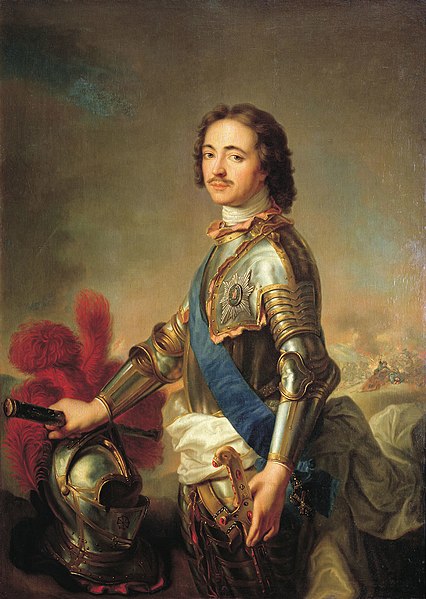
Emperor Peter the Great.
Portrait of Peter I of Russia (1672-1725). Arkhangelskoye Palace collection.
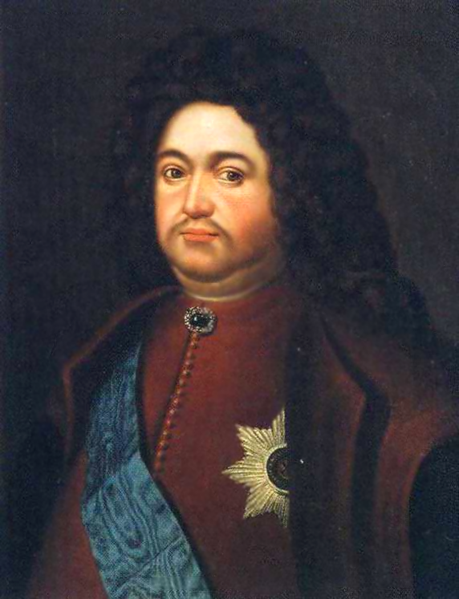
Count Fedor Golovin, portrait from the 18th century.
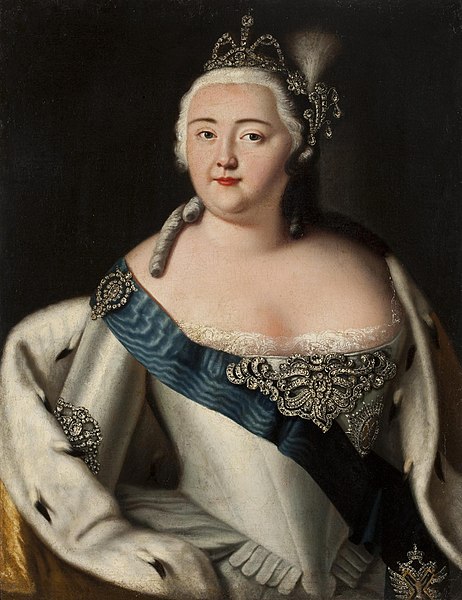
Portrait of Elizaveta Petrovna (Elizabeth I of RUssia) between 1701 and 1800. Hermitage Museum.

The Order of Saint Andrew During the Revolution

During the Russian Revolution of 1917, the Order of St. Andrew, along with other imperial orders, was officially abolished by the Bolshevik government. The new Soviet regime sought to eliminate all vestiges of the Russian imperial system, which included the prestigious chivalric orders that had been symbols of the tsarist state and its aristocracy.

Existing recipients of the Order of St. Andrew were stripped of their titles and privileges. The revolutionary government viewed these honors as incompatible with the new socialist ideology that aimed to dismantle class distinctions and aristocratic privileges.

Despite its official abolition in Russia, the Russian Imperial House in exile continued to recognize the Order of St. Andrew. The heads of the House of Romanov, living in exile, maintained the tradition of awarding the order to individuals who demonstrated exceptional service to the Russian community and the broader international community.

Reinstatement and Modern Status

After the fall of the Soviet Union, the Russian Federation reinstated the Order of St. Andrew as the highest state decoration. Today, the Order of St. Andrew the Apostle the First-Called is conferred upon distinguished statesmen, public figures, and notable individuals from various fields such as science, culture, the arts, and industry, in recognition of their exceptional contributions to the prosperity, prestige, and honor of Russia.

Additionally, the Order may be bestowed upon foreign heads of state for their significant service to the Russian Federation.

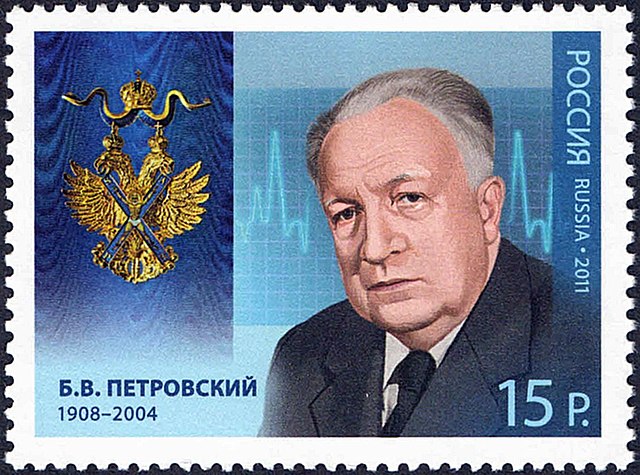
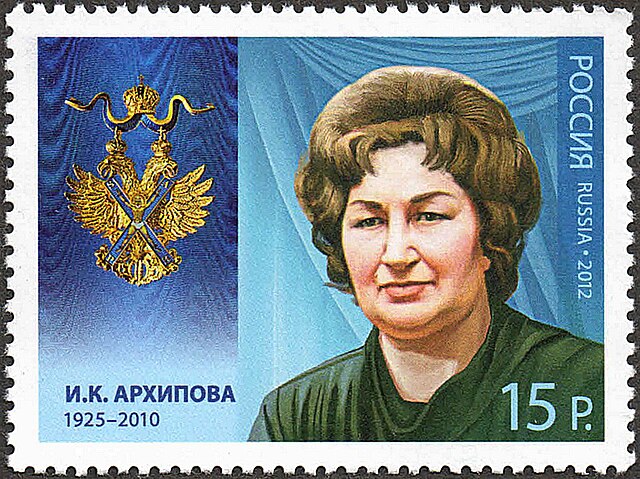
Modern Awardees: Boris Petrovsky
Modern Recipients: General surgeon, health minister of the Soviet Union Boris Petrovsky.
Modern Recipients: Opera singer Irina Arkhipova.

The Order of Saint Andrew Medal Design

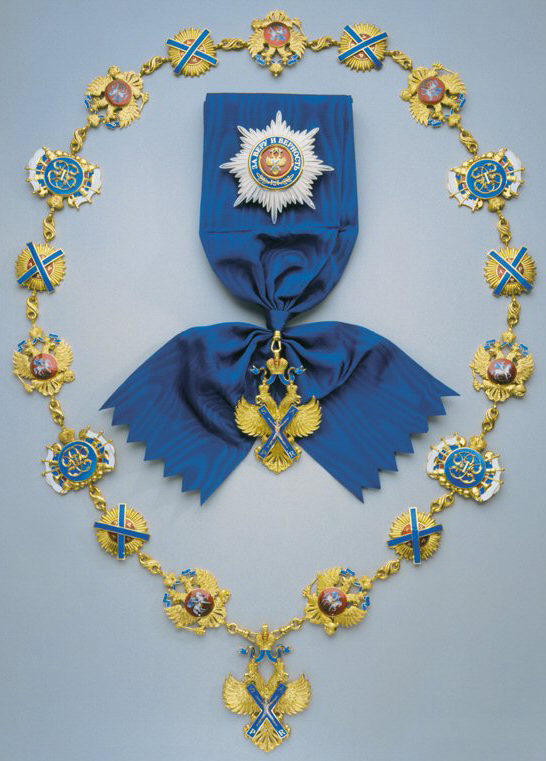
The insignia of the order consisted of a badge and star.

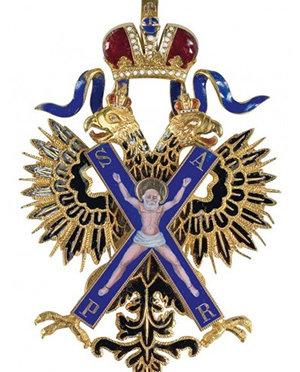
The badge is an enameled crowned black double-headed eagle bearing a blue St. Andrew’s Cross (saltire) with St. Andrew crucified upon it; on the arms of the saltire were the Latin letters ‘SAPR’ (‘St. Andrew, Patron of Russia’). It was worn on a pale blue sash over the right shoulder, or on special occasions on an elaborate ‘collar’ (chain).

The star is an eight-pointed silver star bearing a miniature of the badge on a golden background at the center, surrounded by the motto “For Faith and Loyalty” (or За веру и верность, Za Veru i Vernost in Russian) on a blue ring. It was worn on the left chest.

The insignia of the order could be awarded “with diamonds” as a special distinction. 

Order Of Saint Andrew The Apostle.
Order Of Saint Andrew The Apostle. Star, badge, and collar with badge.

Find an Order of Saint Andrew

Right Now on eBay 
Clicking a link to eBay may result in a referral commission being paid if a purchase is made.
Loading...

The Order of the Red Banner

The Order of the Red Banner was the first Soviet military decoration, established in 1918 by decree of the All-Russian Central Executive Committee.

The Order of the Red Banner (or Орден Крaсного Знамени in Russian) was the first Soviet military decoration. It was established on 16 September 1918, during the Russian Civil War by decree of the All-Russian Central Executive Committee.

The Order was awarded to individuals as well as to military units, cities, ships, political and social organizations, and state enterprises. Recipients were recognized for extraordinary heroism, dedication, and courage demonstrated on the battlefield. In later years, it was also awarded on the twentieth and again on the thirtieth anniversary of military, police, or state security service without requiring participation in combat (the “Long Service Award” variant).

The Order of the Red Banner Medal Design

The Order consisted of a white-enameled badge, which had a golden hammer and sickle badge surrounded by two golden panicles of wheat on a Red Star, backed by crossed hammer, plough, torch, and a red flag bearing the motto Proletarians (Workers) of the World, Unite!.

The medal was surrounded by two golden panicles of wheat; at the bottom were the letters “SSSR” (СССР). Additional awards of the Order bore a white enameled shield with a silver sequence number at the bottom of the obverse. A recipient of multiple Orders of the Red Banner would wear a basic badge of the Order with a numeral corresponding to the sequence of the award on a cartouche over the wheat at the bottom of the badge.

The early variants of the Order were screw back badges to allow wear on clothing. Later variants (from 1943) hung from a standard Soviet pentagonal mount with a ring through the suspension loop. The mount was covered with an overlapping 24mm wide red silk moiré ribbon with 1.5mm wide white edge stripes and a 7mm wide white central stripe.

The Order of the Red Banner was worn on the left side of the chest and when in the presence of other Orders and medals of the USSR, was placed immediately after the Order of the October RevolutionIf worn in the presence of Orders or medals of the Russian Federation, the latter have precedence.

Find This Medal Online

Right Now on eBay 
Clicking a link to eBay may result in a referral commission being paid if a purchase is made.
Loading...