The Police Long Service and Good Conduct Medal

The Police Long Service and Good Conduct Medal was instituted in 1951 and is awarded for twenty aggregate years of service in the police.

The Police Long Service and Good Conduct Medal is an honor bestowed upon police officers in the United Kingdom. Established in 1951, it is awarded to individuals who have completed twenty aggregate years of service in the UK police forces.

The criteria for receiving this medal were established by Royal Warrant under King George VI in June 1951. It is presented as a token of appreciation from the Sovereign for long and meritorious service provided by members of the UK Police Forces. To be eligible for this award, an officer must be recommended by the Chief Constable to the Home Secretary. The recommendation must confirm the following:

  • The officer has served as a member of a Police Force.
  • The officer has demonstrated efficient service for the qualifying period.
  • The officer’s character has been exemplary.

The Police Long Service and Good Conduct Medal Design

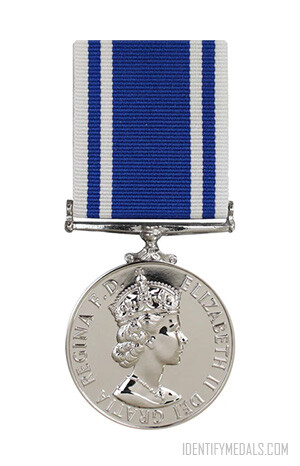
The Police Long Service and Good Conduct Medal is a circular decoration, measuring 1.4 inches (36 mm) in diameter. Originally crafted from cupro-nickel, modern versions are rhodium plated.

The obverse side displays the effigy of the reigning monarch. On the reverse side, there is an image of Justice holding scales in her left hand and a wreath in her right, encircled by the inscription ‘FOR EXEMPLARY POLICE SERVICE’.

The suspender comes in both swivelling and non-swivelling formats and is straight in shape. Recipients’ ranks and names are engraved on the rim using impressed capital letters.

The medal is suspended from a dark blue ribbon, 1.25 inches (32 mm) wide, with two thin white stripes on each edge. Bars for additional service of 30 and 40 years were authorized on March 11, 2022. 
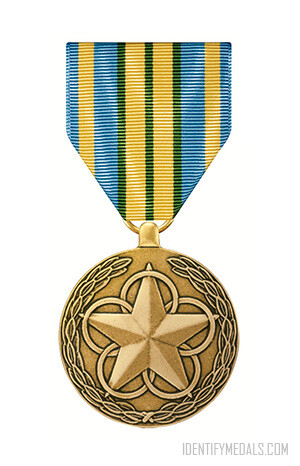
The Military Outstanding Volunteer Service Medal

The Military Outstanding Volunteer Service Medal is a USA award established by George H. W. Bush in 1993 for substantial volunteer service.

The Military Outstanding Volunteer Service Medal (MOVSM) was established by George H. W. Bush through Executive Order 12830 on January 9, 1993, and the design was created by the Institute of Heraldry. It was first awarded in December 1993.

This medal honors members of the military—active duty, reserve, and National Guard—who go above and beyond their required duties by contributing significant volunteer service to their local communities. The volunteer work must be sustained, direct, and produce tangible results that reflect positively on the military and the Department of Defense. The definition of volunteer service is intentionally broad, encompassing a wide range of activities such as Volunteer Emergency Services (e.g., Civil Air Patrol, Coast Guard Auxiliary, or volunteer firefighting/EMS/Rescue Squad), involvement with organizations like the Boy Scouts of America or Habitat for Humanity, and various community initiatives within local, state, or federal parks and forests.

There is no specific time requirement to qualify for the MOVSM, as approval authorities assess each case to determine if the service merits this special recognition. The medal is intended to recognize ongoing and substantial community support rather than a single act or achievement. Additionally, direct involvement in community activities is emphasized, while merely attending membership meetings or social events of a community service group does not count as qualifying service.

MOVSM Multiple Awards: The Service Ribbons

  • First award: service ribbon with no service stars.
  • Second award: service ribbon with one service star.
  • Third award: service ribbon with two service stars.
  • Fourth award: service ribbon with three service stars.
  • Fifth award: service ribbon with four service stars.
  • Sixth award: service ribbon with silver service star.
  • Seventh award: service ribbon with silver and bronze service stars.
  • Eighth award: service ribbon with silver and two bronze service stars.
  • Ninth award: service ribbon with silver and three bronze service stars.

The Military Outstanding Volunteer Service Medal Design

The medal is bronze and measures 1 1/8 inches in diameter. On the obverse side, it features five interlaced annulets behind a five-pointed star, all encircled by a laurel wreath. The reverse side depicts an oak sprig with three leaves and two acorns, with the inscription “OUTSTANDING VOLUNTEER SERVICE” above and “UNITED STATES ARMED FORCES” below.

The suspension and service ribbon is 1 3/8 inches wide and consists of various stripes: 1/8 inch bluebird, 1/8 inch goldenlight, 3/16 inch bluebird, 1/16 inch green, 5/32 inch goldenlight, center 1/16 inch green, 5/32 inch goldenlight, 1/16 inch green, 3/16 inch bluebird, 1/8 inch goldenlight, and 1/8 inch bluebird.

Additional awards are denoted by five-pointed bronze service stars (one per additional award) and five-pointed silver service stars (representing five awards each).

The Medal for Service at the Chernobyl Nuclear Disaster

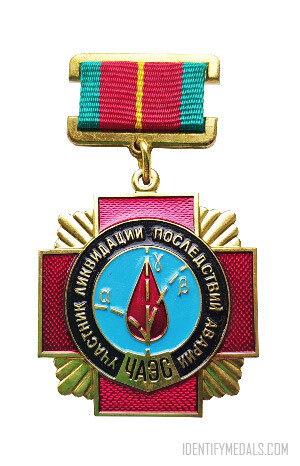
The Medal for Service at the Chernobyl Nuclear Disaster or Chernobyl Liquidators Medal was awarded for participation in the nuclear clean up.

The Chernobyl Nuclear Disaster Service Medal or Chernobyl Liquidators Medal holds a unique distinction as the sole medal globally granted for involvement in a nuclear cleanup operation. The initial responders to the catastrophic Chernobyl event were firefighters, unaware of the peril they faced and assured of minimal radiation exposure. Lacking proper protective gear, they wore only lightweight gas masks. Tragically, many have since perished, while others endure a slow and agonizing decline.

Initially, authorities opted to conceal information from the public, and first responders received standard Firefighter’s Bravery medals. The disaster occurred just before the scheduled May Day parade, leading thousands to march outdoors, unwittingly inhaling radioactive particles instead of remaining indoors. This negligence is regarded by many Russians as another instance of the Party elite’s disregard for Soviet citizens. It wasn’t until the wind carried radioactive dust beyond the border that substantial action was taken, including the deployment of specialized military units.

Upon the medal’s establishment, it was conferred upon all those who sacrificed their lives and well-being in the aftermath of the incident.

The Chernobyl Liquidators Medal Design

The medal is crafted with a gilded finish complemented by enamel in black, red, and turquoise hues. At the heart of the design and in the obverse lies a depiction of the atom splitting into Alpha, Beta, and Gamma radiation.

The Pearl Harbor Commemorative Medal

The Pearl Harbor Commemorative Medal was established by the United States Congress in 1990 and awarded for combat operations.

The Pearl Harbor Commemorative Medal, also referred to as the Pearl Harbor Survivor’s Medal, is a bronze commemorative medal established by the United States Congress on November 5, 1990 (P.L. 101-510, 104 Stat. 1721).

To qualify for the award, individuals must have been members of the Armed Forces of the United States present in Hawaii on December 7, 1941, and engaged in combat operations against Imperial Japanese military forces attacking Hawaii on that day. Those who were killed or wounded in the attack are considered to have participated in the combat operations.

Congress later expanded eligibility on September 23, 1996, allowing civilians who were present in Hawaii on December 7, 1941, and participated in combat operations against the attack to receive the award, regardless of their membership in the Armed Forces.

Next-of-kin of deceased individuals eligible for the award were permitted to apply for the medal, with one medal allotted per eligible person.

The Pearl Harbor Commemorative Medal Design

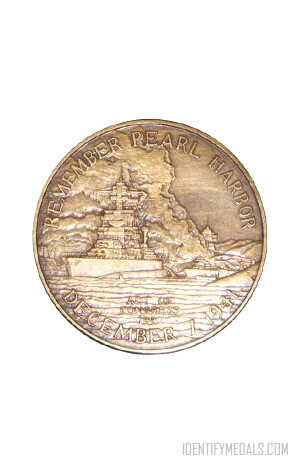
The medal is circular in shape and made of bronze. The obverse shows an mage of the harbor and an inscription reading “Remember Pearl Harbor – December 7 1941“. The reverse shows an eagle and the inscriptions “For Those Who Served” and “A Date Which Will Live in Infamy”.

measures 1.5 inches in diameter and is non-portable, meaning it is not intended to be worn on clothing.

The King Charles III Coronation Medal

The King Charles III Coronation Medal is a commemorative medal that celebrates the coronation of King Charles III and Queen Camilla in 2023.

The King Charles III Coronation Medal was crafted as a commemorative token to honor the crowning of King Charles III and Queen Camilla on May 6, 2023.

In the United Kingdom, recipients of the medal included:

  • Individuals who actively contributed to the official Coronation events in Westminster Abbey and processions, as well as other officially recognized ceremonial Coronation events.
  • Serving members of the Armed Forces who had completed five full calendar years of service by May 6, 2023, or who participated in Armed Forces Coronation events throughout 2023.
  • Frontline emergency personnel who had served in a paid, retained, or voluntary capacity, dealing with emergencies as part of their service conditions, and who had completed five full calendar years of service by May 6, 2023.
  • Publicly employed prison services personnel who had completed five full calendar years of service by May 6, 2023.
  • Living individual recipients of the George Cross and the Victoria Cross.

In total, over 400,000 medals were awarded.

The King Charles III Coronation Medal Design

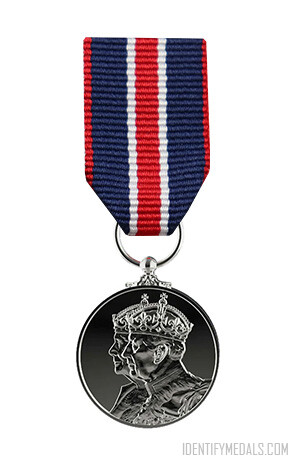
The medals are crafted from nickel silver. On the obverse side, there is a crowned effigy of the King and Queen facing left. The reverse side displays the Royal Cypher CiiiR surmounted by the Tudor Crown, a laurel wreath, and the date of the coronation, which is May 6, 2023.

Worcestershire Medal Service issues the medals, with the effigy on the obverse face modeled by Martin Jennings. The reverse was designed by Phil McDermott of the Worcestershire Medal Service.

Find This Medal Online

Right Now on eBay 
Clicking a link to eBay may result in a referral commission being paid if a purchase is made.
Loading...

The Operational Service Medal for Congo

The Operational Service Medal for Congo was awarded to all British personnel that served between June and September 2003 on Operation Coral.

The Operational Service Medal for the Democratic Republic of Congo is a campaign medal conferred upon all British personnel who served during the period of June to September 2003 as part of Operation Coral. This operation marked the British contribution to the multinational peacekeeping effort led by France in the Democratic Republic of Congo, occurring during the latter phases of the Second Congo War.

The Operational Service Medal (also known as OSM) was established in 1999 to replace the General Service Medal (1962) for all new operations. A separate medal of the same design is awarded for each campaign, differentiated by a distinct ribbon. 

The General Service Medal for Congo Qualifying Criteria

The medal with a clasp is conferred for either 25 days of continuous service in Bunia, located in the Ituri Province of the Congo, or completion of five round-trip operational flights between Entebbe and Bunia. This service must have taken place between June 14 and September 10, 2003, as part of Operation Coral.

There is no specific minimum duration required for individuals who were killed, wounded, or disabled during operations, or for those who received decorations for their operational service, including commendations and mentions in dispatches.

The service that qualifies for the Operational Service Medal also contributes towards the period necessary to receive the Accumulated Campaign Service Medal.

British military personnel who served with United Nations forces in the Congo from November 30, 1999, for a minimum of 90 days as part of the MONUC or MONUSCO missions are eligible to wear the United Nations Medal with the appropriate ribbon.

The General Service Medal for Congo Design

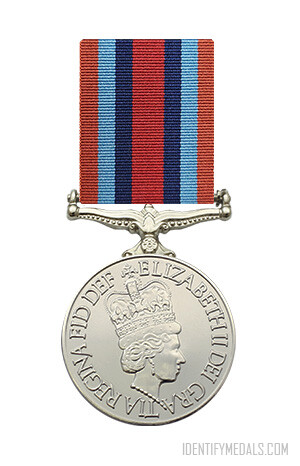
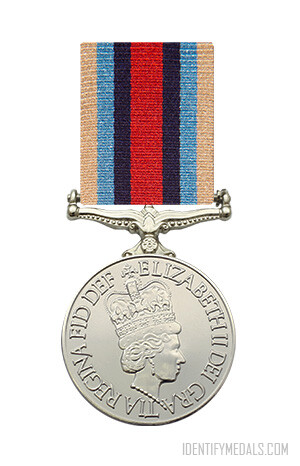
The Operational Service Medal for the Democratic Republic of Congo features a silver circular design.

On the obverse side, it displays the crowned effigy of Queen Elizabeth II along with the inscription ELIZABETH II DEI GRATIA REGINA FID. DEF.

The reverse side showcases the Union Flag encircled by the inscription FOR OPERATIONAL SERVICE, with the four primary compass points depicted alongside four Coronets: Royal (top left), Naval (top right), Mural-Army (bottom left), and Astral-Royal Air Force (bottom right).

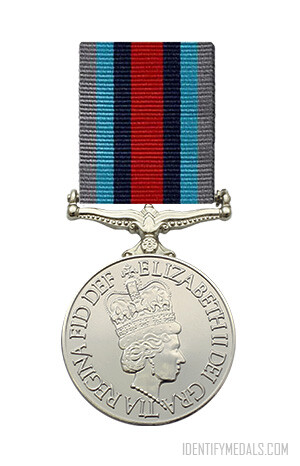
Its ribbon consists of a wide central red stripe flanked by navy blue and light blue stripes, symbolizing the three services, and an outer stripe of ochre representing the Congolese landscape.

Each medal is accompanied by a DROC clasp, with a silver rosette indicating the clasp when worn on the ribbon bar.

The General Service Medal Variants

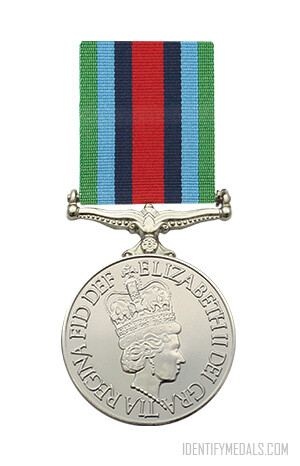
The OSM has been awarded for four separate campaigns, each with a distinctive ribbon. The other three are:

Buy an OSM Medal Online

Right Now on eBay 
Clicking a link to eBay may result in a referral commission being paid if a purchase is made.
Loading...

The Cadet Corps Medal

The Cadet Corps Medal was established by the Republic of South Africa in 1966 for twenty years of effective service in the School Cadet Corps.

The Cadet Corps Medal, established by the Republic of South Africa in 1966, honored officers in the School Cadet Corps for twenty years of effective service. A clasp could be earned after thirty years of qualifying service.

Recipients of the Cadet Corps Medal were officers in the School Cadet Corps recognized for twenty years of commendable service, which did not necessarily need to be continuous. An additional clasp could be granted after thirty years of qualifying service.

The initial recipients of the Cadet Corps Medal were announced in South African Defence Force Order 134/67 on November 24, 1967. Subsequently, deserving officers in the Cadet Corps received the medal annually.

The Cadet Corps Medal Design

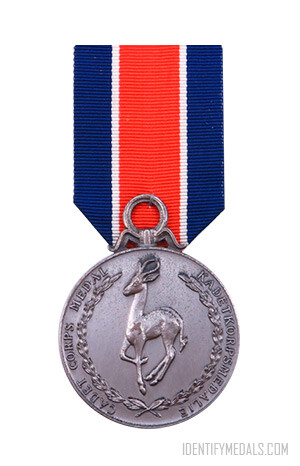
The Cadet Corps Medal is a silver medallion, 38 millimetres in diameter and 3 millimetres thick, featuring a raised rim. It portrays the prancing springbok emblem of the School Cadet Corps of the South African Defence Force, encircled by a wreath of proteas. The inscription “CADET CORPS MEDAL” appears on the left, with “KADETKORPSMEDALJE” on the right.

On the reverse side, there is a raised rim and the pre-2000 South African Coat of Arms is displayed.

The ribbon measures 32 millimetres wide and consists of an 8 millimetres wide dark blue band, followed by a 1½ millimetres wide white band, repeated in reverse order, and separated by a 13 millimetres wide orange band. These colors represent the pre-1994 South African flag.

The De Wet Decoration

The De Wet Decoration was established by the Republic of South Africa in 1965 as a military long service award.

The De Wet Decoration, designated by post-nominal letters DWD, was established by the Republic of South Africa in 1965 as a military long service award. Initially, it was exclusively granted to officers serving in the Commandos, the rural civil defense division of the South African Defence Force, in recognition of twenty years of commendable service and exemplary conduct. However, in 1986, eligibility for the decoration was extended to all ranks within the Commandos.

Recipients of the De Wet Decoration could be honored with a clasp after completing thirty years of dedicated service. In instances where the decoration is not worn, individuals holding the clasp adorn a button featuring the letters “DWD” enclosed within a circle on their ribbon bar.

The De Wet Decoration Design

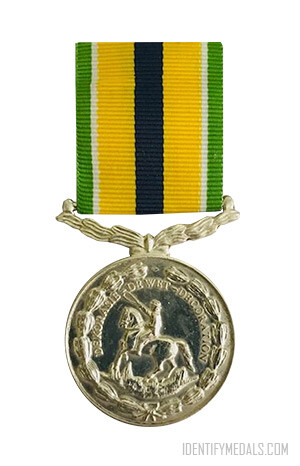
The De Wet Decoration is a circular silver medallion, measuring 38 millimeters in diameter and 3 millimeters in thickness. It features an image of General Christiaan de Wet on horseback during the Second Boer War, surrounded by a wreath of proteas. The inscription “DEKORASIE ~ DE WET ~ DECORATION” borders the depiction.

On the reverse side, the pre-1994 South African Coat of Arms is displayed, with the decoration number impressed or engraved beneath it.

The ribbon measures 32 millimeters in width and consists of alternating bands of green, white, and yellow. Specifically, there is a 3 millimeters wide green band, followed by a 2 millimeters wide white band, and an 8 millimeters wide yellow band. These bands are repeated in reverse order, separated by a 6 millimeters wide dark blue band positioned at the center.

The John Chard Decoration

The John Chard Decoration was a military accolade for long service, established by the Union of South Africa on April 6, 1952.

The John Chard Decoration, designated by the post-nominal letters JCD, was a military accolade for long service, established by the Union of South Africa on April 6, 1952. It was conferred upon members of the Citizen Force of the South African Defence Force in recognition of twenty years of meritorious service and commendable conduct. Additional clasps could be granted for thirty and forty years of service, respectively.

This decoration was bestowed upon all ranks of the Citizen Force for twenty years of efficient service, which did not necessarily need to be continuous. Initially, it was one of only three awards for long service that granted recipients the use of post-nominal letters. The other two were the De Wet Decoration (DWD), presented to Commando members, and the now-defunct Efficiency Decoration (ED).

The John Chard Decoration Design

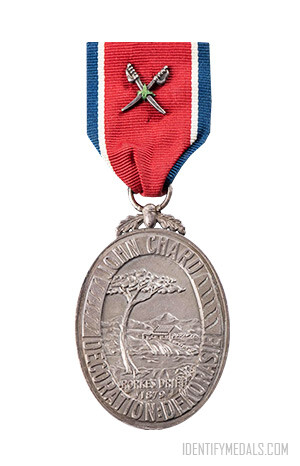
The John Chard Decoration is an oval silver medallion, measuring 39 millimetres wide, 51 millimetres high, and 3 millimetres thick. It portrays a scene from the 1879 battle at Rorke’s Drift in Natal, featuring a tree, the river, and the mission station. This was the site where Lieutenant Chard and ten of his men earned the Victoria Cross (VC). The depiction is inscribed with “RORKE’S DRIFT 1879” and encircled by the words “JOHN CHARD” at the top and “DECORATION : DEKORASIE” at the bottom.

The reverse side features the pre-1994 South African coat of arms. Original decorations, produced by the South African Mint, exhibit a raised rim and a separately crafted ribbon suspender affixed to the top of the decoration, as shown in the illustration above. The decoration number was either impressed or engraved at the bottom on the rim.

The ribbon mirrors that of the John Chard Medal, measuring 32 millimetres wide. It consists of alternating dark blue, white, and dark red bands, each with varying widths (3 millimetres, 2 millimetres, and 22 millimetres respectively).

The Permanent Force Good Service Medal

The Permanent Force Good Service Medal was established by the Republic of South Africa in 1961 as a replacement for the Union Medal.

The Permanent Force Good Service Medal was established by the Republic of South Africa in 1961, coinciding with South Africa’s transition to a republic, as a replacement for the Union Medal. It was bestowed upon Permanent Force members of the South African Defence Force in recognition of eighteen years of commendable service and conduct.

This medal honored Permanent Force members of the South African Defence Force for their eighteen years of dedicated service. Additionally, a clasp could be conferred for thirty years of service.

The Permanent Force Good Service Medal Design

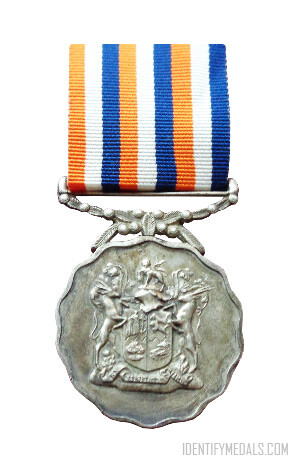
The Permanent Force Good Service Medal is a circular medallion featuring a scalloped edge and raised rim, measuring 38 millimeters in diameter and 3 millimeters thick at the rim. Crafted in silver, it showcases the pre-1994 South African Coat of Arms. Adorning the ribbon suspender are decorations of proteas and leaves.

On the reverse side, inscriptions read “VIR LANGDURIGE DIENS EN GOEIE GEDRAG” and “FOR LONG SERVICE AND GOOD CONDUCT”, with a raised rim and decorated ribbon suspender mirroring those on the obverse. The medals and ribbon suspenders were separately minted and later joined by soldering. The medal number was either stamped or engraved at the bottom of the rim.

The ribbon measures 32 millimeters in width, featuring three bands of orange, white, and blue, repeated three times. The outer orange and blue bands are each 4 millimeters wide, while the seven inner bands are approximately 3½ millimeters wide. These colors—orange, white, and blue—are taken from the pre-1994 national flag. It bears an identical resemblance to the ribbon of the Union Medal.