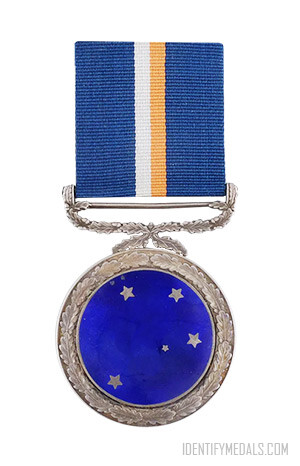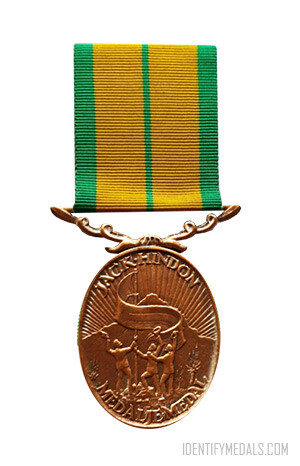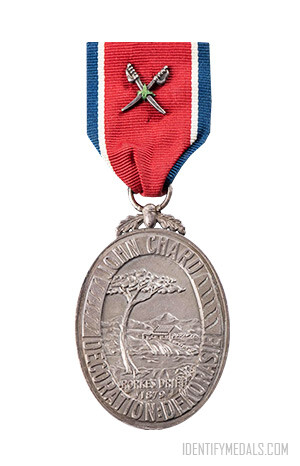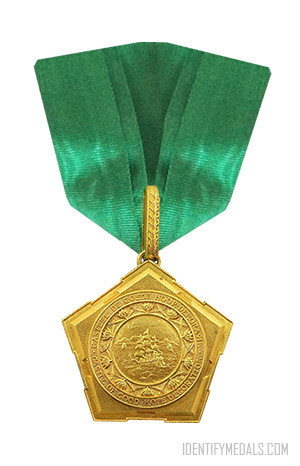
The Order of the Companions of O. R. Tambo

The Order of the Companions of O.R. Tambo is a South African order created to award heads of state and senior diplomats for friendship to SA.

The Order of the Companions of O. R. Tambo (SCOT/GCOT/COT) is a distinguished South African accolade. Established on December 6, 2002, it is conferred by the President of South Africa upon foreign citizens who have advanced South African interests and aspirations through cooperation, solidarity, and support.

Named in honor of the late Oliver Tambo, who served as the president-in-exile of the African National Congress for numerous years, the order pays tribute to his enduring legacy and commitment to the advancement of South Africa’s ideals.

There are currently three classes of appointment. In descending order of precedence, they are:

  • Supreme Companion of OR Tambo in gold, for heads of state and, in special cases, heads of government (SCOT)
  • Grand Companion of OR Tambo in silver, for heads of government, ministers of state, supreme court judges, presidents of legislatures, secretaries of state, ambassadors, commanders-in-chief (GCOT)
  • Companion of OR Tambo in bronze, for legislators, envoys, senior military officers (COT)

The Order of the Companions of O. R. Tambo Design

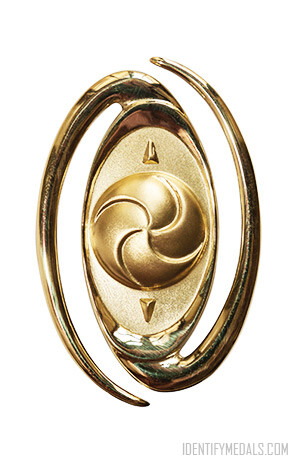
The insignia of the order is oval-shaped and features a symbol reminiscent of the Taijitu, flanked by two arrowheads and framed by two mole snakes. This symbolizes the convergence of diverse spiritual energies, while the snakes represent unity and assistance. On the reverse side, the South African coat of arms is prominently displayed.

The ribbon, worn around the neck, is white and adorned with recurring grey symbols down the center. All three classes of the order are worn in this manner.

In addition to the badge, recipients are presented with a carved wooden walking stick. The walking stick is embellished with a serpent winding around the shaft and a spoon-shaped head displaying the order’s emblem and the national coat of arms. This walking stick serves as a symbol of support, solidarity, and a commitment to stand by the recipient in return.

More South African Orders

The Order of Mapungubwe

The Order of Mapungubwe is a South African order created to award citizens who have served the interests of the country internationally.

The Order of the Mapungubwe is a prestigious South African civilian accolade order established in 2002. It honors South African citizens whose accomplishments resonate on an international scale and contribute to the advancement of South Africa’s interests.

Regarded as South Africa’s most esteemed honor, the order derives its name from the ancient civilization of Mapungubwe, situated in present-day South Africa. Established on December 6, 2002, its inaugural recipient in the highest class was the esteemed former president, Nelson Mandela.

The order (which originally had three classes) was enlarged to four in 2004. These are:

  • Platinum (OMP), for exceptional and unique achievements;
  • Gold (OMG), for exceptional achievements;
  • Silver (OMS), for excellent achievements; and
  • Bronze (OMB), for outstanding achievements.

The Order of Mapungubwe Design

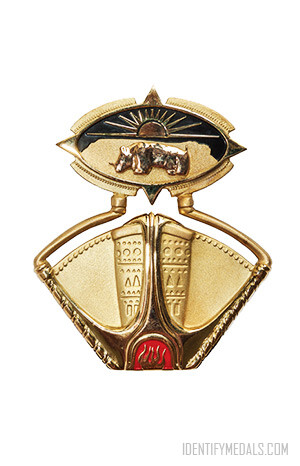
The insignia of the order consists of a horizontal oval positioned above an inverted trapezium. Within the oval frame, a golden rhinoceros is depicted against the backdrop of the sun rising above Mapungubwe Hill. The convex upper edge of the trapezium features a decorative beadwork pattern, while the sides are adorned with sceptres.

At the center is an intricate crucible from which molten gold cascades down into a red furnace. On the reverse side, the South African coat of arms is prominently featured.

The ribbon, worn around the neck, is crafted in gold and embellished with a line of cream-colored bead-like dots along each edge. In the center, recurring cream-colored rhinoceros silhouettes add a distinctive touch to the design. All four classes of the order are worn in this manner

More South African Orders

The Order of Luthuli

The Order of Luthuli is a South African order created to award citizens or contributions to democracy, human rights, and justice.
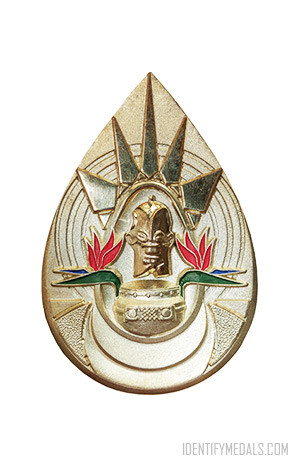
The Order of Luthuli is a South African order established in 2003 and conferred by the President of South Africa in recognition of outstanding contributions to the fight for democracy, human rights, nation-building, justice, peace, and conflict resolution.

Named after Chief Albert Luthuli, a prominent leader of the African National Congress and South Africa’s first Nobel Peace Prize laureate, the order pays homage to his legacy and commitment to advancing social justice and equality.

The Order of Luthuli has three classes:

  • Gold (OLG), for exceptional contributions,
  • Silver (OLS), for excellent contributions,
  • Bronze (OLB), for outstanding contribution.

The Order of Luthuli Design

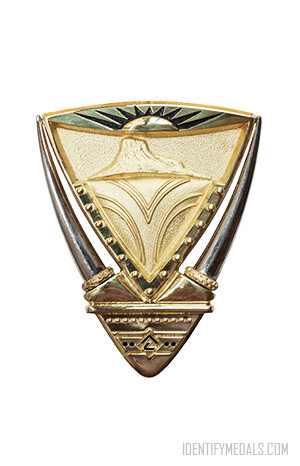
The emblem of the order features an equilateral triangle, with a flintstone positioned above a clay pot. The flintstone symbolizes the rising sun over Isandhlwana and the national flag, flanked by two animal horns emerging from the clay pot, bearing the initials AL. Isandhlwana represents peace and tranquility, while the leopard-skin bands around the bases of the horns represent Chief Luthuli’s headdress. On the reverse side, the South African coat of arms is prominently displayed.

The ribbon, worn around the neck, is adorned with a golden hue and is embellished with cream-colored AL monograms along each edge. In the center, recurring cream-colored outlines of the flintstone, depicting the national flag, add a distinctive element to the design. All three classes of the order are worn in this manner.

More South African Orders

The Order of Ikhamanga

The Order of Ikhamanga is a South African order created to award citizens who have excelled in the arts, literature, music, sport, and more.
The Order of the Ikhamanga (abbreviated as OIG/OIS/OIB) is a South African order established in 2003 to recognize and honor outstanding achievements in the fields of arts, culture, literature, music, journalism, and sport.

Named after the Xhosa word for the strelitzia flower, a symbol of endurance and resilience, the order celebrates individuals who have made significant contributions to the enrichment and advancement of South African society through their talent, creativity, and dedication.

The order has three classes:

  • Gold (OIG), for exceptional achievement,
  • Silver (OIS), for excellent achievement,
  • Bronze (OIB), for outstanding achievement.

The Order of Ikhamanga Design

The oval-shaped emblem features various symbolic elements, including a rising sun, a “Lydenburg head”, two strelitzia flowers, a drum, three circles, and two roadways. Each of these elements carries significance: the head symbolizes the arts, the sun represents glory, the circles signify sport, and the roads symbolize the journey towards excellence. The reverse side of the badge displays the South African coat of arms.

The ribbon, worn around the neck, is adorned with a golden hue and is embellished with four cream-colored lines along each edge. In the center, a recurring pattern of stylized dancing figures adds a dynamic touch to the design.

Designed by Charles Peter Gareth Smart, a graphic designer based in Pretoria, South Africa, the Order of Ikhamanga embodies the nation’s cultural richness and celebrates excellence across various fields of endeavor.

More South African Orders

The Order of The Baobab

The Order of The Baobab is a South African order created to award citizens for services to democracy, human rights, arts, and sciences.
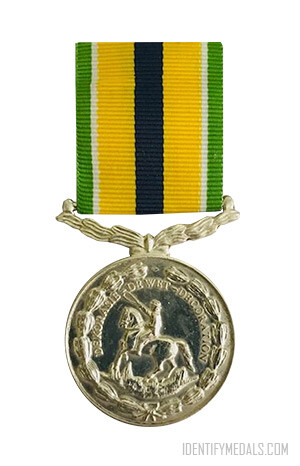
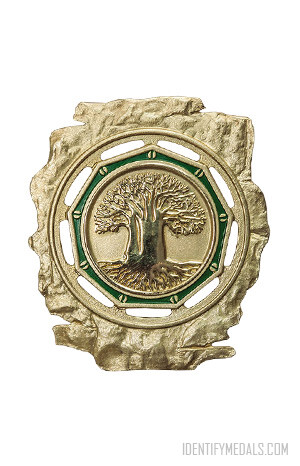
The Order of the Baobab (abbreviated as SCOB/GCOB/COB) is a South African order established in 2002 to honor and recognize outstanding contributions made by South African citizens in various fields, including democracy, human rights, arts and sciences, and community service.

The order is named after the baobab tree, an iconic symbol of resilience, strength, and longevity in African culture. It embodies the values of endurance and steadfastness, reflecting the qualities sought in recipients of the award.

The Order of the Baobab Grades

The Order of the Baobab is divided into three grades to distinguish the level of achievement and impact of the recipients’ contributions:

  1. Gold (GCOB): This highest grade is awarded to individuals who have made exceptional and distinguished contributions to the advancement of democracy, the promotion of human rights, the enrichment of arts and sciences, or the improvement of communities. Recipients of the Gold Order of the Baobab are recognized as trailblazers and leaders in their respective fields, whose efforts have had a profound and lasting impact on South African society.

  2. Silver (SCOB): The Silver grade is bestowed upon individuals who have demonstrated significant achievements and contributions in their chosen areas of endeavor. These recipients have made notable contributions to the advancement of democracy, the promotion of human rights, the development of arts and sciences, or the enhancement of community welfare. Their efforts have made a meaningful difference and have inspired others to follow in their footsteps.

  3. Bronze (COB): The Bronze grade is awarded to individuals who have shown dedication, commitment, and service in their respective fields. While their contributions may be more modest in scope compared to Gold and Silver recipients, Bronze Order of the Baobab recipients are valued for their dedication to the principles of democracy, human rights, arts and sciences, and community service. Their efforts contribute to the overall betterment of South African society and serve as examples of citizenship and civic responsibility.

The Order of the Baobab Design

The inspiration behind this Order stems from the Baobab, an African tree renowned for its significance and symbolism in indigenous cultures. The name “Baobab” is steeped in the legends and mysteries of Africa, often described for its vitality, magical properties, and deep-rooted symbolism. Its remarkable endurance and resilience as it ages reflect the enduring and exceptional service honored by this Order, which contributes to the ongoing growth and prosperity of South Africa.

The Baobab holds a pivotal role in African agroforestry systems, offering a multitude of resources essential for daily life. Its bark provides materials for cloth and rope, while its fruits serve as food and fuel, among other valuable products. The tree’s iconic, expansive root system supports its imposing stature, making it a focal point for important gatherings and a symbol of protection in traditional African societies.

The components are:

  • The Baobab (Adansonia digitata), renowned for its extensive roots and remarkable longevity, serves as a central motif in the design. It not only offers shade and serves as a gathering place but also plays a vital role in supporting the communities where it grows.
  • The nonagon shape, representing a nine-sided polygon, symbolizes the diverse range of potential contributions and services toward building a prosperous and advancing nation. Additionally, it reflects the nine provinces of our country.
  • The exterior organic holding shape features a textured finish reminiscent of Baobab bark, often utilized in the crafting of mats and hats, embodying the rich cultural heritage and practical utility found within South African traditions.

More South African Orders

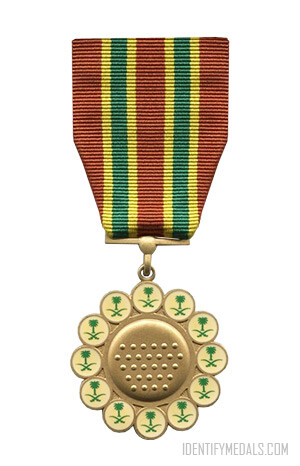
The Medal of Merit in the Nuth Al-Ma’rkat Combat

The Medal of Merit in the Nuth Al-Ma’rkat Combat was established by the Kingdom of Saudi Arabia in 1971 and given for outstanding service.

The Medal of Merit in the Nuth Al-Ma’rkat Combat (ميدالية الاستحقاق) was established by the Kingdom of Saudi Arabia in 1971 and is given for outstanding service.

There are three classes for this medal.

The Medal of Merit Design

The Order of Merit is circular and measures 35 mm wide. The reverse is plain.

The ribbon has stripes in red, yellow, and green. 

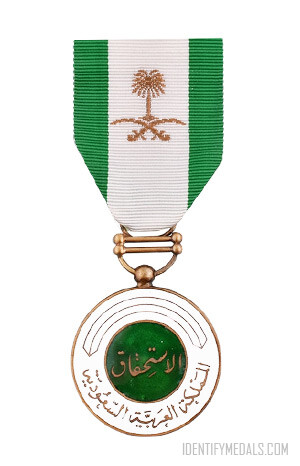
The Order of Merit (Saudi Arabia)

The Order of Merit was instituted by the Kingdom of Saudi Arabia in 1971 and is awarded for outstanding service. It has three classes.

The Order of Merit (ميدالية الاستحقاق) was established on 20th or 21st March 1971 by King Faisal idn Abdulaziz by Council of Minister Decisions of the Kingdom of Saudi Arabia.

The medal is awarded to civilians for outstanding service and exists in three classes. All initial appointments are for the Third (III) Class, with higher ones being achieved by promotion. 

The Order of Merit Medal Design

The Order of Merit is circular and measures 35 mm wide. In the obverse is the inscription “Kingdom of Saudi Arabia”.

The ribbon has outer green stripes and a central larger white stripe. The medal in I Class is struck in gold.

The Process of Denazification And Its Impact on German Medals

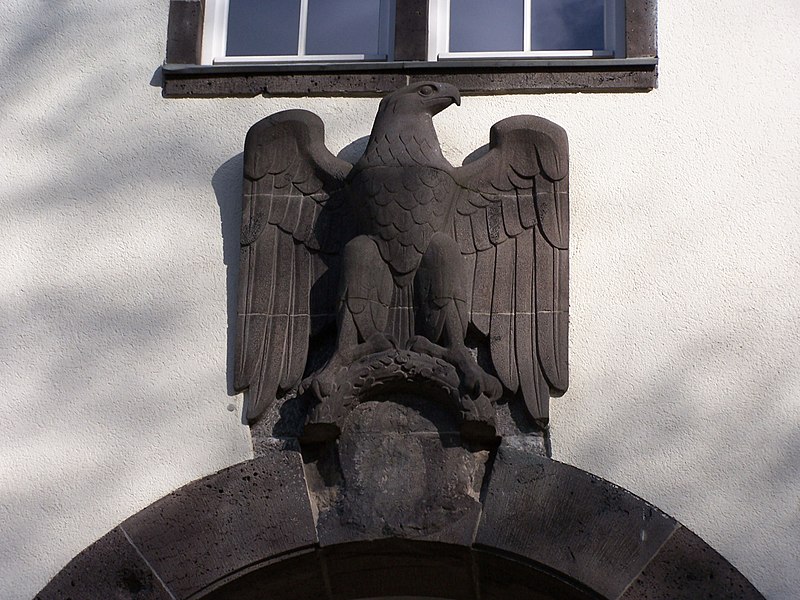
After World War II, the Allies quickly set to rid German and Austrian society and culture of the Nazi ideology. Awards and medals, too.

After World War II, the Allies quickly set to rid German and Austrian society and culture of the Nazi ideology. Awards and medals, too. This process had several key components, including the division of Germany into four occupation zones (each controlled by one of the allied powers), the removal of nazi symbols, and the disbanding of nazi organizations. This included, of course, the redesign of many German medals and awards.

In this article, we will delve into the five most expensive military medals and awards from Nazi Germany / Third Reich Germany and explain why they these WW2 badges and awards tend to sell for much more than your usual medal at auction. All public displays of Nazi symbols, such as swastikas and flags, were banned in Germany after WW2. Nazi propaganda materials were confiscated and destroyed, too. As the Allies worked to establish democratic institutions in Germany, including a new constitution, free elections, and the rule of law, here’s how things changed for the country’s insignia.

Reshaping Post-War Germany Medals

Denazification, the process of purging Nazi ideology, organizations, and individuals from German society after World War II, played a significant role in reshaping post-war Germany. Alongside the removal of Nazi symbols and the dismantling of Nazi institutions, and as we mentioned above, denazification also had an impact on German medals and awards.

One key aspect of denazification was the transformation of existing German medals and the creation of new ones to reflect the values of democracy and human rights, rather than the Nazi ideology. This was especially important as medals and awards had been used by the Nazi regime for propaganda and to honor individuals who promoted Nazi principles.

Here are some ways denazification influenced German medals:

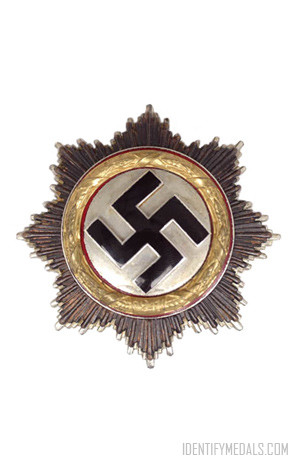
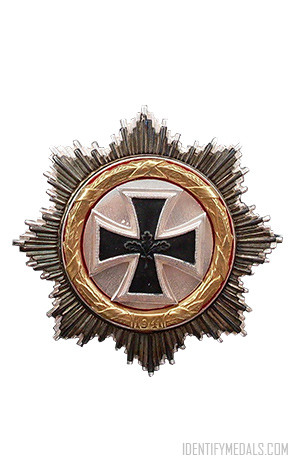
  1. Reevaluation of Existing Medals: Many pre-existing German medals were reevaluated to determine if their namesakes or the reasons for their award were associated with Nazi crimes or propaganda. Those found to have Nazi connections were often discontinued or renamed to reflect their historical significance rather than their Nazi connotations. For example, the German Cross‘ design replaced the central swastica for the iron cross.

  2. Introduction of New Medals: New medals and awards were introduced to honor individuals and organizations who contributed to the reconstruction of Germany and the promotion of democratic values. For example, the Order of Merit of the Federal Republic of Germany (Bundesverdienstkreuz) was established in 1951 to recognize outstanding contributions to society, science, art, and politics.

  3. Changes in Design: The designs of some existing medals were altered to remove Nazi symbolism or references. This included modifications to the Iron Cross and other military medals to ensure they represented the post-war democratic Germany.

  4. Criteria for Awards: The criteria for receiving medals were also adjusted to reflect democratic values. Medals were awarded not just for military valor but also for contributions to society, culture, and humanitarian efforts in line with the new democratic principles.

  5. Educational and Cultural Promotion: Some medals and awards were linked to educational and cultural programs aimed at promoting democracy and human rights. This was a way to use medals as tools for cultural and ideological transformation.

  6. Military Medals: In the case of military medals, their design and criteria were adapted to honor not only military valor but also service to the new democratic Germany and international peacekeeping efforts.

Denazification, therefore, extended to the realm of medals and awards, reflecting the broader effort to redefine Germany’s national identity, values, and societal norms after the defeat of the Nazi regime. By adapting and creating new medals that celebrated democratic principles, Germany sought to distance itself from its Nazi past and build a more inclusive and democratic future.

Nazi Germany Medals and Awards: The German Cross
The German Cross during the Third Reich regime (WW2). Obverse.
Post-WW2 Medals and Awards: The German Cross
The "denazified" German Cross after World War II. Obverse.

Find German Medals Online

Right Now on eBay 
Clicking a link to eBay may result in a referral commission being paid if a purchase is made.
Loading...
]

The New Zealand Suffrage Centennial Medal 1993

The New Zealand Suffrage Centennial Medal was established on 1 July 1993 to commemorate Women’s suffrage in New Zealand.

The New Zealand Suffrage Centennial Medal 1993 was officially established through a Royal Warrant on July 1, 1993. Its purpose was to honor and celebrate Women’s suffrage in New Zealand and to acknowledge the substantial contributions made by individuals, both from New Zealand and the Commonwealth, to advance women’s rights and address women’s issues within New Zealand. Notably, this medal was exclusively awarded in the year 1993.

The background of this commemorative medal is closely tied to the achievement of Women’s suffrage in New Zealand, which was realized with the passing of the Electoral Act 1893 on September 19, 1893. To mark the centennial anniversary of this historic event, the medal was created. It aimed to pay tribute to those New Zealanders and other Commonwealth citizens who had made significant and recognizable contributions to women’s rights or women’s issues within New Zealand. In total, the medal was presented to 544 deserving individuals.

The New Zealand Suffrage Centennial Medal 1993 Design

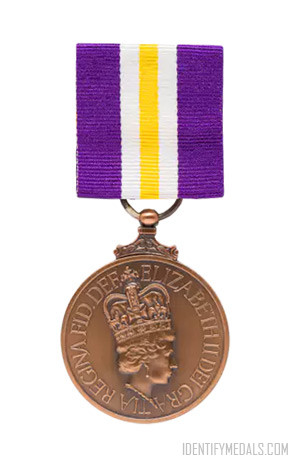
The medal, crafted in bronze with an antique finish, takes on a circular form.

On its obverse it features the crowned effigy of Queen Elizabeth II. Meanwhile, the reverse side of the medal carries the inscription “1893 The New Zealand Suffrage Centennial 1993.” This inscription is elegantly encircled by a combination of a fern frond and a sprig of camellia foliage, culminating in a single flower. These elements are artistically intertwined, their stems crossed and tied together with a graceful bow at the base.

The medal is attached to a ribbon that is 32 mm wide. This ribbon is predominantly purple, with three slim stripes in the center—white, yellow, and white. When worn by a woman, the medal may be elegantly suspended using the ribbon, which can be shaped into a bow for added distinction.

The New Zealand 1990 Commemoration Medal

The New Zealand 1990 Commemoration Medal was awarded in 1990 to celebrate the 150th anniversary of the signing of the Treaty of Waitangi.

The New Zealand 1990 Commemoration Medal, also known as the Sesquicentennial Medal, was established by Queen Elizabeth II through a Royal Warrant on February 9, 1990.

It was specifically intended for award during the year 1990, and around 3,000 individuals were initially chosen to receive it in recognition of their contributions to various aspects of New Zealand life, particularly in connection with the 1990 celebrations. Ultimately, 3,632 medals were conferred.

This medal holds significance as it was issued on the 150th anniversary of the signing of the Treaty of Waitangi on February 6, 1840, by representatives of the British Crown and various Māori chiefs from New Zealand’s North Island.

The New Zealand 1990 Commemoration Medal is an official decoration to be worn on all appropriate occasions. In the order of precedence, it follows Coronation and Jubilee medals but precedes long service decorations and medals. Each recipient is also presented with a certificate bearing the signatures of the Queen, the Governor-General, and the Prime Minister.

The New Zealand 1990 Commemoration Medal Design

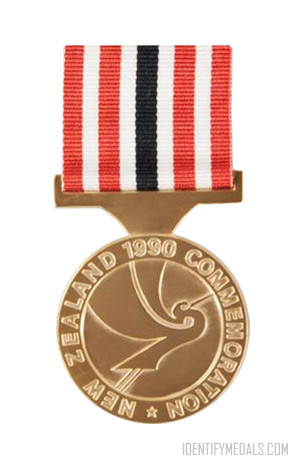
The New Zealand 1990 Commemoration Medal is a gilt metal, circular in shape.

On the obverse, it bears the Effigy of the Sovereign surrounded by the inscription “ELIZABETH II • QUEEN OF NEW ZEALAND”. On the reverse is the official 1990 Symbol (a stylized Kotuku, White Heron) and the inscription “NEW ZEALAND 1990 COMMEMORATION”.

The medal is suspended by a ribbon, 32 millimeters in width, consisting of nine narrow stripes of red ochre, white, red ochre, white, black, white, red ochre, white, and red ochre.

Find This Medal

Right Now on eBay 
Clicking a link to eBay may result in a referral commission being paid if a purchase is made.
Loading...