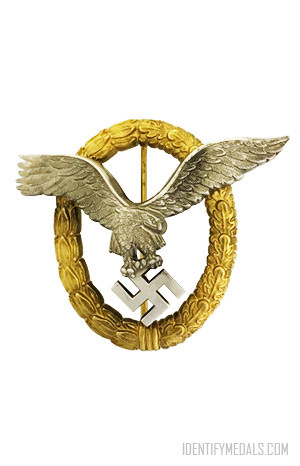
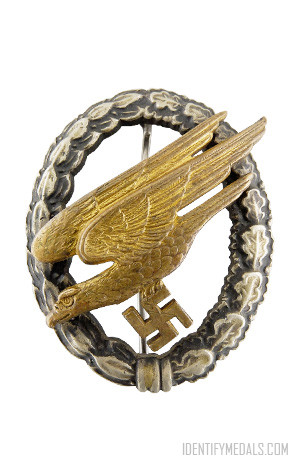
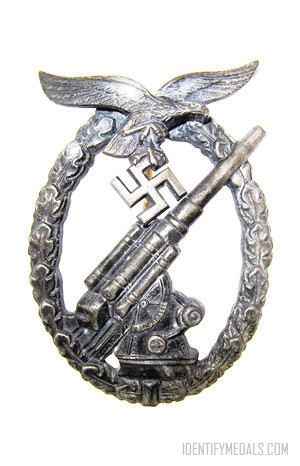
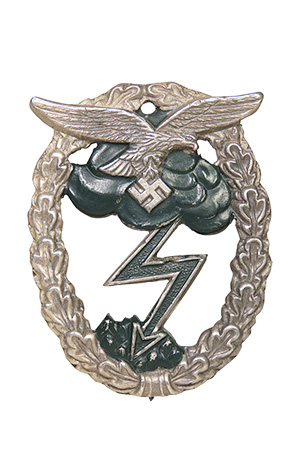
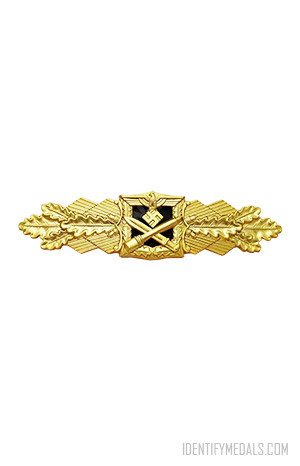
The Close Combat Clasp

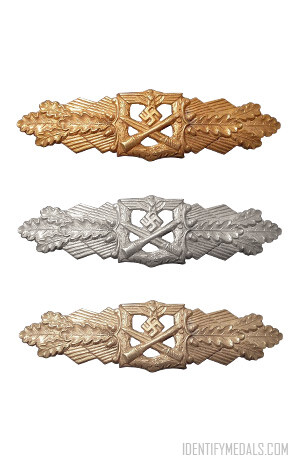
The Close Combat Clasp (Nahkampfspange) was instituted on 25 November 1942, during WW2, for participation in hand-to-hand fighting.

The Close Combat Clasp (Nahkampfspange in German) was a war badge awarded to Waffen SS and Wehrmacht Heer soldiers during World War II. Established on November 25, 1942, the Close Combat Clasp was awarded to German soldiers who displayed exceptional bravery and skill in close combat situations, treet fighting, or other situations where the use of firearms was impractical or ineffective. This included combat actions within buildings, trenches, or other confined spaces where the enemy was engaged at close range.

To be eligible for the Close Combat Clasp, soldiers had to meet certain requirements, including demonstrating individual bravery and skill in close combat situations. These engagements were often intense and dangerous, requiring quick thinking, physical strength, and the ability to adapt to rapidly changing circumstances.

The Close Combat Clasp was one of many military decorations instituted by the Nazi regime during World War II to honor acts of bravery and valor among its soldiers. Despite its association with a regime responsible for some of the greatest atrocities in human history, the award itself remains a significant historical artifact.

The Close Combat Clasp Design

The clasp was made of bronze, silver, or gold, with varying criteria determining which level of award a soldier received. For instance:

  • The bronze clasp was awarded for 15 days of close combat.
  • The silver clasp for 25 days of close combat.
  • The gold clasp for 50 days or more of close combat engagements.

The award was typically worn on the upper left pocket and above the ribbon bar. Individuals would only wear one (the highest level they had received).

More Army/Waffen-SS War Badges

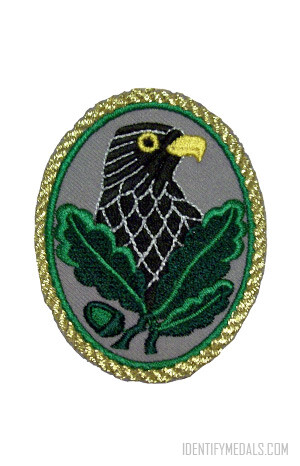
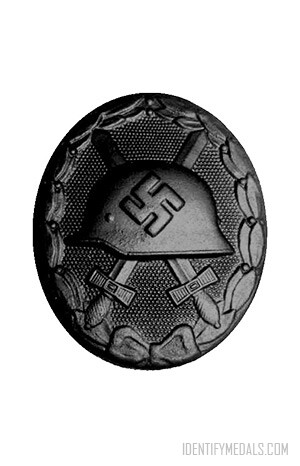
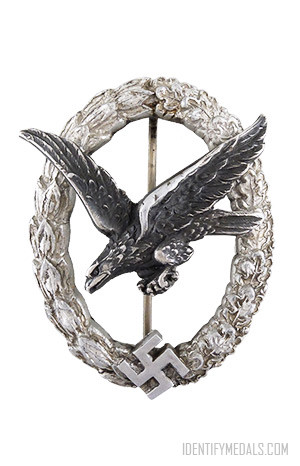
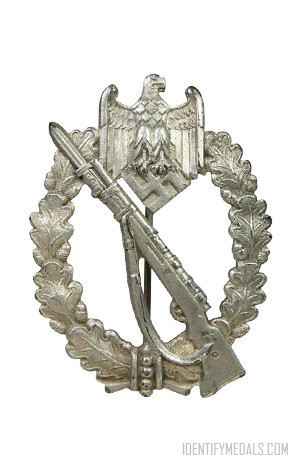
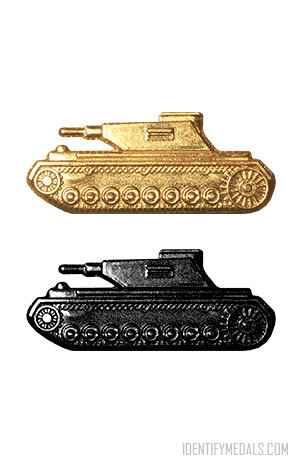
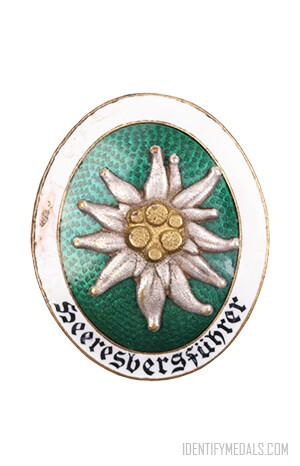
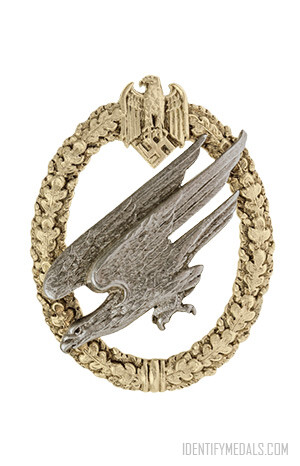
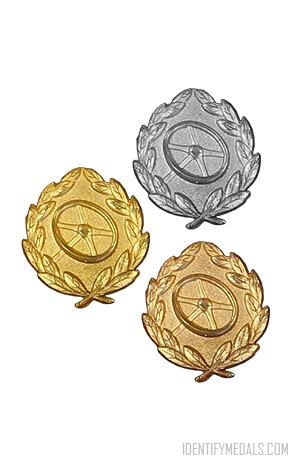
The Army/Waffen-SS war badges were military decorations awarded by Nazi Germany to members of the Army (Heer) and the Waffen-SS. Explore the complete collection below:

All The Third Reich Military Service Badges And What They Mean

The value of military medals varies depending on rarity, historical significance, and condition. Here are the most sought-after German ones.
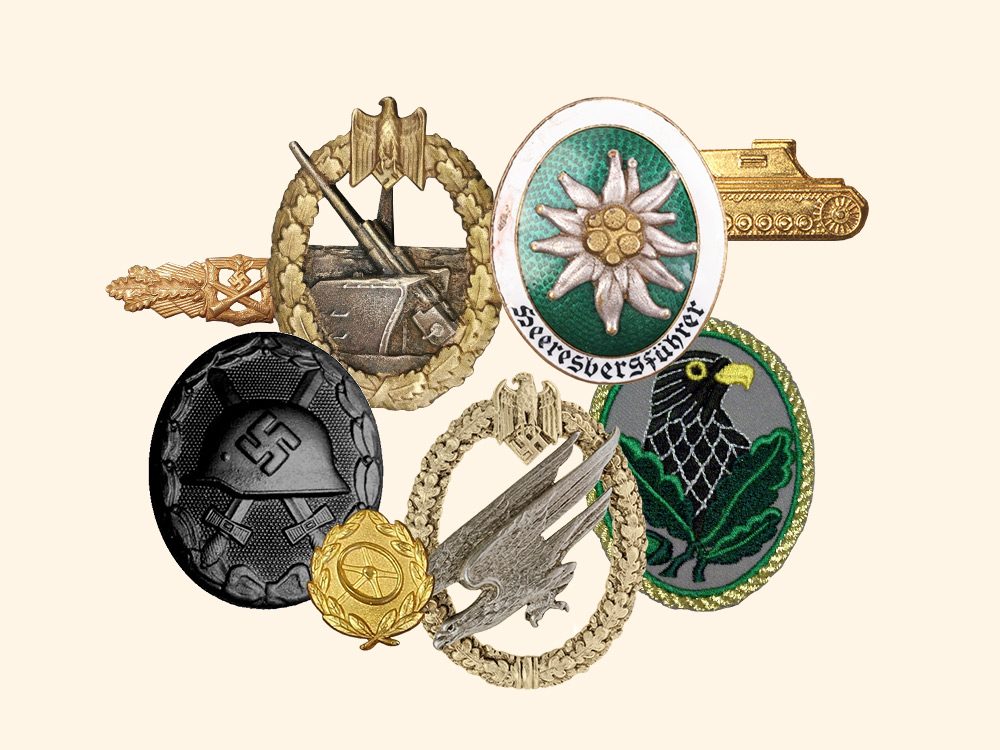
The Third Reich Military Service Badges were a series of awards and decorations introduced by Nazi Germany to honor members of its armed forces for their service and achievements during the Second World War. These badges were instituted during the Third Reich era under Adolf Hitler’s regime and were designed to symbolize various aspects of military service and specialization. In this article, we will cover all the service badges for the German Air Force (Luftwaffe), army (Heer), and Naval Force (Kriegsmarine).

Featured Third Reich Service Badges

Explore the most renowned medals, orders, and decorations bestowed by the nazi regime during the interwar period and World War II. Keep scrolling if you want to see the coplete collection for each group.

All The Service Badges From The Third Reich
(And How They Were Awarded)

The Third Reich Military Service Badges were a series of awards and decorations introduced by Nazi Germany to honor members of its armed forces for their service and achievements. People were assigned different badges based on their roles, duties, and achievements within the military branch for which the badge was awarded. In Nazi Germany, the criteria for receiving badges varied depending on the specific badge and the branch of the armed forces to which the individual belonged.

For example, eligibility for infantry-related badges such as the Infantry Assault Badge or the Close Combat Clasp was often based on participation in combat actions and demonstrated proficiency in infantry tactics or close-quarters combat. Similarly, tank crew members would receive the Panzer Assault Badge for their proficiency and bravery in armored warfare.

In the case of the Luftwaffe, pilots and aircrew might be eligible for badges such as the Luftwaffe Pilot’s Badge or the Luftwaffe Ground Assault Badge based on their roles and responsibilities within the air force. These badges typically required completion of specific training programs, demonstrated skill in flying or ground support operations, and participation in combat missions.

The Army/Waffen-SS
War Badges and Clasps

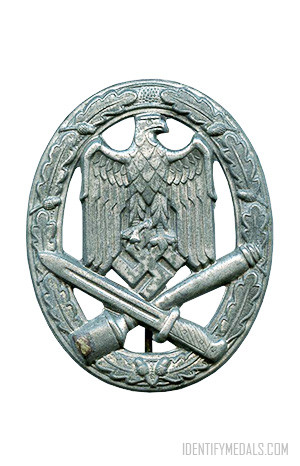
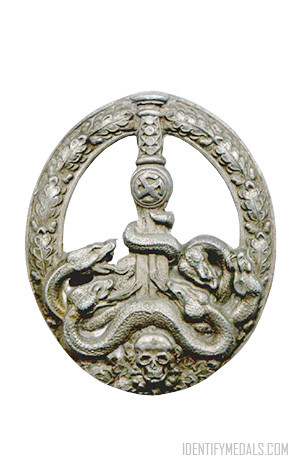
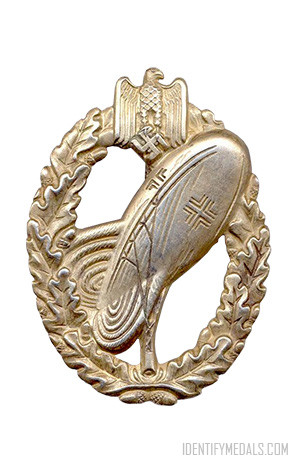
The Army/Waffen-SS war badges were a series of military decorations awarded by Nazi Germany to members of the Army (Heer) and the Waffen-SS for their service and achievements during World War II.

The Naval War Badges

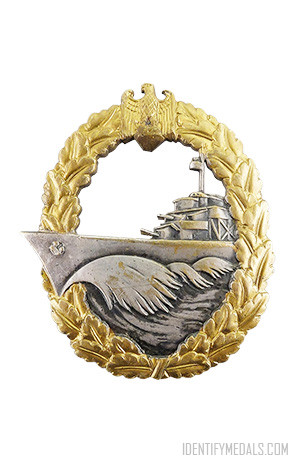
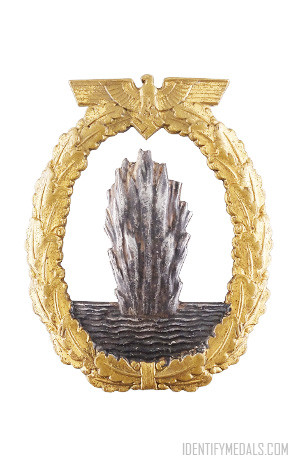
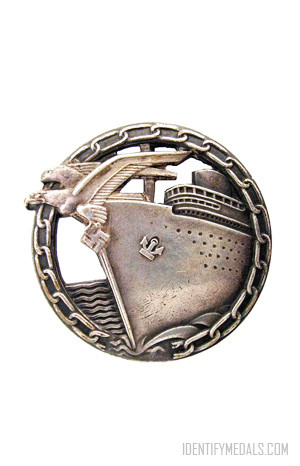
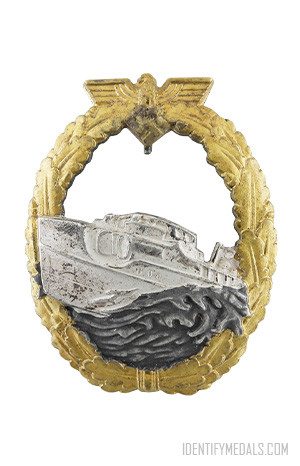
The Naval War Badges (Kriegsmarine) badges were awarded to sailors, officers, and personnel of the Kriegsmarine who demonstrated exceptional skill, bravery, and dedication in naval warfare. There were various types of Naval War Badges, each denoting specific roles and achievements within the navy, such as U-boat operations, surface combat, and mine warfare. These badges served as symbols of proficiency in maritime operations and were highly esteemed within the German naval hierarchy.

The Luftwaffe War Badges

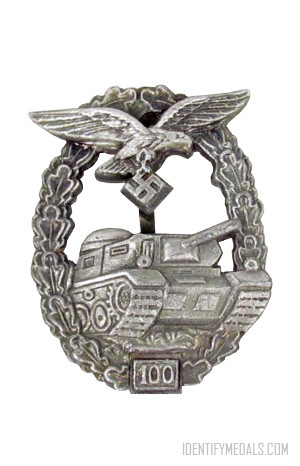
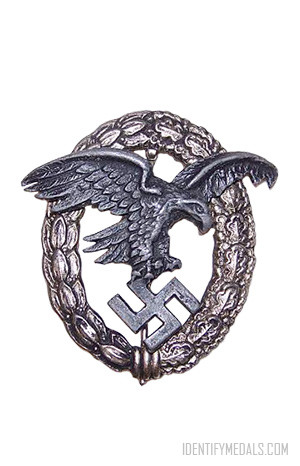
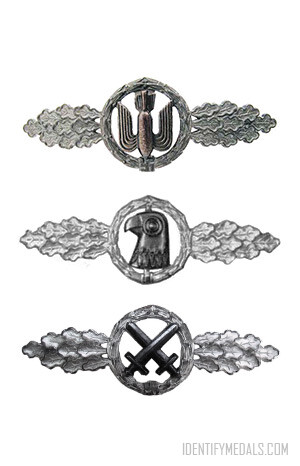
Awarded to members of the German Luftwaffe for their achievements and contributions to air warfare, the Luftwaffe War Badges symbolized excellence, courage, and skill in aerial combat and support roles. Pilots, aircrew, and ground personnel were eligible for various Luftwaffe War Badges, each representing different aspects of air operations, including fighter combat, bomber missions, reconnaissance, and anti-aircraft defense. These badges were worn with pride by recipients and were a testament to their dedication to the defense of the Third Reich and its military objective

Find German Medals Online

Right Now on eBay 
Clicking a link to eBay may result in a referral commission being paid if a purchase is made.
Loading...
]

The Presidential Unit Citation Award (PUC)

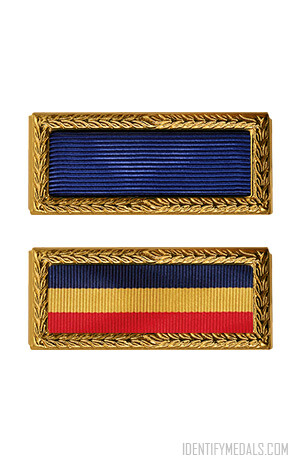
The Presidential Unit Citation or PUC was created by President Franklin D. Roosevelt on 26 February 1942 and awarded in various conflicts.

Time Period: Second World War, Post-WW2
Institution: 1941
Country: United States
 

The Presidential Unit Citation (or PUC) is a military award presented to units of the United States Armed Forces and those of allied countries for extraordinary heroism in action against an armed enemy.

It is one of the highest unit awards that can be bestowed upon a military organization and is considered a significant honor.

The PUC is awarded by the President of the United States in the name of the U.S. Congress. It is typically conferred upon units that have demonstrated exceptional gallantry, determination, and proficiency in combat operations, often under extremely challenging and hazardous conditions.

The Presidential Unit Citation Ribbon Designs

There are several variations of the Presidential Unit Citation, each denoted by a different ribbon or emblem. Recipients of the PUC are authorized to wear the appropriate ribbon or emblem on their uniforms as a symbol of their unit’s extraordinary achievements.

The variations are:

  1. Army Presidential Unit Citation: Awarded to U.S. Army units for extraordinary heroism in action against an armed enemy.

  2. Navy Presidential Unit Citation: Awarded to U.S. Navy units, Marine Corps units, and Coast Guard units when operating under the control of the Department of the Navy for extraordinary heroism in action against an armed enemy.

  3. Air Force Presidential Unit Citation: Awarded to U.S. Air Force units for extraordinary heroism in action against an armed enemy.

  4. Joint Meritorious Unit Award: Awarded to joint units of the U.S. Armed Forces for outstanding meritorious achievement or service in support of combat operations.

  5. Navy Unit Commendation: Awarded to U.S. Navy units, Marine Corps units, and Coast Guard units when operating under the control of the Department of the Navy for outstanding heroism in action against an armed enemy.

The Presidential Unit Citation Submarine Clasps

The Presidential Unit Citation Clasps are small emblems or devices worn on the ribbon of the Presidential Unit Citation to denote additional awards or significant achievements by a unit. The USS Nautilus (SSN-571) and USS Triton (SSRN-586) are two submarines that received the Presidential Unit Citation for their historic achievements.

The USS Nautilus (SSN-571) Clasp

Presidential Unit Citation - USS Nautilus (SSN-571) Clasp

The USS Nautilus was the world’s first operational nuclear-powered submarine and made history by completing the first submerged voyage to the North Pole in 1958. This groundbreaking achievement demonstrated the capabilities of nuclear propulsion in submarines and significantly advanced naval technology. As a result of this historic feat, the USS Nautilus was awarded the Presidential Unit Citation for extraordinary heroism and achievement.

The USS Triton (SSRN-586) Clasp

The USS Triton was another nuclear-powered submarine that made history by completing the first submerged circumnavigation of the Earth in 1960. This unprecedented voyage demonstrated the endurance and capabilities of nuclear-powered submarines and provided valuable data for future naval operations. In recognition of this remarkable achievement, the USS Triton was awarded the Presidential Unit Citation.

The Process of Denazification And Its Impact on German Medals

After World War II, the Allies quickly set to rid German and Austrian society and culture of the Nazi ideology. Awards and medals, too.

After World War II, the Allies quickly set to rid German and Austrian society and culture of the Nazi ideology. Awards and medals, too. This process had several key components, including the division of Germany into four occupation zones (each controlled by one of the allied powers), the removal of nazi symbols, and the disbanding of nazi organizations. This included, of course, the redesign of many German medals and awards.

In this article, we will delve into the five most expensive military medals and awards from Nazi Germany / Third Reich Germany and explain why they these WW2 badges and awards tend to sell for much more than your usual medal at auction. All public displays of Nazi symbols, such as swastikas and flags, were banned in Germany after WW2. Nazi propaganda materials were confiscated and destroyed, too. As the Allies worked to establish democratic institutions in Germany, including a new constitution, free elections, and the rule of law, here’s how things changed for the country’s insignia.

Reshaping Post-War Germany Medals

Denazification, the process of purging Nazi ideology, organizations, and individuals from German society after World War II, played a significant role in reshaping post-war Germany. Alongside the removal of Nazi symbols and the dismantling of Nazi institutions, and as we mentioned above, denazification also had an impact on German medals and awards.

One key aspect of denazification was the transformation of existing German medals and the creation of new ones to reflect the values of democracy and human rights, rather than the Nazi ideology. This was especially important as medals and awards had been used by the Nazi regime for propaganda and to honor individuals who promoted Nazi principles.

Here are some ways denazification influenced German medals:

  1. Reevaluation of Existing Medals: Many pre-existing German medals were reevaluated to determine if their namesakes or the reasons for their award were associated with Nazi crimes or propaganda. Those found to have Nazi connections were often discontinued or renamed to reflect their historical significance rather than their Nazi connotations. For example, the German Cross‘ design replaced the central swastica for the iron cross.

  2. Introduction of New Medals: New medals and awards were introduced to honor individuals and organizations who contributed to the reconstruction of Germany and the promotion of democratic values. For example, the Order of Merit of the Federal Republic of Germany (Bundesverdienstkreuz) was established in 1951 to recognize outstanding contributions to society, science, art, and politics.

  3. Changes in Design: The designs of some existing medals were altered to remove Nazi symbolism or references. This included modifications to the Iron Cross and other military medals to ensure they represented the post-war democratic Germany.

  4. Criteria for Awards: The criteria for receiving medals were also adjusted to reflect democratic values. Medals were awarded not just for military valor but also for contributions to society, culture, and humanitarian efforts in line with the new democratic principles.

  5. Educational and Cultural Promotion: Some medals and awards were linked to educational and cultural programs aimed at promoting democracy and human rights. This was a way to use medals as tools for cultural and ideological transformation.

  6. Military Medals: In the case of military medals, their design and criteria were adapted to honor not only military valor but also service to the new democratic Germany and international peacekeeping efforts.

Denazification, therefore, extended to the realm of medals and awards, reflecting the broader effort to redefine Germany’s national identity, values, and societal norms after the defeat of the Nazi regime. By adapting and creating new medals that celebrated democratic principles, Germany sought to distance itself from its Nazi past and build a more inclusive and democratic future.

Nazi Germany Medals and Awards: The German Cross
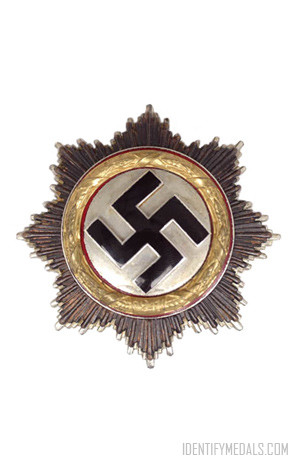
The German Cross during the Third Reich regime (WW2). Obverse.
Post-WW2 Medals and Awards: The German Cross
The "denazified" German Cross after World War II. Obverse.

Find German Medals Online

Right Now on eBay 
Clicking a link to eBay may result in a referral commission being paid if a purchase is made.
Loading...
]

The 5 Most Expensive Nazi / Third Reich Medals from WW2 Germany

The value of military medals varies depending on rarity, historical significance, and condition. Here are the most sought-after German ones.

Several factors contribute to the varying prices of military medals, including rarity, historical significance, provenance, condition, and also the individuals associated with them. In the case of the Third Reich, the German state between 1933 and 1945 (when Adolf Hitler and his Nazi party controlled the country under a totalitarian regime), military medals awarded during the time can reach very high prices. 

In this article, we will delve into the five most expensive military medals and awards from Nazi Germany / Third Reich Germany and explain why they these WW2 badges and awards tend to sell for much more than your usual medal at auction.

Before We Start: A Note About The Time Period

I believe it’s important to clarify that the purpose of this page is educational only. As the creator of this page, I aim to display all military medals regardless of their origin. However, in this case, the origin is hard to ignore. The Third Reich ended in May 1945, after 12 years, when the Allies defeated Germany and ended World War II in Europe. Racism, Nazi eugenics, antisemitism, and anti-Slavism (as well as genocide, mass-murder, and large-scale forced labor) were central features of the regime and all equally monstrous.

What Makes a Medal Expensive?

As we mentioned, there ar several factors that contribute to the varying prices of military medals, including Nazi military medals or those from other periods and countries. Some key reasons include:

  1. Rarity: Medals that were awarded in limited quantities or that were discontinued after a short time are often rarer and, consequently, more valuable and sought-after by collectors. 

  2. Historical Significance: Medals associated with significant historical events or figures tend to be more valuable. For example, those awarded to high-ranking officers or recipients who played pivotal roles in important battles or campaigns.

  3. Condition: The condition of a medal can also significantly affect its value. Well-preserved, unaltered medals with minimal wear and damage are generally more valuable than those in poor condition.

  4. Provenance: The history or provenance of a medal can influence its value, too. If a medal can be traced back to a famous or historically significant individual, its value may increase. Documentation that authenticates the medal’s history can also add to its value.

  5. Type and Design: Different types of medals were awarded for various achievements and roles within the military. Some medals, like those for bravery or long service, may be more valuable due to their prestige and design.

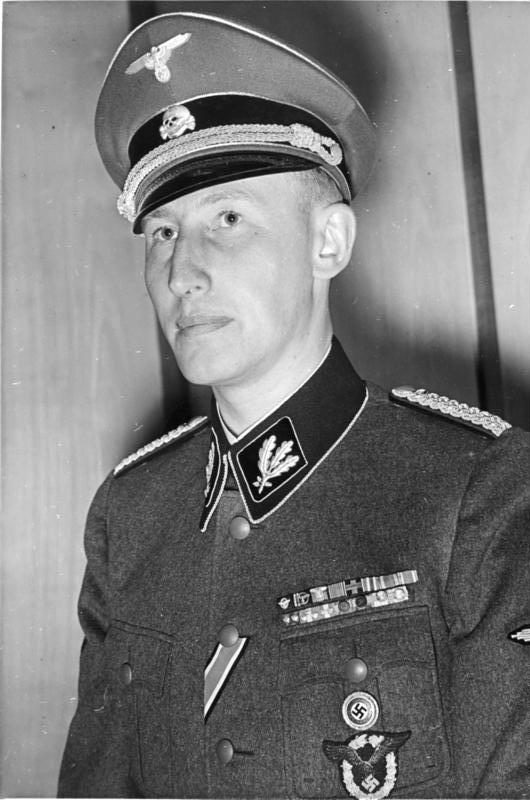
Reinhard Heydrich in 1940.
Reinhard Heydrich in 1940. Image courtesy of German Federal Archives / Wikipedia.

The 5 Most Expensive Nazi Medals

While it’s difficult to provide an exact ranking of the five most expensive Nazi military medals, below you will find five notable examples from this time period (and why they fetch the prices they do).

It’s important to mention, again, that the association with the Nazi regime and the atrocities committed during the war make these medals controversial, and their sale and display are subject to legal restrictions in some countries.

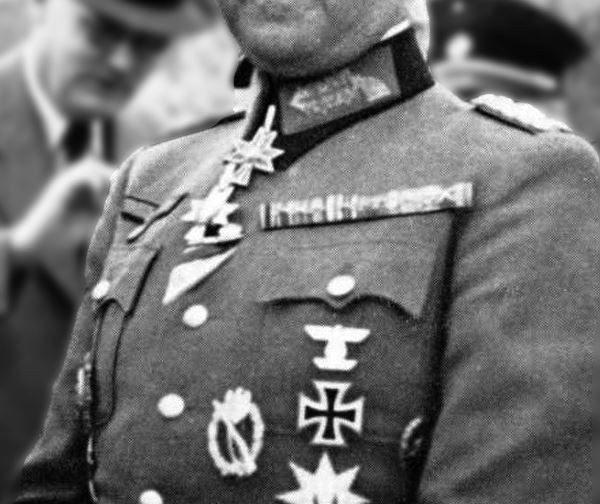
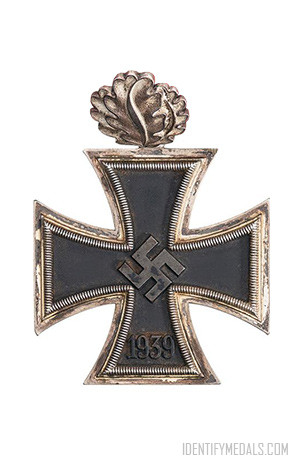
The Knight’s Cross (Ritterkreuz des Eisernen Kreuzes) was one of the highest military decorations awarded by Nazi Germany during World War II. It was instituted by Adolf Hitler on September 1, 1939, shortly after the outbreak of the war, and it remained in use until the end of the conflict in 1945.

The Knight’s Cross was awarded for exceptional acts of bravery, leadership, or achievement on the battlefield. Recipients of the Knight’s Cross were often prominent figures in the German military, including generals, high-ranking officers, and skilled combatants. It was a prestigious award and represented a significant honor within the Nazi regime.

After World War II, the Knight’s Cross and its variations are considered historical artifacts, and they are of interest to military historians and collectors.

Price:
~$10,000 – $75,000

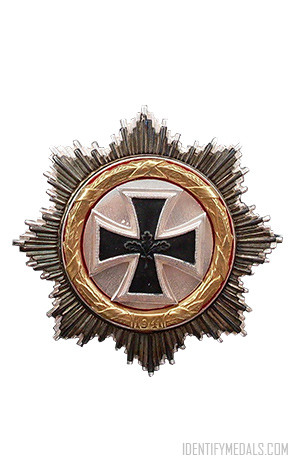
Nazi Germany Medals and Awards: The German Cross
The German Cross during the Third Reich regime (WW2). Obverse.

The German Cross in Gold (Deutsches Kreuz in Gold) was a high-ranking and prestigious military decoration awarded by Nazi Germany during World War II.

It was instituted on September 28, 1941, by Adolf Hitler to recognize outstanding bravery and exceptional military leadership on the battlefield. The German Cross in Gold was primarily awarded to officers and senior non-commissioned officers.

The German Cross in Gold was unique in that it was not a traditional medal but rather a cloth badge with a metallic component. The badge featured a large eight-pointed star with a black swastika in the center, surrounded by a gold wreath. The star was made of a silver-gray metal, and the wreath was made of gold. The reverse of the badge had a round black cloth backing with a central metal plate featuring a maker’s mark and the recipient’s unique identification number.

Price:
~$2,500

Close Combat Clasp in Gold

The Close Combat Clasp in Gold (Nahkampfspange in Gold) was a military decoration awarded by Nazi Germany during World War II. It was instituted on November 25, 1942, by Adolf Hitler to recognize and honor German military personnel who had demonstrated exceptional bravery and skill in close combat situations.

The Close Combat Clasp was not a traditional medal but rather a distinctive badge worn on the uniform. It was issued in three grades:

  • Bronze: Awarded for 15 days of close combat.
  • Silver: Awarded for 30 days of close combat.
  • Gold: Awarded for 50 days of close combat.

Price:
~$3,000

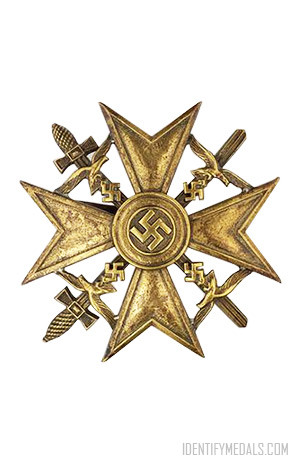
German Medals WW2: Spanish Cross in Gold with Swords
The Spanish Cross in Gold with Swords - Obverse.

The Spanish Cross in Gold with Swords (Spanienkreuz in Gold mit Schwertern) was a military decoration awarded by Nazi Germany to members of the German Condor Legion who had served in the Spanish Civil War. The Condor Legion was a unit of the German Luftwaffe (air force) that provided support to Francisco Franco’s Nationalist forces during the conflict, which took place from 1936 to 1939.

The Spanish Cross in Gold with Swords was instituted on April 14, 1939, by Adolf Hitler to recognize the contributions of the Condor Legion in Spain. This decoration was specifically awarded for outstanding combat achievements and leadership during the Spanish Civil War.

The design of the Spanish Cross in Gold with Swords featured a Maltese cross with a central swastika, similar in appearance to the German Iron Cross. Two crossed swords were positioned behind the swastika, and a laurel wreath encircled the cross. The Gold version had a gold finish.

Price:
~$3,000

The Luftwaffe Pilot’s Badge, known as the “Flugzeugführerabzeichen,” was a German military decoration awarded to qualified pilots of the German Luftwaffe (air force) during World War II. It was instituted on January 19, 1935, by Reichsmarschall Hermann Göring, the commander-in-chief of the Luftwaffe.

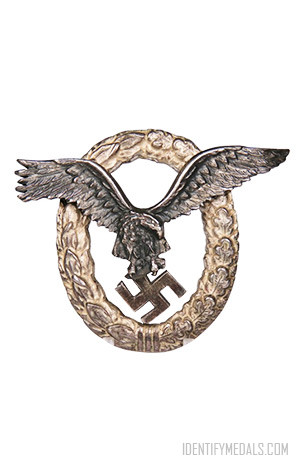
The Luftwaffe Pilot’s Badge was awarded to both officers and enlisted personnel who met specific criteria for flight training, flight hours, and combat missions. The badge featured a stylized eagle in flight clutching a swastika in its talons. Below the eagle was a wreath with oak leaves and acorns, and a half-wing motif was situated beneath the wreath.

The Luftwaffe Pilot’s Badge was highly regarded within the German military, and it symbolized a pilot’s skill and service to the Luftwaffe. The design was typical of German military badges of the time, although the quality of the badge could vary depending on the manufacturer.

Price:
~$5000 – $9,500

Find German Medals Online

Right Now on eBay 
Clicking a link to eBay may result in a referral commission being paid if a purchase is made.
Loading...
]

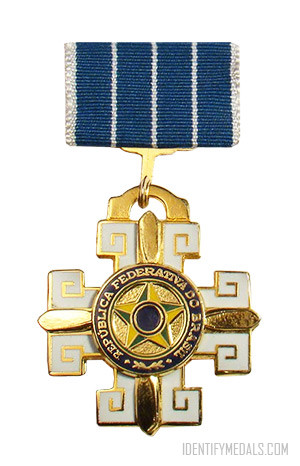
Order of Aeronautical Merit (Brazil)

The Order of Aeronautical Merit is a Brazilian award established in 1943 and presented for distinguished service in the Air Force.

The Order of Aeronautical Merit (or Ordem do Mérito Aeronáutico in Portuguese) is a Brazilian award established in 1943 and presented for exceptional contributions and distinguished service in the Brazilian Air Force.

Classes of the Order of Aeronautical Merit

The Order of Aeronautical Merit has five grades:

  • BRA Ordem do Mérito Aeronáutico Grã-Cruz.png Grand Cross (Grã-Cruz)
  • BRA Ordem do Mérito Aeronáutico Grande Oficial.png Grand Officer (Grande-Oficial)
  • BRA Ordem do Mérito Aeronáutico Comendador.png Commander (Comendador)
  • BRA Ordem do Mérito Aeronáutico Oficial.png Officer (Oficial)
  • BRA Ordem do Mérito Aeronáutico Cavaleiro.png Knight (Cavaleiro)

The National Order of Aeronautical Merit Medal Design

The ribbon of the Order of the Aeronautical Medal is blue with white edges and three thin white lines.

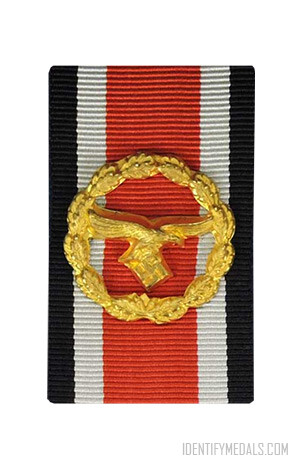
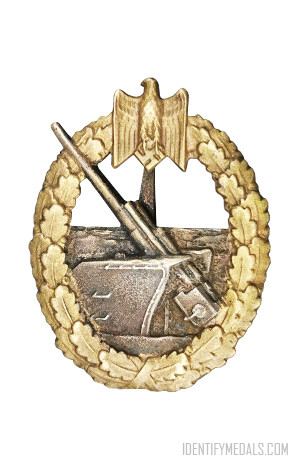
The Sea Battle Badge of the Luftwaffe

The Sea Battle Badge was a German award instituted in 1944 and given to crews of Luftwaffe supply ships, air/sea rescue launches, and vessels.

The Sea Battle Badge was a German award instituted in 1944 and given to crews of Luftwaffe supply ships, air/sea rescue launches, and other special vessels (working on the surface). It’s worth mentioning that Germany had no aircraft carriers or a navy air branch. 

The eligibility criteria were quite broad: Any military or civilian Luftwaffe personnel as eligible – as long as they were not also awarded another badge. There were a number of days at sea required, however:

  • Leaders and crew of supply ships: 60 days in the North or East sea, between 5 and 20 degrees longitude and south of the 60th degree of latitude or 20 days in the Mediterranean, including the Aegean and the Black Sea.
  • Leaders and crew of air and sea rescue boats: 20 days with a minimum of one rescue attempt or a three-hour sea duration each day, or 10 days with a successful rescue.

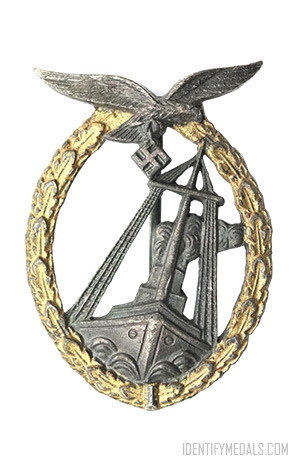
The badge has the Luftwaffe eagle and a swastika with a 30-degree-tilted sea vessel in the center, all surrounded by a gilt wreath made of oak leaves. 

More Luftwaffe War Badges

Awarded to members of the German Luftwaffe for their achievements and contributions to air warfare, the Luftwaffe War Badges symbolized excellence, courage, and skill in aerial combat and support roles. Explore the complete collection below:

The Glider Badge of the Luftwaffe

The Glider Badge of the Luftwaffe was a German award instituted in 1940 and awarded to pilots who had done the glider training course.

The Glider Badge of the Luftwaffe was a German award instituted in 1940 and awarded to pilots who had done the glider training course. 

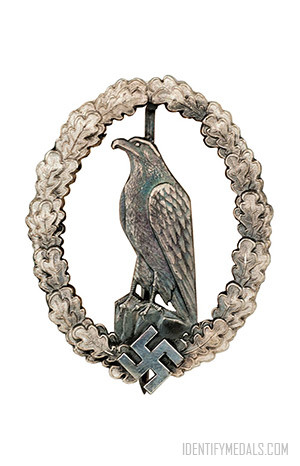
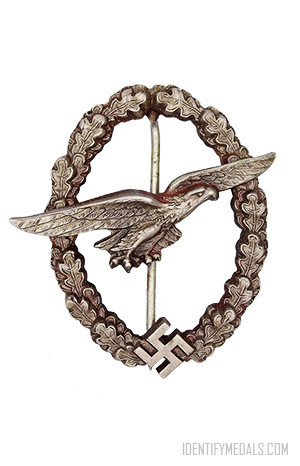
The badge consists of an eagle in flight, with wings spread and spanning the full width of the insignia, and a swastika on top of a circular wreath made of silver oak leaves (unlike other Luftwaffe badges, it’s only oak ones). The Glider Badge was usually made of aluminum, nickel-silver, zinc, or tombak. There was also a cloth version of it. 

More Luftwaffe War Badges

Awarded to members of the German Luftwaffe for their achievements and contributions to air warfare, the Luftwaffe War Badges symbolized excellence, courage, and skill in aerial combat and support roles. Explore the complete collection below:

The Radio Operator Badge of the Luftwaffe

The Radio Operator Badge of the Luftwaffe was a German award given to radio and gunner qualified personnel with training or operations.

The Radio Operator Badge of the Luftwaffe was a German award given to radio operators, gunners, and mechanics (qualified personnel) that had succeeded in the training course (two months at least) and had at least five operational flights. These criteria was shortened if the recipient had been wounded in action.

This badge was later replaced by the Gunner and Flight Engineer Badge of the Luftwaffe. 

The badge is shaped like an oval and shows an eagle carrying two crossed lightning bolts in its claws. There is also a swastika and a wreath made of oak and laurel leaves. The Radio Operator badges were usually made of different metals such as tombak, silver-nickel, pot metal, and zinc. There was also a cloth version authorized later that has silver wire embroidery. 

More Luftwaffe War Badges

Awarded to members of the German Luftwaffe for their achievements and contributions to air warfare, the Luftwaffe War Badges symbolized excellence, courage, and skill in aerial combat and support roles. Explore the complete collection below:

The Air Gunner and Flight Engineer Badge of the Luftwaffe

The Air Gunner and Flight Engineer Badge was a German award given to Luftwaffe flight engineers, air gunners, and aircrew meteorologists.
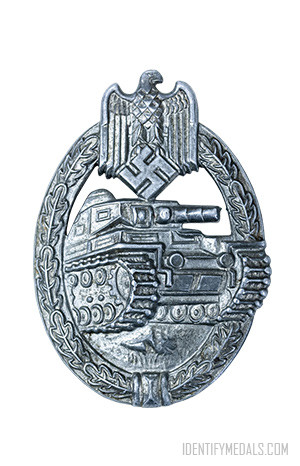
The Air Gunner and Flight Engineer Badge was a German award given to (and worn by) Luftwaffe flight engineers, air gunners, and aircrew meteorologists. The requirement was to complete two months of training or to have participated in five operational flights. 
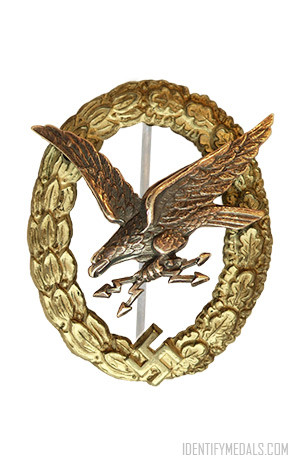
The badge could be awarded at an earlier stage if the recipient had suffered wounds during an operational flight. 

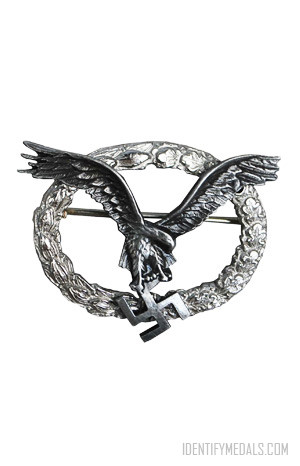
The badge shows an eagle in flight. At the bottom is a swastika. The design is surmounted by a wreath of laurel leaves and oak leaves (the wreath is made of silver). 

The first Air Gunner badges were made in tombak, although there are also examples in kreigsmetal and zinc. The eagle was sometimes made of aluminum and the wreath zinc. 

More Luftwaffe War Badges

Awarded to members of the German Luftwaffe for their achievements and contributions to air warfare, the Luftwaffe War Badges symbolized excellence, courage, and skill in aerial combat and support roles. Explore the complete collection below: