The Coast Guard Medal

The Coast Guard Medal is a distinguished U.S. military decoration awarded for heroism not involving direct conflict with an enemy.

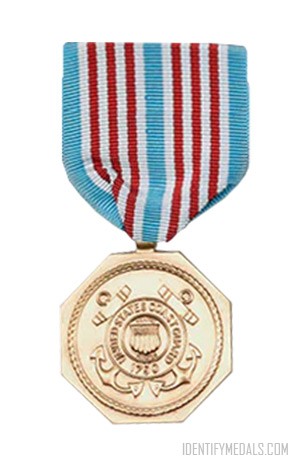
The Coast Guard Medal is a distinguished U.S. military decoration awarded to members of the United States Coast Guard (and other Armed Forces personnel serving with the Coast Guard) for heroism not involving direct conflict with an enemy. It recognizes voluntary acts of outstanding bravery performed in the face of great personal danger, where the individual’s actions go far beyond what is normally expected.

Authorized by Congress on August 4, 1949, the medal was first presented in March 1958 for the heroic rescue of workers trapped in a tunnel beneath Lake Ontario. It ranks above the Bronze Star, and is considered equivalent to the Soldier’s Medal (Army), Navy and Marine Corps Medal, and Airman’s Medal in the other U.S. services.

Recipients of the Coast Guard Medal have included individuals whose voluntary acts of courage saved lives under extreme conditions, such as perilous sea rescues or other hazardous situations.

The Coast Guard Medal Design

Overall, the design combines maritime imagery with traditional U.S. military award symbolism, visually honoring exceptional leadership and service at the highest levels of responsibility.

Buy Coast Guard Medals

Right Now on eBay 
Clicking a link to eBay may result in a referral commission being paid if a purchase is made.
Loading...

The Coast Guard Distinguished Service Medal

The Coast Guard Distinguished Service Medal (CGDSM) is one of the premier awards of the United States Coast Guard.

The Coast Guard Distinguished Service Medal (CGDSM) is one of the premier awards of the United States Coast Guard. It was established by Act of Congress on August 4, 1949 to recognize Coast Guard personnel for exceptionally meritorious service in roles of great responsibility.

Before its creation, Coast Guardsmen were eligible for the Navy Distinguished Service Medal. The first award was not issued until 1961, and the medal continues to be presented today. The award authority is the Secretary of Homeland Security.

The Coast Guard Distinguished Service Medal Criteria

This medal is awarded to members of the Coast Guard who distinguish themselves through exceptionally meritorious service to the United States Government while performing duties of great responsibility.

The level of performance must be clearly above what is normally expected and have a significant impact on the success of a major command, operation, or project. Although typically bestowed upon senior leaders such as flag officers, it can be awarded to any service member—or even members of other U.S. uniformed services—who meets the eligibility standards while serving with or supporting the Coast Guard. 

The Coast Guard Distinguished Service Medal Design

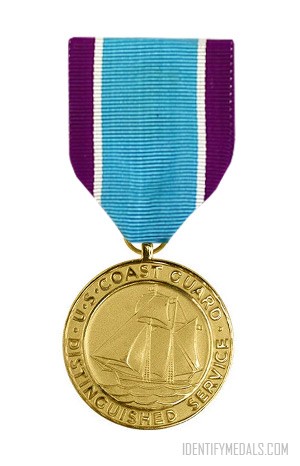
The medal itself is a distinguished bronze decoration. On the obverse is a depiction of a sailing ship encircled by the inscription “U.S. Coast Guard Distinguished Service,” symbolizing the maritime heritage of the service. The accompanying ribbon features a field of blue with white and purple stripes, colors traditionally associated with high‑order service medals. Additional awards of the CGDSM are denoted by small gold stars worn on the ribbon.

Buy Coast Guard Medals

Right Now on eBay 
Clicking a link to eBay may result in a referral commission being paid if a purchase is made.
Loading...

The Coast Guard Cross

The Coast Guard Cross is the United States Coast Guard’s second-highest military decoration, awarded for extraordinary heroism in combat.

The Coast Guard Cross is the United States Coast Guard’s second-highest military decoration, awarded for extraordinary heroism in combat while serving with the Coast Guard when it is not operating under the Department of the Navy. It was established by Act of Congress on October 15, 2010 and is intended to recognize acts of valor that are above and beyond what would merit lesser awards, but not at the level of the Medal of Honor.

Although it is approved and listed in Coast Guard awards regulations, the Coast Guard Cross has not yet been awarded to anyone, making it one of the rarest U.S. military decorations.

In the hierarchy of U.S. military awards, the Coast Guard Cross sits just below the Medal of Honor and is equivalent in stature to the Army’s Distinguished Service Cross, the Navy Cross, and the Air and Space Forces Cross.

The Coast Guard Cross Medal Criteria

  • While participating in combat against an enemy of the United States.
  • While taking part in military operations involving hostilities with a foreign opposing force or an international terrorist organization.
  • While serving alongside allied foreign forces in an armed conflict against an opposing armed force, even if the United States itself is not a direct participant.

The Coast Guard Cross Medal Design

The design features a gold four-armed cross with maritime symbols—including anchors, crossed oars, and a central shield reminiscent of the U.S. Great Seal—suspended from a ribbon of navy blue with scarlet and ultramarine accents. The reverse bears the inscription “FOR VALOR.”

Buy Coast Guard Medals

Right Now on eBay 
Clicking a link to eBay may result in a referral commission being paid if a purchase is made.
Loading...

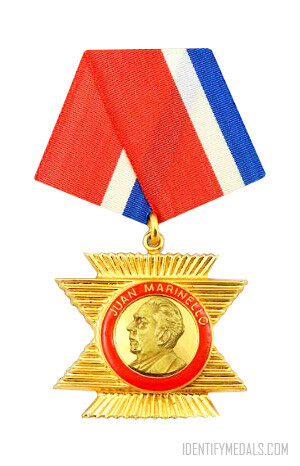
The Order of Juan Marinello

The Order of Juan Marinello is a prestigious Cuban decoration for contributions to ideological, cultural, and artistic development.

  • Time Period: Post-WW2
  • Institution: 10 December 1979
  • Country: Cuba

The Order of Juan Marinello is a prestigious Cuban decoration established on December 10, 1979, under Decree-Law No. 30. Named after the celebrated Cuban intellectual, writer, and politician Juan Marinello, the order honors individuals who have made significant contributions to the ideological, cultural, and artistic development of society.

Juan Marinello Vidaurreta (1898–1977) was a distinguished Cuban writer, scientist, and politician. A leading intellectual of his time, he was deeply committed to promoting culture as a vehicle for revolutionary change. Marinello’s work encompassed literature, philosophy, and social science, and he was a prominent advocate for anti-imperialism, socialism, and the defense of Cuban sovereignty. As a member of the Cuban Communist Party and a significant figure in the cultural and political spheres, Marinello’s legacy is one of intellectual rigor and revolutionary dedication.

The Order of Juan Marinello underscores the importance of cultural and intellectual endeavors in shaping a just and equitable society. It recognizes the power of literature, art, and journalism to influence public opinion, inspire action, and drive the ideological struggle central to Cuba’s revolutionary principles. The recipients of the Order of Juan Marinello are celebrated as cultural and intellectual leaders who contribute to the progress of humanity through their work. 

The Order of Juan Marinello Criteria

The Order of Juan Marinello is conferred on Cuban and foreign citizens who have demonstrated:

  • Excellence in the ideological struggle: Advocating for socialist principles and advancing the fight against reactionary or oppressive ideologies through intellectual or cultural means.
  • Advancements in literature: Producing influential works that enrich Cuban or global literary traditions and contribute to the spread of progressive ideals.
  • Significant contributions to art: Creating impactful art that fosters cultural awareness, inspires revolutionary values, or promotes social justice.
  • Achievements in journalism: Delivering exceptional journalistic work that informs, educates, and mobilizes people in support of revolutionary causes and human progress.

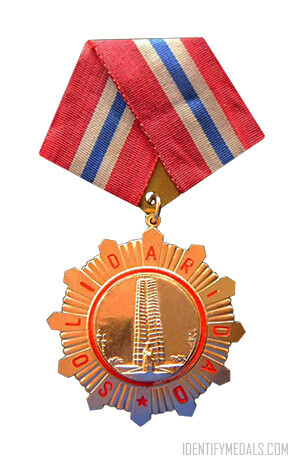
The Order of Solidarity

The Order of Solidarity is a prestigious Cuban decoration for outstanding contributions to justice, equality, and peace.

  • Time Period: Post-WW2
  • Institution: 10 December 1979
  • Country: Cuba

The Order of Solidarity (Orden De la Solidaridad) is a prestigious Cuban decoration established on December 10, 1979, under Decree-Law No. 30. This honor recognizes outstanding contributions by individuals and organizations, both Cuban and foreign, to global struggles for justice, equality, and peace.

The Order of Solidarity represents Cuba’s deep commitment to the ideals of internationalism and collective resistance to oppression. It reflects the revolutionary spirit of solidarity that is central to Cuba’s national identity, honoring those who align with its mission to fight for justice and equality on a global scale.

This award transcends national boundaries, celebrating efforts that contribute to the betterment of humanity. By recognizing individuals and organizations from diverse backgrounds, the Order of Solidarity promotes the interconnectedness of struggles for freedom, equality, and peace.

The Order of Solidarity Criteria

The Order of Solidarity is awarded to Cuban and foreign citizens, as well as organizations, for their exceptional efforts in promoting and defending:

  • The fight against oppression: Confronting imperialism, colonialism, neocolonialism, fascism, racism, and other forms of exploitation and subjugation.
  • Socialist values: Advocating for the construction and consolidation of socialism and the advancement of a fair and equitable society.
  • Peace and independence: Supporting national liberation movements, the struggle for peoples’ independence, and the fight for global peace and coexistence.
  • Democracy and equality: Contributing to the establishment of democratic values and systems, while opposing discrimination and injustice, including racial discrimination.
  • International solidarity: Strengthening cooperation and mutual support across borders in politics, science, and culture to foster unity and understanding among nations.

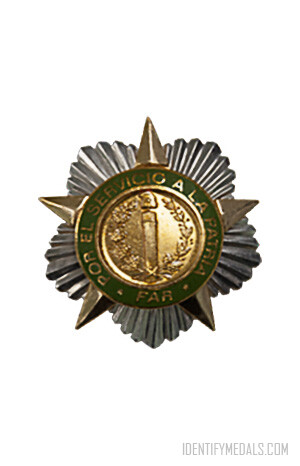
The Order For the Service to the Fatherland in the Revolutionary Armed Forces

This order is a distinguished military honor for exemplary dedication and exceptional service within the Revolutionary Armed Forces (FAR).

  • Time Period: Post-WW2
  • Institution: 10 December 1979
  • Country: Cuba

The Order for the Service to the Fatherland in the Revolutionary Armed Forces (Orden Por el Servicio a la Patria en las Fuerzas Armadas Revolucionarias) is a distinguished military honor established on July 13, 1988, under Decree-Law No. 105. This prestigious order acknowledges exemplary dedication and exceptional service within the Revolutionary Armed Forces (FAR), highlighting the values of loyalty, courage, and commitment to Cuba’s socialist principles.

The Order for the Service to the Fatherland in the Revolutionary Armed Forces is conferred in three classes, each denoting the degree of distinction based on the recipient’s achievements and contributions:

  1. First Class: Reserved for extraordinary and exemplary service that significantly impacts the defense and integrity of the nation.
  2. Second Class: Recognizes notable achievements and dedication in fulfilling military duties.
  3. Third Class: Awarded for consistent and commendable service in support of the socialist homeland.

The Order's Criteria

This order is awarded to members of the Revolutionary Armed Forces who:

  • Demonstrate extraordinary merit in the performance of their military duties.
  • Excel in defending the sovereignty, independence, and territorial integrity of the socialist homeland.
  • Uphold and promote the revolutionary ideals of dedication, discipline, and resilience while serving in the armed forces.

The order not only honors individual excellence but also reinforces the collective commitment of the FAR to protect Cuba’s sovereignty and socialist achievements.

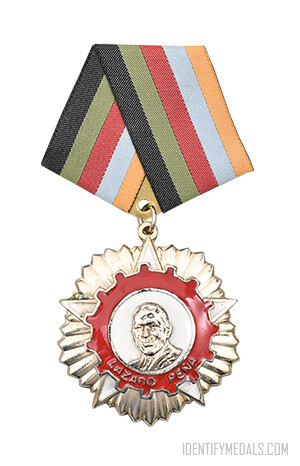
The Order of Lázaro Peña

The Order of Lázaro Peña is a prestigious Cuban award that recognizes extraordinary contributions to labor and national development.

  • Time Period: Post-WW2
  • Institution: 10 December 1979
  • Country: Cuba

The Order of Lázaro Peña is a prestigious Cuban award established on December 10, 1979, under Decree-Law No. 30. Named in honor of Lázaro Peña, a prominent labor leader and advocate for workers’ rights, the order recognizes extraordinary contributions to labor and national development, reflecting Cuba’s emphasis on the dignity and value of work.

The Order is awarded in three classes, each denoting the level of distinction based on the recipient’s contributions and impact.

The Order of Lázaro Peña Criteria

The Order of Lázaro Peña is conferred on both Cuban and foreign citizens who demonstrate:

  • Outstanding achievements in labor: Recognizing exceptional productivity, innovation, or commitment in their professional fields.
  • Significant contributions to national development: Supporting Cuba’s economic growth, scientific progress, cultural enrichment, and artistic excellence.
  • Advancements in science and technology: Rewarding efforts that drive innovation and improve the quality of life.
  • Promotion of culture and art: Celebrating those who elevate cultural and artistic expression as vital components of societal progress.

Lázaro Peña: The Namesake

Lázaro Peña González (1911–1974) was a renowned Cuban and international labor activist. Known as the “Captain of the Working Class,” he was instrumental in the development of Cuba’s trade union movement, advocating for workers’ rights, fair wages, and social justice. As a leading figure in the Cuban Confederation of Workers (CTC) and a staunch supporter of socialism, Lázaro Peña’s legacy embodies the values of hard work, solidarity, and dedication to the well-being of the working class.

The Order of Marianna Grajales

The Order of Mariana Grajales is a distinguished Cuban honor that recognizes the exceptional contributions of Cuban women to the nation.

  • Time Period: Post-WW2
  • Institution: 10 December 1979
  • Country: Cuba

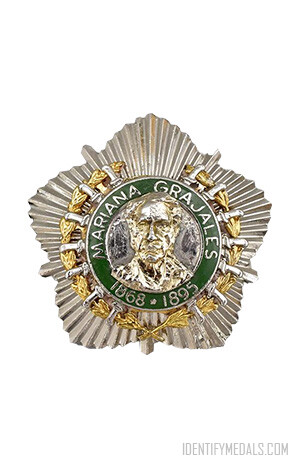
The Order of Mariana Grajales is a distinguished Cuban honor established on December 10, 1979, under Decree-Law No. 30. Named after Mariana Grajales Cuello, a revered Cuban patriot and matriarch of revolutionary ideals, this order recognizes the exceptional contributions of Cuban women to the nation’s development, defense, and revolutionary progress.

Mariana Grajales Cuello (1815–1893) is celebrated as the “Mother of the Nation” in Cuba for her extraordinary role in the fight for independence from Spanish colonial rule. Born in Santiago de Cuba, she instilled patriotic values in her children, many of whom became key figures in Cuba’s wars of independence, including her son Antonio Maceo, a leading general in the Cuban Army of Independence. Known for her bravery, resilience, and dedication to freedom, Mariana Grajales symbolizes the strength and courage of Cuban women.

The Order of Mariana Grajales is more than a recognition of individual achievements; it is a tribute to the enduring contributions of women to Cuba’s revolutionary cause and its national identity. By honoring women who excel in education, labor, and public life, the award underscores the pivotal role of women in shaping a just and equitable society. This award also reflects Cuba’s broader commitment to gender equality and the empowerment of women, aligning with the revolutionary ideals that Mariana Grajales epitomized. 

The Order of Marianna Grajales Criteria

The Order of Mariana Grajales is awarded to Cuban women who have demonstrated:

  • Outstanding revolutionary labor: Excelling in creative and transformative work that aligns with the goals of Cuba’s socialist revolution.
  • Commitment to internationalism: Exemplifying solidarity with global movements for justice and equality.
  • Contributions to youth education: Playing a significant role in nurturing and guiding the younger generation toward revolutionary ideals.
  • Empowering women in public life: Advancing the participation of women in all spheres of society, including leadership roles in civic, social, and national activities.
  • Support for the country’s defense and development: Actively contributing to safeguarding the nation’s sovereignty and promoting its socio-economic growth.

The Order of Camilo Cienfuegos

The Order of Camilo Cienfuegos is a prestigious Cuban military decoration for exceptional contributions to the defense of Cuba’s sovereignty.

  • Time Period: Post-WW2
  • Institution: 10 December 1979
  • Country: Cuba

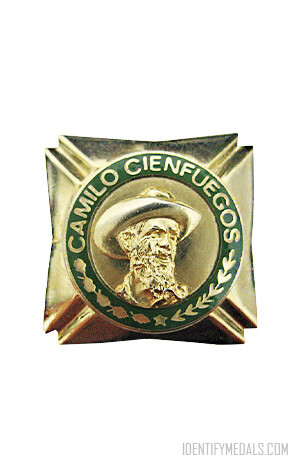
The Order of Camilo Cienfuegos is a prestigious Cuban military decoration established on December 10, 1979, under Decree-Law No. 30. This order honors exceptional contributions to the defense of Cuba’s sovereignty and revolutionary achievements, drawing inspiration from the life and legacy of Camilo Cienfuegos, a key figure in the Cuban Revolution.

Camilo Cienfuegos (1932–1959) was a revered Cuban revolutionary leader and a close ally of Fidel Castro during the Cuban Revolution. Known as the “Hero of Yaguajay,” he played a critical role in the triumph of the revolution, particularly in the final offensive against the Batista regime. Cienfuegos was celebrated for his humility, charisma, and unwavering dedication to the revolutionary cause. His untimely disappearance in 1959 further cemented his status as a symbol of the Cuban struggle for justice and equality.

The Order of Camilo Cienfuegos is not only a recognition of individual and collective military excellence but also a tribute to the revolutionary spirit of its namesake. It highlights the values of courage, leadership, and loyalty to the revolutionary cause that Cienfuegos embodied. By extending the honor to friendly nations, the order also reflects Cuba’s commitment to international solidarity and the shared fight for sovereignty and self-determination.

The Order of Camilo Cienfuegos Criteria

The Order of Camilo Cienfuegos is awarded to:

  • Members of the Revolutionary Armed Forces (FAR): Active, reserve, and retired personnel.
  • Military personnel of friendly nations: Recognizing their solidarity and contributions to shared ideals.

Recipients must demonstrate extraordinary merit in:

  • Planning or executing combat actions: Showcasing exceptional leadership, strategic vision, and operational success in defending Cuba.
  • Defending Cuba’s sovereignty and revolutionary achievements: Acting decisively to protect and advance the nation’s socialist principles and independence.

The Front-Fighters Badge

The Norwegian “Frontkjemper” (Front-Fighter) badge was awarded for bravery to Waffen-SS Norwegian legionnaires and German cadre.

The Norwegian “Frontkjemper” (Front-Fighter) badge was introduced in October 1943 by Vidkun Quisling, leader of the Norwegian collaborationist government during World War II. This badge was awarded to Norwegian legionnaires and German cadre members who demonstrated bravery while serving on the Eastern Front between 1941 and 1945.

The badge was awarded to Norwegian soldiers and German cadre for their participation in combat on the Eastern Front. Nurses who served on the Eastern Front were also eligible for the award. A miniature version was available for veterans to wear on civilian clothing. A special variant featuring a nurse helping a wounded soldier was produced, reflecting the contributions of medical personnel.

The Front-Fighters Badge Design

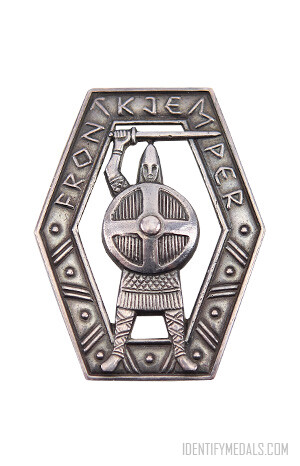
Manufactured by “Webeto” in Oslo, it was only issued in silver. The badge depicts a Nordic warrior with a shield and sword, framed by an archway inscribed with “FRONT KJEMPER” in pseudo runic script. Two types exist: an early high-quality version with sharp details and a later type with a standard “M” in “frontkjeMper”. Original badges feature the silver content “830S” and the maker’s mark “W”.

On the reverse, the badge displays a serial number, indicating its silver content. Authentic pieces have a thin needle, small hinge, and “C”-shaped catch, with patina in the relief’s deepest areas. Some post-war badges, made of zinc, were produced for veterans who lost their awards.