The New Zealand 1990 Commemoration Medal

The New Zealand 1990 Commemoration Medal was awarded in 1990 to celebrate the 150th anniversary of the signing of the Treaty of Waitangi.

The New Zealand 1990 Commemoration Medal, also known as the Sesquicentennial Medal, was established by Queen Elizabeth II through a Royal Warrant on February 9, 1990.

It was specifically intended for award during the year 1990, and around 3,000 individuals were initially chosen to receive it in recognition of their contributions to various aspects of New Zealand life, particularly in connection with the 1990 celebrations. Ultimately, 3,632 medals were conferred.

This medal holds significance as it was issued on the 150th anniversary of the signing of the Treaty of Waitangi on February 6, 1840, by representatives of the British Crown and various Māori chiefs from New Zealand’s North Island.

The New Zealand 1990 Commemoration Medal is an official decoration to be worn on all appropriate occasions. In the order of precedence, it follows Coronation and Jubilee medals but precedes long service decorations and medals. Each recipient is also presented with a certificate bearing the signatures of the Queen, the Governor-General, and the Prime Minister.

The New Zealand 1990 Commemoration Medal Design

The New Zealand 1990 Commemoration Medal is a gilt metal, circular in shape.

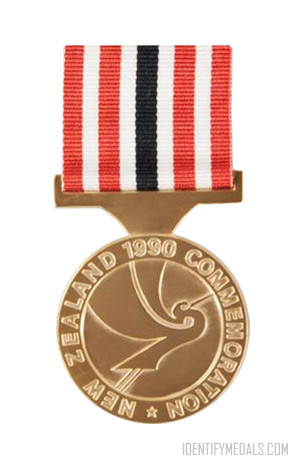
On the obverse, it bears the Effigy of the Sovereign surrounded by the inscription “ELIZABETH II • QUEEN OF NEW ZEALAND”. On the reverse is the official 1990 Symbol (a stylized Kotuku, White Heron) and the inscription “NEW ZEALAND 1990 COMMEMORATION”.

The medal is suspended by a ribbon, 32 millimeters in width, consisting of nine narrow stripes of red ochre, white, red ochre, white, black, white, red ochre, white, and red ochre.

Find This Medal

Right Now on eBay 
Clicking a link to eBay may result in a referral commission being paid if a purchase is made.
Loading...

The New Zealand Special Service Medal

The New Zealand Special Service Medal (NZSSM) was established by royal warrant by Elizabeth II in 2002 for military service.

The New Zealand Special Service Medal (NZSSM) was officially instituted by Queen Elizabeth II through a royal warrant on July 23, 2002. This medal is designed to acknowledge military service that wouldn’t typically qualify for a Campaign medal.

The New Zealand Special Service Medal Ribbons

There are three conditions under which the medal is awarded: New Zealand Special Service Medal (Nuclear Testing), New Zealand Special Service Medal (Asian Tsunami), and New Zealand Special Service Medal (Erebus).

New Zealand Special Service Medal (Nuclear Testing)

The NZSSM (Nuclear Testing) is a retrospective honor, established on July 24, 2002, and is bestowed upon individuals who were part of a New Zealand Government mission during atmospheric nuclear tests in the 1950s and one test in 1973.

The tests recognized by this medal were at Maralinga, South Australia, Malden Island, Christmas Island, Nevada Test Site, Enewetak Atoll, and Moruroa.

New Zealand Special Service Medal (Asian Tsunami)

he NZSSM (Asian Tsunami) was created on December 22, 2005, to honor those who helped after the 2004 Indian Ocean earthquake and tsunami.

To earn this medal, you needed to serve for at least 7 days between December 26, 2004, and February 28, 2005, or for at least 14 days from December 26, 2004, to December 26, 2005. This service involved providing relief, helping with recovery, and aiding in reconstruction in countries affected by the tsunami. 

New Zealand Special Service Medal (Erebus)

The NZSSM (Erebus) was created in November 2006 to honor those who served in the aftermath of the Air New Zealand Flight 901 crash on Mount Erebus, Ross Island, Antarctica, on November 28, 1979. Qualifying service includes activities like body recovery, crash investigation, and victim identification.

The New Zealand Special Service Medal Design

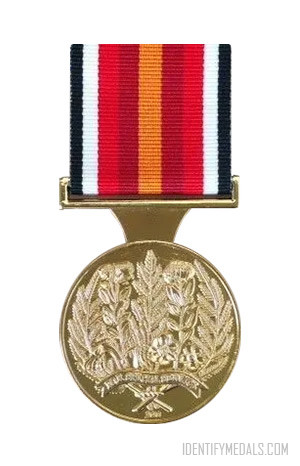
The medal is a round one made of gold-plated base metal. On the obverse, there is the New Zealand Coat of Arms, and on the back, there’s a lovely bouquet of native New Zealand flowers, including fern fronds, Pohutukawa, Manuka, Kowhai, and Mount Cook Lily. At the bottom of the bouquet, there’s a scroll that says “FOR SPECIAL SERVICE.

This design is the same for all three medals.

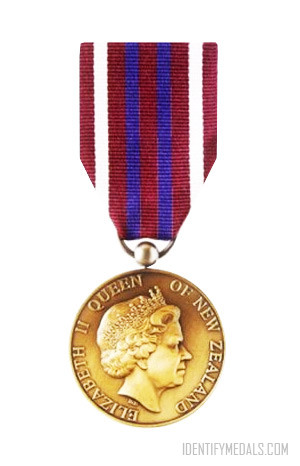
The ribbon is 32 mm wide, and the ribbon’s design can vary depending on the circumstances for which the medal is awarded.

Find This Medal

Right Now on eBay 
Clicking a link to eBay may result in a referral commission being paid if a purchase is made.
Loading...

The New Zealand Queen’s Service Medal

The New Zealand Queen’s Medal is awarded by the government of New Zealand to recognize volunteer service to the community and public service.

The Queen’s Service Medal is a medal bestowed by the New Zealand government to acknowledge and honor volunteer contributions to the community, as well as public service in elected or appointed positions.

This medal was established in 1975 and has a connection to the Queen’s Service Order. The QSM took over the role of the Imperial Service Medal as a New Zealand award.

The New Zealand Queen’s Service Medal Design

There are two versions of the Queen’s Service Medal: 1975-2007 and 2007-present. 

The original medal measured 36 millimeters (1.4 inches) in diameter, was crafted from sterling silver. Its obverse featured the same effigy of Queen Elizabeth II as the Queen’s Service Order badge, encircled by her Royal styles and titles, “ELIZABETH II DEI GRATIA REGINA F.D.” On the reverse, the New Zealand Coat of Arms was displayed, accompanied by the inscription “The Queen’s Service Medal” and the specific sub-division, either “for Community Service” or “for Public Services.” The recipient’s initials and name were engraved on the medal’s rim. These medals were manufactured by the Royal Mint.

The current medal, also composed of sterling silver and measuring 36 mm in diameter, showcases the Ian Rank-Broadley designed effigy of Queen Elizabeth II on its obverse. The effigy is surrounded by her Royal styles and titles, “ELIZABETH II QUEEN OF NEW ZEALAND.” The reverse side features the New Zealand Coat of Arms, bordered by the inscription “The Queen’s Service Medal” above and “for service – MO NGA MAHI NUI” below. 

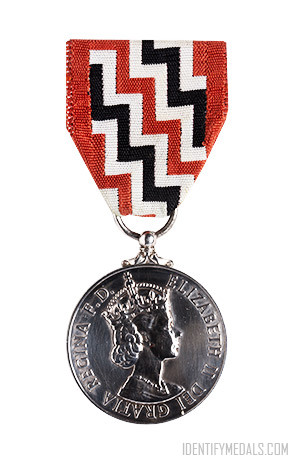
Both versions of the medal hang from a 36 mm wide ribbon. It has narrow red ochre (kokowhai) stripes along the edges, while the center displays alternating stripes of red ochre, white, and black, forming a descending step pattern from left to right. This design draws inspiration from the Māori Poutama pattern found in Tukutuku wall panels, symbolizing the “stairway to heaven,” although in this context, it represents the “steps of service.”

Find This Medal

Right Now on eBay 
Clicking a link to eBay may result in a referral commission being paid if a purchase is made.
Loading...

The New Zealand Bravery Medal

The New Zealand Bravery Medal (NZBM) was instituted i n1999 and is the fourth-level civil decoration of New Zealand.

The New Zealand Bravery Medal (NZBM) holds the distinction of being the fourth-level civil decoration within New Zealand’s honors system.

Its establishment occurred through a Royal Warrant on September 20, 1999, marking a significant shift towards an indigenous New Zealand Bravery system, replacing British bravery awards. This esteemed medal, which can also be posthumously awarded, is granted in recognition of “acts of bravery.” While primarily a civilian honor, it is extended to members of the armed forces who demonstrate acts of bravery in non-operational situations. This allowance is made since New Zealand’s gallantry awards are typically reserved for individuals involved in war, warlike operational service, and peacekeeping missions.

To acknowledge continued acts of exceptional bravery deserving of recognition, bars may be added to the NZBM. Those who are honored with the New Zealand Bravery Medal are entitled to use the postnominal letters NZBM.

The New Zealand Bravery Medal Design

The New Zealand Bravery Medal is a bronze disk measuring 28 mm in diameter. 

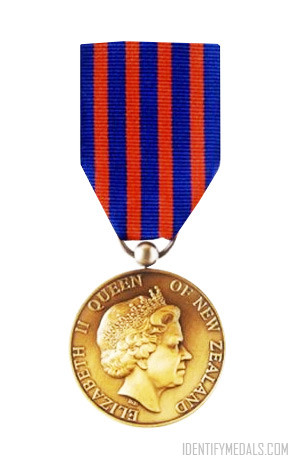
The ribbon is 32 mm wide and has nine equal and alternating stripes of bright blue and crimson.

Find This Medal

Right Now on eBay 
Clicking a link to eBay may result in a referral commission being paid if a purchase is made.
Loading...

The New Zealand Gallantry Medal

The New Zealand Gallantry Medal (NZGM) was established in 1999 and is the fourth-level military decoration of the New Zealand armed forces.

The New Zealand Gallantry Medal (NZGM) is the fourth-tier military decoration within the New Zealand armed forces.

It was established through a Royal Warrant on September 20, 1999, as an integral component of the new, domestically-rooted New Zealand Gallantry system. The medal, which may also be posthumously conferred, is presented in recognition of “acts of gallantry” that occur during war, warlike operational service, and peacekeeping missions.

To commemorate additional acts of gallantry deserving of recognition, bars may be affixed to the NZGM. Those who receive this esteemed medal are entitled to utilize the postnominal letters “N.Z.G.M.”

The New Zealand Gallantry Medal Design

The New Zealand Gallantry Medal is a bronze disk measuring 38 mm in diameter.

Find This Medal

Right Now on eBay 
Clicking a link to eBay may result in a referral commission being paid if a purchase is made.
Loading...

The Woltemade Decoration for Bravery

The Woltemade Decoration for Bravery is a South African civil decoration for acts of bravery and was discontinued in 1961.

The Woltemade Decoration for Bravery is a South African civil decoration awarded for acts of bravery. It replaced the King’s Medal for Bravery, Silver and Queen’s Medal for Bravery. The award of which was discontinued in South Africa in 1961.

The Silver Woltemade Decoration for Bravery was established by the Republic of South Africa in 1970 through a Warrant dated May 20, 1970, as published in Government Gazette no. 2718 on May 29, 1970. Subsequently, the Warrant was modified twice, on November 11, 1971, and May 30, 1973, to broaden the criteria for eligibility for this decoration.

The decoration pays tribute to the heroic act of Wolraad Woltemade, an elderly employee of the Dutch East India Company. On June 1, 1773, he sacrificed his life to save shipwrecked sailors in Table Bay. During a powerful Northwestern gale, the ship De Jonge Thomas lost its anchor and was pushed ashore at the Salt River Mouth. Woltemade courageously rode his horse into the turbulent sea seven times, rescuing surviving sailors with each trip. Tragically, during his eighth rescue attempt, Woltemade and his exhausted horse were overwhelmed by panicked sailors and succumbed to the sea.

The Woltemade Decoration for Bravery Design

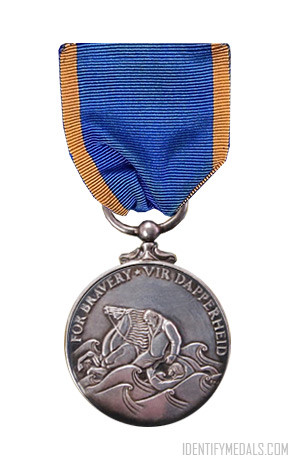
The decoration is crafted from silver, measuring 38 millimeters in diameter, featuring a raised rim and a sizable ring suspender.

On the obverse side, it showcases Wolraad Woltemade on his horse amidst the waves, with the words “FOR BRAVERY • VIR DAPPERHEID” encircling the upper perimeter. This design mirrors the one used on the earlier King’s and Queen’s Medals for Bravery, Silver.

The reverse side displays the South African Coat of Arms’ crest, where a lion holds four staves, symbolizing the four provinces of the Republic of South Africa. Surrounding the crest is a wreath of proteas, encircled by the inscriptions “REPUBLIEK VAN SUID-AFRIKA” above and “REPUBLIC OF SOUTH AFRICA” below.

The ribbon, 44 millimeters wide, is predominantly blue with 4 millimeters wide light orange edges. 

Find This Medal Online

Right Now on eBay 
Clicking a link to eBay may result in a referral commission being paid if a purchase is made.
Loading...

The Union of South Africa Commemoration Medal

The The Union of South Africa Commemoration Medal is a military and civil medal that commemorates the opening of the first Union Parliament.

The Union of South Africa Commemoration Medal, both a military and civilian commemorative decoration, was bestowed in honor of the inauguration of the inaugural Union Parliament in 1910 by the Duke of Connaught and Strathearn. It can be regarded as one of the initial independence medals introduced across the Commonwealth during the 20th century.

The medal was conferred upon individuals from the military, naval forces, and select civilian leaders who played significant roles in the events. This recognition was based on the recommendation of the Principal Secretary of State for the Colonies. A roster was maintained, and it was to be finalized six months following the warrant’s issuance. After this period, any further awards could only be granted with Royal Approval and under highly exceptional circumstances.

The Union of South Africa Commemoration Medal Design

The medal was struck in silver and measures 36 millimetres in diameter. It also has a raised rim.

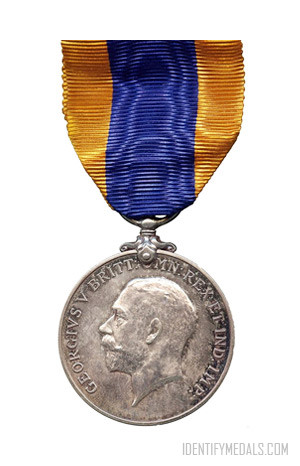
The obverse of the medal features a left-facing portrait of King George V, encircled by the inscription: “GEORGIVS V BRITT:OMN:REX ET IND:IMP:”. The medal is connected to a swiveling claw suspension, secured to the medal using a pin through its upper edge. The suspension includes a sizable ring.

On the reverse side, you can observe the representation of Mercury, symbolizing commerce and prosperity, crafting links of a chain on an anvil. Four of these links are inscribed with the names of the Union of South Africa’s provinces: “CAPE OF GOOD HOPE,” “NATAL,” “TRANSVAAL,” and “ORANGE RIVER.” Beneath this depiction, the year “1910” is intertwined with an olive branch. Surrounding the entire image is the inscription “TO COMMEMORATE THE UNION OF SOUTH AFRICA.”

The ribbon measures 38 millimeters in width and consists of two orange bands, each 10 millimeters wide, separated by a central dark blue band that is 18 millimeters wide.

Find This Medal Online

Right Now on eBay 
Clicking a link to eBay may result in a referral commission being paid if a purchase is made.
Loading...

More Union of South Africa Medals

The Union of South Africa King’s Medal for Bravery

The Union of South Africa King’s Medal for Bravery was the country’s highest civilian decoration between 1910 and 1961.

The Union of South Africa King’s Medal for Bravery 1910 was a military decoration awarded for acts of bravery and valor within the Union of South Africa, which was established in 1910 when the various British colonies and territories in South Africa united to form a single self-governing dominion within the British Commonwealth.

The medal was awarded during the reign of King George V

The King’s Medal for Bravery 1910 was awarded for acts of bravery and heroism performed within the boundaries of the Union of South Africa. It was primarily intended to recognize acts of courage and selflessness by civilians, police officers, and members of the military.

The King’s Medal for Bravery 1910 is no longer awarded, but it is a part of South Africa’s historical honors system and represents acts of bravery and heroism during the early years of the Union of South Africa

The Union of South Africa King’s Medal for Bravery Design

The medal is crafted in silver-gilt and takes the form of a 38-millimeter diameter disk with a raised edge and a prominent ring suspender.

On the obverse, it features the crowned likeness of King George VI, facing left, encircled by the inscription “GEORGIVS VI REX ET IMPERATOR” along the upper edge. 

The reverse was selected through public competition. The victorious entry was designed by Miss Renee Joubert and portrays the 18th-century Cape hero Wolraad Woltemade mounted on his horse, saving shipwreck survivors from a turbulent sea. Consequently, the medal came to be widely known as the “Woltemade Medal.

The ribbon is 44 millimeters wide and dark blue with 4½ millimeters wide orange edges.

Find This Medal Online

Right Now on eBay 
Clicking a link to eBay may result in a referral commission being paid if a purchase is made.
Loading...

More Union of South Africa Medals

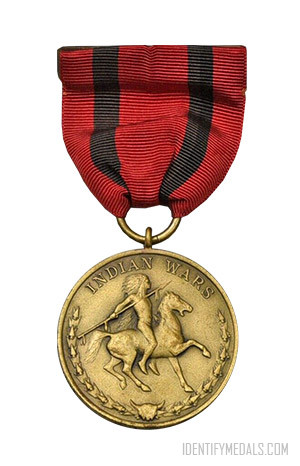
The Indian Wars Campaign Medal

The Indian Campaign Medal was a decoration established in 1907 for participants of the American Indian Wars against the Native Americans.

The Indian Campaign Medal is a distinguished decoration that was established through War Department General Orders 12 in 1907. This medal was bestowed retrospectively upon U.S. Army soldiers who had actively served in the American Indian Wars, engaging in conflicts with Native American tribes from 1865 to 1891. It recognizes the contributions and sacrifices made by those individuals during this significant period of American history.

Originally, the medal featured an all-red ribbon; however, in December 1917, two black stripes were added to avoid confusion with the ribbon of the French Legion of Honor, which bore a similar appearance.

In addition to the medal itself, campaign streamers were authorized for units that participated in Indian Wars as early as 1790. These streamers, bearing the same design as the service ribbon, are displayed as recognition of a unit’s campaign credit. The inscriptions on the streamers that are displayed on the organizational flag correspond to the unit’s lineage and honors. For the Army flag, there are 14 prescribed inscriptions for the campaign streamers, which can be found in AR 840-10 and AR 600-8-22.

The Indian Campaign Medal Design

The bronze medal measures 1 ¼ inches in diameter. The obverse side showcases a mounted Indian facing to the left, adorned with a war bonnet and holding a spear in his right hand. Positioned above the horseman are the words “Indian Wars,” while below, a buffalo skull is flanked by arrowheads arranged in a conventional manner to complete the circle.

On the reverse side, a trophy is depicted, featuring an eagle perched on a cannon supported by crossed flags and rifles. Additional elements of the trophy include an Indian shield, spear, and quiver of arrows, a Cuban machete, and a Sulu kriss. Below the trophy, the words “For Service” are inscribed. Surrounding the design is a circular border with the words “United States Army” in the upper half, while the lower half is adorned with thirteen stars.

The medal is suspended by a ring and is worn with a silk moire ribbon measuring 1 ⅜ inches in length and 1 ⅜ inches in width. The ribbon consists of a red stripe measuring ¼ inch, followed by a black stripe measuring 3/16 inch. Next is a red band measuring ½ inch, again followed by a black stripe measuring 3/16 inch, and finally, a red stripe measuring ¼ inch.

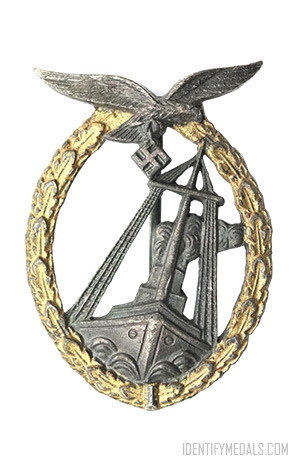
The Sea Battle Badge of the Luftwaffe

The Sea Battle Badge was a German award instituted in 1944 and given to crews of Luftwaffe supply ships, air/sea rescue launches, and vessels.

The Sea Battle Badge was a German award instituted in 1944 and given to crews of Luftwaffe supply ships, air/sea rescue launches, and other special vessels (working on the surface). It’s worth mentioning that Germany had no aircraft carriers or a navy air branch. 

The eligibility criteria were quite broad: Any military or civilian Luftwaffe personnel as eligible – as long as they were not also awarded another badge. There were a number of days at sea required, however:

  • Leaders and crew of supply ships: 60 days in the North or East sea, between 5 and 20 degrees longitude and south of the 60th degree of latitude or 20 days in the Mediterranean, including the Aegean and the Black Sea.
  • Leaders and crew of air and sea rescue boats: 20 days with a minimum of one rescue attempt or a three-hour sea duration each day, or 10 days with a successful rescue.

The badge has the Luftwaffe eagle and a swastika with a 30-degree-tilted sea vessel in the center, all surrounded by a gilt wreath made of oak leaves. 

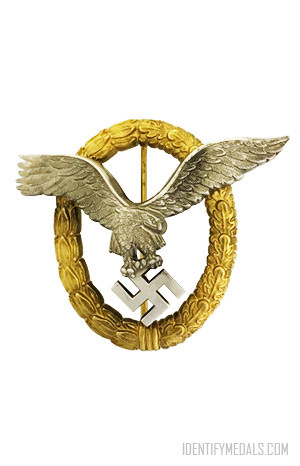
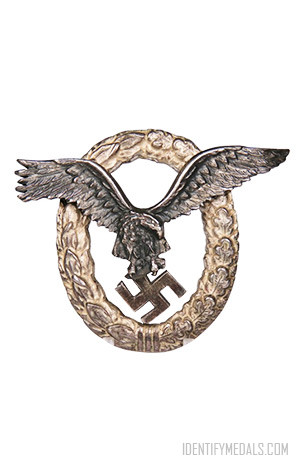
More Luftwaffe War Badges

Awarded to members of the German Luftwaffe for their achievements and contributions to air warfare, the Luftwaffe War Badges symbolized excellence, courage, and skill in aerial combat and support roles. Explore the complete collection below: