The U.S. Navy Spanish Campaign Medal was awarded to sailors and Marines who served aboard vessels operating during the Spanish–American War. Established in 1908, it recognized service in the Caribbean and Pacific campaigns.
The Navy Spanish Campaign Medal was established on 27 June 1908 to recognise the service of United States Navy sailors and Marine Corps personnel who took part in the Spanish–American War. Eligibility was limited to those who served in the waters of Cuba, Puerto Rico, or the Philippines between 21 April and 16 August 1898 aboard designated naval vessels. In total, the crews of 47 ships qualified for the award.
Initially, naval personnel who served in the Caribbean could also receive the West Indies Campaign Medal, while those who participated in the Battle of Santiago de Cuba were eligible for the Sampson Medal, authorized by Congress in 1901. In 1913, the Navy discontinued the West Indies Campaign Medal and expanded the eligibility requirements of the Spanish Campaign Medal to include all Navy and Marine Corps personnel who served on active duty during the Spanish–American War. At the same time, the ribbon design was revised to distinguish it from the national colors of Spain.
Design
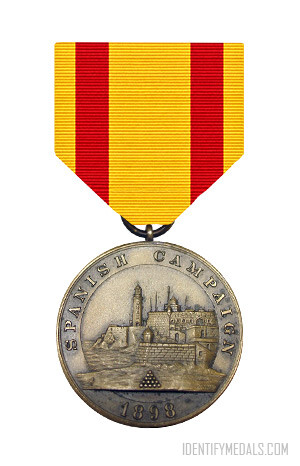
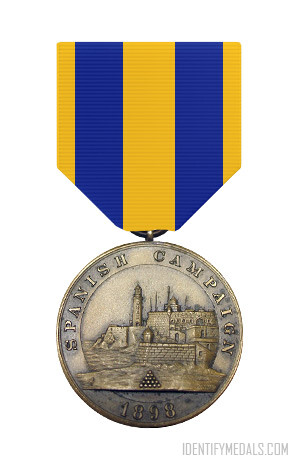
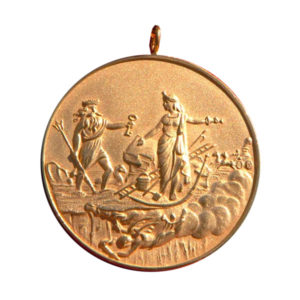
The obverse of the bronze medal features the inscribed words “SPANISH CAMPAIGN” and 1898″ and depicts the Havana Harbour, with Castillo de los Tres Reyes del Morro (Morro Castle) prominently shown guarding its entrance. The scene is not a detailed architectural portrait but a symbolic representation of one of Spain’s most important naval strongholds in the Caribbean. The lighthouse tower of Morro Castle is clearly visible on the left, while the fortified walls and buildings of the castle occupy the center and right of the design. Beneath the fortress appears a stack of cannonballs, reinforcing the military theme.
The Spanish Campaign Medal - Navy, first ribbon, obverse.
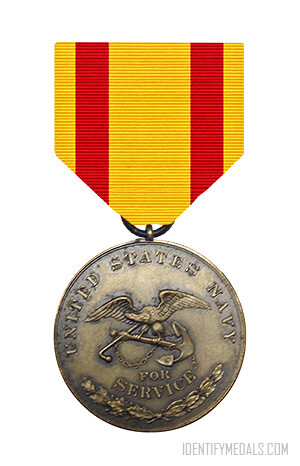
The Spanish Campaign Medal - Medal - Navy, first ribbon, reverse.
The Spanish Campaign Medal - Medal - Navy, second ribbon, obverse.
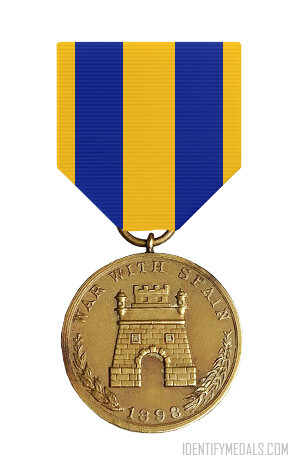
The Spanish Campaign Medal - Medal - Army, obverse.
While the medal itself remained unchanged after its introduction, its ribbon underwent a significant redesign. The original ribbon consisted of gold-yellow with two broad red vertical stripes, closely resembling the colors of the Spanish flag. When the award criteria were broadened in 1913, the Navy replaced this ribbon with a blue and yellow design. The official reason for the change was to avoid using Spain’s national colours on an American campaign medal. As a result, medals issued after 1913 feature the distinctive blue-and-yellow ribbon, while examples retaining the original red-and-yellow ribbon are associated with the medal’s earliest period of issue and are of particular interest to collectors.
Havana was the principal base of the Spanish Caribbean fleet, and its harbor was the focal point of the U.S. Navy’s blockade during the Spanish–American War. By depicting Morro Castle, the medal commemorated the naval campaign against Spain rather than any single battle.
Clicking a link to eBay may result in a referral commission being paid if a purchase is made.
Loading...
More Medals from the United States
Discover the storied legacy of American valor and service with this curated collection of medals spanning different periods in United States history. From the revered Medal of Honor, recognizing extraordinary acts of bravery and sacrifice, to campaign medals commemorating pivotal moments in American military history, each medal tells a tale of courage, dedication, and patriotism.
Browse the listings below if you want to find the perfect addition to your collection or a meaningful gift for the history enthusiast in your life.
Clicking a link to eBay may result in a referral commission being paid if a purchase is made.
Loading...
Further Reading About American History
From gripping accounts of the founding fathers to insightful analyses of pivotal moments in the nation’s development, this selection offers something for every history enthusiast. Explore the pages of these meticulously researched volumes to uncover the diverse stories and enduring legacies that have shaped the United States.
Featured Articles about the United States
Dive into the fascinating history and significance of military medals in the United States, symbols of courage, service, and dedication. Featured articles explore the evolution of these prestigious honors, from the creation of the Medal of Honor during the Civil War to modern-day awards like the Defense Distinguished Service Medal and the Purple Heart. Learn about the stories behind these decorations, their criteria, and the heroic individuals who have earned them.