The Southern Cross of Honor

The Southern Cross of Honor a commemorative medal established by the United Daughters of the Confederacy to honor Confederate veterans.

The Southern Cross of Honor was a commemorative medal created in 1899 by the United Daughters of the Confederacy to recognize the service of Confederate veterans.

The idea for the Cross of Honor was conceived by Mary Ann Erwin in 1898 and designed by her and Sarah E. Gabbett. The first medal was issued on April 26, 1900, to Captain Alexander S. Erwin. Initially produced by Charles W. Crankshaw of Atlanta, Georgia, and later by Schwaab Stamp & Seal Co. and Whitehead & Hoag, the medal’s issuance was managed by Anna Davenport Raines until her death in 1913. The program, which began with the intention to end in 1913, continued until 1959, with at least 78,761 medals awarded.

Eligibility and Allocation

The Cross of Honor could only be awarded through the United Daughters of the Confederacy and was not available for purchase.

It was given to living Confederate veterans in recognition of their honorable service in any branch of the Confederate military.

The final medal was awarded posthumously in 1951 to Rear Adm. Raphael Semmes. Wearing the medal without entitlement is a Class 3 misdemeanor in Virginia, punishable by a fine of up to $500. The Cross of Honor, akin to the Union’s GAR Medal, was never authorized for wear on U.S. military uniforms.

The Southern Cross of Honor Design

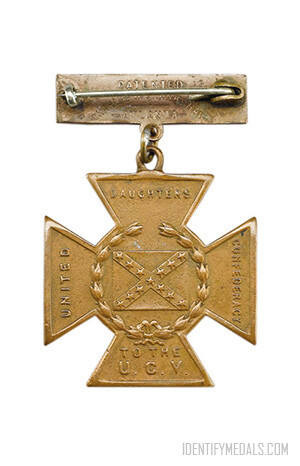
The medal is a cross pattée, suspended from a metal bar designed for engraving, and lacks a cloth ribbon.

The obverse side features the Confederate battle flag at the center, encircled by a wreath. The arms of the cross bear the inscription “UNITED DAUGHTERS OF THE CONFEDERACY TO THE U. C. V.

The reverse displays the Confederate States’ motto “DEO VINDICE” (With God as our Vindicator) and the dates “1861 1865,” surrounded by a laurel wreath. The arms on this side are inscribed with “SOUTHERN CROSS OF HONOR.”
The Society of the Army of the Potomac Medal

The Society of the Army of the Potomac was a military society founded in 1869 from officers and enlisted men of the Army of the Potomac.

The Society of the Army of the Potomac was a military society founded in 1869 from officers and enlisted men who served with the Army of the Potomac during the American Civil War.

When the Society of the Army of the Potomac was founded, Lieutenant General Philip Sheridan was elected as its first president. A total of 12 vice presidents were also elected, representing 10 corps which served with the army as well as the artillery and the general staff.

As the Society did not provide for hereditary membership, it gradually diminished as the veterans of the Civil War died off during the early twentieth century. It held its last annual reunion in 1927.

The Society of the Army of the Potomac Medal Design

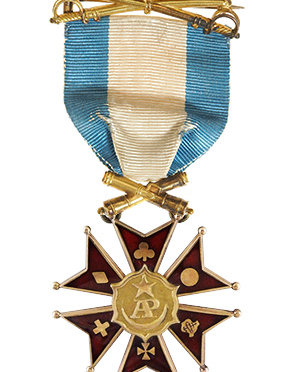
The elaborate insignia was made of gold and manufactured by Bailey, Banks and Biddle jewelers of Philadelphia. It has a top piece of crossed cavalry sabers, a blue and white ribbon, a pair of crossed cannons below the ribbon, and a planchet in the form of a six-armed cross enameled in red with the badges of six of the corps assigned to the army. In the center of the cross is a seal with a crescent moon, a star, and a cipher of the letters A and P.

The New Market Cross of Honor

The New Market Cross of Honor is a military decoration issued to cadets of the Virginia Military Institute for their service to the Confederacy.

The New Market Cross of Honor is a military decoration that was issued by the Alumni Association of VMI to cadets of the Virginia Military Institute (VMI) for their service to the Confederacy during the American Civil War. All the cadets had been previously listed on the Confederate Roll of Honor.

The medal was issued in 1904 and presented to the 294 members who marched into combat at the Battle of New Market, which was fought on May 15, 1864 in Virginia during the Valley Campaigns of 1864. A makeshift Confederate army of 4,100 men turned the tide of the battle for the Confederacy, defeating Union Major General Franz Sigel and his Army of the Shenandoah. A notable participant of this battle (and a reci[ient of the medal) was Moses Jacob Ezekiel.

The cadets, numbering 257, were organized into a battalion of four companies of infantry and one of artillery. Ten cadets died as a result of the battle while 45 were wounded and survived. In the case of those killed in battle or no longer living, the medal was given to surviving family members.

The cross was also presented to Eliza Catherine Clinedinst Crim, a New Market resident who had nursed injured cadets after the battle. When she died in 1931, cadets served as her pallbearers and her grave marker said “Mother of the New Market Corps“.

Separately, VMI has awarded a “New Market Medal” to distinguished alumni since 1962.

The New Market Cross of Honor Design

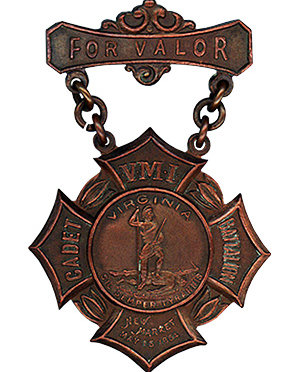
The copper medal measures 1.5″ x 2″ overall. The hanger reads “For Valor“. The drop has the state seal of Virginia and the words: “VMI Cadet Battalion New Market May 15 1864“. The back is marked “V.M.I. Alumni Ass’n” and the name of the recipient.

The Davis Guard Medal

The Davis Guard Medal is a military decoration bestowed by the State of Texas for the victory at the Second Battle of Sabine Pass.

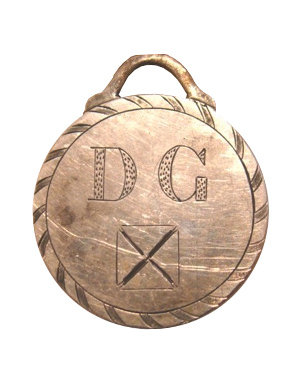
The Davis Guard Medal is a military decoration bestowed by the State of Texas to the members of F Battery, 1st Texas Heavy Artillery Regiment, for the victory at the Second Battle of Sabine Pass. Some consider it to be the only medal issued by the Confederate States of America during the war.

The award was funded by a collection from Houston citizens. It was presented as a one-time award to exactly 50 men. In addition to the 49 members of the battery, the award was also presented to Jefferson Davis as the unit’s honorary commander. President Davis had his medal on him at the time of his capture in May 1865, but it was stolen by a Union soldier. A replacement was given him by three veterans in 1875.

The Davis Guard Medal Design

The medal consisted of a silver Mexican coin polished smooth with the letters “DG” on the front above a cross pattee. The reverse bore the inscription “Sabine Pass Sept. 23, 1864” in cursive script.

The medal hung from a green ribbon, in honor of the Irish origins of the unit’s members. The 50 recipients of the Davis Guard Medal were also listed on the Confederate Roll of Honor.

The Civil War Campaign Medal

The Civil War Campaign Medal was awarded to members of the U.S. Armed Forces who had served in the American Civil War between 1861 and 1865.

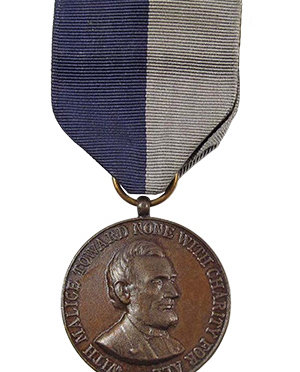
The Civil War Campaign Medal was awarded to members of the United States Armed Forces who had served in the American Civil War between 1861 and 1865 and is considered the first campaign service medal of the United States Armed Forces.

The medal was first authorized in 1905 for the fortieth anniversary of the Civil War’s conclusion by the United States War Department on January 21, 1907, by General Orders Number 12. To qualify, a soldier had to serve between April 15, 1861, and April 9, 1865.

The Civil War Campaign Medal No. 1 was issued to Maj. Gen. Charles F. Humphrey on May 26, 1909.

The Civil War Campaign Medal Design

The blue and grey ribbon denotes the respective uniform colors of the U.S. and Confederate troops. The medal was originally established as a badge, because Congress would not approve a medal due to the costs involved.

The Civil War Campaign medal was designed by Francis D. Millet, a noted sculptor who perished on the RMS Titanic in 1912. The medal was struck at the Philadelphia Mint.

The obverse of the Army Civil War Campaign Medal displayed an engraved image of Abraham Lincoln. The Navy and Marine Corps versions depicted the USS Monitor and CSS Virginia‘s battle at Hampton Roads. In the center of a bronze medallion one and a quarter inches in diameter, the head of Lincoln surrounded by the raised inscription, WITH MALICE TOWARD NONE WITH CHARITY FOR ALL.

The reverse has the words “The Civil War 1861-1865” encircled by a wreath composed of a branch of oak on the left and a branch of laurel on the right, joined at the base by a bow. In the center of a bronze medallion one and a quarter inches in diameter, the words are carved over a bar, under which appear the dates 1861-1865. The oak represents the strength of the United States and the laurel represents victory.

Buy a Civil War Campaign Medal

Note: As an eBay partner, I earn from qualifying purchases. This is all done automatically when you use a link and at no extra cost to you.

Right Now on eBay 
Clicking a link to eBay may result in a referral commission being paid if a purchase is made.
Loading...

The U.S. Medal of Honor

The Medal of Honor is the United States of America’s most prestigious personal military decoration, awarded for acts of valor.

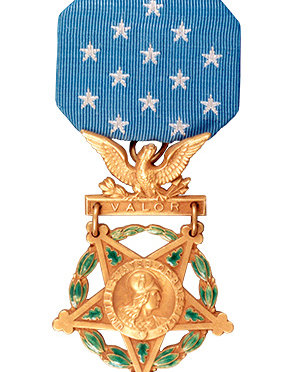
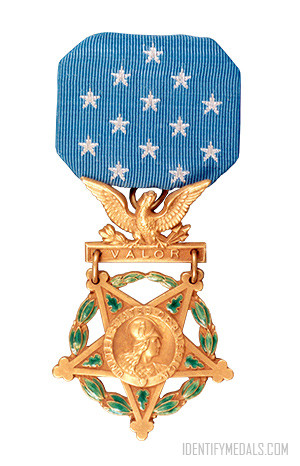
The Medal of Honor is the United States of America’s highest and most prestigious personal military decoration. It may be awarded to recognize U.S. military service members who distinguished themselves by acts of valor and is normally awarded by the President of the United States in the name of the U.S. Congress. The Medal of Honor is the oldest continuously issued combat decoration of the United States armed forces.

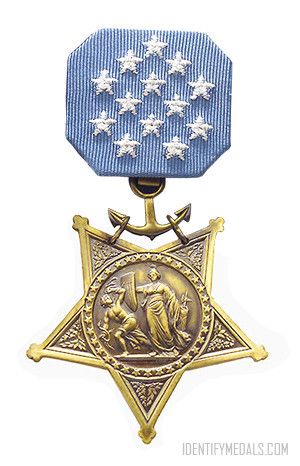
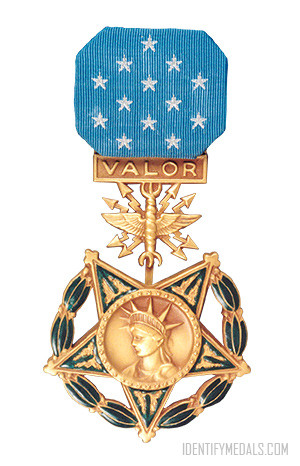
There are three versions of the Medal of Honor insignia. One for the Army, one for the Navy, and one for the Air Force. 

The History of the Medal of Honor

Signed into law by President Abraham Lincoln, a Navy Medal of Honor was first authorized on December 21, 1861 followed by an Army Medal of Honor, which was approved on July 14, 1862.

Over 40 percent of the Medals of Honor awarded to date—1,522 out of 3,464 medals—were bestowed during the Civil War. In fact, some Civil War Medals of Honor years after the end of the war, including Andrew Jackson Smith whose medal was awarded in 2001 and Alonzo Cushing in 2014. 

The first Medals of Honor were given to participants of Andrews’ Raid or the Great Locomotive Chase with Private Jacob Parrot as the first person ever to be awarded this medal of America. At least 32 Medals of Honor were awarded to African-Americans, and William Harvey Carney was the first. Born a slave in Virginia, he finally found freedom in Massachusetts. He volunteered to join the 54th Massachusetts Infantry Regiment, the first African-American unit in the northern states although it was led by white officers.

Tasked with taking Fort Wagner, a beachhead fortification that protected the southern Charleston Harbor, the 54th was chosen for the second attack. The Union flag bearer was killed as the soldiers stormed the fort, but Carney stepped in and held the flag for the remainder of the battle, never losing possession of the flag despite several injuries. Unfortunately, the 54th was forced to retreat, but, as Carney said after the battle, “the old flag never touched the ground.” Carney was awarded the Medal of Honor in 1900, thirty-five years after the end of the Civil War.

Individuals who have received two Medals of Honor are rare, and Thomas Ward Custer is a part of this elite group, receiving both medals for actions during the American Civil War

Personnel of the Marine Corps and Coast Guard receive the Navy version (it was created as a Navy version in 1861 named the “Medal of Valor”). According to the Medal of Honor Historical Society of the United States, 3,519 Medals of Honor have been awarded to the nation’s soldiers, sailors, airmen, Marines, and Coast Guardsmen since the medal’s creation. Less than half of them awarded for actions during the four years of the American Civil War.

American Medals and Awards: The Medal of Honor (Army Version)
The Medal of Honor: Army Version
American Medals and Awards: The Medal of Honor (Navy Version)
The Medal of Honor: Navy Version
American Medals and Awards: Medal of Honor (Airforce)
The Medal of Honor: Air Force Version

The Medal of Honor During World War I and World War II

During World War I and World War II, numerous individuals received the Medal of Honor for their extraordinary valor and heroism in combat.

During World War I (1914-1918), the Medal of Honor was awarded for acts of bravery in various theaters of the war, including the Western Front in Europe, the Italian Front, and other areas of conflict. Recipients demonstrated exceptional courage in the face of enemy fire, often risking their lives to save their comrades or achieve critical objectives. One notable recipient during this world war was Sergeant Alvin York, who single-handedly captured 132 German soldiers during the Meuse-Argonne Offensive in 1918.

In World War II (1939-1945), the Medal of Honor continued to be awarded for acts of extraordinary heroism in combat. Recipients demonstrated exceptional bravery and selflessness in a wide range of theaters, including the Pacific, European, African, and Mediterranean theaters of war. One of the most celebrated recipients of the Medal of Honor during World War II was Sergeant Audie Murphy, who received the medal for his actions during the Battle of Holtzwihr in France, where he single-handedly repelled a German attack and called in artillery fire on enemy positions.

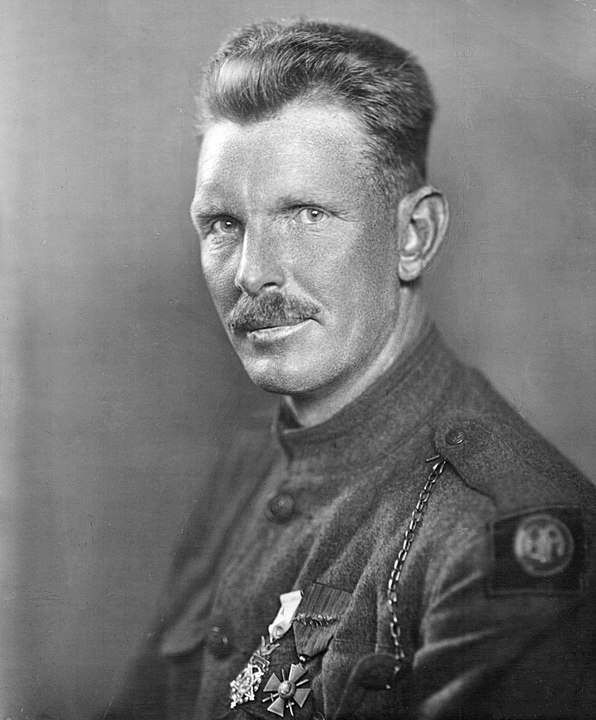
Alvin Cullum York (December 13, 1887 – September 2, 1964)
Alvin York in uniform, 1919, wearing the Medal of Honor and French Croix de Guerre with Palm.
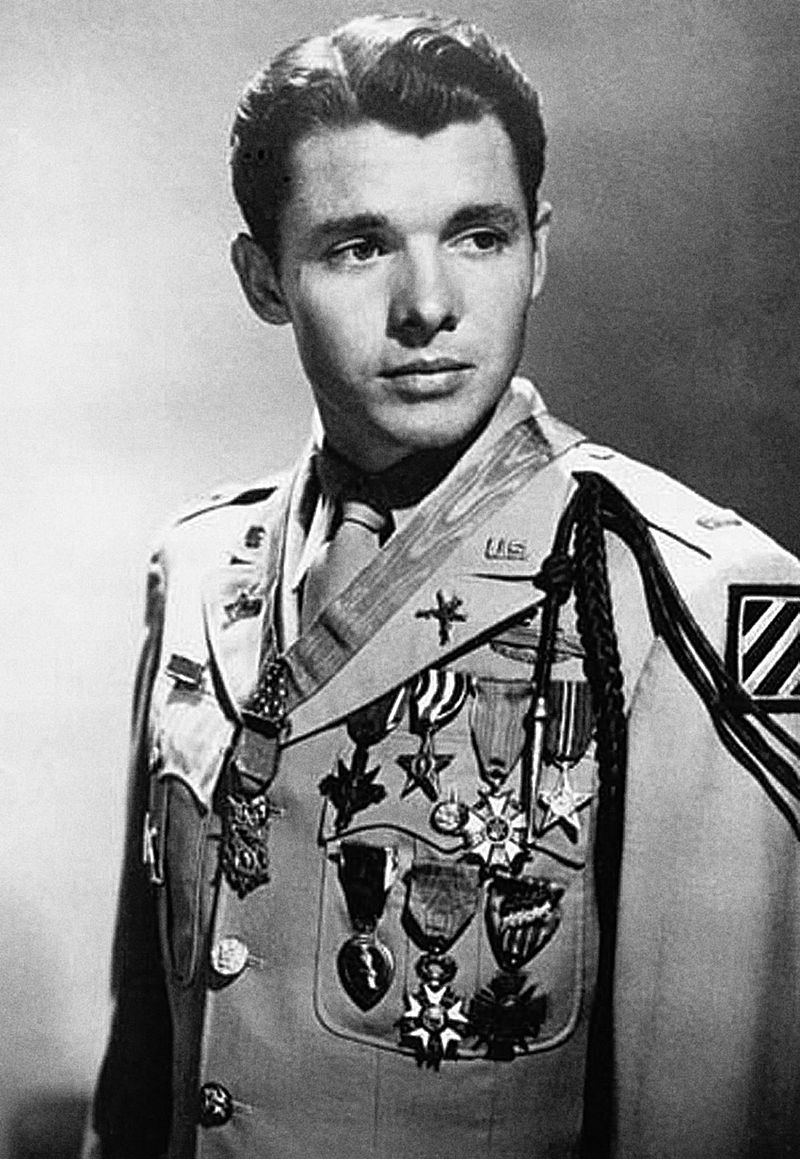
Audie Murphy photographed in 1948 wearing the U.S. Army khaki "Class A" (tropical service) uniform with full-size medals. Source: Wikipedia.

The Medal of Honor Design

After World War I, the Navy decided to separate the Medal of Honor into two versions: One for combat and one for non-combat. The original upside-down star was designated as the non-combat version and a new pattern of the medal pendant, in cross form, was designed by the Tiffany Company in 1919.

It was to be presented to a sailor or marine who “in action involving actual conflict with the enemy, distinguish[es] himself conspicuously by gallantry and intrepidity at the risk of his life above and beyond the call of duty. 

Due to its prestige and status, the Medal of Honor is afforded special protection under U.S. law against any unauthorized adornment, sale, or manufacture, which includes any associated ribbon or badge.

Read more about the symbolism of the Medal of Honor:

Famous U.S. Medal of Honor Recipients

These individuals represent just a few of the many courageous recipients of the Medal of Honor who have demonstrated extraordinary bravery and selflessness in service to their country. Here are five famous recipients of the U.S. Medal of Honor:

  • Audie Murphy: Audie Murphy, a World War II veteran, is one of the most decorated American soldiers in history. He received the Medal of Honor for his actions during the Battle of Holtzwihr in France in 1945.

  • Alvin C. York: Alvin C. York was a World War I soldier and is renowned for his heroic actions during the Meuse-Argonne Offensive in 1918. He received the Medal of Honor for his bravery and leadership in capturing numerous German soldiers.

  • Desmond Doss: Desmond Doss, a conscientious objector during World War II, served as a combat medic. He was awarded the Medal of Honor for his extraordinary bravery and dedication to saving lives during the Battle of Okinawa.

  • Sal Giunta: Staff Sergeant Salvatore Giunta became the first living recipient of the Medal of Honor since the Vietnam War. He was honored for his actions during the War in Afghanistan in 2007 when he saved fellow soldiers from enemy fire.

  • Michael P. Murphy: Navy SEAL Lieutenant Michael P. Murphy was posthumously awarded the Medal of Honor for his courageous actions during Operation Red Wings in Afghanistan in 2005. He sacrificed his life while attempting to call for reinforcements to rescue his team.