The Warsaw Shield

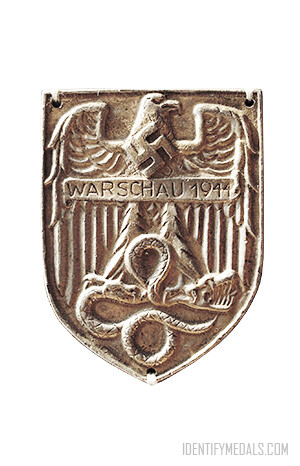
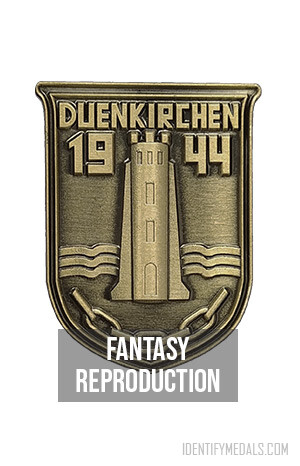
The Warsaw Shield (Ärmelschild Warschau) is a German military decoration for those who took part in the suppression of the Warsaw uprising.

The Warsaw Shield (or Ärmelschild Warschau in German) is a World War II military decoration of Nazi Germany, awarded to Wehrmacht and Waffen-SS servicemen who took part in the suppression of the 1944 Warsaw uprising. The Warsaw uprising lasted 63 days from 1 August 1944. Polish resistance attempted to liberate Warsaw as German forces withdrew. However, the approaching Red Army temporarily halted outside the city, enabling the Germans to regroup and defeat the uprising. 

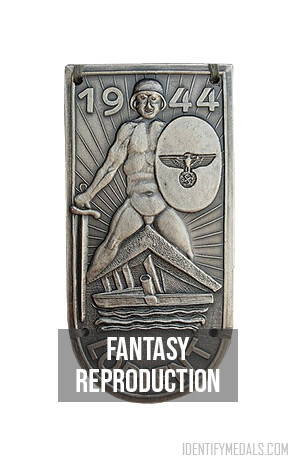
Although authorized, approved and announced (the Warsaw Shield was  instituted on 10 December 1944 by Adolf Hitler, with full award regulations published in the Reich Law Gazette), production had not begun prior to the end of the war and the award was never issued. Dies were prepared, but were destroyed in an air-raid and no shields were actually produced before the end of the war. However, some sample matrices for the shield survived and have been used as the basis for the post-war manufacture of unofficial examples.

The Warsaw Shield Design

The award was designed by Benno von Arent. It was going to be a 50 × 62 mm bronze-colored shield with a large Wehrmacht-style eagle with folded wings grasping a writhing snake. A mobile swastika is superimposed on the eagle’s neck with, immediately below, a narrow banner with the legend WARSCHAU 1944

The shield was to be worn on the left upper arm of the uniform. 

More Nazi Germany Shields (Ärmelschilde)

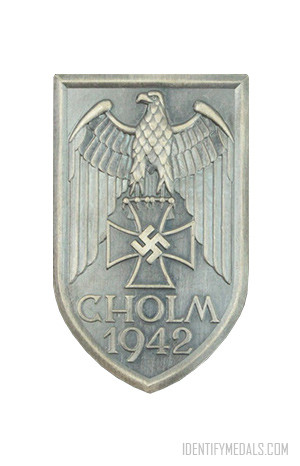
These campaign shields were awarded to members of the Wehrmacht (the unified armed forces of Nazi Germany from 1935 to 1945). They were given for participation in specific battles or campaigns and worn on the left upper arm of the uniform jacket.

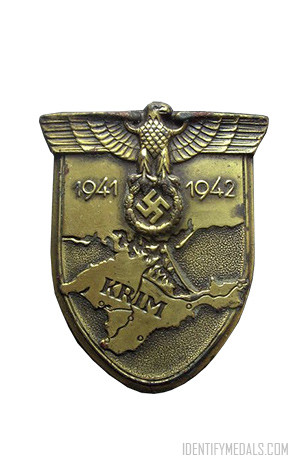
The Crimea Shield - German WW2 Medals, Badges and Awards

The Crimea Shield

The Crimea Shield (Krimschild) is a WW2 German military decoration awarded to military personnel who fought against Soviet Red Army forces.
Read More »

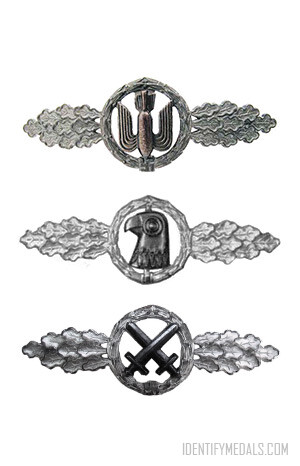
The Tank Combat Badge of the Luftwaffe

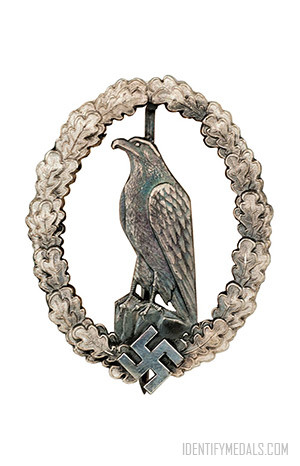
The Tank Combat Badge of the Luftwaffe is a Third Reich / Nazi Germany Luftwaffe War Badge awarded during the Second World War.

The Tank Combat Badge of the Luftwaffe (Or Luftwaffe Panzer Badge, Panzerkampfabzeichen der Luftwaffe German) was a World War II German military decoration instituted on 3 November 1944 by Reichsmarshall Goring to honor the panzer troops of the Luftwaffe field divisions (until then, qualified Luftwaffe personnel were awarded the Heer Panzer Badge).

The badge had two designs:

  • All Silver: Awarded to tank commanders, gunners, drivers, radiomen, repair crews and their medical personnel.
  • Silver with Black Wreath: Awarded to Panzer grenadiers, armored reconnaissance units, and the medical personnel attached to them.

Both badge styles were awarded for three combat engagements on three different days.

The Tank Combat Badge of the Luftwaffe Design

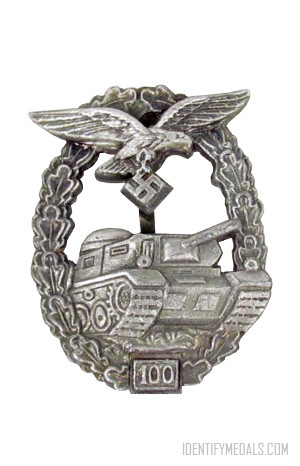
The badge is an oval wreath composed of eight oak leaves on the left and seven oak leaves on the right. The first design was entirely silver and the second had a black wreath.

The badge was presented in a paper packet with the name of the award printed on the outside. 

More Luftwaffe War Badges

Awarded to members of the German Luftwaffe for their achievements and contributions to air warfare, the Luftwaffe War Badges symbolized excellence, courage, and skill in aerial combat and support roles. Explore the complete collection below:

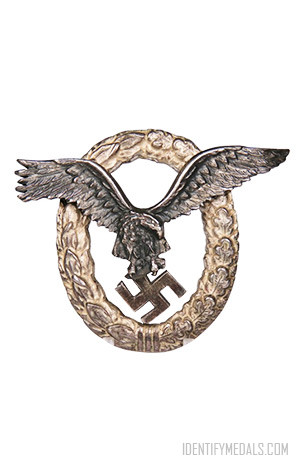
The Ground Assault Badge of the Luftwaffe

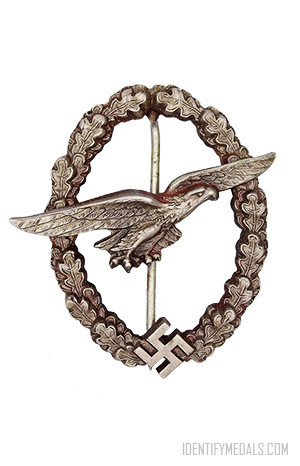
The Ground Assault Badge of the Luftwaffe is a Third Reich / Nazi Germany Luftwaffe War Badge awarded during the Second World War.

The Ground Assault Badge of the Luftwaffe (Erdkampfabzeichen der Luftwaffein German) was a World War II German military decoration instituted on 31 March 1942 by commander-in-chief Hermann Göring and awarded for achievement in ground combat. 

The criteria was the participation in three separate combat operations on separate days. Luftwaffe soldiers who had already been awarded medals or orders of the Heer such as General Assault Badge or the Infantry Assault Badge, were required to exchange their badges for the Ground Assault Badge of the Luftwaffe.

The badge was awarded in four classes based on the number of combat operations:

  • 2nd grade (II. Stufe) for 25 eligible operations,
  • 3rd grade (III. Stufe) for 50 eligible operations,
  • 4th grade (IV. Stufe) for 75 eligible operations,
  • 5th grade (V. Stufe) for 100 eligible operations.

The Ground Assault Badge of the Luftwaffe Design

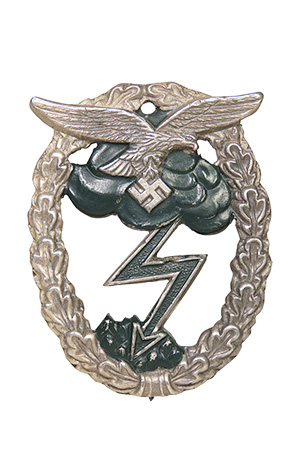
Designed by Professor Sigmund von Weech, the badge consists of a Luftwaffe eagle, clawing a Swastika, flying above a storm cloud, from which a lightning bolt strikes rough ground.

More Luftwaffe War Badges

Awarded to members of the German Luftwaffe for their achievements and contributions to air warfare, the Luftwaffe War Badges symbolized excellence, courage, and skill in aerial combat and support roles. Explore the complete collection below:

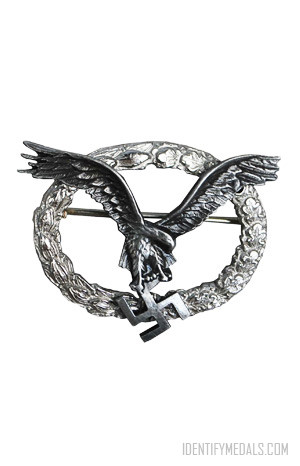
The Anti-Aircraft Flak Battle Badge

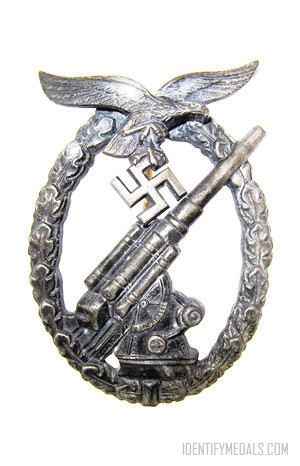
The Anti-Aircraft Flak Battle Badge is a Third Reich / Nazi Germany Luftwaffe War Badge awarded during the Second World War.

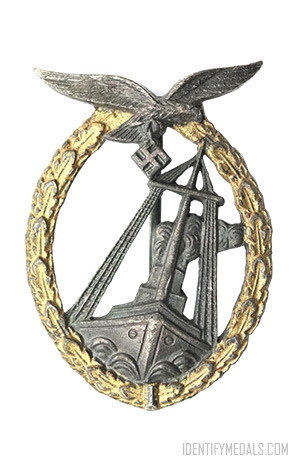
The Anti-Aircraft Flak Battle Badge (Flak-Kampfabzeichen der Luftwaffein German) was a World War II German military decoration instituted on 10 January 1941 by the Commander in Chief of the Luftwaffe Hermann Göring to commemorate soldiers or servicemen of the Flak Artillery who distinguished themselves in action against enemy aerial or ground attacks. 

The Anti-Aircraft Flak Battle Badge Design

The badge was worn on the lower part of the left breast pocket of the service tunic, underneath the 1st class Iron Cross if awarded.

More Luftwaffe War Badges

Awarded to members of the German Luftwaffe for their achievements and contributions to air warfare, the Luftwaffe War Badges symbolized excellence, courage, and skill in aerial combat and support roles. Explore the complete collection below:

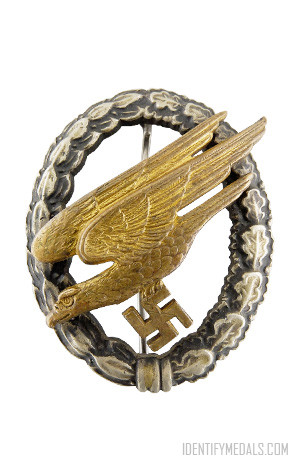
The Luftwaffe Parachutist Badge

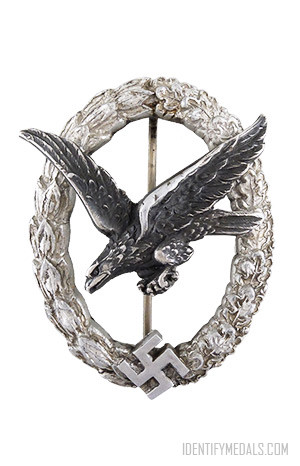
The Luftwaffe Parachutist Badge is a Third Reich / Nazi Germany Luftwaffe War Badge awarded during the Second World War.

The Luftwaffe Parachutist Badge (Fallschirmschützenabzeichen in German) was a World War II German military decoration instituted on 5 November 1936 and awarded to qualified parachutists of the Wehrmacht and the Waffen-SS.

The badge was first established by order of Hermann Göring and originally given to Luftwaffe personnel after completion of the required number of six jumps. A recipient had to re-qualify for the badge each year.

An army version was introduced on 1 September 1937, in which the swastika was relocated to the top of the wreath and surmounted by a smaller upright eagle. 

The Luftwaffe Parachutist Badge Design

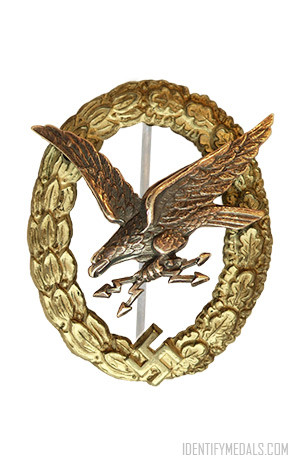
The Luftwaffe Parachutist Badge depicts a diving eagle with a swastika in its claws surrounded by a silver wreath. The original construction was made of gold-finished bronze for the eagle and oxidized silver plate for the laurel leaves.

In 1937, the construction of the badge was changed to aluminum and in late 1942 to a metal alloy. A cloth version of the badge was also authorized in 1937, to be worn on a flight jacket.

More Luftwaffe War Badges

Awarded to members of the German Luftwaffe for their achievements and contributions to air warfare, the Luftwaffe War Badges symbolized excellence, courage, and skill in aerial combat and support roles. Explore the complete collection below:

The Auxiliary Cruiser Badge

The Auxiliary Cruiser Badge is a Military Service Badge (Naval War / Kriegsmarine) from the Third Reich, Germany, Second World War.

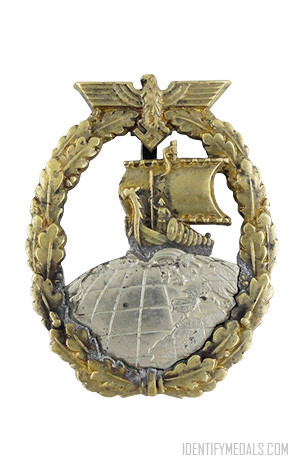
The Auxiliary Cruiser Badge (Kriegsabzeichen für Hilfskreuzer in German) is a war badge awarded to Kriegsmarine soldiers during World War II. It was instituted on 24 April 1941 and given to officers and men of the Kriegsmarine for service on Auxiliary Cruisers or the supply ships that supported them for a successful large voyage.

The Auxiliary Cruiser Badge Design

The badge bears a Viking ship above the northern hemisphere globe, surrounded by oak leaves.

More Naval War Badges

The Naval War Badges (Kriegsmarine) badges were awarded to sailors, officers, and personnel of the Kriegsmarine who demonstrated exceptional skill, bravery, and dedication in naval warfare. Explore the complete collection below:

The Fast Attack Craft War Badge

The Fast Attack Craft War Badge is a Military Service Badge (Army/Waffen-SS) from the Third Reich, Germany, Second World War.

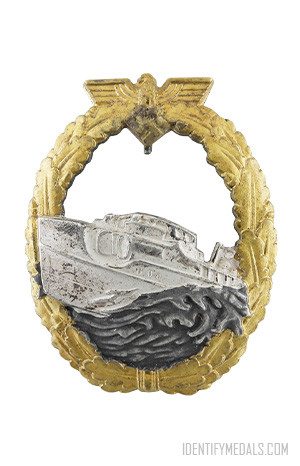
The Fast Attack Craft War Badge (or Das Schnellbootkriegsabzeichen in German) is a war badge instituted on 30 May 1941 and awarded to Kriegsmarine members for service on fast attack craft or torpedo boats.

The requirements for receiving this award included an outstandingly successful sortie, wounds in action, 12 sorties against enemy vessels or installations, or outstanding leadership.

The Badge was made in two versions; the first instituted on May 30, 1941 and the second in January 1943.

The Fast Attack Craft War Badge Design

The badge was worn on the lower part of the left breast pocket of the naval service tunic, underneath the 1st class Iron Cross or equivalent grade award.

Both badge designs were created by Wilhelm Ernst Peekhaus of Berlin. There is also a third exclusive version with nine diamonds replacing the solid bars of the swastika at the top, although only eight of them are known to have been awarded.

More Naval War Badges

The Naval War Badges (Kriegsmarine) badges were awarded to sailors, officers, and personnel of the Kriegsmarine who demonstrated exceptional skill, bravery, and dedication in naval warfare. Explore the complete collection below:

The Blockade Runner Badge

The Blockade Runner Badge is a Military Service Badge (Naval War / Kriegsmarine) from the Third Reich, Germany, Second World War.

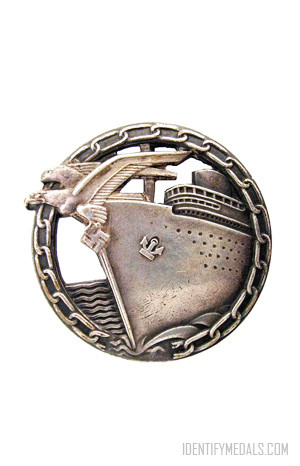
The Blockade Runner Badge (also known as the Badge for Blockade Runners or Abzeichen für Blockadebrecher in German) is a war badge awarded to Kriegsmarine soldiers during World War II.

It was instituted on 1 April 1941 for service on warships or merchant vessels (also allied) that attempted to break through the British sea blockade of Germany. A smaller half-size version was awarded for use by civilians and members of the merchant marine.

The Blockade Runner Badge Design

The design of the Blockade Runner Badge is a warship or merchant vessel surrounded by an circular chain.

More Naval War Badges

The Naval War Badges (Kriegsmarine) badges were awarded to sailors, officers, and personnel of the Kriegsmarine who demonstrated exceptional skill, bravery, and dedication in naval warfare. Explore the complete collection below:

The Minesweeper War Badge

The Minesweeper War Badge is a Military Service Badge (Naval War / Kriegsmarine) from the Third Reich, Germany, Second World War.

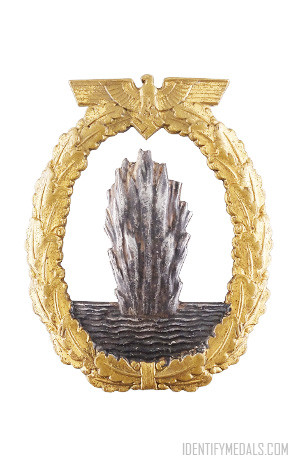
The Minesweeper War Badge (Also known as Minesweepers, Sub-Chasers and Escort-Vessel War Badge, Kriegsabzeichen für Minensuch-, U-Boot-Jagd- und Sicherungsverbände in German) is a war badge awarded to Kriegsmarine soldiers during World War II. It was instituted on 31 August 1940 and given to members for service on Minesweepers boats.

In order to qualify for the award, a person had to be recommended from the ship’s captain if the candidate had completed 3 operational sorties, had been wounded during an operational sortie, had shown exemplary conduct in the execution of his duties over a 6-month period, had completed a specially dangerous mission in a mined area, had served on escort duty for 25 days or more, had participated in a specific mission that had been successfully completed, or if the ship was sunk due to enemy action.

The Minesweeper War Badge Design

The badge was worn on the lower part of the left breast pocket of the naval service tunic, underneath the 1st class Iron Cross or equivalent grade award.

More Naval War Badges

The Naval War Badges (Kriegsmarine) badges were awarded to sailors, officers, and personnel of the Kriegsmarine who demonstrated exceptional skill, bravery, and dedication in naval warfare. Explore the complete collection below:

The Destroyer War Badge

The Destroyer War Badge is a Military Service Badge (Naval War / Kriegsmarine) from the Third Reich, Germany, Second World War.

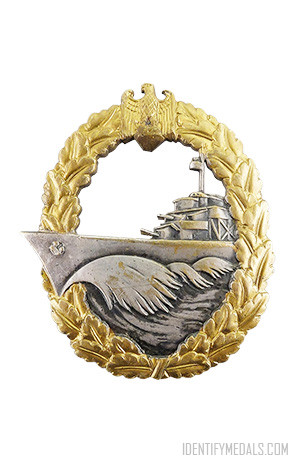
The Destroyer War Badge (Zerstörerkriegsabzeichen in German) is a war badge awarded to Kriegsmarine soldiers during World War II. It was instituted on 4 June 1940 by admiral Erich Raeder and awarded to officers and crew for the service on Kriegsmarine destroyers.

Before October 10, 1940, requirements included participation in the battles of Narvik. After the date, the requirements were wound, participation in three enemy engagements or at least in 12 non-enemy sorties, ship sinking in action, outstanding performance or other heroic deeds. The Badge was also awarded to the crews of Kriegsmarine torpedo boats and fast attack craft until the institution of the Fast Attack Craft War Badge.

Around 6000 Destroyer War Badges were awarded during WW2. A few of them were manufactured using also diamonds but it’s believed these awards were to be presented to only the most successful destroyer captains after the war was over.

The Destroyer War Badge Design

The badge was worn on the lower part of the left breast pocket of the naval service tunic. It was placed underneath the 1st class Iron Cross or equivalent grade award.

A cloth version of the Badge was issued for wear on the dark blue uniform.

More Naval War Badges

The Naval War Badges (Kriegsmarine) badges were awarded to sailors, officers, and personnel of the Kriegsmarine who demonstrated exceptional skill, bravery, and dedication in naval warfare. Explore the complete collection below: