The Order of Montesa

The Order of Montesa is a Christian military order linked to the old Crown of Aragon (today Spain) and named after the order’s headquarters.

The Order of Montesa (or Orden de Montesa in Spanish) is a Christian military order linked to the old Crown of Aragon and named after the castle of the same name, which was the order’s headquarters. 

The Order of Montesa played a significant role in the ongoing struggle against Muslim forces in the Iberian Peninsula. Its knights participated in military campaigns, fortifications, and border defense, contributing to the Christian reconquest of Spain.

Founded in the 14th century, the order emerged as a merger between two prominent military orders: the Knights Templar and the Order of Saint George of Alfama.

The Order of Montesa traces its origins to the aftermath of the suppression of the Knights Templar in the early 14th century. Seeking to preserve the legacy and assets of the Templars, King James II of Aragon facilitated the transfer of their estates and holdings to the newly formed Order of Montesa in 1317. This merger allowed for the continuation of the Templar tradition within the framework of a new order.

With its headquarters established in the castle of Montesa, located in the province of Valencia, the order quickly garnered royal patronage and papal approval. It adopted the rule of the Knights Templar and pledged itself to the defense of the Kingdom of Valencia and the Christian faith.

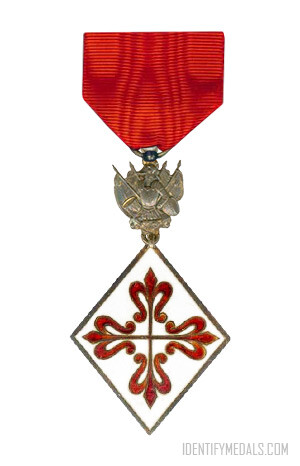
The Order of Montesa Design

At the heart of the insignia is the distinctive cross of Montesa, which serves as the primary emblem of the order. This cross typically features arms of equal length, often adorned with ornate details and embellishments

The Spanish Orders of Knighthood

Collectively, the four Spanish military orders (the Order of Santiago, the Order of Calatrava, the Order of Montesa, and the Order of Alcántara) exemplified the spirit of medieval chivalry and Christian knighthood, dedicating themselves to the defense of the faith and the protection of Christian lands.

Their legacies endure as enduring symbols of Spain’s rich heritage and the enduring ideals of honor, valor, and service.

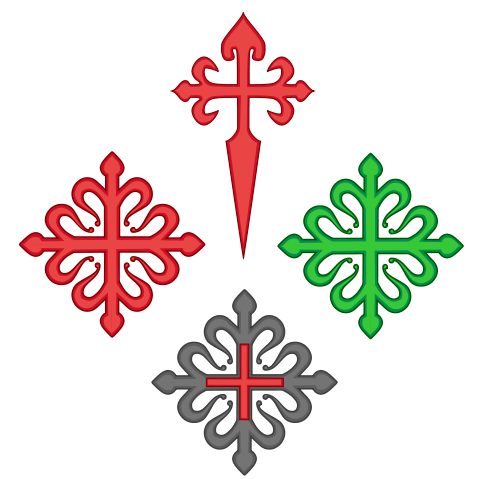
The Spanish military orders.
Badges of the Order of Santiago (top), the Order of Calatrava (left), the Order of Montesa (bottom) and the Order of Alcántara (right).

The Order of Alcántara

The Order of Alcántara or Knights of St. Julian was a military order founded in 1166 and confirmed by Pope Alexander III in 1177.

The Order of Alcántara (or Orden de Alcántara in Spanish), sometimes referred to as the Knights of St. Julian, was a military order of León (today Spain) and was founded in 1166. The Order was then confirmed in 1177 by Pope Alexander III.

Founded in the 12th century during the Reconquista, the order played a pivotal role in the Christian reconquest of the Iberian Peninsula from Muslim rule. 

The origins of this order are shrouded in mystery, yet according to a somewhat dubious tradition, St. Julian de Pereiro, a hermit from the region of Salamanca, played a pivotal role. It is said that upon his counsel, several knights constructed a fortress on the banks of the Tagus River to resist Muslim incursions. References to these knights appear as early as 1176, in a charter issued by King Fernando of León, although their military nature is not explicitly mentioned. It wasn’t until 1177, with the issuance of a papal bull by Pope Alexander III, that they were officially recognized as a military order.

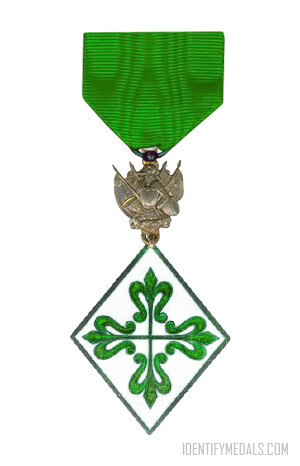
The Order of Alcántara Design

The insignia of the Order of Alcántara is a symbol of the order’s noble ideals and martial heritage. At the heart of the obverse is the distinctive cross of Alcántara, characterized by its unique shape and design. This cross features arms that widen towards the ends, often adorned with intricate details and embellishments. 

Surrounding the cross of Alcántara, the insignia may include additional elements that further enhance its visual appeal and symbolic significance, or inscriptions or mottoes that reflect the order’s ethos and mission.

The Spanish Orders of Knighthood

Collectively, the four Spanish military orders (the Order of Santiago, the Order of Calatrava, the Order of Montesa, and the Order of Alcántara) exemplified the spirit of medieval chivalry and Christian knighthood, dedicating themselves to the defense of the faith and the protection of Christian lands.

Their legacies endure as enduring symbols of Spain’s rich heritage and the enduring ideals of honor, valor, and service.

The Spanish military orders.
Badges of the Order of Santiago (top), the Order of Calatrava (left), the Order of Montesa (bottom) and the Order of Alcántara (right).

The Order of Santiago

The Order of Santiago was a religious and military order founded in the 12th century and one of the four Spanish military orders.

The Order of Santiago (or Orden de Santiago in Spanish) is one of the most renowned and prestigious chivalric orders in Spanish history.

Founded in the 12th century during the Reconquista, its origins are deeply intertwined with the Christian struggle to reclaim the Iberian Peninsula from Moorish rule.

Initially established as a religious and military brotherhood to protect the pilgrims journeying to the shrine of Saint James the Apostle in Santiago de Compostela, the order quickly evolved into a formidable military force. Comprised of noble knights known as Santiago Cavaliers, its members were bound by vows of chivalry, including the defense of the Catholic faith, the protection of pilgrims, and the expulsion of Moors from Christian territories.

Despite experiencing periods of decline and resurgence over the centuries, the Order of Santiago has maintained its status as a symbol of chivalry and honor in Spanish history. Today, it remains active as a dynastic order, preserving its traditions and heritage while continuing to uphold the values of courage, loyalty, and service to the Catholic Church and the Spanish nation.

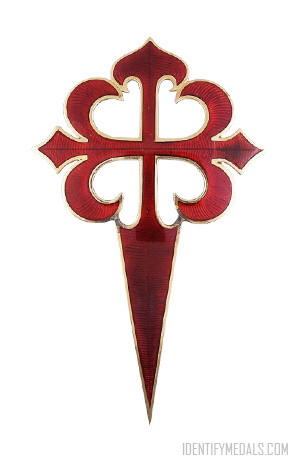
The Order of Santiago Design

The insignia design of the Military Order of Santiago is rich in symbolism and tradition.

Central to the insignia is the distinctive red cross pattée, which serves as the primary emblem of the order. This cross, often depicted in a vibrant red hue, is characterized by its equal-length arms that taper slightly towards the ends. 

Surrounding the cross pattée, and depending on the insignia, you can often find additional elements of heraldic imagery, such as heraldic lions, castles, or fleur-de-lis, which symbolize various aspects of the order’s history, lineage, and mission.

The Spanish Orders of Knighthood

Collectively, the four Spanish military orders (the Order of Santiago, the Order of Calatrava, the Order of Montesa, and the Order of Alcántara) exemplified the spirit of medieval chivalry and Christian knighthood, dedicating themselves to the defense of the faith and the protection of Christian lands.

Their legacies endure as enduring symbols of Spain’s rich heritage and the enduring ideals of honor, valor, and service.

The Spanish military orders.
Badges of the Order of Santiago (top), the Order of Calatrava (left), the Order of Montesa (bottom) and the Order of Alcántara (right).

The Order of Calatrava

The Order of Calatrava was the first military order founded in Castile and one of the first four Spanish military orders.
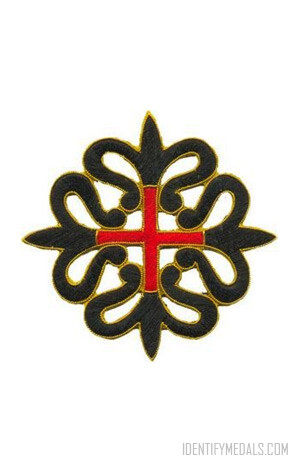
The Order of Calatrava, known as Orden de Calatrava in Spanish and Ordem de Calatrava in Portuguese, stood as one of the four Spanish military orders and notably served as the premier military order established in Castile, albeit being the second to gain papal endorsement. Pope Alexander III officially sanctioned the Order of Calatrava through a papal bull issued on September 26, 1164. While much of the order’s political and military influence waned by the late 15th century, its assets were not fully dissolved until 1838.

The Order of Calatrava holds a distinguished place in the history of medieval Spain as one of the foremost military orders. Founded in the 12th century, it played a crucial role in the Reconquista, the centuries-long effort by Christian kingdoms to retake the Iberian Peninsula from Muslim rule.

Initially established as a military brotherhood to protect the Calatrava fortress in the Kingdom of Castile, the order quickly expanded its mission to defend Christian territories and combat Moorish incursions. Its members, known as knights or cavaliers, took vows of poverty, chastity, and obedience, dedicating themselves to the defense of Christendom.

The Order of Calatrava gained papal approval in 1164, solidifying its status as an official institution of the Catholic Church. With the backing of both secular and ecclesiastical authorities, it grew in power and influence, attracting nobles and warriors from across Europe to join its ranks.

In the present day, the fundamental objective of the Spanish Orders remains unchanged from their inception: the protection and promotion of the Catholic faith. While the use of the sword has ceased, their commitment to doctrine, exemplary conduct, spiritual growth, and religious observance persists, alongside their engagement in cultural and social endeavors.

The Order of Calatrava Design

In recognition of their service and valor, members of the Order of Calatrava were awarded various honors and distinctions, including medals and insignia.

These medals often featured the emblem of the order, which typically included symbols such as a cross, sword, and shield, representing the order’s martial and religious mission.

The Spanish Orders of Knighthood

Collectively, the four Spanish military orders (the Order of Santiago, the Order of Calatrava, the Order of Montesa, and the Order of Alcántara) exemplified the spirit of medieval chivalry and Christian knighthood, dedicating themselves to the defense of the faith and the protection of Christian lands.

Their legacies endure as enduring symbols of Spain’s rich heritage and the enduring ideals of honor, valor, and service.

The Spanish military orders.
Badges of the Order of Santiago (top), the Order of Calatrava (left), the Order of Montesa (bottom) and the Order of Alcántara (right).