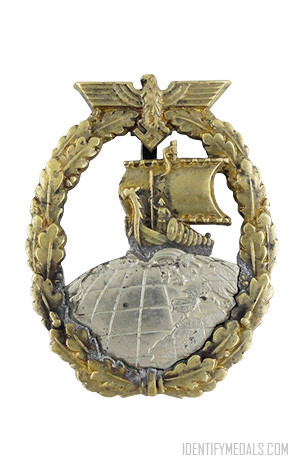
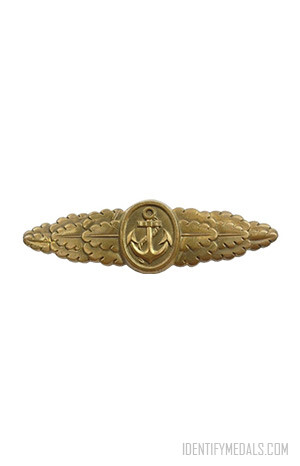
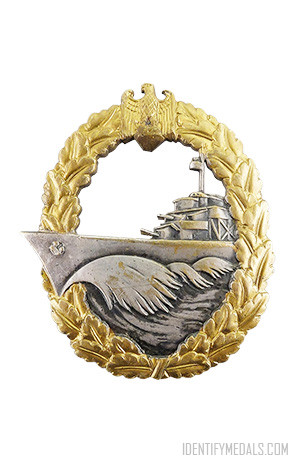
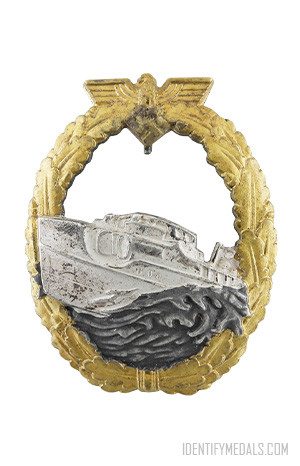
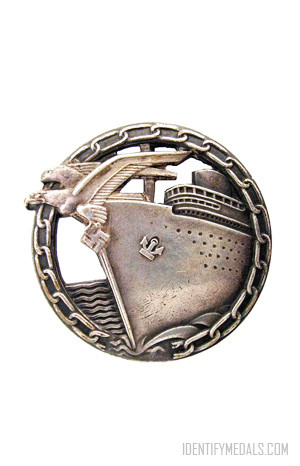
The Minesweeper War Badge

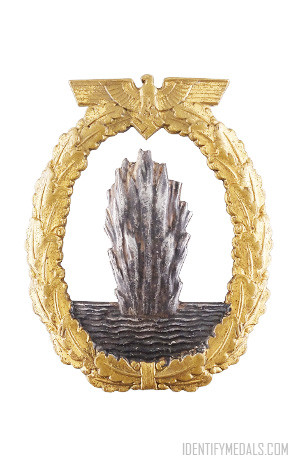
The Minesweeper War Badge is a Military Service Badge (Naval War / Kriegsmarine) from the Third Reich, Germany, Second World War.

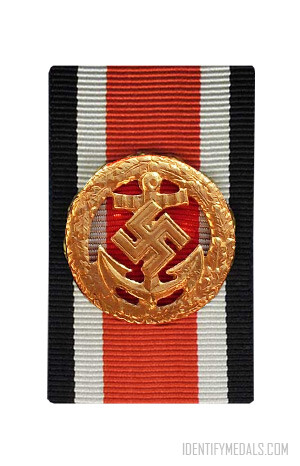
The Minesweeper War Badge (Also known as Minesweepers, Sub-Chasers and Escort-Vessel War Badge, Kriegsabzeichen für Minensuch-, U-Boot-Jagd- und Sicherungsverbände in German) is a war badge awarded to Kriegsmarine soldiers during World War II. It was instituted on 31 August 1940 and given to members for service on Minesweepers boats.

In order to qualify for the award, a person had to be recommended from the ship’s captain if the candidate had completed 3 operational sorties, had been wounded during an operational sortie, had shown exemplary conduct in the execution of his duties over a 6-month period, had completed a specially dangerous mission in a mined area, had served on escort duty for 25 days or more, had participated in a specific mission that had been successfully completed, or if the ship was sunk due to enemy action.

The Minesweeper War Badge Design

The badge was worn on the lower part of the left breast pocket of the naval service tunic, underneath the 1st class Iron Cross or equivalent grade award.

More Naval War Badges

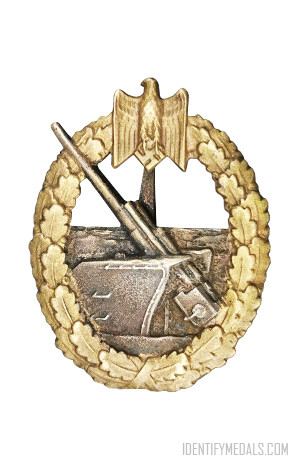
The Naval War Badges (Kriegsmarine) badges were awarded to sailors, officers, and personnel of the Kriegsmarine who demonstrated exceptional skill, bravery, and dedication in naval warfare. Explore the complete collection below:

The Destroyer War Badge

The Destroyer War Badge is a Military Service Badge (Naval War / Kriegsmarine) from the Third Reich, Germany, Second World War.

The Destroyer War Badge (Zerstörerkriegsabzeichen in German) is a war badge awarded to Kriegsmarine soldiers during World War II. It was instituted on 4 June 1940 by admiral Erich Raeder and awarded to officers and crew for the service on Kriegsmarine destroyers.

Before October 10, 1940, requirements included participation in the battles of Narvik. After the date, the requirements were wound, participation in three enemy engagements or at least in 12 non-enemy sorties, ship sinking in action, outstanding performance or other heroic deeds. The Badge was also awarded to the crews of Kriegsmarine torpedo boats and fast attack craft until the institution of the Fast Attack Craft War Badge.

Around 6000 Destroyer War Badges were awarded during WW2. A few of them were manufactured using also diamonds but it’s believed these awards were to be presented to only the most successful destroyer captains after the war was over.

The Destroyer War Badge Design

The badge was worn on the lower part of the left breast pocket of the naval service tunic. It was placed underneath the 1st class Iron Cross or equivalent grade award.

A cloth version of the Badge was issued for wear on the dark blue uniform.

More Naval War Badges

The Naval War Badges (Kriegsmarine) badges were awarded to sailors, officers, and personnel of the Kriegsmarine who demonstrated exceptional skill, bravery, and dedication in naval warfare. Explore the complete collection below:

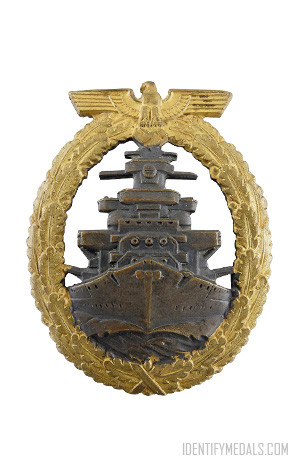
The High Seas Fleet Badge

The High Seas Fleet Badge is a Military Service Badge (Naval War / Kriegsmarine) from the Third Reich, Germany, Second World War.

The High Seas Fleet Badge (Das Flottenkriegsabzeichen in German) is a war badge awarded to Kriegsmarine soldiers during World War II. It was instituted in April 1941 and given for service to the crews of the High Seas Fleet – mainly of battleships and cruisers but also the ships that supported them operationally and for which there was no other award available.

In order to qualify for the badge, a person had to show active duty on 1 or more 12 week cruises, wounds or sinking in action, as well as proof of distinction and good conduct. The award could be given retroactively for actions against the British fleet. The number of required weeks could be reduced if the person met one of these conditions:

  • The recipient was wounded or killed during the voyage.
  • For outstanding achievements in an engagement.
  • If the cruise was successful.
  • If an individual’s ship was sunk in action.
  • For participation in “Rawalpindi” and “Jan Mayen”.
  • For all crew members of the Scharnhorst and Gneisenau in view of the operational effectiveness of the ships.
  • To every sailor who was present on the Tirpitz when it was bombed and sunk by the British R.A.F. on November 12, 1944.

The High Seas Fleet Badge Design

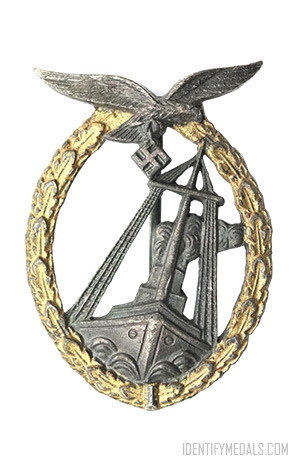
The design of the badge is set over a battleship and surrounded by an oval of oak leaves. 

More Naval War Badges

The Naval War Badges (Kriegsmarine) badges were awarded to sailors, officers, and personnel of the Kriegsmarine who demonstrated exceptional skill, bravery, and dedication in naval warfare. Explore the complete collection below:

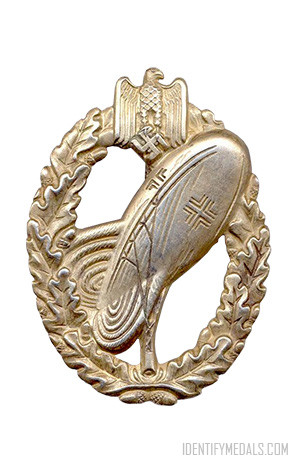
The Balloon Observer’s Badge

The Balloon Observer’s Badge is a Military Service Badge (Army/Waffen-SS) from the Third Reich, Germany, Second World War.

The The Balloon Observer’s Badge (Ballonbeobachterabzeichen in German) is a war badge awarded to officers and men who risked their lives flying 300–500 ft above the ground in a gas balloons. These balloons were easy targets for Allied pilots.

Due to the late introduction of this badge, only a very small number were awarded. It existed in three grades, awarded on a point-basis for different conditions such as transportation or control of heavy weaponry and artillery:

  • Bronze: 20 Points awarded.
  • Silver: 45 Points awarded.
  • Gold: 75 Points awarded.

The Balloon Observer’s Badge Design

The badge was designed by Elmar Lang, although it was never put into production. Lang’s claim to having the prototype design has shed doubt about the originality of badges appearing on the collector’s market.

More Army/Waffen-SS War Badges

The Army/Waffen-SS war badges were military decorations awarded by Nazi Germany to members of the Army (Heer) and the Waffen-SS. Explore the complete collection below:

The Anti-Partisan Guerrilla Warfare Badge

The Anti-Partisan Guerrilla Warfare Badge is a Military Service Badge (Army/Waffen-SS) from the Third Reich, Germany, Second World War.

The Anti-Partisan Guerrilla Warfare Badge (Bandenkampfabzeichen in German) is a war badge awarded to Heer, Luftwaffe, and Waffen-SS personnel during World War II. It was instituted on 30 January 1944 and referred to as “Bandenkampf-Abzeichen”, because Heinrich Himmler decided the term Banden was better than the term “partisans” – as to not give credence to the guerrillas that were active in almost Germany-occupied countries during WW2.

While many of these resistance movements were initially small and disorganized, a lot coalesced into larger, more powerful bands of fighters. For example, in Greece, Russia and the Yugoslavian states, the partisans had become large enough to require increasing German manpower and resources.

The Anti-Partisan Guerrilla Warfare Badge was created to recognize the soldiers of the Axis that were involved in these behind-the-lines battles. There were three grades for this badge:

  • Bronze: For 20 days in combat.
  • Silver: For 50 days in combat. And
  • Gold: For 100 days in combat. 

For the Luftwaffe, the criteria was based on sorties instead of days in action. 

The Anti-Partisan Guerrilla Warfare Badge Design

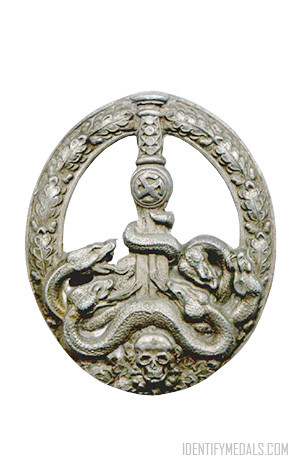
The design of the badge is a wreath with a sword placed vertically in the center. The handle has a sun wheel swastika, representing the Nordic and auxiliary forces. The sword plunges into a Hydra, or multi-headed sea serpent representing the Partisans.

The Hydra was a mythical Greek creature, considered almost impossible to destroy because its heads would grow again after being cut off – alluding to the ever-growing presence of Partisan activities.

More Army/Waffen-SS War Badges

The Army/Waffen-SS war badges were military decorations awarded by Nazi Germany to members of the Army (Heer) and the Waffen-SS. Explore the complete collection below:

The General Assault Badge

The General Assault Badge is a Military Service Badge (Army/Waffen-SS) from the Third Reich, Germany, Second World War.

The General Assault Badge (or Allgemeines Sturmabzeichen in German) is a war badge instituted on 1 June 1940 and awarded to personnel of the German Army, Waffen-SS and Ordnungspolizei that were neither in unmotorized rifle, Gebirgsjäger or tank units. The badge was given to engineers, motorized infantry and troops who had supported infantry and armor units in combat. Artillery, anti-tank (PaK) and anti-aircraft (Flak) units and some medics were also included. 

The General Assault Badge only existed in a silver class and was awarded to persons participating in:

  • Three infantry assaults;
  • In the first line;
  • Breaking through with weapon at hands;
  • On three different days after 1 January 1940; 
  • Not being eligible for the Infantry Assault Badge or Panzer Badge

The General Assault Badge Design

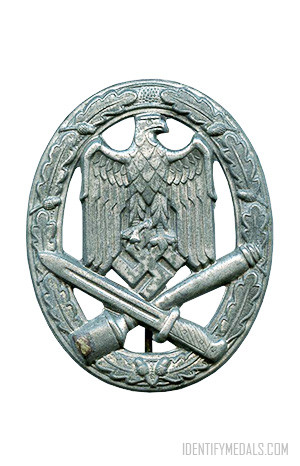
The badge features an eagle clutching a swastika. The design is set over a simple crossed bayonet and grenade and surrounded by an oval of oak leaves. 

More Army/Waffen-SS War Badges

The Army/Waffen-SS war badges were military decorations awarded by Nazi Germany to members of the Army (Heer) and the Waffen-SS. Explore the complete collection below:

The Infantry Assault Badge

The Infantry Assault Badge is a Military Service Badge (Army/Waffen-SS) from the Third Reich, Germany, Second World War.

The Infantry Assault Badge (Infanterie Sturmabzeichen in German) is a war badge awarded to Waffen SS and Wehrmacht Heer soldiers during World War II. It was instituted on December 20, 1939 and could be awarded to members of non-motorized Infantry units and units of the Gebirgsjäger that had participated in Infantry assaults (as long as they had spent least three days of battle in the front line January 1, 1940).

The Infantry Assault Badge was awarded in two classes:

  • Silver: Instituted on December 20, 1939, it was awarded to infantry soldiers who had taken part in three or more infantry assaults, counter-attacks, armed reconnaissance operations, hand-to-hand combat in an assault position, or in the restitution of combat positions.
  • Bronze: Instituted on June 1, 1940, it was awarded to motorized Panzer troops who had taken part in three or more motorized infantry assaults, motorized infantry counter-attacks, motorized armed reconnaissance operations, hand-to-hand combat in motorized assault positions, or in the restitution of a motorized combat position.

The Infantry Assault Badge Design

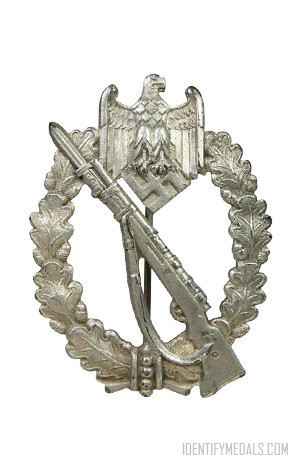
Designed by C. E. Junker of Berlin, the badge is oval in shape and has four oak leaves on each side. On the top there is an eagle standing on a swastika. The front shows a rifle placed across the badge.

The reverse is plain and has a pin attachment.

A de-nazified version of this decorations exists. It’s also available in Silver and Bronze but without the eagle and the Swastika.

More Army/Waffen-SS War Badges

The Army/Waffen-SS war badges were military decorations awarded by Nazi Germany to members of the Army (Heer) and the Waffen-SS. Explore the complete collection below:

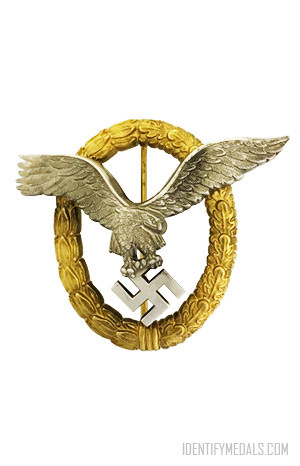
The Pilot / Observer Badge of the Luftwaffe

The Pilot/Observer Badge (or Flugzeugführer- und Beobachterabzeichen in German) was a WW2 German decoration instituted by Hermann Göring.

The Pilot/Observer Badge (or Flugzeugführer- und Beobachterabzeichen in German) was a World War II German military decoration instituted on 26 March 1936 by the Commander in Chief of the Luftwaffe Hermann Göring and awarded to Luftwaffe service personnel who had already been awarded the Pilot’s Badge and Observer Badge.

It was  It was worn on the lower part of the left breast pocket of the service tunic, underneath the Iron Cross 1st Class if awarded. It was to replace the older 1933 Aircrew Badge.

The Pilot/Observer Badge Design

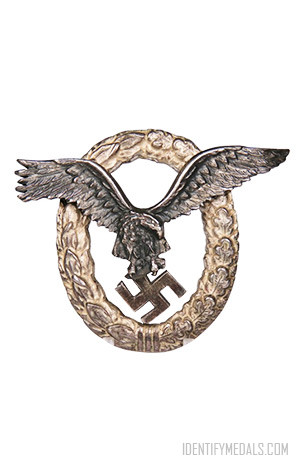
The badge was originally manufactured in bronze, and later zinc. The badge can be distinguished from the Pilot’s Badge by the gold wreath; the Pilot’s Badge had a silver wreath.

There was also a cloth version of the badge which used embroidered bullion for the officer’s version and cotton for the NCO’s version. The presentation case was dark blue, with a blue satin top liner and a blue velvet bottom liner on the inside.

There is an exclusive variant of the Pilot/Observer Badge in Gold with Diamonds (or Gemeinsame Flugzeugführer- und Beobachterabzeichen in Gold mit Brillanten in German). It was bestowed by Göring to honour exceptional achievement and on rare occasions as an honorary award. The first recipients were General Walther Wever, Chief of the Luftwaffe General Staff and General der Flieger Erhard Milch, State Secretary of the Reichsluftfahrtministerium on 11 November 1935.

More Luftwaffe War Badges

Awarded to members of the German Luftwaffe for their achievements and contributions to air warfare, the Luftwaffe War Badges symbolized excellence, courage, and skill in aerial combat and support roles. Explore the complete collection below:

The Panzer Badge or Tank Battle Badge (Nazi Germany)

The Panzer Badge (or Panzerkampfabzeichen) was a World War II military decoration of Nazi Germany awarded to troops in armored divisions. 

The Panzer Badge (or Panzerkampfabzeichen in German) was a World War II military decoration of Nazi Germany awarded to troops in armored divisions.

If you know a thing or two about World War II, you might be aware that the German Panzers played one of the major roles, if not the most important one. Led by intrepid commanders such as Erich Von Manstein, Heinz Guderian, Erwin Rommel, and many more, the Panzers broke the front lines with speed, power and destruction following their paths. But the men who led the Panzers through the Russian Steppe or Northern France were the real “Heroes.”

To recognize the achievements of some of these Panzer crews, the OKW (OberKommando Wehrmacht, the German ground army HQ) decided to create a medal for these men. It was first awarded during World War I but was long forgotten since the Germans saw little action during the end of the war.

During the interwar period, a badge was issued for the veterans of the Condor Legion who participated in the Spanish Civil War. But as World War II was starting, the tank crews and their beloved tactics needed something, something to recognize their “Blitz” through the enemy lines.

Famous Recipients of The Panzer Badge

The most decorated generals of the Wehrmacht never got their grasp on this badge, even if their achievements were enormous. No, this badge was meant for the crewmen, those who gave their life for their country. Some of them never saw the end of the war, but some others did.

Otto Carius, per example, is one of the most decorated Panzer ace, having destroyed more than 150 enemy tanks, and most surprinsigly, a flying enemy plane. This particular enemy plane was “annoying” the gunner of the tank, Heinz Kramer, shooting its armor with its machine gun. As the sound of bullets hitting the armor was annoying more and more Mr Kramer, he asked permission to shoot down the plane, and after a first missed shot, shot down the plane. Probably the best tank shot ever. Carius lived until 2015 in Germany and was the last Panzer ace alive.

The most famous Panzer ace, Michael Wittmann, was also awarded with the highest class of the Badge. He was known to have destroyed at least 150+ tanks and more than 130 enemy canons (of any caliber). Unfortunately for him, he ultimately died in Normandy during Operation Overlord in his beloved Tiger. Nonetheless, his legend grew after the war when all of his achievements were discovered.

These folks are some of the most famous recipients of the Panzer Badge, but it would be wrong to forget about the 34,000 others that got the Badge in the different classes with around 22,000 getting the silver one.

There was definitely a lot of recipients during World War II but what is somehow “strange”, is that the Badge is still being given to members of Germany’s land Army, the Heer. If you are a badge “fanatic”, you can try to get one from the Internet but beware of forgeries, as some of them look very close to the original one.

The Panzer Badge Design

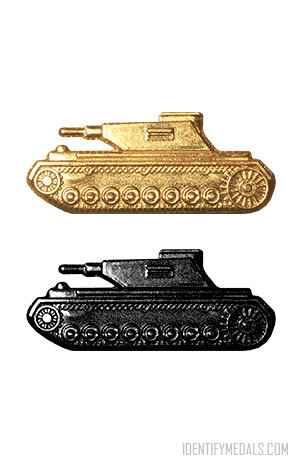
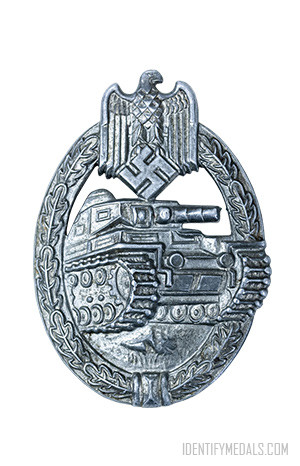
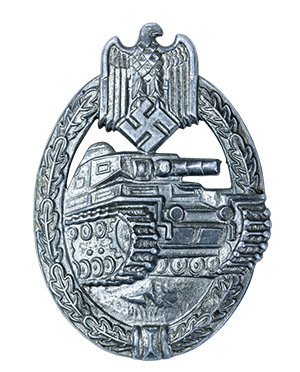
The obverse of the Panzer Badge shows a border of oak leaves with a tie at the base and a Panzerkampfwagen IV superimposed in the centre on grassy ground, with its left tank track extending over the edge of the badge. The reverse is plain with a vertical needle style pin, with an oval based hinge and catch.

The badge measures 42.05 mm (w) x 60.09 mm (h) and weights 27.6 grams.

The 50 and 100 engagement badges were struck in a lightweight zinc alloy; this was so that the larger pin did not pull inconveniently on the tunic. The 1957 de-Nazified version lost the eagle and the swastika, but was otherwise unchanged.

The Panzer Classes and Wear

Designed in 1939 by Ernst Peekhaus, the Panzer Badge was first issued in December 1939, when the chief of the OKW, Walter Von Brauchitsch, decided to create a medal dedicated to the sacrifice and the achievements of the Panzer’s crews. Two different classes of the badge were designed for those who received it during world war II. The first and “original” one was the silver Panzer Badge, designed to recognize solely the tank crews.

The “less original” one, the Bronze Panzer Badge, was designed to recognize the crews of armored vehicles (half tracks, trucks,…). As the war was still raging, it was decided that the Badge should evolve. In June 1943, four new classes were created, depending on the amount of engagement the recipent would have take part in: 25, 50, 75 and 100. Depending on which class and the amount of engagement you took part in, the metal used to design the medal and the color of it changed accordingly. 

After the war, it was frowned upon to wear this badge since there was a swastika on the top of it. Thus, West Germany decided in 1957 to authorize to wear the Panzer badge in public but only if the swastika was removed from it.

Note: As an eBay partner, I earn from qualifying purchases. This is all done automatically when you use a link and at no extra cost to you.

More Army/Waffen-SS War Badges

The Army/Waffen-SS war badges were military decorations awarded by Nazi Germany to members of the Army (Heer) and the Waffen-SS. Explore the complete collection below:

Buy a Panzer Badge

Right Now on eBay 
Clicking a link to eBay may result in a referral commission being paid if a purchase is made.
Loading...

The U-boat War Badge (Nazi Germany)

The U-boat War Badge (or U-Boot-Kriegsabzeichen) was a German war badge that was awarded to U-boat (submarine) crew members in WW2.
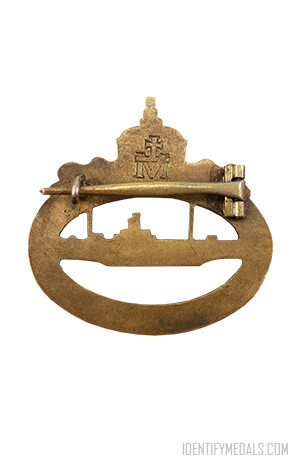
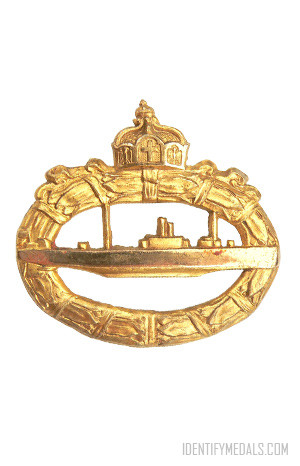
The U-boat War Badge (or U-Boot-Kriegsabzeichen in German) was a German war badge that was awarded to U-boat (submarine) crew members during World War I and World War II.

The original U-boat War Badge was originally instituted during WW1 on February 1, 1918, to recognize U-boat crews who had completed three war patrols. On October 13, 1939, the U-boat War Badge was reinstituted and bestowed in two classes:

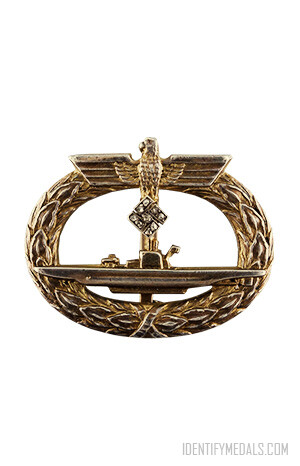
  • U-Boat War Badge: For the completion of two or more war patrols. Completing two war patrols could be equally dangerous as the U-boat has to endure constant attacks by Allied aircraft and warships. The other occasion when this badge was awarded was having been wounded during a patrol or killed in action.
  • U-boat War Badge with Diamonds: It was instituted by Großadmiral Karl Dönitz after he had received from Grand Admiral Erich Raeder a special solid gold version of the U-boat War Badge in which the wreath as well as the swastika were inlaid with diamonds.

This second version of the badge was a special issue award given to U-boat commanders who had received the Knight’s Cross of the Iron Cross with Oak Leaves. Made of gold plate over silver and manufactured by Schwerin u. Sohn and Gebr. Godet & Co., it was the same as the basic pattern but with nine small diamonds inlaid in the swastika. 

This award was more of a personal award by Dönitz, and approximately 30 were awarded, including the original one to Admiral Dönitz.

The U-Boat War Badge Design

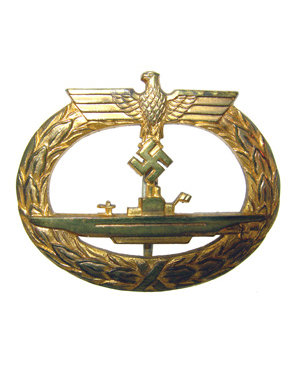
The badge was worn on the lower left side of the uniform and was oval shaped resembling a wreath of laurel leaves. A submarine lay across the center and the German State Crown was inlaid at the top center of the wreath.

The 1939 version was very similar to the original badge with the exception of the imperial crown being replaced with a German Eagle above a swastika, and a more modernized submarine now facing towards the left was used.

The new version was first made of bronze metal, with later ones made of zinc with a “gold wash”.

Imperial U-Boat Badge, reverse.
Imperial U-Boat Badge, reverse. The "M" is an original maker mark but the manufacturer is unknown.
The U-boat War Badge - German WW1 Medals & Badges
The WW1 U-boat War Badge - Obverse.
U-Boat Badge with diamonds, reverse.
German WW2 U-Boat Badge with diamonds. 1939 version, obverse.

Find an U-Boat War Badge

Right Now on eBay 
Clicking a link to eBay may result in a referral commission being paid if a purchase is made.
Loading...

More Naval War Badges

The Naval War Badges (Kriegsmarine) badges were awarded to sailors, officers, and personnel of the Kriegsmarine who demonstrated exceptional skill, bravery, and dedication in naval warfare. Explore the complete collection below: