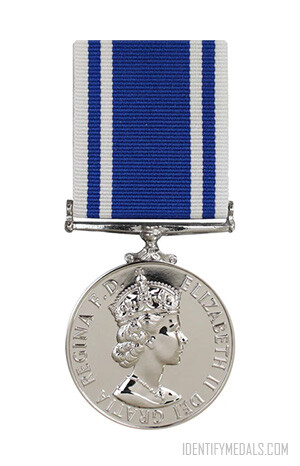
The Royal Air Force Long Service and Good Conduct Medal

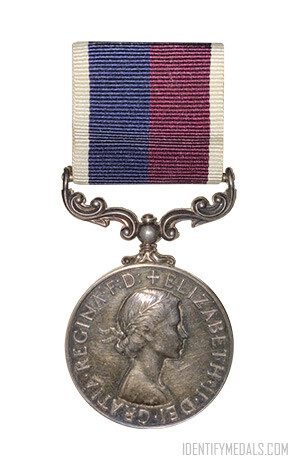
The Royal Air Force Long Service and Good Conduct Medal was instituted by King George V in 1919 and awarded to officers and airmen.

The Royal Air Force Long Service and Good Conduct Medal is awarded to regular members of the Royal Air Force in recognition of their long service and exemplary conduct.

Instituted by King George V in 1919, following the establishment of the world’s first independent air force, the medal was initially awarded to non-commissioned officers and airmen. The criteria were later broadened to include officers who had served a minimum period in the ranks before being commissioned. Since 2016, all regular members of the RAF, including officers who have never served in the ranks, are eligible for this medal.

Originally, the medal was awarded after eighteen years of unblemished service, later reduced to fifteen years from December 1, 1977. An airman became eligible upon completing the requisite service period, provided there were no disqualifying offenses. Recommendations for the medal required a commanding officer’s endorsement and were awarded only to serving personnel. Before 1944, up to four years of service in the Royal Navy or British Army could count towards the RAF service requirement. During wartime or emergencies, the medal could be awarded for distinguished service without the usual time or conduct requirements.

The Royal Air Force Long Service and Good Conduct Medal Design

The silver medal is a 36-millimeter disk, with the obverse featuring the effigy of the reigning monarch.

The reverse displays the RAF eagle with outstretched wings, surmounted by the crown, and the inscription “FOR LONG SERVICE AND GOOD CONDUCT.” The clasp features an eagle with outstretched wings and a crown, with a silver rosette on the ribbon bar denoting the award in undress uniform.

The ribbon is 32 millimeters wide with distinct bands of white, dark blue, and crimson.

More British Long Service and Good Conduct Decorations

The British military has instituted several Long Service and Good Conduct Decorations, each honoring the dedication and exemplary service of its personnel across different branches. Here are some other ones from different time periods:

Find these medals online:

Right Now on eBay 
Clicking a link to eBay may result in a referral commission being paid if a purchase is made.
Loading...

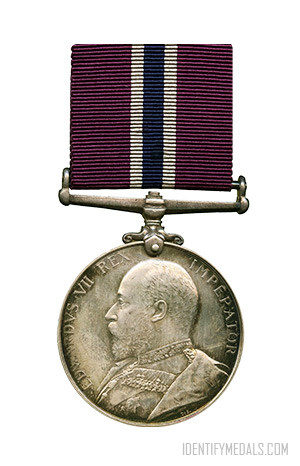
The Permanent Forces of the Empire Beyond the Seas Medal

The Permanent Forces of the Empire Beyond the Seas Medal was established in 1910 to supersede the several local versions of the Army one.

The Permanent Forces of the Empire Beyond the Seas Medal, also known as the Permanent Overseas Forces Long Service and Good Conduct Medal, was established in 1910 to recognize long service and good conduct among other ranks of the Permanent Forces of the Dominions and Colonies of the British Empire.

This medal replaced the various local versions of the Army Long Service and Good Conduct Medal. Superseded in 1930 by the Medal for Long Service and Good Conduct (Military), it continued the tradition of honoring exemplary service.

Commonwealth of Australia Version

The Commonwealth of Australia version of the Army Long Service and Good Conduct Medal emerged following Australia’s federation on 1 January 1901.

The five distinct medals for New South Wales, Queensland, South Australia, Tasmania, and Victoria were unified into a single version with King Edward VII’s effigy and the inscription “COMMONWEALTH OF AUSTRALIA” on the reverse.

These medals retained the same crimson ribbon, but with a distinctive 4-millimeter central band representing the Commonwealth. This version was part of the broader effort to standardize awards across the British Empire’s territories.

The Permanent Forces of the Empire Beyond the Seas Medal Design

The Permanent Forces of the Empire Beyond the Seas Medal is crafted in silver, with a diameter of 36 millimeters (1.42 inches) and a thickness of 3 millimeters (0.12 inches). It features a single-toe claw mounting, secured to the medal by a horizontal pin through its upper edge, and is supported by double-scroll claws on the rim. The medal is attached to a straight, swiveling suspension bar.

The initial version of the medal’s obverse showcases the effigy of King Edward VII in a Field Marshal’s uniform, facing left, with the inscription “EDWARDVS VII REX IMPERATOR” around the edge. Following the coronation of King George V on June 22, 1911, the obverse was updated to depict his effigy, also in a Field Marshal’s uniform and facing left, with the inscription “GEORGIVS V BRITT: OMN: REX ET IND: IMP:” around the perimeter.

The reverse side of the medal is smooth with a raised rim. It features the inscription “PERMANENT FORCES OF THE EMPIRE BEYOND THE SEAS” around the edge, and “FOR LONG SERVICE AND GOOD CONDUCT” in four lines at the center.

The medal is suspended from a ribbon that is 32 millimeters wide. The ribbon consists of an 11.5-millimeter wide crimson band and a 2.5-millimeter wide white band, repeated in reverse order and separated by a 4-millimeter wide dark blue band.

More British Long Service and Good Conduct Decorations

The British military has instituted several Long Service and Good Conduct Decorations, each honoring the dedication and exemplary service of its personnel across different branches. Here are some other ones from different time periods:

Find these medals online:

Right Now on eBay 
Clicking a link to eBay may result in a referral commission being paid if a purchase is made.
Loading...

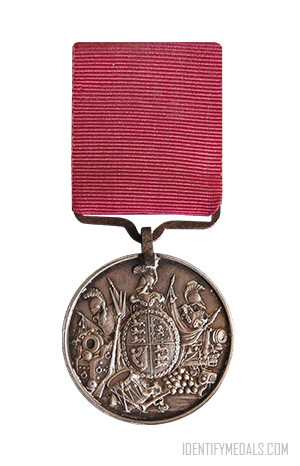
The Army Long Service and Good Conduct Medal

This Army long service medal was instituted by King William IV in 1830 and remained in use for a hundred years, until 1930.

Instituted by King William IV in 1830, the Army Long Service and Good Conduct Medal was awarded for long service and exemplary conduct. It remained in use until 1930, when it was replaced by the Medal for Long Service and Good Conduct.

On 31 May 1895, Queen Victoria authorized Dominion and Colonial governments to adopt various military medals, including the Army Long Service and Good Conduct Medal, for their local military forces. Territories that utilized this authorization included Canada, Cape of Good Hope, India, Natal, New South Wales, New Zealand, Queensland, South Australia, Tasmania, Victoria, and, from 1901, the Commonwealth of Australia.

Originally awarded for 21 years (infantry) or 24 years (cavalry) of service, the qualifying period was reduced to 18 years in 1870.

The Army Long Service and Good Conduct Medal Design

Initially featuring a Trophy of Arms and the Royal Coat of Arms, the medal’s obverse changed with each monarch. The reverse consistently displayed “FOR LONG SERVICE AND GOOD CONDUCT”.

Authorized in 1895 for Dominion and Colonial forces, these medals were similar but included specific territory names and unique ribbon colors. Made of silver, 36mm in diameter, the medal’s suspension evolved over time, with the ribbon changing in 1916 to a crimson or reddish-violet with white edges.

More British Long Service and Good Conduct Decorations

The British military has instituted several Long Service and Good Conduct Decorations, each honoring the dedication and exemplary service of its personnel across different branches. Here are some other ones from different time periods:

Find these medals online:

Right Now on eBay 
Clicking a link to eBay may result in a referral commission being paid if a purchase is made.
Loading...

The Medal for Long Service and Good Conduct

The Medal for Long Service and Good Conduct was instituted by King George V in 1930 and initially awarded to Regular Force officers.

The Military Medal for Long Service and Good Conduct is awarded to regular members of the armed forces. It was instituted by King George V in 1930 and replaced the Army Long Service and Good Conduct Medal and the Permanent Forces of the Empire Beyond the Seas Medal.

Initially awarded to Regular Army warrant officers, non-commissioned officers, and men of the UK Armed Forces, it also had territorial versions for the British Dominions. In 1947, eligibility was extended to include officers with prior service in the ranks, and since 2016, it includes all regular members who meet the required length of service.

The Medal for Long Service and Good Conduct Design

The medal is crafted in silver, measuring 36 millimeters in diameter.

The obverse features the effigy of the reigning monarch. Two versions were made during the reigns of King George VI and Queen Elizabeth II. All versions share an ornamented scroll pattern suspender, attached to a bar inscribed “REGULAR ARMY,” affixed with a single-toe claw and a horizontal pin.

The reverse, unchanged across versions, is smooth with a raised rim and bears the inscription “FOR LONG SERVICE AND GOOD CONDUCT” in four lines. The bar’s reverse is smooth and undecorated.

The clasp displays the Army Crest. A silver rosette on the ribbon bar denotes the award of the clasp in undress uniform. The ribbon, identical to that of the Army Long Service and Good Conduct Medal introduced in June 1916, is 32 millimeters wide and crimson or reddish violet, edged with 3-millimeter-wide white bands.

More British Long Service and Good Conduct Decorations

The British military has instituted several Long Service and Good Conduct Decorations, each honoring the dedication and exemplary service of its personnel across different branches. Here are some other ones from different time periods:

Find these medals online:

Right Now on eBay 
Clicking a link to eBay may result in a referral commission being paid if a purchase is made.
Loading...

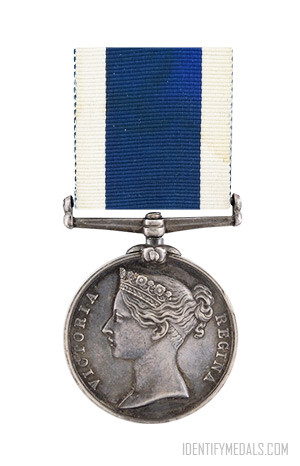
The Naval Long Service and Good Conduct Medal

This long service medal, established in 1848, is still awarded to regular members of His Majesty’s Naval Service.

The Naval Long Service and Good Conduct Medal (1848) is awarded to regular members of His Majesty’s Naval Service for long service. Instituted by Queen Victoria to replace the 1830 version, it initially honored other ranks and men in the Royal Navy and Royal Marines. Since 2016, the medal is awarded to all regular members, including officers, after completing fifteen years of service.

The original 1830 medal, known as the “anchor type,” was introduced by King William IV and awarded after 21 years of service. It was used until 1847, during Queen Victoria’s reign.

Initially requiring 21 years of service, the qualifying period was reduced to ten years in 1874, then increased to fifteen years in 1884. Despite some confusion regarding changes, the regulations were last updated on 1 October 2016, confirming the fifteen-year service requirement.

The Naval Long Service and Good Conduct Medal Design

The medal is struck in silver, measuring 36 millimeters (1.42 inches) in diameter, slightly larger than the earlier “anchor type” medal from 1830, which is 34 millimeters (1.34 inches) in diameter.

The obverse features the effigy of the reigning monarch. Since its institution in 1848, seven versions have been issued, including two versions each during the reigns of Queen Victoria and King George V.

The reverse depicts a starboard broadside view of HMS Victory, Lord Nelson’s flagship at the Battle of Trafalgar in 1805. The ship is encircled by a rope tied with a reef knot at the bottom, with the inscription “FOR LONG SERVICE AND GOOD CONDUCT” around the circumference. The design has remained mostly unchanged, though early Queen Victoria versions with a wide suspender featured a larger flag at the masthead, while later versions had a more triangular flag.

The clasp features a laurel leaf design. When only the ribbon bar is worn, a silver rosette on the ribbon indicates the award of a clasp.

The original 1848 ribbon, paired with the wide suspender version of the medal, was 38 millimeters wide and Navy blue with 7 millimeter wide white edges. With the introduction of the narrower suspender version in 1874, the ribbon was changed to 32 millimeters wide and Navy blue with 6½ millimeter wide white edges.

More British Long Service and Good Conduct Decorations

The British military has instituted several Long Service and Good Conduct Decorations, each honoring the dedication and exemplary service of its personnel across different branches. Here are some other ones from different time periods:

Find these medals online:

Right Now on eBay 
Clicking a link to eBay may result in a referral commission being paid if a purchase is made.
Loading...

The Police Long Service and Good Conduct Medal

The Police Long Service and Good Conduct Medal was instituted in 1951 and is awarded for twenty aggregate years of service in the police.
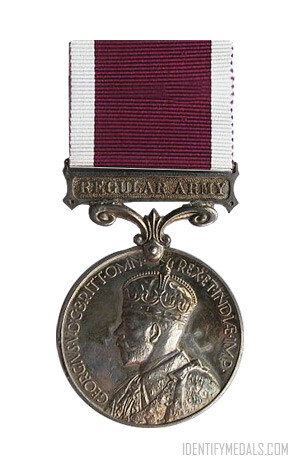
The Police Long Service and Good Conduct Medal is an honor bestowed upon police officers in the United Kingdom. Established in 1951, it is awarded to individuals who have completed twenty aggregate years of service in the UK police forces.

The criteria for receiving this medal were established by Royal Warrant under King George VI in June 1951. It is presented as a token of appreciation from the Sovereign for long and meritorious service provided by members of the UK Police Forces. To be eligible for this award, an officer must be recommended by the Chief Constable to the Home Secretary. The recommendation must confirm the following:

  • The officer has served as a member of a Police Force.
  • The officer has demonstrated efficient service for the qualifying period.
  • The officer’s character has been exemplary.

The Police Long Service and Good Conduct Medal Design

The Police Long Service and Good Conduct Medal is a circular decoration, measuring 1.4 inches (36 mm) in diameter. Originally crafted from cupro-nickel, modern versions are rhodium plated.

The obverse side displays the effigy of the reigning monarch. On the reverse side, there is an image of Justice holding scales in her left hand and a wreath in her right, encircled by the inscription ‘FOR EXEMPLARY POLICE SERVICE’.

The suspender comes in both swivelling and non-swivelling formats and is straight in shape. Recipients’ ranks and names are engraved on the rim using impressed capital letters.

The medal is suspended from a dark blue ribbon, 1.25 inches (32 mm) wide, with two thin white stripes on each edge. Bars for additional service of 30 and 40 years were authorized on March 11, 2022.