
The Inter Allied Victory Medal (Siam)

The Siam (or Thailand) Victory Medal was established in 1919, soon after the country declared war on Germany and sent a expeditionary force.

  • Time Period: World War I
  • Institution: 1919
  • Country: Siam

The Allied Victory Medal was recommended by an inter-allied committee in March 1919. Fourteen victorious countries finally awarded the medal after World War I, and each allied nation would design a ‘Victory Medal’ for award to their own nationals. Certain features were to be shared: a winged figure of Victory on the obverse and the same ribbon.

Siam declared war on Germany on 22 June 1917, after the USA’s entry to gain allied recognition of Thailand’s sovereignty in international affairs, and send an expeditionary force to France in July 1918. The official reason was to respond to Germany’s policy of unrestricted submarine warfare.

The medal (about 1,500 of them) were given to all the officers and soldiers of the task force, sailors that transported them and the royalty and staff officers.

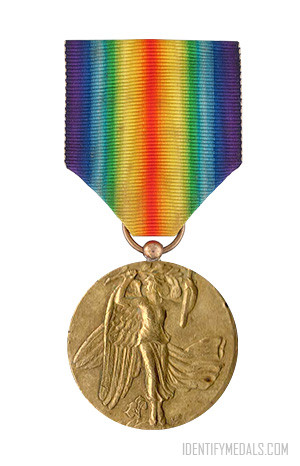
The Siam Inter-Allied Victory Medal Design

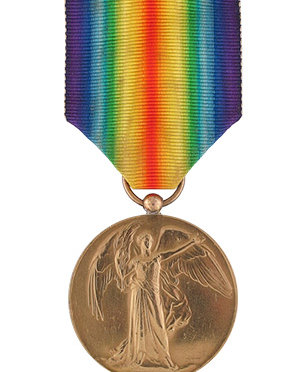
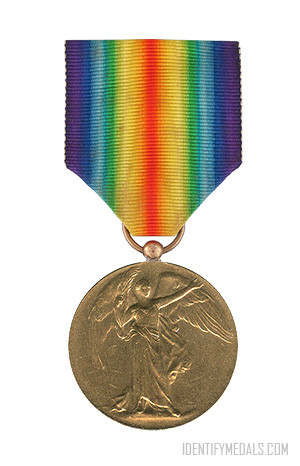
The Victory Medal measures 36 millimetres (1.4 in) in diameter and was designed by William McMillan. The design and ribbon was also adopted by Belgium, Brazil, Cuba, Czechoslovakia, France, Greece, Italy, Japan, Portugal, Romania, Siam, Union of South Africa and the USA. Each allied nation would design a ‘Victory Medal’ for award to their own nationals, all issues having certain common features, including a winged figure of victory on the obverse and the same ribbon.

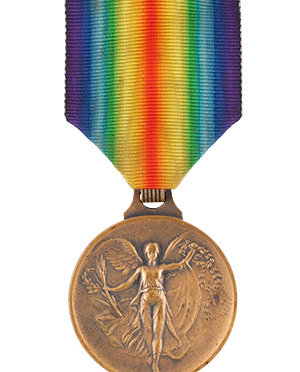
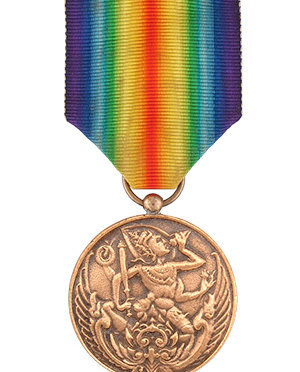
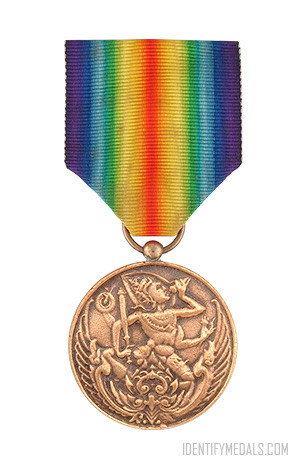
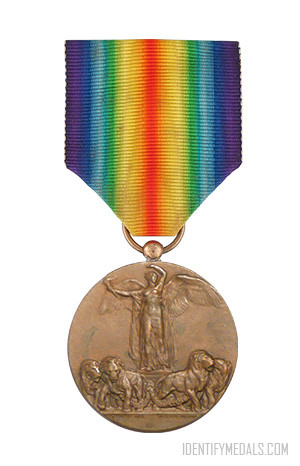
The obverse of the medal was designed by Prince Iddhidebsan Kritakara (1890-1935) and is presumed to have been manufactured at the Royal Thai Mint. There were two contemporary un-official versions, distinguishable by the ear of Vishnu being covered in all. Because Siamese culture didn’t have the traditional Western figure of victory, they instead used the image of a deity based on Vishnu riding the mythical bird Garuda holding, in its four hands, a club, a disk, a conch shell, and a lotus flower.

The reverse bears the inscription in Thai letters for ‘THE GREAT WAR FOR CIVILISATION’, within a lotus-decorated border.

The 39 millimeters (1.5 in) wide watered ribbon has an iridescent color scheme, with the violet moving through to a central red stripe where both schemes meet. It attaches to the medal through a ring suspender. The recipient’s name, rank, service number and unit were impressed on the edge of the medal. The name of the regiment or corps was omitted on medals awarded to Army officers.

All the Inter-Allied Victory Medal Variations

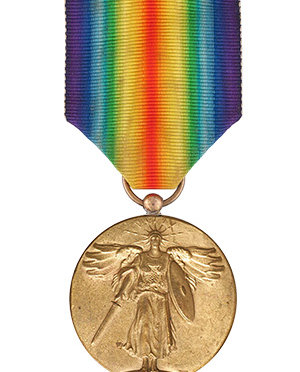
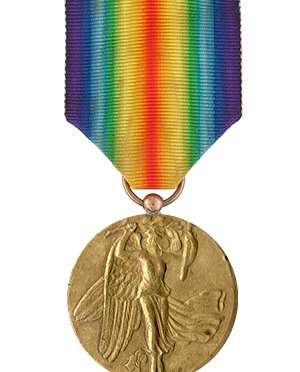
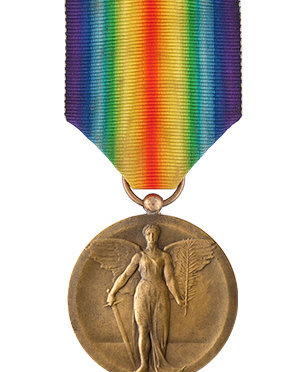
Although each country designed its own version of the Inter-Allied Victory Medal, all of them shared some common elements, such as a winged victory figure on the obverse and a similar ribbon with rainbow colors symbolizing unity among the Allies. Here are the versions for all countries:

Find an Inter-Allied Victory Medal Online

Right Now on eBay 
Clicking a link to eBay may result in a referral commission being paid if a purchase is made.
Loading...

The Inter Allied Victory Medal (Japan)

The Allied Victory Medal was recommended by an inter-allied committee in March 1919. The Japanese Medal was established by Imperial Edict.

The Allied Victory Medal was recommended by an inter-allied committee in March 1919. Fourteen victorius countries finally awarded the medal after World War I, and each allied nation would design a ‘Victory Medal’ for award to their own nationals. Certain features were to be shared: a winged figure of Victory on the obverse and the same ribbon.

The Japanese Allied Victory Medal was established by Imperial Edict #406 on 17 September 1920.

The Japan Inter Allied Victory Medal Design

The Victory Medal measures 36 millimetres (1.4 in) in diameter and was designed by William McMillan. The design and ribbon was also adopted by Belgium, Brazil, Cuba, Czechoslovakia, France, Greece, Italy, Japan, Portugal, Romania, Siam, Union of South Africa and the USA. Each allied nation would design a ‘Victory Medal’ for award to their own nationals, all issues having certain common features, including a winged figure of victory on the obverse and the same ribbon.

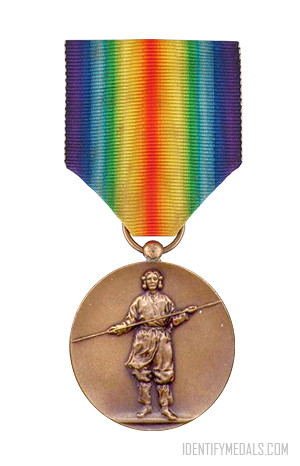
Japan’s obverse design was different from all other versions as it did not depict the goddess Victory. This figure from Roman mythology would have no connection to Japanese culture, so a depiction of Takemikazuchi, the war god in Japanese mythology occupies the obverse of the medal. Takemikazuchi (建御雷/武甕槌) is considered a god of thunder and a sword god.

The reverse shows the words ‘THE GREAT / WAR FOR / CIVILISATION / 1914-1919‘  surrounded by a laurel wreath.

The 39 millimeters (1.5 in) wide watered ribbon has an iridescent color scheme, with the violet moving through to a central red stripe where both schemes meet. It attaches to the medal through a ring suspender. The recipient’s name, rank, service number and unit were impressed on the edge of the medal. The name of the regiment or corps was omitted on medals awarded to Army officers.

All the Inter-Allied Victory Medal Variations

Although each country designed its own version of the Inter-Allied Victory Medal, all of them shared some common elements, such as a winged victory figure on the obverse and a similar ribbon with rainbow colors symbolizing unity among the Allies. Here are the versions for all countries:

Find an Inter-Allied Victory Medal Online

Right Now on eBay 
Clicking a link to eBay may result in a referral commission being paid if a purchase is made.
Loading...

The Inter Allied Victory Medal (Greece)

The Greek Victory Medal was instituted to commemorate the Allied victory in the First World War. It was designed by Henry-Eugène Nocq.

The Allied Victory Medal was recommended by an inter-allied committee in March 1919. Fourteen victorious countries finally awarded the medal after World War I, and each allied nation would design a ‘Victory Medal’ for award to their own nationals. Certain features were to be shared: a winged figure of Victory on the obverse and the same ribbon.

For most of the war, Greece was officially neutral. Finally in 1918 Greece sided with the allies, sending 230,000 troops to fight in Macedonia. The Greek Victory medal followed the proposal made by French Marshal Ferdinand Foch, who was the supreme commander of the Allied Forces during the war. It was instituted on 22nd September 1920 and was awarded to military personnel who had served at least 3 months active service or had been wounded in action, died of wounds or had been killed in action and to sailors with service of at least a year between 14th June 1917 and 25th November 1918. Approximately 200,000 medals were issued.

The Greece Inter Allied Victory Medal Design

The Victory Medal measures 36 millimetres (1.4 in) in diameter and was designed by William McMillan. The design and ribbon was also adopted by Belgium, Brazil, Cuba, Czechoslovakia, France, Greece, Italy, Japan, Portugal, Romania, Siam, Union of South Africa and the USA. Each allied nation would design a ‘Victory Medal’ for award to their own nationals, all issues having certain common features, including a winged figure of victory on the obverse and the same ribbon.

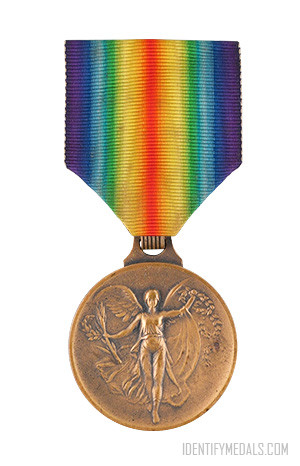
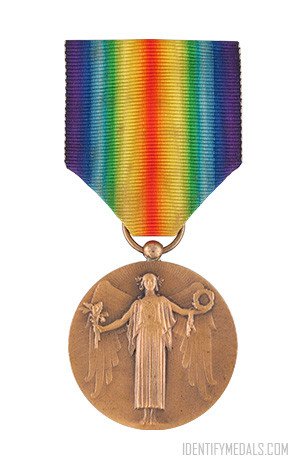
The obverse of the medal bears the winged, full-length figure of Victory designed by Henry-Eugène Nocq (1868–1944), a recognized French sculptor and medalist who lived in Paris, where the medal was also struck. The image of Victory was modeled after the 5th Century BCE statue of Nike by Paionios. The reverse bears “The Great War for Civilization” in Greek, and an infant Hercules wrestling with two snakes. The tablet in the center reads “Allies and Comrades” and lists the allied nations.

The 39 millimeters (1.5 in) wide watered ribbon has an iridescent color scheme, with the violet moving through to a central red stripe where both schemes meet. It attaches to the medal through a ring suspender. The recipient’s name, rank, service number and unit were impressed on the edge of the medal. The name of the regiment or corps was omitted on medals awarded to Army officers.

All the Inter-Allied Victory Medal Variations

Although each country designed its own version of the Inter-Allied Victory Medal, all of them shared some common elements, such as a winged victory figure on the obverse and a similar ribbon with rainbow colors symbolizing unity among the Allies. Here are the versions for all countries:

Find an Inter-Allied Victory Medal Online

Right Now on eBay 
Clicking a link to eBay may result in a referral commission being paid if a purchase is made.
Loading...

The Inter Allied Victory Medal (Belgium)

The Belgian Victory Medal was established by royal decree on 15 July 1919 and awarded to all members of the Belgian Armed Forces.

The Allied Victory Medal was recommended by an inter-allied committee in March 1919. Fourteen victorious countries finally awarded the medal after World War I, and each allied nation would design a ‘Victory Medal’ for award to their own nationals. Certain features were to be shared: a winged figure of Victory on the obverse and the same ribbon.

The Belgian Victory Medal was established by royal decree on 15 July 1919 and awarded to all members of the Belgian Armed Forces.

The Belgium Inter Allied Victory Medal Design

The Victory Medal measures 36 millimetres (1.4 in) in diameter and was designed by William McMillan. The design and ribbon was also adopted by Belgium, Brazil, Cuba, Czechoslovakia, France, Greece, Italy, Japan, Portugal, Romania, Siam, Union of South Africa and the USA. Each allied nation would design a ‘Victory Medal’ for award to their own nationals, all issues having certain common features, including a winged figure of victory on the obverse and the same ribbon.

The obverse of the medal was designed by Belgian sculptor Paul Du Bois.

The reverse shows the words ‘THE GREAT / WAR FOR / CIVILISATION / 1914-1919’ surrounded by a laurel wreath.

The 39 millimeters (1.5 in) wide watered ribbon has an iridescent color scheme, with the violet moving through to a central red stripe where both schemes meet. It attaches to the medal through a ring suspender. The recipient’s name, rank, service number and unit were impressed on the edge of the medal. The name of the regiment or corps was omitted on medals awarded to Army officers.

All the Inter-Allied Victory Medal Variations

Although each country designed its own version of the Inter-Allied Victory Medal, all of them shared some common elements, such as a winged victory figure on the obverse and a similar ribbon with rainbow colors symbolizing unity among the Allies. Here are the versions for all countries:

Find an Inter-Allied Victory Medal Online

Right Now on eBay 
Clicking a link to eBay may result in a referral commission being paid if a purchase is made.
Loading...

The Inter Allied Victory Medal (Brazil)

The Brazilian Victory Medal was established in January 24, 1919 and awarded to all military personnel or civilians employed in war service.

The Allied Victory Medal was recommended by an inter-allied committee in March 1919. Fourteen victorious countries finally awarded the medal after World War I, and each allied nation would design a ‘Victory Medal’ for award to their own nationals. Certain features were to be shared: a winged figure of Victory on the obverse and the same ribbon.

The President of the United States of Brazil, adopted the proposal of Marshal Foch in January 24, 1919 so that all the fighters of the Great War received a commemorative medal. Brazil had a sizable merchant fleet and had lost a number of ships to German submarines when it joined the allies in October 1917, contributing with two cruisers and two destroyers and their crews placed under command of the British Admiralty.

Brazilians also sent a medical mission to Europe and a number of soldiers to set up several field medical stations and a 300-bed hospital near Paris. Approximately 2,500 medals were produced for these sailors, soldiers and medical personnel.

The Brazil Inter Allied Victory Medal Design

The Victory Medal measures 36 millimetres (1.4 in) in diameter and was designed by William McMillan. The design and ribbon was also adopted by Belgium, Brazil, Cuba, Czechoslovakia, France, Greece, Italy, Japan, Portugal, Romania, Siam, Union of South Africa and the USA. Each allied nation would design a ‘Victory Medal’ for award to their own nationals, all issues having certain common features, including a winged figure of victory on the obverse and the same ribbon.

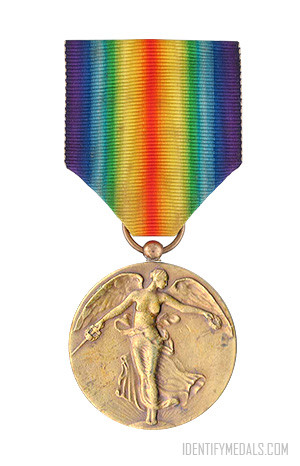
The obverse of the Brazilian Victory Medal featured a symbolic figure of Victoria fringed with two palms on a plain background.

The reverse shows the words ‘THE GREAT / WAR FOR / CIVILISATION / 1914-1919’ surrounded by a laurel wreath.

The 39 millimeters (1.5 in) wide watered ribbon has an iridescent color scheme, with the violet moving through to a central red stripe where both schemes meet. It attaches to the medal through a ring suspender. The recipient’s name, rank, service number and unit were impressed on the edge of the medal. The name of the regiment or corps was omitted on medals awarded to Army officers.

All the Inter-Allied Victory Medal Variations

Although each country designed its own version of the Inter-Allied Victory Medal, all of them shared some common elements, such as a winged victory figure on the obverse and a similar ribbon with rainbow colors symbolizing unity among the Allies. Here are the versions for all countries:

Find an Inter-Allied Victory Medal Online

Right Now on eBay 
Clicking a link to eBay may result in a referral commission being paid if a purchase is made.
Loading...

The Inter Allied Victory Medal (South Africa)

The South African Victory Medal was awarded to all those South Africans who were awarded the 1914–15 Star or the British War Medal.

The Allied Victory Medal was recommended by an inter-allied committee in March 1919. Fourteen victorious countries finally awarded the medal after World War I, and each allied nation would design a ‘Victory Medal’ for award to their own nationals. Certain features were to be shared: a winged figure of Victory on the obverse and the same ribbon.

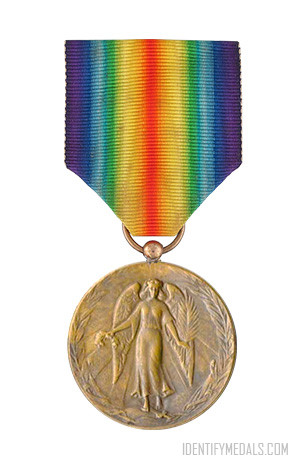
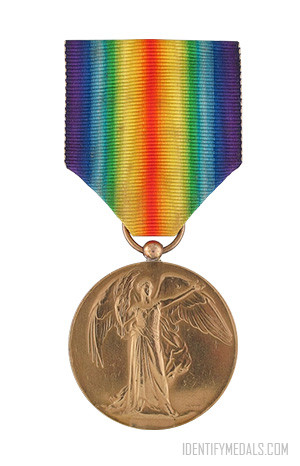
The South-African Victory medal was awarded to all those South Africans who were awarded the 1914–15 Star or the British War Medal. The Union of South Africa awarded its own version of the Victory Medal, identical to the British version on the obverse, but with the inscription on the reverse in English and Dutch, the two official languages of South Africa at the time. Recipients had to have entered a theatre of the war between 5 August 1914.

The South Africa Inter Allied Victory Medal Design

The Victory Medal measures 36 millimetres (1.4 in) in diameter and was designed by William McMillan. The design and ribbon was also adopted by Belgium, Brazil, Cuba, Czechoslovakia, France, Greece, Italy, Japan, Portugal, Romania, Siam, Union of South Africa and the USA. Each allied nation would design a ‘Victory Medal’ for award to their own nationals, all issues having certain common features, including a winged figure of victory on the obverse and the same ribbon.

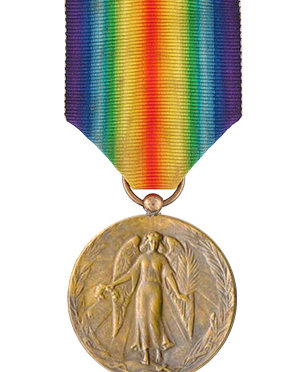
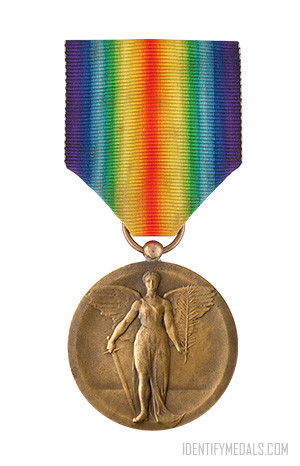
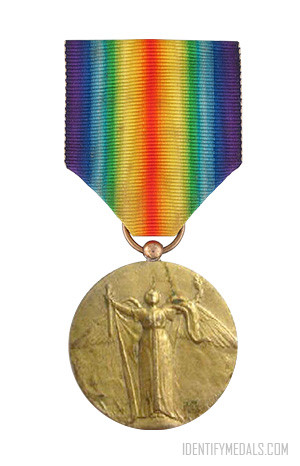
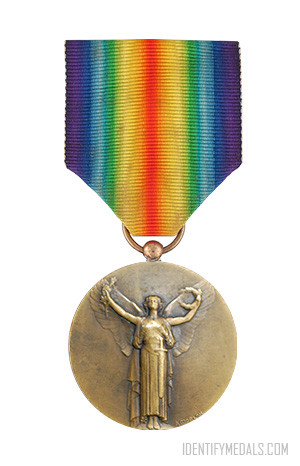
The obverse of the medal bears the winged, full-length and full-front figure of Victoria, with her left arm extended and holding a palm branch in her right hand. The reverse reads “THE GREAT WAR FOR CIVILISATION” in three lines above and “DE GROTE OORLOG VOOR DE BESCHAVING” in three lines below, with the two inscriptions separated by “•••••” and with the years “1914-1919”, all surrounded by a laurel wreath.

The 39 millimeters (1.5 in) wide watered ribbon has an iridescent color scheme, with the violet moving through to a central red stripe where both schemes meet. It attaches to the medal through a ring suspender. The recipient’s name, rank, service number and unit were impressed on the edge of the medal. The name of the regiment or corps was omitted on medals awarded to Army officers.

All the Inter-Allied Victory Medal Variations

Although each country designed its own version of the Inter-Allied Victory Medal, all of them shared some common elements, such as a winged victory figure on the obverse and a similar ribbon with rainbow colors symbolizing unity among the Allies. Here are the versions for all countries:

Find an Inter-Allied Victory Medal Online

Right Now on eBay 
Clicking a link to eBay may result in a referral commission being paid if a purchase is made.
Loading...

The Inter Allied Victory Medal (Portugal)

The Portuguese Victory Medal was designed by Joao da Silva. Portugal had to defend against German attacks on her colonies.

The Allied Victory Medal was recommended by an inter-allied committee in March 1919. Fourteen victorious countries finally awarded the medal after World War I, and each allied nation would design a ‘Victory Medal’ for award to their own nationals. Certain features were to be shared: a winged figure of Victory on the obverse and the same ribbon.

Portugal had to defend against German attacks on her colonies, Angola and Mozambique, after it seized 72 German merchant ships that were in Portuguese harbors and Germany declared war on it.

The Portugal Inter Allied Victory Medal Design

The Victory Medal measures 36 millimeters (1.4 in) in diameter and was designed by William McMillan. The design and ribbon was also adopted by Belgium, Brazil, Cuba, Czechoslovakia, France, Greece, Italy, Japan, Portugal, Romania, Siam, Union of South Africa and the USA. Each allied nation would design a ‘Victory Medal’ for award to their own nationals, all issues having certain common features, including a winged figure of victory on the obverse and the same ribbon.

The obverse of the medal was designed by Joao da Silva, a renowned Portuguese sculptor of the time. The reverse reads “MEDALHA DA VITORIA” or “Victory Medal” (instead of the usual “The Great War for Civilization”) and omits the names of the allied nations.

The 39 millimeters (1.5 in) wide watered ribbon has an iridescent color scheme, with the violet moving through to a central red stripe where both schemes meet. It attaches to the medal through a ring suspender. The recipient’s name, rank, service number and unit were impressed on the edge of the medal. The name of the regiment or corps was omitted on medals awarded to Army officers.

All the Inter-Allied Victory Medal Variations

Although each country designed its own version of the Inter-Allied Victory Medal, all of them shared some common elements, such as a winged victory figure on the obverse and a similar ribbon with rainbow colors symbolizing unity among the Allies. Here are the versions for all countries:

Find an Inter-Allied Victory Medal Online

Right Now on eBay 
Clicking a link to eBay may result in a referral commission being paid if a purchase is made.
Loading...

The Inter Allied Victory Medal (United States)

The American Victory Medal was designed by James Earle Fraser and awarded to military personnel for service between 1917 and 1918.

The Allied Victory Medal was recommended by an inter-allied committee in March 1919. Fourteen victorius countries finally awarded the medal after World War I, and each allied nation would design a ‘Victory Medal’ for award to their own nationals. Certain features were to be shared: a winged figure of Victory on the obverse and the same ribbon.

The American Victory Medal was awarded to military personnel for service between April 6, 1917, and November 11, 1918 with the American Expeditionary Forces in European Russia (November 12, 1918 to August 5, 1919) or the American Expeditionary Forces Siberia (November 23, 1918 to April 1, 1920).

Although originally intended to be established by an act of Congress, the bill authorizing the medal never passed and it had to be established by the military departments through general orders. The War Department published orders in April 1919, and the Navy on June 1919.

The Victory Medal was authorized with a large variety of devices to denote specific accomplishments, such as the Citation Star, Navy Commendation Star and several Battle Clasps.

The U.S. Inter-Allied Victory Medal Design

The Victory Medal measures 36 millimetres (1.4 in) in diameter and was designed by William McMillan. The design and ribbon was also adopted by Belgium, Brazil, Cuba, Czechoslovakia, France, Greece, Italy, Japan, Portugal, Romania, Siam, Union of South Africa and the USA. Each allied nation would design a ‘Victory Medal’ for award to their own nationals, all issues having certain common features, including a winged figure of victory on the obverse and the same ribbon.

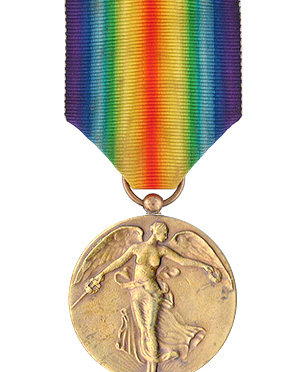
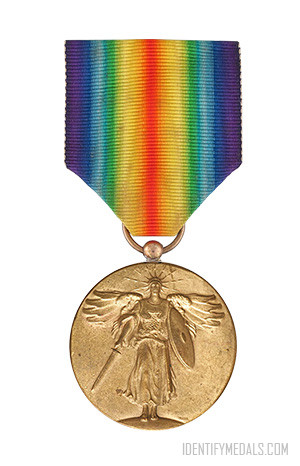
The obverse of the medal features a winged Victory holding a shield and sword on the front. The reverse bears “The Great War For Civilization” in capital letters curved along the top of the medal. Along the bottom of the back are six stars, three on either side of the center column of seven staffs wrapped in a cord. On left side of the staff it lists one World War I Allied country per line: France, Italy, Serbia, Japan, Montenegro, Russia, and Greece. On the right side of the staff the Allied country names read Great Britain, Belgium, Brazil, Portugal, Rumania(spelled with a U), andChina.

The 39 millimeters (1.5 in) wide watered ribbon has an iridescent color scheme, with the violet moving through to a central red stripe where both schemes meet. It attaches to the medal through a ring suspender. The recipient’s name, rank, service number and unit were impressed on the edge of the medal. The name of the regiment or corps was omitted on medals awarded to Army officers.

All the Inter-Allied Victory Medal Variations

Although each country designed its own version of the Inter-Allied Victory Medal, all of them shared some common elements, such as a winged victory figure on the obverse and a similar ribbon with rainbow colors symbolizing unity among the Allies. Here are the versions for all countries:

Find an Inter-Allied Victory Medal Online

Right Now on eBay 
Clicking a link to eBay may result in a referral commission being paid if a purchase is made.
Loading...

The Inter Allied Victory Medal (Czechoslovakia)

The Czechoslovakian Victory Medal was awarded to all military personnel or civilians who participated in WW1 and has an Art Deco style.

  • Time Period: World War I
  • Institution: 1919
  • Country: Czechoslovakia

The Allied Victory Medal was recommended by an inter-allied committee in March 1919. Fourteen victorious countries finally awarded the medal after World War I, and each allied nation would design a ‘Victory Medal’ for award to their own nationals. Certain features were to be shared: a winged figure of Victory on the obverse and the same ribbon.

During the war, Czechs and Slovaks living in France were given the choice of military service or internment as enemy aliens. The Inter-Allied Victory medal was awarded to soldiers who served in the various Czech legions under the French, Italian and Russian Armies, to those who fought in the army of any allied nation, and to those who joined the French Foreign Legion.

The Czechoslovakia Inter-Allied Victory Medal Design

The Victory Medal measures 36 millimetres (1.4 in) in diameter and was designed by William McMillan. The design and ribbon was also adopted by Belgium, Brazil, Cuba, Czechoslovakia, France, Greece, Italy, Japan, Portugal, Romania, Siam, Union of South Africa and the USA. Each allied nation would design a ‘Victory Medal’ for award to their own nationals, all issues having certain common features, including a winged figure of victory on the obverse and the same ribbon.

The obverse of the Czechoslovakian Victory Medal featured an Art Deco style winged Victory. The linden tree, symbol of the Czech nation, sprouts near Victory’s feet. The back has a shield with the lion of Bohemia with the arms of Silesia on its chest, surrounded by linden leaves.

The reverse shows the words ‘THE GREAT / WAR FOR / CIVILISATION / 1914-1919’ surrounded by a laurel wreath.

The 39 millimeters (1.5 in) wide watered ribbon has an iridescent color scheme, with the violet moving through to a central red stripe where both schemes meet. It attaches to the medal through a ring suspender. The recipient’s name, rank, service number and unit were impressed on the edge of the medal. The name of the regiment or corps was omitted on medals awarded to Army officers.

All the Inter-Allied Victory Medal Variations

Although each country designed its own version of the Inter-Allied Victory Medal, all of them shared some common elements, such as a winged victory figure on the obverse and a similar ribbon with rainbow colors symbolizing unity among the Allies. Here are the versions for all countries:

Find an Inter-Allied Victory Medal Online

Right Now on eBay 
Clicking a link to eBay may result in a referral commission being paid if a purchase is made.
Loading...

The Inter Allied Victory Medal (Romania)

The Romanian Victory Medal was awarded to those who had taken part in a battle between 28 August 1916 and 31 March 1921 or served as a medic.

  • Time Period: World War I
  • Institution: 1919
  • Country: Romania

The Allied Victory Medal was recommended by an inter-allied committee in March 1919. Fourteen victorious countries finally awarded the medal after World War I, and each allied nation would design a ‘Victory Medal’ for award to their own nationals. Certain features were to be shared: a winged figure of Victory on the obverse and the same ribbon.

To qualify for the Romanian Victory Medal, recipients of any rank had to be mobilized for war service and to have taken part in a battle between 28 August 1916 and 31 March 1921, or to have served as an army medic. Also included were the combatants from the Hungarian–Romanian War.

The Romania Inter-Allied Victory Medal Design

The Victory Medal measures 36 millimetres (1.4 in) in diameter and was designed by William McMillan. The design and ribbon was also adopted by Belgium, Brazil, Cuba, Czechoslovakia, France, Greece, Italy, Japan, Portugal, Romania, Siam, Union of South Africa and the USA. Each allied nation would design a ‘Victory Medal’ for award to their own nationals, all issues having certain common features, including a winged figure of victory on the obverse and the same ribbon.

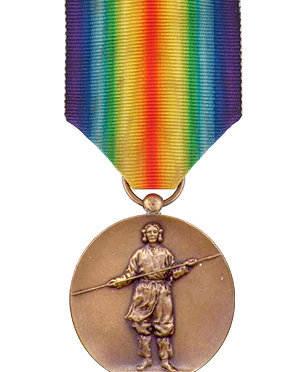
The obverse of the Romanian medal was selected from a set of proposals submitted to an international jury. The jury selected the design of Lt. Col. Constantin Kristescu, who was also put in charge of its sculpting. The medal was manufactured in Paris, where Kristescu used to work with La Maison Arthus-Bertrand.

The reverse shows the words ‘THE GREAT / WAR FOR / CIVILISATION / 1914-1919’ surrounded by a laurel wreath.

The 39 millimeters (1.5 in) wide watered ribbon has an iridescent color scheme, with the violet moving through to a central red stripe where both schemes meet. It attaches to the medal through a ring suspender. The recipient’s name, rank, service number and unit were impressed on the edge of the medal. The name of the regiment or corps was omitted on medals awarded to Army officers.

All the Inter-Allied Victory Medal Variations

Although each country designed its own version of the Inter-Allied Victory Medal, all of them shared some common elements, such as a winged victory figure on the obverse and a similar ribbon with rainbow colors symbolizing unity among the Allies. Here are the versions for all countries:

Find an Inter-Allied Victory Medal Online

Right Now on eBay 
Clicking a link to eBay may result in a referral commission being paid if a purchase is made.
Loading...