
The 1940-1945 Belgian Red Cross Decoration

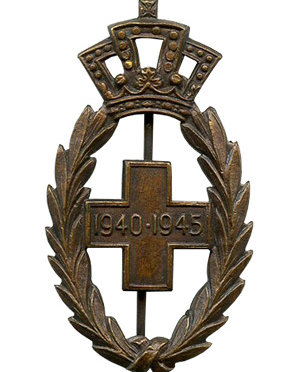
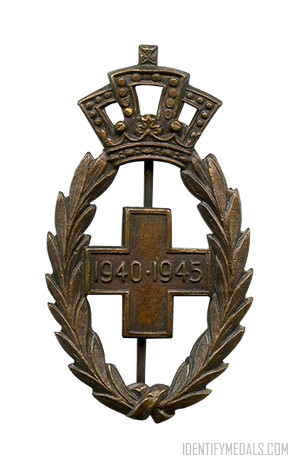
The 1940-1945 Belgian Red Cross Decoration (Décoration de la Croix Rouge Belge 1940–1945 / Ereteken van het Belgische Rode Kruis 1940–1945).

The 1940-1945 Belgian Red Cross Decoration (Décoration de la Croix Rouge Belge 1940–1945 / Ereteken van het Belgische Rode Kruis 1940–1945) is a Belgian Red Cross decoration.

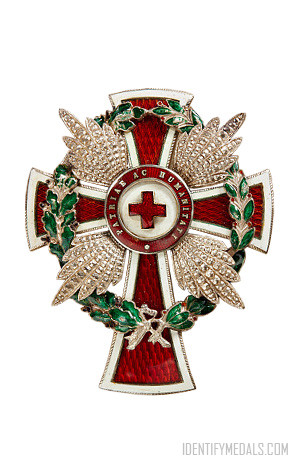
It consists of a gilding metal pin-back badge of 60mm max height in the form of an openwork crowned pair of vertically elongate palms. The palms support the Greek Red Cross symbol in the center, which bears the dates ‘1940 -1945’ across the horizontal arms.

Find Red Cross Medals Online

More Red Cross Medals

The Blood Donor’s Medal

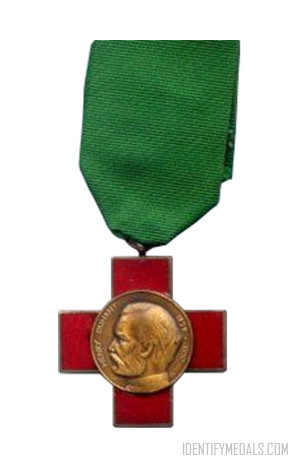
The Blood Donor’s Medal (Médaille de Donneur de Sang / Bloeddonor Medaille) is a Red Cross Belgian medal awarded for blood donations.
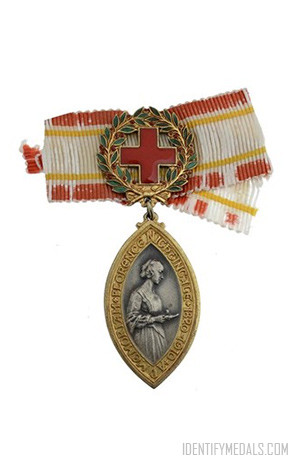
The Blood Donor’s Medal (Médaille de Donneur de Sang / Bloeddonor Medaille) is a Red Cross Belgian medal.

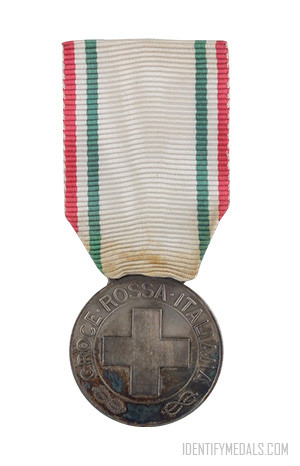
A circular bronze badge was awarded for 25 to 40 blood donations, a bronze medal for 40 to 60 donations and a silver medal for 60 to 80 donations.

Find Red Cross Medals Online

More Red Cross Medals

The Order of the Belgian Red Cross

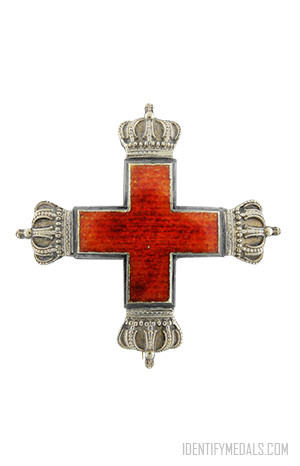
The Order of the Belgian Red Cross (Ordre de la Croix Rouge Belge / Orde van het Belgische Rode Kruis) was established in 1880.
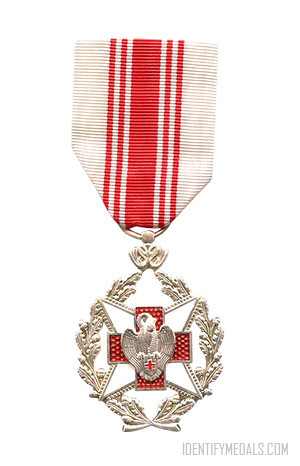
The Order of the Belgian Red Cross (Ordre de la Croix Rouge Belge / Orde van het Belgische Rode Kruis) was established in 1880.
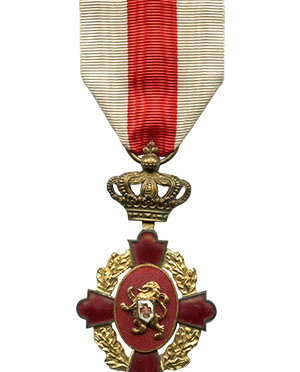
The award was produced in two classes: 1st class (gilt finish), and 2nd class (silver finish).

The Order of the Belgian Red Cross Design

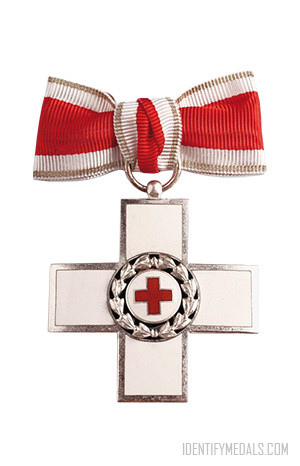
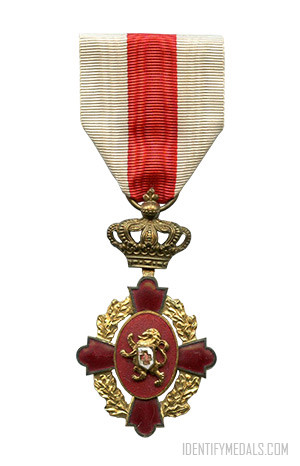
The medal is a red enamel cross patonce 37mm wide with an oak wreath set within the arms. The obverse bears a vertically elongate oval central medallion in red enamel bears the Belgian lion, with the red cross emblem on a small white shield superimposed. The reverse is similar, but with a plain central medallion in gilt or silver, suitable for engraving of the recipient’s details.

The ribbon measures 37 mm wide with a 12mm wide red central stripe for the 1st class award, or with two narrow red central stripes for the 2nd class award.

Find Red Cross Medals Online

More Red Cross Medals

The Military Cross (Belgium)

The Military Cross (Croix Militaire / Militair Kruis) is a military long service decoration of Belgium established on 11 February 1885 by Royal Decree and awarded to commissioned officers in the Belgian Armed Forces for loyal and uninterrupted service or to Non-Belgian military officers for distinguished service in favor of the Military of Belgium.

The Military Cross, second class is awarded to Belgian military officers after 25 years of service. The Military Cross, first class is awarded to Belgian military officers after 25 years of service as a commissioned officer.

The award may be awarded to Commissioned Officers of non-Belgian armed forces for distinguished service towards the Belgian Defence. In such a case, the second class is awarded to officers below the rank of brigadier general. The first class is awarded to general officers.

The Military Cross Design

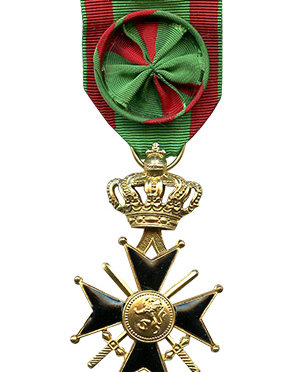
The award is a black enameled Maltese cross with a 1 mm gilt edge. The aarms end in eight 2 mm in diameter gilt spheres and gilt crossed swords pointing up are positioned between the arms of the cross.

The obverse central medallion bears the Belgian lion rampant, pre-1952, while the reverse bears the royal cipher of the reigning monarch. After 1952, the reverse is identical to the obverse.

The ribbon is green silk moiré and has two 5 mm wide red stripes set 1 mm from the ribbon’s edges. There’s a suspension ring passing through the orb of a pivot mounted crown.  The Military Cross First Class differs only from the second class award in the form of a rosette on the ribbon in the same colors as the ribbon.

The Military Decoration for Exceptional Service

The Military Decoration (Décoration Militaire / Militaire Ereteken) is a military award of the Kingdom of Belgium established on December 23, 1873 and awarded to non-commissioned officers and other ranks of the Belgian Armed Forces for loyal and uninterrupted service.

The Decoration is awarded in two classes: Military personnel below the rank of Officer are awarded the second class after ten years of service. Five years after the award, they are awarded the first class of the medal.

The Military Decoration for Exceptional Service Design

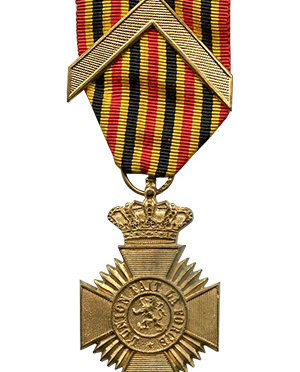
The award is a gilt cross pattée surmounted by the royal crown of Belgium with four rays between the cross arms.

The obverse bears a circular central medallion with a Belgian lion and a circular relief inscription: “Unity makes Strength” in French (“l’union fait la force”) or Dutch (since July, 8, 1952, “eendracht maakt macht”). The reverse is identical except for the central medallion, which bears the royal monogram of the reigning monarch surrounded by the relief inscription “ARMÉE * MÉRITE * ANCIENNETÉ” (“ARMY * MERIT * SENIORITY“).

Since July, 8, 1952, only a Belgian lion is depicted, without surrounding text or reference to the reigning monarch.

The ribbon is silk moiré of seventeen alternating longitudinal stripes of red, yellow and black. The medal is suspended by a ring through the suspension loop. A gilt inverted metal chevron is affixed to the ribbon of the award first class.

The Civic Decoration (Belgium)

The Civic Decoration (Décoration Civique / Burgerlijke Ereteken) is a civilian decoration of the Kingdom of Belgium first established on 21 July 1867 by royal decree to reward exceptional acts of bravery, devotion or humanity.

A second royal decree of 15 January 1885 extended the award to state civil servants for long service, and it was once more amended by royal decree in 1902 to include long service in the Civic Guard and firefighters.

Two wartime variants were created to reward civilians who distinguished themselves during the World Wars.

The Civic Decoration is awarded in two categories:

  • The Civic Cross (First and a Second Class),
  • The Civic Medal (First, Second and Third Class).

The Civic Decoration Design

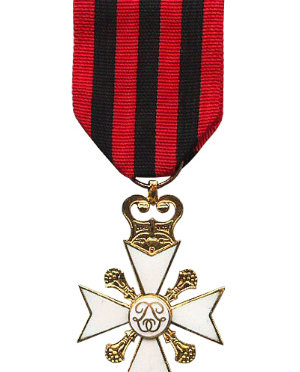
The badge of the Civic Cross is a white enameled maltese cross with the central medallion bearing the monogram of King Leopold I or of King Albert I on the obverse and reverse. Between the arms of the Cross are:

  • Crossed swords for the Civic Cross 1914–1918.
  • Crossed flaming torches for the Civic Cross 1940–1945.
  • A Burgundy Cross for the Civic Cross for administrative services and for services as a firefighter.

The ribbons differ with the type of award:

  • For long and distinguished service in the administration: Red with three vertical black stripes.
  • For exceptional acts of bravery, devotion or humanity: Red with two vertical black stripes bordered on each side by a yellow line.
  • For long and distinguished service as a firefighter: Green with two vertical white stripes.
  • For the 1914–1918 award: Pale green with vertical black, yellow and red stripes on each edge and a central vertical gold stripe.
  • For the 1940–1945 award: Saffron with vertical black, yellow and red stripes on each edge and a central vertical black stripe.

The 1914-1918 Medal for National Restoration

The 1914-1918 Medal for National Restoration was instituted on 22 May 1928 and awarded for meritorious service in organizations rebuilding Belgium after the First World War.

The 1914-1918 Medal for National Restoration Design

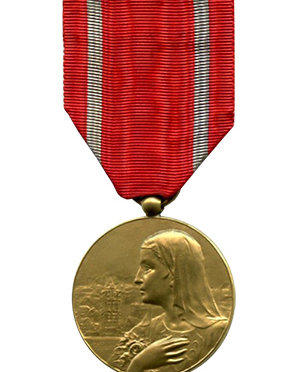
The medal is circular and struck in bronze gilt designed by Alfonse “Alf” Mauquoy.

The obverse depicts a woman (representing Belgium), holding flowers, against a background of a city with a tower being repaired. The reverse shows the ruins of Ypres with the dates “1914” and “1918” and in a panel underneath, embellished by two oak leaves, the inscription: “SOUVENIR DE LA RESTAURATION NATIONALE” / “AANDENKEN VAN DE NATIONALE HERSTELLING“) (“In remembrance of the national restoration”).

The ribbon is red with two light blue edge stripes.

The Commemorative Medal of the National Committee for Aid and Food

The Commemorative Medal of the National Committee for Aid and Food was instituted on 31 May 1919 and awarded to those who had been active in the ‘National Committee’.

The Committee was able to direct aid and assistance to the neediest, operating under American protection and within the constraints of the occupying German forces. Much of Belgium was German-occupied from August 1914 and by the following month groups of civilian volunteers had sprung up to alleviate hunger and hardship. The Committee was also important politically and culturally in maintaining a Belgian civil identity through the period of occupation.

The Commemorative Medal of the National Committee for Aid and Food Design

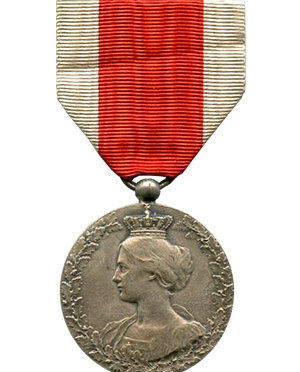
The medal is circular and was engraved by Devresse. It’s divided into 4 classes, each struck in a different material:

  • 1st class: In gilded bronze and rosette ribbon.
  • 2nd class: In gilded bronze.
  • 3rd class: In silvered bronze.
  • 4th class: In bronze.

The ribbon is red with white edges.

The Queen Elisabeth Medal

The Queen Elisabeth Medal (Médaille de la reine Élisabeth / Koningin Elisabeth Medaille) is a Belgian decoration created in October 1916 by royal decree to recognize exceptional services to Belgium in the relief of the suffering of its citizens during the First World War.

The medal was awarded to people, both Belgians and foreign nationals, who, like Queen Elisabeth herself, had worked and cared for the suffering victims of war for a year or more prior to 10 September 1919.

The award wasn’t limited to the medical care of the sick and wounded and included people working in hospitals (they received a variant with a red enameled cross within the suspension wreath). Many Belgian and foreign doctors and nurses received the medal too.

The Queen Elisabeth Medal Design

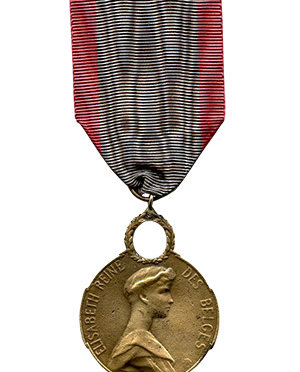
The medal measures 36 mm (1.4 in) in diameter and is circular and struck in bronze (although many recipients opted for silver or gilt silver variants). It has four sections inset by 1 mm (0.039 in) giving it the slight outline of a cross and a slightly raised edge on both sides.

The obverse bears the relief right profile bust of Queen Elisabeth with the circular relief inscription ÉLISABETH REINE DES BELGES (“ELISABETH QUEEN OF THE BELGIANS”). The reverse bears the relief image of a nurse sitting and holding an oil lamp with the circular inscription in Latin PRO PATRIA HONORE ET CARITATE (“FOR COUNTRY HONOUR AND CHARITY”). Below are the years “1914 – 1916”.

The ribbon was 38 mm (1.5 in) wide silk moiré with 6 mm (0.24 in) wide pink edge stripes. The medal was suspended by a ring through a suspension loop; a laurel wreath with a hollow center served as the base for it. Awards made for services to wounded or invalided soldiers incorporated a red enameled cross within the wreath.

The King Albert Medal

The King Albert Medal (Médaille du Roi Albert / Koning Albert Medaille) is a Belgian medal established on 7 April 1919 by royal decree and awarded to people who were exceptionally meritorious in promoting, organizing or administering humanitarian and charitable work that assisted Belgians in need during the First World War.

The medal could be awarded to both Belgians and foreigners.

The King Albert Medal Design

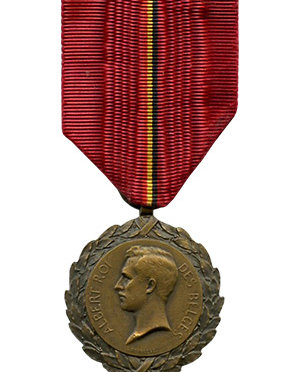
The medal measures 35mm in diameter and is circular and struck in bronze. Its obverse bears a central medallion bearing the left profile of King Albert I with the inscription in French or in Dutch “ALBERT KING OF THE BELGIANS” (“ALBERT ROI DES BELGES” /ALBERT KONING DER BELGEN”) surrounded by a 5mm wide laurel wreath along the entire medal circumference.

On the reverse is the relief inscription on four lines in French or in Dutch “IN TESTIMONY OF NATIONAL RECOGNITION” (EN TEMOIGNAGE DE RECONNAISSANCE NATIONALE” / “ALS BLIJK VAN’S LANDS ERKENTELIJKHEID”) with the years “1914-1918” below.

The ribbon is 38mm wide dark red silk moiré and bears a single 3mm wide longitudinal central stripe in the national colors of Belgium (1mm red, 1mm yellow and 1mm black). The ribbon bears two such stripes if the recipients distinguished themselves in the covert resupply of occupied Belgium. The medal is suspended by a ring through a suspension loop.