The Mongolian Order of the Polar Star

The Order of the Polar Star was created in 1936 as a state award of the Mongolian People’s Republic. It comes in four types.

The Order of the Polar Star (Алтан гадас одон, Altan Gadas Odon) is a long-standing state award of Mongolia, first instituted in 1936 and formally regulated by resolution of the Presidium of the Small Khural and the Council of Ministers of the Mongolian People’s Republic on 16 May 1941.

It remains an active honour today, with tens of thousands conferred since its creation. The award is given to both Mongolian and foreign nationals in recognition of special merits to society, which can include contributions to public life, international cooperation, cultural achievement, economic development, and other services benefiting Mongolia. The Order is placed directly below the Order of the Precious Wand in the nation’s order of precedence.

Unlike some medals that are limited to citizens, the Polar Star is frequently presented to foreign recipients for their work strengthening diplomatic, cultural, scientific, or economic ties with Mongolia; past awardees include international politicians, academics, diplomats, and organizational leaders, reflecting its role as one of Mongolia’s highest civilian honours.

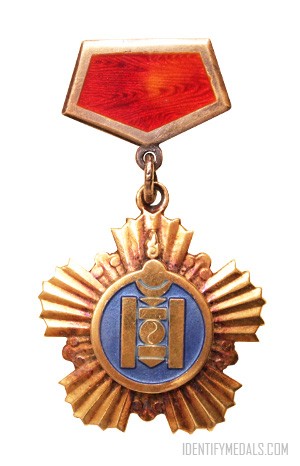
The Mongolian Order of the Polar Star Medal Design

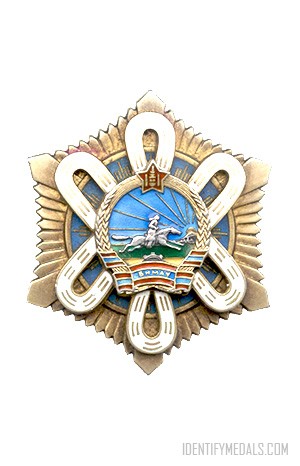
The obverse (front) of the Order of the Polar Star medal is visually striking and rich in symbolic detail, representing both Mongolia’s national identity and the prestige of the award.

At its core, the medal generally takes the form of a multi-pointed starburst with layered rays emanating from the center, often executed in gilded metal and enamel. Superimposed on this backing is a circular central medallion that features a horseman motif, usually depicting a rider across the Mongolian landscape — a common symbol of Mongolian heritage and the nation’s historic ties to horsemanship and freedom. Around this central scene, an enamelled ring and decorative elements (often in colors like blue and red) accentuate the medal’s focal imagery. Interlaced with the star’s rays are curved, repeating shapes — sometimes appearing as enamelled loops — that give the medal a distinctive, almost floral or astral appearance, aligning with the notion of the Polar Star as a guiding light. Many preserved examples show the medal finished with a high level of enamelling and metalwork detail, characteristic of both Soviet-era production and later variations.

The overall aesthetic combines geometric star forms and natural symbolism — encapsulating Mongolia’s cultural legacy and the honour’s role in recognizing exceptional contributions to society.
The Order of Sukhbaatar

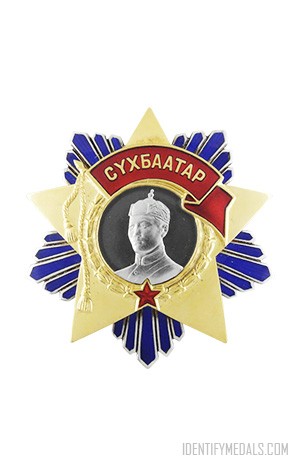
The Order of Sukhbaatar was formally introduced in September 1945 and is a major state order of Mongolia give for exceptional services.

The Order of Sukhbaatar (Сүхбаатарын одон) is a major state order of Mongolia, first established in May 1941 (with some sources citing its formal introduction in September 1945). It is named after Damdin Sükhbaatar, the Mongolian revolutionary hero who played a central role in the country’s struggle for independence in the early 20th century. The award is given to both Mongolian citizens and foreign nationals in recognition of exceptional services to Mongolia’s defense, economic and cultural development, and acts of heroism in protecting the nation against external and internal threats. It continues to be conferred today, and until 2005 it was the highest state order before being superseded by the Order of Chinggis Khaan. Recipients of the Order are accorded various civic privileges, including cultural and social benefits provided by the state.

The Order of Sukhbaatar Medal Design

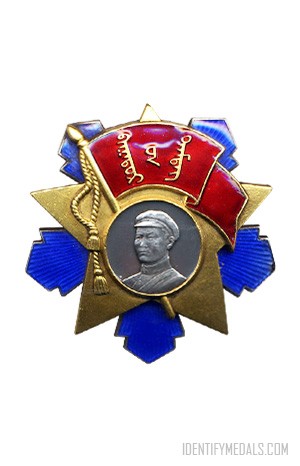
The obverse (front) of the Order of Sukhbaatar is highly symbolic and visually rich, reflecting Mongolia’s revolutionary heritage and state identity. On the front, the medal is dominated by a large five-pointed star that serves as the primary shape of the Order. Between the star’s points are silver or enameled rays of varying lengths, often finished in blue enamel, which create a radiant, layered effect. At the center of the star is a circular medallion featuring a relief portrait (bust) of Damdin Sükhbaatar, traditionally rendered in a contrasting material such as platinum against an enamel background. The central scene is surrounded by a decorative wreath or border, and above the portrait is a revolutionary banner in red enamel bearing the Cyrillic inscription “СҮХБААТАР” (“Sukhbaatar”), symbolizing the award’s namesake and Mongolia’s revolutionary spirit. Below the portrait, a red enamel star often appears as an additional motif, reinforcing the order’s prestige.

The combination of colors (red, blue, and metallic tones), the star motif, and the portrait all emphasize the Order’s association with national pride, heroic service, and the legacy of Sukhbaatar himself.

The Order of Chinggis Khaan Medal

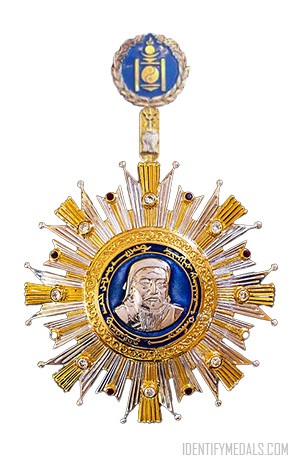
The Order of Chinggis Khaan, established on 17 May 2002, is the highest state decoration of Mongolia. It’s awarded for special merits.

The Order of Chinggis Khaan (Чингис хаан одон) is the highest state decoration of Mongolia, established on 17 May 2002 through a parliamentary resolution supported by the second President of Mongolia, Natsagiin Bagabandi. Its creation was intended to honor individuals and organizations whose contributions significantly strengthened Mongolia’s independence, sovereignty, national unity, economic and social development, cultural heritage, and international reputation.

The first award was presented in 2005, and since then the Order has been conferred on distinguished Mongolian and foreign citizens, musical ensembles, and institutions such as the band The Hu and the Mongolian Armed Forces.
Recipients include political leaders, scholars, athletes, cultural figures, and international dignitaries whose actions have embodied the spirit and legacy of Chinggis Khaan by advancing Mongolia’s interests at home and abroad. Although the award is usually limited to one conferral per year, exceptions have been made in special circumstances, such as awarding two recipients in 2021.

Those honored receive not only the decoration itself but also ceremonial recognition, eligibility for official state events, and other state privileges.

The Order of Chinggis Khaan Medal Design

The obverse of the Order of Chinggis Khaan medal is rich in symbolic imagery reflecting Mongolia’s history and cultural identity. At the heart of the medal’s obverse is a round central medallion featuring a relief depiction of Chinggis Khaan himself, traditionally crafted in white gold against a contrasting enamel background.

Surrounding this central figure is an outer circle of blue enamel, on which the motto “Munkh tengeriin khuchin dor” (“Under the Might of the Eternal Blue Sky”) is inscribed in gold on one side, with “Chinggis Khaan Temuujin” written in traditional Mongolian script on the other.
Encircling this enamel band is a decorative golden border adorned with stylized patterns (often interpreted as horn-shaped motifs), which symbolize the cardinal directions and unity. Emanating from the central medallion are ornate rays and arrow motifs, sometimes embellished with gemstones, representing strength, unity, and the enduring legacy of the Mongol state. Above the main medallion is a pendant section featuring the Golden Soyombo emblem set against a colored enamel backdrop, flanked by elements such as the Great White Banners and lotus motifs, further reinforcing Mongolia’s sovereign and cultural heritage.

The Hero of Labour of Mongolia Medal

The Hero of Labour of Mongolia Medal is one of the country’s highest state honours, originally established during the People’s Republic era.

The Hero of Labour of Mongolia (or Хөдөлмөрийн гавьяаны улаан тугийн одон in Mongolian) is one of Mongolia’s highest state honours, originally established during the Mongolian People’s Republic era and retained in modern Mongolia with the same spirit.

It was created by a decree of the Presidium of the Great People’s Khural on 31 December 1956 to recognize exceptional contributions to the nation’s development and prosperity. Winners of this title were not only given the honorary designation but also received the Order of Sukhbaatar and a distinctive insignia known as the “Golden Soyombo” medal, symbolizing the award.

The first person to be honoured under this title was D. Davaajav, an excavator at the Nalaikh mine, in 1957. After the country’s political transition and renaming in the early 1990s, the title continued in the independent state of Mongolia under the updated name Hero of Labour of Mongolia, reflecting outstanding achievements in advancing the country across various fields.

In practice, the award has been conferred on distinguished athletes, cultural figures, workers, and other individuals whose accomplishments have brought honour or significant benefit to Mongolia. Recipients in recent years have included world-class athletes such as wrestlers and Paralympians recognised for their international success, demonstrating how the title continues to celebrate excellence and contribution to national prestige.

The Hero of Labour of Mongolia Medal Design

On the obverse (front), the medal features a prominent Soyombo symbol — the national emblem of Mongolia that represents independence and the nation’s traditional values — rendered in gold at the center of the design. The Soyombo is a tall, vertical emblem composed of abstract elements (such as flame, sun, moon, triangles, and yin-yang), each with symbolic meaning tied to Mongolia’s cultural heritage. This golden emblem is the focal point of the obverse and signifies the high honour being conferred with the title Hero of Labour.

Surrounding or incorporated into this central symbol, the medal’s design typically reflects a formal, solid metallic finish, befitting one of Mongolia’s top state decorations, intended to be worn on ceremonial occasions with other high orders like the Order of Sukhbaatar.

The Hero of the Mongolian People’s Republic Medal

The Hero of the Mongolian People’s Republic, first awarded in 1922, was one of the highest distinctions in the country.

The Hero of the Mongolian People’s Republic was the most prestigious honor in the former Mongolian People’s Republic, created to recognize extraordinary acts done in service to the Mongolian people and state. It was inspired by the Soviet Union’s own Hero of the Soviet Union award.

The title could be given to both Mongolian citizens and foreigners and was first bestowed in September 1922. In the early years after Mongolia’s 1921 revolution, the new government introduced high honors, with initial awards going to key revolutionary figures. Later, a distinctive Gold Star medal was established in 1945 to represent the title.

Recipients of the Hero of the Mongolian People’s Republic medal also received the Sukhbaatar Order.

Over the decades until it was last awarded in 1989, a total of 59 individuals received it, including two posthumously. Recipients ranged from military leaders and political figures in Mongolia to prominent Soviet allies, reflecting the close ties between the two countries during much of the twentieth century.

The Hero of the Mongolian People’s Republic Design

There are two variants of this medal. The first type was issued during 1941 to 1946 and the second from 1946.

The Hero of the Mongolian People's Republic
The Hero of the Mongolian People's Republic - 1st Type (1941-46), Obverse.
The Hero of the Mongolian People's Republic - Mongolian Medals
The Hero of the Mongolian People's Republic - 2nd Type (1946), Obverse.

The obverse of the medal is a gold star-shaped badge with a radiating, multi-faceted design. It appears as a starburst with sharply defined, sculpted rays emanating from the center, giving a three-dimensional, almost geometric look.

Around the edges of the star there are five small, round gemstones (traditionally diamonds) set near the points of the star, one between each pair of major rays, which add sparkle and emphasize the award’s prestige.

First World War Medal Identification Guide

The First World War (1914–1918) resulted in a wide variety of medals being awarded. Here is a guide to help you identify yours.

The First World War (1914–1918) resulted in a wide variety of medals being awarded to military personnel, civilians, and allies of the participating nations. If you came across one of these, you’re probably wondering its history. This is where this article might come in handy.

Each participating nation in the First World War issued its own set of medals, many of which are highly distinctive. For example, the United Kingdom and Commonwealth nations issued  several decorations to recognize the contributions of their military personnel, such as the 1914 Star (also known as the Mons Star), the British War Medal, and the Inter-Allied Victory Medal. Of course, the same happened in other countries like the United States, France, and Germany.

How to Identify WW1 Medals

Let’s start with some basic tips that can help you identify your World War I medals.

Step 1:
Examine the Design

The design of a medal often provides immediate clues about its origin and purpose. These are some key features to look for:

Symbols and Figures: Many WW1 medals feature symbolic imagery, such as Britannia, Victory, or military emblems.

    • For example, the British War Medal displays a horseman representing St. George trampling the emblems of war, symbolizing triumph.
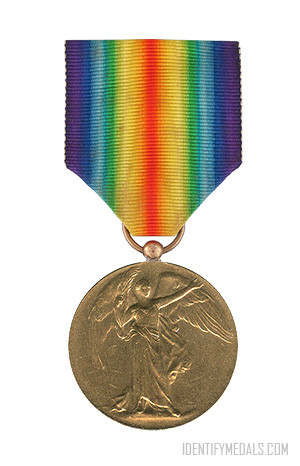
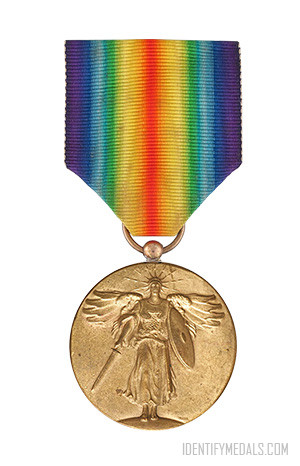
    • The Victory Medal features a winged figure of Victory, a universal symbol among Allied medals.

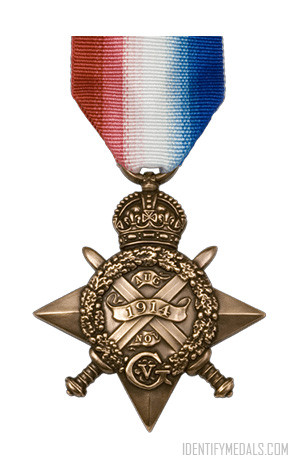
Dates: Medals often include the years of service or conflict they commemorate. For instance, the 1914 Star is inscribed with “1914” at the center.

Sovereign’s Effigy: British and Commonwealth medals often depict King George V on the obverse (front), making them easily distinguishable.

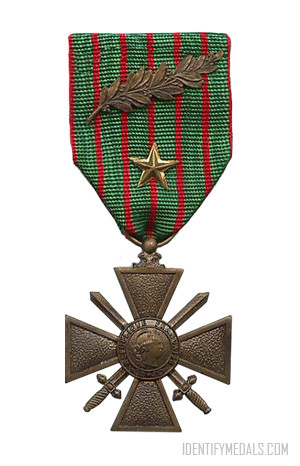
National Emblems: You can also look for unique elements like national crests, animals, or flags that tie the medal to its issuing country. For example, the French Croix de Guerre features crossed swords and a laurel wreath.

Step 2:
Check the Ribbon

Ribbons are an essential component of medal identification and vary significantly in color and pattern. Some of them are pretty unique. For example:

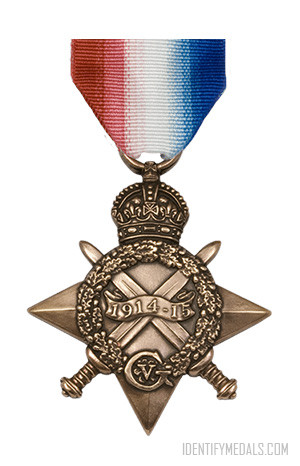
  • The 1914 Star and 1914–15 Star share a ribbon with a red, white, and blue gradient, representing the Allied nations.
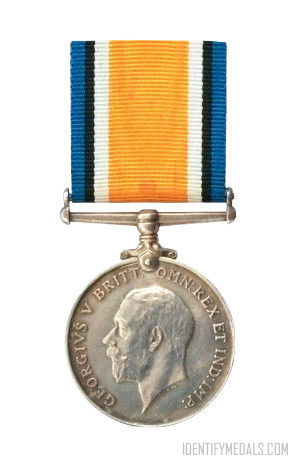
  • The British War Medal features a ribbon with orange, white, black, and blue stripes symbolizing the dawn, darkness, and the ocean.
  • The Victory Medal ribbon has a rainbow pattern, symbolizing hope and peace.
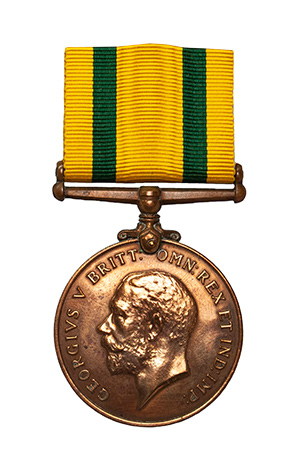
  • The Territorial Force War Medal has a green and yellow striped ribbon, unique among British WW1 medals.

Step 3:
Inspect the Inscription on the Rim

One of the most distinctive features of British WW1 medals is the engraved or stamped inscription on the rim, providing a personal connection to the recipient.

Details Included:

    • Name: Typically full name or initials.
    • Rank: The rank held by the recipient during their service.
    • Regiment or Service Number: This helps trace the recipient’s military record.

Reading the Inscription: Use a magnifying glass or proper lighting if the inscription is faint. For example, a rim marked “Pte. J. Smith, 1st Bn. Royal Fusiliers” indicates Private John Smith of the 1st Battalion, Royal Fusiliers.

Step 4:
See the Material

The material used in a medal’s production can hint at its significance and the economic conditions of the time.

Metals Used:

  • Silver: Commonly used for the British War Medal, it tarnishes over time but can be polished.
  • Bronze: Used for medals such as the Territorial Force War Medal or for certain ranks and roles.
  • Gilt Bronze: Seen in decorative medals like the Victory Medal, giving it a golden appearance.
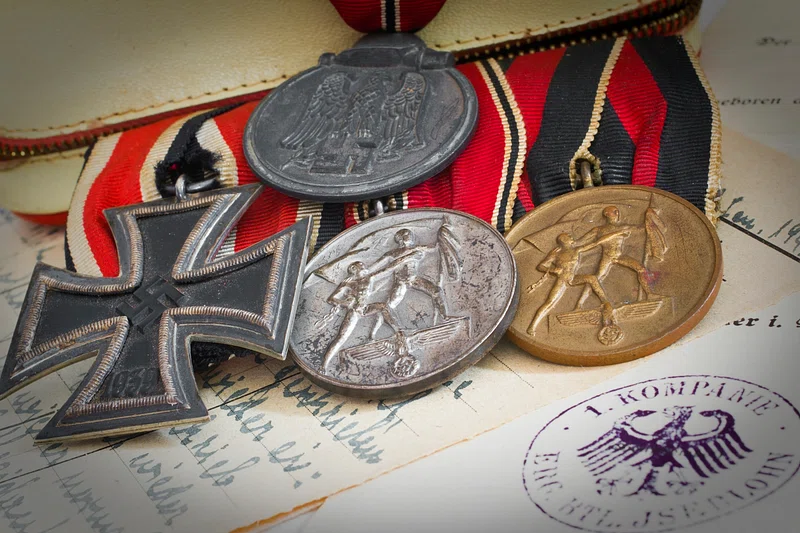
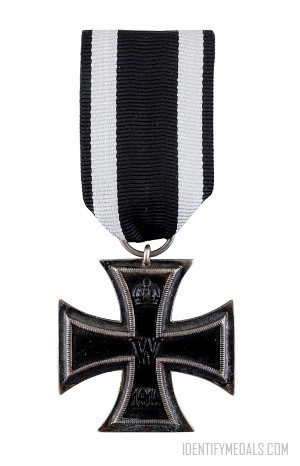
  • Iron or Base Metals: German Iron Crosses, for instance, were made from iron with a silver frame.

Weight and Wear: Genuine medals often have a solid, heavy feel compared to replicas or modern reproductions. Patina, scratches, or dents can reflect the medal’s age and usage.

Researching the Award Criteria

Understanding the context and criteria for a medal’s issuance is crucial for accurate identification. For example, the 1914 Star was only awarded to those who served in France or Belgium before November 22, 1914. The 1914–15 Star followed for later arrivals.

Some medals were also only awarded for service in specific regions or battles. For instance, the Hindenburg Cross in Germany was issued to veterans of the Western Front. And decorations like the Victoria Cross were given for extreme acts of bravery and are very rare.

Bar Clasps and Decorations:

Bars or clasps were added to certain medals to denote participation in specific campaigns or battles. For example, a bar inscribed with “5th Aug.-22nd Nov. 1914” on the 1914 Star indicates frontline service during this period.

Most Common WW1 Medals

Here are some common World War I medals you might find:

United Kingdom

  • Awarded to: Soldiers who served in France or Belgium between August 5 and November 22, 1914.
  • Key Features: A bronze star with crossed swords and a laurel wreath.
  • Ribbon: Red, white, and blue gradient.

United Kingdom

  • Awarded to: Personnel who served in any theater of war between August 5, 1914, and December 31, 1915, but were not eligible for the 1914 Star.
  • Key Features: Similar in design to the 1914 Star but marked “1914–15.”
  • Ribbon: Identical to the 1914 Star.

United Kingdom

  • Awarded to: All personnel who served overseas or in home defense during the war.
  • Key Features: A silver (or bronze for some roles) medal depicting King George V and a horseman trampling emblems of war.
  • Ribbon: Orange, white, black, and blue stripes.

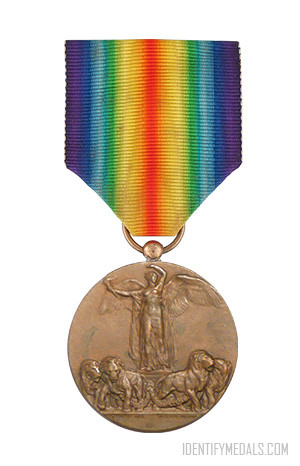
United Kingdom

  • Awarded to: All Allied personnel who served in WW1, often in conjunction with the British War Medal.
  • Key Features: A bronze medal featuring a winged figure of Victory.
  • Ribbon: A rainbow spectrum.

United Kingdom

  • Awarded to: Territorial Force members who volunteered for overseas service during the war.
  • Key Features: Bronze medal with an inscription on the reverse reading “For Voluntary Service Overseas.”
  • Ribbon: Green, white, and yellow stripes.

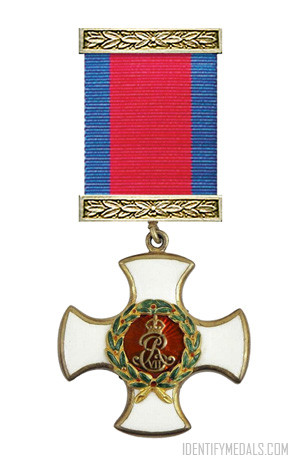
United Kingdom

  • Awarded to: Officers for meritorious or distinguished service in combat.
  • Key Features: A gold and enamel medal with a white enamel cross and crown.

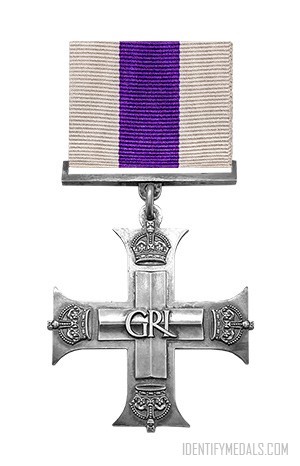
United Kingdom

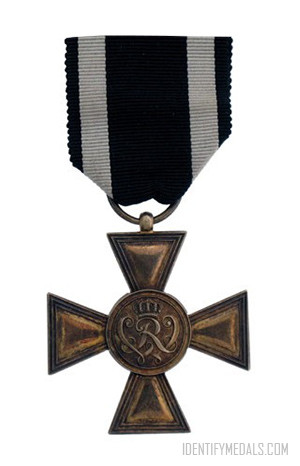
  • Awarded to: Junior officers and warrant officers for gallantry.
  • Key Features: A silver cross medal with straight arms, featuring a crown and the royal cipher.
  •  

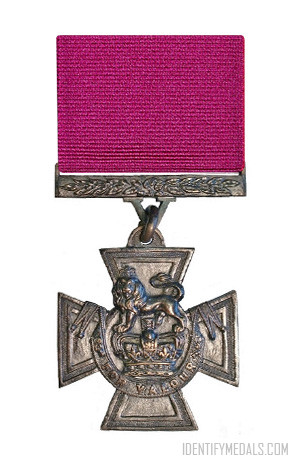
United Kingdom

  • Awarded to: Those who displayed extraordinary bravery in the face of the enemy.
  • Key Features: A bronze cross featuring the crowned lion of England and the inscription “For Valour.”

United States

  • Awarded to: All US military personnel who served during WW1.
  • Key Features: Similar to the British Victory Medal but includes bars for specific battles.
  • Ribbon: Rainbow spectrum.

United States

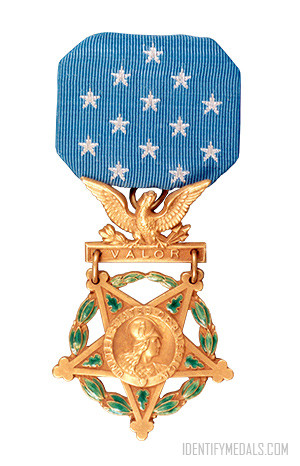
  • Awarded to: Exceptional acts of valor in combat.
  • Key Features: A unique star design with different versions for each service branch.

France

  • Awarded to: French and Allied soldiers for acts of bravery.
  • Key Features: A bronze cross with swords and the head of the French Republic.
  • Ribbon: Red with green stripes.

France

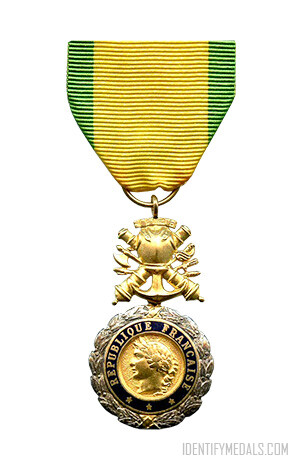
  • Awarded to: Non-commissioned officers and privates for gallantry.
  • Key Features: A gold medallion with a blue enamel border.

Germany

  • Awarded to: Soldiers for bravery or leadership.
  • Key Features: A black iron cross with a silver frame, featuring the “W” cipher for Kaiser Wilhelm II and the date “1914.”

Germany

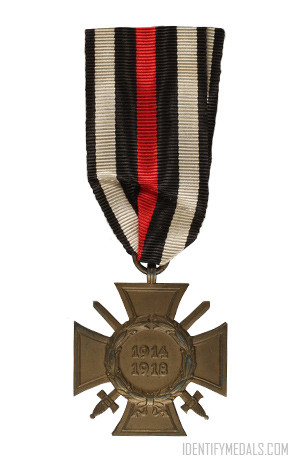
  • Awarded to: WW1 veterans in postwar Germany.
  • Key Features: A bronze cross featuring crossed swords (combatants) or no swords (non-combatants).

Austria-Hungary

  • Awarded to: Soldiers for bravery or distinguished service.
  • Key Features: A white enamel cross with a central medallion.

Austria-Hungary

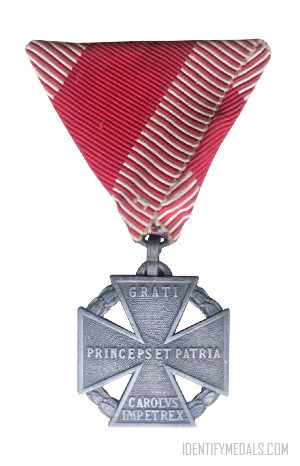
  • Awarded to: Austro-Hungarian soldiers for service during WW1.
  • Key Features: A bronze cross with the inscription “Gratia regis et patriae” (For King and Country).

Austria-Hungary

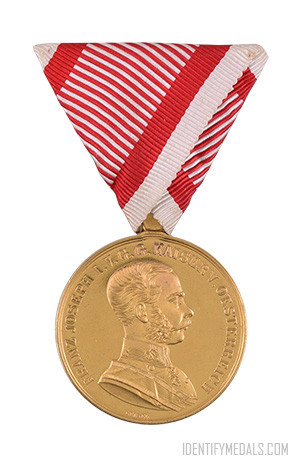
  • Awarded to: Soldiers of Austria-Hungary for acts of bravery in combat during WW1.
  • Key Features: A bronze or silver circular medal bearing the effigy of Emperor Franz Joseph or Emperor Karl, depending on the year of issuance, with a laurel wreath around the inscription.
  • Ribbon: Triangular ribbon in red with white edges, reflecting Austro-Hungarian national colors.

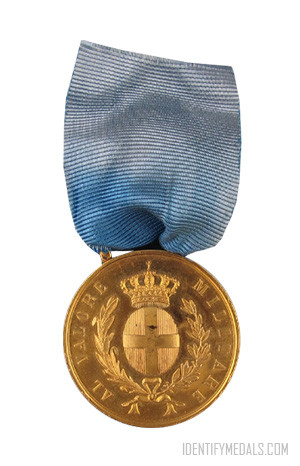
Italy

  • Awarded to: Soldiers for exceptional bravery.
  • Key Features: A gold medal with a wreath and the Italian royal crest.

Italy

Awarded to: Italian soldiers, identical to other Allied Victory Medals in design.

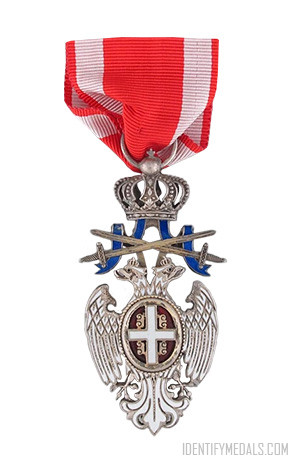
Serbia

  • Awarded to: Both Serbian and Allied military personnel for outstanding bravery, leadership, or significant contributions to Serbia’s war effort during WW1.
  • Key Features: A richly ornate medal featuring a double-headed white eagle with a crown, often enameled, and the Serbian royal arms at the center.
  • Ribbon: Red and blue stripes, representing the Serbian national colors.

Common Pairings

For British soldiers, a common medal combination was the British War Medal and the Victory Medal, nicknamed “Mutt and Jeff.” Soldiers who served earlier in the war might also have received the 1914 Star or 1914–15 Star.

Resources for Further Identification

  • Medal Reference Books: Books like The Medal Yearbook offer detailed descriptions and images.
  • Online Databases: Websites like The National Archives and Commonwealth War Graves Commission provide searchable databases.
  • Collectors’ Forums: Engaging with collectors and historians can offer insights into less common medals.

The Order of Jose Martí

The Order of José Martí is one of Cuba’s most prestigious honors and awarded for exceptional contributions to humanity and society.

  • Time Period: Post-WW2
  • Institution: 2 December 1972
  • Country: Cuba

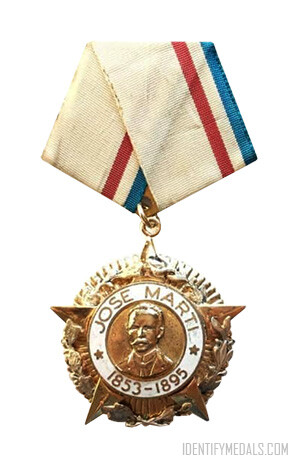
The Order of José Martí (or Orden de José Martí in Spanish) is one of Cuba’s most prestigious honors, established on December 2, 1972, under Law No. 1239, and later redesigned and ratified under Decree-Law No. 30 on December 10, 1979. This distinguished order is named after José Martí 🔗, a revered Cuban poet, philosopher, essayist, and national hero whose life and work embody the ideals of freedom, justice, and cultural excellence.

The Order of José Martí represents the highest recognition of achievements that align with Cuba’s revolutionary principles and global solidarity. It underscores the importance of fostering education, culture, and innovation while advocating for peace and human dignity.

The order has two variations of insignia, each reflecting the high honor and significance associated with the award. These variations emphasize the legacy of José Martí and the values he stood for.

The Order of Jose Marti Criteria

The Order of José Martí is awarded to:

  • Cuban and foreign citizens: Recognizing their exceptional contributions to humanity and society.
  • Heads of State or Government: Honoring their extraordinary efforts in promoting global peace, collaboration, and human progress.

Recipients of this honor are recognized for their:

  • Great feats in favor of peace and humanity: Actions that contribute to resolving conflicts, fostering solidarity, or promoting justice and equality on a global scale.
  • Contributions to education, culture, science, and sport: Advancing these fields in ways that inspire progress, enlightenment, and the betterment of society.
  • Extraordinary merits and creative work: Demonstrating innovation, excellence, and dedication in their respective fields of expertise.

About José Martí

José Martí (1853–1895) was a Cuban intellectual, revolutionary, and martyr whose influence extends beyond his homeland. A prolific writer and philosopher, Martí’s essays, poetry, and political thought advocated for Cuba’s independence from Spanish colonial rule and inspired anti-imperialist movements throughout Latin America. His dedication to education, culture, and justice made him a symbol of liberty and enlightenment, often referred to as the “Apostle of Cuban Independence.”

Martí’s vision of a free, equitable, and united society is encapsulated in the ideals of the order that bears his name.

The Order of Sports Merit

The Order of Sports Merit is a distinguished Cuban honor that recognizes exceptional contributions to the field of sports.

  • Time Period: Post-WW2
  • Institution: 10 April 1979
  • Country: Cuba

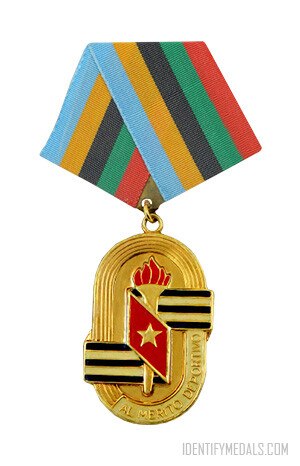
The Order of Sports Merit (Orden Al Mérito Deportivo) is a distinguished Cuban honor established on December 10, 1979, under Decree-Law No. 30. This prestigious award recognizes exceptional contributions to the field of sports and physical culture, celebrating achievements that inspire excellence, promote national pride, and advance the development of athletic programs in Cuba and beyond.

The Order of Sports Merit reflects Cuba’s deep commitment to physical education and sports as integral components of national identity and human development. Sports are not only viewed as a source of pride but also as a means of fostering discipline, teamwork, and solidarity—values that align with the ideals of the Cuban Revolution.

By extending the award to international recipients and organizations, Cuba underscores the importance of global collaboration and shared efforts in promoting physical culture, mutual respect, and the unifying power of sports.

The Order of Sports Merit Criteria

The Order of Sports Merit is conferred on:

  • Cuban and foreign athletes: Honoring extraordinary achievements in sports, including competitive excellence, breaking records, or representing their nation with distinction.
  • Contributors to physical culture and sports: Recognizing individuals who have made significant and selfless contributions to the development of physical education and athletic programs.
  • Sports professionals and organizations: Awarded to technicians, specialists, entities, and organizations (both Cuban and foreign) for their exceptional support in:
    • Enhancing the development of physical culture and sports infrastructure.
    • Providing technical expertise or innovation that advances athletic performance.
    • Supporting the training and improvement of Cuban athletes.

Recipients of the Order of Sports Merit represent the pinnacle of dedication and achievement in the realm of sports and physical culture. They inspire new generations of athletes and contribute to the broader goals of health, fitness, and unity within society.

The Order of Blas Roca

The Order of Blas Roca (Orden Blas Roca) is a prestigious Cuban honor established for the advancement of socialism and collective progress.

  • Time Period: Post-WW2
  • Institution: 13 July 1988
  • Country: Cuba

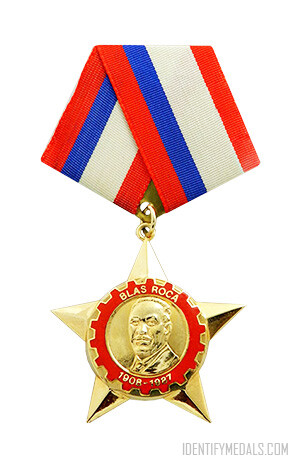
The Order of Blas Roca (Orden Blas Roca) is a prestigious Cuban honor established on July 13, 1988, under Decree-Law No. 105. This award recognizes exceptional leadership and dedication among professional cadres of the Communist Party of Cuba (PCC), reflecting their significant contributions to the advancement of socialism and collective progress.

The Order of Blas Roca underscores the critical role of leadership and responsibility in advancing the goals of socialism. By recognizing individuals who excel in guiding others, taking initiative, and upholding the principles of the Communist Party, the award fosters a culture of excellence and accountability within Cuba’s leadership ranks.

The Order of Blas Roca Criteria

The Order of Blas Roca is conferred on individuals who demonstrate:

  • Outstanding leadership: Exceptional ability to guide and inspire teams, fostering unity and collective success within the Party and other spheres of activity.
  • Dedication to work: An unwavering commitment to their responsibilities, consistently exceeding expectations in their roles.
  • Sense of responsibility: Acting with integrity, accountability, and an exemplary work ethic that reflects the principles of socialism.
  • Contributions to socialism: Maintaining a steadfast and exemplary attitude in promoting and constructing socialist ideals through their professional and personal endeavors.

This honor emphasizes the importance of leadership and dedication as foundational qualities for building and sustaining Cuba’s socialist society. Recipients of the Order of Blas Roca are celebrated as role models who exemplify the qualities of vision, commitment, and integrity necessary for building a just and equitable society. 

Blas Roca Calderío: The Namesake

Blas Roca Calderío (1908–1987) was a prominent Cuban politician, Marxist theorist, and a key figure in the Communist Party of Cuba. As the longtime leader of the Popular Socialist Party, Roca played an instrumental role in the ideological foundation of Cuba’s socialist transformation. He was deeply committed to promoting Marxist principles and aligning them with the Cuban revolutionary movement.

Roca was also a skilled orator and writer, contributing significantly to the formulation of the Cuban Constitution of 1976, which codified the country’s socialist principles. His dedication to the collective good and his unwavering commitment to socialism made him an enduring symbol of revolutionary leadership.

The Order of Félix Varela

The Order of Félix Varela is a prestigious Cuban honor for exceptional contributions to the enrichment and preservation of cultural heritage.

  • Time Period: Post-WW2
  • Institution: 10 December 1979
  • Country: Cuba

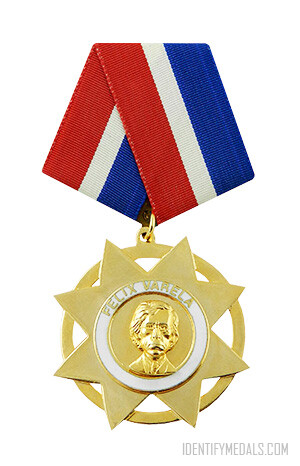
The Order of Félix Varela is a prestigious Cuban honor established on December 10, 1979, under Decree-Law No. 30. Named after the revered Cuban intellectual and Catholic prelate Félix Varela, the award recognizes exceptional contributions to the enrichment and preservation of cultural heritage, both nationally and globally.

The Order of Félix Varela is awarded in two classes, acknowledging varying levels of distinction based on the recipient’s contributions and impact.

The Order of Félix Varela serves as a symbol of Cuba’s commitment to honoring those who enrich the cultural and intellectual life of society. It emphasizes the importance of art, education, and cultural preservation as pillars of national identity and human progress.

The Order of Félix Varela Criteria

The Order of Félix Varela is awarded to:

  • Cuban and foreign citizens: Individuals who have demonstrated extraordinary dedication to promoting cultural values and advancing artistic, intellectual, or educational contributions.
  • Cultural groups: Organizations or collectives whose efforts have significantly influenced the preservation and development of national and universal culture.

Recipients are recognized for their:

  • Outstanding contributions to cultural development: Advancing creative and intellectual endeavors that embody the enduring values of culture.
  • Efforts to preserve universal cultural heritage: Supporting initiatives that safeguard and promote cultural identity, diversity, and artistic expression.
  • Promotion of national identity: Celebrating and preserving the unique cultural heritage of Cuba while fostering a sense of global solidarity.

Félix Varela: The Namesake

Félix Varela (1788–1853) was a prominent Cuban priest, philosopher, educator, and political thinker who profoundly influenced the intellectual and cultural development of Cuba. Often regarded as one of the founding figures of Cuban identity, Varela advocated for social justice, the abolition of slavery, and the education of the Cuban people. His writings and teachings inspired a sense of national pride and self-determination, laying the intellectual groundwork for Cuba’s later struggles for independence.

Varela’s legacy as a champion of both national and universal human values makes him a fitting namesake for this award, which celebrates contributions to the enduring ideals of culture and humanity.