The Order of the 17th of May

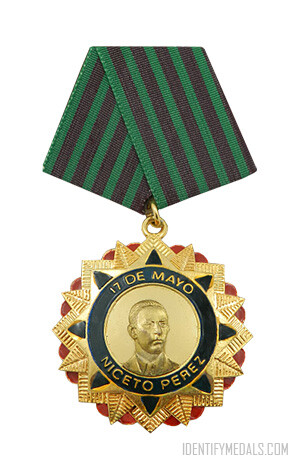
The Order of the 17th of May is a distinguished Cuban honor honoring individuals whose dedication align with the Revolution.

  • Time Period: Post-WW2
  • Institution: 10 December 1979
  • Country: Cuba

The Order of the 17th of May (Orden 17 de Mayo) is a distinguished Cuban honor established on May 24, 1989, under Decree-Law No. 112. This award recognizes exceptional contributions to Cuba’s agricultural sector and the advancement of its national economy, honoring individuals whose dedication and professional achievements align with the principles of the Cuban Revolution.

The Order of the 17th of May highlights Cuba’s recognition of agriculture as a vital component of its national identity and economic sustainability. By honoring those who excel in this sector, the award emphasizes the role of innovation, dedication, and solidarity in achieving food security and economic independence.

This order also serves as a tribute to the struggles of the Cuban peasantry, celebrating the legacy of Niceto Pérez and the collective efforts to create a more just and equitable society. It extends beyond national borders to recognize foreign individuals whose contributions to agriculture embody the ideals of international solidarity and cooperation.

The Order of the 17th of May Criteria

The Order of the 17th of May is conferred upon Cuban and foreign citizens who have demonstrated:

  • Extraordinary merit in agriculture: Making significant contributions to the development, innovation, and productivity of Cuba’s agricultural sector.
  • Support for the national economy: Playing a key role in advancing agricultural practices that bolster the economic well-being of the country.
  • An exemplary professional career: Demonstrating outstanding expertise, commitment, and leadership in agricultural fields or related disciplines.
  • Alignment with revolutionary ideals: Maintaining an attitude and conduct consistent with the values of social justice, equality, and the goals of the Revolution.

Historical Context: The Legacy of May 17

The order commemorates the assassination of Niceto Pérez on May 17, 1946, a revolutionary leader and advocate for the Cuban peasantry. Pérez was a staunch defender of farmers’ rights, actively resisting evictions and exploitation by landowners. His murder by members of the Rural Guard became a symbol of the struggle against oppression and the fight for land reform.

May 17 was later declared National Farmers’ Day in Cuba, underscoring the importance of the agricultural sector in the nation’s history and its role in the Revolution. The date also marks the signing of the Agrarian Reform Law in 1959, a cornerstone of revolutionary policy that redistributed land to the Cuban people and dismantled the exploitative systems of the past.
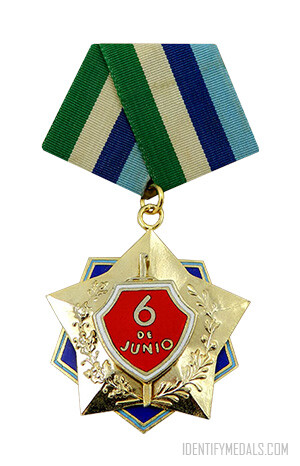
The Order of the 6th of June Medal

The Order of the 6th of June (Orden 6 de Junio) is a prestigious Cuban honor for dedication, bravery, and exceptional achievements.

  • Time Period: Post-WW2
  • Institution: 10 December 1979
  • Country: Cuba

The Order of the 6th of June (Orden 6 de Junio) is a prestigious Cuban honor established on July 13, 1988, under Decree-Law No. 105. This order recognizes the dedication, bravery, and exceptional achievements of members of the Ministry of the Interior (MININT) in their efforts to safeguard the security and stability of the Cuban state.

The order derives its name from the Battle of Guantánamo Bay, fought from June 6 to June 10, 1898, during the Cuban War of Independence and the Spanish-American War. This battle, a significant conflict in the fight for Cuban sovereignty, symbolizes resilience and the struggle for freedom, values that the order seeks to honor in its recipients. By honoring both individual and collective accomplishments, the award fosters a culture of excellence, discipline, and patriotism among those responsible for maintaining internal order.

The Order of the 6th of June is conferred in two classes, reflecting the level of distinction and impact of the recipient’s contributions.

The Order of the 6th of June Criteria

The Order of the 6th of June is awarded to:

  • Active and retired members of the Ministry of the Interior: Honoring individuals who have demonstrated extraordinary merit and dedication in fulfilling their entrusted missions.
  • Units of the Ministry of the Interior: Recognizing collective efforts that have resulted in significant successes in operations or initiatives aimed at protecting the state and maintaining internal order.

Recipients are acknowledged for:

  • Exceptional performance in assigned missions: Successfully accomplishing tasks critical to state security and internal peace.
  • Significant contributions to state security or internal order: Upholding the safety and sovereignty of Cuba through strategic and operational excellence.
  • Relevant successes in their field of work: Achievements that stand out as benchmarks of professionalism, loyalty, and efficiency.

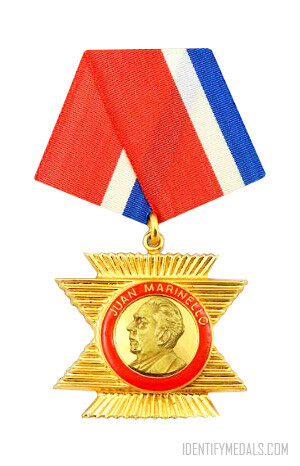
The Order of Juan Marinello

The Order of Juan Marinello is a prestigious Cuban decoration for contributions to ideological, cultural, and artistic development.

  • Time Period: Post-WW2
  • Institution: 10 December 1979
  • Country: Cuba

The Order of Juan Marinello is a prestigious Cuban decoration established on December 10, 1979, under Decree-Law No. 30. Named after the celebrated Cuban intellectual, writer, and politician Juan Marinello, the order honors individuals who have made significant contributions to the ideological, cultural, and artistic development of society.

Juan Marinello Vidaurreta (1898–1977) was a distinguished Cuban writer, scientist, and politician. A leading intellectual of his time, he was deeply committed to promoting culture as a vehicle for revolutionary change. Marinello’s work encompassed literature, philosophy, and social science, and he was a prominent advocate for anti-imperialism, socialism, and the defense of Cuban sovereignty. As a member of the Cuban Communist Party and a significant figure in the cultural and political spheres, Marinello’s legacy is one of intellectual rigor and revolutionary dedication.

The Order of Juan Marinello underscores the importance of cultural and intellectual endeavors in shaping a just and equitable society. It recognizes the power of literature, art, and journalism to influence public opinion, inspire action, and drive the ideological struggle central to Cuba’s revolutionary principles. The recipients of the Order of Juan Marinello are celebrated as cultural and intellectual leaders who contribute to the progress of humanity through their work. 

The Order of Juan Marinello Criteria

The Order of Juan Marinello is conferred on Cuban and foreign citizens who have demonstrated:

  • Excellence in the ideological struggle: Advocating for socialist principles and advancing the fight against reactionary or oppressive ideologies through intellectual or cultural means.
  • Advancements in literature: Producing influential works that enrich Cuban or global literary traditions and contribute to the spread of progressive ideals.
  • Significant contributions to art: Creating impactful art that fosters cultural awareness, inspires revolutionary values, or promotes social justice.
  • Achievements in journalism: Delivering exceptional journalistic work that informs, educates, and mobilizes people in support of revolutionary causes and human progress.

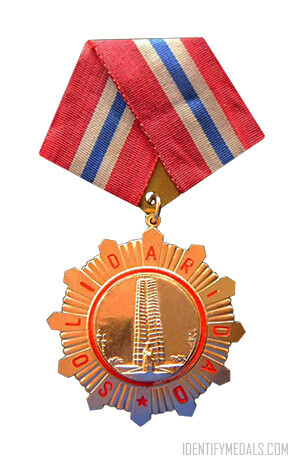
The Order of Solidarity

The Order of Solidarity is a prestigious Cuban decoration for outstanding contributions to justice, equality, and peace.

  • Time Period: Post-WW2
  • Institution: 10 December 1979
  • Country: Cuba

The Order of Solidarity (Orden De la Solidaridad) is a prestigious Cuban decoration established on December 10, 1979, under Decree-Law No. 30. This honor recognizes outstanding contributions by individuals and organizations, both Cuban and foreign, to global struggles for justice, equality, and peace.

The Order of Solidarity represents Cuba’s deep commitment to the ideals of internationalism and collective resistance to oppression. It reflects the revolutionary spirit of solidarity that is central to Cuba’s national identity, honoring those who align with its mission to fight for justice and equality on a global scale.

This award transcends national boundaries, celebrating efforts that contribute to the betterment of humanity. By recognizing individuals and organizations from diverse backgrounds, the Order of Solidarity promotes the interconnectedness of struggles for freedom, equality, and peace.

The Order of Solidarity Criteria

The Order of Solidarity is awarded to Cuban and foreign citizens, as well as organizations, for their exceptional efforts in promoting and defending:

  • The fight against oppression: Confronting imperialism, colonialism, neocolonialism, fascism, racism, and other forms of exploitation and subjugation.
  • Socialist values: Advocating for the construction and consolidation of socialism and the advancement of a fair and equitable society.
  • Peace and independence: Supporting national liberation movements, the struggle for peoples’ independence, and the fight for global peace and coexistence.
  • Democracy and equality: Contributing to the establishment of democratic values and systems, while opposing discrimination and injustice, including racial discrimination.
  • International solidarity: Strengthening cooperation and mutual support across borders in politics, science, and culture to foster unity and understanding among nations.

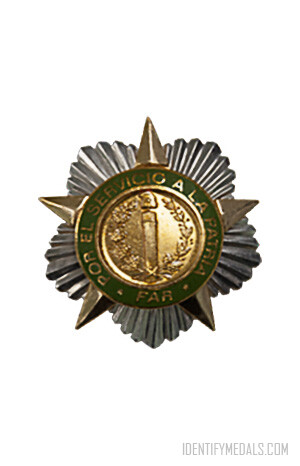
The Order For the Service to the Fatherland in the Revolutionary Armed Forces

This order is a distinguished military honor for exemplary dedication and exceptional service within the Revolutionary Armed Forces (FAR).

  • Time Period: Post-WW2
  • Institution: 10 December 1979
  • Country: Cuba

The Order for the Service to the Fatherland in the Revolutionary Armed Forces (Orden Por el Servicio a la Patria en las Fuerzas Armadas Revolucionarias) is a distinguished military honor established on July 13, 1988, under Decree-Law No. 105. This prestigious order acknowledges exemplary dedication and exceptional service within the Revolutionary Armed Forces (FAR), highlighting the values of loyalty, courage, and commitment to Cuba’s socialist principles.

The Order for the Service to the Fatherland in the Revolutionary Armed Forces is conferred in three classes, each denoting the degree of distinction based on the recipient’s achievements and contributions:

  1. First Class: Reserved for extraordinary and exemplary service that significantly impacts the defense and integrity of the nation.
  2. Second Class: Recognizes notable achievements and dedication in fulfilling military duties.
  3. Third Class: Awarded for consistent and commendable service in support of the socialist homeland.

The Order's Criteria

This order is awarded to members of the Revolutionary Armed Forces who:

  • Demonstrate extraordinary merit in the performance of their military duties.
  • Excel in defending the sovereignty, independence, and territorial integrity of the socialist homeland.
  • Uphold and promote the revolutionary ideals of dedication, discipline, and resilience while serving in the armed forces.

The order not only honors individual excellence but also reinforces the collective commitment of the FAR to protect Cuba’s sovereignty and socialist achievements.

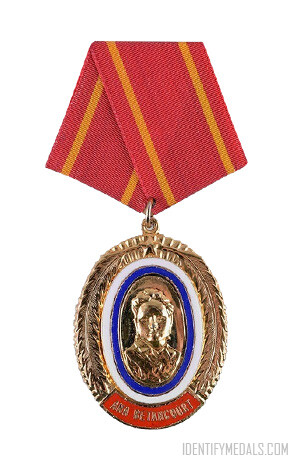
The Order of Ana Betancourt

The Order of Ana Betancourt is a distinguished Cuban decoration that celebrates the achievements of exceptional women.

  • Time Period: Post-WW2
  • Institution: 10 December 1979
  • Country: Cuba

The Order of Ana Betancourt is a distinguished Cuban decoration established on November 28, 1974, and later redesigned and ratified under Decree-Law No. 30 on December 10, 1979. This honor celebrates the achievements of exceptional women who have contributed significantly to revolutionary progress, societal advancement, and the fight for justice.

Ana Betancourt (1832–1901) was a pioneering figure in Cuba’s fight for independence from Spain. A staunch advocate for women’s rights and freedom, she boldly declared that women should not only support the struggle for liberation but also claim their rightful place in the nation’s political and social spheres. During the Ten Years’ War (1868–1878), Betancourt played a key role in the revolutionary movement, using her leadership and vision to inspire others. Her legacy symbolizes the strength and resilience of Cuban women in the pursuit of justice and equality.

The Order of Ana Betancourt Criteria

The Order of Ana Betancourt is awarded to Cuban women, both within Cuba and internationally, who have:

  • Excelled in the revolutionary and political struggle: Demonstrating exceptional leadership and dedication to advancing the goals of the Cuban Revolution and socialist ideals.
  • Achieved significant contributions in scientific work: Driving innovation and discovery in fields that benefit society.
  • Shown distinction in artistic creation: Producing works of cultural and aesthetic value that inspire and enrich the Cuban people.
  • Succeeded in industrial and professional endeavors: Contributing to the country’s economic and industrial development through dedication and excellence.
  • Advocated for a just peace: Actively working to achieve fairness and justice for oppressed peoples worldwide.

Recipients of the order embody the values of courage, determination, and commitment to building a just and equitable society.

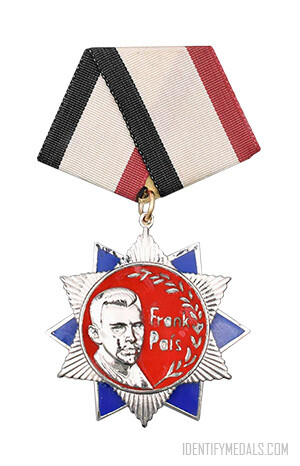
The Order of Frank Pais

The Order of Frank País is a prestigious Cuban award that recognizes exceptional contributions to the field of education.

  • Time Period: Post-WW2
  • Institution: 10 December 1979
  • Country: Cuba

The Order of Frank País is a prestigious Cuban award established on December 10, 1979, under Decree-Law No. 30, and later amended on March 27, 1982, under Decree-Law No. 53. This honor recognizes exceptional contributions to the field of education, reflecting Cuba’s commitment to knowledge, cultural development, and revolutionary ideals.

Frank País (1934–1957) was a Cuban revolutionary leader and martyr, known for his dedication to the Cuban Revolution and his role in organizing resistance against the Batista regime. As a trained teacher, País was deeply committed to education and believed in its transformative power to achieve social justice and equality. He played a key role in the urban underground movement, organizing resources and strategies that significantly contributed to the success of the revolution. His tragic assassination at the young age of 22 made him a symbol of courage and devotion to the revolutionary cause.

The Order of Frank Pais Criteria

The Order of Frank País is awarded to Cuban and foreign citizens who:

  • Exhibit extraordinary merit in education: Demonstrating excellence in teaching, curriculum development, or educational leadership.
  • Contribute selflessly to citizen education: Supporting comprehensive and transformative education that empowers individuals and strengthens societal values.
  • Advance the development of education: Making innovative and valuable contributions to educational systems, policies, or practices, both nationally and internationally.

Recipients of this order are recognized for their dedication to education as a means of fostering equality, enlightenment, and revolutionary consciousness.

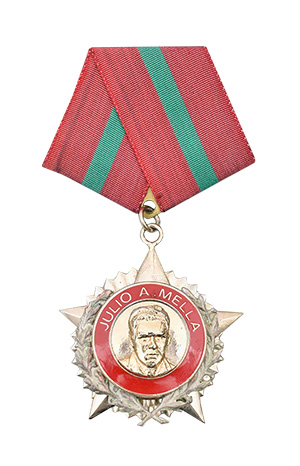
The Order of Julio Antonio Mella

The Order of Julio Antonio Mella is a Cuban honor that recognizes outstanding contributions by youth who embody revolutionary ideals.

  • Time Period: Post-WW2
  • Institution: 10 December 1979
  • Country: Cuba

The Order of Julio Antonio Mella is a distinguished Cuban honor established on December 10, 1979, under Decree-Law No. 30. Named after Julio Antonio Mella, a revolutionary activist and founder of the Cuban Communist Party, this order recognizes outstanding contributions by youth who embody the ideals of commitment, excellence, and revolutionary spirit.

Julio Antonio Mella (1903–1929) was a prominent Cuban revolutionary, intellectual, and co-founder of the Cuban Communist Party. Known for his internationalist vision, Mella championed workers’ rights, educational reform, and anti-imperialism. Despite his untimely assassination, his legacy endures as a symbol of youthful determination and revolutionary fervor. He remains an inspiration to generations of Cubans committed to social change and progress.

The Order of Julio Antonio Mella serves as a recognition of the vital role young people play in building and sustaining revolutionary societies.

The Order of Julio Antonio Mella Criteria

The Order of Julio Antonio Mella is awarded to young Cuban and foreign citizens who have demonstrated:

  • Excellence in work, study, and research: Exceptional dedication and achievements that contribute to personal growth and the advancement of society.
  • Artistic and sporting achievements: Outstanding contributions to cultural and athletic fields, inspiring others and showcasing the potential of youth.
  • Advocacy for youth rights: Active participation and leadership in movements that promote the empowerment and rights of young people.
  • Contributions to revolutionary ideals: Commitment to the struggle for justice, equality, and socialist principles.

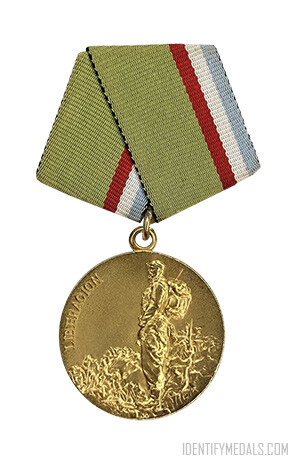
The Order of the Liberation War Combatant

The Order of the Liberation War Combatant is a prestigious Cuban decoration for individuals who demonstrated extraordinary dedication.

  • Time Period: Post-WW2
  • Institution: 10 December 1979
  • Country: Cuba

The Order of the Liberation War Combatant is a prestigious Cuban decoration established on December 10, 1979, under Decree-Law No. 30. This order pays tribute to individuals who demonstrated extraordinary dedication and courage during Cuba’s revolutionary struggle, contributing significantly to the victory of the Cuban Revolution.

The Order of the Liberation War Combatant is conferred in two classes, recognizing varying levels of contribution and significance of the recipient’s role in the liberation movement.

This order serves to honor the courage, sacrifice, and dedication of those who fought for Cuba’s independence from the Batista regime. It celebrates the unity and resilience of the combatants who, through their efforts, laid the foundation for the establishment of a socialist Cuba.

Additionally, the award symbolizes the enduring gratitude of the Cuban state and people toward those who stood on the frontlines of the revolution or supported its cause through exceptional acts of bravery or leadership.

The Order of the Liberation War Combatant Criteria

The order is awarded to:

  • Combatants of the Rebel Army: Individuals who actively served in the fronts, columns, or units of the Rebel Army during the liberation war.
  • Exceptional contributors to the insurrectionary struggle: Individuals, even outside the Rebel Army, who played a prominent and impactful role in advancing the goals of the revolution.

Recipients must have:

  • Maintained an exemplary attitude: Displaying unwavering commitment and adherence to revolutionary ideals.
  • Demonstrated consistency with revolutionary principles: Upholding the values of socialism and liberation throughout their actions and lives.

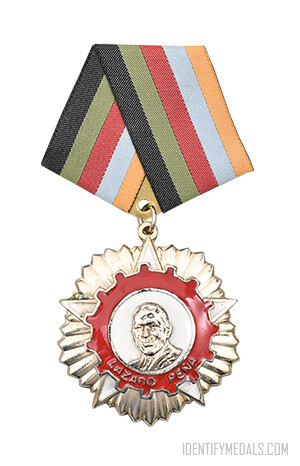
The Order of Lázaro Peña

The Order of Lázaro Peña is a prestigious Cuban award that recognizes extraordinary contributions to labor and national development.

  • Time Period: Post-WW2
  • Institution: 10 December 1979
  • Country: Cuba

The Order of Lázaro Peña is a prestigious Cuban award established on December 10, 1979, under Decree-Law No. 30. Named in honor of Lázaro Peña, a prominent labor leader and advocate for workers’ rights, the order recognizes extraordinary contributions to labor and national development, reflecting Cuba’s emphasis on the dignity and value of work.

The Order is awarded in three classes, each denoting the level of distinction based on the recipient’s contributions and impact.

The Order of Lázaro Peña Criteria

The Order of Lázaro Peña is conferred on both Cuban and foreign citizens who demonstrate:

  • Outstanding achievements in labor: Recognizing exceptional productivity, innovation, or commitment in their professional fields.
  • Significant contributions to national development: Supporting Cuba’s economic growth, scientific progress, cultural enrichment, and artistic excellence.
  • Advancements in science and technology: Rewarding efforts that drive innovation and improve the quality of life.
  • Promotion of culture and art: Celebrating those who elevate cultural and artistic expression as vital components of societal progress.

Lázaro Peña: The Namesake

Lázaro Peña González (1911–1974) was a renowned Cuban and international labor activist. Known as the “Captain of the Working Class,” he was instrumental in the development of Cuba’s trade union movement, advocating for workers’ rights, fair wages, and social justice. As a leading figure in the Cuban Confederation of Workers (CTC) and a staunch supporter of socialism, Lázaro Peña’s legacy embodies the values of hard work, solidarity, and dedication to the well-being of the working class.