



Ten Stories of Heroism That Earned Americans the Purple Heart Medal

Learn about ten American people awarded a Purple Heart for being wounded or killed due to enemy action while serving in the U.S Armed Forces.

Learn about ten American people awarded a Purple Heart for being wounded or killed as a result of enemy action while serving in the United States Armed Forces. Explore stories from World War I, World War II, the Vietnam War, and more. See pictures and find out about medals, too.

What is the Purple Heart?

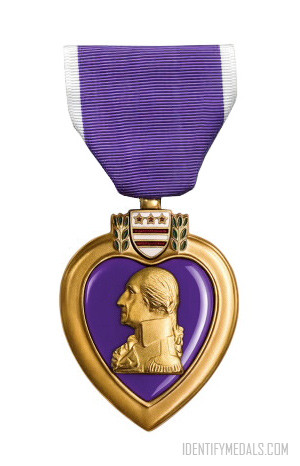
The Purple Heart medal is a United States military decoration awarded to members of the U.S. Armed Forces who have been wounded or killed in combat.

The medal was first created by General George Washington in 1782 and was known as the “Badge of Military Merit.” It was revived in 1932 on the 200th anniversary of Washington’s birth and was renamed the Purple Heart.

The Purple Heart is awarded to military personnel who have been injured or killed as a result of enemy action while serving in the U.S. Armed Forces. It is also awarded to those who have been injured or killed as a result of friendly fire or while a prisoner of war.

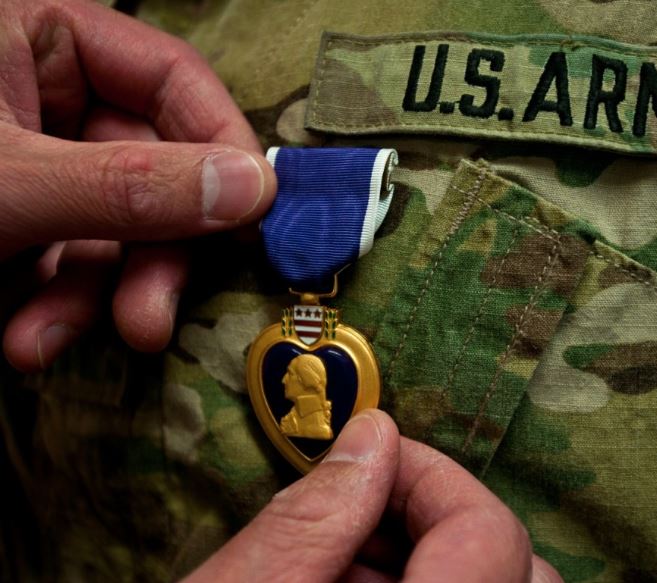
The Purple Heart is a heart-shaped medal made of purple enamel and bronze. It features a bust of George Washington and is suspended from a purple ribbon. Recipients of the Purple Heart also receive a citation signed by the President of the United States. Theis is a highly respected and prestigious award and a symbol of sacrifice and heroism in service to the country.

Ten Purple Heart Stories

The Purple Heart is one of the most esteemed military awards of the United States. Over the years, countless American servicemen and women have received this prestigious medal for their heroic actions in combat.

From World War II to the ongoing conflicts in the Middle East, the Purple Heart has been awarded to those who have made the ultimate sacrifice in the service of their country.

Here are ten Americans who have received the Purple Heart for their bravery and sacrifice on behalf of the United States.

John F. Kennedy

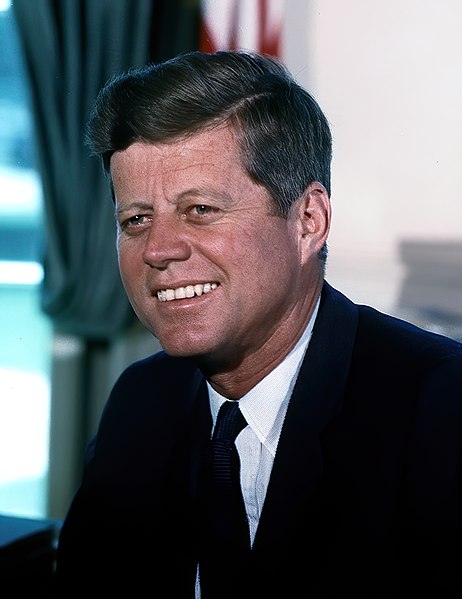
John F. Kennedy. Oval Office portrait, 1963. Source: Wikipedia.

The former U.S. President received the Purple Heart for injuries sustained during World War II.

John F. Kennedy received the Purple Heart medal for injuries he sustained while serving as a naval officer during World War II.

In August 1943, Kennedy was serving as the commander of a patrol torpedo boat in the Solomon Islands when his boat was struck by a Japanese destroyer. The collision caused an explosion that threw Kennedy and several other crew members into the water. Kennedy suffered injuries to his back, and he was later rescued by a U.S. Navy destroyer.

After recovering from his injuries, Kennedy was transferred to other duties and eventually returned to the United States. He received the Purple Heart medal for his injuries in 1944, along with other decorations for his service. 

Audie Murphy

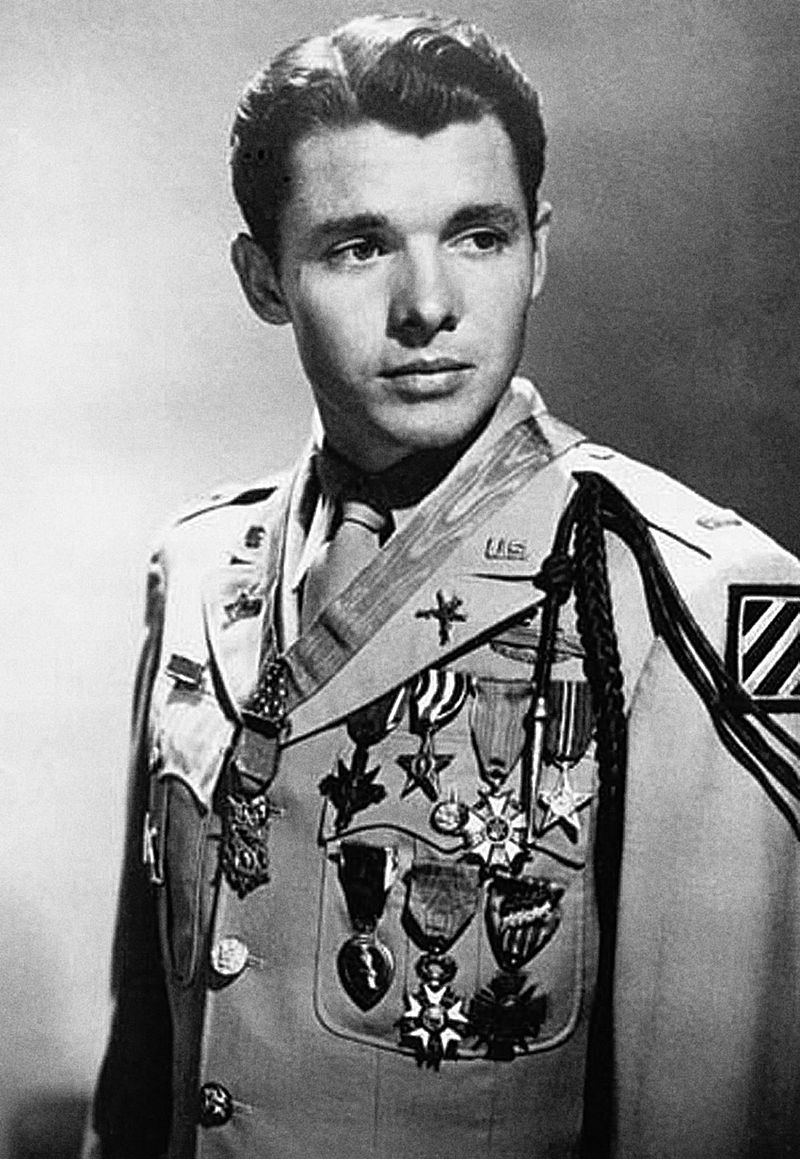
Audie Murphy photographed in 1948 wearing the U.S. Army khaki "Class A" (tropical service) uniform with full-size medals. Source: Wikipedia.
Audie Murphy photographed in 1948. Source: Wikipedia.

The most decorated American soldier of World War II, he received the Purple Heart for injuries sustained in combat.

Audie Murphy, one of the most decorated American soldiers of World War II, received the Purple Heart medal for injuries he sustained during combat in Italy. In 1943, Murphy was serving as a rifleman with the 3rd Infantry Division in Italy when he was wounded in action. He was hit by a German sniper’s bullet and suffered a leg injury.

Despite his injury, Murphy continued to fight and went on to earn numerous other decorations for his service, including the Medal of Honor, which is the highest military award in the United States. After the war, Murphy went on to become a successful actor and wrote a memoir about his wartime experiences. The Purple Heart is awarded to members of the U.S. Armed Forces who have been wounded or killed in combat, and is one of the most esteemed military decorations of the United States.

Tammy Duckworth

Tammy Duckworth Official portrait, 2017. Source: Wikipedia.

U.S. Senator and former Army helicopter pilot lost both legs in combat during the Iraq War.

Tammy Duckworth is a former Army helicopter pilot who received the Purple Heart medal for injuries she sustained while serving in combat during the Iraq War. In 2004, while flying a mission over Iraq, Duckworth’s helicopter was hit by a rocket-propelled grenade. The explosion caused severe damage to the aircraft and resulted in Duckworth losing both of her legs and partial use of her right arm.

Despite her injuries, Duckworth continued to serve in the Army and eventually retired as a Lieutenant Colonel. She later went on to serve as the Director of the Illinois Department of Veterans Affairs and was elected to the U.S. House of Representatives and the U.S. Senate.

Pat Tillman

Pat Tillman in 2003 as a specialist. Source: Wikipedia.

The former NFL player joined the Army after 9/11 and was killed in action in Afghanistan.

Pat Tillman received the Purple Heart medal posthumously for injuries he sustained while serving in combat in Afghanistan. Tillman was a former NFL player who joined the U.S. Army in 2002 after the 9/11 terrorist attacks. He served with the 75th Ranger Regiment and was deployed to Iraq and Afghanistan.

In April 2004, Tillman was killed in action during a firefight in Afghanistan. He was initially believed to have been killed by enemy fire, but it was later revealed that he had been killed by friendly fire. Tillman was posthumously awarded the Purple Heart medal for injuries he sustained during the firefight.

Colin Powell

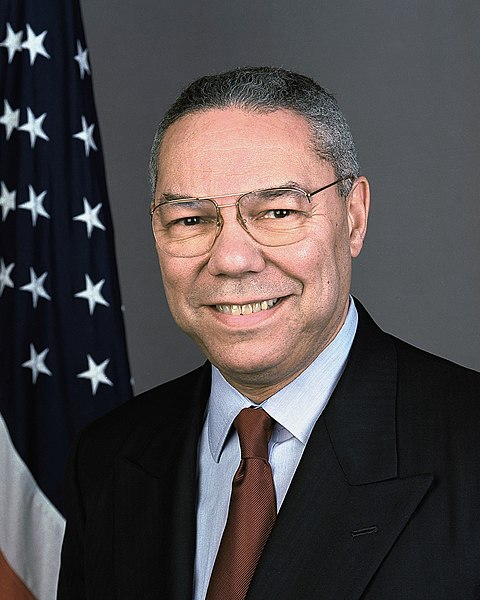
Colin Powell, Official portrait, 2001. Source: Wikipedia.

The former U.S. Secretary of State and retired four-star general received the Purple Heart for injuries sustained during the Vietnam War.

General Colin Powell received the Purple Heart medal for injuries he sustained during his service in the Vietnam War. In 1963, Powell was serving as a Lieutenant in the U.S. Army and was deployed to Vietnam. He was assigned to the 23rd Infantry Division and was serving as an advisor to the South Vietnamese Army.

During a helicopter crash in 1963, Powell suffered a broken ankle and was awarded the Purple Heart for his injuries. Powell went on to have a long and distinguished military career, eventually rising to the rank of four-star General and serving as Chairman of the Joint Chiefs of Staff. He later served as Secretary of State under President George W. Bush. 

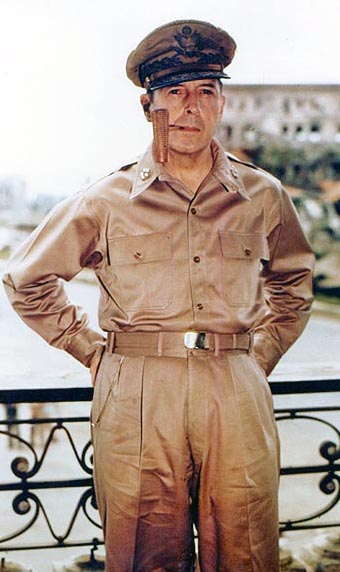
Douglas MacArthur

General of the Army Douglas MacArthur smoking his corncob pipe, probably at Manila, Philippine Islands, 2 August 1945.
General Douglas MacArthur smoking his corncob pipe in 1945. Source: Wikipedia.

The five-star general received the Purple Heart for injuries sustained during World War I.

General Douglas MacArthur received the Purple Heart medal for injuries he sustained during his service in World War II. MacArthur was serving as the commander of the United States Army Forces in the Far East (USAFFE) when Japan launched a surprise attack on the Philippines in December 1941.

During the defense of the Philippines, MacArthur suffered a shrapnel wound to his cheek from a Japanese bombing raid. He was subsequently awarded the Purple Heart for his injuries. MacArthur went on to lead Allied forces in the Pacific Theater and played a significant role in the eventual Allied victory over Japan. 

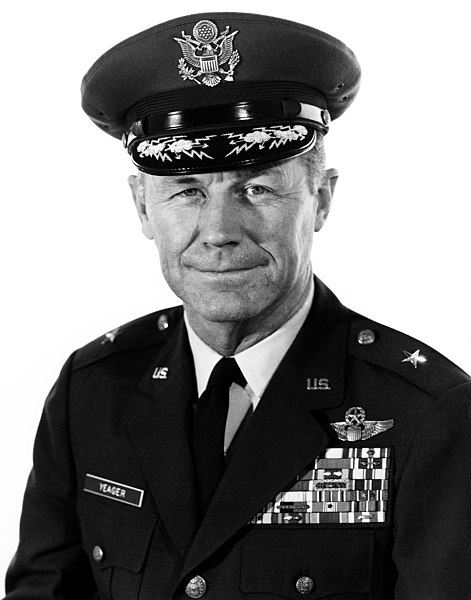
Chuck Yeager

Brigadier General Chuck Yeager. Source: Wikipedia.

The retired Air Force Brigadier General and test pilot received the Purple Heart for injuries sustained during World War II.

General Chuck Yeager, a renowned pilot and test pilot, did not receive the Purple Heart medal. The Purple Heart is awarded to members of the U.S. Armed Forces who have been wounded or killed in combat. While Yeager served in the military and flew numerous combat missions during World War II, he did not receive any combat-related injuries that would qualify him for the Purple Heart.

However, Yeager did receive numerous other military awards and decorations for his service, including the Distinguished Service Medal, the Silver Star, and the Legion of Merit.

Oliver North

Oliver North in 2017, wearing his Silver Star medal ribbon. Source: Wikipedia.

The retired Marine Corps Lieutenant Colonel received the Purple Heart for injuries sustained during the Vietnam War.

Oliver North, a retired U.S. Marine Corps Lieutenant Colonel, received the Purple Heart medal for injuries he sustained during his service in the Vietnam War. In 1968, North was serving as a Platoon Commander in the 3rd Battalion, 4th Marines, when he was seriously injured by shrapnel during an enemy mortar attack.

North was evacuated to a military hospital for treatment and was subsequently awarded the Purple Heart for his injuries. North went on to have a long and controversial career in the military and politics, serving as a National Security Council staff member during the Reagan administration and becoming embroiled in the Iran-Contra scandal. The Purple Heart is awarded to members of the U.S. Armed Forces who have been wounded or killed in combat, and is one of the most esteemed military decorations of the United States.

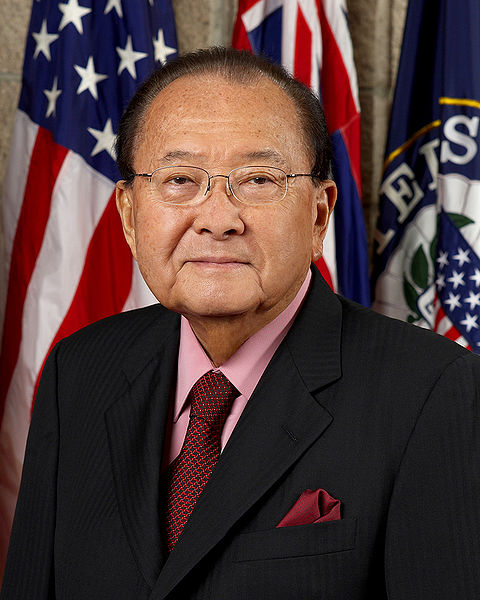
Daniel Inouye

Daniel Inouye Official portrait, 2008. Source: Wikipedia.

The former U.S. Senator and World War II veteran received the Purple Heart for injuries sustained during combat in Italy.

Senator Daniel Inouye received the Purple Heart medal for injuries he sustained while serving in the U.S. Army during World War II. In 1945, Inouye was serving as a platoon leader with the 442nd Regimental Combat Team, a unit made up entirely of Japanese American soldiers.

During a battle in Italy, Inouye was shot in the stomach and had to crawl to a machine gun nest to continue fighting. He was then hit by a grenade that destroyed his right arm. Despite his severe injuries, Inouye continued to fight and led his platoon to victory.

Inouye was evacuated to a military hospital for treatment and was subsequently awarded the Purple Heart for his injuries. He later received numerous other military honors, including the Distinguished Service Cross, the Bronze Star, and the Medal of Honor.

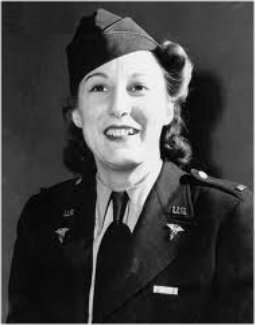
Cordelia E. Cook

First Lieutenant Cordelia Cook in 1945. Source: Wikipedia.

The combat nurse in the U.S. Army Nurse Corps was the first woman in the army to receive both the Bronze Star Medal and the Purple Heart.

Cordelia E. Cook was a member of the U.S. Army Nurse Corps and was serving in the Philippines when Japanese forces attacked her field hospital. She was the first woman to receive the Purple Heart medal, which she received for injuries she sustained during a World War II bombing raid. 

During the attack, Cook was hit by shrapnel and suffered severe injuries to her hands and legs. Despite her injuries, she continued to treat wounded soldiers until the attack was over.

Cook was evacuated to a military hospital for treatment and was subsequently awarded the Purple Heart for her injuries. She went on to receive numerous other military honors for her service, including the Asiatic-Pacific Campaign Medal and the World War II Victory Medal.

The New York City Fire Department Medal, Its History, and Recipients

The N.Y. Fire Department Medal (James Gordon Bennett, now Chief Peter J. Ganci) is awarded for valor above and beyond the call of duty.
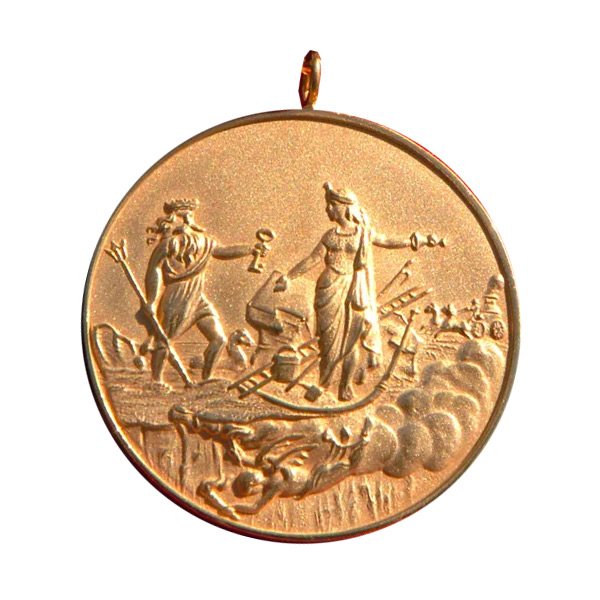
The N.Y. Fire Department Medal (formerly known as James Gordon Bennett medal and renamed Chief Peter J. Ganci medal in 2020) is awarded for valor above and beyond the call of duty. It is considered one of the highest honors in the New York City Fire Department and akin to a Medal of Honor for the fire service.

A Short History of the N.Y. Fire Department

The New York City Fire Department (FDNY) has a long and storied history, dating back to the early 18th century.

Let’s quickly go through the history of the New York City Fire Department. In 1648, New Amsterdam (which later became New York City) established its first fire prevention regulations, requiring that all chimneys be made of stone or brick, and, in 1731, the first volunteer fire company (the “Union Volunteer Fire Company”) was formed. The first official fire department, though, was established in 1798 by the New York City Common Council. In 1898, the five boroughs of New York City (Manhattan, Brooklyn, Queens, the Bronx, and Staten Island) were consolidated into a single city, and the FDNY became the official fire department for the entire city.

Today, the FDNY is one of the largest and most respected fire departments in the world, with over 10,000 uniformed firefighters and more than 200 firehouses serving the five boroughs of New York City.

The Chief Peter J. Ganci Medal (Formerly James Gordon Bennett)

For 150 years, the New York City Department’s highest honor was the James Gordon Bennett Medal, which was given to firefighters who had shown valor above and beyond the call of duty. 

This medal was not named after a firefighter but a public servant who gave the award to men who had saved his upstate home from a blaze in 1869. However, after his racist and segregationist views on the New York Herald (of which he was publisher), the medal changed its name to that of Chief Peter J. Ganci.

Ganci was the highest-ranking uniformed member of the New York Fire Department to be killed in the September 11 terror attacks of 2001. 

The New York City Police Department Medals and Awards

The New York City Police Department presents several medals to its members for meritorious service. The highest award is the Medal of Honor.
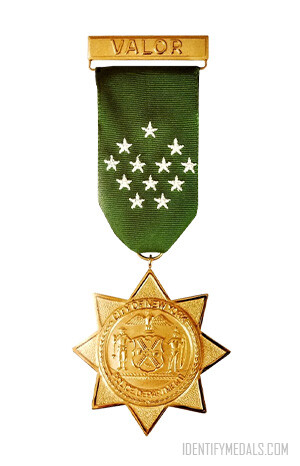
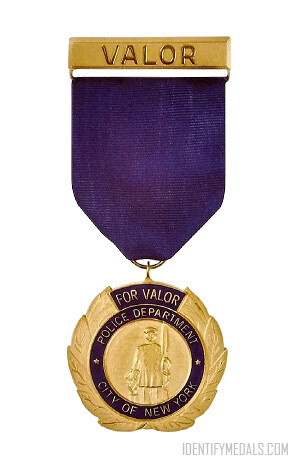
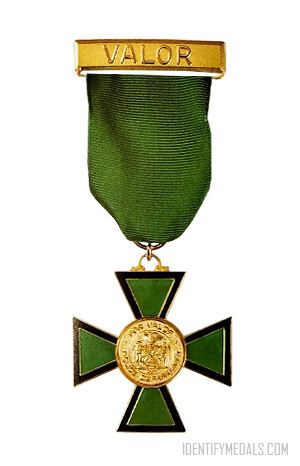
The New York City Police Department presents medals to its members for meritorious service. These include (in highest to lower precedence) the Medal of Honor, Police Combat Cross, and Medal of Valor. These medals are awarded for individual acts of extraordinary bravery and heroism. Here are the New York City Police Department medals (you can click on them to see more details):

A Short History of the NYPD and its Medals

The New York City Police Department (NYPD) is the primary law enforcement agency within the City of New York. The NYPD was established on May 23, 1845, replacing an old night watch system, and is the largest and one of the oldest police departments in the country. The NYPD employs around 55,000 people, including almost 35,000 uniformed officers.

The NYPD has a broad array of specialized services, including the Emergency Service Unit, air support, bomb squad, counter-terrorism, criminal intelligence, anti-gang, anti-organized crime, narcotics, public transportation, and public housing units. 

I made this  shortvideo to explain how each medal is awarded (keep scrolling to learn more):

The NYPD Medal of Honor

The highest honor bestowed by the NYPD, the Medal of Honor is awarded to officers who demonstrate extraordinary bravery in the face of imminent danger to their own lives. This medal is typically awarded to officers who display exceptional courage and valor while confronting armed assailants or during life-threatening situations. Recipients of the Medal of Honor are recognized for their selfless acts of heroism and their unwavering commitment to protecting the lives of others.

The Police Combat Cross

The Police Combat Cross is awarded to officers who demonstrate exceptional courage and valor in the line of duty, particularly in situations involving an armed confrontation with a dangerous suspect. Recipients of this medal have displayed extraordinary bravery and resourcefulness in the face of imminent danger, often risking their own lives to protect the lives of others. The Police Combat Cross is a symbol of the NYPD’s appreciation for the bravery and dedication of its officers in the most challenging and dangerous situations.

The NYPD Medal for Valor

The Medal for Valor is awarded to officers who demonstrate conspicuous bravery and heroism in the performance of their duties. Recipients of this medal have displayed exceptional courage and selflessness in the face of danger, often risking their own safety to protect the lives of others or to apprehend dangerous criminals. The Medal for Valor is a testament to the extraordinary dedication and bravery of NYPD officers in protecting the communities they serve.

The NYPD Badges

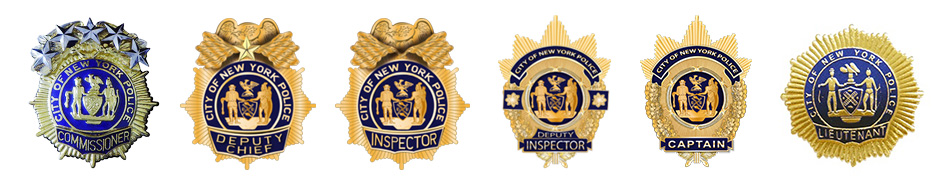
Badges or “shields of the NYPD represent different ranks. Every rank has a different design (except for “police officer” and “probationary police officer”). All sworn members of the NYPD have their ID card photos taken against a red background (civilian employees’ photos are taken against a blue background).

Badges of the New York City Police Department

NYPD Ranks and the Medals

The New York City Police Department (NYPD) employs a structured rank system that organizes its personnel and defines the chain of command. This rank hierarchy also relates to the awarding of prestigious departmental honors such as the Medal of Honor, Police Combat Cross, and Medal of Valor.

  • All Ranks Eligible: Officers of all ranks are eligible for these awards. The acts of bravery and heroism that qualify someone for an award are not confined to a particular rank. However, higher-ranking officers may be involved in more strategic roles during critical incidents.
  • Recognition of Heroism: These awards are a testament to the heroism of NYPD officers across the rank structure. Whether it’s a police officer on patrol, a detective investigating a crime, or a sergeant leading a team, acts of exceptional bravery can occur at any level.
  • Promotion and Recognition: Receiving one of these prestigious awards can enhance an officer’s career, potentially leading to promotions and greater responsibilities within the department. Heroic acts and the recognition that follows underscore an officer’s commitment to duty and valor.

The Meritorious Police Duty (MPD) Bars

The Meritorious Conduct Board reviews the cases involving particularly meritorious
service and makes recommendations for proper recognition of outstanding acts. The MPD Bars are:

Honorable Mention

Honorable Mention

The Honorable Mention (displayed wearing the MPD medal with a silver star in the middle) is awarded for an act of extraordinary bravery intelligently performed in the line of duty at imminent and personal danger to life.

Exceptional Merit

The Exceptional Merit (displayed wearing the MPD medal with a green star in the middle) is awarded for an act of bravery intelligently performed involving personal risk to life.

Commendation or Commendation—Integrity

Commendation or Commendation—Integrity

The Commendation or Commendation—Integrity (displayed wearing the MPD medal with a bronze star in the middle) is awarded for grave personal danger in the performance of duty, or a highly creditable, unusual police accomplishment.

Commendation—Community Service

Commendation—Community Service

The Commendation—Community Service (displayed wearing the MPD medal with a blue star in the middle) is awarded for an act which demonstrates devotion to Community service or an idea implemented that improves conditions within a Community.

Meritorious Police Duty

Meritorious Police Duty

The Meritorious Police Duty (MPD medal with no star in the middle) is awarded for an act of intelligent and valuable police service demonstrating special faithfulness or perseverance, or highly creditable acts of police service over a period of time.

Other NYPD Awards

Excellent Police Duty (EPD)

Excellent Police Duty (EPD)

The Excellent Police Duty (green and white bar with gold vertical bars) is awarded for an intelligent act materially contributing to a valuable accomplishment, or submission of a device or method adopted to increase efficiency in an administrative or tactical procedure.

Unit Citation

Unit Citation

The Unit Citation (medium blue bar) is awarded to a specific unit or precinct for outstanding accomplishments.

Law Enforcement Purple Heart

Purple Shield

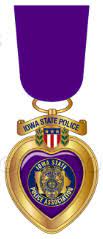
The department awards a Purple Shield to those injured or killed in the line of duty.

Distinguished Service Medal

The department also awards the Distinguished Service Medal posthumously to members of the service who suffer death as a result of illnesses associated with duty performed under unusual hazard or demand. It was first awarded in 2008.

Other Commemorative Medals

Various commemorative medals, unit citations, air crew wings, and others have also been authorized for wear:

  • American Flag Breast Bar: May be worn by any NYPD officer. When worn, it is affixed above any other medal.
  • World Trade Center Breast Bar: Once only reserved to be worn by any NYPD officer who was in active service during, or worked details related to the follow up on, the September 11 attacks, it has been updated to allow any NYPD Police Officer, at their discretion, to wear the bar in honor and remembrance. When worn, it is affixed just below the American Flag Breast Bar and above any other medal.
  • Firearms Proficiency Bar: May be worn by any NYPD officer who has been certified or recertified as an expert shooter with their police firearm. When worn, it is affixed just above the shield and below any other medal.

Find NYPD Medals Online

Right Now on eBay 
Clicking a link to eBay may result in a referral commission being paid if a purchase is made.
Loading...

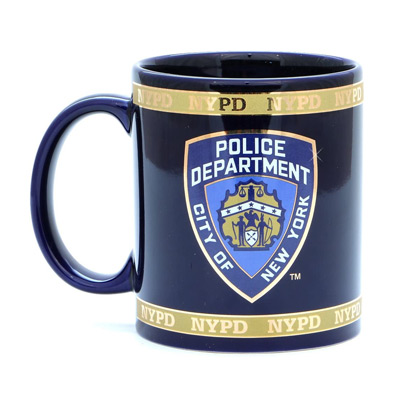
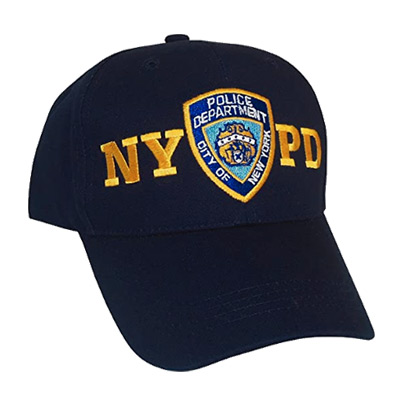
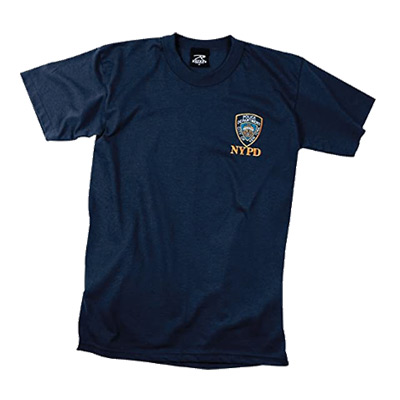
NYPD Gift Ideas

The following NYPD products are Officially Licensed. As an Amazon Affiliate, I get a percentage of the sale if you make a purchase; however, the cost is the same for you. This helps me maintain the site running.

The Women Airforce Service Pilots (WASP) And Their Congressional Gold Medal

All about this medal, created in 1977 to recognize the service of the Women Airforce Service Pilots who flew military aircraft during WW2.
Learn about the Women Airforce Service Pilots who flew military aircraft during WW2 – and the medal they were awarded for their service, record, and revolutionary efforts at a ceremony in the Capitol on March 10, 2010. 

Who Were the Women Airforce Service Pilots?

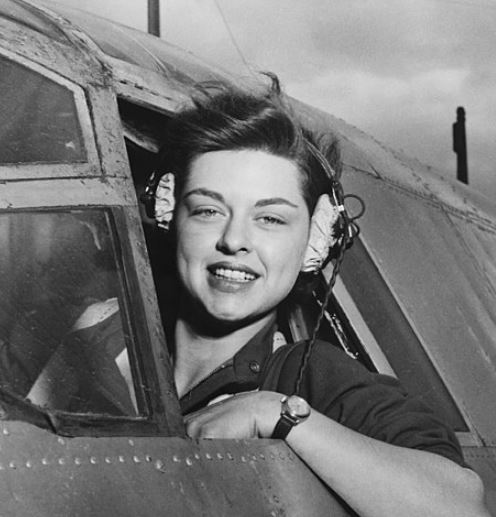
The Women Airforce Service Pilots (WASPs) were a group of female civilian pilots recruited to fly military aircraft during World War II. The program was established in 1942 as a way to free up male pilots for combat duty, and over 1,000 women ultimately served in the program.

The WASPs flew a variety of aircraft, including fighter planes, trainers, and bombers, and were tasked with a range of duties, including ferrying aircraft, conducting test flights, and training male pilots.

Despite their significant contributions to the war effort, the WASPs faced discrimination and opposition from some male pilots and military leaders.

They were not granted military status until 1977, and were not eligible for military benefits until 1979. Despite these challenges, the WASPs paved the way for future generations of female military pilots and helped to change the perception of women’s roles in aviation.

The WASP Congressional Gold Medal

On March 10, 2010, the American Senate and House of Representatives recognized and awarded the WASPs a medal for their service (Public Law 111-40). This medal (Congressional Gold Medal, Women Airforce Service Pilots) is awarded to an individual or group who performs an outstanding deed or act of service to the security, prosperity, and national interest of the United States. 

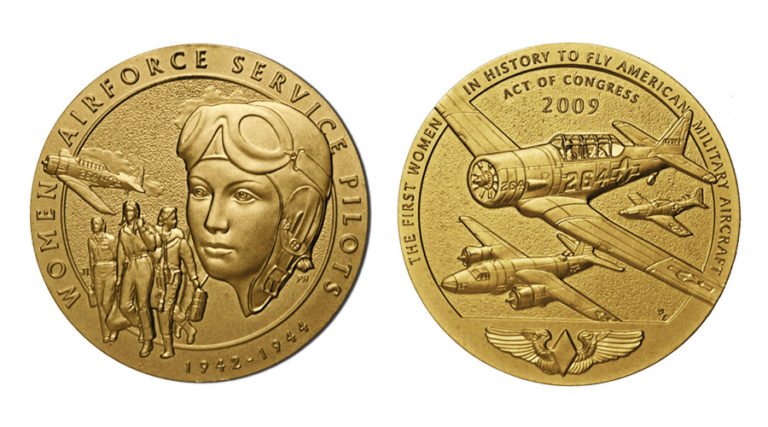
This is what the medal looks like:

The WASP Congressional Gold Medal - Obverse and Reverse

The WASP Congressional Gold Medal Design

The medal was designed and sculpted by U.S. Mint Sculptor-Engraver Don Everhart.

The obverse of the WASP Congressional Gold Medal features the portrait of a Women Airforce Service Pilot and three female figures with uniforms walking towards an aircraft. Surrounding the design is the inscription “Women Airforce Service Pilots” and “1942-1944”. 

The reverse of the medal depicts three aircraft, which symbolize the types that were flown by WASPs: Fighter planes, trainers, and bombers. The inscription on the edge reads “The first women in history to fly American military aircraft” and “Act of Congress 2009”. 

Where to See The WASP Congressional Gold Medal

This object is on display in the Boeing Aviation Hangar at the Smithsonian – Steven F. Udvar-Hazy Center in Chantilly, VA.

Why Are People Awarded Medals? Soldiers and Their Heroic Actions

Soldiers are awarded medals for many reasons, including bravery, outstanding achievements, and service. Here’s how this all works.

Soldiers are awarded medals for a variety of reasons. For instance, military medals can be given to recognize and honor someone’s outstanding achievements, bravery, and service to their country. They can also represent acts of valor, such as risking one’s life to save others or for exceptional performance of duty during combat or other military operations.

In this article, we’ll go over the main reasons why a soldier might be awarded a military medal. I will also include a few examples of opportunities in which heroic acts were recognized. 

Main Reasons Why Soldiers Are Awarded Medals

As I mentioned above, some of the reasons why soldiers can be awarded military medals are to recognize achievements, bravery, or service. In some cases, they can also be used to honor those who have completed a number of years in the force or as a way to motivate and inspire others to strive for excellence. Let’s go through each of these in some more detail, shall we?

Medals Awarded for Acts of Bravery

Military medals are awarded for acts of bravery when a soldier demonstrates exceptional courage, selflessness, and heroism in the face of danger. These acts of bravery can occur during combat, in the line of duty, or in other situations where a soldier’s actions significantly impact the mission or the safety of others.

To receive a medal for an act of bravery, a soldier must usually meet certain criteria established by the military branch and the specific medal being awarded. For example, they must demonstrate exceptional courage and bravery in the face of danger, risking their own life to save others or performing actions that go above and beyond the call of duty.

The process for awarding medals for acts of bravery typically involves a review of the circumstances surrounding the act, including statements from witnesses and other documentation. The recommendation for the medal must be approved by higher-ranking officials, and the medal is often presented in a formal ceremony to recognize the soldier’s heroic actions.

An Example of a Medal Awarded for Bravery: The U.S. Medal of Honor

One example of a military medal awarded for an act of bravery is the U.S. Medal of Honor, which is the highest military decoration awarded by the United States government.

The Medal of Honor is awarded to members of the armed forces who distinguish themselves by acts of valor above and beyond the call of duty.

To receive the Medal of Honor, a soldier must have demonstrated exceptional bravery and courage in the face of extreme danger, often risking their own life to save the lives of others. The criteria for the Medal of Honor state that the act must be performed in combat, and that it must be clearly beyond the requirements of duty.

The Medal of Honor is typically awarded by the President of the United States in a formal ceremony, and it is often accompanied by a citation that details the actions for which the medal is being awarded. Recipients of the Medal of Honor are also entitled to certain benefits and privileges, including a pension, special license plates, and priority access to medical treatment at military hospitals.

Medals Awarded for Achievements

Military medals are awarded for achievements to recognize and honor the service, dedication, and outstanding performance of military personnel. These achievements can include a wide range of accomplishments, such as completing a certain number of years of service, demonstrating exceptional leadership, technical expertise or excellence in a particular job or mission.

Medals can also be awarded for outstanding academic achievement, language proficiency, physical fitness, or other personal accomplishments that enhance the military’s mission readiness.

The specific criteria for each medal vary, depending on the branch of service and the specific medal being awarded. In general, a soldier must meet certain performance and service standards in order to be considered for a medal for achievement.

The awarding process typically involves a nomination or recommendation from a commanding officer or other authority, which identifies the individual’s achievements and recommends them for the medal. The recommendation is then reviewed and approved by higher-ranking officials before the medal is presented to the soldier in a formal ceremony.

Medals Awarded for Service

Military medals are often awarded for service to recognize the dedication and contributions of military personnel who have served their country with distinction. These medals are generally given to individuals who have completed a certain number of years of service or who have demonstrated exceptional service in support of their unit or the mission of their branch of service.

Service medals can also be awarded for specific types of service, such as for serving in a particular conflict or operation, or for serving in a specific role or position. The criteria for each service medal varies, depending on the branch of service and the specific medal being awarded. Generally, a soldier must meet certain performance and service standards and serve a minimum length of time to be considered for a service medal.

The Symbolism And Design of Nazi Medals And Awards

Explore the meaning behind the various symbols and designs used on Nazi medals and how they conveyed the ideals and values of the regime.
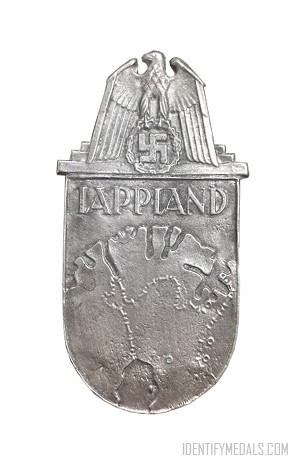
During the Nazi regime in Germany, medals and awards were often used as tools of propaganda to promote and reinforce the ideals of the Nazi party. The symbols and designs used on these medals were carefully chosen to convey specific messages and values to both the recipients and the wider population.

In this article, we will examine the symbolism and design of Nazi medals and awards, exploring the meanings behind them and how they were intended to convey the Nazi regime’s ideology and shape public opinion.

Why Did The Nazi Regime Invest So Much Effort Into Its Aesthetics?

The Nazi regime was responsible for some of the most horrific atrocities in human history and should be condemned unequivocally. However, many authors have referred to how elements of its design and fashion (including the symbolism and design of medals, awards, and badges) were carefully planned with a certain aesthetic in mind. 

For example, one characteristic of Nazi design is bold, simple imagery, such as the swastika. The goal of these motifs was to become easily recognizable symbols. During the Third Reich, there was a marked use of red, white, and black color schemes that helped to create a sense of unity and coherence in Nazi propaganda.

Another reason why the regime sought to use these symbols was to present itself as modern and sophisticated, with a focus on precision, order, and discipline. This was reflected in everything from the military uniforms to the layout of public spaces and the different medals awarded during the time. 

Symbolism of Nazi Insignia and Medals

There were numerous medals and awards used by the Nazi regime during their time in power, but here are some of the main ones and what they represented.

Symbolism of the Nazi Iron Cross

The Iron Cross is a military award that had been used in Germany since the 19th century, but was revived and redesigned by the Nazis. It was awarded for acts of bravery or merit in combat, and was intended to symbolize the courage and sacrifice of German soldiers.

The design of the Iron Cross predates the Nazi regime, as it was originally introduced by King Friedrich Wilhelm III of Prussia in 1813 (it was used as a military decoration during the Napoleonic Wars).

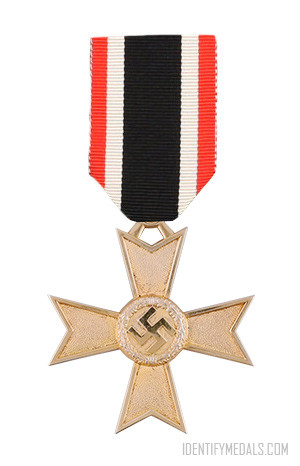
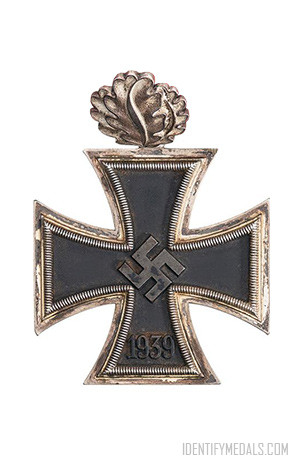
Initially, the cross shape was chosen for its simplicity and recognizability, as it could be easily seen and identified from a distance on the battlefield. When the Nazi regime came to power in 1933, they revived the Iron Cross as a military award, but made some changes to the design. The swastika, the Nazi Party’s symbol, was added to the center of the cross, and the overall design was made more angular and streamlined.

Symbolism of the War Merit Cross

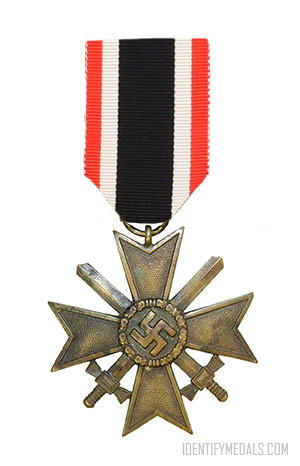
The War Merit Cross was another military award that came in two classes, one for officers and one for enlisted soldiers. It was awarded for exemplary service or achievement in military duties, and was intended to promote a sense of duty and patriotism among the German military.

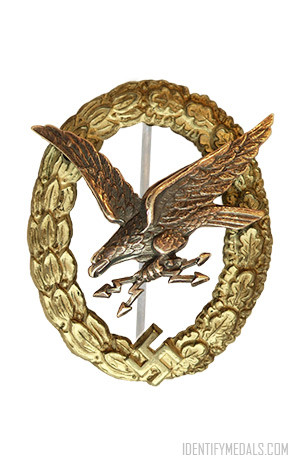
The cross was designed to symbolize bravery and military service, and featured a swastika in the center, surrounded by a wreath of oak leaves. The swastika was a central symbol of the Nazi party, representing their racist and nationalist ideology. The oak leaves symbolize strength, endurance, and victory.

Symbolism of the Order of the German Eagle

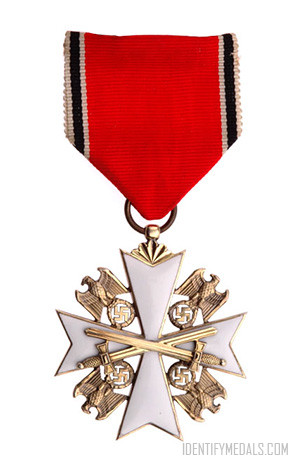
The Order of the German Eagle was a civilian award that was given to foreign nationals who had made significant contributions to the Nazi regime, such as diplomatic or military support. It was intended to promote international cooperation and recognition of Nazi ideology.

The order featured a design of an eagle, a traditional symbol of power and strength, with outstretched wings and a wreath of oak leaves in its talons. The eagle was set against a swastika, which was a central symbol of the Nazi party. The eagle and swastika were surrounded by a blue enamel ring bearing the inscription “Für Verdienste um das Deutsche Reich” (“For Services to the German Reich”).

Symbolism of the Golden Party Badge

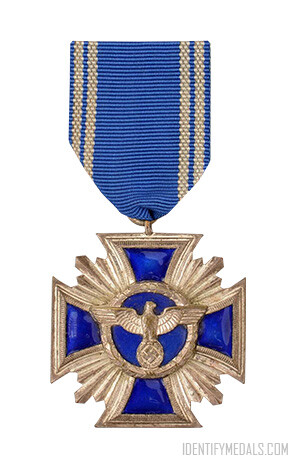
The Golden Party Badge was a high-level award given to members of the Nazi party who had shown exceptional loyalty and dedication. It was intended to promote a sense of camaraderie and loyalty among party members and to reward those who had worked tirelessly to promote Nazi ideology.

Symbolism of the Hitler Youth Badge

Hitler Youth Badge: This was an award given to members of the Hitler Youth, the Nazi party’s youth organization. It was intended to promote a sense of loyalty and dedication to the Nazi regime among young people, and to encourage them to see themselves as part of a larger movement working towards a common goal.

Explaining vs Glorifying Nazi Aesthetics

It is important to remember that these elements of Nazi design were used to promote a violent and hateful ideology that led to the deaths of millions of people.

Today, the use of Nazi symbols, including the swastika and the eagle, is generally prohibited in many countries due to the association with the atrocities committed by the Nazi regime, including the Holocaust. Many of the medals mentioned in this article are often considered a symbol of hate and bigotry, and their display is generally discouraged or illegal in many contexts.

This is why I want to reinforce the belief that any attempt to appreciate the aesthetics of Nazi design must be firmly rooted in an understanding of the horrors of the regime and a commitment to opposing any attempts to promote or glorify it.

Nazi Medal Design Examples

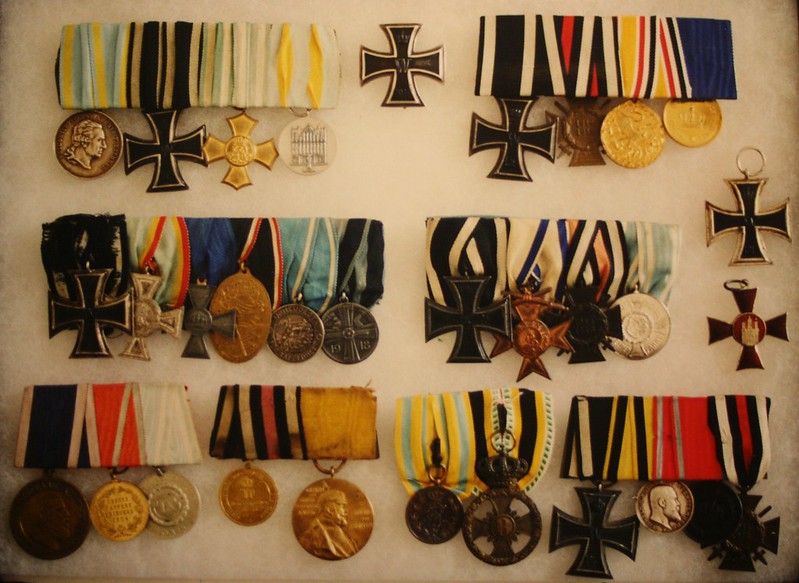
The following Iron Crosses exist:

What Are The U.S. Marine Corps Badges? An In-Depth Description

The Marine Corps Man Badges are issued by the U.S. Navy to those who achieve certain accomplishments. Here’s everything about them.
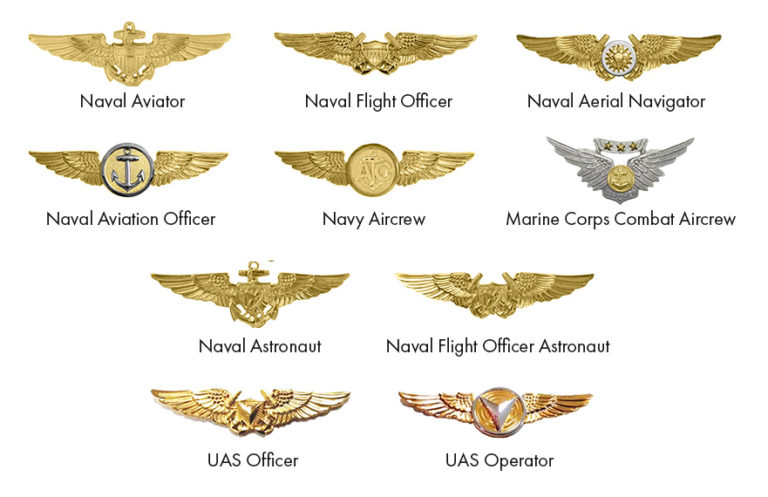
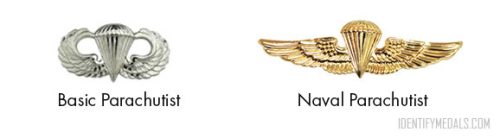
The Marine Corps Badges are issued by the U.S. Navy to those who achieve certain accomplishments and qualifications while serving on active and reserve duty in the United States Marine Corps. There are different types of badges, such as breast insignia, marksmanship badges, and identification badges.

In this article, we’ll cover al of them and how they are awarded. 

Why Are Badges Awarded to the United States Marine Corps?

The United States Marine Corps (or USMC 🔗) is the maritime land force service branch of the country’s Armed Forces. They are responsible for conducting amphibious and expeditionary operations and have their own infantry, aerial, artillery, and special operation forces. 

The United States Marine Corps insignia (also sometikmes referred to as marine corps emblem) are military badges issued by the Navy to commissioned officers who have obtained particular accomplishments. For example, they can be awarded to some officer ranks while the person is serving or on reserve duty for completing certain qualifications or carrying out operations. 

Marine Corps Badges:
The Breast Insignia

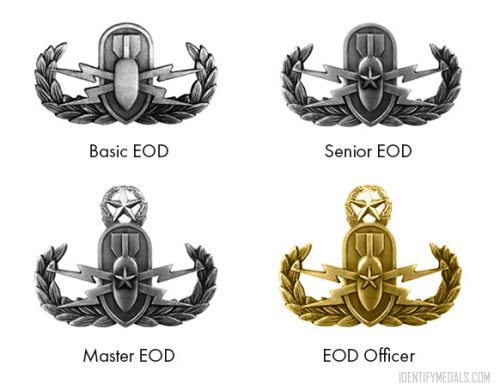
Breast insignia are worn immediately above ribbons and medals. These insignia are awarded for qualifications or designations. There are five types of Marine Corps breast insignia: Aviation, Parachutist, Explosive Ordnance Disposal, Diver, and Special Operator. Let’s go through each of these in some detail. 

#1

Marine Corps Aviation Insignia

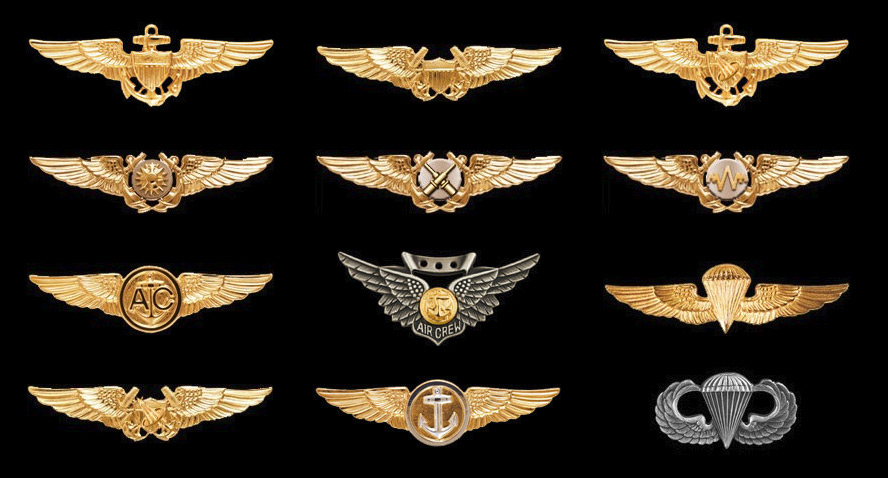
Aviation insignia is awarded to Marines who have qualified or designated to perform duties supporting Marine aircraft. The insignia are:

  • The Naval Aviator Insignia (for commissioned officers or warrant officers that are qualified as crewed aircraft pilots in the Navy or U.S. Marines)
  • The Unmanned Aerial System (UAS) Insignia (For those responsible for handling unmanned aerial vehicles or drones)
  • The Naval Flight Officer (NFO) Insignia (for aviators of the Navy, Marine Corps, and Coast Guard who have qualified as NFO based o successful completion of flight training)
  • The Naval Astronaut Insignia (awarded to civilian and military personnel for completing training and performing a successful spaceflight)
  • The Naval Astronaut (NFO) Insignia
  • The Marine Aerial Navigator Insignia
  • The Naval Aviation Observer Insignia
  • The Aircrew Insignia
U.S. Marine Corps Breast Insignia: Aviation Insignia.
#2

Marine Corps Parachutist Insignia

The Parachutist Insignia (also known as “lead wings” or “lead sled”) is awarded to personnel who has completed the Basic Airborne Course at the Army Airborne School. There is a silver version for completing the basic parachutist training and doing give qualifying jumps, and a gold version for five additional qualifying jumps. 

U.S. Marine Corps Breast Insignia: Parachutist Insignia.
#3

Marine Corps Explosive Ordnance Disposal Insignia

The Explosive Ordnance Disposal (EOD) Breast Insignia, or the “Crab”, is given to personnel who have successfully completed training at the Naval School Explosive Ordnance Disposal (NAVSCOLEOD) at Eglin Air Force Base in Florida, which deals with safe-rendering and disposal of conventional and unconventional munitions.

U.S. Marine Corps Breast Insignia: Explosive Ordnance Disposal Insignia.
#4

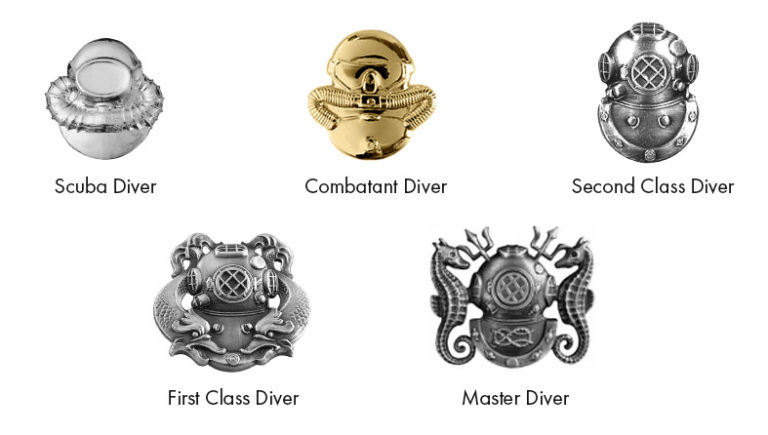
Marine Corps Diver Insignia

The Marine Corps Diver Insignia is awarded to qualified diverts. There are several degrees to it, the first one being SCUBA Diver and the others given for deep sea diving qualifications (in degrees of Second Class, First Class, Master Diver, and Diving Medical Technician). There’s also a Combatant Diver insignia for those who have completed the Combatant Diver Course.

U.S. Marine Corps Breast Insignia: Diving Insignia.
#5

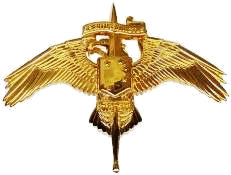
Marine Corps Marine Special Operator Insignia

Since August 2016, the Marine Corps also have used a Marine Special Operator Insignia (a pin) that is given to graduates of the five-phase Individual Training Course (ITC).

U.S. Marine Corps Breast Insignia: Special Operator Insignia.
U.S. Marine Corps Breast Insignia: Special Operator Insignia. Image courtesy of Wikipedia.

Marine Corps Badges:
The Marksmanship Badges

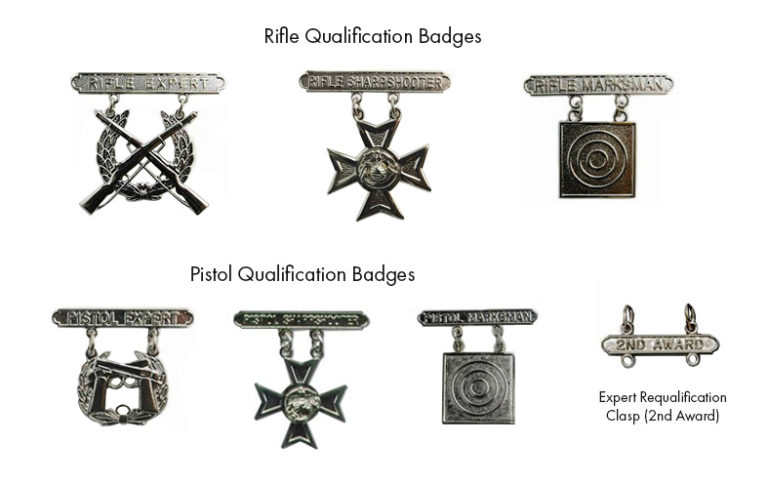
Marine Corps Marksmanship Badges are work suspended beneath a bar that states the type of weapon and qualification the person has received (for example, Rifle Expert, Rifle Sharpshooter, Pistol Marksman, etc.) Each badge has a distinctive design.

In order to obtain a Marine Corps Marksmanship badge, you must obtain a passing score and receive a qualification level. Then, a person will be able to wear the badge for the remainder of their military career (or until a new qualification level is obtained). 

U.S. Marine Corps marksmanship qualification badges.

Marine Corps Marksmanship Competition Badges

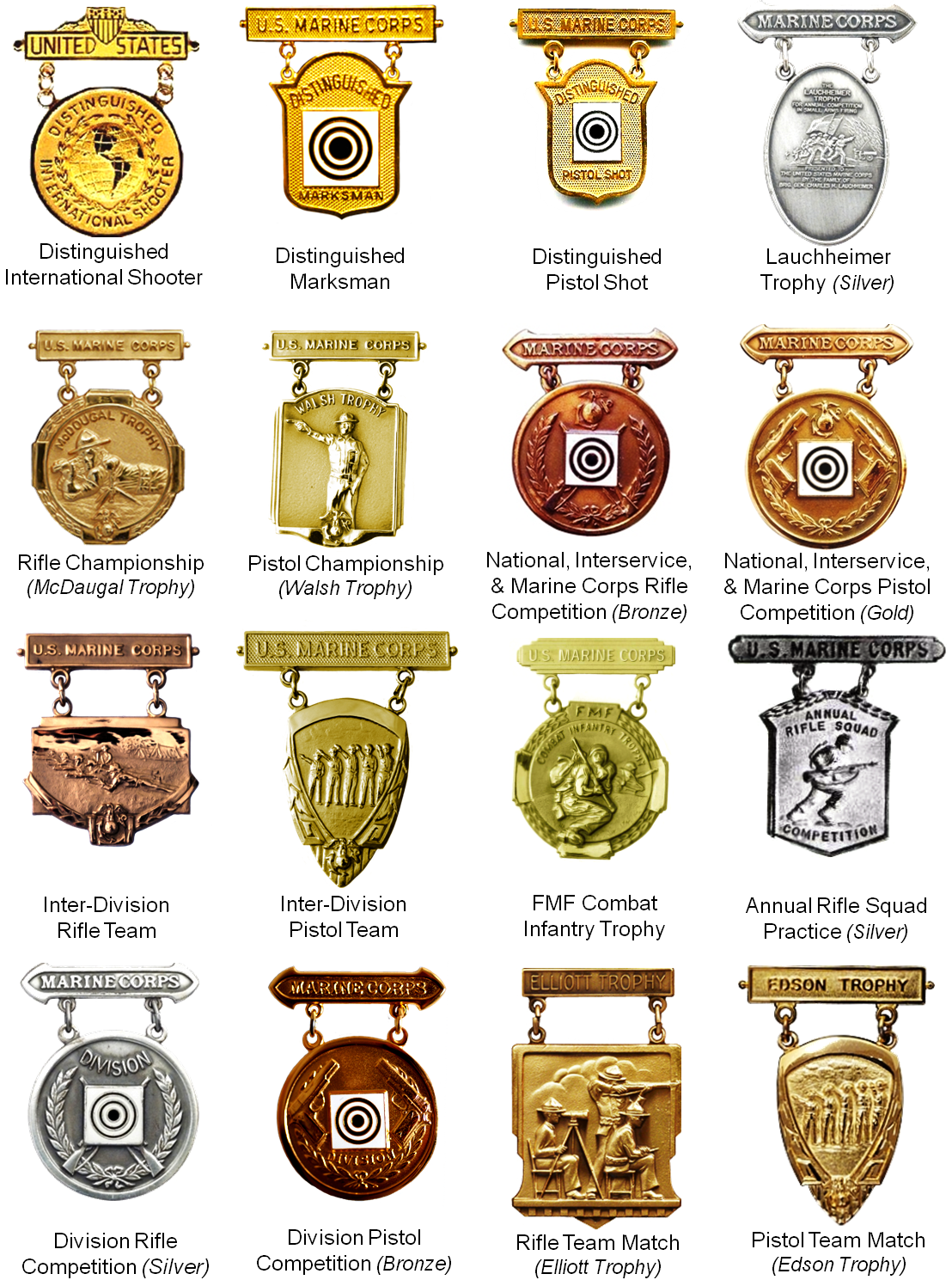
In addition to the Marksmanship Badges, the Marine Corps also has a number of Marksmanship Competition Badges authorized for wear as permanent awards. These are presented to top-performing Marines at Marine Corps sponsored marksmanship competitions and given alongside trophies. 

Some examples of U.S. Marine Corps marksmanship competition badges.
Some examples of U.S. Marine Corps marksmanship competition badges. Image courtesy of Wikipedia.

Marine Corps Identification Badges

Lastly, there are some Identification Badges for the Marine Corps. These are:

  • The United States Marine Corps Military Police Badge.
  • The Marine Corps Military Police Corrections Badge.
  • The Marine Corps Criminal Investigation Division Agent Badge.
  • The Marine Corps Counterintelligence Agent Badge.

Learn More About Marine Corps Badges

If you want to learn more about these badged, there’s a great video that can help:

Further Reading About the Marine Corps and U.S. Military History

For those interested in learning more about the Marine Corps and U.S. military history, there is a wealth of resources available. Books like “First to Fight” by Lt. Gen. Victor H. Krulak offer a deep dive into the Marine Corps’ culture and legacy, while “With the Old Breed” by E.B. Sledge provides a firsthand account of the Pacific battles of WWII. The Marine Corps History Division publishes detailed accounts of battles and operations, offering insights into military strategy and heroism. Additionally, visiting sites like the National Museum of the Marine Corps and the Smithsonian’s National Museum of American History provides engaging, in-depth exhibits on key moments in military history.

Order of Pedro I

The Order of Pedro I is a Brazilian order of chivalry instituted in 1826 by Emperor Pedro I and considered the rarest of the country’s orders.

The Order of Pedro I (or Imperial Ordem de Pedro Primeiro in Portuguese) is a Brazilian order of chivalry instituted in 16 April 1826 by Emperor Pedro I and considered the rarest of the country’s Imperial orders.

The Order of Pedro I was canceled on 22 March 1890 by the interim government of the United States of Brazil. Since the deposition of the last Brazilian monarch in 1889, it continues to be used as a house order by the Heads of the Orleans-Berganza house. The Grand Mastership, like many other Brazilian imperial orders, is shared between the branches of Petrópolis and Vassouras.

Classes of the Order of Pedro I

The Imperial Order of Pedro I has the following classes:

  • Grand Cross (Grã-Cruz)
  • Commander (Comendador)
  • Knight (Cavaleiro)

The Order of Pedro I Medal Design

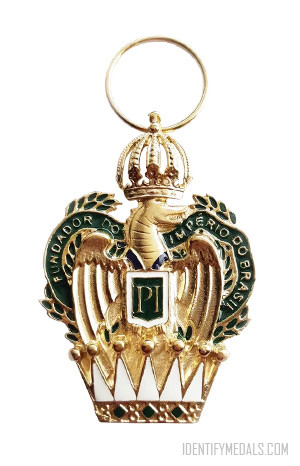
The insignia of the Grand Cross of the Order of Pedro I is a gold-winged dragon (referencing the House of Braganza) with a red sole garnished with coffee branches and the inscription “Founder of the Empire of Brazil”. The insignia is topped with an imperial crown and a green ribbon. The reverse is the same except that the dragon is complete with its tail and without the crown of the city.

Order of Saint James of the Sword

The Order of Saint James of the Sword was an honorific order of the Empire of Brazil established in 1843 and nationalized by Pedro I.

  • Time Period: Pre-WW1
  • Institution: 9 September 1843
  • Country: Brazil

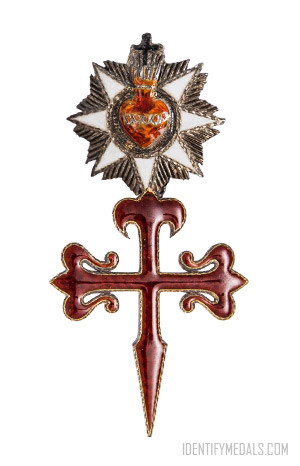
The Imperial Order of Saint James of the Sword (or Imperial Ordem de Sant’Iago da Espada in Portuguese) was an honorific order of the Empire of Brazil established on 9 September 1843 and nationalized by Pedro I of Brazil after the reform proposed by  Dona Maria II of Portugal and recommended by the Judiciary.

While the Portuguese Order of Saint James of the Sword (on which this Brazilian one is based) was offered to people who made advancements in science, literature, and art, the Brazilian counterpart was reserved exclusively for military personnel (especially of Pedro I and his son Dom Pedro II). 

The Imperial Order of Saint James of the Sword was canceled as a national order by the interim government of the United States of Brazil on 22 March 1890. Since then, it continues to be awarded by the Heads of the Orleans-Braganza house, and the Petrópolis and Vassouras branches of the Imperial family dispute its Gand Mastership. 

Classes of the Order of th Sword

The Imperial Order of Saint James of the Sword has the following classes:

  • Grand Cross (Grã-Cruz)
  • Commander (Comendador)
  • Knight (Cavaleiro)

Imperial Order of St. Benedict of Avis

The Imperial Order of St. Benedict of Avis is a Brazilian military order established in 1843 and awarded in three grades.

  • Time Period: Pre-WW1
  • Institution: 9 September 1843
  • Country: Brazil

The Imperial Order of St. Benedict of Avis (or Imperial Ordem de São Bento de Avis in Portuguese) is a military order established on 9 September 1843 and awarded in three grades. 
It’s believed this order originates from the Portuguese Military Order of Aviz – which, in turn, dates back to medieval times. Other theories inlve a Spanish origin based on the Order of Calatrava.

The Order of Avis had a religious character, which was deprived in September 1843 when the Republic was proclaimed. 

Since the deposition of Emperor Pedro II (the last Brazilian monarch), the order continues to be used as a house order awarded by the Heads of the House of Orleans-Braganza. The Grand Mastership of the order is disputed between the Petrópolis and Vassouras branches of the Imperial family. 

Classes of the Order of Avis

The Order of Avis has the following classes:

  • Grand Cross (Grã-Cruz)
  • Commander (Comendador)
  • Knight (Cavaleiro)

The Order of Avis Medal Design

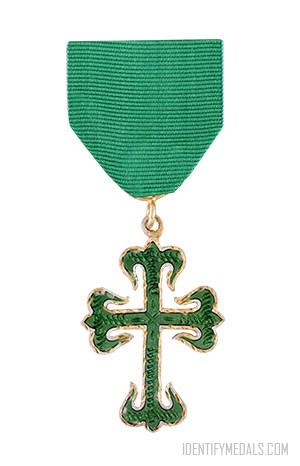
The obverse of the Order of Avis’ insignia is a white star with five forked tips and doorknobs. It sits on a garland of tobacco and coffee branches, and the pendant has an imperial crown. In the center is a white medallion with a florid green cross embroidered in gold. 

The Knight’s insignia is a green enamelled florid cross.