The War Commemorative Medal of 1813-15

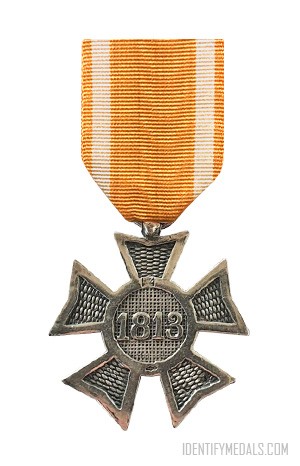
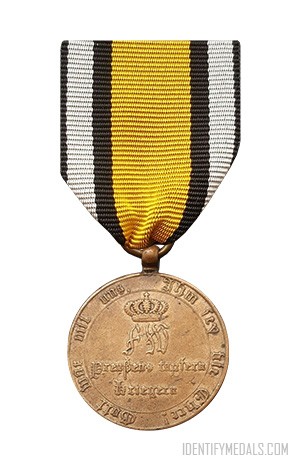
The War Commemorative Medal for 1813–1815 was established in 1813 by King Friedrich Wilhelm III of Prussia for the Wars of Liberation.

The War Commemorative Medal of 1813/15 (or Kriegsdenkmünze für 1813/15 in German) was a Prussian war commemorative medal  established on 24 December 1813 by King Friedrich Wilhelm III of Prussia to honour members of the Prussian Army who fought in the Wars of Liberation against Napoleonic France during 1813–1815.

It recognised those who served throughout the conflict, which included campaigns that eventually led to the defeat of Napoleon and the decisive Battle of Waterloo.

A later related piece, the Erinnerungs‑Kriegs‑Denkmünze, was instituted on 17 March 1863 by King Wilhelm I on the 50th anniversary of the original campaigns. This anniversary issue featured portraits of Friedrich Wilhelm III and inscriptions marking the years 1813–1815, and was intended as a keepsake for legitimate holders of the original medal and their families.

The War Commemorative Medal Design

The medal is about 29 mm in diameter and features a cross on the obverse with rays between its arms and a wreath of laurel and oak leaves encircling the year or years of service (such as 1813, 1814, or 1815). The reverse bears the crowned monogram “F. W.” for Friedrich Wilhelm and the inscription Preußens tapferen Kriegern, Gott war mit uns, Ihm sey die Ehre (“To Prussia’s brave warriors, God was with us, to Him be the glory”).

There were two versions of the medal: a combatant version struck in bronze made from captured artillery, often with the edge inscription Aus erobertem Geschütz (“From captured cannon”), and a non‑combatant version cast in iron and oval in shape, which was awarded to those who did not see active combat or who supported the war effort. The iron variant became informally known as the “Eiserne Pflaume” (“Iron Plum”) due to its shape.

Both versions were worn on the left breast suspended from distinctive ribbons: combatants on an orange ribbon edged in black and white, and non‑combatants on a white ribbon edged in black, orange, and white.

The Different Waterloo Medals

The Waterloo medal was issued by the British Government to all soldiers present during action. Seven nations of the Seventh Coalition struck differently designed medals for soldiers who took part in the campaign. These are:

The Waterloo Medal - British Medals Pre-WW1

The Waterloo Medal

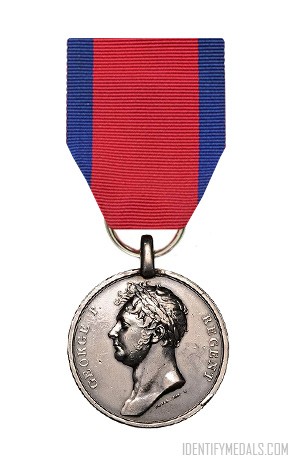
The Waterloo Medal is a British military medal established in 1816-17 and struck for all those who participated in the Waterloo campaign.
British Campaign Medals: The Brunswick Waterloo Medal

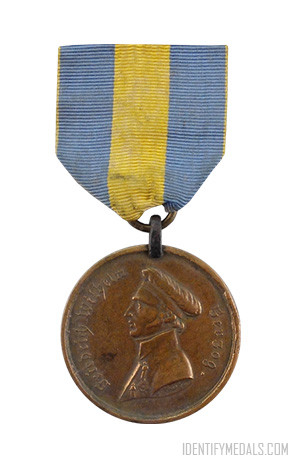
The Brunswick Waterloo Medal

The Brunswick Waterloo Medal was a campaign medal awarded to those who participated in the Battles of Quatre Bras and Waterloo.
British Campaign Medals: The Hanoverian Waterloo Medal

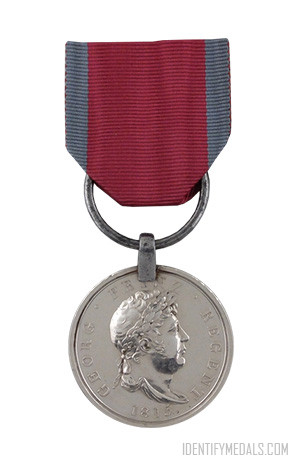
The Hanoverian Waterloo Medal

The Hanoverian Waterloo Medal was issued to all members of the Hanoverian army who fought in the battles of Quatre Bras and Waterloo.
British Campaign Medals: The Nassau Medal for Waterloo

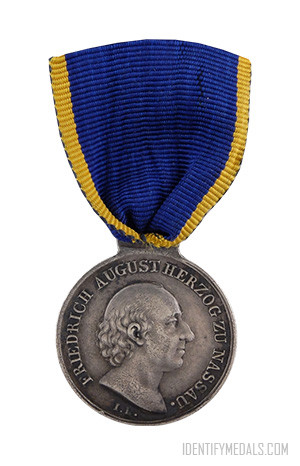
The Nassau Waterloo Medal

The Waterloo Medal is a campaign of the Duchy of Nassau established by Frederick Augustus, Duke of Nassau on 23 December 1815.
Where to Find Waterloo Medals

Right Now on eBay 
Clicking a link to eBay may result in a referral commission being paid if a purchase is made.
Loading...

The Order of Saint John (Bailiwick of Brandenburg)

The Order of Saint John (Bailiwick of Brandenburg) was established as the Order of Saint John or the Johanniter Order in 1099.

The Bailiwick of Brandenburg of the Chivalric Order of Saint John of the Hospital at Jerusalem (or Balley Brandenburg des Ritterlichen Ordens Sankt Johannis vom Spital zu Jerusalem in German), commonly referred to as the Order of Saint John or the Johanniter Order (Johanniterorden), is the German Protestant branch of the Knights Hospitaller. The order, considered the oldest surviving chivalric order, is believed to have been established in Jerusalem in 1099.

The current leader, or Herrenmeister (Master of the Knights/Grand Master), is Oskar Prince of Prussia. The order comprises approximately four thousand knights globally, classified as either Knights of Justice (Rechtsritter) or Knights of Honour (Ehrenritter). Membership is by invitation only and is not restricted to German nationals or speakers. Though the order no longer requires noble status for membership since 1948, most members still come from the nobility. The order includes seventeen commanderies in Germany and one each in Austria, Finland, France, Hungary, and Switzerland, along with a global commandery with subcommanderies in twelve other countries, including Australia, Belgium, Canada, Colombia, Denmark, Italy, Namibia, Poland, South Africa, the UK, the US, and Venezuela.

The Order of Saint John (Bailiwick of Brandenburg) Design

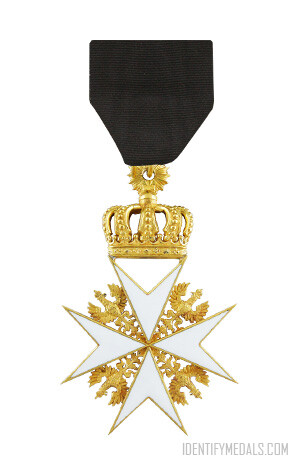
The cloak of the Order is primarily black, featuring a prominent white, linen eight-pointed cross on the left breast. Most knights wear cloaks made of black wool, while French knights add distinctive white wool collars.

The basic insignia is a white-enamelled Maltese cross. Since 1668, the crosses have featured crowned Brandenburg (later Prussian) eagles between the arms. For Knights of Justice, Honorary Commanders, Commanders, and the Herrenmeister, the eagles are gold, while for Knights of Honour and Honorary Members, the eagles are enamelled black with gold crowns. The cross’s size varies by rank: 5 cm for Knights of Justice, 5.5 cm for Commanders and Honorary Commanders, 6 cm for Knights of Honour, and 7 cm for the Herrenmeister. Each cross is worn on a black-moire ribbon around the neck.

Members may also wear a plain Maltese cross as a star or ‘breast badge,’ typically made of plain linen, with enamelled stars in silver or silver gilt for formal occasions. Additionally, a smaller white-enamelled Maltese cross in gold or silver may be worn on the left lapel of a knight’s suit or sportcoat.

The Charlotte Cross

The Charlotte Cross was a decoration founded in 1916 by King Wilhelm II to honor his wife and awarded for care-related services.

The Charlotte Cross, established on January 5, 1916 by King Wilhelm II in tribute to his wife, Queen Charlotte, was bestowed upon individuals regardless of rank, who demonstrated exceptional care for the sick and wounded in times of war. It also recognized other valuable caregiving services during World War I.

The Charlotte Cross Design

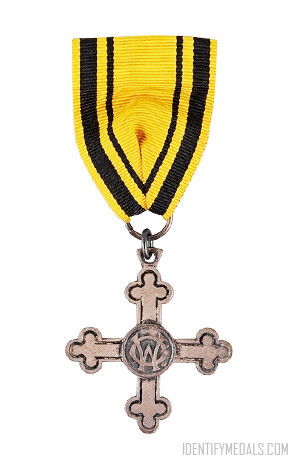
The emblem comprises a silvered white metal cross botonny, featuring a central medallion. The front of the medallion displays the intertwined initials “C” and “W” for Charlotte and Wilhelm, while the reverse side bears the year 1916.

Initially crafted from pure silver, the crosses changed to other materials at the onset of World War I.

It was tradition to wear the emblem on the left breast, attached to a yellow ribbon bordered by narrow and wide black stripes on either side.

The Commemorative Medal for Rescue from Danger 1925-1933

The Commemorative Medal for Rescue from Danger 1925-1933 was instituted on 9 June 1925 for rescue from danger at the peril of rescuer’s life.

The Commemorative Medal for Rescue from Danger 1925-1933 was instituted on 9 June 1925 for rescue from danger at the peril of rescuer’s life. The medal was awarded very sparingly.

The Commemorative Medal for Rescue from Danger 1925-1933 Design

The medal is large and circular, and measures 48.72mm (1.92 inches) in diameter. Records show that it was originally manufactured in silver, however there are several examples struck in zinc alloy – perhaps manufactured at a time of material shortages and economic crisis or for collectors at the time.

The obverse has the Prussian eagle, head facing right, wings outstretched, and the inscription ‘REPUBLIK’ above and ‘PREUSSEN’ below. The reverse is inscribed ‘FÜR RETTUNG AUS GEFAHR’ (“For Rescue from Danger”) within an oak leaf border in relief.

The Cross of the Mount of Olives

The Cross of the Mount of Olives is a Prussian award founded in 1909 to commemorate the foundation of a hospital on the Mount of Olives.

The Cross of the Mount of Olives (or Ölberg-Kreuz in German) is a Prussian award founded on 24 December 1909 as a decoration to commemorate the foundation of a hospital, the Kaiserin Auguste Victoria-Stiftung on the Biblical Mount of Olives in Jerusalem.

The award was created by Prince Eitel Friedrich of Prussia. His very devout mother, Augusta Victoria of Schleswig-Holstein, was fond of charitable works and built several churches and he and Emperor Wilhelm II of Germany had visited Jerusalem in 1898. They then pledged to build a hospital for Christian pilgrims suffering from malaria.

The Cross of the Mount of Olives was awarded to those who contributed to the Foundation, and the Augusta Victoria Hospital opened its doors in 1910.

The Cross of the Mount of Olives Design

The badge of the decoration is a red-and-black enameled Jerusalem cross, upon which is imposed the white cross of the Johanniterorden, the evangelical noblemen’s society which Prince Eitel Friedrich then headed as Grandmaster.

The badge is suspended from a monogram of the Empress’s initials, “AV”. The ribbon is plain white and the deserving were awarded golden or silver-gilt Crosses.

The Jerusalem Cross

The Jerusalem Memorial Cross is a Prussian decoration established in 1898 and awarded to those who visited Palestine with the King.

The Jerusalem Cross, also known as the Jerusalem Memorial Cross or “Jerusalem-Kreuz; Jerusalem-Erinnerungskreuz” in German, holds historical significance as a Prussian decoration established on October 31, 1898. Its establishment coincided with Emperor Wilhelm II‘s notable visit to Palestine in the same year. This distinguished award was bestowed upon individuals who had the unique privilege of accompanying Emperor Wilhelm II on his pilgrimage to Palestine and participated in the solemn inauguration ceremony of the Lutheran Church of the Redeemer in Jerusalem.

Emperor Wilhelm II’s journey to Palestine and the dedication of the Lutheran Church of the Redeemer marked a significant event in Prussian history, symbolizing the nation’s cultural and religious ties to the Holy Land. The Jerusalem Cross served as a commemorative token of this historic occasion, honoring those who were part of this remarkable pilgrimage. As a testament to their participation in this momentous event, recipients of the Jerusalem Cross were recognized for their role in fostering diplomatic relations, religious unity, and cultural exchange between Prussia and the Holy Land

The Jerusalem Cross Design

The cross is made in the shape of the Jerusalem cross, which consists of a large cross portent with four plain crosslets between the arms. The crosses are red enameled with silver-gilt borders. In the center of the cross is a round gold colored medallion.

The obverse depicts the Imperial Crown of the Prussian German Emperor surmounting the letters IR (Imperator Rex) over the royal cypher of a stylized W II. The reverse of the medallion bears the date 31 October 1898, which is depicted using a large Roman numeral X in the center for October, and a small Roman numeral XXXI at the top. To the left is MDCCC and to the right side IIC for the year 1898.

The Lifesaving Medal

The Lifesaving Medal was a civil decoration of the Kingdom of Prussia awarded to those who had saved a person’s life at risk to their own.

The Lifesaving Medal (on Rettungsmedaille am Band” in German) was a civil decoration of the Kingdom of Prussia.

Established 1 February 1833, it was awarded to individuals who had saved another person’s life, at risk to their own.

This medal is referred to as the Lifesaving Medal on Band to differentiate it from a previous non-portable award established in 1802. Otto von Bismarck received it for rescuing a drowning man.

The Lifesaving Medal Design

The medal is circular and struck in silver. The obverse presents the head of King Friedrich Wilhelm III in relief, facing left, in the center.

Around it is circumscribed FRIEDRICH WILHELM III KÖNIG VON PREUSSEN. The reverse has inscribed FÜR RETTUNG AUS GEFAR (FOR RESCUE FROM DANGER) within an oak leaf wreath, measuring 24.79 mm in diameter, on loop for suspension from the period original ribbon, and in fine condition.

The Prussian Red Cross Medal

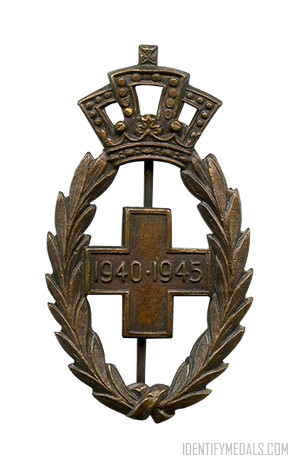
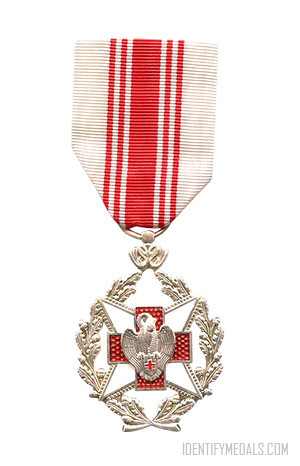
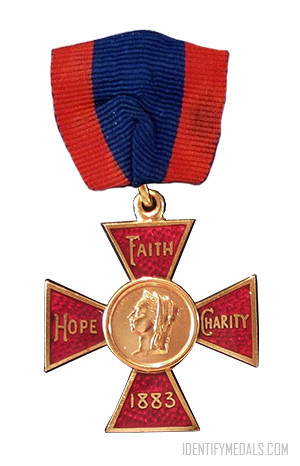
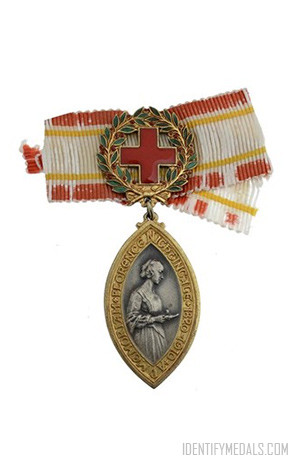
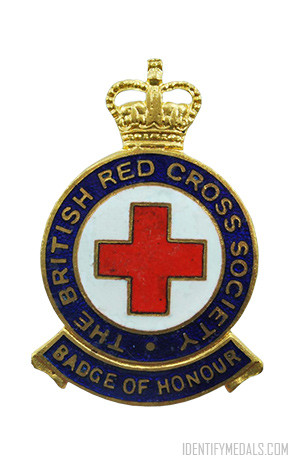
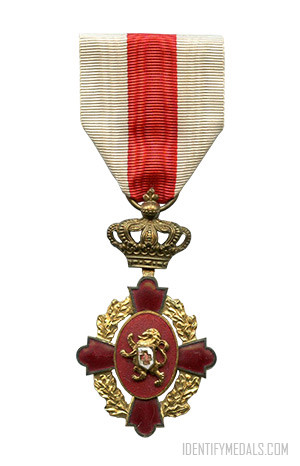
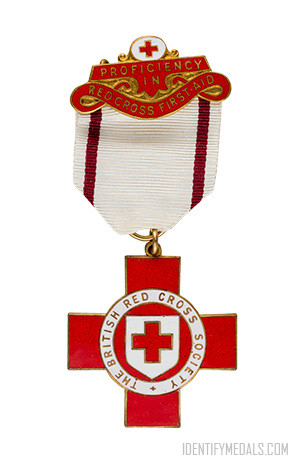
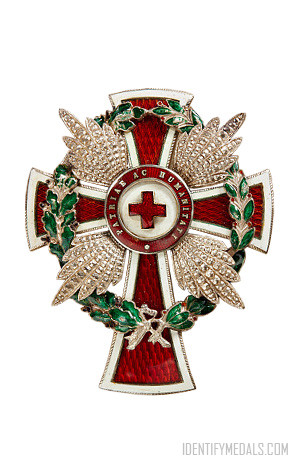
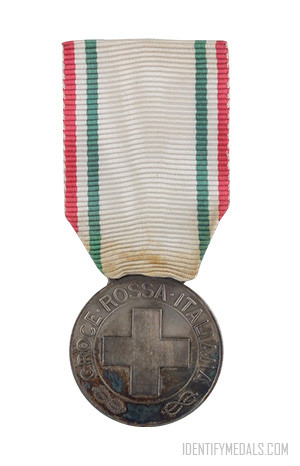
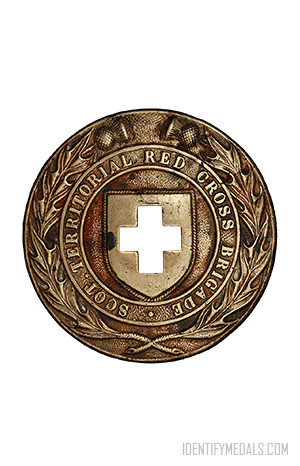
The Red Cross Medal was set up in 1898 by Emperor Wilhelm II and awarded to those who did great service to the sick in peace or wartime.

The Red Cross Medal was set up on 1 October 1898 by Emperor Wilhelm II and awarded to all those who carried out great service to the sick in peace or wartime, or for special achievement in the service of the German Red Cross. This was a peacetime award, as opposed to the Order of the Crown and general honor decorations with the Red Geneva Cross.

The Red Cross Medal was awarded in three classes, the Second and Third classes being worn as circular medals suspended from a red ribbon with white and black stripes.

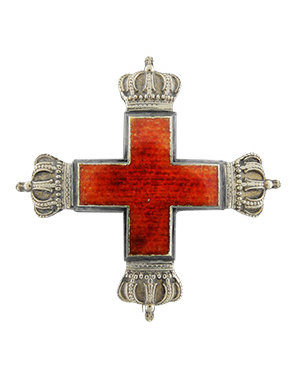
The First Class was a red enameled Geneva Cross with gilded Prussian Royal Crowns at the ends of the arms. This award was worn as a steckreuz on the breast like the Iron Cross. Recipients could be promoted to the next class of the medal with five years time in service, with the first level anyone could be initially appointed to being the Second Class.

Find Red Cross Medals Online

Right Now on eBay 
Clicking a link to eBay may result in a referral commission being paid if a purchase is made.
Loading...

More Red Cross Medals

The Königgrätz Commemorative Cross

The Königgrätz Commemorative Cross is a Prussian medal instituted in 1866 by Wilhelm I and awarded to officers, NCOs and officials.

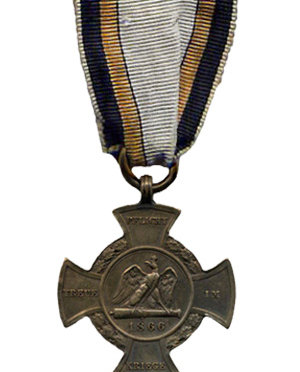
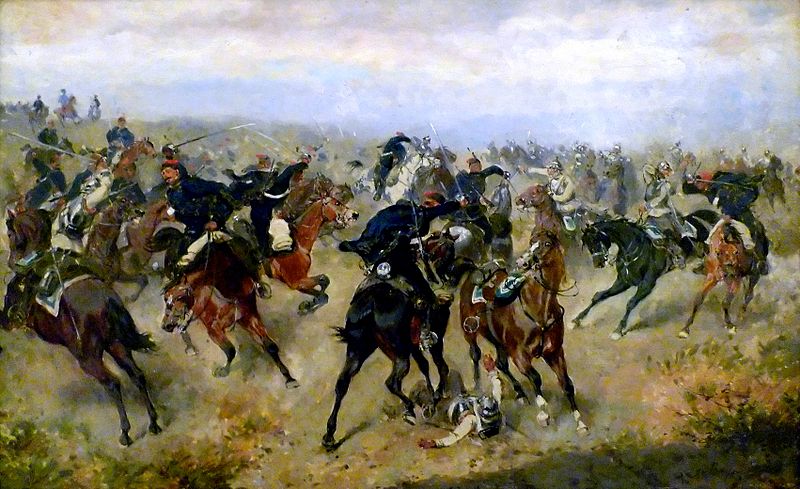
The Königgrätz Commemorative Cross is a Prussian medal instituted on September 20, 1866 by the King of Prussia Wilhelm I. The medal was awarded to Prussian officers, NCOs and other ranks as well as to military officials following the Prussian victory in the Austro-Prussian War (June 17 – July 26, 1866).

This award was named after the Battle of Königgrätz (Schalcht bei Königgrätz, also referred to as the Battle of Sadowa) that took place on July 03, 1866 and  involved the largest number of troops in Europe until that time. The battle ended with one of the highest casualties for a major battle: Austrians and their Saxon allies lost 44,000 men killed in action, wounded and missing in action including 22,000 being held prisoners while Prussians had 360 officers and 8,812 men killed.

A total of 144,000 “combat” crosses and 1,200 non-combatant versions were issued.

The Königgrätz Commemorative Cross Design

The medal has the shape of a cross pattée with a round medallion superimposed on its center and a round wreath between its arms and is made of bronze from captured Austrian cannons. It was designed by the Prussian court medalist Friedrich Wilhelm Kullrich (1821-1887) and the Prussian royal mint engraver Emil Weigand (1837-1906) and measured 34,5 x 34,5 mm.

A central medallion on its obverse has an image of a crowned Prussian eagle leaning against a captured Austrian cannon (with some variations). There were four different crosses instituted to commemorate “1866 victorious campaign”. All the four crosses share the same reverse design, a crowned cipher of the Prussian king Wilhelm I.

  • Königgrätz Cross: For the military personnel who participated directly in the Battle of Königgrätz. Inscription: “König-Grätz” – “Den 3.” – “Juli” – “1866”.
  • “Main Army” Cross: For the military personnel of a Main army who fought under command of General Eduard Vogel von Falckenstein against troops from Hannover, Hessen, Bavaria, Baden and Wurttemberg. Inscription “Der” – “Main” – “Armee” -“1866”.
  • “Loyal Fighters” Cross: For military personnel who hadn’t participated in the Battle of Königgrätz and were not attached to the Main army. Inscription “Treuen” – “Krie-” – “Gern” – “1866”.
  • “Loyal to its duty in times of war” Cross: For non-combatants. Round wreath is made of oak leaves. Inscription “Pflicht” – “Treue” – “Im” – “Kriege”.

Like other Imperial awards, the Cross was worn either obverse or reverse outwards. The silk ribbon of the first three versions of a Königgrätz Commemorative Cross was black with two yellow-orange and white vertical stripes closer to its edges.

Related Article:

The Centenary Medal (Prussia)

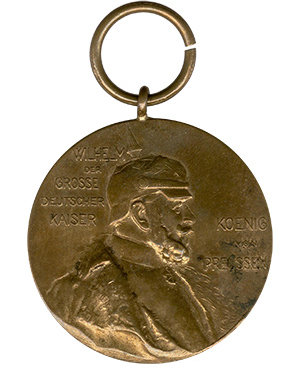
The Kaiser Wilhelm Memorial Medal was established in 1897 by Wilhelm II to celebrate the 100th Birthday of his grandfather Emperor Wilhelm I.

The Kaiser Wilhelm Memorial Medal (also known as the Centenary Medal or Kaiser-Wilhelm-Erinnerungsmedaille Zentenarmedaille in German) was established on March 22, 1897 by Wilhelm II to celebrate the 100th Birthday of his grandfather, Emperor Wilhelm I.

The Centenary Medal was awarded by Prussia to state and university officials, as well as all military officers, non-commissioned officers and enlisted personnel, who had been actively serving in army, navy and Schutztruppe.

Medals were also awarded to the surviving veterans of the First Schleswig WarSecond Schleswig WarAustro-Prussian War, and the Franco-Prussian War.

The Centenary Medal Design

The Centenary Medal is struck made of bronze gunmetal from captured cannons. It measures 40 mm in diameter and is suspended from a ribbon 36 mm wide.

The obverse depicts a right facing effigy of Wilhelm I in military uniform wearing a mantle and Pickelhaube. To the left of the effigy is the inscription WILHELM / DER / GROSSE / DEUTSCHE / KAISER (William the Great German Emperor). To the right is KOENIG / VON / PREUSSEN (King of Prussia).

The reverse of the medal shows symbols of royal authority including the German State Crown, an orb, sword, and scepter placed upon a pillow surrounded by oak leaves, in the lower half of the medal. To the left is an upward climbing laurel branch. In the upper half is the inscription in six lines ZUM ANDENKEN AN DEN HUNDERTSTEN GEBURTSTAG DES GROSSEN KAISERS WILHELM I. 1797 22.MAERZ 1897 (IN MEMORY OF THE HUNDREDTH BIRTHDAY THE GREAT EMPEROR WILHELM I. 1797–MARCH 22–1897).