The Cross for Revolutionary Merit 1910-11

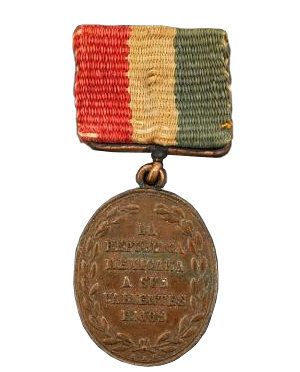
The Cross of Revolutionary Merit is a medal issued during 1910 and 1920 when control of Mexico’s government was attempted by several parties. 

The Cross of Revolutionary Merit is a medal issued during the early years of the twentieth century, between 1910 and 1920 when control of Mexico’s government was attempted by several parties.

The United States involvement in the Mexican Revolution was varied and seemingly contradictory, first supporting and then repudiating Mexican regimes during the period 1910-1920. For both economic and political reasons, the U.S. government generally supported those who occupied the seats of power, whether they held that power legitimately or not.

When Francisco I. Madero was elected president in October 1911, the U.S. president was a lame duck. The U.S. Ambassador to Mexico, Henry Lane Wilson was initially sympathetic to the new regime, but quickly came into conflict with it. Ambassador Wilson conspired with General Victoriano Huerta to oust Madero.

The United States government under newly inaugurated president Woodrow Wilson refused to recognize Huerta’s government and sent troops to occupy Veracruz. President Wilson’s government recognized the government of Venustiano Carranza in 1915.
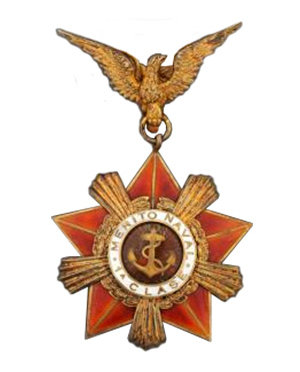
The Star for Naval Merit (Mexico)

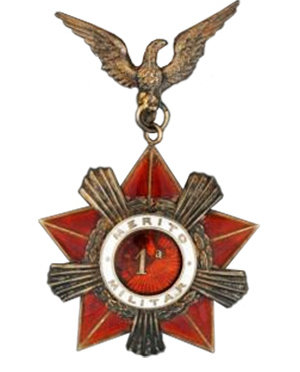
The Star for Military Merit was a medal issued during the twentieth century for the suppression of revolts and for general military service as the Mexican army put down rebellions by Mayan Indians.

In Spanish colonial times, the Yucatán (like most of New Spain) population operated under a legal caste system: peninsulares (officials born in Spain) were at the top, the criollos of Spanish descent in the next level, followed by the mestizo population (of mixed European-Amerindian descent), then descendants of the natives who had collaborated with the Spanish conquest of Yucatán, and at the bottom were the other native indios.

The Caste War of Yucatán (1847–1901) began with the revolt of native Maya people of Yucatán, Mexico against the European-descended population, called Yucatecos. The latter had long held political and economic control of the region. A lengthy war ensued between the Yucateco forces in the north-west of the Yucatán and the independent Maya in the south-east.

The war officially ended in 1901 when the Mexican army occupied the Maya capital of Chan Santa Cruz and subdued neighboring areas. Another formal end was made in 1915, when a Mexican general was sent to subdue the territory. However, skirmishes with small settlements that refused to acknowledge Mexican control continued until 1933.

The Star for Military Merit (Mexico)

The Star for Military Merit was a medal issued during the twentieth century for the suppression of revolts and for general military service as the Mexican army put down rebellions by Mayan Indians.

In Spanish colonial times, the Yucatán (like most of New Spain) population operated under a legal caste system: peninsulares (officials born in Spain) were at the top, the criollos of Spanish descent in the next level, followed by the mestizo population (of mixed European-Amerindian descent), then descendants of the natives who had collaborated with the Spanish conquest of Yucatán, and at the bottom were the other native indios.

The Caste War of Yucatán (1847–1901) began with the revolt of native Maya people of Yucatán, Mexico against the European-descended population, called Yucatecos. The latter had long held political and economic control of the region. A lengthy war ensued between the Yucateco forces in the north-west of the Yucatán and the independent Maya in the south-east.

The war officially ended in 1901 when the Mexican army occupied the Maya capital of Chan Santa Cruz and subdued neighboring areas. Another formal end was made in 1915, when a Mexican general was sent to subdue the territory. However, skirmishes with small settlements that refused to acknowledge Mexican control continued until 1933.

The Cross for the Yucatán

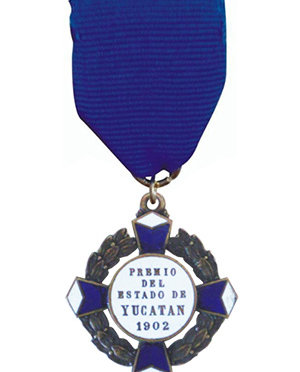
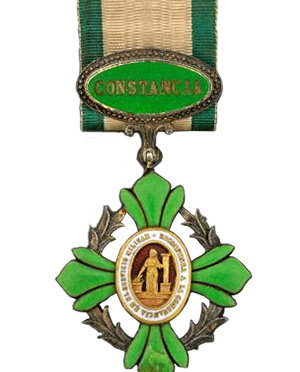
The Cross for the Yucatán was issued for the suppression of revolts and for general military service as the army put down rebellions. 

The Cross for the Yucatán was a medal issued during the twentieth century for the suppression of revolts and for general military service as the Mexican army put down rebellions by Mayan Indians.

In Spanish colonial times, the Yucatán (like most of New Spain) population operated under a legal caste system: peninsulares (officials born in Spain) were at the top, the criollos of Spanish descent in the next level, followed by the mestizo population (of mixed European-Amerindian descent), then descendants of the natives who had collaborated with the Spanish conquest of Yucatán, and at the bottom were the other native indios.

The Caste War of Yucatán (1847–1901) began with the revolt of native Maya people of Yucatán, Mexico against the European-descended population, called Yucatecos. The latter had long held political and economic control of the region. A lengthy war ensued between the Yucateco forces in the north-west of the Yucatán and the independent Maya in the south-east.

The war officially ended in 1901 when the Mexican army occupied the Maya capital of Chan Santa Cruz and subdued neighboring areas. Another formal end was made in 1915, when a Mexican general was sent to subdue the territory. However, skirmishes with small settlements that refused to acknowledge Mexican control continued until 1933.

The Cross for the French Intervention

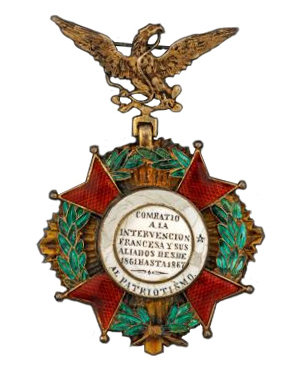
The Cross for the French Intervention is part of several medals created during the occupation of Mexico by French troops between 1862 and 1867.

On July 12 1859, Juárez decreed the first regulations of a new reform: “The Law of Nationalization of the Ecclesiastical Wealth.” The civil war between Liberals and Conservatives that followed (Civil War of the Reform) severely damaged Mexico’s infrastructure and crippled its economy. In view of the government’s desperate financial straits, Juárez canceled, in 1861, repayments of interest on foreign loans that had been taken out by the defeated conservatives.

Spain, Britain and France, angry over unpaid Mexican debts, sent a joint expeditionary force that seized the Veracruz Customs House in December 1861. Spain and Britain soon withdrew after they realized that the French Emperor Napoleon III intended to overthrow the Juárez government and establish a Second Mexican Empire, with the support of the remnants of the Conservative side in the Reform War.

Faced with US opposition to a French presence and a growing threat on the European mainland from Prussia, French troops began pulling out of Mexico in late 1866.

The Medal for the Battle of the Cinco de Mayo

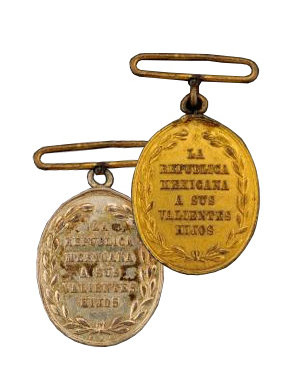
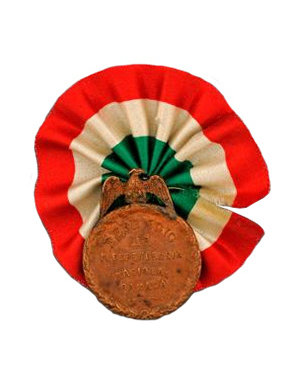
The Medal for the Battle of the Cinco de Mayo is part of several medals created during the occupation of Mexico by French troops between 1862 and 1867.

On July 12 1859, Juárez decreed the first regulations of a new reform: “The Law of Nationalization of the Ecclesiastical Wealth.” The civil war between Liberals and Conservatives that followed (Civil War of the Reform) severely damaged Mexico’s infrastructure and crippled its economy. In view of the government’s desperate financial straits, Juárez canceled, in 1861, repayments of interest on foreign loans that had been taken out by the defeated conservatives.

Spain, Britain and France, angry over unpaid Mexican debts, sent a joint expeditionary force that seized the Veracruz Customs House in December 1861. Spain and Britain soon withdrew after they realized that the French Emperor Napoleon III intended to overthrow the Juárez government and establish a Second Mexican Empire, with the support of the remnants of the Conservative side in the Reform War.

Faced with US opposition to a French presence and a growing threat on the European mainland from Prussia, French troops began pulling out of Mexico in late 1866.

The Medal for Acultzingo

The Medal for Acultzingo is part of several medals created during the occupation of Mexico by French troops between 1862 and 1867.

On July 12 1859, Juárez decreed the first regulations of a new reform: “The Law of Nationalization of the Ecclesiastical Wealth.” The civil war between Liberals and Conservatives that followed (Civil War of the Reform) severely damaged Mexico’s infrastructure and crippled its economy. In view of the government’s desperate financial straits, Juárez canceled, in 1861, repayments of interest on foreign loans that had been taken out by the defeated conservatives.

Spain, Britain and France, angry over unpaid Mexican debts, sent a joint expeditionary force that seized the Veracruz Customs House in December 1861. Spain and Britain soon withdrew after they realized that the French Emperor Napoleon III intended to overthrow the Juárez government and establish a Second Mexican Empire, with the support of the remnants of the Conservative side in the Reform War.

Faced with US opposition to a French presence and a growing threat on the European mainland from Prussia, French troops began pulling out of Mexico in late 1866.

The Medal for the French Intervention – Oaxaca

The Medal for the French Intervention is part of several medals created during the occupation of Mexico by French troops between 1862 and 1867.

On July 12 1859, Juárez decreed the first regulations of a new reform: “The Law of Nationalization of the Ecclesiastical Wealth.” The civil war between Liberals and Conservatives that followed (Civil War of the Reform) severely damaged Mexico’s infrastructure and crippled its economy. In view of the government’s desperate financial straits, Juárez canceled, in 1861, repayments of interest on foreign loans that had been taken out by the defeated conservatives.

Spain, Britain and France, angry over unpaid Mexican debts, sent a joint expeditionary force that seized the Veracruz Customs House in December 1861. Spain and Britain soon withdrew after they realized that the French Emperor Napoleon III intended to overthrow the Juárez government and establish a Second Mexican Empire, with the support of the remnants of the Conservative side in the Reform War.

Faced with US opposition to a French presence and a growing threat on the European mainland from Prussia, French troops began pulling out of Mexico in late 1866.

The Restorer of the Peace Medal (1855)

Time Period: Pre-WW1
Institution: 1855
Country: Mexico

The Restorer of the Peace medal was created in 1955, when the future president Ignacio Comonfort restored the peace after a series of conservative risings against liberal governmental reforms.

Ignacio Gregorio Comonfort de los Ríos (12 March 1812 – 13 November 1863), or Ignacio Comonfort, was a Mexican politician and soldier who became President of Mexico in 1855 after the outbreak of the Revolution of Ayutla that overthrew Santa Anna. This uprising’s name refers to not just a narrow political goal of ousting the dictator, but a more thorough change in political direction via armed warfare.

The Plan of Ayutla was the 1854 written plan aimed at removing conservative, centralist President Antonio López de Santa Anna from control of Mexico during the Second Federal Republic of Mexico period. This event is considered to be the first act of the Liberal Reform in Mexico.

The new regime would then proclaim the 1857 Mexican Constitution, which implemented a variety of liberal reforms.

The Cross for Military Loyalty (1841)

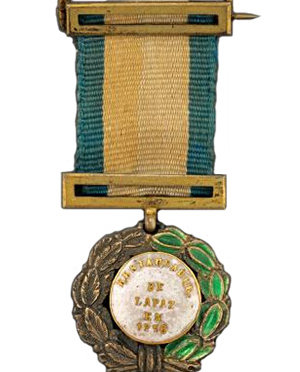
This set of medals were issued during the period 1835-1841 of armed conflict between settlers and the Mexican army that began in late 1835.

As the number of American settlers in the Mexican state of Texas kept growing, the Mexican government made the decision in 1830 to close the border to all immigration, imposing as well numerous restrictions like the abolition of slavery.

The Mexican government believed the United States had instigated the Texas insurrection (October 2, 1835 – April 21, 1836) with the goal of annexation. The Mexican Congress passed the Tornel Decree, declaring that any foreigners fighting against Mexican troops “will be deemed pirates and dealt with as such, being citizens of no nation presently at war with the Republic and fighting under no recognized flag.”

The revolution began in October 1835, after a decade of political and cultural clashes between the Mexican government and the increasingly large population of American settlers in Texas. Colonists and Tejanos disagreed on whether the ultimate goal was independence or a return to the Mexican Constitution of 1824. In March 1836, a second political convention declared independence and appointed leadership for the new Republic of Texas.

Determined to avenge Mexico’s honor, Santa Anna vowed to personally retake Texas. His Army of Operations entered Texas in mid-February 1836 and found the Texians completely unprepared. Mexican General José de Urrea led a contingent of troops on the Goliad Campaign up the Texas coast, defeating all Texian troops in his path and executing most of those who surrendered. Santa Anna led a larger force to San Antonio de Béxar (or Béxar), where his troops defeated the Texian garrison in the Battle of the Alamo, killing almost all of the defenders.

After the Texans’ defeat in April 1836 of General Santa Anna, Mexico made no further attempt to reconquer the territory, although it refused to recognize its independence. The annexation of Texas as the 28th state of the United States, in 1845, led directly to the Mexican–American War. By the terms of the Treaty of Guadalupe Hildago, signed in 1848, Mexico ceded almost half its national territory to the United States.