The New Zealand Gallantry Medal

The New Zealand Gallantry Medal (NZGM) was established in 1999 and is the fourth-level military decoration of the New Zealand armed forces.

The New Zealand Gallantry Medal (NZGM) is the fourth-tier military decoration within the New Zealand armed forces.

It was established through a Royal Warrant on September 20, 1999, as an integral component of the new, domestically-rooted New Zealand Gallantry system. The medal, which may also be posthumously conferred, is presented in recognition of “acts of gallantry” that occur during war, warlike operational service, and peacekeeping missions.

To commemorate additional acts of gallantry deserving of recognition, bars may be affixed to the NZGM. Those who receive this esteemed medal are entitled to utilize the postnominal letters “N.Z.G.M.”

The New Zealand Gallantry Medal Design

The New Zealand Gallantry Medal is a bronze disk measuring 38 mm in diameter.

Find This Medal

Right Now on eBay 
Clicking a link to eBay may result in a referral commission being paid if a purchase is made.
Loading...

The New Zealand Bravery Decoration

The New Zealand Bravery Decoration (or NZBD) is the third-level civil decoration of New Zealand. It was established in 1999.

The New Zealand Bravery Decoration (NZBD) stands as the third-tier civil decoration within New Zealand’s honors system.

Its inception took place through a royal warrant on September 20, 1999, marking a significant shift towards a unique New Zealand Bravery system to replace British bravery awards. This esteemed medal, which can also be conferred posthumously, is bestowed in recognition of “remarkable acts of bravery in perilous situations.” While predominantly a civilian honor, it is extended to members of the armed forces who exhibit acts of bravery in non-operational scenarios. This allowance is made as New Zealand’s gallantry awards are typically reserved for those involved in war, warlike operational service, and peacekeeping missions.

To acknowledge ongoing acts of extraordinary bravery deserving of recognition, bars may be added to the NZBD. Those who are honored with the New Zealand Bravery Decoration are entitled to use the postnominal letters NZBD.

The New Zealand Bravery Decoration Design

The New Zealand Bravery Decoration measures 45mm in diameter.

The obverse is a faceted cross pattée surmounted by a small faceted four-pointed star with the Royal Crown and fern frond wreath emblem. The reverse has the inscription “FOR BRAVERY – MO TE MAIA“.

The suspension is a ring suspension.

Find This Medal

Right Now on eBay 
Clicking a link to eBay may result in a referral commission being paid if a purchase is made.
Loading...

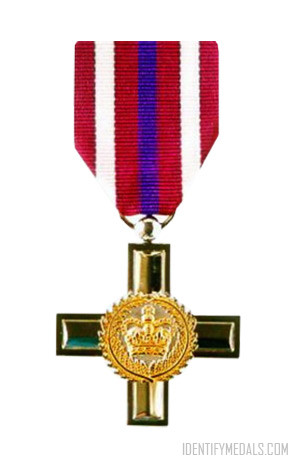
The New Zealand Gallantry Decoration

The New Zealand Gallantry Decoration (or NZGD) is the third-level military decoration of the New Zealand armed forces.

The New Zealand Gallantry Decoration (NZGD) holds the distinction of being the third-level military decoration within the New Zealand armed forces.

This prestigious decoration was established through a Royal Warrant on September 20, 1999, as an integral component of the new, homegrown New Zealand Gallantry system. The medal, including the potential for posthumous awards, is bestowed in recognition of “remarkable acts of gallantry in situations fraught with danger” that occur during war, warlike operational service, and peacekeeping missions.

In honor of continued acts of exceptional gallantry deserving of recognition, bars may be added to the NZGD. Those who receive this distinguished decoration are entitled to utilize the postnominal letters “N.Z.G.D.”

The New Zealand Gallantry Decoration Design

The New Zealand Gallantry Decoration measures 46mm in diameter.

The obverse is a faceted silver cross surmounted by the Royal Crown and fern frond wreath emblem. The reverse has the inscription “FOR GALLANTRY – MO TE TOANGA“.

The suspension is a ring suspension.

Find This Medal

Right Now on eBay 
Clicking a link to eBay may result in a referral commission being paid if a purchase is made.
Loading...

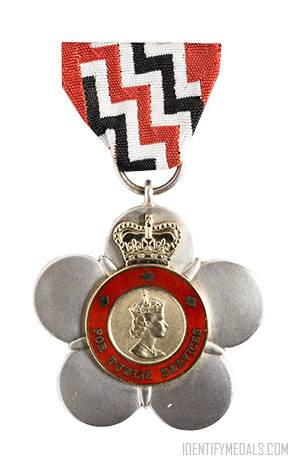
The New Zealand Queen’s Service Order

The New Zealand Queen’s Service Order was established on 13 March 1975 and awarded for valuable voluntary service to the community.

The Queen’s Service Order, established through a royal warrant by Queen Elizabeth II on March 13, 1975, serves as a means of acknowledging “valuable voluntary service to the community or meritorious and faithful services to the Crown or similar services within the public sector, whether in elected or appointed office.

This order emerged following a comprehensive evaluation of New Zealand’s honors system in 1974, effectively supplanting the Imperial Service Order in New Zealand.

The name of this Order reflects the historical significance of Queen Elizabeth II as the inaugural monarch officially designated as the Queen of New Zealand. The monarch of New Zealand is the Sovereign Head of the order and those who are appointed as members are “Companions“.

The New Zealand Queen’s Service Order Design

The emblem of this order features a stylized mānuka flower characterized by five petals, within which lies the likeness of the reigning monarch encircled by a red border bearing the words “FOR SERVICE — MŌ NGA MAHI NUI,” topped by a crown.

The ribbon showcases a traditional Māori Poutama pattern, consisting of black, white, and red diagonal ‘steps,’ symbolizing human growth and perpetual striving upwards. Red stripes line each edge of the ribbon.

Wearers display the insignia on the left lapel of their coat, and women opt to wear it as a ribbon fashioned into a bow on their left shoulder. When in uniform, women adopt the male fashion of displaying the QSO. 

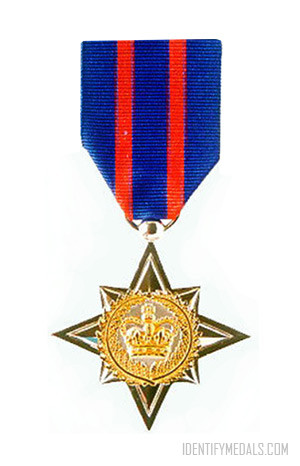
The New Zealand Bravery Star

The New Zealand Bravery Star was instituted by Royal Warrant on 20 September 1999 and is the second-level civil decoration of New Zealand.

The New Zealand Bravery Star (NZBS) holds the distinction of being the second-level civil decoration in New Zealand’s honors system.

It was established by Royal Warrant on September 20, 1999, as part of an initiative to transition from British bravery awards to a distinct New Zealand Bravery system. This noteworthy medal, which can also be conferred posthumously, is granted in acknowledgment of “acts of outstanding bravery in situations of danger.” While primarily a civilian honor, it is also extended to members of the armed forces who display acts of exceptional courage in non-operational contexts. This allowance is made because New Zealand’s gallantry awards are typically reserved for those involved in war, warlike operational service, including peacekeeping missions.

Additional recognition in the form of bars can be added to the NZBS to commemorate further acts of bravery deserving of this prestigious award. Those who receive the New Zealand Bravery Star are entitled to use the postnominal letters NZBS.

This medal took the place of the George Medal, recognizing acts of bravery within or worthy of recognition by New Zealand, and signifying the country’s shift towards its unique bravery recognition system.

The New Zealand Bravery Star Design

The New Zealand Bravery Star measures 45mm in diameter.

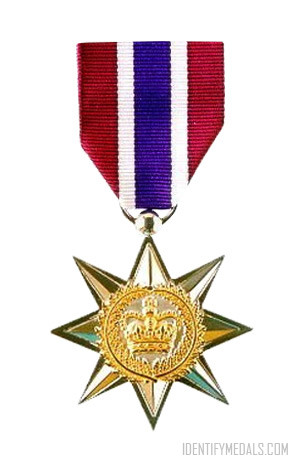
The obverse is a faceted silver eight-pointed star of equal points surmounted by the Royal Crown and fern frond wreath emblem (four of the arms are shorter than the Gallantry Star). The reverse has the inscription “FOR BRAVERY – MO TE MAIA“.

The suspension is a ring suspension.

Find This Medal

Right Now on eBay 
Clicking a link to eBay may result in a referral commission being paid if a purchase is made.
Loading...

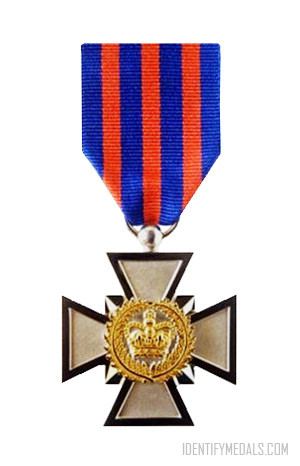
The New Zealand Gallantry Star

The New Zealand Gallantry Star (or NZGS) was created in 1999 and is the second-level military decoration of the New Zealand armed forces.

The New Zealand Gallantry Star (NZGS) holds the position of the second-highest military decoration within the New Zealand armed forces.

Its establishment came through a Royal Warrant on September 20, 1999, marking a significant step toward replacing British gallantry awards with a distinctly New Zealand Gallantry system. This distinguished medal, which can also be awarded posthumously, is conferred in recognition of “acts of outstanding gallantry in situations of danger” that occur during war, warlike operational service, and even peacekeeping missions.

Bars, or additional recognitions, can be added to the NZGS to acknowledge further acts of gallantry deserving of this prestigious award. Those honored with the New Zealand Gallantry Star are entitled to use the postnominal letters “N.Z.G.S.”

This medal effectively replaced the Distinguished Service Order (when awarded for gallantry), the Distinguished Conduct Medal, and the Conspicuous Gallantry Medal, signifying a shift towards a more indigenous New Zealand system of recognizing gallantry.

The New Zealand Gallantry Star Design

The New Zealand Gallantry Star measures 45mm in diameter.

The obverse is a faceted silver eight-pointed star of equal points surmounted by the Royal Crown and fern frond wreath emblem. The reverse has the inscription “FOR GALLANTRY – MO TE TOANGA“.

The suspension is a ring suspension.

Find This Medal

Right Now on eBay 
Clicking a link to eBay may result in a referral commission being paid if a purchase is made.
Loading...

The New Zealand Order of Merit

The New Zealand Order of Merit was an order of merit established by royal warrant on 30 May 1996 by Elizabeth II, Queen of New Zealand.

The New Zealand Order of Merit is a prestigious order of merit within New Zealand’s royal honors system. Queen Elizabeth II of New Zealand established it through a royal warrant on May 30, 1996.

This order is bestowed upon individuals who have provided commendable service to the Crown and the nation across various fields of endeavor. It recognizes outstanding contributions, talents, and merits, both in civil and military roles, symbolizing exceptional dedication to the people of New Zealand.

In terms of precedence, the New Zealand Order of Merit holds a position immediately following the Order of New Zealand in the hierarchy of honors.

The New Zealand Order of Merit Classes

The Sovereign of New Zealand serves as the titular head of the order, while the Chancellor of the order is the governor-general. Appointments to the order are made across five distinct levels:

  • Knight or Dame Grand Companion (GNZM)
  • Knight or Dame Companion (KNZM or DNZM)
  • Companion (CNZM)
  • Officer (ONZM)
  • Member (MNZM)

Between 2000 and 2009, the highest levels of the Order were known as Principal Companion (PCNZM) and Distinguished Companion (DCNZM), without the use of “Sir” or “Dame” titles.

The total number of Knights and Dames Grand Companion (including Principal Companions) is capped at 30 living individuals. Additionally, there are annual limits for new appointments, which stand at 15 Knights or Dames Companion, 40 Companions, 80 Officers, and 140 Members.

In addition to the five levels, the order features three distinct types of membership. Ordinary membership is exclusively available to citizens of New Zealand or a Commonwealth realm. “Additional” members, appointed for special occasions, do not count towards the numerical limits. Individuals who are not citizens of a Commonwealth realm may receive “Honorary” membership, and if they subsequently adopt citizenship from a Commonwealth realm, they become eligible for Additional membership.

The New Zealand Order of Merit Design

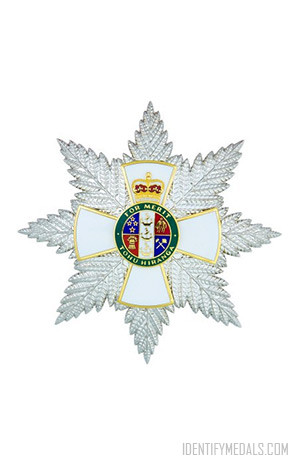
For the three highest classes of the Order, the badge is fashioned as a cross with gently curved edges, crafted from gold and white enamel. At its center, in the obverse, is the New Zealand coat of arms enclosed within a green enamel ring bearing the motto “For Merit Tohu Hiranga,” all crowned by a regal crown.

Officers and Members receive badges in similar designs, but in silver-gilt and silver, respectively.

The collar of the Order, an exclusive adornment worn solely by the Sovereign and Chancellor, consists of interconnected links featuring the central medallion of the order’s badge and “S”-shaped Koru designs. In the center of this arrangement is the New Zealand coat of arms. Dangling from the coat of arms is the order’s badge.

The star of the Order takes the form of an eight-pointed star, with each arm intricately designed to resemble a fern frond. At the heart of this star, the Order’s badge is prominently displayed. Grand Companions proudly wear a gold star, while Knight Companions don a silver one.
The wearing of these badges varies by class: Grand Companions wear theirs on a sash over the right shoulder, although the Governor-General often opts to wear it as a neck decoration instead of the Collar. Knight Companions and Companions don their badges on a neck ribbon (for men) or a bow on the left shoulder (for women), while Officers and Members wear theirs from a ribbon on the left lapel (for men) or a bow on the left shoulder (for women).

The ribbon and sash, on the other hand, are simple and unadorned, featuring a plain red ochre color.

Find This Medal

Right Now on eBay 
Clicking a link to eBay may result in a referral commission being paid if a purchase is made.
Loading...

The Order of New Zealand

The Order of New Zealand was created to recognize outstanding service and is the highest honor in the New Zealand royal honors system.

The Order of New Zealand represents the pinnacle of recognition within the New Zealand royal honors system. It was established on February 6, 1987, through a royal warrant, this prestigious order is designed to honor individuals who have demonstrated exceptional service to both the Crown and the people of New Zealand, whether in civil or military roles.

Appointments to the Order are made through a royal warrant under the monarch’s sign manual, following the prime minister’s advice. The order’s administration is overseen by a Secretary and Registrar, who holds the role of Clerk of the Executive Council.

The Order of New Zealand Classes

The Order of New Zealand consists of three classes categories of members:

  • Sovereign
  • Ordinary
  • Honorary

The ordinary membership is limited to 20 living members, although this number can be lower at any given time. Additional members may be appointed to commemorate significant royal, state, or national events, such as anniversaries or jubilees. Notable occasions for these appointments include the Treaty of Waitangi’s 150th anniversary in 1990, the Queen’s Golden Jubilee in 2002, the 20th anniversary of the Order’s institution in 2007, the Queen’s Diamond Jubilee in 2012, the Queen’s Platinum Jubilee in 2022, and the coronation of King Charles III in 2023. Additional members share the same status as ordinary members.

Honorary membership is extended to citizens of countries where the Sovereign is not the head of state. All members, regardless of category, are entitled to use the post-nominal letters “ONZ.”

The Order of New Zealand Design

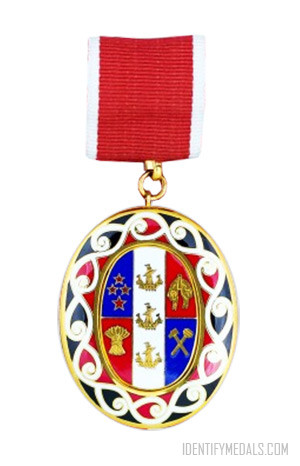
The insignia of the Order features an oval-shaped medallion adorned with the New Zealand coat of arms in brilliant gold and vibrant enamel colors. It is traditionally worn suspended from a white and ochre ribbon around the neck for men, while women wear it as a bow on their left shoulder.

The New Zealand Cross (1999)

The New Zealand Cross (1999) was instituted in 1999 and is New Zealand’s highest award for bravery, not in the face of the enemy.

The New Zealand Cross (NZC) stands as New Zealand’s highest honor for acts of extraordinary bravery, particularly in situations not involving combat. It was officially established through a Royal Warrant on September 20, 1999, as part of New Zealand’s efforts to create a distinct bravery award system, replacing British honors.

This prestigious medal, which can also be awarded posthumously, is bestowed in recognition of acts of immense bravery in situations of utmost peril. While primarily a civilian award, it is also conferred upon members of the armed forces who display remarkable courage in non-operational settings, as New Zealand’s gallantry awards are reserved for those involved in war or warlike operational service, including peacekeeping missions.

The addition of bars to the NZC acknowledges recipients’ repeated acts of bravery that warrant this distinguished award. Those honored with the New Zealand Cross are entitled to use the postnominal letters “NZC.” This medal took the place of the George Cross in recognizing acts of bravery within or deserving recognition from New Zealand. 

The Victoria Cross for New Zealand Design

The design of the New Zealand Cross draws inspiration from the original New Zealand Cross (1869), with the ribbon color altered to distinguish it from the Victoria Cross.

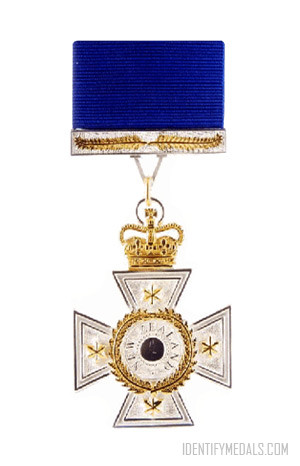
This distinctive decoration takes the form of a silver cross pattée, standing at 52 millimeters in height and 38 millimeters in width. Each of its arms is adorned with a gold six-pointed star, creating a striking visual contrast.

At the heart of the cross lies the inscription ‘New Zealand,’ encircled by a gracefully rendered gold fern wreath. Atop the cross, one finds the regal Saint Edward’s Crown in gold, affixed by a ring and a seriffed ‘V,’ which attaches it to a bar embellished with gold fern leaves, serving as a passage for the ribbon.

On the reverse side of the medal, the words “FOR BRAVERY – MO TE MAIA” are elegantly inscribed, symbolizing the valor and courage for which this distinguished award is granted.

Find This Medal

Right Now on eBay 
Clicking a link to eBay may result in a referral commission being paid if a purchase is made.
Loading...

The New Zealand Cross (1869)

The New Zealand Cross was introduced in 1869 during the New Zealand Wars, fought between the Māori and forces raised by European settlers.

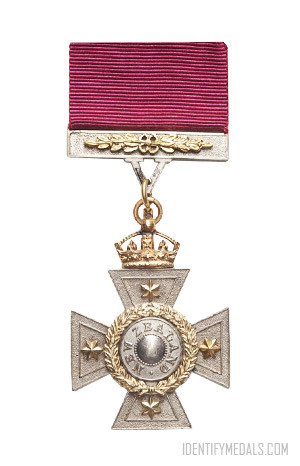
The New Zealand Cross was established in 1869, during the New Zealand Wars, a conflict between the indigenous Māori people and European settlers (Pākehā) aided by British troops. Throughout this turbulent period, marked by bravery and unwavering commitment to duty, numerous acts of gallantry and devotion were displayed by local militia, armed constabulary, and volunteers.

On March 10, 1869, without verifying the facts and under the mistaken belief that colonial troops were ineligible for the Victoria Cross unless under British command, Sir George Bowen, the Governor of New Zealand, introduced the New Zealand Cross as the highest honor in the country. This decision drew criticism in England, where it was seen as encroaching on Queen Victoria’s prerogatives. Nevertheless, Queen Victoria eventually endorsed this move.

The New Zealand Cross was awarded sparingly, with only 23 recipients. The first six awards were published in the New Zealand Gazette in 1869, followed by one award in 1870. Remarkably, the remaining 16 awards were not gazetted until between 1875 and 1910, some six to 44 years after the commendable actions they recognized.

The New Zealand Cross Design

The New Zealand Cross takes the shape of a silver cross pattée, with distinctive features adorning both its obverse and reverse sides. On the obverse, the central portion proudly bears the gilded gold inscription ‘NEW ZEALAND,’ encircled by an elegant laurel wreath. Each arm of the cross boasts a six-point gold star, and atop the cross rests a regal gold Imperial State Crown.

The reverse of the medal shows two concentric circles, with the recipient’s name skillfully engraved between them and the date of the heroic action etched within the inner circle.

A crimson ribbon passes through a silver suspender clasp embellished with delicate gold laurel leaves.

The first 20 medals crafted in 1871 included a distinctive feature on the reverse of the suspender clasp – the cartouche of the goldsmiths, Messrs Phillips Brothers and Son of Cockspur Street, London. However, this detail was omitted from a subsequent batch of five medals produced in 1886.