The Bronze Cross Medal (Philippines)

The Bronze Cross Medal military decoration of the Armed Forces of the Philippines awarded for heroism involving risk of life.

The Bronze Cross Medal (or Medalyang Tanso na Krus) is a singular military decoration bestowed by the Armed Forces of the Philippines, given for acts of “heroism involving risk of life” under circumstances not warranting the higher Gold Cross Medal. It may be granted for either: 1) voluntary actions displaying exceptional courage beyond the call of duty amidst grave danger, or 2) other remarkable acts of bravery not directly involving combat with the enemy.

This honor is conferred by various high-ranking officials including the Chief of Staff of the Armed Forces of the Philippines (AFP), commanders of the Philippine Army, Navy (PN), and Air Force (PAF), as well as AFP Support Services Units, Area Commands, division and brigade commanders, and their equivalents in the PAF and PN. Recipients of this medal may include both military and civilian personnel of the AFP, and individuals from allied armed forces may also be eligible based on the specified award criteria.

The Bronze Cross Medal Design

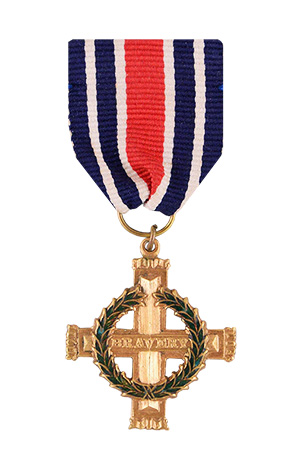
The medal features a golden Greek cross with a green laurel wreath positioned centrally over it. At the center of the horizontal arms of the cross, there is a golden bar bearing the inscription “BRAVERY.”

It hangs from a blue ribbon with a central red stripe bordered by white edges, accompanied by narrow white stripes positioned halfway to the ribbon’s edges.
The Gawad sa Kaunlaran Distinction

The Gawad sa Kaunlaran Distinction is the second highest distinction presented by the Armed Forces to civilians and government officials

The Gawad sa Kaunlaran is conferred upon Philippine citizens by the Chief of Staff of the Armed Forces of the Philippines, Area Command, and Major Service Commanders. It stands as the second highest honor bestowed by the Armed Forces of the Philippines upon civilians and government officials.

This award is granted for remarkably meritorious and significant contributions to socio-economic and other non-combat endeavors, or for exceptionally distinguished service that significantly furthers the peaceful objectives of the AFP or enhances the quality of life within military communities.

Recipients are selected based on the conspicuous nature of their achievements, regardless of their position or length of service. The completion of specific tasks or projects is not a prerequisite for consideration; rather, the notable impact and contribution of the individual’s actions are the primary criteria for recognition.

The Gawad sa Kaunlaran Medal Design

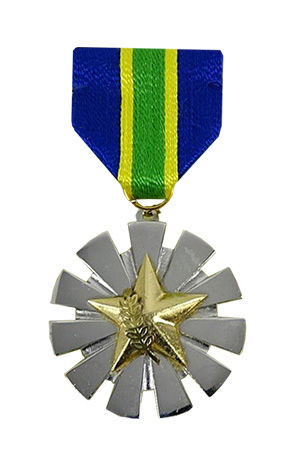
The medal features a circular design adorned with 11 silver rays, with dark blue interspaces between the rays. Positioned at the center of the rays is a gold star, upon which a single branch of light-green laurel leaves is diagonally superimposed.

It hangs from a blue ribbon accentuated by a central green stripe bordered by yellow edges.

The Distinguished Navy Cross (Philippines)

The Distinguished Navy Cross is a military decoration of the Armed Forces presented for distinguished heroism.

The Distinguished Navy Cross is a prestigious decoration within the Armed Forces of the Philippines (AFP), recognizing exceptional heroism. This valor is demonstrated through voluntary actions undertaken in the face of grave danger, surpassing the expected duties while engaged in naval operations.

The act must be notably outstanding, setting the recipient apart from their peers. This accolade is granted by the Chief of Staff of the AFP, Unified Command, or Major Service Commanders to AFP military personnel serving in any capacity within the Philippine Navy or its naval components.

The Distinguished Navy Cross Design

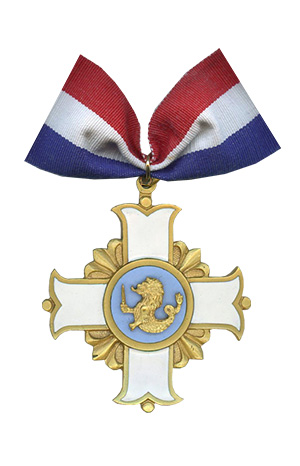
The award itself features a gold Maltese cross, with the centerpiece displaying the emblem of the Philippine Navy. This emblem depicts a gold-plated Philippine sea lion grasping a dagger in its right paw and a Sampaguita flower in the left, set upon an anchor. Encircling this emblem is a navy blue disc adorned with laurel leaves.

The ribbon accompanying the cross is colored cornflower blue and is accentuated with three small white lines at its center.

The Distinguished Aviation Cross (Philippines)

The Distinguished Aviation Cross is a military decoration of the Armed Forces presented for heroism or achievement during aerial operation.

The Distinguished Aviation Cross is a prestigious military honor bestowed by the Armed Forces of the Philippines, recognizing acts of heroism or exceptional achievement in aerial operations.

This cross is granted to individuals serving within the Philippine Air Force or the air components of the Philippine Army or Philippine Navy. It acknowledges voluntary actions undertaken in the face of substantial danger, surpassing the usual expectations of duty. The recognized accomplishment must demonstrate an exceptional and remarkable nature, highlighting distinguished heroism or extraordinary achievement while engaging in aerial flight.

The Distinguished Aviation Cross Design

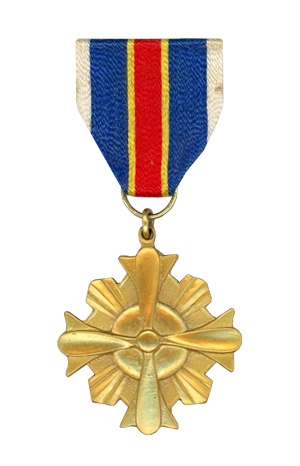
The medal, crafted from gold-colored metal, takes the shape of a diamond. Positioned on the diamond is a Maltese cross featuring a radiant golden sun at its center, with rays extending between the arms of the cross. Above the sun, a four-bladed propeller is superimposed, with each blade extending beyond the cross’s edges.

This cross is hung from a ribbon of blue, bordered with white, and embellished with a central red stripe edged in gold.

The Gold Cross (Philippines)

The Gold Cross is a decoration established by the Armed Forces of the Philippines to recognize gallantry in action.

The Gold Cross Medal (GCM) is a military decoration within the Armed Forces of the Philippines, acknowledging acts of bravery in combat. Ranked as the third highest military honor in the Philippines for heroism, it is conferred by the Chief of Staff of the Armed Forces of the Philippines or other senior commanders to deserving members of the Armed Forces for acts of gallantry in action that do not warrant the award of the Distinguished Conduct Star.

The Gold Cross Design

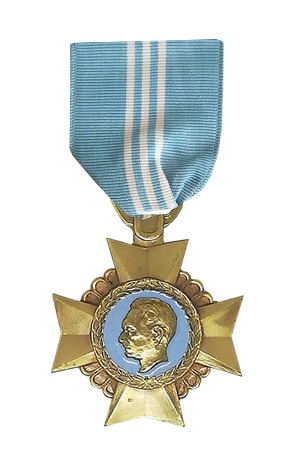
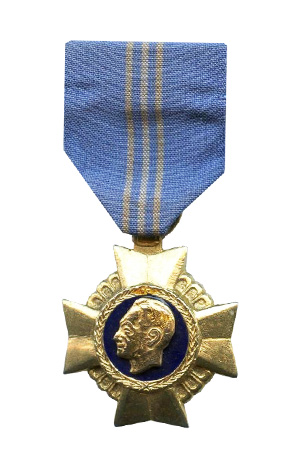
The design of the medal features a golden Maltese cross with a distinctive grooved border between its arms. Positioned at the center of the cross, in gold relief, is a left-facing profile of Manuel L. Quezon displayed on a dark blue disc. Surrounding the disc is a wreath of laurel leaves in gold, elegantly superimposed on the cross.

A golden metal loop is fixed at the top arm of the cross for suspension, while the medal hangs from a ribbon characterized by a light blue hue with three narrow vertical white lines running through its center.

The Distinguished Service Star (Philippines)

The Distinguished Service Star is the third highest military award of the Philippines and awarded for valuable service.

The Distinguished Service Star holds the position as the third highest military honor within the Armed Forces of the Philippines. It is bestowed in recognition of exceptionally meritorious and valuable contributions made while holding significant positions of responsibility.

The Distinguished Service Star Design

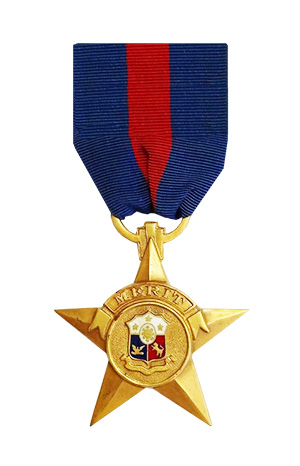
The award is worn suspended from the neck, secured by a ribbon featuring a dark blue hue with a prominent red vertical stripe at its center. Resembling a five-pointed star, the medal features a central disc showcasing the Coat of Arms of the Philippines. Above the seal, an arc-shaped golden scroll bears the inscription “Merit.”

A wreath composed of twenty-six dark green leaves and ten white buds attaches the star to its ribbon. Engraved on the reverse side of the medal are the words “For Distinguished Service.”

The Distinguished Conduct Star (Philippines)

The Distinguished Conduct Star is the second highest military award of the Philippines and awarded for extraordinary acts of heroism.

The Distinguished Conduct Star stands as the Philippines’ second-highest military honor, ranking only below the Medal of Valor. President Manuel L. Quezon established this award in 1939, replacing the Philippine Constabulary Distinguished Conduct Star.

Criteria This decoration is bestowed upon individuals serving in any capacity within the Armed Forces of the Philippines who demonstrate extraordinary heroism not meeting the criteria for the Medal of Valor during military operations against an armed adversary. The act or acts of heroism must be exceptionally notable and involve a level of life-threatening risk that sets the individual apart from their peers. The Chief of Staff of the Armed Forces of the Philippines has the authority to confer this award.

The Distinguished Conduct Star Design

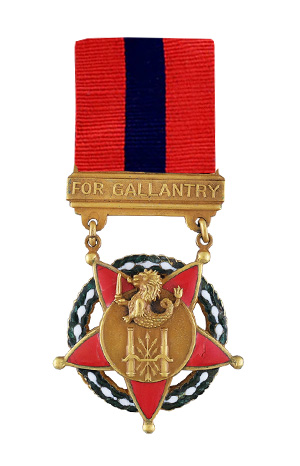
The medal features a red enameled, downward-pointing star with a central gold disc. Encased within the disc is a relief of a gold heraldic sea lion, grasping a dagger in its right hand, positioned atop the muzzles of two cannons flanking both sides. At the disc’s base lie two bows resting horizontally across arrows, placed between the breeches of the cannons. Vertically positioned spears point upward, overlaying the crossed arrows.

Affixed to a gold bar engraved with the phrase “For Gallantry,” the star is connected to the base of a wreath crafted from Sampaguita white flower buds and green leaves. The award is worn suspended from the neck by a red ribbon featuring a blue stripe at its center.

The Order of Lapu-Lapu

The Order of Lapu-Lapu is a national order of merit established in 2017 and conferred by the President of the Philippines.

The Order of Lapu-Lapu (or Orden ni Lapu-Lapu in Filipino) is a prestigious national honor bestowed by the President of the Philippines upon government officials, personnel, and private individuals. It recognizes exceptional contributions or remarkable service related to a specific campaign or advocacy initiated by the President.

Unlike awards included in the Honors Code of the Philippines, this presidential accolade is positioned below the Presidential Medal of Merit in terms of precedence.

The Order of Lapu-Lapu Ranks

According to Executive Order No. 17 signed by President Rodrigo Duterte, the Order of Lapu-Lapu originally consisted of three ranks: the Lapu-Lapu Medal, the Kalasag Medal, and the Kampilan Medal. However, this was expanded to four ranks with the issuance of Executive Order No. 35. The new ranks are as follows:

  1. Magalong Medal: Awarded to government officials, personnel, and private individuals who have demonstrated exceptional service or made outstanding contributions to the success of an activity aligned with a campaign or advocacy of the President.
  2. Kalasag Medal: Conferred upon government officials, personnel, and private individuals who lost their lives directly due to their involvement in an activity connected to a campaign or advocacy of the President.
  3. Kampilan Medal: Granted to government officials, personnel, and private individuals who sustained serious injuries, wounds, or significant property loss as a direct consequence of their participation in an activity related to a campaign or advocacy of the President.
  4. Kamagi Medal: Presented to government officials, personnel, and private individuals who actively participated in and made substantial contributions to an activity associated with a campaign or advocacy of the President but do not fall under any of the aforementioned ranks.

The Order of Lapu-Lapu Design

The medals for the Order of Lapu-Lapu are crafted by the Bangko Sentral ng Pilipinas using 99.9% silver, with specific ranks featuring selective gold plating.

The ribbon is fashioned from Philippine cotton, hand-woven by a cooperative foundation located in Bontoc, Mountain Province.

  1. Magalong Medal: Awarded to government officials, personnel, and private individuals who have demonstrated exceptional service or made outstanding contributions to the success of an activity aligned with a campaign or advocacy of the President.
  2. Kalasag Medal: Conferred upon government officials, personnel, and private individuals who lost their lives directly due to their involvement in an activity connected to a campaign or advocacy of the President.
  3. Kampilan Medal: Granted to government officials, personnel, and private individuals who sustained serious injuries, wounds, or significant property loss as a direct consequence of their participation in an activity related to a campaign or advocacy of the President.
  4. Kamagi Medal: Presented to government officials, personnel, and private individuals who actively participated in and made substantial contributions to an activity associated with a campaign or advocacy of the President but do not fall under any of the aforementioned ranks

The Philippines’s Presidential Medal of Merit

The Philippines’s Presidential Medal of Merit is an honor established in 2003 and given by the Republic of the Philippines.

The Presidential Medal of Merit (or Pampanguluhang Medalya ng Merito) is a distinction bestowed by the Republic of the Philippines. Originally named the Presidential Merit Award, it was rebranded as the Presidential Medal of Merit through Executive Order 236 on September 19, 2003.

The Presidential Medal of Merit is granted to individuals, whether Filipino or foreign, for various reasons. For instance:

  • a. Exceptional service to the President, the Administration, or cabinet members.
  • b. Achievement in international events or fields such as literature, sciences, arts, entertainment, and other civilian domains, contributing to national pride and artistic excellence.
  • c. Recognition of retiring cultural workers or artists who have served the government in official or advisory capacities, or foreign artists who have promoted Philippine culture.
  • d. Acts of merit that elevate the reputation of the Republic of the Philippines, including leading the Philippine delegation or materially contributing to the success of significant international conferences or events that bring honor and distinction to the country, such as Presidential visits abroad and major international gatherings held within the Philippines.

The Order of the Golden Heart

The Order of the Golden Heart is an order of the Philippines created in 1954 and awarded for distinguished services and aid.

The Order of the Golden Heart (or Orden ng Gintong Puso) is a distinguished order in the Philippines. Established initially as the Golden Heart Presidential Award through Executive Order 40-A on June 21, 1954, it was later elevated to the Order of the Golden Heart by Executive Order 236 on September 19, 2003.

This order aims to officially recognize individuals, whether Filipino or foreign citizens, who have provided exceptional services or significant financial or material assistance. Their contributions extend to the advancement of moral, social, and economic conditions among the Filipino populace, as well as their voluntary efforts in serving the Filipino community.

The Order of the Golden Heart Ranks

The Order of the Golden Heart consists of the following ranks:

  • Grand Collar (GCGH) (Maringal na Kuwintas): Bestowed upon a former or current head of State or government.
  • Grand Cross (GCrGH) (Maringal na Krus): Granted to a Crown Prince, Vice President, Senate President, Speaker of the House, Chief Justice, or an equivalent official. It may also be awarded to foreign ministers or other cabinet-level officials, as well as Ambassadors, Undersecretaries, Assistant Secretaries, or individuals of comparable rank.
  • Grand Officer (GOGH) (Maringal na Pinuno): Conferred upon Chargé d’affaires, Minister, Minister Counselor, Consul General, executive director, or individuals of similar rank.
  • Commander (CGH) (Komandante): Bestowed upon Chargé d’affaires a.i., Counselor, First Secretary, Consul General (in the consular section of an Embassy), Consular officer with a personal rank exceeding Second Secretary, Director, or individuals of comparable rank.
  • Officer (OGH) (Pinuno): Awarded to Second Secretaries, Consuls, assistant directors, or individuals of similar rank.
  • Member (MGH) (Kagawad): Conferred upon Third Secretaries, Vice Consuls, Attachés, Principal Assistants, or individuals of comparable rank.

The Order of the Golden Heart Design

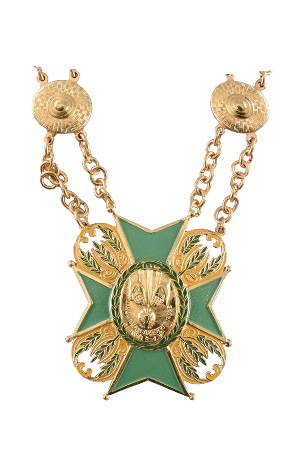
The badge and plaque consist of a green-enamelled Maltese cross, adorned with an oval golden medallion depicting open hands embracing a shining golden heart. Above this motif is the Latin motto “MANUM TUAM APERVIT INOPE,” and the entire medallion is encircled by a laurel crown in green. Between the laurel branches are golden laces and green leaves. Originally designed as a medal by Gilbert Perez, it was later adapted into the badge of the Order by Galo Ocampo.

The ribbon of the Order is red, while the original award featured a tricolor ribbon of blue, white, and red.