The Distinguished Service Cross

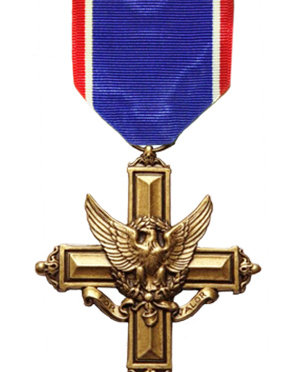
The Distinguished Service Cross is the second-highest United States Army military award and is given for extreme gallantry and risk of life.

The Distinguished Service Cross (or DSC) is the second-highest United States Army military award. It is given for extreme gallantry and risk of life in actual combat with an armed enemy force. This award was established by President Woodrow Wilson on January 2, 1918, during World War I.

The act or acts of heroism required for the Distinguished Service Cross must have been so notable and have involved risk of life so extraordinary as to set the individual apart from his or her comrades. These are of such degree that are above those required for all other U.S. combat decorations except the Medal of Honor.

While the Distinguished Service Medal is awarded to persons in recognition of service to the government, the Cross is only awarded for actions in combat.

The History of the Distinguished Service Cross

The award was first given during World War I, although a number of them were made for actions before WW1 to soldiers who had received a Certificate of Merit for gallantry. Others were belated recognition of actions in the Philippines during the Boxer Rebellion and on the Mexican Border.

During World War II, just over 5,000 awards were made. Only three men received the medal three times: Lieutenant Colonel John C. Meyer, Major General James A. Van Fleet, and Master Sergeant Llewellyn Chilson. A little over fifty soldiers and one sailor received two Distinguished Service Crosses in WW2.

Over 800 awards, over 300 posthumous, were given in the Korean War, and over 1,000 in the Vietnam War (almost 400 of which were posthumous).

The Distinguished Service Cross Design

The Distinguished Service Cross award is a cross made of bronze and measures 2 inches in height and ​1 1316 inches in width.

The obverse shows an eagle in the center and a scroll below the eagle bearing the inscription “FOR VALOR.” On the reverse, the center of the cross is circled by a wreath with a space for engraving the name of the recipient. The Distinguished Service Cross was originally designed by J. Andre Smith, an artist employed by the United States Army during World War I.

During World War I, 6,309 awards of the Distinguished Service Cross were made to 6,185 recipients. In the aftermath of The Great War, 62 awards were made for actions in North Russia and Siberia during the Russian Civil War and approximately 132 retroactive awards were made for actions in previous conflicts. During World War II, just over 5,000 awards were made.

American Soldiers That Earned a
Distinguished Service Cross

Here are five individuals who earned the Distinguished Service Cross. They represent just a few examples of the many brave soldiers who have earned this award for their exceptional courage and selflessness in the face of danger.

Audie Murphy

Audie Murphy, a highly decorated American soldier and actor, earned the Distinguished Service Cross for his actions during World War II. He received the medal for his heroic leadership and valor in combat, including single-handedly holding off a German attack.

Alvin C. York

Alvin C. York, a World War I soldier, was awarded the Distinguished Service Cross for his extraordinary actions during the Meuse-Argonne Offensive in 1918. He led an attack on a German machine gun nest, capturing 132 enemy soldiers and helping to secure the success of his unit.

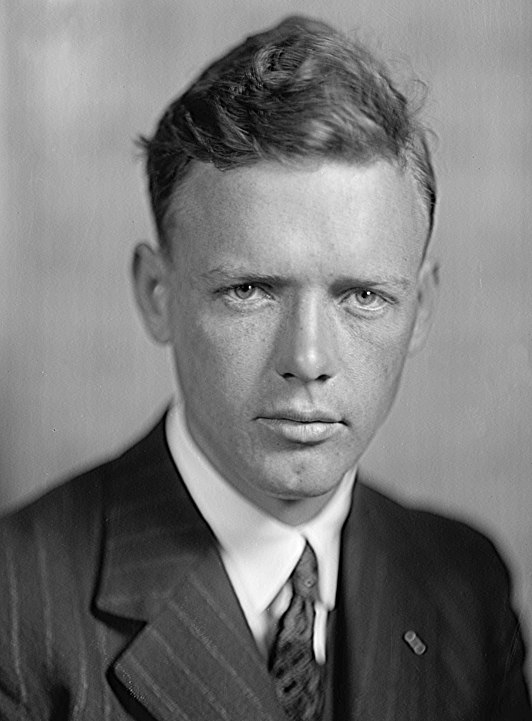
Charles Lindbergh 

Charles Lindbergh, the renowned aviator, received the Distinguished Service Cross for his pioneering transatlantic flight in 1927. The award recognized his significant contribution to aviation and the advancement of airmail services.

Theodore Roosevelt Jr.

Theodore Roosevelt Jr., the son of President Theodore Roosevelt, was posthumously awarded the Distinguished Service Cross for his actions during the D-Day invasion of Normandy in World War II. Despite being suffering from arthritis and heart problems, he landed with the first wave of troops and provided invaluable leadership during the assault.

Roy Benavidez

Roy Benavidez, a member of the U.S. Army Special Forces, earned the Distinguished Service Cross for his heroic actions during the Vietnam War. He saved the lives of numerous fellow soldiers during a six-hour battle, despite being severely wounded himself.
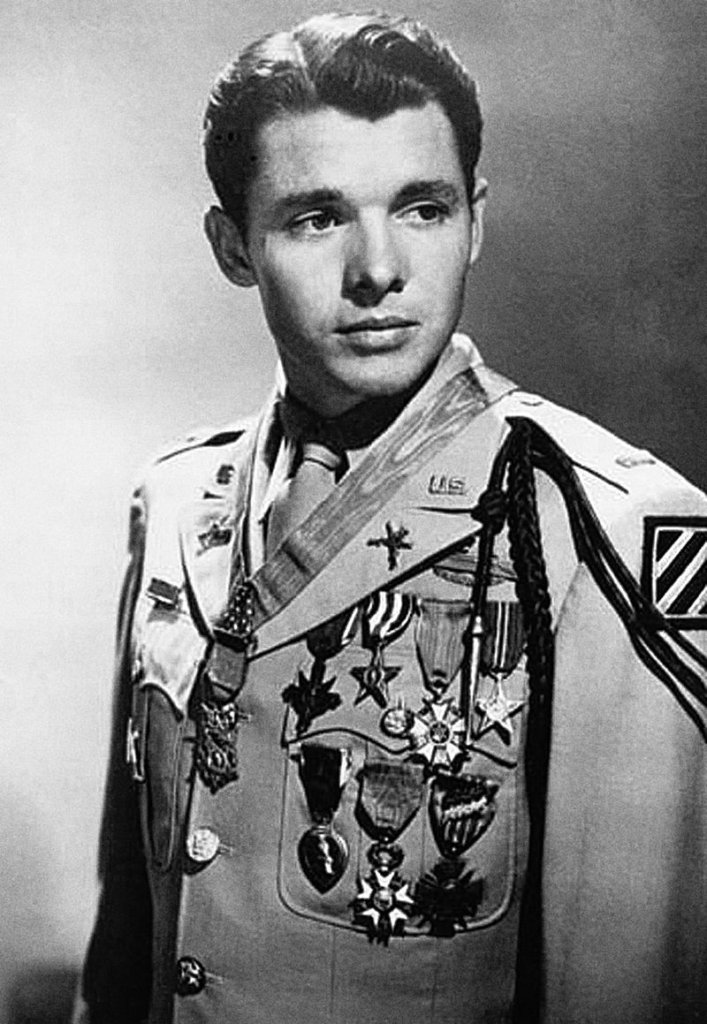
Audie Murphy photographed in 1948 wearing the U.S. Army khaki "Class A" (tropical service) uniform with full-size medals. Source: Wikipedia.
Col. Charles Lindbergh. Photo by Harris & Ewing, c. 1927.

Buy This Medal Online

Right Now on eBay 
Clicking a link to eBay may result in a referral commission being paid if a purchase is made.
Loading...

The Distinguished Service Medal

The Distinguished Service Medal is a United States Army military award given for exceptionally meritorious service to the Government.

  • Time PeriodThe Great War
  • Institution: January 2, 1918
  • Country: United States

The Distinguished Service Medal is a United States Army military award given to any person who, while serving in any capacity with the United States military, has distinguished himself by exceptionally meritorious service to the Government in a duty of great responsibility. The performance must be clearly exceptional.

The Distinguished Service Medal is one of the highest military decorations awarded by the United States Armed Forces. It is typically bestowed upon high-ranking military officers, senior government officials, and individuals who have made exceptional achievements in their respective fields.

The Distinguished Service Medal represents the highest recognition for extraordinary service and dedication to the nation. 

The Distinguished Service Medal Design

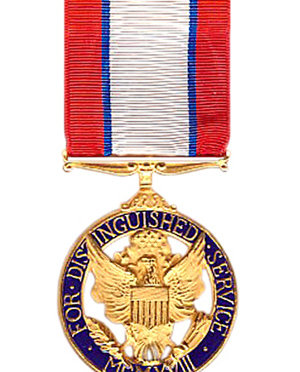
The medal measures 1 ½ inches in diameter and bears the inscription “FOR DISTINGUISHED SERVICE MCMXVIII”.

The obverse of the Distinguished Service Medal shows the Coat of Arms of the United States in gold surrounded by a circle of Dark Blue enamel. On the reverse is a scroll for the engraved name of the recipient upon a trophy of flags and weapons.

More than 2,000 awards were made during World War I.

Buy a Distinguished Service Medal

Note: As an eBay partner, I earn from qualifying purchases. This is all done automatically when you use a link and at no extra cost to you.

Note 2: It’s unlikely you will find this medal in second-hand stores, but I’ve added a box below in case one shows up.

Right Now on eBay 
Clicking a link to eBay may result in a referral commission being paid if a purchase is made.
Loading...

The Silver Star Medal (USA)

The Silver Star Medal is the United States Armed Forces’s third-highest personal decoration for gallantry and valor in combat.

The Silver Star Medal (known unofficially as the Silver Star or SSM) is the United States Armed Forces’ third-highest personal decoration for valor in combat. The medal is awarded primarily to members of the United States Armed Forces for gallantry in action against an enemy of the United States, so long as the action did not justify one of the next higher valor awards.

Throughout its history, the Silver Star has been awarded to numerous deserving individuals who have demonstrated extraordinary valor and bravery in defense of the United States. It remains a highly esteemed medal within the U.S. military, honoring the exceptional sacrifices made by service members.

The Silver Star Medal was also awarded for singular acts of valor or heroism over a brief period, such as one or two days of a battle.

The History of the Silver Star Medal

The Silver Star was established on July 19, 1932, by an act of the U.S. Congress. It was initially created as the “Silver Star Medal” and was primarily intended to recognize the heroism of individuals in the U.S. Army during World War I. The medal was retroactively authorized to be awarded for acts of valor dating back to April 6, 1917, the entry of the United States into World War I.

Over time, the eligibility for the Silver Star was expanded beyond the Army to include all branches of the U.S. armed forces. This includes the Army, Navy, Marine Corps, Air Force, and Coast Guard. It is awarded to members of these branches for gallantry in action against an enemy of the United States.

The Silver Star Criteria and Recognition

The Silver Star is awarded for acts of extraordinary heroism, typically involving great personal risk and bravery. It is often bestowed upon those who display exceptional valor in combat, where their lives are in immediate danger.

The actions for which the Silver Star is awarded must be of such a high degree that they are worthy of recognition above and beyond the requirements for other medals.

The Silver Star Medal Design

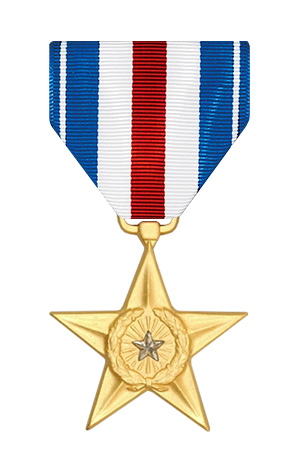
The Silver Star Medal is a gold five-pointed star measuring 1 12 inches (38 mm) in diameter.

Its obverse shows a laurel wreath encircling rays and a silver star superimposed in the center. The reverse has the inscription FOR GALLANTRY IN ACTION.

The medal is worn as a ribbon on the uniform, and the recipient also receives a medal with an appropriate citation that details the specific acts of valor or distinguished service.

The Department of Defense does not keep extensive records for the Silver Star Medal, but independent groups estimate that some 100,000 to 150,000 SSMs were awarded.

Right Now on eBay 
Clicking a link to eBay may result in a referral commission being paid if a purchase is made.
Loading...
]

The Navy Cross

The Navy Cross is the United States military’s second-highest decoration and awarded to members of the Navy, Marine Corps, and Coast Guard. 

The Navy Cross holds a significant place among the military decorations awarded by the United States Department of the Navy. Established in 1919, it serves as the second-highest military decoration specifically for the Navy, Marine Corps, and Coast Guard personnel. The Navy Cross is presented to individuals who have displayed extraordinary acts of valor and heroism in combat or have demonstrated meritorious service in situations that do not meet the criteria for the Medal of Honor.

The Navy Cross is reserved for those who have shown exceptional bravery, selflessness, and dedication to their comrades and the mission at hand. It recognizes acts of valor performed in the face of the enemy, involving personal risk and exhibiting a level of courage that goes beyond what is expected of service members in the line of duty.

The medal is equivalent to the Army’s Distinguished Service Cross, the Air and Space Forces’ Air Force Cross, and the Coast Guard Cross.

A Short History of The Navy Cross

The introduction of the Navy Cross was closely linked to the United States’ entry into World War I. At that time, while several European nations had a tradition of honoring heroes from foreign countries, the U.S. only had the Medal of Honor as its sole award for valor. In response to this, the Army introduced the Distinguished Service Cross and Distinguished Service Medal in 1918, and the Navy followed suit in 1919, retroactively recognizing actions from 6 April 1917.

Initially, the Navy Cross held a lower precedence compared to the Medal of Honor and the Navy Distinguished Service Medal. This was because it was awarded for both combat heroism and other distinguished service. However, this order of precedence was revised by Congress on 7 August 1942, designating the Navy Cross as a decoration exclusively for combat actions, following the Medal of Honor in hierarchy.

Since its establishment, the Navy Cross has been bestowed upon individuals over 6,300 times

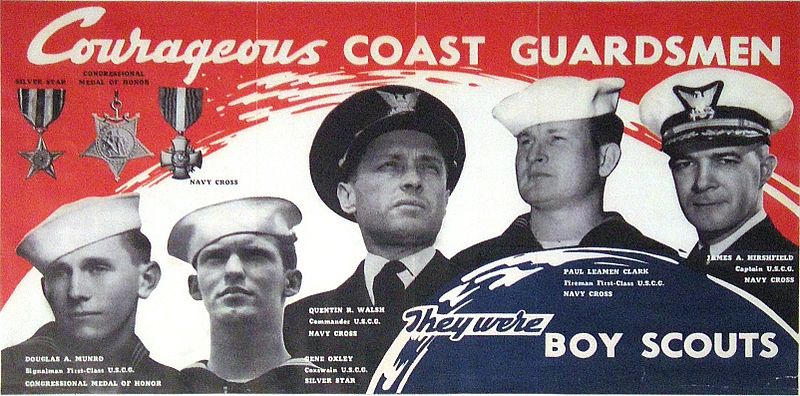
Courageous Coast Guardsmen poster
World War II vintage US poster used in New York City subways: "Courageous Coast Guardsmen / They were Boy Scouts". Image courtesy of Wikipedia.

The Navy Cross Medal Criteria

The criteria for receiving the Navy Cross are stringent, requiring evidence of outstanding leadership, extraordinary initiative, and steadfast devotion to duty. Recipients of the Navy Cross have displayed exceptional courage and have often placed themselves in extreme danger to protect their fellow servicemembers or achieve the mission’s objectives.

The awarding of the Navy Cross is typically accompanied by a citation, which describes in detail the recipient’s heroic actions or meritorious service. These narratives honor the individual’s extraordinary deeds and testify to their valorous or exceptional contributions.

The Navy Cross Medal Design

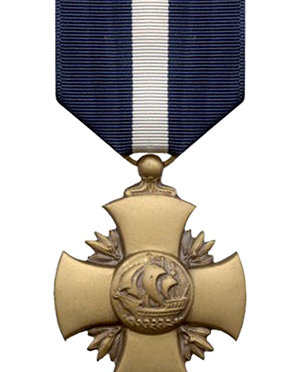
The obverse of the medal is a modified cross pattée one and a half inches wide. There are four laurel leaves with berries in each of the re-entrant arms of the cross, and in the center a sailing vessel is depicted on waves, sailing to the viewer’s left. The reverse shows a bronze cross pattée with crossed anchors from the pre-1850 period and cables attached. The earliest version of the Navy Cross (1919–1928) featured a narrow strip of white.

Around 6,900 medals were awarded. The first actual recipient of Cross is unknown because initial awards were made from a lengthy list published after World War I.

Right Now on eBay 
Clicking a link to eBay may result in a referral commission being paid if a purchase is made.
Loading...

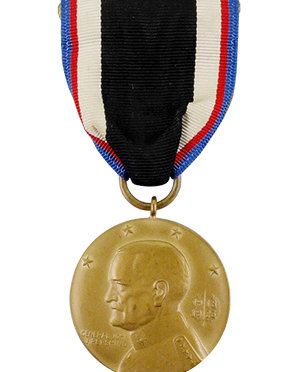
The Army of Occupation of Germany Medal

The Army of Occupation of Germany Medal is a U.S. service medal created in 1941 to recognize military members who fought in WW1.

The Army of Occupation of Germany Medal is a United States military service medal created by Congress on November 21, 1941 to recognize members of the United States military who served in the European occupation force following the close of World War I. The decoration was awarded for honorable service (occupation garrison duty) in Germany or Austria-Hungary between 12 November 1918 and 11 July 1923.

The first Army of Occupation of Germany Medal was presented to General of the Armies Pershing, with retroactive presentations made to any service member upon application to the United States War Department. While the obverse includes the dates of the U.S. Occupation of Germany, the three stars on the reverse symbolize the Third Army, which comprised the occupation forces of Germany.

The medal was established by Public Law 322, 77th Congress on 21 November 1941, and announced in War Department Bulletin 34, dated 10 December 1941, and War Department Circular 176 dated 6 June 1942.

The Army of Occupation of Germany Medal Design

The medal is struck in Bronze and measures 1 ¼ inches in diameter. It was designed by Mr. T. A. Rovelstad, Heraldic Division, Office of the Quartermaster General, in June 1942, and was approved by the Secretary of War on 8 July 1942.

The obverse shows the profile of General John J. Pershing encircled by four stars indicating his insignia of grade as Commanding General of the Field Forces. In the lower-left is the inscription “GENERAL JOHN J. PERSHING” and on the right is a laurel wreath superimposed by a sword with the dates “1918” and “1923” enclosed by the wreath.

The reverse bears the American eagle perched with outspread wings standing on the Castle Ehrenbreitstein, encircled by the words “U.S. ARMY OF OCCUPATION OF GERMANY” and three stars at the bottom of the medal.

The ribbon included initially a wavy blue edge stripe to signify the Rhine River, but this design proved impractical to mass-produce and was later changed to a straight line. It’s 1 3/8 inches in width and consists of the following stripes: 1/16 inch Ultramarine Blue 67118; 1/16 inch Scarlet 67111; 3/16 inch White 67101; ¾ inch Black 67138 (center); 3/16 inch White; 1/16 inch Scarlet and 1/16 inch Ultramarine Blue.

Buy an Army of Occupation of Germany Medal

Note: As an eBay partner, I earn from qualifying purchases. This is all done automatically when you use a link and at no extra cost to you.

Right Now on eBay 
Clicking a link to eBay may result in a referral commission being paid if a purchase is made.
Loading...