The Most Glorious Order of the Ojaswi Rajanya

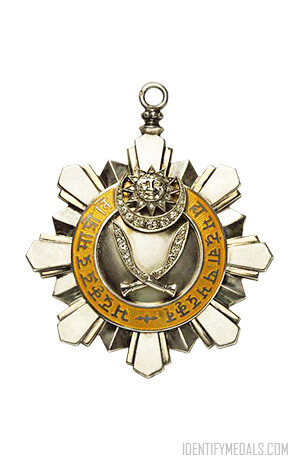
The Most Glorious Order of the Ojaswi Rajanya was established by King Tribhuvan on May 14, 1934 and comprises several ranks.

The Most Glorious Order of the Ojaswi Rajanya (or Ojaswi Rajanyako Manapadvi in Nepali) was established by King Tribhuvan on May 14, 1934. 

The order is conferred upon distinguished individuals, specifically members of the Nepalese royal family, foreign royal families, and foreign Heads of State. It serves as a symbol of honor and recognition for their significant contributions and exceptional service, fostering diplomatic and friendly relations between Nepal and other nations.

The Order of the Ojaswi Rajanya is structured into three distinct classes:

  • Sovereign (Parama-Ojaswi-Rajanya): The highest rank, usually held by the reigning monarch.
  • Grand Master (Ati-Ojaswi-Rajanya): A rank awarded to high-ranking members of the royal family or esteemed foreign royals.
  • Ordinary Members (Ojaswi-Rajanya): Individuals who have rendered notable service or demonstrated significant achievements.

Since its inception, the order has played a crucial role in enhancing Nepal’s diplomatic engagements and recognizing the contributions of key figures in both national and international contexts.

The Order of the Ojaswi Rajanya Design

The ribbon of the order is light yellow with narrow white edge stripes. It features a badge that is worn on the chest as well as another badge attached to a sash ribbon.
The Order of the Three Divine Powers

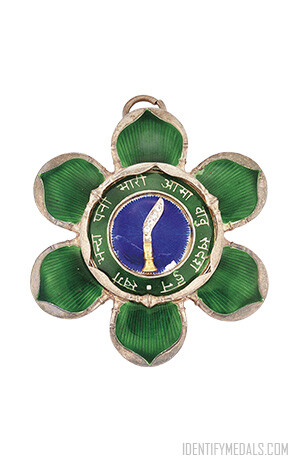
The Order of the Three Divine Powers was established by King Tribhuvan in 1937 and is an order of knighthood of the former Kingdom of Nepal.

The Most Illustrious Order of Tri Shakti Patta (or त्रिशक्ति पट्ट, Tri Shakti Patta in Nepali) is a distinguished order of knighthood from the former Kingdom of Nepal.

This honor is bestowed upon members of the royal family, Nepalese citizens who have made exceptional contributions to the nation, and foreigners who have provided significant benefits to Nepal.

The medal was initially established by King Tribhuvan Bir Bikram Shah Dev in 1936 and was formally instituted as an order on November 27, 1937, by the same monarch.

Following the abolition of the monarchy in 2008, the new government introduced a revised series of awards. The Nepal Ratna Man Padavi became the highest class of these new honors, with the Rastra Gaurav Man Padavi as the second highest. These awards are now conferred by the President of Nepal on Republic Day, May 29.

The Order of Tri Shakti Patta has five classes and a medal:

  • Member First Class (Jyotirmaya-Subikhyat-Tri-Shakti-Patta)
  • Member Second Class (Subikhyat-Tri-Shakti-Patta)
  • Member Third Class (Bikhyat-Tri-Shakti-Patta)
  • Member Fourth Class (Prakhyat-Tri-Shakti-Patta)
  • Member Fifth Class (Tri-Shakti-Patta)
  • Medal (Tri-Shakti-Patta-Padak)

The Order of the Three Divine Powers Design

The ribbon of the order is navy blue with green edges bordered by white.

The German Knight’s Cross Freikorps Detachment Von Randow

The German Knight’s Cross Freikorps Detachment Von Randow (or Randow Cross) was created by Captain Alfred von Randow in March 1919.

The Freikorps Detachment von Randow German Knight’s Cross, also known as the “Randow Cross,” was created and designed by Captain Alfred von Randow in March 1919. It was primarily bestowed upon members of the Volunteer Detachment von Randow, a unit formed on January 5, 1919, tasked with ensuring security in the Baltic region.

This decoration aimed to foster camaraderie within the unit and serve as a memento of past experiences. Initially, it comprised two grades: the standard Knight’s Cross and a Silver Breast Star. The Grand Cross, accompanied by the Breast Star in Gold, was bestowed upon Commanders who displayed extraordinary merit. The Knight’s Cross was awarded for four months of exemplary service, while the Silver Breast Star recognized six months of commendable service.

The first ceremony honoring recipients took place on April 12, 1919, just nine days after the initial batch of crosses was delivered. Recipients received their awards along with certificates. In May 1919, two additional grades were introduced: the Gold Breast Star and the Grand Cross. The Knight’s Cross was further divided into I and II Class.

Although primarily awarded between 1919 and 1923, sporadic awards continued until 1928. Following the NSDAP’s rise to power in 1933, the award was entirely discontinued.

The Randow Cross Design

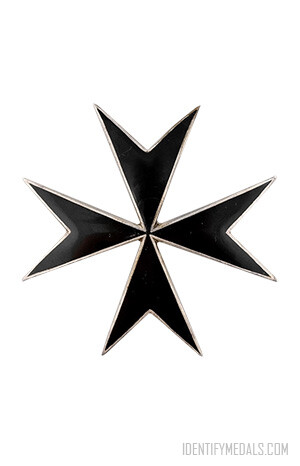
The cross features a quadrilateral eight-point design with black enamel. Because it was produced by several German manufacturers, its size may vary depending on the maker.

The I Class Cross was traditionally worn on the left breast pocket, secured by a vertical pin and the II Class Cross was worn suspended from a black ribbon, adorned with a clasp in the shape of crossed swords and a crown. Both the Breast Star in Silver and Gold were affixed to the tunic pocket. The Grand Cross was worn as a decorative neckpiece.

The NSDAP Golden Party Badge

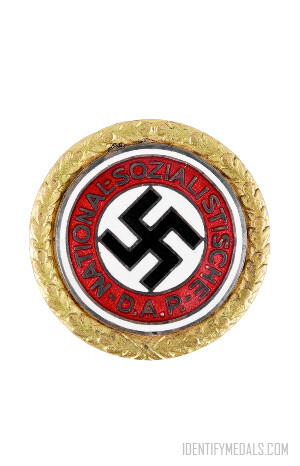
The NSDAP Golden Party Badge was one of the most prestigious decorations awarded by the party during the Third Reich era in Germany.

The NSDAP Golden Party Badge, or Gold Party Badge, was one of the most prestigious decorations awarded by the National Socialist German Workers’ Party (NSDAP) during the Third Reich era in Germany. Instituted in 1933, it was primarily intended to honor loyal and long-standing members of the Nazi Party who had made significant contributions to the party’s cause.

The awarding of the Golden Party Badge was a highly prestigious honor, signifying the recipient’s status as a trusted and valued member of the Nazi Party elite. It was often presented in formal ceremonies or special events, further emphasizing its significance within the party hierarchy.

The criteria for receiving the Golden Party Badge were stringent, requiring a minimum of ten years of uninterrupted membership in the NSDAP, along with a record of exceptional service and dedication to the party’s goals. Additionally, candidates needed the personal approval of Adolf Hitler himself.

The NSDAP Golden Party Badge Design

The NSDAP gold badge was crafted in solid gold and features the Nazi Party eagle emblem surrounded by a wreath of oak leaves in the obverse.

The badge was available in two sizes: 30mm for uniform wear and 25mm for civilian attire. On the reverse of each badge is a unique membership number. The value of the badge increases as the serial number on the reverse decreases. Adolf Hitler wore the NSDAP badge number 7.

Two authorized manufacturers produced the badge: Deschler & Sohn and Joseph Fuess, both headquartered in Munich. Recipients wore the NSDAP badge on the left breast of their uniform, symbolizing their allegiance to the Nazi ideology and leadership.

The Naval Artillery War Badge

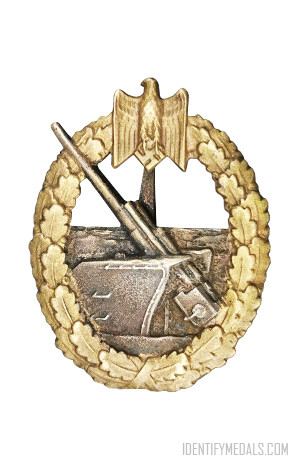
The Naval Artillery War Badge was a World War II decoration awarded to the crews of land-based marine artillery and anti-aircraft units.

The Naval Artillery War Badge (or Kriegsabzeichen für die Marineartillerie in German) was a military decoration bestowed upon the personnel serving in land-based marine artillery and anti-aircraft units of the Kriegsmarine during World War II.

Instituted on June 24, 1941, by Grand Admiral Erich Raeder, this badge was presented to individuals and crew members of coastal defense units as well as anti-aircraft units in recognition of their valorous actions. Additionally, it was awarded posthumously to those who lost their lives in action while serving in this unit.

The badge was granted in a singular degree. To earn the award, a crew needed to accumulate eight points, which could be obtained as follows:

  • Two points for independently downing an aircraft.
  • One point for jointly downing an aircraft with the assistance of another crew.
  • Half a point for non-gun crew members who contributed to the downing of aircraft by operating searchlights, fire control systems, sound locators, or serving as radio operators.

The Naval Artillery War Badge Design

The medal, designed by Otto Placzek of Berlin, comprises an outer laurel wreath adorned with oak leaves, with the German Eagle positioned at the apex, its wings gracefully downturned as it clutches a golden swastika. In the center, a coastal artillery gun is depicted against a backdrop of the sea, rendered in grey.

Early versions of the medal were crafted from bronze, later transitioning to nickel. However, towards the end of the war, inferior quality versions were fashioned from materials such as “pot or monkey metal”. This medal was traditionally worn on the lower section of the left breast pocket of the naval service tunic.

More Naval War Badges

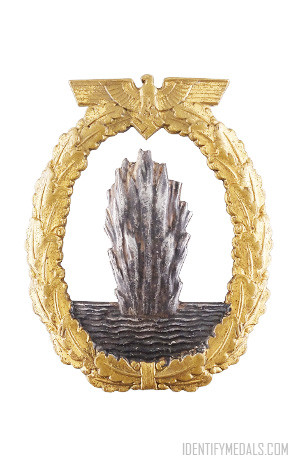
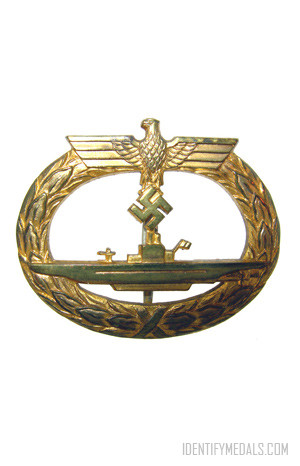
The Naval War Badges (Kriegsmarine) badges were awarded to sailors, officers, and personnel of the Kriegsmarine who demonstrated exceptional skill, bravery, and dedication in naval warfare. Explore the complete collection below:

The Union of South Africa King’s Medal for Bravery

The Union of South Africa King’s Medal for Bravery was the country’s highest civilian decoration between 1910 and 1961.

The Union of South Africa King’s Medal for Bravery 1910 was a military decoration awarded for acts of bravery and valor within the Union of South Africa, which was established in 1910 when the various British colonies and territories in South Africa united to form a single self-governing dominion within the British Commonwealth.

The medal was awarded during the reign of King George V

The King’s Medal for Bravery 1910 was awarded for acts of bravery and heroism performed within the boundaries of the Union of South Africa. It was primarily intended to recognize acts of courage and selflessness by civilians, police officers, and members of the military.

The King’s Medal for Bravery 1910 is no longer awarded, but it is a part of South Africa’s historical honors system and represents acts of bravery and heroism during the early years of the Union of South Africa

The Union of South Africa King’s Medal for Bravery Design

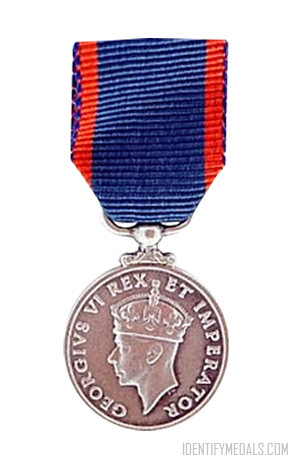
The medal is crafted in silver-gilt and takes the form of a 38-millimeter diameter disk with a raised edge and a prominent ring suspender.

On the obverse, it features the crowned likeness of King George VI, facing left, encircled by the inscription “GEORGIVS VI REX ET IMPERATOR” along the upper edge. 

The reverse was selected through public competition. The victorious entry was designed by Miss Renee Joubert and portrays the 18th-century Cape hero Wolraad Woltemade mounted on his horse, saving shipwreck survivors from a turbulent sea. Consequently, the medal came to be widely known as the “Woltemade Medal.

The ribbon is 44 millimeters wide and dark blue with 4½ millimeters wide orange edges.

Find This Medal Online

Right Now on eBay 
Clicking a link to eBay may result in a referral commission being paid if a purchase is made.
Loading...

More Union of South Africa Medals

The Spanish Cross (Nazi Germany)

The Spanish Cross was a military decoration awarded by Nazi Germany to members of the German Condor Legion in the Spanish Civil War.

The German Spanish Cross (Spanienkreuz) was a military decoration awarded by Nazi Germany to members of the German Condor Legion who had served in the Spanish Civil War, which took place from 1936 to 1939. The Condor Legion was a unit of the German Luftwaffe (air force) that provided support to Francisco Franco’s Nationalist forces during the conflict.

The German Spanish Cross came in two classes:

  1. Spanish Cross in Bronze (Spanienkreuz in Bronze): This version of the award was given for service in Spain without combat action. It featured a Maltese cross with a central swastika and a laurel wreath. The cross had a bronze finish.

  2. Spanish Cross in Silver with Swords (Spanienkreuz in Silber mit Schwertern): This higher-class version was awarded for actual combat action in Spain. It featured the same design as the bronze cross but had a silver finish, and crossed swords were added behind the swastika to denote combat service.

The Spanish Cross Design

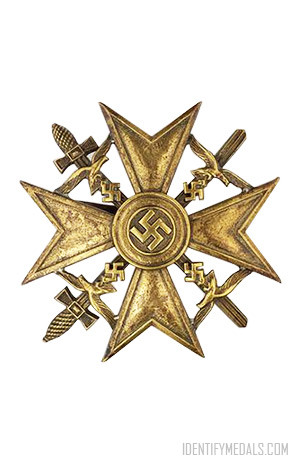
The Spanish Cross had a Maltese cross shape, which is a type of cross characterized by arms of equal length that widen as they extend outward from the center. This shape is often associated with military medals.

In the center of the cross, there was a black swastika, which was a prominent symbol of the Nazi regime.

Surrounding the central swastika, there was a laurel wreath. Laurel wreaths are traditional symbols of victory and honor, and they were often used in military decorations to signify achievement.

In the Spanish Cross in Silver with Swords, two crossed swords were positioned behind the swastika. These crossed swords indicated that the recipient had been awarded the medal for combat service in Spain.

The cross itself had a silver finish, which distinguished it from the lower-ranking Spanish Cross in Bronze, which had a bronze finish.

Order of Naval Merit (Brazil)

The Order of Naval Merit is a Brazilian award established in 1934 and presented for distinguished service and contributions.

The Order of Naval Merit (or Ordem do Mérito Naval in Portuguese) is a Brazilian award established on 4 July 1934 by president Getúlio Vargas and presented to those who have served with distinction in the Brazilian Navy or have contributed in some way to it.

Classes of the Order of Naval Merit

The Order of Naval Merit has five grades:

  • Order of Naval Merit - Grand Cross (Brazil) - ribbon bar.png Grand Cross (Grã-Cruz)
  • Order of Naval Merit - Grand Officer (Brazil) - ribbon bar.png Grand Officer (Grande-Oficial)
  • Order of Naval Merit - Commander (Brazil) - ribbon bar.png Commander (Comendador)
  • Order of Naval Merit - Officer (Brazil) - ribbon bar.png Officer (Oficial)
  • Order of Naval Merit - Knight (Brazil) - ribbon bar.png Knight (Cavaleiro)

The National Order of Naval Merit Medal Design

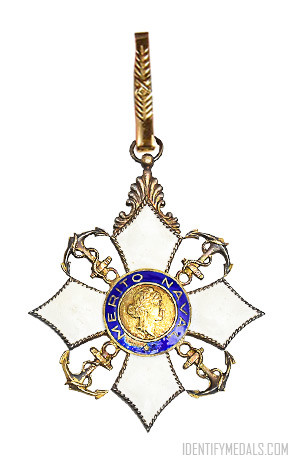
The obverse of the Order of Naval Merit medal bears the effigy of the republic surrounded by a circle of blue enamel. On it is the inscription “Naval Merit”.

The reverse shows the word “Brasil” inscribed in the same blue circle.

The ribbon consists of a red grosgrain chamalotada with a light blue stripe in the center.

Order of Military Merit (Brazil)

The Order of Military Merit is a Brazilian award established in 1934 and presented for distinguished service and contributions.

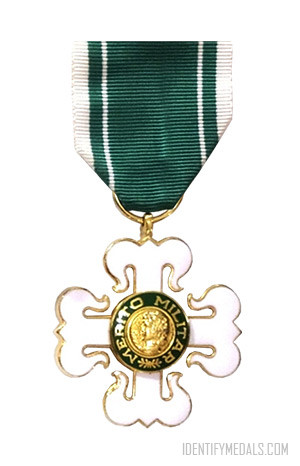
The Order of Military Merit (or Ordem do Mérito Militar in Portuguese) is a Brazilian award established in 1934 and presented for distinguished service and exceptional contributions to the country. 

It can be awarded to members of the Brazilian army and friendly nations’ armies.

Classes of the Order of Military Merit

The Order of Defence Merit has five grades:

  • BRA Ordem do Merito Militar Gra-cruz.png Grand Cross (Grã-Cruz)
  • BRA Ordem do Merito Militar Grande Oficial.png Grand Officer (Grande-Oficial)
  • BRA Ordem do Merito Militar Comendador.png Commander (Comendador)
  • BRA Ordem do Merito Militar Oficial.png Officer (Oficial)
  • BRA Ordem do Merito Militar Cavaleiro.png Knight (Cavaleiro)

The National Order of Military Merit Medal Design

The ribbon of the Brazilian Order of Defence Merit is green with outer white stripes and edges. 

The New York City Police Department Combat Cross

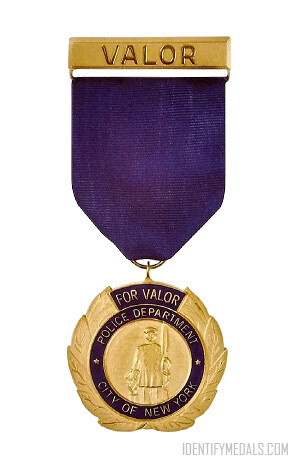
The New York City Police Department Combat Cross is the second highest departmental award of the NYPD and awarded for heroism.

The New York City Police Department Combat Cross is the second highest departmental award of the NYPD. It was established in 14 Augusta, 1934, and awarded to police officers who, “having received Honorable Mention awards, successfully and intelligently perform an act of extraordinary heroism while engaged in personal combat with an armed adversary under circumstances of imminent personal hazard to life”.

The Police Combat Cross was first awarded July 19, 1934, to six members of the police department for heroic service in the previous year. More than two hundred members of the New York Police Department have been awarded the Police Combat Cross.

The New York City Police Department Combat Cross Design

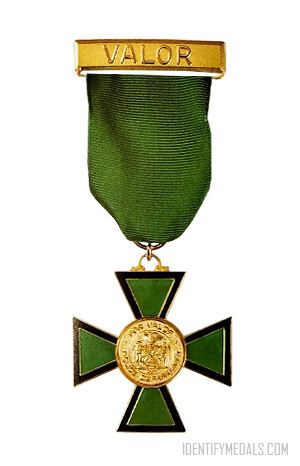
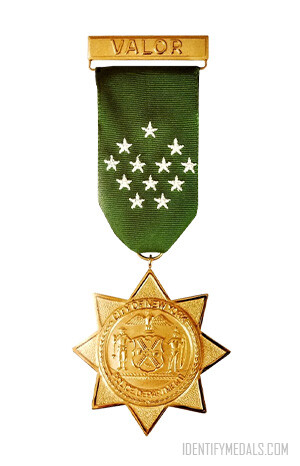
The medal is a gold Maltese Cross with the seal of New York City set in the center obverse and surrounded by the inscription, “For Valor, Police“. The name of the holder and the year of awarding are engraved on the reverse.

The cross is suspended by a ring from green silk ribbon. If the Combat Cross is awarded a second time, a gold palm leaf is set in the center of the ribbon.

More New York City Police Department Medals

NYPD medals are awards presented by the New York City Police Department to recognize and honor the bravery, service, and exceptional achievements of its officers. These medals serve as symbols of honor and pride within the NYPD, highlighting the commitment and sacrifice of its members in safeguarding the communities they serve.