The 1935 Texas Rangers Badge
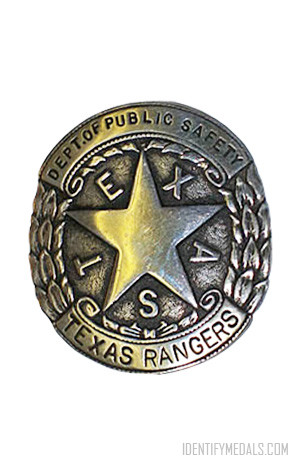
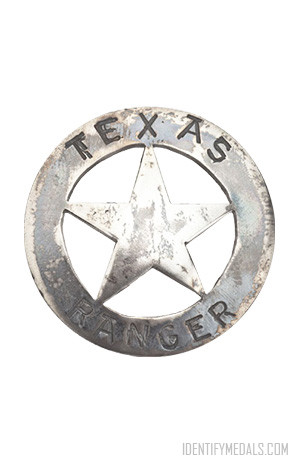
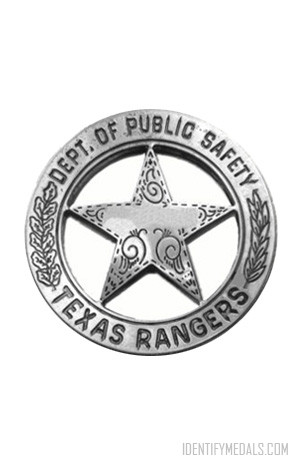
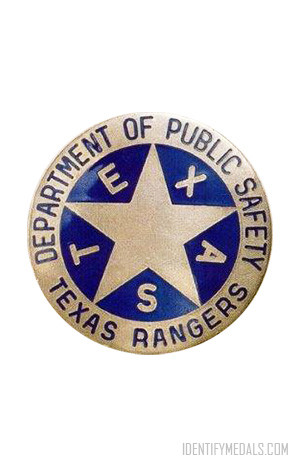
The 1935 Texas Rangers Badge is a shield overlaid with a circle star. It was the first official badge by the Texas Dept. of Public Safety.

The 1935 Texas Rangers Badge is a shield overlaid with a circle star. It was the first official badge by the Texas Dept. of Public Safety.
The Grand Cross of the Iron Cross was the highest grade Nazi decoration above the various classes of the Knight’s Cross.
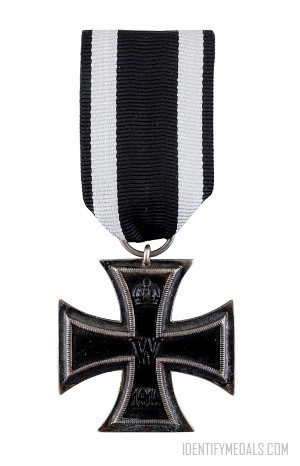
The Iron Cross (Eisernes Kreuz or EK) is a military decoration established by King Friedrich Wilhelm III of Prussia in March 1813.
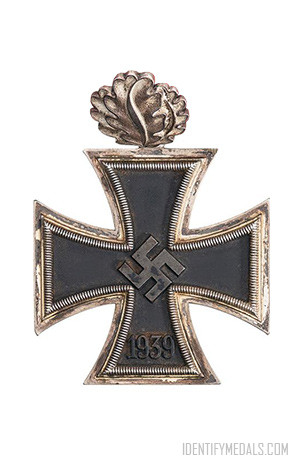
The Knight’s Cross of the Iron Cross was the highest military and paramilitary award for the forces of Nazi Germany during World War II.
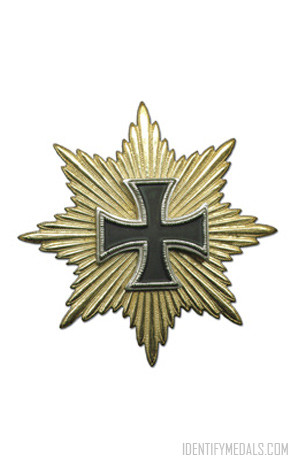
The Star of the Grand Cross of the Iron Cross was the highest military decoration of the Kingdom of Prussia and the German Empire.
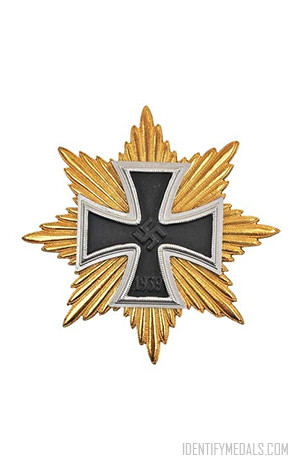
The Star of the Grand Cross of the Iron Cross was the highest military decoration of the Kingdom of Prussia and the German Empire.
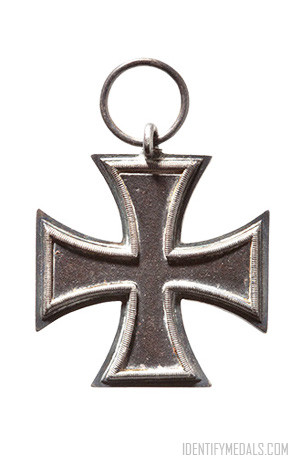
The Iron Cross (Eisernes Kreuz) is a military decoration of the Kingdom of Prussia and later the German Empire and Nazi Germany.
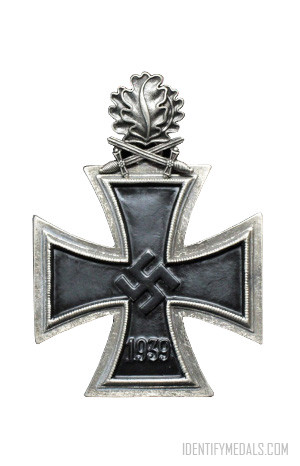
The Grand Cross of the Iron Cross was the highest grade Nazi decoration above the various classes of the Knight’s Cross.
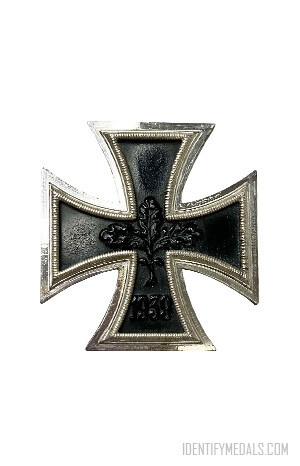
The Iron Cross 1957 was introduced to allow German veterans to wear their WWII decorations in a denazified form.
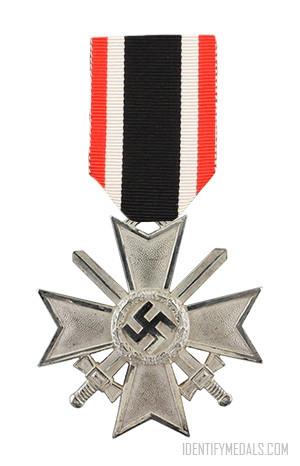
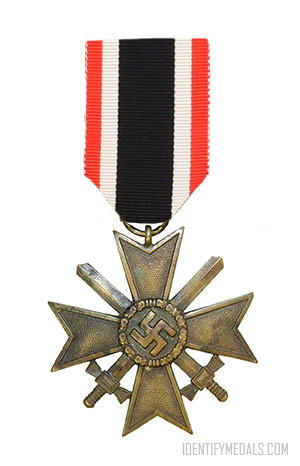
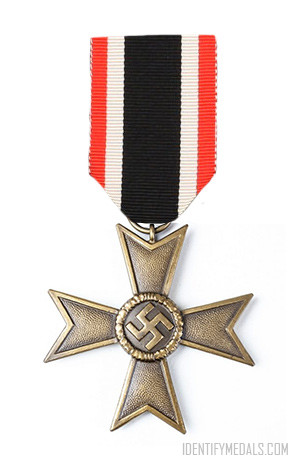
The Knights Cross of the War Merit Cross was a decoration of Nazi Germany awarded during World War II created by Adolf Hitler.
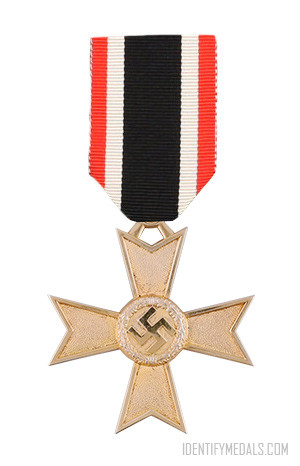
The Knight’s Cross Of The War Merit Cross In Gold is a rare Third Reich variation of the War Merit Cross suggested by Albert Speer in 1944.
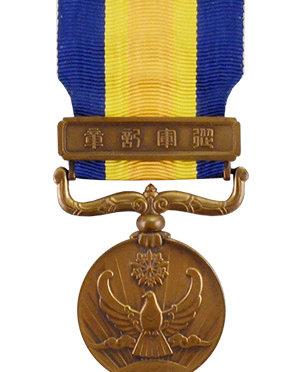
The Manchukuo Border Incident War Medal was instituted in 1940 and commemorates the Nomonhan Incident, a clash with Russia in Manchuria.
The Manchukuo Border Incident War Medal was instituted in 1940 and commemorates the Nomonhan Incident, a clash with Russia that happened in Manchuria.
The Battles of Khalkhyn Gol were fought among the Soviet Union, Mongolia, Japan and Manchukuo in 1939. The conflict was named after the river Khalkhyn Gol, which passes through the battlefield. In Japan, this battle is known as the Nomonhan Incident – named after a nearby village on the border between Mongolia and Manchuria.
The battles resulted in the defeat of the Japanese Sixth Army, which incurred 18,000 casualties.
The medal is struck in bronze and measures 30 mm wide. The bar reads ‘War Medal.’
The obverse shows Pu-Yi’s orchid crest above, with a dove with outstretched wings in the center. Below is part of
the globe showing Asia and behind are clouds and rays. The reverse bears the inscription ‘Border Incident.’
The medal was awarded in a red vase with golden lettering.
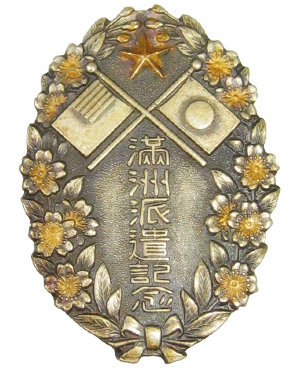
The Manchukuo Army Dispatch Badge was awarded to commemorate a unit’s service in Manchuria. During the 1930s, these badges were common.
The Manchukuo Army Dispatch Badge was awarded to commemorate a unit’s service in Manchuria. During the 1930s, different regiments and companies made their own badges to motivate and inspire soldiers.
The obverse of this badge is decorated with cherry blossom branches (a symbol of Japan) and a gold Army star. The flags are the Japanese national flag and the Manchukuo national flag. The central kanji reads ‘Manchuria Dispatch Commemorative.’
Most likely, these badges were awarded in a simple paulownia wood case.
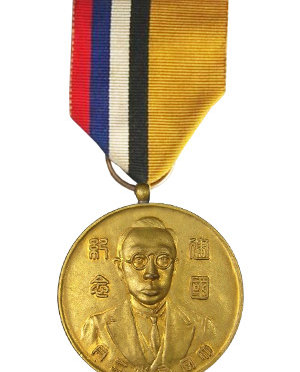
The Manchukuo National Foundation Imperial Medal is one of the rarest Manchukuo medals, believed to be a personal award from Emperor Pu-Yi.
The Manchukuo National Foundation Imperial Medal is one of the rarest Manchukuo medals. It’s believed that this medal may have been a personal award from Emperor Pu-Yi.
Very little is known about this medal. This rarer version must have been limited to a select few awardees.
The medal is round and struck in gold-plated bronze. The kanji on the obverse reads the inscription ‘National Foundation Commemorative, Daidou Year 1 [1932], March.’ There is also an image depicting Pu-Yi. The era name Daidou refers to 3 years: 1932-1934 (specifically March 1st, 1932 to February 28, 1934). The reverse shows the Manchukuo national flag in the center, and on either side are birds commonly called feng, or fenghuang.
It was awarded in a plush case with velvet exterior and inscription on the inside lid reading ‘National Foundation, Imperial Event Commemorative‘.
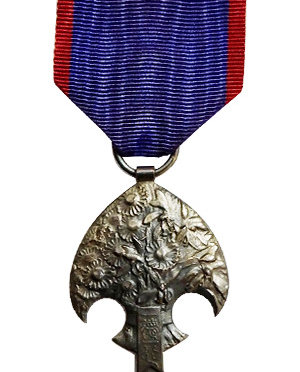
The Manchukuo Emperor State Visit to Japan medal was established in 1935 to commemorate the Manchukuo Emperor Pu-Yi’s visit to Japan in 1934.
The Manchukuo Emperor State Visit to Japan medal was established in 1935 to commemorate the Manchukuo Emperor Pu-Yi’s visit to Japan in 1934. The Emperor Pu-Yi (often called the Last Emperor) made two state visits to Japan: The first in 1935 and the second in 1940. The first one was the most celebrated because he presented himself as the Manchukuo Emperor to the Showa Emperor.
Four commemorative postage stamps were issued, while many important people assembled to welcome Pu-Yi to Japan. The Japan Mint created this official medal to commemorate the 1935 visit.
The medal was awarded by the government and not put on sale like some other Japan Mint items.
The medal is struck in silver and has the shape of a spearhead.
The obverse is decorated with orchids and chrysanthemums, the Imperial flowers of Manchukuo and Japan. There is an inscription in the banner at the bottom that reads ‘One in virtue and spirit.’ The reverse has the inscription’Kang Te 2 [1934] Manchukuo Empire, Emperor’s Visit to Japan Commemorative Medal, April 6th.’
The medal was awarded in a green case with gold lettering on the front.
The Order of Brilliant Jade is a civilian order established in 22 December 1933 and that can be worn only by the head of a nation.
The Order of Brilliant Jade (or 采玉大勳章 in Chinese) is a civilian order of the Republic of China instituted on 22 December 1933 and that can be worn only by the head of a nation.
According to regulations, the order can only be presented by the president of the country or an emissary expressly dispatched to friendly nations for the conferment. The Chinese official name of the order was claimed to be named after President Chiang Kai-shek’s mother, Wang Caiyu (王采玉) by Democratic Progressive Party members of Legislative Yuan. There are suggestions from the pan-green coalition to rename the order to suit Taiwanese locality as “Order of Taiwan”, but this was not passed at the Legislative Yuan in April 2007 because it faced opposition from the Kuomintang.
Previously, the Order of the Brilliant Jade was divided into two, namely Grand Order of Brilliant Jade (current) and Order of Brilliant Jade with nine ranks.
The Order has a star-patterned face of inlaid jade bordered with gold and pearls. In the center, there is white sun surrounded by a blue sky, the national emblem.
The Order of the Cloud and Banner is a military award of the Republic of China awarded for contributions to national security.
The Order of the Cloud and Banner (or 雲麾勳章/雲麾勛章 in Chinese) also known as the Order of the Resplendent Banner is a military award of the Republic of China.
It was instituted on June 15, 1935 and is awarded in nine grades for contributions to national security such as putting down civil strife or for military exploits.
The Order is awarded in nine classes:
The order is organized into nine grades:
The insignia of the order features a fluttering yellow flag, surrounded by white clouds on a blue field. This image is surrounded by golden rays.