The Medalje vir Troue Diens Medal for Loyal Service

The Medalje vir Troue Diens Medal for Loyal Service is eligible to all ranks who have demonstrated impeccable character and conduct.

The Medalje vir Troue Diens – Medal for Loyal Service was established by the President of the Republic of South Africa on April 16, 2003, and became effective on April 27, 2003. It is eligible for presentation to all ranks who have demonstrated impeccable character and conduct, and have completed ten years of qualifying service.

The medal is eligible for presentation to all ranks of the South African National Defence Force and any Auxiliary Service of the South African National Defence Force, provided their character and conduct have been impeccable. Additionally, recipients must have completed ten years of qualifying service, regardless of whether it was continuous, starting from April 27, 2003, onwards. Posthumous awards of both the medal and its bars are permissible.

Qualifying service encompasses prior service in the constituent permanent or part-time forces of the SANDF, as well as other former uniformed institutions like the Police forces and Prisons services of South Africa, the Republics of Transkei, Bophuthatswana, Venda, and Ciskei, and the Self-Governing Territories.

About The Union Defence Forces (UDF)

Established in 1912 as the Union Defence Forces (UDF), the military entity underwent a renaming to become the South African Defence Force (SADF) in 1958. Subsequently, on April 27, 1994, it merged with six other distinct forces to form the South African National Defence Force (SANDF).

The Medalje vir Troue Diens Medal for Loyal Service Design

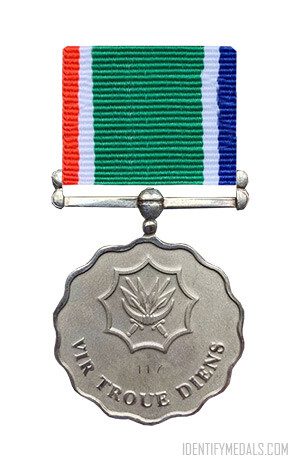
The Medalje vir Troue Diens – Medal for Loyal Service is circular and made of nickel-silver, with a diameter of 38 millimeters and a raised, evenly scalloped edge. Its obverse side features the coat of arms of the Republic of South Africa in relief.

On the reverse side, the medal displays the emblem of the South African National Defence Force at the top. Below, the words “VIR TROUE DIENS” are inscribed in relief around the lower perimeter, with the medal number impressed between the emblem and the inscription. The medal is attached to a plain nickel-silver suspender fixed to the upper rim.

The ribbon is 32 millimeters wide and colored national flag green. It features a 3 millimeter wide national flag red band and a 3 millimeter wide white band on the left edge, as well as a 3 millimeter wide white band and a 3 millimeter wide national flag blue band on the right edge.
The Tshumelo Ikatelaho General Service Medal

The Tshumelo Ikatelaho General Service Medal is granted to all ranks who have taken part in military campaigns or operations with the UDF.

The Tshumelo Ikatelaho – General Service Medal was established by the President of the Republic of South Africa on April 16, 2003, becoming effective on April 27, 2003. It is granted to all ranks who have taken part in military campaigns or operations that, although not meeting the criteria for specific campaign medals, merit recognition through a general service medal. The title of the medal is bilingual, presented in both Tshivenda and English.

The medal is eligible for all ranks of the South African National Defence Force, Auxiliary Service of the South African National Defence Force, and Armed Forces associated with or aiding the South African National Defence Force.

Those who have participated, whether directly or in support, in military campaigns or operations, whether they are belligerent or not, for one day or longer, in accordance with the regulations outlined in the Defence Act, qualify. These operations, while not individually meriting specific campaign medals, are deemed significant enough to warrant the presentation of a general service medal.

About The Union Defence Forces (UDF)

Established in 1912 as the Union Defence Forces (UDF), the military entity underwent a renaming to become the South African Defence Force (SADF) in 1958. Subsequently, on April 27, 1994, it merged with six other distinct forces to form the South African National Defence Force (SANDF).

The Tshumelo Ikatelaho General Service Medal Design

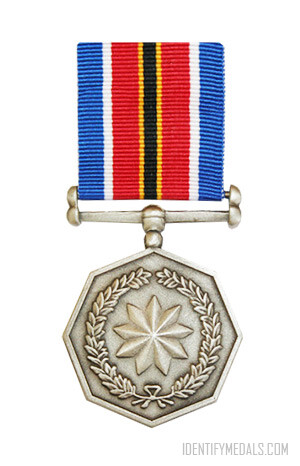
The Tshumelo Ikatelaho – General Service Medal is a 38-millimeter bronze medal, octagonal in shape, featuring a faceted nine-pointed star encircled by a laurel wreath. The star symbolizes the nine Provinces of the Republic of South Africa.

On the reverse side, the medal displays the coat of arms of the Republic of South Africa in raised relief. It is affixed to a plain nickel-silver suspender fixed to the upper rim of the medal, with the medal number stamped below the coat of arms.

The ribbon measures 32 millimeters in width and consists of a national flag blue band measuring 5 millimeters, followed by a 2 millimeter white band, a national flag red band measuring 6 millimeters, and a 1½ millimeter gold band. These bands are repeated in reverse order and separated by a 3 millimeter black band in the center.

The iPhrothiya yeGolide Golden Protea Medal

The iPhrothiya yeGolide Golden Protea Medal is a South African bestowed upon individuals who have demonstrated outstanding leadership.

The iPhrothiya yeGolide – Golden Protea, denoted by the post-nominal letters PG, was established by the President of the Republic of South Africa on April 16, 2003, becoming effective on April 27, 2003. It is bestowed upon individuals of all ranks who have demonstrated outstanding leadership, exceptional meritorious service, and unwavering dedication to duty. This prestigious decoration stands as South Africa’s highest military honor for meritorious conduct.

The decoration is granted to members of the South African National Defence Force, its Auxiliary Services, and affiliated Armed Forces who exhibit outstanding leadership, exceptional meritorious service, and unwavering dedication to duty. It holds precedence within a trio of military decorations for merit, accompanied by the iPhrothiya yeSiliva – Silver Protea and the iPhrothiya yeBhronzi – Bronze Protea.

About The Union Defence Forces (UDF)

Established in 1912 as the Union Defence Forces (UDF), the military entity underwent a renaming to become the South African Defence Force (SADF) in 1958. Subsequently, on April 27, 1994, it merged with six other distinct forces to form the South African National Defence Force (SANDF).

The iPhrothiya yeGolide Golden Protea Medal Design

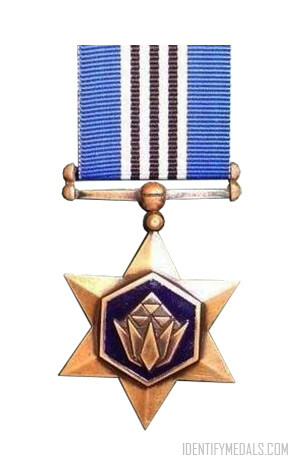
The iPhrothiya yeGolide – Golden Protea features a six-pointed star showcasing a stylized protea, the national flower of South Africa, positioned within a blue hexagon at its center.

On the reverse side, the decoration displays the coat of arms of South Africa in raised relief. It is attached to a plain silver-gilt suspender fixed to the upper point of the star, with the medal number stamped or engraved below the coat of arms.

The ribbon measures 32 millimeters in width and is colored national flag blue, with a 2 millimeter wide gold band flanked by 2 millimeter wide black bands positioned at its center.

The Nkwe ya Gauta Golden Leopard Medal

The Nkwe ya Gauta Golden Leopard Medal is a South Africa military honor awarded for acts of bravery. It was established in 2003.

The Nkwe ya Gauta, also known by its post-nominal letters NG or Golden Leopard, is a South African military honor awarded for acts of bravery. Established in 2003, it superseded the Honoris Crux Gold (HCG) and stands as South Africa’s foremost military decoration for acts of courage.

The title of this decoration is bilingual, being presented in both Sesotho and English. It stands as the highest tier within a trilogy of military decorations for bravery, accompanied by the Nkwe ya Selefera – Silver Leopard and the Nkwe ya Boronse – Bronze Leopard.

The Nkwe ya Gauta – Golden Leopard is granted to members of the South African National Defence Force, its Auxiliary Services, and any affiliated Armed Forces who display exceptional bravery during military operations, whether through singular acts or sustained valor.

About The Union Defence Forces (UDF)

Established in 1912 as the Union Defence Forces (UDF), the military entity underwent a renaming to become the South African Defence Force (SADF) in 1958. Subsequently, on April 27, 1994, it merged with six other distinct forces to form the South African National Defence Force (SANDF).

The Nkwe ya Gauta Golden Leopard Medal Design

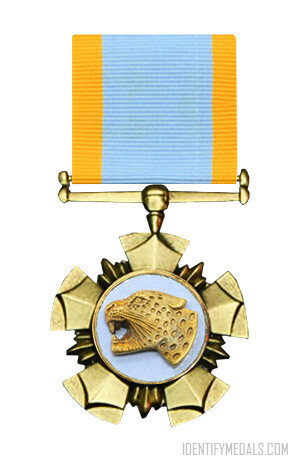
The Nkwe ya Gauta – Golden Leopard features a five-armed cross pattée made of 9 carat gold, measuring 38 millimeters in diameter. The cross’s arms are faceted per chevron and embowed throughout, with the extremities also embowed and separated by three short rays. At the center of the obverse side lies a 19-millimeter light blue enamel roundel adorned with a golden leopard’s head.

On the reverse side, the decoration showcases the relief of the coat of arms of South Africa. It is affixed to a plain gold suspender fixed to the upper arm of the decoration, with the medal number either impressed or engraved below the coat of arms.

The ribbon accompanying the decoration is 32 millimeters wide, with 6 millimeters wide gold edges. Its sky blue color symbolizes the feathers of the blue crane, historically presented by Xhosa kings to courageous warriors.

The Swedish Armed Forces Medal of Merit

The Swedish Armed Forces Medal of Merit is a military decoration awarded for action during combat or during war-like situations.

The Swedish Armed Forces Medal of Merit (or Försvarsmaktens förtjänstmedalj in Swedish; FMGM and FMSM) is a prestigious decoration established by the Swedish Armed Forces and conferred in recognition of exceptional actions undertaken during combat or war-like situations. The decision to bestow this medal is made by the Supreme Commander and may be granted to both Swedish nationals and foreign personnel.

Originally, this medal was formed through the amalgamation of two previous honors: the Swedish Armed Forces International Service Medal of Reward, awarded in silver or gold with a blue ribbon adorned with a silver sword; and the Swedish Armed Forces Medal of Merit, bestowed for commendable efforts, presented in silver or gold with a yellow ribbon (sometimes featuring a sword in each denomination). These aforementioned medals are no longer presented.

The medal may be granted for national or international operations, actions undertaken during war-like conditions, or other commendable personal endeavors. The criteria for receiving this medal apply even in times of armed conflict. Eligibility also extends to individuals both within and outside the Swedish Armed Forces, regardless of nationality.

The Swedish Armed Forces Medal of Merit Design

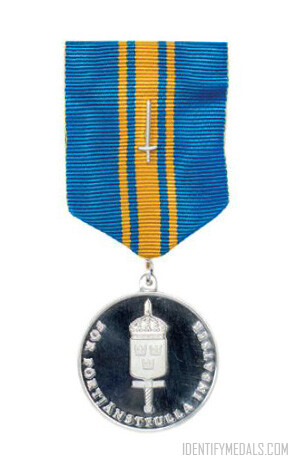
The medal is available in two classes: gold and silver. Crafted from gilded hallmarked silver or hallmarked silver with a diameter of 31 mm, the medal features the Swedish Armed Forces heraldic arms on the obverse side, encircled by the inscription “FOR MERITORIOUS SERVICES” (FÖR FÖRTJÄNSTFULLA INSATSER).

The reverse side showcases a laurel wreath along the outer edge and remains smooth, allowing for the recipient’s name, year of awarding, and, if applicable, country to be engraved. Additionally, a miniature version of the medal is available, and it is accompanied by a diploma.

The medal is worn suspended from a blue ribbon with a broad yellow stripe in the center and narrow ones on each side. If the medal is awarded for actions in combat or during war-like situations, a gold or silver upright sword is displayed on the ribbon. Alternatively, a service ribbon with a horizontal gold or silver sword is worn in lieu of the medal for such action.

The Cross of Valor (Togo)

The Cross of Valor is a Togolese decoration established in 1988 and awarded for acts of valor or wounds during war or security operations.

  • Time Period: Post-WW2
  • Institution: 27 July 1988
  • Country: Togo

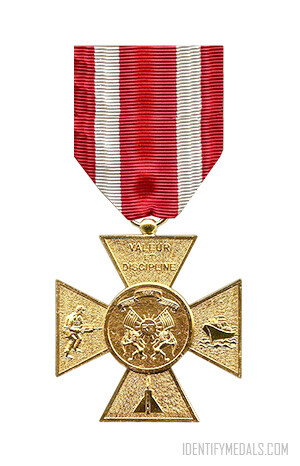
The Cross of Valor is a Togolese decoration established in 1988 (Decreee n°88-131) and bestowed upon military personnel who have demonstrated acts of bravery or have been injured during warfare or public security operations.

In exceptional circumstances, civilians who have shown exceptional valor during military operations may also receive this decoration.

The Order of Academic Palms (Togo)

The Order of Academic Palms is a Togolese decoration awarded for significant contributions to the national education system.

  • Time Period: Post-WW2
  • Institution: 25 June 1984
  • Country: Togo

The Order of Academic Palms is a Togolese decoration established on 25 June 1984 and awarded for significant contributions to the national education system.

The order has three classes.

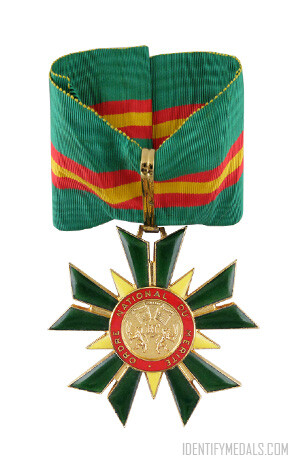
The National Order of Merit (Togo)

The National Order of Merit is a Togolese decoration awarded for distinguished service in the public, private, or military.

  • Time Period: Post-WW2
  • Institution: 26 March 1973
  • Country: Togo

The National Order of Merit is a Togolese decoration established in 1973 and awarded for distinguished service in the public, private, or military.

The order has five classes:

  • Grand Cross
  • Grand Officer
  • Commander
  • Officer
  • Knight

The Order of the Republic of Tunisia

The Order of the Republic of Tunisia is a decoration awarded to those who have contributed to the establishment of the Republic.

  • Time Period: Post-WW2
  • Institution: 16 March 1959
  • Country: Tunisia

The Order of the Republic of Tunisia is a decoration awarded to those who have contributed to the establishment of the Republic, the strengthening of its institutions, and the development of the regime.

The order was established on 16 March 1959 and can be given to both Tunisians and foreigners.

It has five classes:

  • Grand Cordon
  • Grand Officer
  • Commander
  • Officer
  • Knight

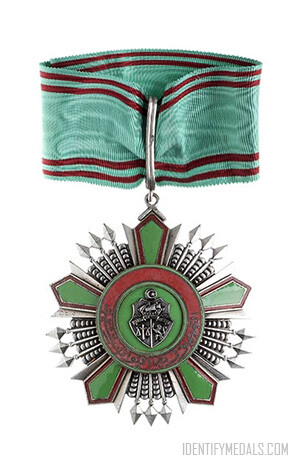
Order of the Republic of Tunisia Design

The insignia is a cross struck in silver and enameled. The ribbon is green with two red stripes on the sides.