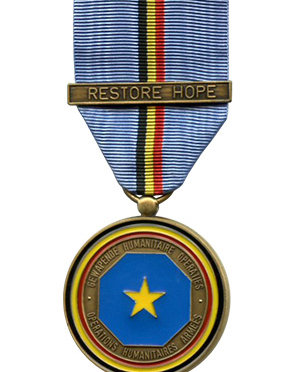
The Commemorative Medal for Armed Humanitarian Operation

The Commemorative Medal for Armed Humanitarian Operations (Médaille commémorative pour opérations humanitaires armées / Herinneringsmedaille voor Gewapende Humanitaire Operaties) is a military decoration of Belgium established on 11 September 1987 and awarded to military and civilian members of the Belgian Armed Forces who participated in armed humanitarian operations.

The list of the operations for which the medal is awarded is included in the Royal Decree creating the medal, it is amended on a regular basis. If a person participated in more than one such operation, he or she will be awarded the same medal for each of these operations, each award represented by an additional clasp on the ribbon.

In the period 2009-2013, the Commemorative Medal for Armed Humanitarian Operations was awarded 119 times.

The Commemorative Medal for Armed Humanitarian Operation Design

The medal is circular and struck in bronze. The obverse bears at its center a blue enameled octagon with a yellow five-pointed star in the center. Along the outer circumference of the medal are thin enameled lines of black, yellow, and red surrounding the relief inscription “ARMED HUMANITARIAN OPERATIONS” (OPÉRATIONS HUMANITAIRES ARMÉES / GEWAPENDE HUMANITAIRE OPERATIES). The obverse is plain.

The ribbon is azure blue, with three thin longitudinal bars in the national colors of Belgium (black, yellow and red). Small bronze clasps bear the names of the operations in which the recipient participated.

The Cross of Honor for Military Service Abroad

The Cross of Honour for Military Service Abroad (Croix d’Honneur pour Service Militaire à l’Étranger / Erekruis voor Militaire Dienst in het Buitenland) is a Belgian military decoration established on 16 June 1997 and originally awarded to Belgian servicemen who served for a long period of time in the Federal Republic of Germany, Zaire (now Congo), Rwanda or Burundi.

The medal was awarded in three classes, based on the duration of service in the relevant territory:

  • First Class is awarded for 15 years of service;
  • Second Class for 10 years of service;
  • Third Class for 5 years of service.

Depending on the region where the services were performed, one year of actual service may count for more than one year for the purpose of awarding the Cross of Honor.

The Cross of Honor for Military Service Abroad Design

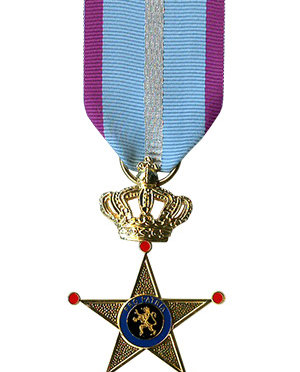
The medal is a gold star with a red pearl at each tip, suspended to the ribbon by a royal crown and a ring.

The obverse bears a central medallion with a golden lion on a black enameled background surrounded by a ring of blue enamel with the motto in gold letters Pro Patria. The reverse bears a crown of laurels surrounding two crossed swords.

The ribbon is azure blue with a purple vertical border on each side and in the center a vertical stripe the color of which depends on the class: gold for first-class, silver for second class, and red for third class.

The Foreign Operational Theaters Commemorative Medal

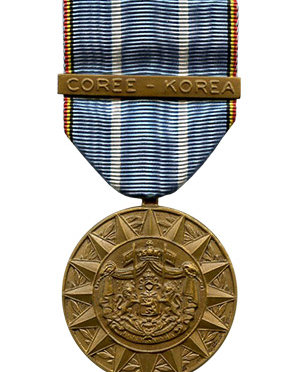
The Foreign Operational Theaters Commemorative Medal (Médaille Commémorative des Théatres d’Opérations Extérieurs / Herinneringsmedaille voor Buitenlandse Operaties) was promulgated by Royal Decree of 26 September 1951 and signed by King Baudouin. The medal could be awarded posthumously.

The medal was awarded to Belgian citizens and entitled foreigners who served with Belgian Units in the Korean theatre of operations, for one day or more, between 18 December 1950 and 29 July 1953.

There are several clasps and emblems, worn to show each of the theatres involved.

  • COREE-KOREA – all volunteers of the Bataillon Belge who qualified for the medal are entitled to this clasp.
  • IMJIN – for soldiers of the first Belgian contingent (1951-2) who participated in the fighting in April 1951.
  • HAKTANG-NI – for soldiers of the first contingent (1951-2) who participated in the fighting in October 1951.
  • CHATKOL for soldiers of the second contingent (1952-3) who participated in the fighting along the bank of the Imjin River in April 1953.

The Foreign Operational Theaters Commemorative Medal Design

The medal measures 5mm in diameter and is circular and struck in bronze.

The obverse bears the emblem with the lion of Belgium in relief. A single red enameled cross is worn by those wounded in action and granted an injury chevron, and a 5 pointed silver star by servicemen returning to duty in Korea after being wounded in action.

The War Cross (Belgium)

[vc_row][vc_column width=”1/4″][vc_single_image image=”6490″ img_size=”full”][/vc_column][vc_column width=”3/4″][vc_column_text]

The War Cross (Belgium)

[/vc_column_text][vc_column_text]

Institution: 25 October 1915
Country: Belgium

[/vc_column_text][vc_separator css=”.vc_custom_1526473075957{padding-top: 16px !important;padding-bottom: 16px !important;}”][vc_column_text]The War Cross (Croix de guerre / Oorlogskruis) is a military decoration of the Kingdom of Belgium established on 25 October 1915 by royal decree and primarily awarded for bravery or other military virtue on the battlefield, or for three years or more of service on the front line, or good conduct on the battlefield. It was only awarded to individuals.

The award was reestablished on 20 July 1940 by the Belgian government in exile for recognition of bravery and military virtue during World War II. The decoration was again reestablished by royal decree on 3 April 1954 for award during future conflicts.

The War Cross was also awarded to volunteers after a minimum of 18 months of service, to escaped prisoners of war rejoining the armed forces, and to military personnel who were placed on inactive duty because of injury.[/vc_column_text][vc_column_text css=”.vc_custom_1590656067244{padding-top: 24px !important;}”]

The War Cross (1915) Design

WW1

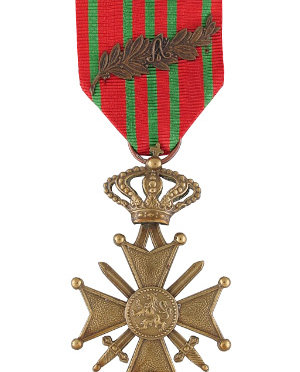
The War Cross from WW1 is a 40mm wide and 65mm high bronze Maltese cross with 3mm balls at its eight points.

On its obverse, it has a 14mm central medallion bearing the relief image of a lion rampant. On its reverse is the royal cypher of King Albert I. Two 37mm long crossed swords point upwards between its arms. A 14mm high “inverted V” between the two points of the top cross arm is secured to the inside of a high royal crown, and the ribbon’s suspension ring passes through the top orb of the crown.

The ribbon of the WW1 War Cross is red and measures 38 mm (1.5 in) wide, with five 2 mm (0.079 in) wide light green longitudinal stripes, three at the center separated by 3 mm (0.12 in) and one on each side 3 mm from the edges.

When the person being awarded was mentioned in despatches, the distinction was denoted by a device worn on the ribbon, either a small lion or a palm adorned with the monogram “A”.

WW2

The WW2 War Cross shows slight changes to the reverse of the central medallion (the royal cypher was that of King Leopold III) and the ribbon. Because the award was now also authorized as a unit award, those presented to a unit were denoted by a ribbon of the war cross being affixed to the unit colors.

The new ribbon was still red with light green stripes but there were now six, 1mm wide, and positioned three on each side 2mm apart beginning 2mm from the edge of the ribbon.[/vc_column_text][vc_raw_html css=”.vc_custom_1590656126997{padding-top: 40px !important;}”]JTNDaW5zJTIwY2xhc3MlM0QlMjJlcG4tcGxhY2VtZW50JTIyJTIwZGF0YS1jb25maWctaWQlM0QlMjI1ZWNmN2M3OGM2NWQ2MDQ3MmIxYTYzY2MlMjIlM0UlM0MlMkZpbnMlM0U=[/vc_raw_html][/vc_column][/vc_row][vc_row][vc_column][vc_column_text css=”.vc_custom_1590504426327{padding-bottom: 24px !important;}”]

Explore More Belgian Medals – See All >

[/vc_column_text][vc_basic_grid post_type=”post” max_items=”18″ style=”pagination” items_per_page=”6″ element_width=”2″ gap=”20″ arrows_design=”vc_arrow-icon-arrow_06_left” arrows_position=”outside” paging_design=”none” item=”masonryGrid_Default” grid_id=”vc_gid:1590655230493-00ce8aa7-b6aa-3″ taxonomies=”127″ el_class=”relatedMedals”][/vc_column][/vc_row][vc_row][vc_column][vc_column_text css=”.vc_custom_1590656143680{padding-bottom: 24px !important;}”]

Explore More Medals from WW1 – See All >

[/vc_column_text][vc_basic_grid post_type=”post” max_items=”18″ style=”pagination” items_per_page=”6″ element_width=”2″ gap=”20″ orderby=”rand” arrows_design=”vc_arrow-icon-arrow_06_left” arrows_position=”outside” paging_design=”none” item=”masonryGrid_Default” grid_id=”vc_gid:1590655230496-c0ab4813-3062-9″ taxonomies=”4″ el_class=”relatedMedals”][/vc_column][/vc_row][vc_row][vc_column][vc_column_text css=”.vc_custom_1590656240664{padding-bottom: 24px !important;}”]

Explore More Medals from WW2 – See All >

[/vc_column_text][vc_basic_grid post_type=”post” max_items=”18″ style=”pagination” items_per_page=”6″ element_width=”2″ gap=”20″ orderby=”rand” arrows_design=”vc_arrow-icon-arrow_06_left” arrows_position=”outside” paging_design=”none” item=”masonryGrid_Default” grid_id=”vc_gid:1590656226877-e32a1611-d274-6″ taxonomies=”8″ el_class=”relatedMedals”][/vc_column][/vc_row]

The Order of Military Valor And Merit

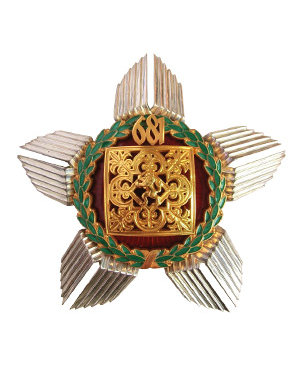
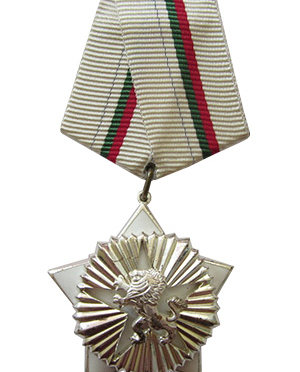
The Order of Military Valor And Merit is a Bulgarian medal established on 28 May 1974 and awarded to Military personnel, Workers of the Ministry Of Defence and reservists for long distinguished and honorable service or for merit in the strengthening of the power of armed forces and national security or for merit in combat training.

The award was designed by B. Kozarev and M. Markov.

The Order of The Balkan Mountains

The Order of The Balkan Mountains is a Bulgarian medal established on 4 August 1966 and awarded to statesmen, ministers, diplomats, civil servants, and foreign citizens for the establishment and strengthening of friendly international relations with The People’s Republic Of Bulgaria.

If awarded for Military relationships the award was presented with swords. Designed by V. Starchev and K. Damjanov.

The Order Of The Rose

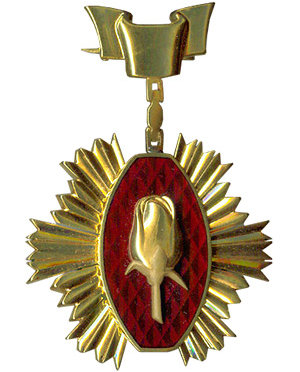
The Order Of The Rose is a Bulgarian medal established on 4 August 1966 by Decree No. 606 of the Presidium of the National Assembly of the People’s Republic of Bulgaria. It’s awarded to female foreigners for merit in establishing friendly international relationships with The People’s Republic Of Bulgaria.

The Order was designed by Dechko Uzunov, and the insignia are made at the State Mint in Sofia. Oval in shape, it measures 40.5 mm in diameter. In the center is a gilded embossed rose form. The rays are gold for the first degree and silver for the second degree. The plate is mounted on a rosette consisting of 10 bundles of rays, each of which is formed by three beams. The silver order differs from the gold only in that with the exception of the rose, which is gilded, is silver.