The Norwegian War Medal

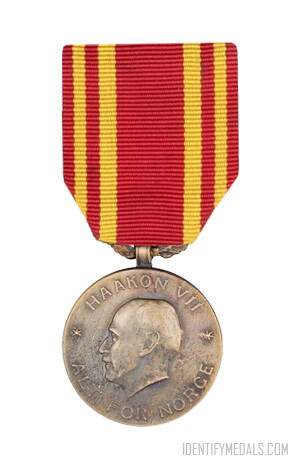
The Norwegian War Medal was instituted in 1941 by King Haakon VII of Norway and awarded for service during Second World War.

The War Medal (or Krigsmedaljen in Norwegian) is a Norwegian military decoration initially established to honor service during World War II, and later expanded to recognize meritorious service in wartime.

The Norwegian War Medal was instituted by King Haakon VII of Norway through a Royal Decree on May 23, 1941, with an additional decree on November 13, 1942. It is awarded to both Norwegian and foreign military personnel who have demonstrated meritorious participation in World War II on behalf of Norway. The medal can also be awarded posthumously to Norwegian and foreign individuals who served in the Norwegian forces or merchant marine and died for the Norwegian Resistance.

The War Medal Criteria

Although distribution of the medal ceased in 1951, a Royal Decree in 1979 reinstated it to honor Norwegian and foreign seamen who served on Norwegian Shipping and Trade Mission (Nortraship) vessels for at least 18 months, or on Royal Norwegian Navy vessels during World War II.

The criteria were revised again in 2012, allowing the medal to be awarded to Norwegians for distinguished wartime service to Norway. Notably, it has been awarded for efforts in the conflict against ISIL.

The War Medal Design

The obverse side of the medal showcases a portrait of King Haakon VII of Norway, along with his name and motto, “Alt for Norge” (All for Norway).

The reverse side features a wreath encircling the inscription “Krigsmedalje” (War Medal) and the king’s monogram.

Made of bronze, the medal is accompanied by a ribbon in the colors of the Royal Standard: red and yellow. Recipients who earn the medal multiple times may attach up to three stars to the ribbon. Each medal is issued with a certificate signed by the king. The initial production of the medal was handled by Spink & Son in London.
The King Haakon VII Freedom Cross

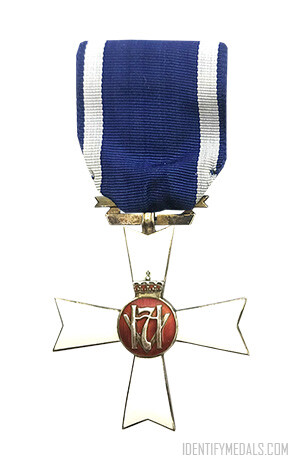
The King Haakon VII Freedom Cross is awarded for for outstanding achievement in wartime and was established in Norway on 18 May 1945.

The King Haakon VII’s Freedom Cross (or Haakon VIIs Frihetskors in Norwegian) was instituted in Norway on May 18, 1945. This distinguished medal is awarded to both Norwegian and foreign military and civilian personnel in recognition of exceptional achievements during wartime.

As a significant honor, it holds the fifth position in the Norwegian order of precedence. The Freedom Cross symbolizes the gratitude and recognition of the Norwegian state for extraordinary contributions to the war effort, reflecting the enduring legacy of King Haakon VII’s leadership during challenging times.

The King Haakon VII Freedom Cross Design

The medal is designed as a Maltese cross. On the obverse, it features a circular red field at the center, displaying the gilded silver monogram of King Haakon VII over the letter V, symbolizing victory.

The reverse side is engraved with the inscription: “Alt for Norge 7 juni 1945” (All for Norway 7 June 1945), marking the date when King Haakon VII returned to Norway after five years of forced exile during World War II. The medal is suspended from a blue ribbon adorned with narrow white stripes along both edges.

The Norwegian War Cross

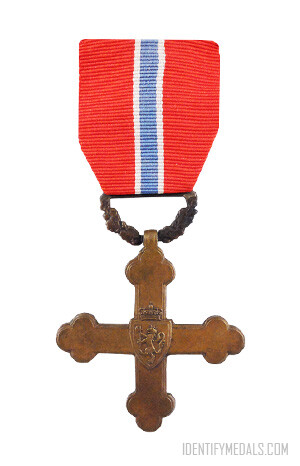
The Norwegian War Cross was established in 1941 by King Haakon VII and is the highest ranking gallantry decoration of Norway.

The War Cross (or Bokmål: Krigskorset in Norwegian) stands as Norway’s highest gallantry award, recognizing acts of extraordinary bravery or exceptional leadership during combat. Recipients of this prestigious medal may receive additional swords on the ribbon for further acts of valor, though this is exceedingly rare. 

Established on May 23, 1941, by King Haakon VII via royal resolution while he was in exile in London during the German occupation of Norway, the War Cross was initially awarded for both combat and non-combat achievements. Notably, some early recipients included members of the British Royal family and individuals who made significant contributions to Norway’s war effort, with non-combat awards presented without the sword.

On May 18, 1945, the statutes were revised to limit the award to military personnel for combat-related actions exclusively, ensuring all subsequent decorations included the sword. Concurrently, Haakon VII’s Freedom Cross was introduced to honor civilian contributions.

The awarding of the War Cross ceased in 1949 but was revived on June 26, 2009, when the statutes were amended once more to recognize post-1945 actions.

In 2022, the Norwegian Armed Forces commissioned composer Marcus Paus to create a major work celebrating the stories of War Cross recipients. This initiative aims to serve as a significant “identity-building and unifying” project for the Norwegian armed forces, preserving and honoring the legacy of the medal’s recipients.

The War Cross Design

Initially, prior to 1945, the War Cross could be awarded either with or without a sword-shaped clasp on its ribbon. If an individual received the War Cross more than once, a star-shaped clasp was added to the ribbon for each subsequent award.

After 1945, the War Cross was always conferred with a sword-shaped clasp on its ribbon. For additional awards, additional sword-shaped clasps are added to the ribbon.

The Defense Medal for Bravery

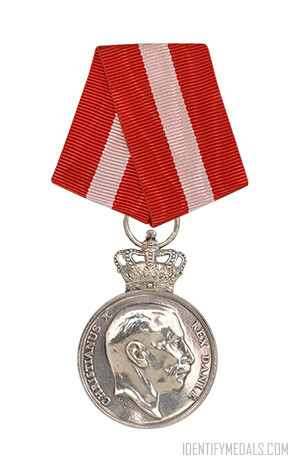
The King Christian X’s Liberty Medal was a commemorative decoration awarded for special services to Denmark during the Second World War.

King Christian X’s Liberty Medal (or Kong Christian den Tiendes frihedsmedaille in Danish) was a commemorative decoration established by King Christian X of Denmark. It was awarded to individuals who provided exceptional services to Denmark during World War II, reflecting their significant contributions to the nation’s resistance and liberation efforts.

The medal honored those who displayed outstanding bravery, dedication, and service in support of Denmark’s fight against occupation. It symbolized national gratitude and recognition of the sacrifices made by these individuals to ensure Denmark’s freedom and sovereignty.

The Defense Medal for Bravery Design

The medal typically featured the likeness of King Christian X and was suspended from a ribbon representing Denmark’s national colors.

The design elements highlighted the valor and dedication of the recipients, serving as a lasting tribute to their heroic actions during a critical period in Danish history.

The Luxembourg War Cross

The Luxembourg War Cross was created on 17 April 1945 by Charlotte to recognize military service and feats of bravery.

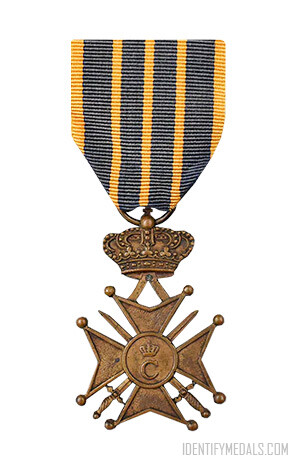
The Luxembourg War Cross (or Croix de Guerre in French, Kriegskreuz in German) is a distinguished military decoration awarded by Luxembourg. Established on 17 April 1945 by Grand Duchess Charlotte, the War Cross honors acts of military service and bravery. Often referred to as the Luxembourg Croix de Guerre due to French being one of the country’s official languages, this medal recognizes exceptional valor.

The War Cross was awarded to both Luxembourg citizens and Allied Forces members who displayed remarkable bravery during the Liberation of Luxembourg. It could also be conferred upon entire military units for their collective acts of courage. Given the relatively limited combat operations within Luxembourg compared to other regions like Belgium, France, and Germany, the Luxembourg War Cross remains one of the rarest foreign decorations presented to Allied troops.

War Cross 1940–1945

The War Cross 1940–1945 was established in April 1945 by Grand Duchess Charlotte of Luxembourg. This decoration was awarded to members of the armed forces and paramilitary organizations for distinguished service during World War II, and it was also open to foreigners.

War Cross 1951

The War Cross 1951 was instituted in May 1951 to recognize acts of bravery and courage by members of the Luxembourg Military and paramilitary organizations. It can be awarded posthumously and is also open to foreigners. This decoration was created to acknowledge service in the Korean War and future conflicts.

The Luxembourg War Cross Design

War Cross 1940-1945 Design:

A dark bronze Cross pattée, surmounted by a grand ducal crown. The obverse features a large letter “C” crowned and the reverse bears the date “1940.” Additional elements include crossed swords between the arms of the cross, pointing upward.

The ribbon is nassau blue with three yellow-orange stripes equally spaced from the center, with yellow-orange edges.

War Cross 1951 Design:

The medal is identical to the War Cross 1940–1945, but with a different reverse, which features a wreath of oak leaves instead of the date “1940.”

The Military Medal (Luxembourg)

The Military Medal was established in 1945 by Grand Duchess Charlotte and is the highest military decoration of Luxembourg.

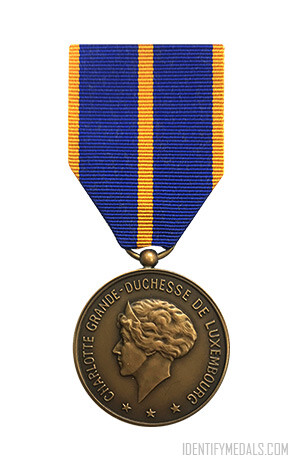
The Military Medal (or Médaille militaire, German: Militärmedaille in French) is Luxembourg’s highest military honor.

The Military Medal was instituted on 30 October 1945 by Grand Duchess Charlotte, following a proposal from then Prince Jean. This creation came in the aftermath of World War II, a period that highlighted the importance of recognizing military heroism and extraordinary service.

The medal is awarded for outstanding achievements and extraordinary deeds, regardless of rank. It can be awarded to all military personnel, regardless of rank, who demonstrate outstanding achievements and extraordinary deeds. This inclusive criterion ensures that valor and exceptional service are recognized across all levels of the military hierarchy.

The Military Medal Design

The medal is a bronze circular disc.

The obverse features the left-facing profile of Grand Duchess Charlotte, with the inscription “Charlotte Grande-Duchesse de Luxembourg” around the edge, emphasizing her role in establishing the medal.

The reverse displays the Lesser coat of arms of Luxembourg, with the numbers “19” to the left and “40” to the right of the arms, symbolizing the year 1940.

The medal is suspended from a blue ribbon with a thin central yellow line and yellow edges.

The Order of the Resistance (Luxembourg)

The Order of the Resistance is a civil decoration established in 1946 to recognize civilians who distinguished themselves during WW2.

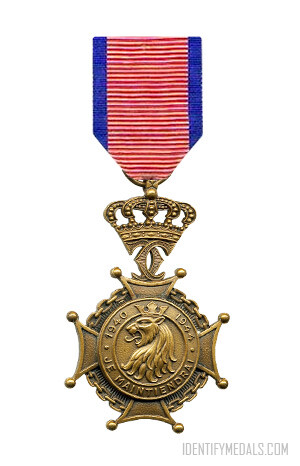
The Order of the Resistance 1940–1944 is a civilian decoration of Luxembourg, established on March 30, 1946, by decree of Grand Duchess Charlotte. This honor recognizes civilians who demonstrated exceptional service to the national or allied cause during the German occupation of Luxembourg in World War II, through acts of resistance, bravery, and dedication.

Recipients of the Order could be awarded either a cross or a medal, conferred by the monarch of Luxembourg upon the recommendation of the Prime Minister and the Council for the Remembrance of the Resistance. In 2003, it was decided that the cross would only be awarded posthumously, and the medal would no longer be awarded.

The Order of the Resistance Design

The medal is a cross pattée, which features broad arms that narrow towards the center.

At the center of the cross, there is a circular medallion with the letters “R L” (Resistance Luxembourg) prominently displayed, symbolizing the resistance efforts within Luxembourg.

The cross is suspended from a ribbon. The ribbon is red with two narrow black stripes near each edge, reflecting the colors associated with resistance movements.

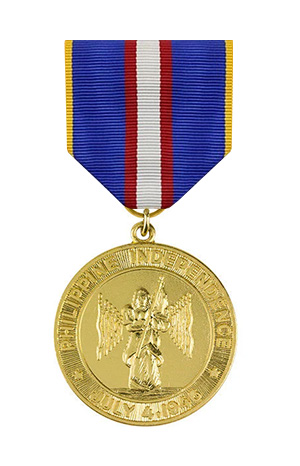
The Philippine Independence Medal

The Philippine Independence Medal is a military award for members of the military who participated in military operations during WW2.

The Philippine Independence Medal is a military decoration established by the Philippine Army Headquarters on July 3, 1946, initially as the Philippine Independence Ribbon.

The addition of the medal occurred in 1968. It honors individuals who served in various Philippine Commonwealth military operations during World War II.

The Philippine Independence Medal Criteria

To qualify for the Philippine Independence Medal, a service member must have previously been awarded both the Philippine Defense Medal and the Philippine Liberation Medal. The eligibility for wearing these awards must have been recorded before November 24, 1954. This criterion effectively encompassed individuals who participated in the initial resistance against Japanese invasion and contributed to the campaigns to liberate the Philippines from Japanese occupation between October 1944 and September 1945.

The decoration was also open for authorization to the United States and other foreign military personnel, resulting in several retroactive awards presented between 1945 and 1948. Notably, General of the Army Douglas MacArthur was among the distinguished American recipients.

Initially, the Philippine Independence Medal was bestowed as a service ribbon only. It wasn’t until 1968 that President Ferdinand Marcos authorized the addition of a full-sized medal.

German Tinnies: What Are They And Why Are They So Collectible?

Campaign shields were military decorations worn on the sleeves of uniforms to denote participation in specific military campaigns or battles.

German tinnies were small, lightweight badges or pins made of tin alloy, typically featuring patriotic or propaganda motifs, slogans, or symbols related to Nazi ideology and events of the time. They were popular during World War II as they served multiple purposes, including fundraising. Tinnies played a role in fostering a sense of unity, patriotism, and support for the regime among the German population during the conflict. So, let’s take a look at their history and some examples.

The Purpose of German Tinnies

German tinnies were extremely popular during World War II as they served multiple purposes. First of all, they were used as a tool for propaganda, promoting Nazi ideals, events, and personalities. They often featured imagery glorifying the military, Hitler, or achievements of the Third Reich, serving to rally support for the regime and boost morale among the civilian population.

Many people also collected tinnies as souvenirs or mementos of significant events or rallies they attended. They were affordable and accessible, making them appealing to a wide range of people, including soldiers, civilians, and members of Nazi organizations.

In some cases, tinnies were sold as part of fundraising efforts for various causes, such as supporting the war effort, charitable organizations, or Nazi Party activities. Proceeds from tinnie sales could contribute to financing Nazi initiatives or providing aid to soldiers and their families.

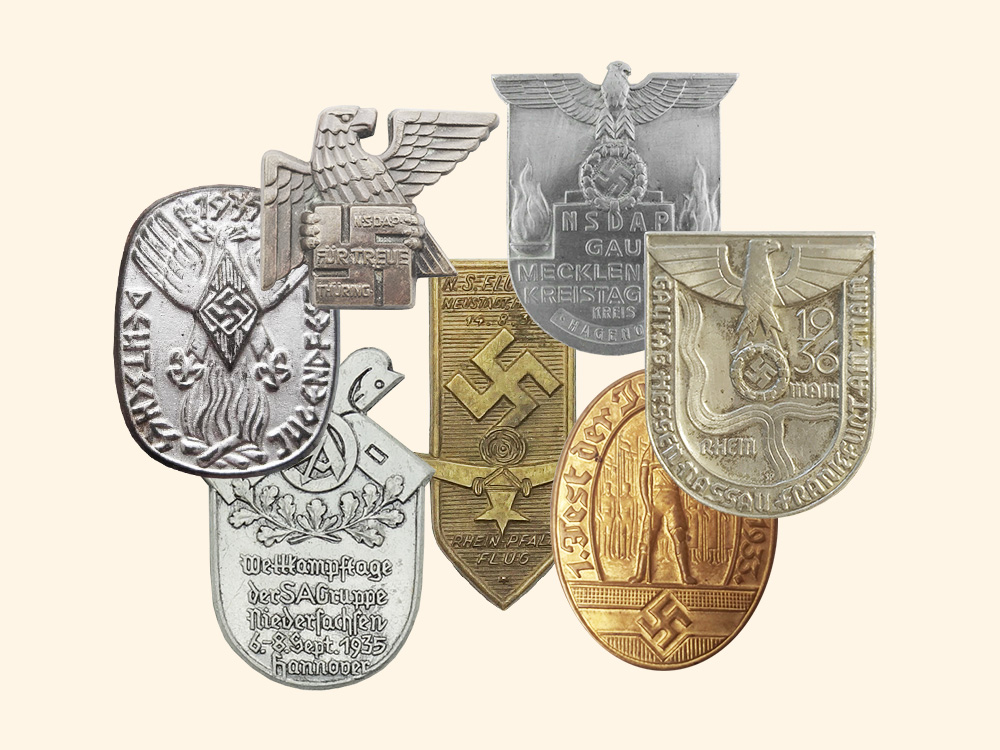
German Tinnies: Examples and Pictures

Overall, the process of making German tinnies was relatively efficient and cost-effective, allowing for the mass production of these small badges during World War II. Their widespread production and distribution mean that tinnies come in a variety of designs, making them interesting to collectors seeking diversity in their collections.

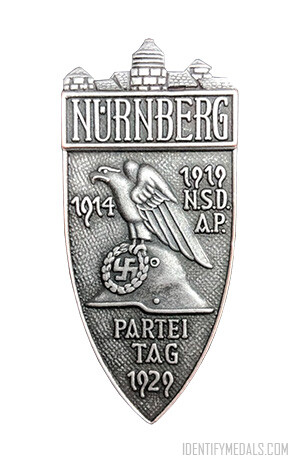
German WW2 Tinnies: Reichsparteitag 1929
1929: Reichsparteitag Nurnberg (Obverse)

1929: The Reichsparteitag Nurnberg Badge

The Reichparteitag, or Nuremberg Rally, of 1929 was the first major propaganda event held by the Nazi Party in Nuremberg. This rally marked the Nazi Party’s growing influence in German politics and was used to showcase their ideology and military discipline.

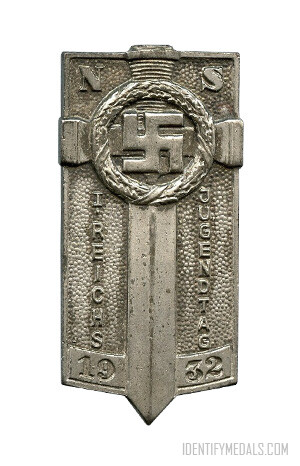
German WW2 Tinnies: Reichsjugendtages Potsdam 1932
1932: Reichsjugendtages Potsdam (Obverse)

1932: The Reichsjugendtages Potsdam Badge

The First Reich Youth Day in Potsdam was a significant event aimed at mobilizing the German youth under the Nazi banner. This event was part of the broader Nazi strategy to indoctrinate young Germans with their ideology.

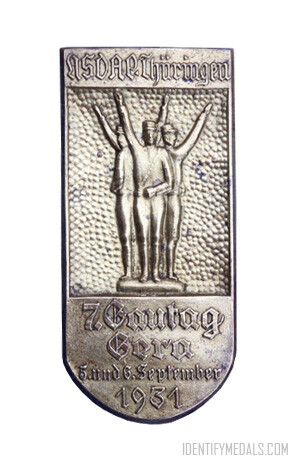
German WW2 Tinnies: Gera’s Gauparteitag1931
1931: Gera’s Gauparteitag (Obverse)

1931: The Gera's Gauparteitag Badge

5 September 1931

Gera’s Gauparteitag was a regional Nazi Party meeting held in Gera. These regional gatherings (Gauparteitag) were important for consolidating party support at the local level and mobilizing party members and supporters.

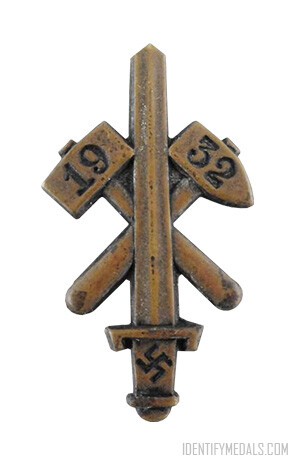
German WW2 Tinnies: Gautag in Essen 1932
1932: Gautag in Essen (Obverse)

1932: The Gautag in Essen Badge

30 October 1932

The Gautag in Essen was another regional Nazi rally. Held in the industrial heartland of Germany, such events were crucial for the Nazis to garner support among the working class and industrial workers.

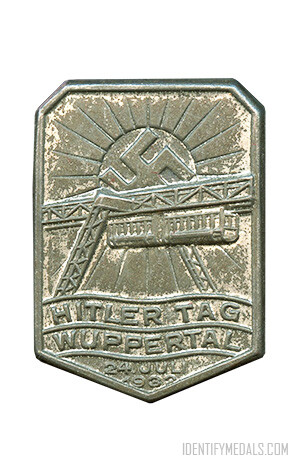
1932: Wuppertal Hitler Tag Participants Badge
1932: Wuppertal Hitler Tag Participants Badge (Obverse)

1932: The Wuppertal Hitler Tag Participants Badge

This commemorative badge was issued to individuals who participated in the Hitler Tag event held in Wuppertal, Germany, in 1932. This event was organized by the National Socialist German Workers’ Party (NSDAP), commonly known as the Nazi Party, and served as a platform for Adolf Hitler to rally support for his political agenda.

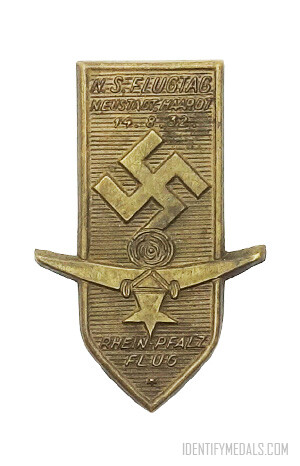
1932: N.S Flugtag Neustadt Haardt Rhein-Pfalz
1932: N.S Flugtag Neustadt Haardt Rhein-Pfalz (Obverse)

1932: The N.S Flugtag Neustadt Haardt Rhein-Pfalz

The 1932 N.S. Flugtag Neustadt Haardt Rhein-Pfalz was an aviation event organized by the National Socialist German Workers’ Party (NSDAP), also known as the Nazi Party, held in Neustadt an der Weinstraße in the Rhein-Pfalz region of Germany. Flugtag translates to “flight day” in English, and these events typically featured airshows, aircraft demonstrations, and displays of aviation prowess.

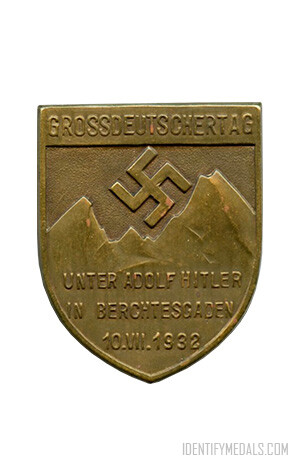
German WW2 Tinnies: Grossdeutscher Tag Berchtesgaden 1932
1932: Grossdeutscher Tag Berchtesgaden (Obverse)

1932: Grossdeutscher Tag Berchtesgaden Badge

10 July 1932

The “Greater German Day” in Berchtesgaden was a Nazi rally aimed at promoting the idea of a Greater Germany that would include all German-speaking peoples. Berchtesgaden was also significant as it was near Hitler’s mountain retreat.

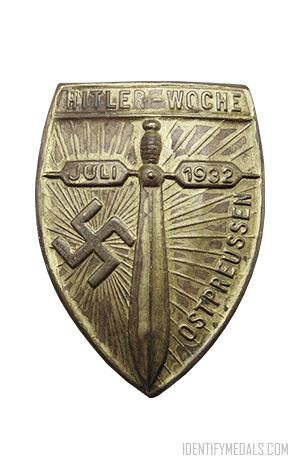
German WW2 Tinnies: Hitler Woche in Königsberg 1932
1932: Hitler Woche in Königsberg (Obverse)

1932: Hitler Woche in Königsberg

17 July 1932

“Hitler Week” in Königsberg was a week-long series of events designed to promote Adolf Hitler and the Nazi Party in the East Prussian city of Königsberg. Such events were part of the broader strategy to solidify Hitler’s image and the party’s popularity across Germany.

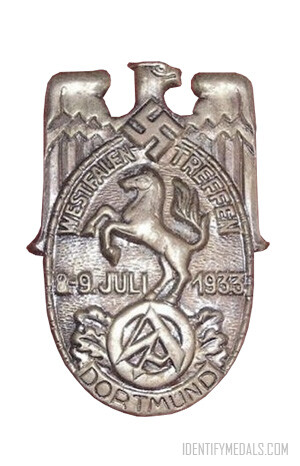
German WW2 Tinnies: Dortmund SA Rally 1933
1933: Dortmund SA Rally (Obverse)

1932: Dortmund SA Rally

9 July 1933

This rally in Dortmund was an SA (Sturmabteilung) event, emphasizing the paramilitary organization’s loyalty to Hitler and its role in enforcing Nazi policies and suppressing opposition.

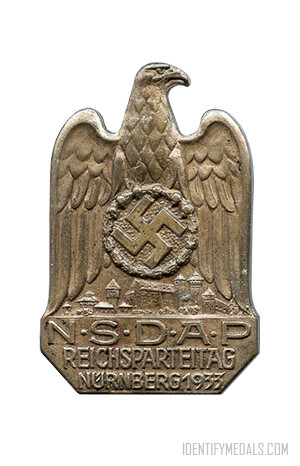
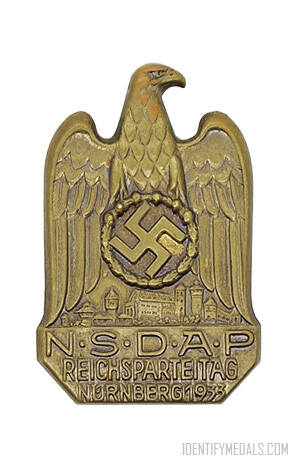
German WW2 Tinnies: Reichparteitag 1933
1933 Reichparteitag (Obverse)

1933: Reichparteitag 1933

30 August – 3 September 1933

The Reichparteitag of 1933, also known as the “Rally of Victory,” was the first Nuremberg Rally after Hitler’s rise to power. It celebrated the Nazi seizure of power and showcased the unity and strength of the Nazi regime.

German WW2 Tinnies: Befreiungsfeier in Kelheim 1933
1933: Befreiungsfeier in Kelheim (Obverse)

1933: Befreiungsfeier in Kelheim

22 October 1933 (source)

The “Liberation Celebration” in Kelheim commemorated the Nazi Party’s political victories and the consolidation of power in 1933. These celebrations were used to reinforce the narrative of liberation from the Weimar Republic and the triumph of Nazi ideology.

German WW2 Tinnies: Tag der Arbeit 1934
1934: Tag der Arbeit (Obverse)

1934: Tag der Arbeit

1 May 1934

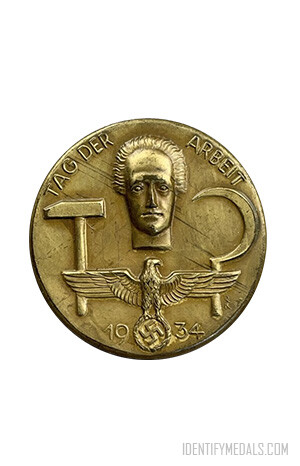
“Tag der Arbeit” or “Day of Labor” was the Nazi celebration of International Workers’ Day. The Nazis co-opted this day to align the labor movement with Nazi ideology, promoting the message of national solidarity and labor’s role in the Nazi state.

1933: Fest der Jugend Badge
1933: Fest der Jugend Badge (Obverse)

1933: The Fest der Jugend Badge

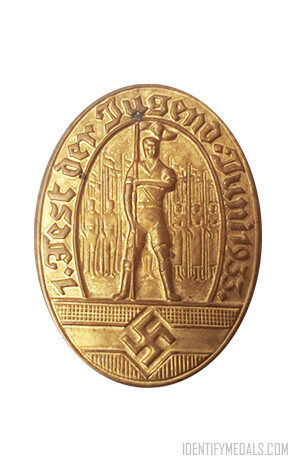
The 1933 Fest der Jugend badge was a badge issued for the Festival of Youth held in 1933. This event, organized by the Nazi Party, aimed to mobilize and indoctrinate German youth in support of the party’s ideology and agenda. The badge featured symbols associated with the Nazi regime, such as the swastika, and was often worn by participants and attendees of the festival.

1933: Gau Thüringen Erfurt Badge
1933: Gau Thüringen Erfurt Badge (Obverse).

1933: The Gau Thüringen Erfurt Badge

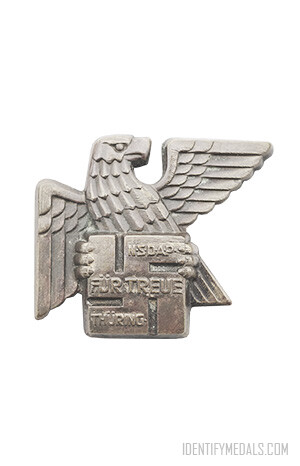
The 1933 Gau Thüringen Erfurt Badge was a commemorative badge associated with the Nazi Party’s regional administration in Thuringia, Germany. These badges were distributed to party members and supporters in the region, serving as a symbol of affiliation with the Nazi movement.

1933: NSDAP National Party Badge
1933: NSDAP National Party Badge (Obverse).

1933: The NSDAP National Party Badge

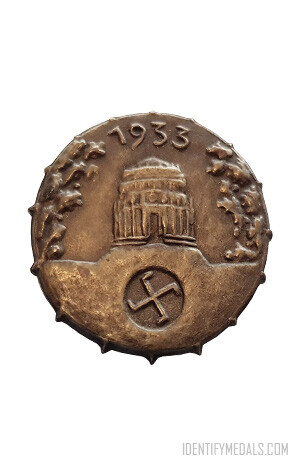
The 1933 NSDAP National Party Badge, also known as the Nazi Party Badge, was a prominent symbol of allegiance to the National Socialist German Workers’ Party (NSDAP) during the early years of Adolf Hitler’s regime in Germany. This badge, featuring a swastika encircled by an oak leaf wreath, was issued to party members as a mark of their affiliation and loyalty to the Nazi movement.

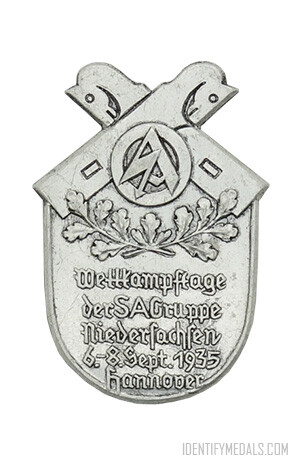
1935: Wettkampftage der SA Gruppe Niedersachsen Badge
1935: Wettkampftage der SA Gruppe Niedersachsen Badge (Obverse).

1935: The Wettkampftage der SA Gruppe Niedersachsen Badge

The 1935 Wettkampftage der SA Gruppe Niedersachsen Badge, translated as the “Competition Days of the SA Group Niedersachsen Badge,” was a commemorative badge issued by the Sturmabteilung (SA), or Storm Detachment, in the Lower Saxony region of Germany. The SA was a paramilitary organization.

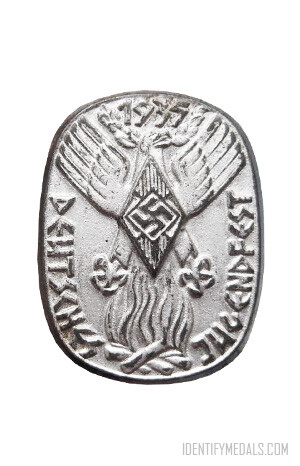
1935: Fest der Jugend Badge
1935: Fest der Jugend Badge (Obverse).

1935: The Fest der Jugend Badge

The Fest der Jugend aimed to promote loyalty to the Nazi regime among young people. The 1935 Fest der Jugend Badge was a commemorative badge issued to mark the Fest der Jugend (Youth Festival) event held in Nazi Germany. This festival was organized by the National Socialist German Workers’ Party (NSDAP) as part of its efforts to mobilize and indoctrinate German youth into Nazi ideology.

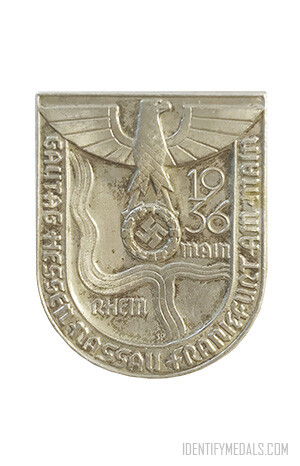
1936: NSDAP Gautag Hessen Nassau Badge
1936: NSDAP Gautag Hessen Nassau Badge (Obverse)

1936: The NSDAP Gautag Hessen Nassau Badge

The 1936 NSDAP Gautag Hessen Nassau Badge was a commemorative badge issued by the National Socialist German Workers’ Party (NSDAP) for the Gautag event held in the Hessen Nassau region of Germany. Gautag events were large-scale gatherings organized by the NSDAP at the district (Gau) level where party members and supporters convened to celebrate Nazi ideology.

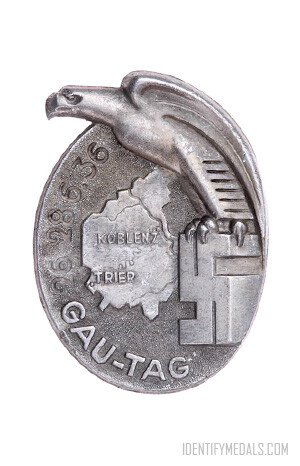
1936: NSDA Gautag Koblenz Trier Badge
1936: NSDA Gautag Koblenz Trier Badge (Obverse).

1936: The NSDAP Gautag Koblenz Trier Badge

The 1936 NSDAP Gautag Koblenz Trier Badge was a commemorative badge issued to mark the Gautag event held in Koblenz-Trier, Germany, in 1936. These events were organized by the National Socialist German Workers’ Party (NSDAP) as regional gatherings aimed at promoting party ideology, showcasing Nazi achievements, and fostering loyalty among party members.

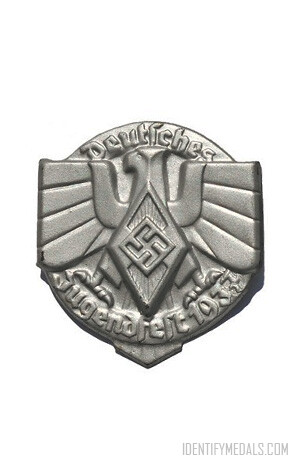
1937: Fest der Jugend Badge
1937: Fest der Jugend Badge (Obverse).

1937: The Fest der Jugend Badge

The 1937 Fest der Jugend Badge was a commemorative badge issued for the Fest der Jugend event held in 1937. This event, translated as “Youth Festival,” was organized by the National Socialist German Workers’ Party (NSDAP) in Germany. The badge features the traditional eagle, swastika, and inscription referring to the event.

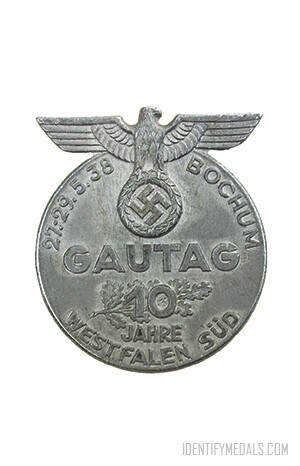
1938: NSDAP Gautag Bochum Westfallen
1938: NSDAP Gautag Bochum Westfallen (Obverse).

1938: The NSDAP Gautag Bochum Westfallen

The 1938 NSDAP Gautag Bochum Westfallen Badge was issued for the Gautag event held in Bochum, Westphalia in 1938. Gautag events were regional gatherings organized by the National Socialist German Workers’ Party (NSDAP) in various parts of Germany. These events typically featured speeches, parades, and other activities aimed at promoting Nazi ideology and bolstering party morale.

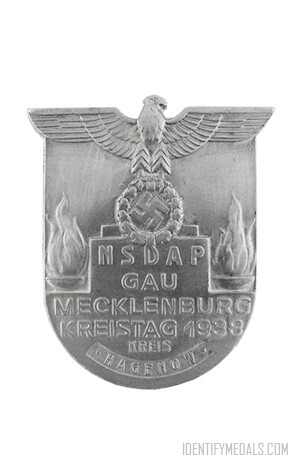
1938: The NSDAP Kreistag Mecklenburg Ludwigslust
1938: NSDAP Kreistag Mecklenburg Ludwigslust (Obverse)

1938: The NSDAP Kreistag Mecklenburg Ludwigslust

The 1938 NSDAP Kreistag Mecklenburg Ludwigslust Badge was issued for the Kreistag event held in Ludwigslust, Mecklenburg in 1938. Kreistag events were district-level gatherings organized by the National Socialist German Workers’ Party (NSDAP) in various regions of Germany. These gatherings served as platforms for disseminating Nazi propaganda, promoting party policies, and fostering loyalty among party members.

How Were Nazi Tinnies Made?

German tinnies during WW2 were typically made using a process called die-striking or stamping. Artists fist conceptualized designs featuring patriotic or propaganda motifs, symbols, or slogans associated with the Nazi regime or specific events. Metal dies were then meticulously created, bearing negative impressions of these designs. Sheets of tin alloy, typically thin and composed of tin mixed with other metals like lead or zinc, were prepared for stamping.

Positioned between the dies of a stamping press, these metal sheets underwent significant force, imprinting the design onto the metal and cutting out the shape of the tinnie simultaneously. Following stamping, tinnies underwent various finishing steps, including cleaning, polishing, and sometimes adding enamel coating or paint.

Depending on the design, attachment mechanisms like pins or clips were affixed to the back, facilitating wearing or display. 

Find German Medals Online

Right Now on eBay 
Clicking a link to eBay may result in a referral commission being paid if a purchase is made.
Loading...
]

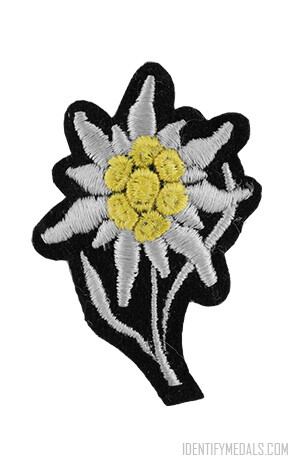
The SS Edelweiss Cap Badge

The SS Edelweiss Cap Badge was an award given by the Third Reich regime to Waffen-SS Mountain Troops serving in Norway.

The SS Edelweiss Cap Badge was an award established on 15th April 1941 and given by the Third Reich regime to Waffen-SS Mountain Troops serving in Norway.

In October 1940, Waffen-SS Mountain Troops stationed in Norway began wearing Army-style attire. Subsequently, on April 15, 1941, authorization was extended to all SS-Mountain Troops to don the Mountain Cap.

The choice of the Edelweiss was deliberate, as it thrives in the challenging conditions of high Alpine elevations, symbolizing resilience and fortitude.

The SS Edelweiss Cap Badge Design

The Officer’s Edelweiss badge was crafted from either bullion or aluminum thread, reflecting superior quality. In contrast, badges for Non-Commissioned Officers and enlisted men were of lesser quality and made from regular thread.

The Edelweiss Badge was affixed to the left side of the cap. The emblem held significant symbolism, not only representing the German mountain troops but also embodying qualities of bravery and courage.