The Order of the Golden Kite

The Order of the Golden Kite was an order of the Empire of Japan established in 1890 by Emperor Meiji “in commemoration of Jimmu Tennō”.

  • Time Period: Pre-WW1
  • Institution: 12 February 1890
  • Country: Medals from Japan Japan

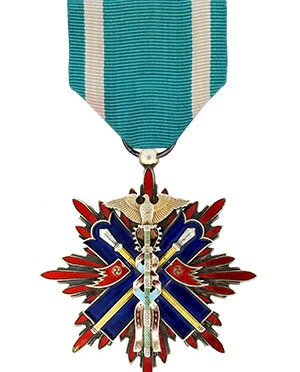
The Order of the Golden Kite (金鵄勲章 Kinshi Kunshō) was an order of the Empire of Japan established on 12 February 1890 by Emperor Meiji “in commemoration of Jimmu Tennō, the Romulus of Japan”.

The Order of the Golden Kite was an exclusively military award, conferred for bravery, leadership or command in battle. It ranked just below the Order of the Chrysanthemum in precedence and was the military equivalent of the Order of the Paulownia Flowers; therefore, it could be considered analogous to the military division of the Order of the Bath in the United Kingdom. The first three classes were roughly equivalent to the three divisions of the Order of the Bath, the fourth, fifth, sixth and seventh classes were analogous to the DSO, MC/DSC, DCM/CGM and DSM/MM, respectively.

The order consisted of seven classes. Enlisted rank soldiers were eligible for the 7th–5th classes, non-commissioned officers were eligible for the 6th–4th classes, junior officers for the 5th–3rd classes, field grade officers for the 4th–2nd classes and general officers for the 3rd-1st classes. A total of 1,067,492 Order of the Golden Kite awards were made over the history of the order, most of them in the two lower 6th and 7th classes. Only 41 of the 1st class and 201 of the 2nd class were awarded.

The Order was officially abolished by the Supreme Commander of the Allied Powers of Occupied Japan in 1947 after World War II.

The Order of the Golden Kite Medal Design

The badge for the Order is a gilt cross with white enameled rays, bearing a central emblem of a red enameled sun disc surrounded by red rays, and with three paulownia blossoms between each arm of the cross. It is suspended from three enameled paulownia leaves on a sash in red with white border stripes, and is worn on the right shoulder.

The star for the Order is the same as the badge, but without the paulownia leaves suspension. It is worn on the left chest.
The Bukochosho Medal

Time Period: WW2

Institution: 7 December 1944
Country: Medals from Japan Japan

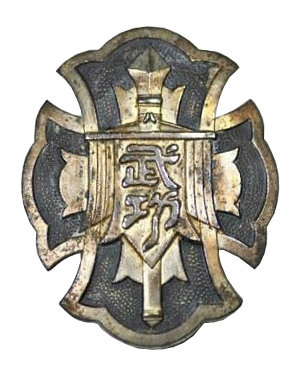
The Rikugun Bukōkishō (陸軍武功徽章 “Badge for Military Merit”), commonly called the Bukōshō, was a military decoration of the Empire of Japan established on 7 December 1944 by Imperial edict.

The medal was awarded by the Imperial Japanese Army (IJA) to living soldiers who had performed with exceptional valor in battle. Airmen, especially fighter pilots defending Japan against enemy bombers, were most likely to win the award. Eighty-nine Bukōshō were awarded during the eight months it was actively awarded.

Emperor Hirohito established the award on 7 December 1944, the third anniversary of the attacks on Hong Kong and Pearl Harbor, which had signaled the start of the broader Pacific War.

The Bukōshō was allowed to be given retroactively to soldiers who had distinguished themselves as far back as 1941 or perhaps 1940. In practice, the award was given disproportionately to fighter pilots flying against the American Boeing B-29 Superfortresses bombing the Japanese homeland.

The Bukochosho Medal Design

The Bukōshō (as it was popularly known) was presented in two classes, called A and B, or First and Second. The Bukōshō was a pin back badge, cast in iron or steel, featuring two shields (in gilt for A-Class, bronzed for B-Class) forming a cross, with a gilt banner at the center bearing the two kanji characters “Bukō” (Military Merit).

The reverse side (again in gilt for A-Class, bronzed for B-Class) bore the six kanji characters in two columns “Rikugun/Bukōchōshō” (Army/Badge for Military Merit). Both classes were the same size: 50 mm (2.0 in) high and 40 mm (1.6 in) wide.

The Order of Saint Andrew the Apostle

The Order of St. Andrew is the highest order of the Russian Federation. It was established in 1698 and the motto is “For Faith and Loyalty”.

The Order of St. Andrew the Apostle the First-Called (or Орден Святого апостола Андрея Первозванного in Russian) is the highest order of the Russian Federation. Established as the first and highest order of chivalry of the Russian Empire in 1698, it was abolished under the USSR before being re-established as the top Russian order in 1998.

The Order was established in 1698 by Tsar Peter the Great, in honor of Saint Andrew, the first apostle of Jesus and patron saint of Russia. It was bestowed in a single class and was only awarded for the most outstanding civilian or military merit.  Saint Andrew’s Cathedral in Saint Petersburg was the chapter church of this order of chivalry.

A Brief History of the Russian Order of Saint Andrew

During Peter the Great’s travels in the West as part of the Great Embassy, Peter the Great observed the practice of awarding honors, a departure from the traditional Russian method of rewarding service with money or estates. For instance, he witnessed first hand the awards ceremonies for England’s Order of the Garter and Austria’s Order of the Golden Fleece and noticed the loyalty and pride of the awardees. It also saved the state land and money.

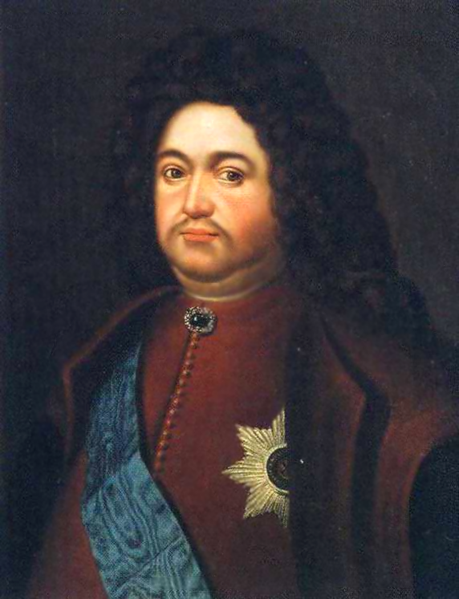
The first recipient of the Order of St. Andrew was Count Fyodor Golovin, a boyar (member of the highest rank of feudal nobility) and the first Chancellor of the Russian Empire.

Until the Russian Revolution in 1917, slightly over a thousand individuals were bestowed with this honor. These included:

  • Sir John Acton, 6th Baronet: A prominent British naval officer and Prime Minister of Naples.
  • Prince Adalbert of Prussia (1811–1873): A notable member of the Prussian royal family.
  • Adolf Frederick, King of Sweden: King of Sweden from 1751 until his death in 1771.
  • Grand Duke Adolphe of Luxembourg: The first Grand Duke of Luxembourg from the House of Nassau-Weilburg.
  • Prince Albert of Prussia: A general in the Prussian army and regent of the Duchy of Brunswick.
  • Alexander I of Russia: Emperor of Russia from 1801 to 1825, known for his role in defeating Napoleon.
  • Alexander II of Russia: Emperor of Russia from 1855 to 1881, famed for his emancipation of the serfs.
  • Otto von Bismarck: The first Chancellor of the German Empire, recognized for unifying Germany.
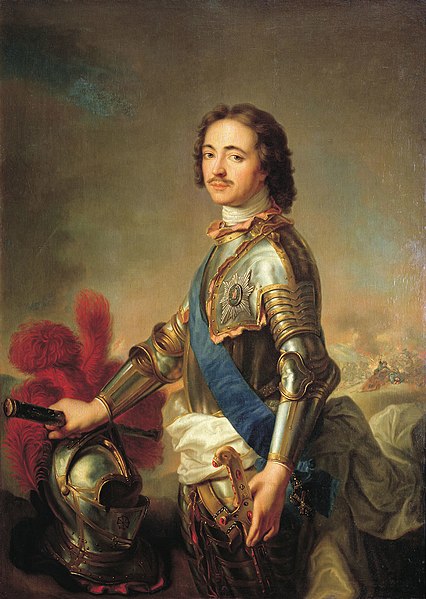
Emperor Peter the Great.
Portrait of Peter I of Russia (1672-1725). Arkhangelskoye Palace collection.
Count Fedor Golovin, portrait from the 18th century.
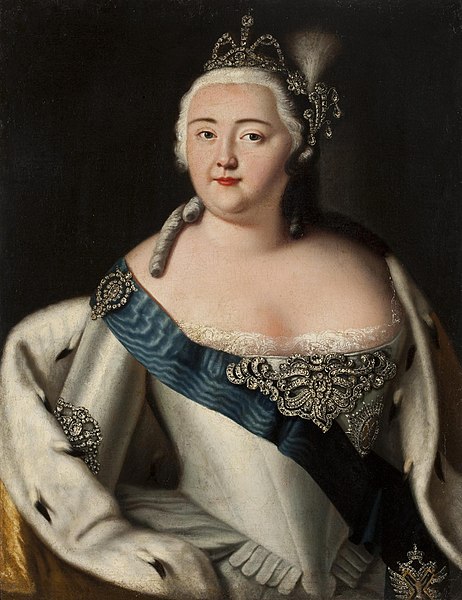
Portrait of Elizaveta Petrovna (Elizabeth I of RUssia) between 1701 and 1800. Hermitage Museum.

The Order of Saint Andrew During the Revolution

During the Russian Revolution of 1917, the Order of St. Andrew, along with other imperial orders, was officially abolished by the Bolshevik government. The new Soviet regime sought to eliminate all vestiges of the Russian imperial system, which included the prestigious chivalric orders that had been symbols of the tsarist state and its aristocracy.

Existing recipients of the Order of St. Andrew were stripped of their titles and privileges. The revolutionary government viewed these honors as incompatible with the new socialist ideology that aimed to dismantle class distinctions and aristocratic privileges.

Despite its official abolition in Russia, the Russian Imperial House in exile continued to recognize the Order of St. Andrew. The heads of the House of Romanov, living in exile, maintained the tradition of awarding the order to individuals who demonstrated exceptional service to the Russian community and the broader international community.

Reinstatement and Modern Status

After the fall of the Soviet Union, the Russian Federation reinstated the Order of St. Andrew as the highest state decoration. Today, the Order of St. Andrew the Apostle the First-Called is conferred upon distinguished statesmen, public figures, and notable individuals from various fields such as science, culture, the arts, and industry, in recognition of their exceptional contributions to the prosperity, prestige, and honor of Russia.

Additionally, the Order may be bestowed upon foreign heads of state for their significant service to the Russian Federation.

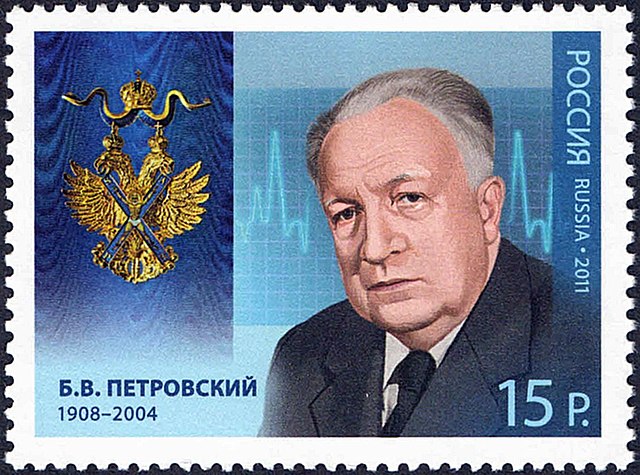
Modern Awardees: Boris Petrovsky
Modern Recipients: General surgeon, health minister of the Soviet Union Boris Petrovsky.
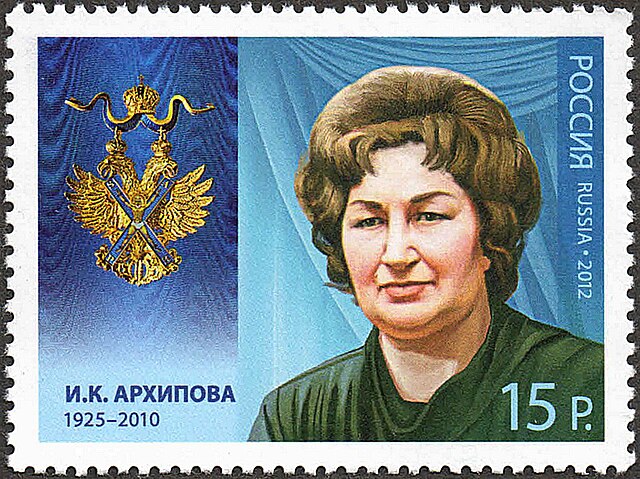
Modern Recipients: Opera singer Irina Arkhipova.

The Order of Saint Andrew Medal Design

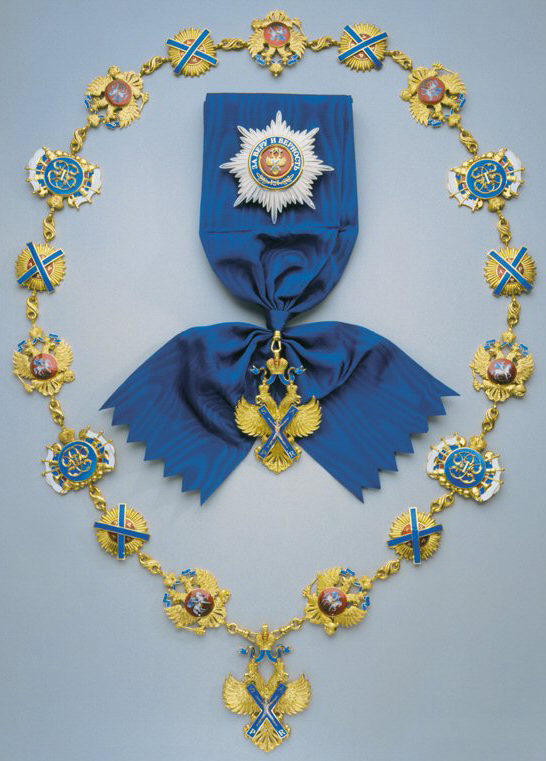
The insignia of the order consisted of a badge and star.

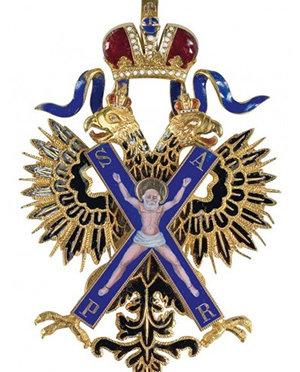
The badge is an enameled crowned black double-headed eagle bearing a blue St. Andrew’s Cross (saltire) with St. Andrew crucified upon it; on the arms of the saltire were the Latin letters ‘SAPR’ (‘St. Andrew, Patron of Russia’). It was worn on a pale blue sash over the right shoulder, or on special occasions on an elaborate ‘collar’ (chain).

The star is an eight-pointed silver star bearing a miniature of the badge on a golden background at the center, surrounded by the motto “For Faith and Loyalty” (or За веру и верность, Za Veru i Vernost in Russian) on a blue ring. It was worn on the left chest.
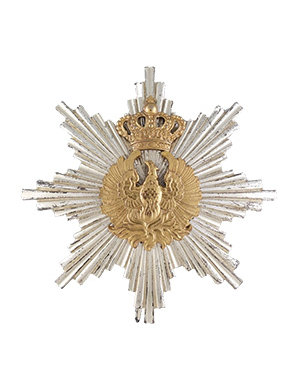
The insignia of the order could be awarded “with diamonds” as a special distinction. 

Order Of Saint Andrew The Apostle.
Order Of Saint Andrew The Apostle. Star, badge, and collar with badge.

Find an Order of Saint Andrew

Right Now on eBay 
Clicking a link to eBay may result in a referral commission being paid if a purchase is made.
Loading...

The Achievement Medal – Army

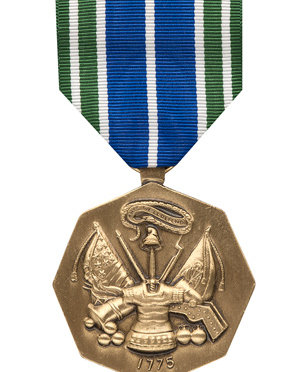
The Achievement Medal is a military decoration of the Armed Forces for the contributions of junior officers and enlisted personnel

The Achievement Medal is a military decoration of the United States Armed Forces. It was first proposed as a means to recognize the contributions of junior officers and enlisted personnel who were not eligible to receive the higher Commendation Medal or the Meritorious Service Medal. Award authority rests with local commanders, granting a broad discretion of when and for what action the Achievement Medal may be awarded.

Each military service issues its own version of the Achievement Medal, with a fifth version authorized by the U.S. Department of Defense for joint military activity.

The Achievement Medal Eligibility

Eligibility criteria for the Achievement Medal – Army (AM-Army) typically include:

  1. Service: Recipients must be serving in the United States Army, including active duty, reserve, and National Guard components.

  2. Meritorious Service: The medal is awarded for meritorious service or achievement, which may include performance of duties at a level above what is normally expected, completion of a special project or assignment, or significant contributions to the mission of the Army.

  3. Non-Combat Role: The Achievement Medal is typically awarded for achievements or contributions in non-combat roles. It is not awarded for acts of valor or combat-related actions, which would be recognized by higher awards such as the Bronze Star Medal or the Silver Star Medal.

  4. Recommendation: Nominations for the Achievement Medal are usually submitted by the individual’s chain of command, with justification for the award based on specific accomplishments and contributions to the Army’s mission.

  5. Approval: The final approval for the award of the Achievement Medal is typically granted by the individual’s commanding officer or higher authority within the chain of command.

The Achievement Medal Design

The following devices may be authorized to be worn on the following achievement medals suspension ribbon and service ribbon:

  • All Achievement Medals, “C” device, which signifies meritorious performance “under combat conditions”, after January 2016
  • Army Achievement Medal, for additional awards – oak leaf clusters
  • Air Force Achievement Medal, for additional awards – oak leaf clusters
  • Navy and Marine Corps Achievement Medal, for additional awards – 5/16 inch stars
  • Coast Guard Achievement Medal, for additional awards – 5/16 inch stars
  • Joint Service Achievement Medal (all service branches), for additional awards – oak leaf clusters
  • Coast Guard Achievement Medal – Operational Distinguishing Device (“O” device)
  • Coast Guard Achievement Medal – Combat Distinguishing Device (Combat “V”)

Find This Medal Online

Right Now on eBay 
Clicking a link to eBay may result in a referral commission being paid if a purchase is made.
Loading...

The Achievement Medal – Navy and Marine Corps

The Achievement Medal is a military decoration of the Armed Forces for the contributions of junior officers and enlisted personnel

The Achievement Medal is a military decoration of the United States Armed Forces. It was first proposed as a means to recognize the contributions of junior officers and enlisted personnel who were not eligible to receive the higher Commendation Medal or the Meritorious Service Medal. Award authority rests with local commanders, granting a broad discretion of when and for what action the Achievement Medal may be awarded.

Each military service issues its own version of the Achievement Medal, with a fifth version authorized by the U.S. Department of Defense for joint military activity.

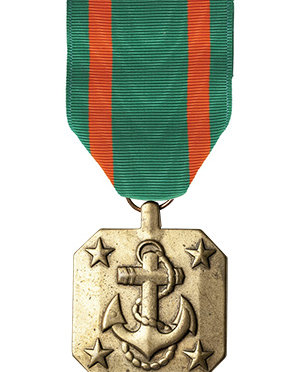
The Navy and Marine Corps Achievement Medal (NAM), is the United States Navy and U.S. Marine Corps’ version of the Achievement Medal. The U.S. Navy was the first branch of the U.S. Armed Forces to award such a medal, doing so in 1961, when it was dubbed the “Secretary of the Navy Commendation for Achievement Medal”. This title was shortened in 1967 to simply, the “Navy Achievement Medal”. On 19 August 1994, to recognize those of the United States Marine Corps who had received the Navy Achievement Medal, the name of the decoration was officially changed to the “Navy and Marine Corps Achievement Medal”. The award is referred to in shorthand speech as a “NAM”.

The Achievement Medal Design

The following devices may be authorized to be worn on the following achievement medals suspension ribbon and service ribbon:

  • All Achievement Medals, “C” device, which signifies meritorious performance “under combat conditions”, after January 2016
  • Army Achievement Medal, for additional awards – oak leaf clusters
  • Air Force Achievement Medal, for additional awards – oak leaf clusters
  • Navy and Marine Corps Achievement Medal, for additional awards – 5/16 inch stars
  • Coast Guard Achievement Medal, for additional awards – 5/16 inch stars
  • Joint Service Achievement Medal (all service branches), for additional awards – oak leaf clusters
  • Coast Guard Achievement Medal – Operational Distinguishing Device (“O” device)
  • Coast Guard Achievement Medal – Combat Distinguishing Device (Combat “V”)

Find This Medal Online

Right Now on eBay 
Clicking a link to eBay may result in a referral commission being paid if a purchase is made.
Loading...

The Order of the Indian Empire

The Most Eminent Order of the Indian Empire is a British order of chivalry founded by Queen Victoria in 1878.

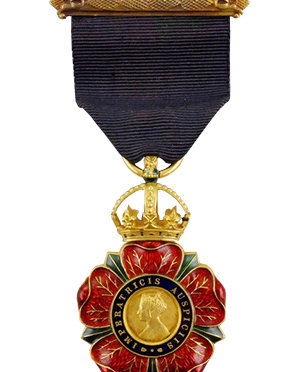
The Most Eminent Order of the Indian Empire is an order of chivalry founded by Queen Victoria in 1878. The motto of the Order is Imperatricis auspiciis, (Latin for “Under the auspices of the Empress“), a reference to Queen Victoria, the first Empress of India. The Order is the junior British order of chivalry associated with the British Indian Empire; the senior one is The Most Exalted Order of the Star of India.

The British founded the Order in 1878 to reward British and native officials who served in India. The Order originally had only one class (Companion), but expanded to comprise two classes in 1887. On 15 February 1887, the Order of the Indian Empire formally became “The Most Eminent Order of the Indian Empire” and was divided into two classes: Knights Commander and Companions, with the following first Knights Commander.

The British Sovereign serves as the Sovereign of the Order. The Grand Master held the next-most senior rank; the position was held, ex officio, by the Viceroy of India. Members of the first class were known as “Knights Grand Commanders” rather than “Knights Grand Cross” so as not to offend the non-Christian Indians appointed to the Order.

No appointments have been made since 1947, the year that India and Pakistan became independent from the British Raj. With the death of the last surviving knight, the Maharaja of Dhrangadhra, the order became dormant in 2010.

The Order of the Indian Empire Design

Members of the Order wore elaborate costumes on important ceremonial occasions:

  • The mantle, worn only by Knights Grand Commanders, comprised dark blue satin lined with white silk. On the left side was a representation of the star (see photo at right).
  • The collar, also worn only by Knights Grand Commanders, was made of gold. It was composed of alternating golden elephants, Indian roses and peacocks.

At less important occasions, simpler insignia were used:

  • The star, worn only by Knights Grand Commanders and Knights Commanders, had ten points, including rays of gold and silver for Knights Grand Commanders, and of plain silver for Knights Commanders. In the center was an image of Victoria surrounded by a dark blue ring with the motto and surmounted by a crown.
  • The badge was worn by Knights Grand Commanders on a dark blue riband, or sash, passing from the right shoulder to the left hip, and by Knights Commanders and Companions from a dark blue ribbon around the neck. It included a five-petaled crown-surmounted red flower, with the image of Victoria surrounded by a dark blue ring with the motto at the center.

The insignia of most other British chivalry orders incorporates a cross: the Order of the Indian Empire does not in deference to India’s non-Christian tradition.

The Order of Beneficence (Greece)

The Order of Beneficence (or Τάγμα της Ευποιΐας in Greek), is an order of Greece established in 1948 as a moral reward for women especially, Greek and foreign, for the good services they have rendered to the Fatherland in the field of charity as well as for their performance in the arts and letters.

The medal is conferred by the Greek government and has five classes:

  • Grand Cross – wears the badge on a sash from the right shoulder, plus the star on the left chest;
  • Grand Commander – wears the badge on a bow, plus the star on the left chest;
  • Commander – wears the badge on a bow;
  • Gold Cross – wears the badge on a ribbon on the left chest;
  • Silver Cross – wears the badge on a ribbon on the left chest.

The Order of Beneficence Design

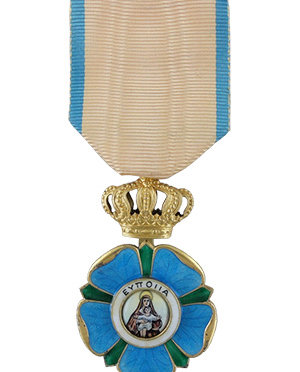
The badge of the Order is a five tipped blue-enameled flower, in silver for the Silver Cross class, in gold for the higher classes.

The overall design is clearly derived from the then-recently abolished British Order of the Indian Empire. The obverse central disc bears a portrait of the Holy Virgin with the Divine Child in Her arms with the legend “ΕΥΠΟΙΙΑ” («Beneficence») on a white enamel ring. The reverse side bears the emblem of the Hellenic Republic.

The star of the Order is a silver eight-pointed star with straight rays, with the same central disc as the obverse of the badge, while the reverse side also bears the emblem of the Hellenic Republic. The ribbon of the Order is orange with blue edges.

The Order of Saints Olga and Sophia

  • Time Period: Pre-WW1
  • Year of Institution: January 1936
  • Country: Greece

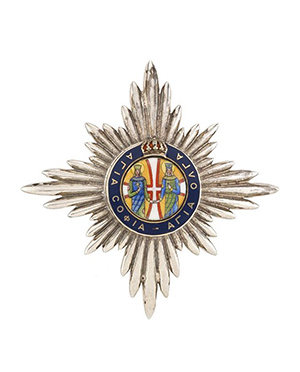
The Royal Family Order of Saints Olga and Sophia (or Βασιλικόν Οἰκογενειακόν Τάγμα Ἁγίων Ὂλγας καὶ ΣοφίαςVasilikon Oikogeneiakon Tagma Agion Olgas kai Sofias) was an order of the Greek royal family reserved for women.

It was the third highest hohor of the modern Greek state and the Crown after the Order of the Redeemer and the male-only Order of Saints George and Constantine. It was instituted in January 1936 by King George II in the memory of his grandmother (Queen Olga) and his mother (Queen Sophia).

The order was abolished in 1973 by the Greek state and today is awarded only by the head of the former Greek royal family, at the monarch’s pleasure for personal services of women to the Crown.

The Order of Saints Olga and Sophia Design

The Order is awarded on the following Grades:

  • Dame 1st Class or Grand Cross
  • Dame 2nd Class
  • Dame 3rd Class
  • Dame 4th Class
  • Grand Cross (‘Μεγαλόσταυρος’) – wears the badge of the Order on a collar or on a sash on the right shoulder, and the star of the Order on the left chest;
  • Grand Commander (‘Ανώτερος Ταξιάρχης’) – wears the badge and the star of the Order on the left chest;
  • Commander (‘Ταξιάρχης’) – wears the badge of the Order on a necklet;
  • Gold Cross (‘Χρυσούς Σταυρός’) – wears the badge on a ribbon on the left chest;
  • Silver Cross (‘Αργυρούς Σταυρός’) – wears the badge on a ribbon on the left chest.
The Order of the Phoenix

  • Time Period: Pre-WW1
  • Year of Institution: 13 May 1926
  • Country: Greece

The Order of the Phoenix (or Τάγμα του Φοίνικος) is an order of Greece established on May 13, 1926, by the republican government of the Second Hellenic Republic to replace the defunct Royal Order of George I.

The honor is bestowed by the Greek government to Greek citizens who have excelled in the arts and literature, science, public administration, shipping, commerce, and industry. It is also awarded to foreigners who have helped raise Greece’s international prestige.

The order was retained after the restoration of the monarchy in 1935 and continues to be awarded by the current Third Republic.

The Order has five classes:

  • GRE Order of the Phoenix - Grand Cross BAR.png Grand Cross (‘Μεγαλόσταυρος’) – wears the badge of the Order on a sash on the right shoulder, and the star of the Order on the left chest;
  • GRE Order of the Phoenix - Grand Commander BAR.png Grand Commander (‘Ανώτερος Ταξιάρχης’) – wears the badge of the Order on a necklet, and the star of the Order on the left chest;
  • GRE Order of the Phoenix - Commander BAR.png Commander (‘Ταξιάρχης’) – wears the badge of the Order on a necklet;
  • GRE Order of the Phoenix - Gold Cross BAR.png Officer or Gold Cross (‘Χρυσούς Σταυρός’) – wears the badge on a ribbon on the left chest;
  • GRE Order of the Phoenix - Silver Cross BAR.png Member or Silver Cross (‘Αργυρούς Σταυρός’) – wears the badge on a ribbon on the left chest.

The Order of the Phoenix Design

The badge of the Order is a white-enameled cross, in silver for the Silver Cross class, in gold for the higher classes, with the Phoenix (symbolizing the rebirth of the Hellenic nation) at the center. A five-pointed star is at the upper arm of the cross.

The first version of the Order (1926–1935) featured the letters “E-T-T-A” in Byzantine uncial on each arm of the cross, the initials of the motto Εκ της τέφρας μου αναγεννώμαι (“From my ashes I am reborn”). During the Monarchy (1935–1974) the letters were removed and the badge was topped by a crown, while the badge’s reverse side featured the monogram of the reigning monarch. The current version (since 1975) omits the crown, while the reverse features the Greek National Emblem with the words ΕΛΛΗΝΙΚΗ ΔΗΜΟΚΡΑΤΙΑ (“Hellenic Republic”).

The star of the Order is a silver eight-pointed star with straight rays, with the phoenix at the centre; during the Monarchy it was topped by a crown. The ribbon of the Order is orange with black edges. Crossed swords on the insignia indicate that the award was given in the military division of the Order.

The Order of the Redeemer

The Order of the Redeemer is an order of merit of Greece and the oldest and highest decoration awarded by the modern Greek state.

  • Time Period: Pre-WW1
  • Year of Institution: 1829
  • Country: Greece

The Order of the Redeemer (or Τάγμα του Σωτήρος, Tágma tou Sotíros), also known as the Order of the Saviour, is an order of merit of Greece and the oldest and highest decoration awarded by the modern Greek state.

According to the original decree, the Order was to be awarded to those Greek citizens who partook in the War of Independence, or “who should distinguish themselves henceforth in any branch of public service, in the army and navy, in the diplomatic and judicial corps, in public administration, in the arts, science, agriculture and industry, commerce, or should distinguish themselves in any other social field through outstanding civic virtue, and through illustrious services to the Throne, for the Glory of the Hellenic name and for the welfare of the fatherland”, while foreigners were admitted either for past services to Greece, or due to their ability “to bring honour to the Order, through their outstanding personal virtues and excellence“.

The Order was established by the Fourth National Assembly at Argos in 1829, during the final year of the Greek War of Independence. The decision was not immediately implemented, however, and the relevant decree was signed on May 20, 1833. According to the decree of the establishment, the name of the Order “shall recall the, by divine assistance miraculously and fortuitously accomplished, the salvation of Greece“.

The Order of the Redeemer has five classes:

  • GRE Order Redeemer 1Class.png Grand Cross (‘Μεγαλόσταυρος’) – wears the badge of the Order on a sash on the right shoulder, and the star of the Order on the left chest;
  • GRE Order Redeemer 2Class.png Grand Commander (‘Ανώτερος Ταξιάρχης’) – wears the badge of the Order on a necklet, and the star of the Order on the left chest;
  • GRE Order Redeemer 3Class.png Commander (‘Ταξιάρχης’) – wears the badge of the Order on a necklet;
  • GRE Order Redeemer 4Class.png Gold Cross (‘Χρυσούς Σταυρός’) – wears the badge on a ribbon on the left chest;
  • GRE Order Redeemer 5Class.png Silver Cross (‘Αργυρούς Σταυρός’) – wears the badge on a ribbon on the left chest.

The Order of the Redeemer Medal Design

The form of the various insignias has been altered a number of times since the establishment of the order, the most obvious change being the removal of the crown during the periods of Republican rule.

The original decree of 1833 described the badge of the Order as consisting of a white enamelled Maltese cross (silver for the Silver Cross, gold for the higher grades), surmounted by a crown, set on a green enamelled wreath, one half of which is an oak branch and the other half a laurel branch.

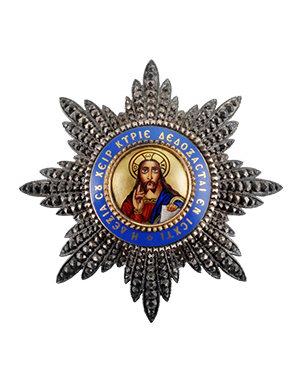
The obverse featured a white cross on a blue background (the coat of arms of Greece) with Otto’s Bavarian arms in an inescutcheon in the centre, surrounded by this inscription on an outer ring: Η ΔΕΞΙΑ ΣΟΥ ΧΕΙΡ, ΚΥΡΙΕ, ΔΕΔΟΞΑΣΤΑΙ ΕΝ ΙΣΧΥΙ (“Thy right hand, O Lord, is become glorious in power”, Exodus, 15:6). The reverse featured a portrait of Otto with the circular inscription: ΟΘΩΝ, ΒΑΣΙΛΕΥΣ ΤΗΣ ΕΛΛΑΔΟΣ (“Otto, King of Greece”).

After Otto’s deposition in 1863, his portrait was removed and substituted by an icon of Jesus, the Redeemer of Orthodox Christian soteriology.