The Medal of Honor of the Police
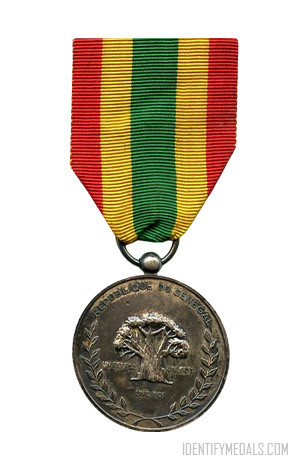
The Medal of Honor of the Police is a Senegalese medal instituted by Law 72-643 from 29 May 1972. The medal is struck in silver.

The Medal of Honor of the Police is a Senegalese medal instituted by Law 72-643 from 29 May 1972. The medal is struck in silver.
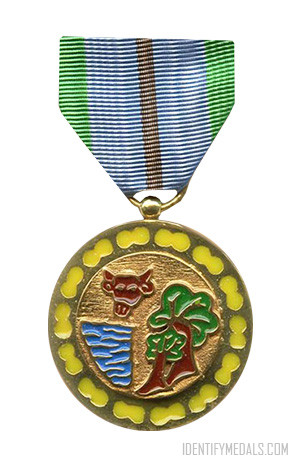
The Wound Medal is a Senegalese medal awarded for sustaining wounds in combat during the uprising in Casamance.
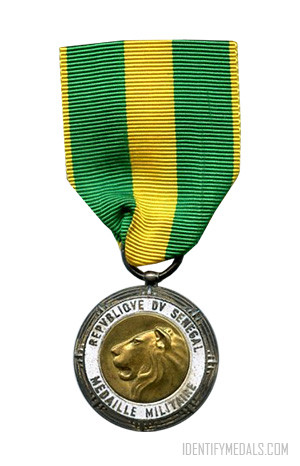
The Military Medal is a Senegalese medal established in 1964 and awarded for acts of valor or to NCOs for long and meritorious service.
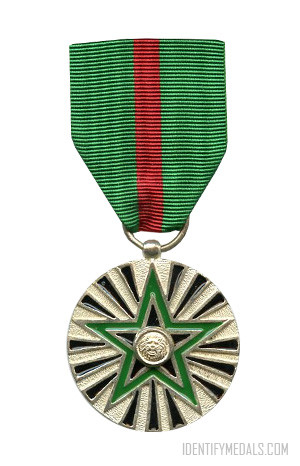
The Order of Agricultural Merit is a Senegalese medal established on 7 August 1982 and has three ranks: Commander, Officer and Chevalier.
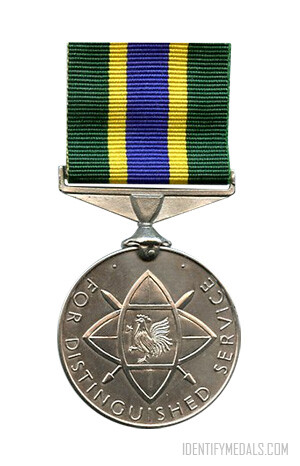
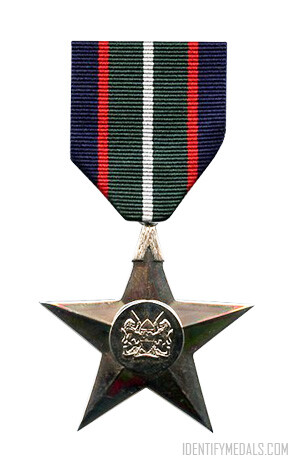
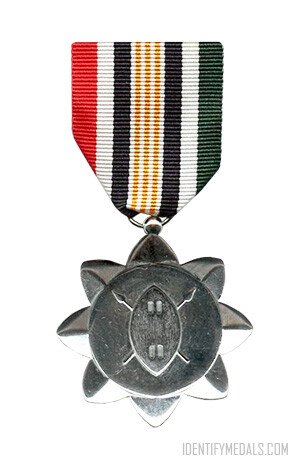
The Distinguished Conduct Medal is a Kenyan award given for exceptionally distinguished service or devotion by members of the Armed Forces.
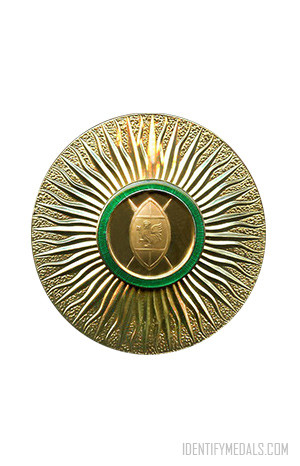
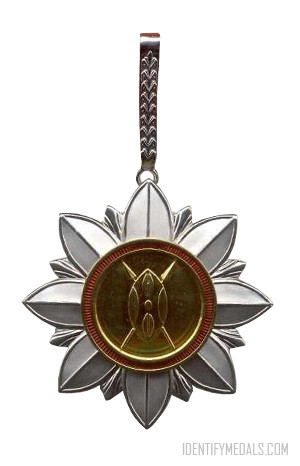
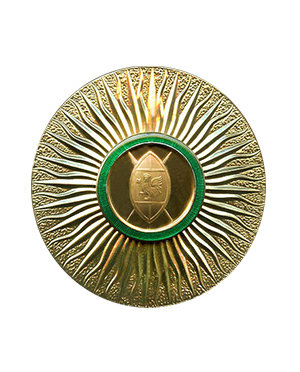
The Chief of the Order of the Golden Heart of Kenya Medal is the highest-ranked award and presented to the holders of the president’s office.
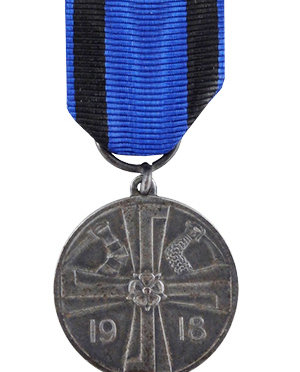
The Finnish Liberation War Medal 1918 is a Finnish medal from WW1. The medal was instituted 1918 for participants in the Liberation War, fighting against the Finnish and Soviet Bolsheviks. It was awarded to Soldiers of the Finnish Army, as well to German soldiers of the Baltic Division and foreign volunteers (Polish, Swedish, and Estonian).
The medal is struck in silver and measures 30 mm.
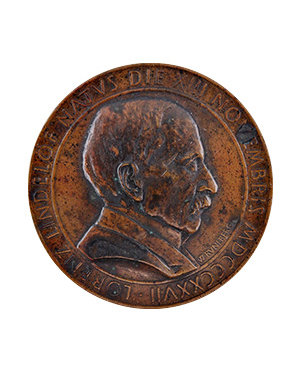
The Lorenz Lindelöf Scientific Award Medal is a finish medal established before WW1.
Finland had been ceded to Russia in 1809. At the time that time, Leonard Lorenz Lindelöf (November 13, 1827 – March 3, 1908)’s father was appointed professor of mathematics at the university, the main building of the university on Senate Square had recently been completed. Lindelöf spent the year 1891 in Stockholm, and the years 1893-94 in Paris returning to Helsingfors where he graduated in 1895. He then taught there as a docent, visiting Göttingen in 1901. Helsinki was still under Russian control and indeed the Russians had implemented a policy of Russification, in reply to the national movements which had arisen.
Lindelöf remained as a professor of mathematics in Helsinki until he retired in 1938. It was a time of rapid economic growth for the new country and the university flourished and rapidly expanded. Lindelöf supported his new country undertaking his university duties with great enthusiasm. Later in his life, Lindelöf gave up research to devote himself to teaching and writing textbooks.
For his outstanding contributions to Scandinavian mathematics, he was honoured by the universities of Uppsala, Oslo, Stockholm, and Helsinki.
The medal is struck in bronze and measures 56.5 mm. The obverse illustrates the right-facing bust of Lorenz Lindelöf, surrounded by the inscription “LORENZ LINDELÖF NATVS DIE XII NOVEMBRIS MDCCCXXVII” (1827).
The reverse illustrates a branch of laurel leaves at the left and a branch of oak leaves at the right, inscribed in the centre is “SECRETARIO SVO QVADRAGENARIO SOCIETAS SCIENTIAS FENNIAE / DIE XIII NOVEMBRIS MCMVII” (1907).
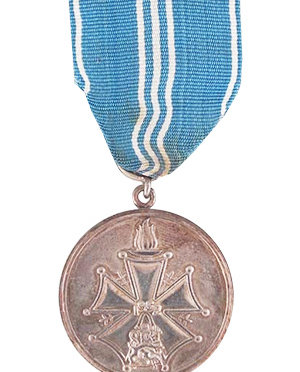
The 1952 Helsinki Olympic Merit Medal is a Finnish medal created by Executive Order on July 21st 1952. The medal was conferred by the President of the Republic for distinguished services in the XV Olympic Games.
The medal was awarded in three classes:
The medal is a one-piece construction struck in solver and measures 31.11 mm. It shows a five-armed cross and the Finnish Lion. In the middle of the cross on the obverse are the Olympic rings, and on the reverse the year 1952.
The ribbon is striped blue and white.
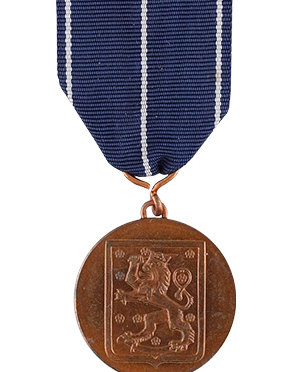
The Finish Continuation War Commemorative Medal 1941-1945 is a Finnish medal awarded to participants in the Continuation War (1941-1945). It was established on 24 May 1957, 12 years after the end of the war.
The Continuation War supported the view that it was a continuation of the Winter War of 1939-1940 in which Soviet forces invaded Finland. It was an attempt by Finland to regain territory lost at the end of the Winter War and to occupy Russian territory, taking advantage of the German invasion of Russia and acting as a defensive buffer against future incursions.
The medal is a one-piece construction and measures 31 mm wide. The ribbon is dark blue with three thin white strips on the sides and middle.