The Sir Harry Smith’s Medal for Gallantry

The Sir Harry Smith’s Medal for Gallantry is an unofficial military decoration privately instituted in 1851 by Major General Sir Henry George Wakelyn Smith for bravery, awarded for actions following the siege of Fort Cox in December 1850, at the beginning of the 8th Cape Frontier War. Smith was at the time the Governor and Commander-in-Chief of the Cape of Good Hope.

Fort Cox was not provisioned to withstand a long siege, had no artillery, and could only be supplied with water by hazardous expeditions to and from the Keiskamma River far below. Several attempts to relieve the Fort were unsuccessful and Smith, concerned that his being trapped in Fort Cox would affect the Colony’s morale and cause the defection of loyal Xhosa tribes, decided to fight his way out. On 31 December 1850, escorted by about 250 men of the Cape Mounted Riflemen, Smith succeeded to get through the Xhosa lines and safely reached King William’s Town. Fort Cox was finally relieved on 31 January 1851.

Impressed by the showing of the Cape Mounted Riflemen under his command, Smith created Sir Harry Smith’s Medal for Gallantry in recognition of their conduct. In the Colonies and former Boer Republics which became the Union of South Africa in 1910, several unofficial military decorations and medals were instituted and awarded during the nineteenth and early twentieth century.

The Sir Harry Smith’s Medal for Gallantry Design

The medal is circular, struck in silver and measures 34 mm in diameter.

The obverse shows a British lion passant gardant beneath a crown of laurel leaves, with the year “1851” in the exergue. The reverse is plain and has the inscription “PRESENTED BY” around the upper perimeter, “HIS EXCELLENCY“, “SIR H.G. SMITH BART C.G.B.” and “TO” in three lines, with open space for private naming, and “FOR GALLANTRY IN THE FIELD” around the bottom perimeter.

The ribbon is dark blue with crimson edges and measures 32 millimeters wide.

The St. Jean d’Acre Medal

The St. Jean d’Acre Medal was established in 1840 and awarded by the Sultan of Turkey to British, Austrian and Turkish forces under Sir Charles Napier who had taken part in the liberation of the city after eight years of Egyptian occupation.

Like earlier Egyptian rulers, Mehemet Ali wanted to extend the boundaries of Egypt and to control Syria, both for its strategic value and for its natural resources. He began an open revolt against Mahmud II in 1831 and ordered the invasion of Syria. His army quickly overran the region, capturing its largest port, Acre, after a six-month siege. Britain, Austria, Russia and Prussia agreed to offer Mehemet Ali the hereditary rule of Egypt and the administration for life of Acre, in exchange for his withdrawal from the rest of Syria, but Mehemet Ali rejected these terms so a mixed European force (without France) began direct action. In return for the assistance given to Turkey, Mahmud II proposed that, amongst other decorations and rewards, the allied forces present in the Syrian operations would receive a Turkish medal, known to the British as The St. Jean d’Acre medal after the ancient name of the port. Given that there was no precedent for the award of an official medal like this to the massed ranks of the Royal Navy and Royal Marines, let alone one to be issued by a foreign power, the announcement caused great excitement and interest.

The medal is generally accompanied by the Naval General Service Medal with clasp “Syria”, awarded for the same operation.

The St. Jean d’Acre Medal Design

The medal is circular, struck in gold (22 gms), silver or copper and measures 30 mm in diameter.

The obverse shows a fortress flying the Ottoman flag, with six five-pointed stars around the top. On the foot, there’s a commemorative inscription and date in Arabic. The reverse bears the Toughra of the Sultan in a laurel wreath.

The ribbon is red with white edges.

The British Legion Medal

The British Legion Medal was a British Empire campaign medal instituted in 1836 and presented for service in Spain during the First Carlist War, a civil war that was fought in Spain between 1833 and 1839.

The medal was awarded to all those who volunteered and subsequently served in Spain with the British Auxiliary Legion. It was issued un-named. The British Auxiliary Legion was commanded by General Sir George De Lacey Evans (1787-1870) and volunteered for service in Spain in support of Isabella II who, at the age of three, succeeded her father as a monarch. Her uncle, Don Carlos, opposed this and triggered off a war that lasted until 1840. The war was largely fought in the Northern provinces.

The British Legion Medal Design

The medal is circular, struck in silver or white metal and measures 36 mm in diameter.

The obverse bears a Cross Pattée with the central inscription ‘TUJO’, alluding to the battle at Laguna del Tujo, surrounded by a laurel leaf. The reverse depicts a British lion at the center surrounded by a cordon of the Golden Fleece. The inscription; ‘ESPANA’ is above and ‘AGRADECIDA’ below meaning ‘Grateful Spain’.

The ribbon is broad blue with narrow yellow stripes towards the edges. The medal is fitted with a ring for suspension from a double-looped bar and has a brooch fitment at the top of the ribbon.

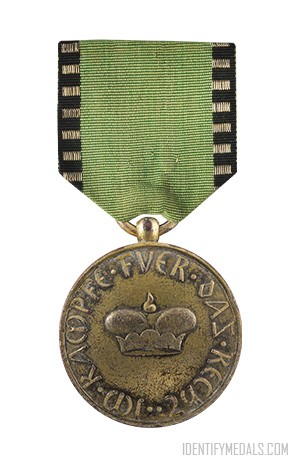
The Saxe-Gotha Altenburg Waterloo Medal

The Saxe-Gotha Altenburg Waterloo Medal, instituted in 1816, was awarded for participation n the Napoleonic Wars against France.

The Saxe-Gotha Altenburg Waterloo Medal was instituted in 1816 by Duke August von Sachsen-Gotha und Altenburg and awarded for participation n the Napoleonic Wars against France in 1814-1815.

The medal was established in different versions for officers, for non-commissioned officers and for other ranks. A reduced-size version for officers was also created. Gilded medals were issued to officers, NCOs received bronze medals with gilt raised points and other ranks a bronze version.

The Saxe-Gotha Altenburg Waterloo Medal Design

The medal is struck in gilt bronze or bronze and measures 42 mm in diameter.

The obverse shows a crown with the legend “IM KAMPFE FUER DAS RECHT” (translated to “In the struggle for the right”). The reverse bears an ornate rose motif with the name of the duchy and the dates of the campaign in roman numerals. 

The ribbon is green with black edges and gold stripes.

The Different Waterloo Medals

The Waterloo medal was issued by the British Government to all soldiers present during action. Seven nations of the Seventh Coalition struck differently designed medals for soldiers who took part in the campaign. These are:

The Waterloo Medal - British Medals Pre-WW1

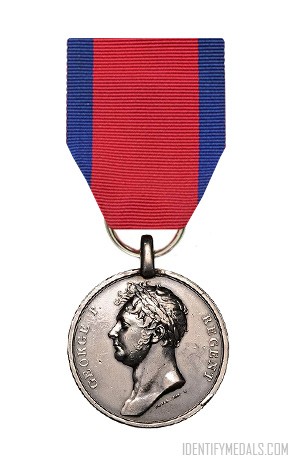
The Waterloo Medal

The Waterloo Medal is a British military medal established in 1816-17 and struck for all those who participated in the Waterloo campaign.

British Campaign Medals: The Brunswick Waterloo Medal

The Brunswick Waterloo Medal

The Brunswick Waterloo Medal was a campaign medal awarded to those who participated in the Battles of Quatre Bras and Waterloo.

British Campaign Medals: The Hanoverian Waterloo Medal

The Hanoverian Waterloo Medal

The Hanoverian Waterloo Medal was issued to all members of the Hanoverian army who fought in the battles of Quatre Bras and Waterloo.

British Campaign Medals: The Nassau Medal for Waterloo

The Nassau Waterloo Medal

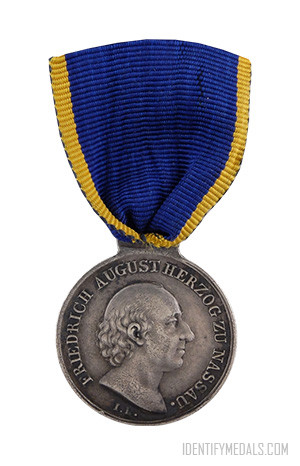
The Waterloo Medal is a campaign of the Duchy of Nassau established by Frederick Augustus, Duke of Nassau on 23 December 1815.

Where to Find Waterloo Medals

Right Now on eBay 
Clicking a link to eBay may result in a referral commission being paid if a purchase is made.
Loading...

The Nassau Waterloo Medal

The Waterloo Medal is a campaign of the Duchy of Nassau established by Frederick Augustus, Duke of Nassau on 23 December 1815.

The Waterloo Medal is a campaign of the Duchy of Nassau established by Frederick Augustus, Duke of Nassau on 23 December 1815.

The Duchy of Nassau was an independent state between 1806 and 1866 and was located in what is now the German states of Rhineland-Palatinate and Hesse. Its ruling dynasty, now extinct, was the House of Nassau. On 17 July 1806, the remaining counties of Nassau-Usingen and Nassau-Weilburg joined the Confederation of the Rhine.

For the Waterloo Campaign the Duke brought a force of 7,400 into the field, many of whom were seasoned veterans from the French armies of the Peninsular War.

The Nassau Waterloo Medal Design

The medal is struck in silver and measures 28 mm in diameter.

The obverse shows Duke Friedrich of Nassau, and the reverse bears the winged figure of Victory crowning a soldier with laurels. The exergue has inscribed the date of the action. 

The ribbon is dark blue edged in yellow.

The Different Waterloo Medals

The Waterloo medal was issued by the British Government to all soldiers present during action. Seven nations of the Seventh Coalition struck differently designed medals for soldiers who took part in the campaign. These are:

The Waterloo Medal - British Medals Pre-WW1

The Waterloo Medal

The Waterloo Medal is a British military medal established in 1816-17 and struck for all those who participated in the Waterloo campaign.

British Campaign Medals: The Brunswick Waterloo Medal

The Brunswick Waterloo Medal

The Brunswick Waterloo Medal was a campaign medal awarded to those who participated in the Battles of Quatre Bras and Waterloo.

British Campaign Medals: The Hanoverian Waterloo Medal

The Hanoverian Waterloo Medal

The Hanoverian Waterloo Medal was issued to all members of the Hanoverian army who fought in the battles of Quatre Bras and Waterloo.

Where to Find Waterloo Medals

Right Now on eBay 
Clicking a link to eBay may result in a referral commission being paid if a purchase is made.
Loading...

The Hanoverian Waterloo Medal

The Hanoverian Waterloo Medal was issued to all members of the Hanoverian army who fought in the battles of Quatre Bras and Waterloo.

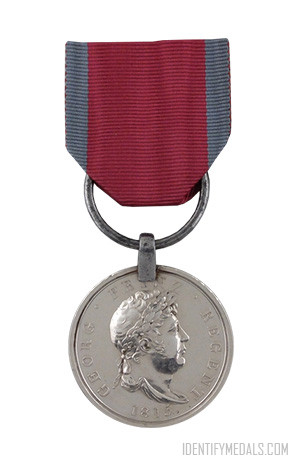
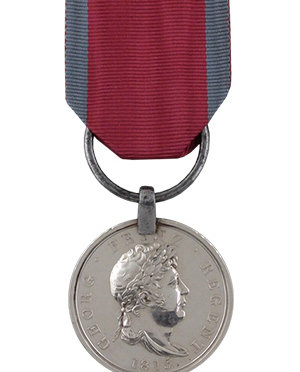
The Hanoverian Waterloo Medal was a British Campaign issued to all members of the Hanoverian army who fought in the battles of Quatre Bras and Waterloo 16–18 June 1815.

The Hanoverian troops, excluding those of the King’s German Legion, present on the 16, 17 and 18 June at Battle of Quatre Bras and Waterloo, under the command of General Charles Alten, amounted to almost 16,900 men, equivalent to 18% of Wellington‘s Allied Army.

This medal was founded by George, the Prince Regent in December 1817, and was awarded to every soldier who was present in the Hanoverian army at the Battle of Waterloo.

The medal remained the property of the soldier, and if he left the military service, he was still allowed to wear it. It could not, however, under any circumstances, be transferred from one soldier to another (after the death of the first recipient, it was ordered that it should remain in his family as an heirloom).

The Hanoverian Waterloo Medal Design

The medal is struck in silver and measures 35 mm in diameter.

The obverse shows a profile and laureate head of the Prince Regent to the right, with the legend “GEORG. PRINZ. REGENT, 1815” around it. The reverse bears two branches of laurel and a breastplate, with two spears and two colors crossed on either side. Underneath is the date “WATERLOO JUN. XVIII.” and, above, in Roman letters, “HANNOVER SCHER TAPFERKEIT“. Round the rim is inscribed the soldier’s name, regiment, etc.

The ribbon is maroon edged with light blue.

The Different Waterloo Medals

The Waterloo medal was issued by the British Government to all soldiers present during action. Seven nations of the Seventh Coalition struck differently designed medals for soldiers who took part in the campaign. These are:

The Waterloo Medal - British Medals Pre-WW1

The Waterloo Medal

The Waterloo Medal is a British military medal established in 1816-17 and struck for all those who participated in the Waterloo campaign.

British Campaign Medals: The Brunswick Waterloo Medal

The Brunswick Waterloo Medal

The Brunswick Waterloo Medal was a campaign medal awarded to those who participated in the Battles of Quatre Bras and Waterloo.

British Campaign Medals: The Nassau Medal for Waterloo

The Nassau Waterloo Medal

The Waterloo Medal is a campaign of the Duchy of Nassau established by Frederick Augustus, Duke of Nassau on 23 December 1815.

Where to Find Waterloo Medals

Right Now on eBay 
Clicking a link to eBay may result in a referral commission being paid if a purchase is made.
Loading...

The Brunswick Waterloo Medal

The Brunswick Waterloo Medal was a campaign medal awarded to those who participated in the Battles of Quatre Bras and Waterloo.

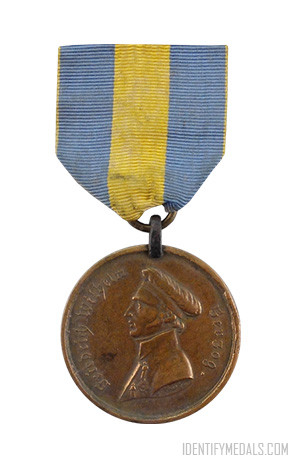
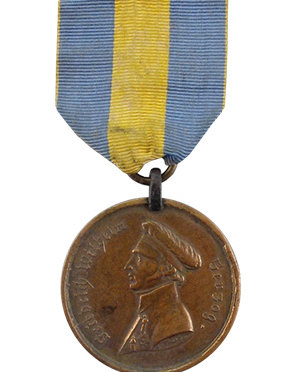
The Brunswick Waterloo Medal was a campaign medal of the Duchy of Brunswick, a historical German state established by the Congress of Vienna in 1815. The medal was awarded to troops and officers from Brunswick who participated in the Battles of Quatre Bras and Waterloo.

The Brunswick Waterloo Medal was authorized by the Prince Regent.

The Brunswick Waterloo Medal Design

The medal is struck in bronze from captured French cannons and measures 35 mm in diameter.

The obverse shows, in a left-facing profile, the fallen Duke of Brunswick, Frederick William. Around the edge is the inscription, in German Script, “FRIEDRICH WILHELM HERZOG”. The reverse bears the date 1815 in the center, surrounded by a wreath of oak and laurels. Around the outside of the wreath is the inscription, “Braunschweig Seinen Kriegern” (or “Brunswick to her Warriors”) and “Quatrebras und Waterloo” below.

The ribbon measures 1 12 inches (38 mm) wide, and is yellow with blue edge stripes 38 inch (9.5 mm) wide. The medal is suspended from a steel clip and ring.

The Different Waterloo Medals

The Waterloo medal was issued by the British Government to all soldiers present during action. Seven nations of the Seventh Coalition struck differently designed medals for soldiers who took part in the campaign. These are:

The Waterloo Medal - British Medals Pre-WW1

The Waterloo Medal

The Waterloo Medal is a British military medal established in 1816-17 and struck for all those who participated in the Waterloo campaign.

British Campaign Medals: The Hanoverian Waterloo Medal

The Hanoverian Waterloo Medal

The Hanoverian Waterloo Medal was issued to all members of the Hanoverian army who fought in the battles of Quatre Bras and Waterloo.

British Campaign Medals: The Nassau Medal for Waterloo

The Nassau Waterloo Medal

The Waterloo Medal is a campaign of the Duchy of Nassau established by Frederick Augustus, Duke of Nassau on 23 December 1815.

Where to Find Waterloo Medals

Right Now on eBay 
Clicking a link to eBay may result in a referral commission being paid if a purchase is made.
Loading...

The Army Gold Medal

The Army Gold Medal is a British campaign medal awarded to field and general officers in recognition of successful commands in campaigns.

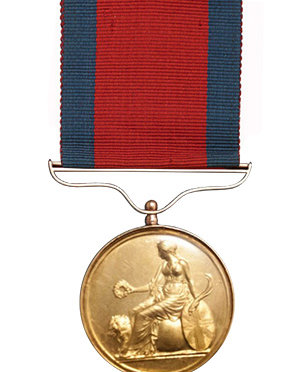
The Army Gold Medal, also known as the Peninsular Gold Medal, was a British campaign medal awarded to field and general officers in recognition of successful commands in campaigns, predominantly the Peninsular War (1807–1814). The medal was issued only to officers whose status was no less than that of battalion commander or equivalent.

The Peninsular War was a military conflict fought by Bourbon Spain and Portugal, assisted by Great Britain, against the invading and occupying forces of the First French Empire for control of the Iberian Peninsula during the Napoleonic Wars. The war on the peninsula lasted until the Sixth Coalition defeated Napoleon in 1814, and is regarded as one of the first wars of national liberation, significant for the emergence of large-scale guerrilla warfare.

Naval Gold Medals had been awarded since 1794 to captains and admirals who had served in specified successful naval actions. The Army Gold Medal was established in 1810 to reward service at Napoleonic War battles since 1808. Like the Maida Gold Medal, it was awarded only to majors and above and, like the Naval Gold Medal, it was awarded in two sizes, with the larger to senior officers. In October 1813, to prevent a proliferation of awards to one recipient, an order was created instructing that only one medal be worn.

The award could be awarded posthumously, and sent to the officer’s family.

The Army Gold Medal Design

The medal is struck in gold and measures 54 mm and 33 mm in diameter.

Large Gold Medal

The Large Gold Medal, restricted to general officers, was designed by Thomas Wyon. It was mounted in a gold frame, and glazed on both sides. The obverse shows Britannia with a shield, seated and facing left and holding a laurel wreath in her right hand and a palm branch in her left. Behind her is the head of a lion. The reverse shows a laurel wreath, with the name of the battle engraved in the center, although that for Barrosa was die struck. The large medal was worn around the neck.

Small Gold Medal

The Small Gold Medal, awarded to officers between the rank of major and colonel. was mounted in a gold frame and glazed, and had the same design as the large medal. It was worn on the left chest, often from a buttonhole, with the ribbon attached via a wide curved suspender.

Gold (or Peninsular) Cross

The Gold (or Peninsular) Cross, awarded to those who earned four or more gold medals. It is an ornamental cross pattée with a proud lion at its center and the four qualifying actions embossed on its arms. The obverse and reverse are the same. The medal was worn around the neck with the ribbon attached via an ornate loop.

The ribbon for all the awards was broad crimson with blue borders and measured 1.75 inches (44 mm) wide.

The Maida Gold Medal

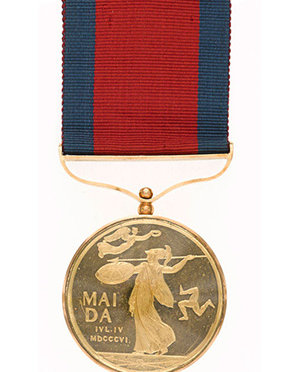
The Battle of Maida Medal was established in 1806 and awarded to the thirteen senior officers involved in the battle of Maida. Only an unknown number of gold and silver specimens are known to exist.

The Battle of Maida was fought on 4 July 1806 was a battle between the British expeditionary force under General Sir John Stuart and a much larger French force outside the town of Maida in Calabria, Italy during the Napoleonic Wars. Sir John Stuart’s forces numbered about 4,500, while Marshal Reynier’s force consisted of more than 6,000. French casualties were heavy, estimated to be in excess of 2,000, while those of the British were limited to less than 400.

The Battle of Maida was the British Army’s first victory since the beginning of the French Revolution on mainland Europe. It shattered Napoleon’s aura of invincibility, created by his outstanding victories such as Marengo and Austerlitz. It also proved to the Duke of Wellington, who received a report on the battle, that British lines could beat French columns.

The Maida Gold Medal Design

The medal is struck in gold and measures 39 mm in diameter.

The obverse shows the laureated profile of George III. The reverse bears the winged figure of Victory hovering with a laurel wreath over the head of Britannia. Britannia has her shield upraised and is in the act of throwing a spear. The name and date of the battle appear on her left, with the trinacria or three-legged emblem on the right.

The ribbon measures 38mm wide and is crimson edged with navy blue.

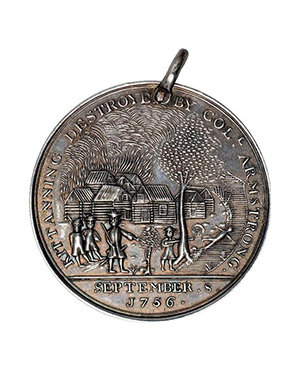
The Kittanning Destroyed Medal

The Kittanning Destroyed Medal was the very first military medal in North America. It was awarded for courage and bravery.

The Kittanning Destroyed Medal is the first documented medal engraved and struck for military honor in British North America. It was established by order of the Corporation of the City of Philadelphia and presented by Mayor Attwood Shute to Colonel John Armstrong.

Armstrong had led the Second Battalion of the Pennsylvania Regiment against the Indian village of Kittanning on September 8, 1756, in retaliation for the raiding and burning of Fort Granville approximately a month before.

Armstrong and his officers received silver medals. Later, his non-commissioned officers accepted medals struck in bronze, while the enlisted soldiers collected theirs in pewter.

The last strike from the original dies was most likely in the early 1860s and, although the medal has been restruck for many of America’s commemorative anniversaries and celebrations, the dates have rarely been recorded.

The Kittanning Destroyed Medal continues to be reproduced and admired because it provides narration, perspective charm, commemoration, image, beauty, and longevity. It was the very first military medal in North America awarded for courage and bravery, predating the Badge of Military Merit or Purple Heart by approximately twenty-five years.

The Kittanning Destroyed Medal Design

The medal is circular and struck in silver, bronze or pewter medal. It measures 1 5/8 in. (4.1 cm) in diameter. The
medals were engraved by Edward Duffield, a watchmaker, and struck by Joseph Richardson, a noted silversmith.

The obverse shows the battle at Kittanning. Colonel Armstrong is directing his men through the stockade surrounding the Delaware village of Kittanning, and there’s a man prostrate on the ground before them. In the background, the Indian village is burning. The image is surrounded by the inscription “KITTANNING DESTROYED BY COL. ARMSTRONG.” The exergue reads: “SEPTEMBER . 8 . / 1756.”

The reverse portrays the Philadelphia Corporation’s coat of arms surrounded by the inscription “THE GIFT OF THE CORPORATION OF THE CITY OF PHILADELPHIA“.