The Blood Order or Blutorden

The Blood Order or Blutorden was a highly prestigious Nazi Party decoration established by Adolf Hitler in March 1934.

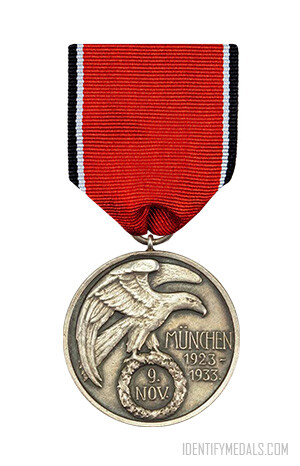
The Blood Order (or Blutorden in German), formally known as the Decoration in Memory of 9 November 1923 (Medaille zur Erinnerung an den 9. November 1923), was a highly prestigious Nazi Party decoration.

Established by Adolf Hitler in March 1934, it commemorated the failed Beer Hall Putsch of November 9, 1923. 

Initially, the Blood Order was awarded to 1,500 putsch participants who were members of the Nazi Party or its formations before January 1932, or cadets from the Munich Infantry School. These first medals, made of 99% pure silver, were carefully numbered except for those given to Hitler and Göring. Recipients wore the ribbon on the right breast in a rosette form, with the medal sometimes pinned below.

In May 1938, eligibility expanded to include those imprisoned or sentenced to death for Nazi activities before 1933, those severely wounded in service of the Party, Austrian Nazi participants in the 1934 July Putsch, and others at Hitler’s discretion. Reinhard Heydrich was the last posthumous recipient.

The Blood Order or Blutorden Rank

Holders who left the Nazi Party had to return the medal. Among the recipients were 16 women, with fewer than 6,000 total awards given, including the original putsch participants and those from the 1938 extensions.

Hitler’s 1936 “Orders and Awards” decree ranked the Blood Order fifth among top NSDAP honors, after the Coburg Badge, Nürnberg Party Badge of 1929, SA Treffen at Brunswick 1931, and the Golden Party Badge, followed by Gau badges and the Golden HJ Badge.

The Blood Order or Blutorden Design

The medal is silver, featuring an eagle clutching an oak wreath with the date “9. Nov” and “München 1923–1933” inscribed on the obverse. The later medals, struck in 80% silver, carried serial numbers above 1500 and lacked the maker’s name, unlike the initial Type I medals. 

The reverse shows the Feldherrnhalle entrance, a swastika with sun rays, and the motto “UND IHR HABT DOCH GESIEGT” (“And after all, you won”).
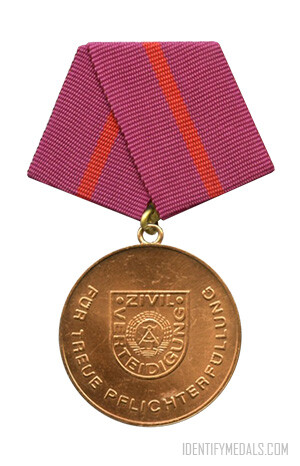
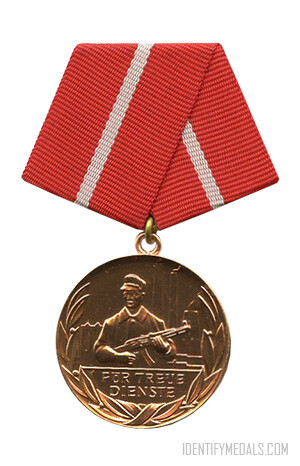
The Medal for Faithful Fulfillment of Duties in the Civil Defense of the GDR

The Medal for Faithful Fulfillment of Duties in the Civil Defense of the GDR honored individuals who demonstrated exceptional dedication.

The Medal for Faithful Fulfillment of Duties in the Civil Defense of the GDR (or Medaille für treue Pflichterfüllung in der Zivilverteidigung der DDR in German) was established to honor individuals who demonstrated exceptional dedication and performance in the civil defense sector of the German Democratic Republic.

Created on February 11, 1963, this medal recognized those who contributed significantly to the preparation, coordination, and execution of civil defense measures, ensuring the safety and protection of the population during emergencies and disasters.

The Award Criteria

The criteria for receiving the Medal for Faithful Fulfillment of Duties in the Civil Defense of the GDR included demonstrating consistent dedication, efficiency, and professionalism in civil defense roles.

The medal was awarded in multiple classes based on service duration and performance: bronze for 5 years, silver for 10 years, and gold for 15 years or more. Recipients were expected to have shown exceptional performance in planning and executing civil defense operations, adherence to socialist principles, and significant contributions to the safety and preparedness of the state.

The Award Design

The Medal for Faithful Fulfillment of Duties in the Civil Defense of the GDR featured a circular design made from bronze, silver, or gold, depending on the class.

The obverse side displayed civil defense symbols, such as a shield or a torch, surrounded by laurel leaves. The reverse bore the inscription “Für treue Pflichterfüllung” (For Faithful Fulfillment of Duties) and the number of years of service.

The medal was attached to a crimson ribbon with a central red stripe.

The Medal for Faithful Service in Fighting Groups of the Working Class

The Medal for Faithful Service in Fighting Groups of the Working Class was awarded to paramilitary units composed of workers of the GDR.

The Medal for Faithful Service in Fighting Groups of the Working Class (or Medaille für treue Dienste in den Kampfgruppen der Arbeiterklasse in German) was established to recognize the long-term dedication and exemplary service of members of the Fighting Groups of the Working Class.

These groups were paramilitary units composed of workers who were trained and organized to defend the German Democratic Republic (GDR) against internal and external threats. The medal was created to honor their commitment to the socialist state and their role in safeguarding its achievements.

The Award Criteria

The criteria for receiving the Medal for Faithful Service in Fighting Groups of the Working Class included demonstrating long-term service and exemplary performance in the duties of the Fighting Groups.

The award was given in multiple classes, typically bronze for 5 years, silver for 10 years, and gold for 15 years or more. Recipients needed to show dedication to their training, readiness to defend the state, and adherence to socialist principles. The medal recognized both individual achievements and collective efforts in maintaining the security and stability of the GDR.

The Award Design

The Medal for Faithful Service in Fighting Groups of the Working Class featured a round design made from bronze, silver, or gold, depending on the class.

The obverse side displayed symbols of the Fighting Groups, such as crossed rifles or a clenched fist, surrounded by laurel leaves. The reverse bore the inscription “Für treue Dienste” (For Faithful Service) and the number of years of service.

The medal was attached to a red ribbon with a central white stripe.

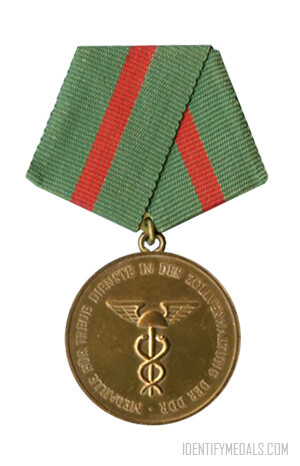
The Medal for Loyal Service in the Customs Administration of the GDR

The Medal for Loyal Service in the Customs Administration of the GDR was established to recognize the dedication of customs officials.

The Medal for Loyal Service in the Customs Administration of the GDR (or Medaille für treue Dienste in der Zollverwaltung der DDR in German) was established to recognize the dedication and long-term service of customs officials within the German Democratic Republic.

Instituted on June 30, 1954, this medal honored customs officers who played a crucial role in regulating trade, preventing smuggling, and ensuring the security and economic interests of the state. The award highlighted the importance of the Customs Administration in maintaining the integrity of the GDR’s borders and economic policies.

The Award Criteria

Recipients of the Medal for Loyal Service in the Customs Administration of the GDR were selected based on their length of service and exemplary conduct.

The medal was awarded in multiple classes, typically bronze for 5 years, silver for 10 years, and gold for 15 years or more. Criteria included consistent performance, adherence to state regulations, and significant contributions to the efficiency and effectiveness of the customs services. The award aimed to motivate customs officials and recognize their commitment to upholding the state’s economic and security measures.

The Award Design

The Medal for Loyal Service in the Customs Administration of the GDR featured a circular design made from bronze, silver, or gold, corresponding to the class.

The obverse displayed an emblem of the Customs Administration, such as crossed keys or a shield, surrounded by laurel branches. The reverse bore the inscription “Für treue Dienste” (For Faithful Service) and the number of years of service.

The medal was attached to a green ribbon with a thick red stripe in the middle.

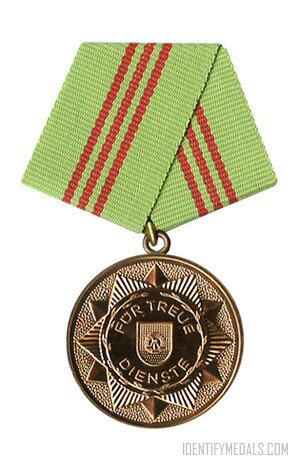
The Medal for Faithful Service in Militarized Organs of the Interior Ministry

The Medal for Faithful Service in Militarized Organs of the Interior Ministry recognized dedication and service in the militarized branches.

The Medal for Faithful Service in Militarized Organs of the Interior Ministry (or Medaille für treue Dienste in den bewaffneten Organen des Ministeriums des Innern in German) was an honor awarded by the German Democratic Republic. It was established on December 1, 1955, to recognize the dedication and long-term service of personnel within the militarized branches of the Ministry of the Interior, including the police and other security services.

This medal aimed to acknowledge the essential role these organs played in maintaining internal security, public order, and the enforcement of state laws. It was part of the broader system of state awards designed to incentivize loyalty and exemplary performance among security personnel.

The Award Criteria

The criteria for receiving the Medal for Faithful Service in Militarized Organs of the Interior Ministry were based on the length of service and the demonstration of consistent, exemplary performance.

The medal was awarded in different classes, reflecting various milestones in service duration. Typically, these classes included bronze for 5 years of service, silver for 10 years, and gold for 15 years or more. Recipients needed to have shown continuous dedication, adherence to the principles of socialism, and significant contributions to the effectiveness and reliability of the security services.

The Award Design

The Medal for Faithful Service in Militarized Organs of the Interior Ministry featured a circular design made from bronze, silver, or gold, depending on the class.

The obverse side displayed the emblem of the Ministry of the Interior, which might include symbols such as a shield, crossed swords, or other elements indicative of law enforcement. The reverse typically bore the inscription “Für treue Dienste” (For Faithful Service) along with the number of years of service.

The medal was attached to a green ribbon with three thin red lines in the middle.

The Medal for Faithful Service in the Civil Defense of the GDR

The Medal for Faithful Service in the Civil Defense was awarded for long-term dedication and exemplary service in civil defense efforts.

The Medal for Faithful Service in the Civil Defense of the GDR (or Medaille für treue Dienste in der Zivilverteidigung der DDR in German) was established to honor the long-term dedication and exemplary service of individuals involved in the GDR’s civil defense efforts.

Created on February 11, 1963, this medal recognized those who contributed significantly to the preparation, coordination, and implementation of civil defense measures, ensuring the safety and protection of the population in times of emergencies and disasters.

The Award Criteria

The criteria for receiving the Medal for Faithful Service in the Civil Defense of the GDR included the length of service and the recipient’s consistent demonstration of dedication, efficiency, and professionalism in civil defense roles.

The medal was awarded in multiple classes based on service duration: bronze for 5 years, silver for 10 years, and gold for 15 years or more. Recipients needed to show exceptional performance in planning and executing civil defense operations, adhering to socialist principles, and making significant contributions to the safety and preparedness of the state.

The Award Design

The design of the Medal for Faithful Service in the Civil Defense of the GDR featured a circular medal made from bronze, silver, or gold, corresponding to the class.

The obverse side displayed civil defense symbols, such as a shield or a torch, surrounded by laurel leaves. The reverse bore the inscription “Für treue Dienste” (For Faithful Service) and the number of years of service.

The ribbon was worn on the left chest, signifying the recipient’s long-term service and dedication to civil defense in the GDR.

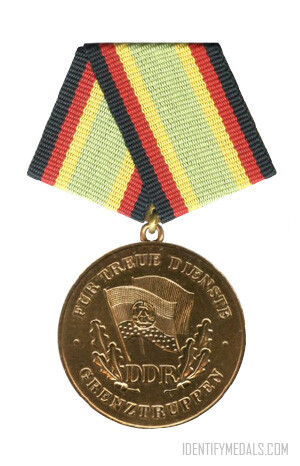
The Medal For Faithful Service in the Border Guards of the GDR

The Medal For Faithful Service in the Border Guards of the GDR was established to recognize the long-term service and loyalty of members.

The Medal for Faithful Service in the Border Guards of the GDR (or Medaille für treue Dienste in den Grenztruppen der DDR in German) was established to recognize the long-term service and loyalty of members of the Border Guards.

Instituted on December 1, 1954, this medal aimed to honor the dedication and exemplary conduct of personnel who played a vital role in securing the borders of the GDR, preventing illegal crossings, and protecting the state’s sovereignty. The award underscored the importance of the Border Guards in maintaining national security and stability.

The Award Criteria

The criteria for receiving the Medal for Faithful Service in the Border Guards of the GDR included the length of service and the recipient’s consistent demonstration of loyalty, professionalism, and dedication.

The medal was awarded in multiple classes based on service duration: bronze for 5 years, silver for 10 years, and gold for 15 years or more. Recipients were expected to show outstanding performance, adherence to the principles of the socialist state, and significant contributions to border security and protection.

The Award Design

The design of the Medal for Faithful Service in the Border Guards of the GDR featured a round medal made from bronze, silver, or gold, depending on the class.

The obverse side depicted symbols of the Border Guards, such as a watchtower or a border patrol emblem, surrounded by laurel leaves. The reverse bore the inscription “Für treue Dienste” (For Faithful Service) along with the number of years of service.

The medal was attached to a ribbon, green with black, red, and yellow stripes, representing the national colors of the GDR. 

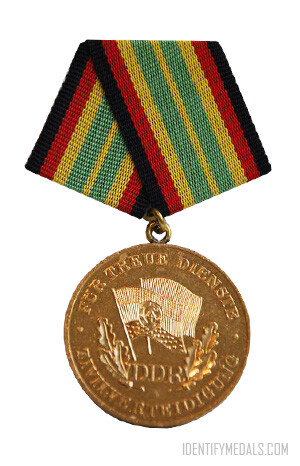
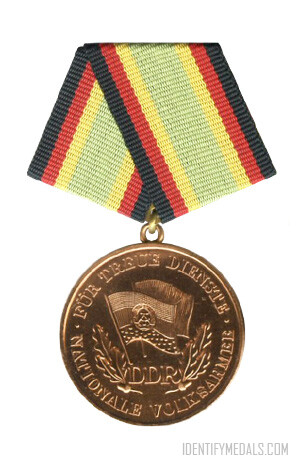
The Medal For Faithful Service in the National People’s Army

The Medal For Faithful Service in the National People’s Army was established to honor the long-term and dedicated service of personnel.

The Medal for Faithful Service in the National People’s Army (or Medaille für treue Dienste in der Nationalen Volksarmee in German) was established to honor the long-term and dedicated service of military personnel in the National People’s Army (NVA) of the GDR.

Instituted on March 1, 1956, this medal aimed to recognize the loyalty, commitment, and exemplary conduct of soldiers who served in the NVA. The award highlighted the critical role of the armed forces in defending the socialist state and maintaining national security.

The Award Criteria

The Medal for Faithful Service in the National People’s Army was awarded based on the duration of service and the demonstration of consistent, exemplary performance by the recipients.

The medal was conferred in multiple classes, each corresponding to specific service milestones: bronze for 5 years, silver for 10 years, gold for 15 years, and higher classes for longer periods of service. Recipients were required to show loyalty to the state, dedication to their military duties, and adherence to the principles of the socialist system, ma

The Award Design

The design of the Medal for Faithful Service in the National People’s Army featured a circular medal made from bronze, silver, or gold, according to the class.

The obverse side depicted an emblem of the National People’s Army, such as crossed rifles or other military symbols, encircled by a wreath of laurel leaves. The reverse bore the inscription “Für treue Dienste” (For Faithful Service) and the number of years of service.

The medal was suspended from a ribbon in the colors of the GDR, with different designs to indicate the various classes. 

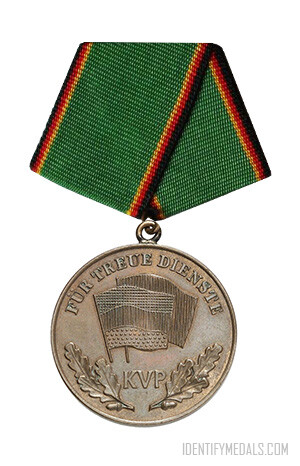
The Medal for Faithful Service in the Barracked People’s Police

This Medal for Faithful Service was a decoration instituted to recognize long-term, dedicated service in the Kasernierte Volkspolizei.

The Medal for Faithful Service in the Barracked People’s Police (or Medaille für treue Dienste in der Kasernierten Volkspolizei in German) was a decoration instituted by the German Democratic Republic (GDR) to recognize long-term, dedicated service in the Barracked People’s Police (Kasernierte Volkspolizei).

Established on December 1, 1955, this medal was created to acknowledge the commitment and loyalty of police personnel who served in this militarized wing of the police force. The Barracked People’s Police were responsible for maintaining internal security, supporting the armed forces, and preparing for national defense, making their service critical to the state’s stability and security.

The Award Criteria

The Medal for Faithful Service in the Barracked People’s Police was awarded based on the length of service and the exemplary conduct of the recipients. The award recognized periods of faithful and diligent service in increments of five years.

Typically, the medal was available in multiple classes, including bronze (5 years), silver (10 years), and gold (15 years or more), reflecting the duration and dedication of the service provided. Recipients needed to demonstrate consistent performance, loyalty to the state, and adherence to the principles of the socialist system.

The Award Design

The design of the Medal for Faithful Service in the Barracked People’s Police featured a round medal made from bronze, silver, or gold, corresponding to the class of the award.

The obverse side displayed the emblem of the Barracked People’s Police, often including symbols such as a police shield or an inscription highlighting the award. The reverse typically bore the inscription “Für treue Dienste” (For Faithful Service) along with the number of years of service.

The medal was attached to a green ribbon with thin edges in the GDR’s national colors.

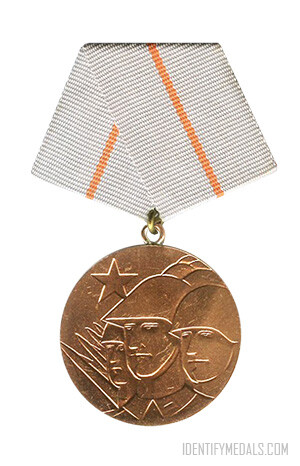
The Brotherhood in Arms Medal

The Brotherhood in Arms Medal was a prestigious award in the GDR, established to recognize and honor the solidarity and cooperation.

The Medal Brotherhood in Arms (or Medaille Brüderlichkeit im Arme in German) was a prestigious award in the German Democratic Republic, established to recognize and honor the solidarity and cooperation between the GDR’s military forces and those of other socialist countries.

The medal was created to celebrate the fraternal bonds and mutual support among the armies of the socialist bloc, highlighting their joint efforts in maintaining peace and defending socialist ideals. It was a symbol of international military solidarity and the collective strength of socialist nations.

The Award Criteria

The criteria for receiving the Medal Brotherhood in Arms included demonstrating exceptional cooperation and solidarity with the armed forces of other socialist countries. It was awarded to military personnel who contributed significantly to joint operations, military exercises, and other collaborative efforts that strengthened the bonds between the GDR and its allies.

The medal recognized both individual contributions and collective achievements in fostering international military cooperation. It aimed to encourage and honor those who played a key role in promoting unity and mutual support among socialist armies.

The Award Design

The Medal Brotherhood in Arms featured a circular design made from high-quality metal, typically bronze, silver, or gold.

The obverse side displayed symbols of military cooperation, such as crossed flags or shaking hands, often surrounded by laurel leaves. The reverse side bore an inscription denoting the purpose of the award and the year it was established.

The medal was attached to a white ribbon with a thin central line.