The Fidelity Medallion

The Fidelity Medallion or André Capture Medal was created in 1780 and is the oldest decoration of the United States military.

The Fidelity Medallion was created by act of the Continental Congress in 1780 and is the oldest decoration of the United States military. Also known as the “André Capture Medal“, the Fidelity Medallion was awarded to those soldiers who participated in the capture of Major John André, of the British army, who had been the contact to Benedict Arnold and had helped organize his defection.

Historical records indicate that three soldiers, all members of the militia of New York state, were awarded the Fidelity Medallion after its first issuance:

The Fidelity Medallion was never again bestowed and it quickly became regarded as a commemorative decoration. For this reason, the Badge of Military Merit is generally considered the first decoration of the U.S. military, even though it was created two years after the Fidelity Medallion, in 1782.

All three of the original Medallions were thought to be lost. Isaac Van Wart’s example was thought to be lost at the time of his death in 1828, but is actually in the hands of a descendant in Westchester County, NY. John Paulding’s and David Williams’ medallions were both donated to the New-York Historical Society in 1905 which displayed them in a locked, glass-topped case. In mid-1975, the two Medallions were stolen, along with the pocket watch originally belonging to Major John André. The Historical Society did not go public with the loss at the time, and none of the items have been recovered.

The Fidelity Medallion Design

The Fidelity Medallion measures 55mm. x 41mm. The obverse of the medallion was inscribed “Fidelity“; the reverse, with the motto, “Amor Patriæ Vincit“, which means, “The love of country conquers.”

In the two centuries since the original Fidelity Medallions were issued, replicas have occasionally been produced in metals including silver, pewter, lead and bronze and in varying degrees of historical accuracy. The American Numismatic Society has six different specimens in their collection.
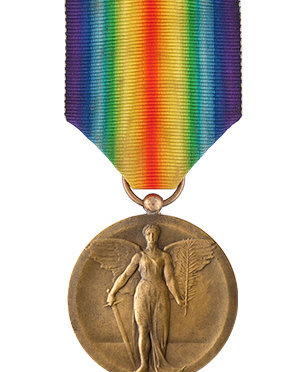
The Inter Allied Victory Medal (Romania)

The Romanian Victory Medal was awarded to those who had taken part in a battle between 28 August 1916 and 31 March 1921 or served as a medic.

  • Time Period: World War I
  • Institution: 1919
  • Country: Romania

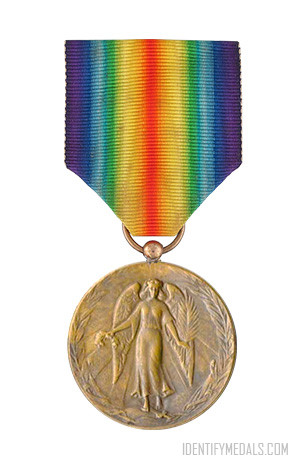
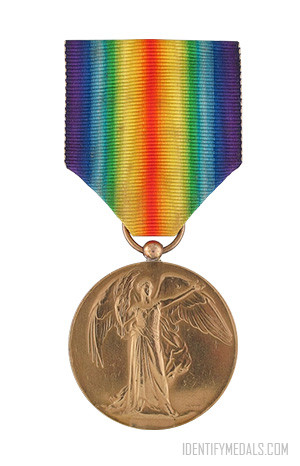
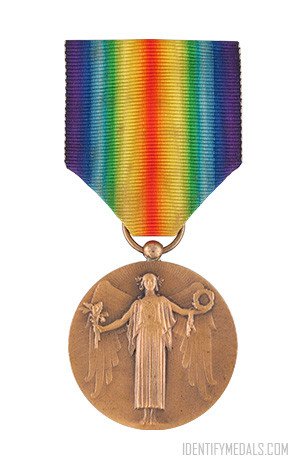
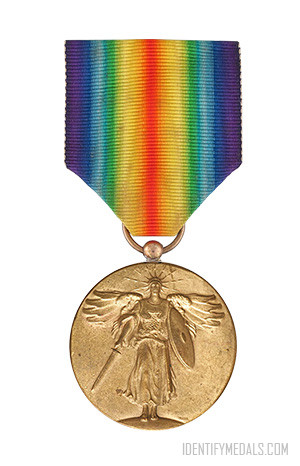
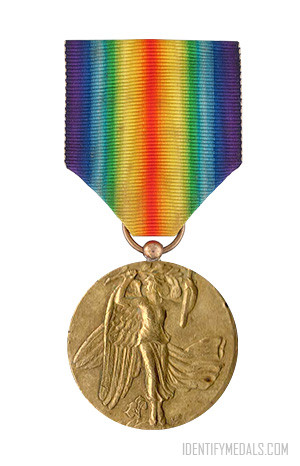
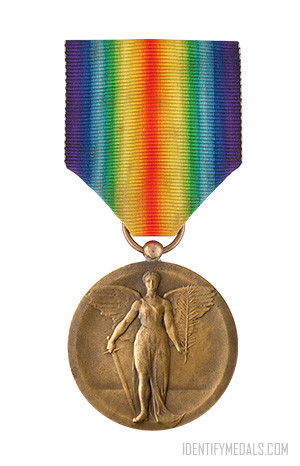
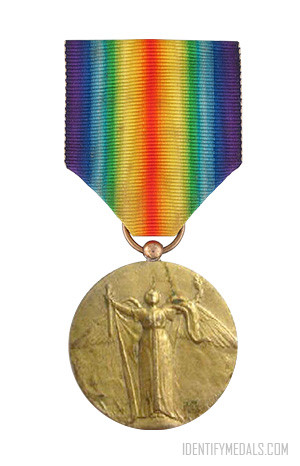
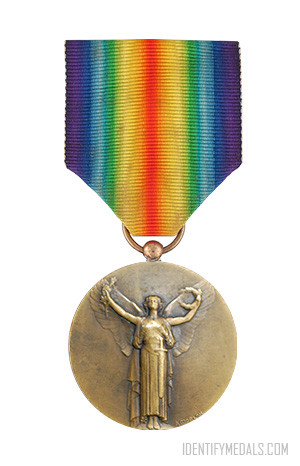
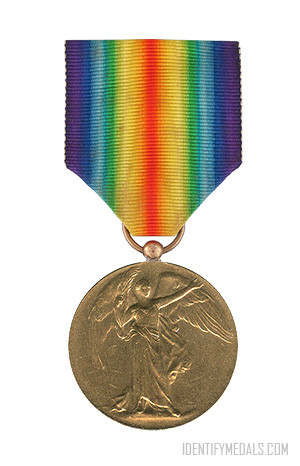
The Allied Victory Medal was recommended by an inter-allied committee in March 1919. Fourteen victorious countries finally awarded the medal after World War I, and each allied nation would design a ‘Victory Medal’ for award to their own nationals. Certain features were to be shared: a winged figure of Victory on the obverse and the same ribbon.

To qualify for the Romanian Victory Medal, recipients of any rank had to be mobilized for war service and to have taken part in a battle between 28 August 1916 and 31 March 1921, or to have served as an army medic. Also included were the combatants from the Hungarian–Romanian War.

The Romania Inter-Allied Victory Medal Design

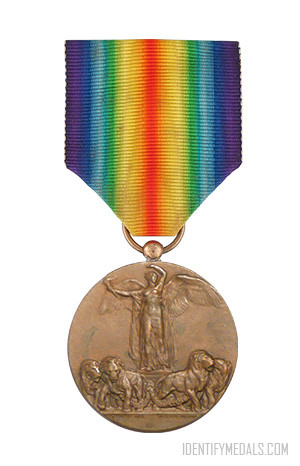
The Victory Medal measures 36 millimetres (1.4 in) in diameter and was designed by William McMillan. The design and ribbon was also adopted by Belgium, Brazil, Cuba, Czechoslovakia, France, Greece, Italy, Japan, Portugal, Romania, Siam, Union of South Africa and the USA. Each allied nation would design a ‘Victory Medal’ for award to their own nationals, all issues having certain common features, including a winged figure of victory on the obverse and the same ribbon.

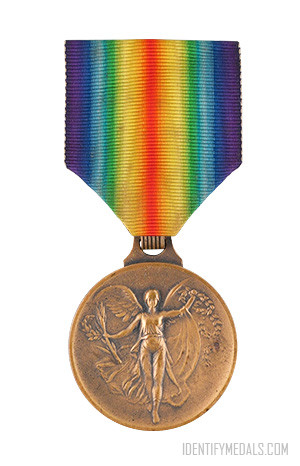
The obverse of the Romanian medal was selected from a set of proposals submitted to an international jury. The jury selected the design of Lt. Col. Constantin Kristescu, who was also put in charge of its sculpting. The medal was manufactured in Paris, where Kristescu used to work with La Maison Arthus-Bertrand.

The reverse shows the words ‘THE GREAT / WAR FOR / CIVILISATION / 1914-1919’ surrounded by a laurel wreath.

The 39 millimeters (1.5 in) wide watered ribbon has an iridescent color scheme, with the violet moving through to a central red stripe where both schemes meet. It attaches to the medal through a ring suspender. The recipient’s name, rank, service number and unit were impressed on the edge of the medal. The name of the regiment or corps was omitted on medals awarded to Army officers.

All the Inter-Allied Victory Medal Variations

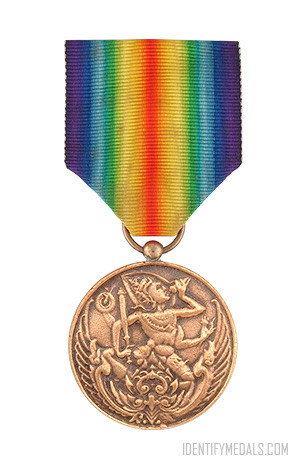
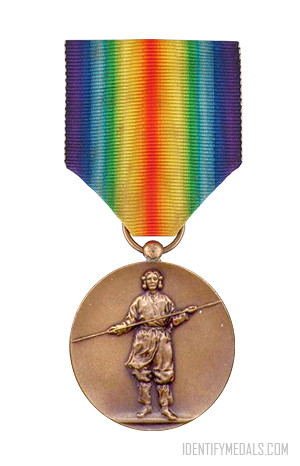
Although each country designed its own version of the Inter-Allied Victory Medal, all of them shared some common elements, such as a winged victory figure on the obverse and a similar ribbon with rainbow colors symbolizing unity among the Allies. Here are the versions for all countries:

Find an Inter-Allied Victory Medal Online

Right Now on eBay 
Clicking a link to eBay may result in a referral commission being paid if a purchase is made.
Loading...

The Inter Allied Victory Medal (Cuba)

The Cuban Victory Medal was awarded to all military personnel or civilians who have been employed in war service between 1917 and 1919.

The Allied Victory Medal was recommended by an inter-allied committee in March 1919. Fourteen victorious countries finally awarded the medal after World War I, and each allied nation would design a ‘Victory Medal’ for award to their own nationals. Certain features were to be shared: a winged figure of Victory on the obverse and the same ribbon.

The President of the United States of Brazil, adopted the proposal of Marshal Foch in January 24, 1919 so that all the fighters of the Great War received a commemorative medal.

The Cuba Inter-Allied Victory Medal Design

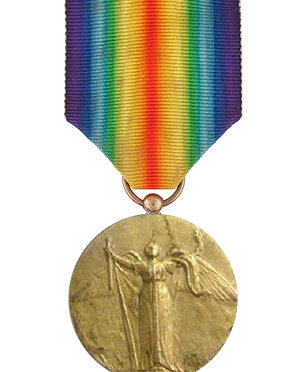
The Victory Medal measures 36 millimetres (1.4 in) in diameter and was designed by William McMillan. The design and ribbon was also adopted by Belgium, Brazil, Cuba, Czechoslovakia, France, Greece, Italy, Japan, Portugal, Romania, Siam, Union of South Africa and the USA. Each allied nation would design a ‘Victory Medal’ for award to their own nationals, all issues having certain common features, including a winged figure of victory on the obverse and the same ribbon.

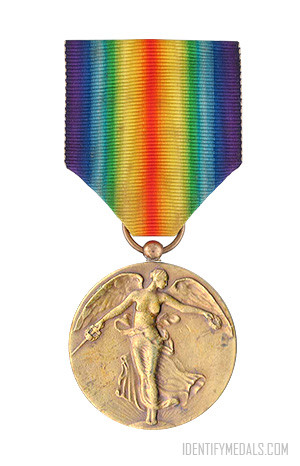
The obverse of the Cuban Victory Medal featured a symbolic figure of Victoria with her hands up on a plain background.

The reverse shows the words ‘THE GREAT / WAR FOR / CIVILISATION / 1914-1919’ surrounded by a laurel wreath.

The 39 millimeters (1.5 in) wide watered ribbon has an iridescent color scheme, with the violet moving through to a central red stripe where both schemes meet. It attaches to the medal through a ring suspender. The recipient’s name, rank, service number and unit were impressed on the edge of the medal. The name of the regiment or corps was omitted on medals awarded to Army officers.

All the Inter-Allied Victory Medal Variations

Although each country designed its own version of the Inter-Allied Victory Medal, all of them shared some common elements, such as a winged victory figure on the obverse and a similar ribbon with rainbow colors symbolizing unity among the Allies. Here are the versions for all countries:

Find an Inter-Allied Victory Medal Online

Right Now on eBay 
Clicking a link to eBay may result in a referral commission being paid if a purchase is made.
Loading...

The Order of the Aztec Eagle

The Order of the Aztec Eagle is the highest Mexican order awarded to foreigners in the country and forms part of the Mexican Honours System.

The Order of the Aztec Eagle (or Orden Mexicana del Águila Azteca in Spanish) is the highest Mexican order awarded to foreigners in the country and forms part of the Mexican Honours System. It’s awarded for services to the Mexican nation or to humanity, and it’s reciprocally given to Mexican public service providers living abroad.

The order was created by decree on December 29, 1933 by President Abelardo L. Rodríguez although it is based on the temporal Aztec Eagle decoration, which was created on September 30, 1932. This award had a light blue ribbon and was given as a thank you to foreigners, in particular to ministers from the Chilean Foreign Issues Office.

It corresponds to similar distinctions given to Mexican citizens such as the Miguel Hidalgo Order or the Belisario Domínguez Medal of Honor. It is given by the office of the foreign minister on the instructions of a Council established for this purpose headed by the President.

The Order of the Aztec Eagle Design

There is some design similarity of the order with the coat of arms of Mexico, particularly the golden eagle holding a rattlesnake, which is associated with the Aztec civilization.
Prior to the 2011 reform, the classes were, in descending order:

  1. MEX Order of the Aztec Eagle 1Class BAR.png Collar (“Collar”), awarded to heads of state;
  2. MEX Order of the Aztec Eagle 2Class BAR.png Grand Cross (“Cruz”), awarded to prime ministers and heads of government
  3. MEX Order of the Aztec Eagle 3Class BAR.png Sash (“Banda”), awarded to government ministers, secretaries and ambassadors
  4. MEX Order of the Aztec Eagle 4Class BAR.png Medal (“Medalla”), awarded to government undersecretaries, plenipotentiary ministers, as well to those whose category is tantamount to the previous;
  5. MEX Order of the Aztec Eagle 5Class BAR.png Placard (“Placa”), awarded to ad hoc business representatives, colonels and lieutenant colonels, captains of a ship, equivalent servants of embassies in Mexico), as well to those whose category is tantamount to the previous;
  6. MEX Order of the Aztec Eagle 5Class BAR.png Venera (a type of insignia), awarded to ad interim business representatives and other members of diplomatic missions;
  7. MEX Order of the Aztec Eagle 5Class BAR.png Insignia proper, awarded under the Council’s discretion; and
  8. MEX Order of the Aztec Eagle 5Class BAR.png Honorable Mention (“Mención Honorífica”).

Since the reform of March 2011, the classes are :

  1. MEX Orden del Aguila Azteca 2011 Collar BAR.svg Collar (“Collar”), awarded to heads of state;
  2. MEX Orden del Aguila Azteca 2011 Banda Especial BAR.svg Sash of Special Category (“Banda en Categoría Especial”), awarded to prime ministers and heads of government, hereditary princes(ses), consorts of heads of state, or to people whose category is tantamount to the previous;
  3. MEX Orden del Aguila Azteca 2011 Banda BAR.svg Sash (“Banda”), awarded to government ministers, secretaries, members of royal families, ambassadors, or individuals whose category is tantamount to the previous;
  4. MEX Orden del Aguila Azteca 2011 Placa BAR.svg Plaque (“Placa”), awarded to government undersecretaries, plenipotentiary ministers, consuls general, brigadier generals, rear admirals, as well to those whose category is tantamount to the previous;
  5. MEX Orden del Aguila Azteca 2011 Venera BAR.svg Venera (a type of insignia), awarded to ad hoc business representatives, colonels and lieutenant colonels, captains of a ship, equivalent servants of embassies in Mexico, as well to those whose category is tantamount to the previous;
  6. MEX Orden del Aguila Azteca 2011 Insignia BAR.svg Insignia, awarded to ad interim business representatives and other members of diplomatic missions; captain, navy lieutenant, as well to those whose category is tantamount to the previous and to those cases the Council considers pertinent.

All grades except the collar may be awarded, under the Council’s discretion, to distinguished foreigners.

The Cross for the French Intervention

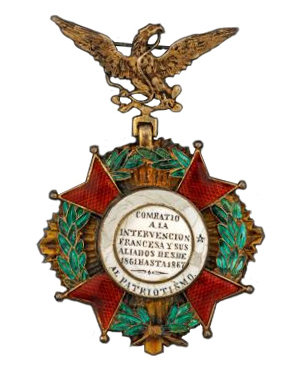
The Cross for the French Intervention is part of several medals created during the occupation of Mexico by French troops between 1862 and 1867.

On July 12 1859, Juárez decreed the first regulations of a new reform: “The Law of Nationalization of the Ecclesiastical Wealth.” The civil war between Liberals and Conservatives that followed (Civil War of the Reform) severely damaged Mexico’s infrastructure and crippled its economy. In view of the government’s desperate financial straits, Juárez canceled, in 1861, repayments of interest on foreign loans that had been taken out by the defeated conservatives.

Spain, Britain and France, angry over unpaid Mexican debts, sent a joint expeditionary force that seized the Veracruz Customs House in December 1861. Spain and Britain soon withdrew after they realized that the French Emperor Napoleon III intended to overthrow the Juárez government and establish a Second Mexican Empire, with the support of the remnants of the Conservative side in the Reform War.

Faced with US opposition to a French presence and a growing threat on the European mainland from Prussia, French troops began pulling out of Mexico in late 1866.

The Medal for the Battle of the Cinco de Mayo

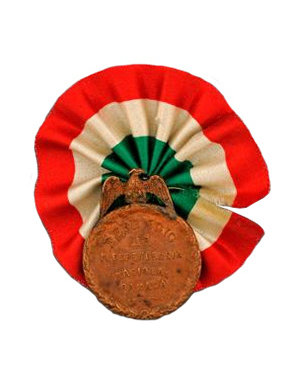
The Medal for the Battle of the Cinco de Mayo is part of several medals created during the occupation of Mexico by French troops between 1862 and 1867.

On July 12 1859, Juárez decreed the first regulations of a new reform: “The Law of Nationalization of the Ecclesiastical Wealth.” The civil war between Liberals and Conservatives that followed (Civil War of the Reform) severely damaged Mexico’s infrastructure and crippled its economy. In view of the government’s desperate financial straits, Juárez canceled, in 1861, repayments of interest on foreign loans that had been taken out by the defeated conservatives.

Spain, Britain and France, angry over unpaid Mexican debts, sent a joint expeditionary force that seized the Veracruz Customs House in December 1861. Spain and Britain soon withdrew after they realized that the French Emperor Napoleon III intended to overthrow the Juárez government and establish a Second Mexican Empire, with the support of the remnants of the Conservative side in the Reform War.

Faced with US opposition to a French presence and a growing threat on the European mainland from Prussia, French troops began pulling out of Mexico in late 1866.

The Medal for Acultzingo

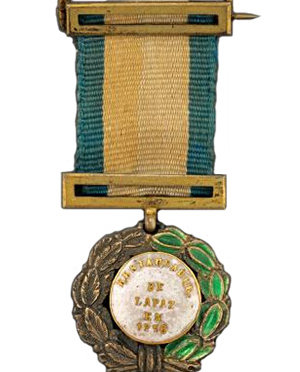
The Medal for Acultzingo is part of several medals created during the occupation of Mexico by French troops between 1862 and 1867.

On July 12 1859, Juárez decreed the first regulations of a new reform: “The Law of Nationalization of the Ecclesiastical Wealth.” The civil war between Liberals and Conservatives that followed (Civil War of the Reform) severely damaged Mexico’s infrastructure and crippled its economy. In view of the government’s desperate financial straits, Juárez canceled, in 1861, repayments of interest on foreign loans that had been taken out by the defeated conservatives.

Spain, Britain and France, angry over unpaid Mexican debts, sent a joint expeditionary force that seized the Veracruz Customs House in December 1861. Spain and Britain soon withdrew after they realized that the French Emperor Napoleon III intended to overthrow the Juárez government and establish a Second Mexican Empire, with the support of the remnants of the Conservative side in the Reform War.

Faced with US opposition to a French presence and a growing threat on the European mainland from Prussia, French troops began pulling out of Mexico in late 1866.

The Medal for the French Intervention – Oaxaca

The Medal for the French Intervention is part of several medals created during the occupation of Mexico by French troops between 1862 and 1867.

On July 12 1859, Juárez decreed the first regulations of a new reform: “The Law of Nationalization of the Ecclesiastical Wealth.” The civil war between Liberals and Conservatives that followed (Civil War of the Reform) severely damaged Mexico’s infrastructure and crippled its economy. In view of the government’s desperate financial straits, Juárez canceled, in 1861, repayments of interest on foreign loans that had been taken out by the defeated conservatives.

Spain, Britain and France, angry over unpaid Mexican debts, sent a joint expeditionary force that seized the Veracruz Customs House in December 1861. Spain and Britain soon withdrew after they realized that the French Emperor Napoleon III intended to overthrow the Juárez government and establish a Second Mexican Empire, with the support of the remnants of the Conservative side in the Reform War.

Faced with US opposition to a French presence and a growing threat on the European mainland from Prussia, French troops began pulling out of Mexico in late 1866.

The Restorer of the Peace Medal (1855)

Time Period: Pre-WW1
Institution: 1855
Country: Mexico

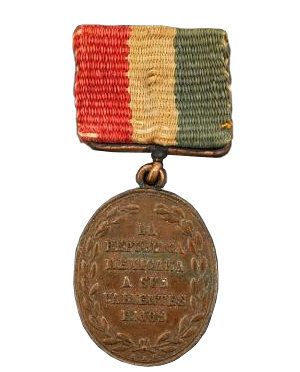
The Restorer of the Peace medal was created in 1955, when the future president Ignacio Comonfort restored the peace after a series of conservative risings against liberal governmental reforms.

Ignacio Gregorio Comonfort de los Ríos (12 March 1812 – 13 November 1863), or Ignacio Comonfort, was a Mexican politician and soldier who became President of Mexico in 1855 after the outbreak of the Revolution of Ayutla that overthrew Santa Anna. This uprising’s name refers to not just a narrow political goal of ousting the dictator, but a more thorough change in political direction via armed warfare.

The Plan of Ayutla was the 1854 written plan aimed at removing conservative, centralist President Antonio López de Santa Anna from control of Mexico during the Second Federal Republic of Mexico period. This event is considered to be the first act of the Liberal Reform in Mexico.

The new regime would then proclaim the 1857 Mexican Constitution, which implemented a variety of liberal reforms.

The Defense of Puebla Medal (1833)

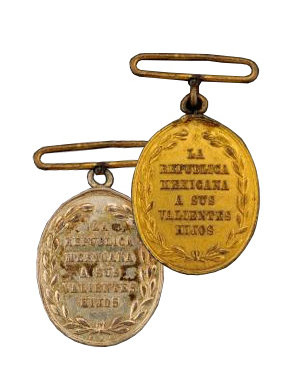
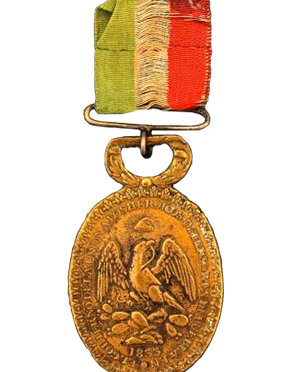
The Defense of Puebla was a government authorized medal for the militia defenders at Puebla during the Revolt of the Polkos in Mexico in 1833.

The Defense of Puebla was a government authorized medal for the militia defenders at Puebla during the Revolt of the Polkos in Mexico in 1833.

Valentín Gómez Farías (14 February 1781 – 5 July 1858) was the President of Mexico for five short periods between the 1830s and 1840s. During his term in 1833 and in the absence of President Antonio López de Santa Anna (1794–1876), he enacted significant liberal reforms that were aimed at undermining the power of the Roman Catholic Church and the army in Mexico – for example, he advised Catholic clerics to limit their sermons to religious concerns and stop intervening in politics.

Some of Gómez Farías’ legislation restricted the Catholic Church’s power and eliminated some military privileges. The Conservatives, the Church, and the Army quickly responded in the form of the Revolt of the Polkos, calling for the removal of the Liberal government. During it, five Mexican National Guard regiments rose up in rebellion against the Mexican government, in protest over legislation that permitted the government to requisition money and property from the Catholic Church.

After the revolt was put down, the government authorized a medal for the militia defenders at Puebla: The Defense of Puebla medal.