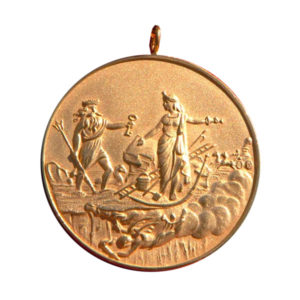
The Army of Cuban Occupation Medal was established by the U.S. War Department on 28 June 1915 to recognize soldiers who served with the American occupation forces in Cuba after the conclusion of the Spanish–American War.
Although hostilities with Spain had ended in August 1898, the United States maintained a military government in Cuba until the island achieved formal independence on 20 May 1902. The medal was created to honour those who took part in this important occupation and reconstruction period rather than the combat operations of the war itself.
The medal was awarded to members of the United States Army who served in Cuba between 18 July 1898 and 20 May 1902. Eligible service included occupation and garrison duty under the Military Government of Cuba. Unlike the Army Spanish Campaign Medal, which recognized wartime operations, the Army of Cuban Occupation Medal commemorated the peacekeeping and administrative duties that followed the conflict.
Design
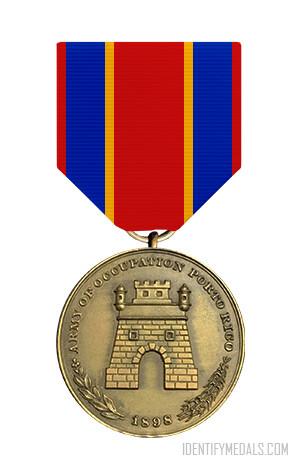
The medal is struck in bronze and measures approximately 35 mm (1⅜ inches) in diameter. Its obverse prominently displays the Coat of Arms of Cuba, surrounded by the inscription “ARMY OF OCCUPATION – MILITARY GOVERNMENT OF CUBA.” The dates 1898 and 1902 appear on either side of the Phrygian cap at the top of the Cuban coat of arms, marking the period of American military administration.
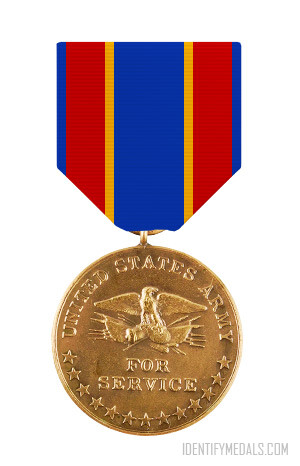
The reverse follows the standard style used on several early twentieth-century Army campaign medals. Around the upper edge appears the inscription “UNITED STATES ARMY,” while “FOR SERVICE” is placed beneath the central design. The center depicts a spread-winged American eagle perched upon a trophy of military arms, including cannon, rifles, flags, spears, a shield, and edged weapons, symbolizing the strength and traditions of the U.S. Army. Thirteen stars beneath the trophy represent the original thirteen states of the Union.
The ribbon is distinctive and colourful, consisting of alternating ultramarine blue and Old Glory red stripes separated by narrow golden-yellow stripes. The arrangement produces a balanced pattern of blue-red-yellow-blue-yellow-red-blue.
Clicking a link to eBay may result in a referral commission being paid if a purchase is made.
Loading...
More Medals from the United States
Discover the storied legacy of American valor and service with this curated collection of medals spanning different periods in United States history. From the revered Medal of Honor, recognizing extraordinary acts of bravery and sacrifice, to campaign medals commemorating pivotal moments in American military history, each medal tells a tale of courage, dedication, and patriotism.
Browse the listings below if you want to find the perfect addition to your collection or a meaningful gift for the history enthusiast in your life.
Clicking a link to eBay may result in a referral commission being paid if a purchase is made.
Loading...
Further Reading About American History
From gripping accounts of the founding fathers to insightful analyses of pivotal moments in the nation’s development, this selection offers something for every history enthusiast. Explore the pages of these meticulously researched volumes to uncover the diverse stories and enduring legacies that have shaped the United States.
Featured Articles about the United States
Dive into the fascinating history and significance of military medals in the United States, symbols of courage, service, and dedication. Featured articles explore the evolution of these prestigious honors, from the creation of the Medal of Honor during the Civil War to modern-day awards like the Defense Distinguished Service Medal and the Purple Heart. Learn about the stories behind these decorations, their criteria, and the heroic individuals who have earned them.