The War Commemorative Medal of 1813-15

The War Commemorative Medal for 1813–1815 was established in 1813 by King Friedrich Wilhelm III of Prussia for the Wars of Liberation.

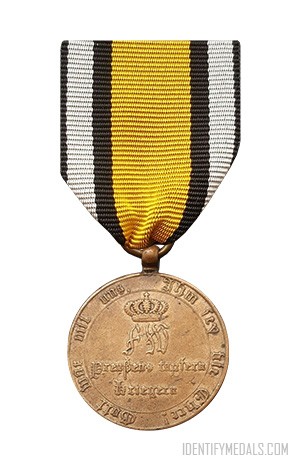
The War Commemorative Medal of 1813/15 (or Kriegsdenkmünze für 1813/15 in German) was a Prussian war commemorative medal  established on 24 December 1813 by King Friedrich Wilhelm III of Prussia to honour members of the Prussian Army who fought in the Wars of Liberation against Napoleonic France during 1813–1815.

It recognised those who served throughout the conflict, which included campaigns that eventually led to the defeat of Napoleon and the decisive Battle of Waterloo.

A later related piece, the Erinnerungs‑Kriegs‑Denkmünze, was instituted on 17 March 1863 by King Wilhelm I on the 50th anniversary of the original campaigns. This anniversary issue featured portraits of Friedrich Wilhelm III and inscriptions marking the years 1813–1815, and was intended as a keepsake for legitimate holders of the original medal and their families.

The War Commemorative Medal Design

The medal is about 29 mm in diameter and features a cross on the obverse with rays between its arms and a wreath of laurel and oak leaves encircling the year or years of service (such as 1813, 1814, or 1815). The reverse bears the crowned monogram “F. W.” for Friedrich Wilhelm and the inscription Preußens tapferen Kriegern, Gott war mit uns, Ihm sey die Ehre (“To Prussia’s brave warriors, God was with us, to Him be the glory”).

There were two versions of the medal: a combatant version struck in bronze made from captured artillery, often with the edge inscription Aus erobertem Geschütz (“From captured cannon”), and a non‑combatant version cast in iron and oval in shape, which was awarded to those who did not see active combat or who supported the war effort. The iron variant became informally known as the “Eiserne Pflaume” (“Iron Plum”) due to its shape.

Both versions were worn on the left breast suspended from distinctive ribbons: combatants on an orange ribbon edged in black and white, and non‑combatants on a white ribbon edged in black, orange, and white.

The Different Waterloo Medals

The Waterloo medal was issued by the British Government to all soldiers present during action. Seven nations of the Seventh Coalition struck differently designed medals for soldiers who took part in the campaign. These are:

The Waterloo Medal - British Medals Pre-WW1

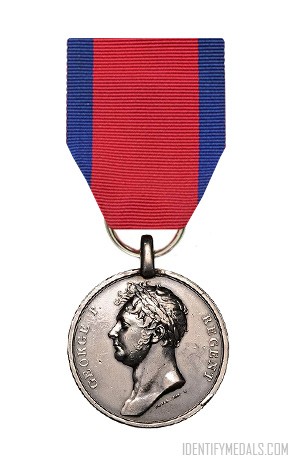
The Waterloo Medal

The Waterloo Medal is a British military medal established in 1816-17 and struck for all those who participated in the Waterloo campaign.
British Campaign Medals: The Brunswick Waterloo Medal

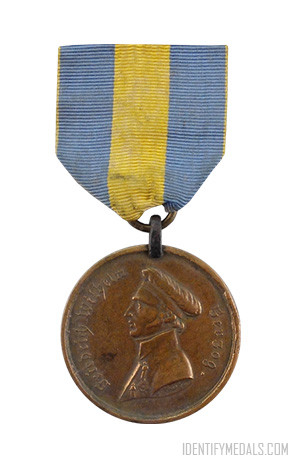
The Brunswick Waterloo Medal

The Brunswick Waterloo Medal was a campaign medal awarded to those who participated in the Battles of Quatre Bras and Waterloo.
British Campaign Medals: The Hanoverian Waterloo Medal

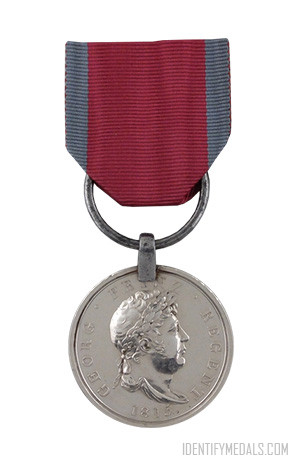
The Hanoverian Waterloo Medal

The Hanoverian Waterloo Medal was issued to all members of the Hanoverian army who fought in the battles of Quatre Bras and Waterloo.
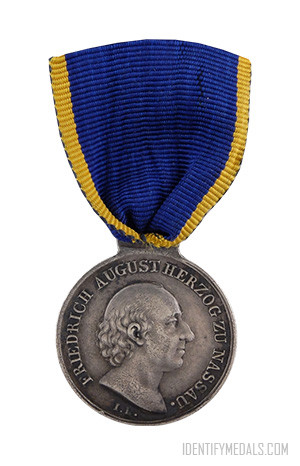
British Campaign Medals: The Nassau Medal for Waterloo

The Nassau Waterloo Medal

The Waterloo Medal is a campaign of the Duchy of Nassau established by Frederick Augustus, Duke of Nassau on 23 December 1815.
Where to Find Waterloo Medals

Right Now on eBay 
Clicking a link to eBay may result in a referral commission being paid if a purchase is made.
Loading...

The Silver Memorial Cross 1813–1815

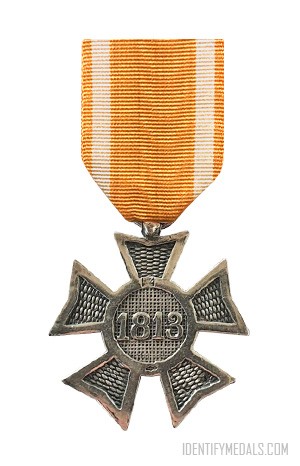
The Silver Memorial Cross 1813–1815 was a Dutch campaign medal created by King William III of the Netherlands in 1865.

The Silver Memorial Cross 1813–1815 was a Dutch campaign medal created by King William III of the Netherlands in 1865 to honour veterans who had served in the wars that restored Dutch independence at the end of the Napoleonic Wars. It specifically commemorated service during the campaigns of 1813–1815, including the 1814 operations against French forces and the Hundred Days that culminated in the Battle of Waterloo.

The award was only given to surviving veterans, meaning it was both a retrospective recognition and a symbol of national gratitude. At the time it was issued, only a fraction of the original troops were still alive, making it a relatively rare and highly valued decoration.

The Silver Memorial Cross is historically significant because it not only commemorates military service but also represents one of the earliest examples of a state issuing a campaign medal retrospectively to surviving soldiers, decades after the conflict. It is often mentioned alongside other European post-Napoleonic commemoratives, like the Waterloo Medal.

The Silver Memorial Cross Medal Design

The cross is made of silver with five arms, featuring a central medallion engraved with the years 1813 and 1815. It was worn on a ribbon of orange with white stripes, reflecting the national colours of the Netherlands.

The medal was intended for everyday wear on military dress and ceremonial occasions, serving as a tangible link between the veterans and the country they helped free.

The Different Waterloo Medals

The Waterloo medal was issued by the British Government to all soldiers present during action. Seven nations of the Seventh Coalition struck differently designed medals for soldiers who took part in the campaign. These are:

The Waterloo Medal - British Medals Pre-WW1

The Waterloo Medal

The Waterloo Medal is a British military medal established in 1816-17 and struck for all those who participated in the Waterloo campaign.

British Campaign Medals: The Brunswick Waterloo Medal

The Brunswick Waterloo Medal

The Brunswick Waterloo Medal was a campaign medal awarded to those who participated in the Battles of Quatre Bras and Waterloo.

British Campaign Medals: The Hanoverian Waterloo Medal

The Hanoverian Waterloo Medal

The Hanoverian Waterloo Medal was issued to all members of the Hanoverian army who fought in the battles of Quatre Bras and Waterloo.

British Campaign Medals: The Nassau Medal for Waterloo

The Nassau Waterloo Medal

The Waterloo Medal is a campaign of the Duchy of Nassau established by Frederick Augustus, Duke of Nassau on 23 December 1815.

Where to Find Waterloo Medals

Right Now on eBay 
Clicking a link to eBay may result in a referral commission being paid if a purchase is made.
Loading...

Medal Makers: The Royal Mint, United Kingdom’s Principal Medal Maker

The Royal Mint is the United Kingdom’s historic state mint and the principal maker of British official medals and decorations.

The Royal Mint is the United Kingdom’s historic state mint and the principal maker of British official medals and decorations, including many of those issued during the First and Second World Wars. It has produced official medals for over two centuries and holds a unique place in British numismatic and medallic history.

Medals struck by the Royal Mint are typically named on the rim or edge for British service awards. Because the Mint’s work extended across both world wars, many collector groups value examples bearing original naming and good condition.

A Brief History of the Royal Mint

The institution dates back over 1,100 years, originally responsible for striking coins for English and later British monarchs. A Royal Patent in 1669 granted the Mint the exclusive right to produce medals bearing a monarch’s portrait — establishing its early role in medal manufacture.

The turning point for official campaign medals came with the Waterloo Medal in 1815, which was one of the first large‑scale British military awards; this began the Mint’s regular involvement in military medal production.

After WWI, formal medal production was reorganised, and by 1922 the Royal Mint’s dedicated medal unit became the official supplier of virtually all British state medals and decorations, except for the Victoria Cross.

Involvement with WWI & WWII Medals

The Royal Mint was central to manufacturing British military medals for both world wars:

World War I (1914–1918)

Although much wartime production was shared with private contractors and the Woolwich Arsenal due to industrial demand, the Mint supported war production and later assisted heavily with medal striking and engraving.

World War II (1939–1945)

After the conflict ended and metal shortages eased, the Mint helped produce millions of campaign stars and other service medals for Britain and the Commonwealth.

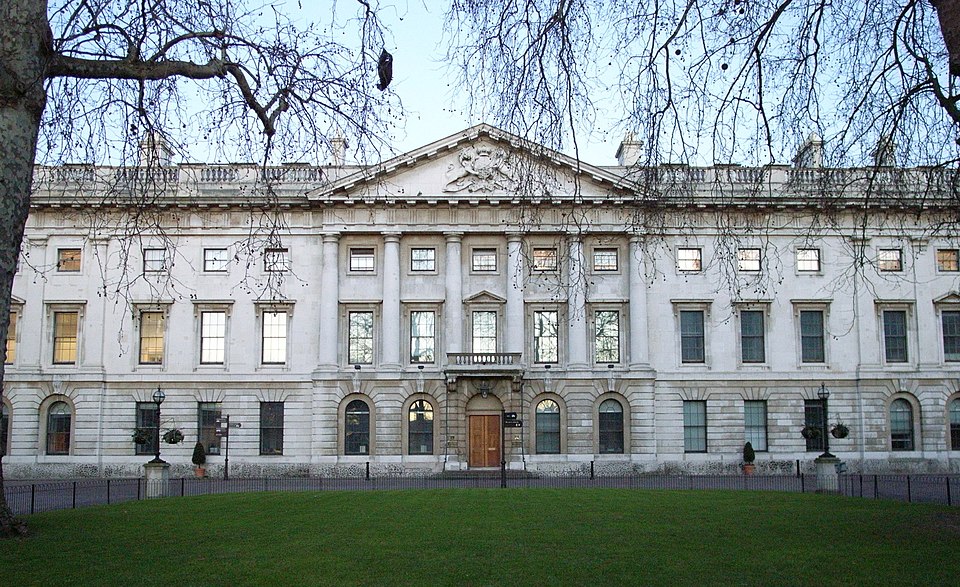
The former Royal Mint (1807-9) by Robert Smirke and James Johnson. Image courtesy of Steve Cadman via Wikipedia.

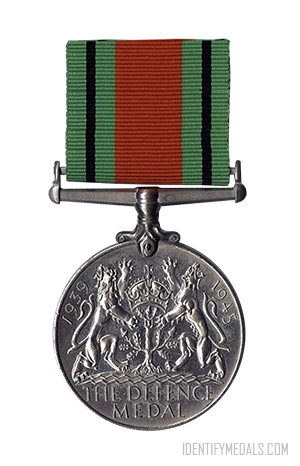
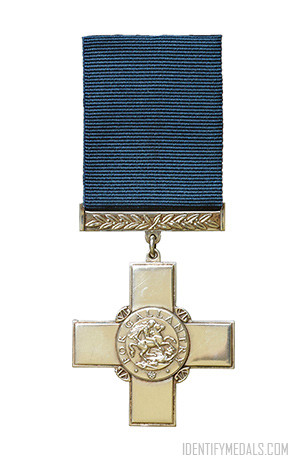
Master tooling for many campaign stars was prepared at the Royal Mint and then supplied overseas to Australian, Canadian, Indian, and South African mints. The Mint also made other medals related to the war effort, such as the George Cross, George Medal, Defence Medal, and War Medal 1939–1945.

Notable Medals Made by the Royal Mint

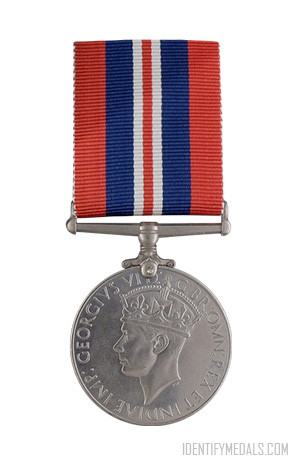
The War Medal 1939-1945 Obverse

The War Medal 1939-1945

The War Medal 1939–1945 is a British campaign medal instituted by the United Kingdom on 16 August 1945. The medal was awarded to subjects of the British Commonwealth who had served full-time.

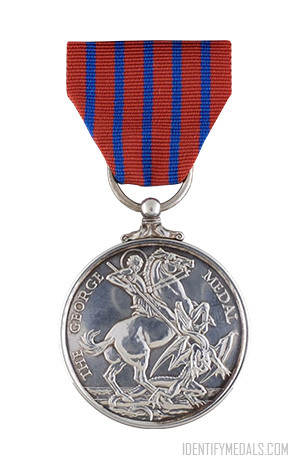
British Medals and Decorations: The George Medal

The George Medal

The George Medal (or GM) is a decoration of the United Kingdom and Commonwealth instituted in 1940 by King George VI for gallantry.

Design & Production Quality

The Mint’s medal production blended traditional craftsmanship with modern techniques, often using historic tools alongside newer technology. Many award designs, especially for high‑volume military medals, were overseen by the Royal Mint Advisory Committee, ensuring artistic standards and heraldic accuracy.

Historic dies and tools dating back over 100 years still form part of the Mint’s production heritage.

Recognition & Legacy

From Waterloo through both world wars to modern honours and even the 2012 London Olympics medals, the Royal Mint’s output spans medals of national and international significance.

Although it competed with other manufacturers after 2010 for some British medal contracts, the Royal Mint remains widely recognised as Britain’s premier medal maker.

What Are Campaign Medals and Gallantry Medals?

Two common types of awards are campaign and gallantry medals. Although they may look similar, they represent different forms of recognition.

Military medals are among the most recognisable symbols of service, sacrifice, and honour. And two of the most common types of awards are campaign medals and gallantry medals. Although they may look similar, they represent very different forms of recognition. So, what exactly is a campaign medal — and how does it differ from a gallantry medal?

Campaign medals and gallantry medals serve different roles, but both are important and, together, they form part of the wider record of military history. Campaign medals recognise the millions who served — often in harsh, dangerous, and exhausting conditions — even if their role was not celebrated in headlines. Gallantry medals highlight extraordinary acts of courage, reminding us of the bravery individuals showed in moments of crisis. Let’s see the differences in more detail and explore some examples for both.

What is a Campaign Medal?

A campaign medal is an award given to members of the armed forces (and sometimes civilians) in recognition of service during a specific military campaign or conflict.

Unlike medals for bravery, campaign medals are not awarded for a single heroic act. Instead, they are issued to those who served in a particular theatre of war, region, or operation, often for a required length of time.

Campaign medals recognise participation in a war or campaign, service in a defined operational area, or contribution to a military effort, whether in combat or support roles.

How Are Campaign Medals Earned?

Campaign medals are usually awarded based on eligibility criteria, such as:

  • Serving in a particular region
  • Taking part in a named operation
  • Completing a minimum number of days or months on duty
  • Being part of a qualifying unit or service branch

Some campaign medals also include clasps or bars, which add extra detail about the recipient’s service. For example, an Africa Star might include a clasp such as “8th Army,” indicating a specific formation.

Examples of Campaign Medals

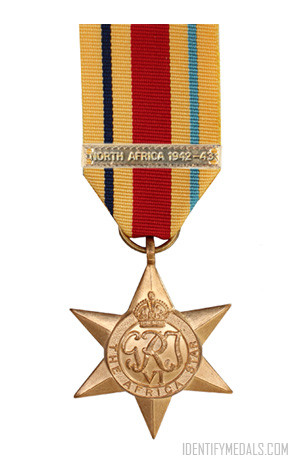
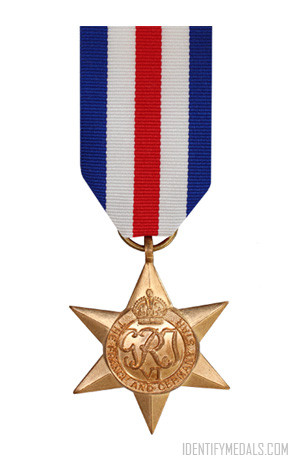
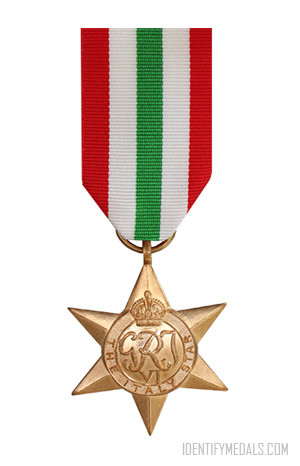
During the Second World War, Britain issued several campaign awards known as “Stars,” including:

Other campaign-related awards included:

The 1939-1945 Star - Obverse

The 1939-1945 Star

The 1939–1945 Star is a military campaign medal instituted by the United Kingdom on 8 July 1943 for operational service overseas.

WW2 Medals and Awards: The Africa Star

The Africa Star

The Africa Star is a military campaign medal awarded to those who served in the Second World War specifically in North Africa. 

WW2 Medals and Awards: The France and Germany Star

The France and Germany Star

The France and Germany Star is a military campaign medal awarded to subjects of the British Commonwealth who served during WW2.

WW2 Medals and Awards: The Italy Star

The Italy Star

The Italy Star is a military campaign medal, instituted by the United Kingdom in May 1945 for service in the Italian Campaign 1943 to 1945.

The War Medal 1939-1945 Obverse

The War Medal 1939-1945

The War Medal 1939–1945 is a British campaign medal instituted by the United Kingdom on 16 August 1945. The medal was awarded to subjects of the British Commonwealth who had served full-time.

What is a Gallantry Medal?

A gallantry medal is awarded for bravery, courage, or heroism, usually in the face of the enemy or in extremely dangerous circumstances.

Gallantry awards are not given simply for being present in a war zone. These medals are far rarer than campaign awards because they recognise acts that go beyond normal duty — moments where an individual showed exceptional courage, leadership, or self-sacrifice. Gallantry medals honour:

  • Heroism in combat
  • Bravery under fire
  • Extraordinary devotion to duty
  • Risking one’s life to save others

Examples of Gallantry Medals

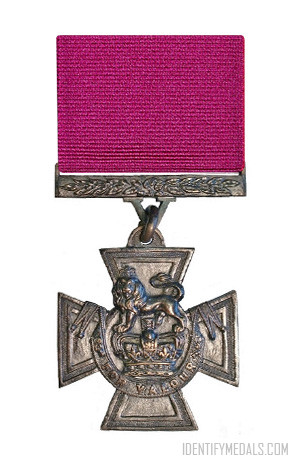
Some well-known British gallantry awards include:

These awards often required eyewitness reports and official recommendations.

Great Britain Medals: The Victoria Cross

The Victoria Cross

The Victoria Cross (VC) is the highest United Kingdom honors system award. It is given for gallantry in the presence of the enemy.

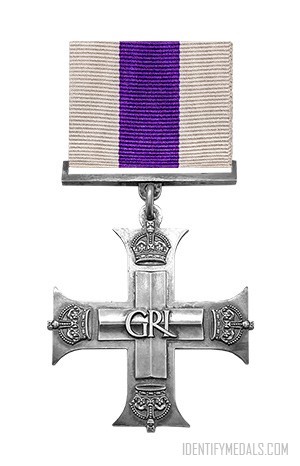
The Military Cross - British Medals & Awards, WW1, The Great War

The Military Cross

The Military Cross (MC) is the third-level military decoration awarded for acts of exemplary gallantry during active operations.

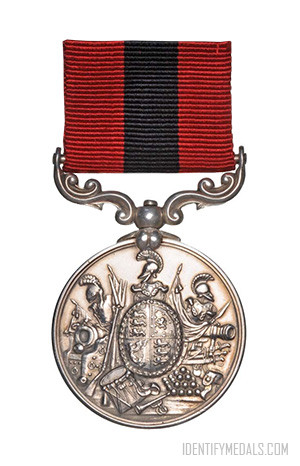
British Medals and Decorations: The Distinguished Conduct Medal

The Distinguished Conduct Medal

The Distinguished Conduct Medal, or DCM, was established in 1854 and is the oldest British award for gallantry in the field by other ranks.

Campaign Medals vs Gallantry Medals: Key Differences

Although both types of medals recognise military service, they represent very different achievements.

FeatureCampaign MedalsGallantry Medals
PurposeRecognise service in a campaignRecognise bravery or heroism
Awarded ForParticipation and dutyExceptional courage beyond duty
EligibilityBased on time/place of serviceBased on a specific act
FrequencyWidely issuedRare and selective
ExamplesAfrica Star, War MedalVictoria Cross, Military Cross

Conclusion

A campaign medal honours service in a particular conflict or theatre of war, while a gallantry medal honours exceptional bravery and heroism.

Understanding the difference helps us appreciate the full meaning behind military awards — not just as decorations, but as symbols of sacrifice, duty, and courage. Whether common or rare, every medal tells a story worth remembering.

The Inherent Resolve Campaign Medal

The Inherent Resolve Campaign Medal is a U.S. campaign medal created to recognise military service in Operation Inherent Resolve.

The Inherent Resolve Campaign Medal (IRCM) is a U.S. Department of Defense campaign medal created to recognise military service in Operation Inherent Resolve, the U.S.-led effort against the Islamic State extremist group in Iraq and Syria. It was established by Executive Order on 30 March 2016 during the Obama administration and is awarded retroactively to service beginning 15 June 2014.

Unlike awards for specific achievements, the IRCM is a service-based campaign medal, meaning it acknowledges participation in a defined military operation rather than an individual act of heroism. It is presented to members of the U.S. Army, Navy, Marine Corps, Air Force, and Coast Guard who meet eligibility criteria related to deployment in designated areas during the operation.

To qualify, a service member generally must have been assigned to a unit based in Iraq or Syria, have flown missions into these countries or their contiguous waters and airspace, or otherwise operated in the area for a specified period—typically 30 days (consecutive or non-consecutive). Those who are killed, wounded, medically evacuated, or engaged in combat before completing the time requirement also qualify immediately.

The award replaced the use of the Global War on Terrorism Expeditionary Medal for service in Iraq and Syria once it was instituted; personnel who previously earned that medal for qualifying service may petition to convert it to the IRCM instead, but a service member cannot receive both for the same period of service.

Today the medal remains an active award recognising U.S. military participation in one of the major post-9/11 operations and is often seen alongside campaign stars on its ribbon to denote participation in different phases of the conflict.

The Inherent Resolve Campaign Medal Design

The design and symbolism of the IRCM reflect aspects of the operational environment: an eagle and dagger denote strength and resolve, while regional artistic motifs and colours evoke the landscape where Operation Inherent Resolve was conducted.

Find This Medal Online

Right Now on eBay 
Clicking a link to eBay may result in a referral commission being paid if a purchase is made.
Loading...

The Korean Service Medal

The Korean Service Medal (KSM) is a U.S. military service medal created during the Korean War to recognise American Armed Forces members.

The Korean Service Medal (KSM) is a United States military service medal created during the Korean War to recognise American Armed Forces members who served in the Korean theatre between 27 June 1950 and 27 July 1954. It was established by Executive Order 10179 signed by President Harry S. Truman on 8 November 1950, with retroactive effect back to the start of the conflict.

The medal was awarded to service members who either served in Korea or its surrounding waters and airspace, or those who directly supported United Nations military operations during the Korean War. Eligibility generally required a period of service in the designated area or participation with a unit on permanent or temporary duty during the war.

Although active combat in Korea ended with the armistice in July 1953, the Korean Service Medal continued to be issued until mid-1954 because of ongoing occupation duties and the potential for renewed hostilities. It was not awarded for service after that date; later periods of service in Korea have been recognised by other medals such as the Korea Defense Service Medal.

The Korean Service Medal Design

The KSM is a bronze medallion about 1¼ inches in diameter. The obverse shows a Korean gateway encircled by the words “KOREAN SERVICE”, and the reverse bears the Korean taegeuk symbol from the South Korean flag with “UNITED STATES OF AMERICA” and a wreath of oak and laurel.

The ribbon uses blue and white colours inspired by the United Nations flag, reflecting the UN’s role in the conflict.

To denote participation in specific phases of the campaign, service stars were worn on the ribbon, one for each of the officially recognised campaigns within the Korean War period. In some cases, additional devices such as an arrowhead were authorised to show involvement in assault landings.

Find This Medal Online

Right Now on eBay 
Clicking a link to eBay may result in a referral commission being paid if a purchase is made.
Loading...

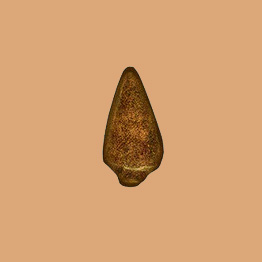
Learning More About US Military Devices: The Arrowhead Device

Learn more about the Arrowhead Device, established in June 1944 as a respected mark of direct assault involvement in combat operations.

Devices are small emblems used by the United States military that aren’t a medal itself, but an addition worn on certain campaign, expeditionary, and service medals and ribbons to indicate a very specific kind of combat participation.

The Arrowhead Device, established in June 1944, is a ribbon device and a respected mark of direct assault involvement in combat operations and signifies that the wearer participated in some of the most demanding tactical insertions in modern military history. Its design is a miniature bronze replica of a Native American arrowhead about ¼ inch high and is worn on the ribbon of a qualifying medal (you can find a complete list below).

The Arrowhead Device Criteria and Usage

To earn this distinction, the service member must actually exit the aircraft or watercraft involved in a tactical assault, such as a combat parachute jump, helicopter assault landing, combat glider landing, or an amphibious assault landing while serving as part of an organized force assigned to a mission. Simply being present with a unit is not enough for individual credit; the member must have taken part directly.

Only one arrowhead device can be worn on any given ribbon, and when it is present it is typically positioned to the wearer’s right of other devices such as service stars or “V” (valor) devices.

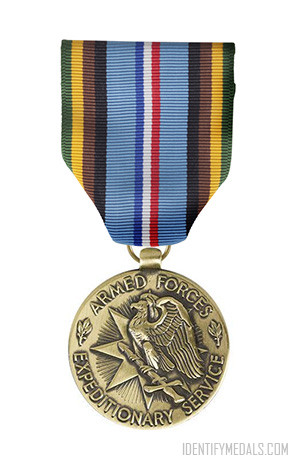
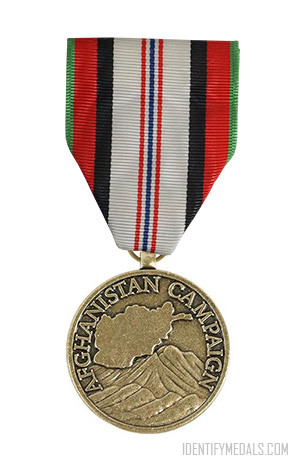
General Joseph L. Votel, 13th Commander of U.S. Central Command, wearing arrowhead devices on the Afghanistan Campaign and Armed Forces Expeditionary Medals. Image courtesy of Wikipedia.

Authorized Medals That Can Use the Arrowhead Device

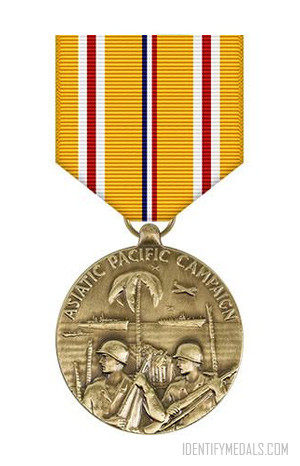
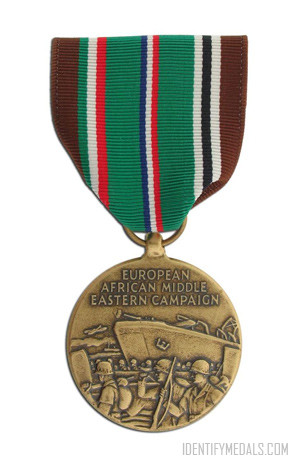
First authorized in June 1944 during World War II with the European-African-Middle Eastern Campaign Medal, the arrowhead device has continued to be used across multiple conflicts. These are all the medals that can have an Arrowhead Device:

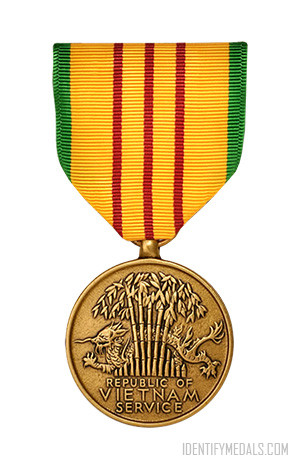
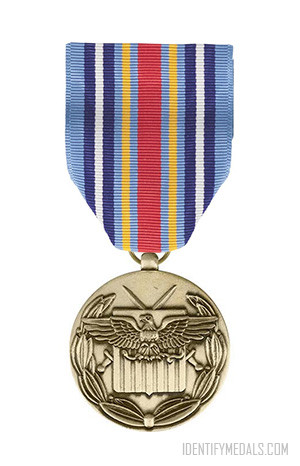
United States Military Medals Post WW2 - The Vietnam Service Medal

The Vietnam Service Medal

Authorized by executive order in 1965, the Vietnam Service Medal is a U.S. medal to honor service members who served in SE Asia.

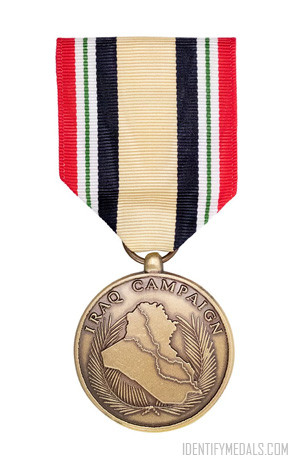
Military Medals - United States - The Iraq Campaign Medal (USA)

The Iraq Campaign Medal (USA)

The Iraq Campaign Medal is a military award of the Armed Forces awarded during the Iraq War, from 29 November 2004 to 31 December 2011.

The Korean Service Medal - American Medals & Awards

The Korean Service Medal

The Korean Service Medal (KSM) is a U.S. military service medal created during the Korean War to recognise American Armed Forces members.

Where To Buy Collectible Arrowhead Devices

Online surplus/military supply stores like Bradley’s Surplus and Military Depot which sell bronze arrowhead devices made in regulation style for display or uniform use. Auction sites and marketplaces like eBay also allow you to find original devices, mounted or unmounted, as they often listed with other medal attachments and service ribbons.

Tips before buying:

  • Check whether the item is original or reproduction, especially on marketplaces.
  • Sellers often ship internationally, but check customs rules for military memorabilia in your country.
Right Now on eBay 
Clicking a link to eBay may result in a referral commission being paid if a purchase is made.
Loading...

The Order of the Red Banner of Labour Valour (Literacy Labour)

The Order of the Red Banner of Labour Valour is a Mongolian award first instituted in 1926 as the Order of Literacy Valour.

  • Time Period: Interwar
  • Institution: 1926 (as “The Order of Literacy Valour“, renamed to “The Order of Civil Valour” in 1931 and then “The Order of the Red Banner of Labour Valour” in 1945)
  • Country: Mongolia

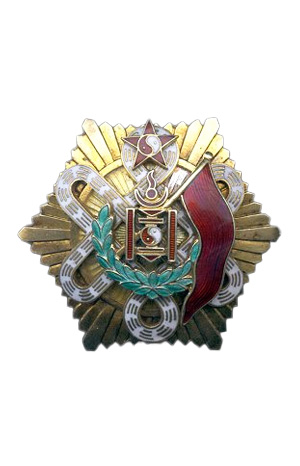
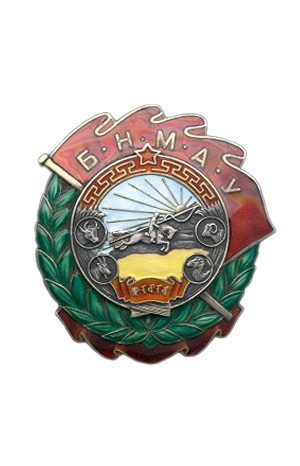
This award was originally created in 1926 under the name Order of Literacy Valour. In 1931 its name was changed to Order of Civil Valour, and finally in 1945 it became known as the Order of the Red Banner of Labour Valour. It was a civil decoration awarded to individuals for notable service in key areas of society, such as education, agriculture, health, and industry—recognizing contributions to national development and social progress.

Awards like this were part of Mongolia’s system of honours during the socialist period when the government recognised not just military achievements but also significant civil and labour accomplishments that advanced national goals.

The Order of the Red Banner of Labour Valour Medal Design

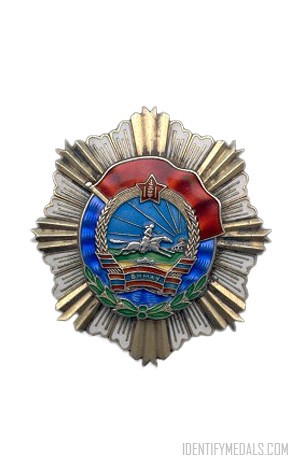
The obverse of the Order of the Red Banner of Labour Valour has varied with different production types, but core elements remain consistent with its military and symbolic themes. There are several different designs, some of which are listed below.

Mongolian Order of Literacy Valour
Order of Literacy Valour, Obverse.
Mongolian Order of Civil Valour.
Order of Civil Valour. Obverse.
The Order of the Red Banner of Labour Valour (Literacy Labour)
The Order of the Red Banner of Labour Valour. 1970 Version, Obverse.

The ribbon for the order is green with a central red stripe, a design typical of many labour and merit awards from socialist-era states, symbolising dedication and sacrifice.

The Order of Mother Heroine

The Order of Mother Heroine was introduced in 1957 and awarded to mothers for bearing and raising large families.

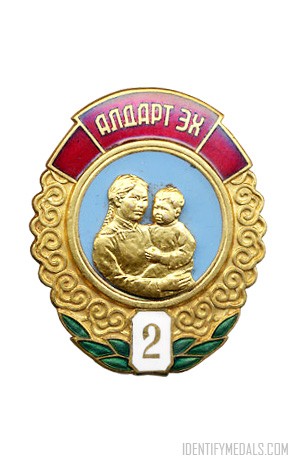
The Order of Mother Heroine was awarded to Mongolian mothers for bearing and raising large families. There medal was given in two classes: 

  • 1st Class: For mothers with eight or more children.
  • 2nd Class: For mothers with five to eight children.

The Order of Mother Heroine Design

The medal is made of bronze gilt with red, white, light blue, and green enamels and measures 39.5 mm (w) x 46.5 mm (h). 

The 1st and 2nd Class medals share the same design: A Mongolian mother holding a child, over a light blue enamel background. The difference lies in the number at the bottom of the award (a “1” for 1st Class and a “2” for 2nd Class).

Mongolian People's Republic: Order of Mother Heroine

1st Class 

Mongolian People's Republic: Order of Mother Heroine

2nd Class 

The Coast Guard Silver Lifesaving Medal

Established at the same time as the gold grade in 1874, the Silver Lifesaving Medal recognizes extraordinary lifesaving efforts.

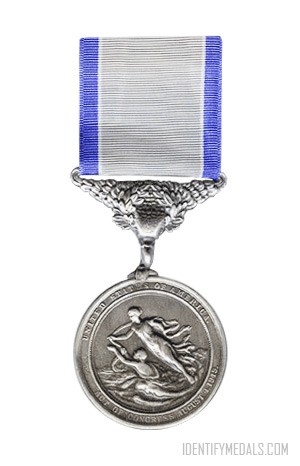
Established at the same time as the gold grade in 1874, the Silver Lifesaving Medal recognizes extraordinary lifesaving efforts that do not meet the extremely high threshold of the Gold Lifesaving Medal.

Like its gold counterpart, it transitioned from Treasury Department administration to Coast Guard responsibility and remains authorized under U.S. law. Over 1,900 Silver Lifesaving Medals have been awarded since its creation.

The Coast Guard Silver Lifesaving Medal Criteria

The Silver Lifesaving Medal is awarded to individuals who rescue or attempt to rescue someone from drowning, shipwreck, or other water‑related dangers under circumstances that show significant effort and risk but not to the same degree of personal danger required for the gold medal.

The geographic and jurisdictional requirements are the same as for the Gold Lifesaving Medal, and awards may also be made posthumously.

The Coast Guard Silver Lifesaving Medal Design

Like the gold medal, the silver version is struck from actual silver and features imagery representing lifesaving efforts.

Historically, early silver medals were worn from a light blue ribbon; post‑1949 versions use a standardized ribbon pattern with multiple colors. The obverse inscription usually identifies heroic deeds in saving life from the sea, and additional awards are often denoted by silver clasps or stars on the ribbon.

Buy Coast Guard Medals

Right Now on eBay 
Clicking a link to eBay may result in a referral commission being paid if a purchase is made.
Loading...