The Silver Memorial Cross 1813–1815

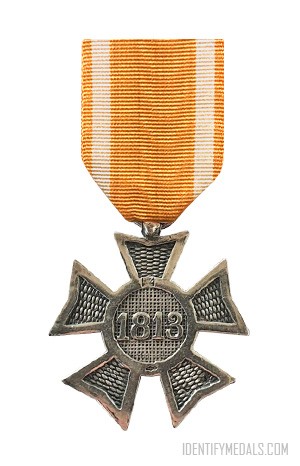
The Silver Memorial Cross 1813–1815 was a Dutch campaign medal created by King William III of the Netherlands in 1865.

The Silver Memorial Cross 1813–1815 was a Dutch campaign medal created by King William III of the Netherlands in 1865 to honour veterans who had served in the wars that restored Dutch independence at the end of the Napoleonic Wars. It specifically commemorated service during the campaigns of 1813–1815, including the 1814 operations against French forces and the Hundred Days that culminated in the Battle of Waterloo.

The award was only given to surviving veterans, meaning it was both a retrospective recognition and a symbol of national gratitude. At the time it was issued, only a fraction of the original troops were still alive, making it a relatively rare and highly valued decoration.

The Silver Memorial Cross is historically significant because it not only commemorates military service but also represents one of the earliest examples of a state issuing a campaign medal retrospectively to surviving soldiers, decades after the conflict. It is often mentioned alongside other European post-Napoleonic commemoratives, like the Waterloo Medal.

The Silver Memorial Cross Medal Design

The cross is made of silver with five arms, featuring a central medallion engraved with the years 1813 and 1815. It was worn on a ribbon of orange with white stripes, reflecting the national colours of the Netherlands.

The medal was intended for everyday wear on military dress and ceremonial occasions, serving as a tangible link between the veterans and the country they helped free.

The Different Waterloo Medals

The Waterloo medal was issued by the British Government to all soldiers present during action. Seven nations of the Seventh Coalition struck differently designed medals for soldiers who took part in the campaign. These are:

The Waterloo Medal - British Medals Pre-WW1

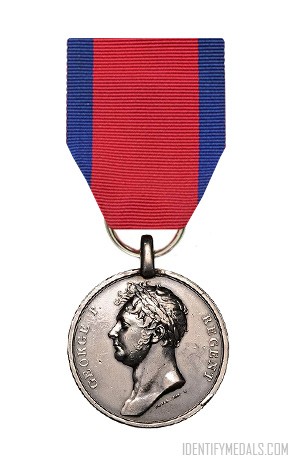
The Waterloo Medal

The Waterloo Medal is a British military medal established in 1816-17 and struck for all those who participated in the Waterloo campaign.

British Campaign Medals: The Brunswick Waterloo Medal

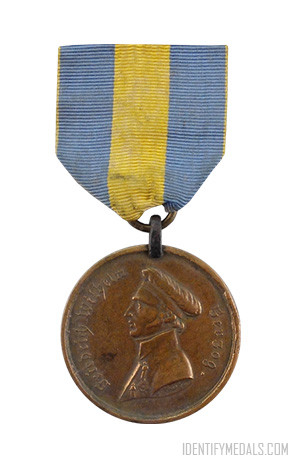
The Brunswick Waterloo Medal

The Brunswick Waterloo Medal was a campaign medal awarded to those who participated in the Battles of Quatre Bras and Waterloo.

British Campaign Medals: The Hanoverian Waterloo Medal

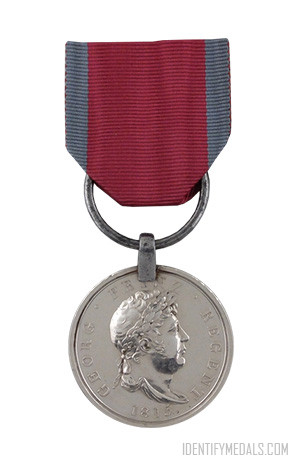
The Hanoverian Waterloo Medal

The Hanoverian Waterloo Medal was issued to all members of the Hanoverian army who fought in the battles of Quatre Bras and Waterloo.

British Campaign Medals: The Nassau Medal for Waterloo

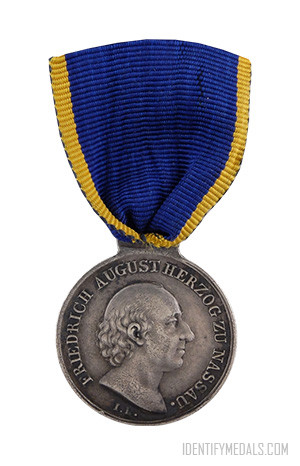
The Nassau Waterloo Medal

The Waterloo Medal is a campaign of the Duchy of Nassau established by Frederick Augustus, Duke of Nassau on 23 December 1815.

Where to Find Waterloo Medals

Right Now on eBay 
Clicking a link to eBay may result in a referral commission being paid if a purchase is made.
Loading...

The Dutch NSKK Honor Badge

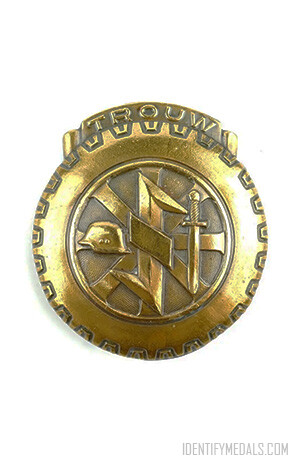
The Dutch NSKK Honor Badge was awarded for exceptional service in the Motor W.A. (German Motorized Transport service).

The Honor Badge for Dutch volunteers in the “NSKK” was awarded for exceptional service in the Motor W.A.

The badge, available in bronze, silver, and gold, was awarded by Banleader Eman with input from the NSKK-Gruppe Luftwaffe liaison officer. bronze badges were typically awarded biannually on May 11 and November 9, while silver badges were reserved for exceptional cases and awarded at Christmas.

The Ggold badge is believed to have never been awarded.

The Dutch NSKK Honor Badge Design

The badge, die-struck from a bronze-copper alloy, features the Dutch “wolf-hook” emblem, a German helmet, and a downward-facing sword, with “TROUW” (Loyalty) inscribed on a transport tire. The reverse has a Belgian-style “C” catch and pin. Measuring 46.8mm x 51.2mm, the badge is associated with those who served in Russia during the winter of 1941-1942, were wounded at Milorowo, or volunteered for guard duties in Makajewka.

The Gold class criteria remain unknown, and reproductions of the badge, identifiable by different attaching hardware, have surfaced.

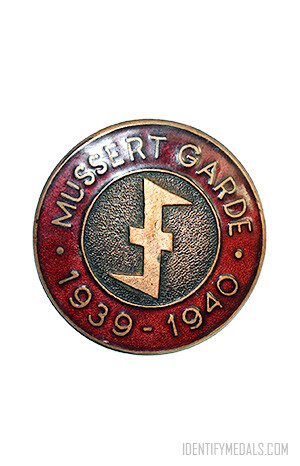
The Mussert Garde Pin 1939-1940

The Mussert Garde Pin, created in 1939-1940, was a symbol of loyalty and service to the National Socialist Movement in the Netherlands (NSB).

The Mussert Garde Pin, created in 1939-1940, was a symbol of loyalty and service to the National Socialist Movement in the Netherlands (NSB), led by Anton Mussert.

This pin was awarded to members of the Mussert Garde, an elite guard unit responsible for protecting NSB leaders and significant events. The design of the pin typically featured the NSB emblem, reflecting the organization’s ideology and dedication to the Nazi cause.

These pins are now rare historical artifacts, providing insight into the collaborationist activities in the Netherlands during World War II.

The Mussert Garde Pin Design

The badge features a central shield with a black Wolfsangel, a symbol used by the NSB, on a white background. This central element is surrounded by a red enamel border.

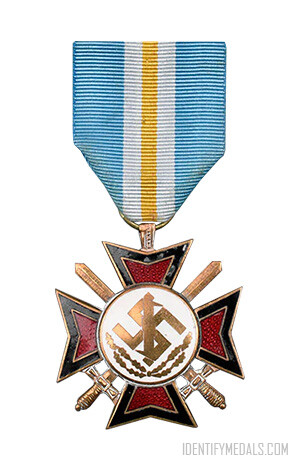
The Mussert Bravery Cross

The Mussert Bravery Cross was a special award for NSB members serving in German forces. It was akin to the German Eastern Front Medal.

Officially referred to as the “Oostlanderskruis,” the Mussert Bravery Cross or “Mussertkruis” was instituted by the Dutch Nazi Party (NSB), led by Anton Mussert, as a special award for NSB members serving in German forces.

The award was akin to the German Eastern Front Medal and not a bravery award. It was issued in two classes: with swords for combatants and without swords for non-combatants.

Although the decoration was not authorized for wear on German uniforms, it was likely worn by recipients.

The Mussert Bravery Cross Design

The NSB Mussert Bravery Cross is a gilded bronze Maltese cross with red and black enamel, featuring crossed swords between its arms.

The obverse center medallion displays a golden mobile swastika, Wolfsangel, and oak leaf stems on a white enamel background. The reverse center medallion bears the inscription “MUSSERT 1941” surrounded by “HOU EN TROU” and oak leaf branches.

Measuring 37.12 mm by 41.25 mm, the cross is suspended from a ribbon that displays the Dutch national colors.

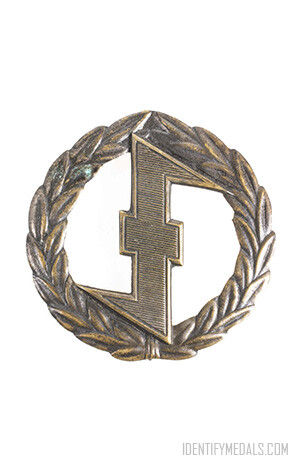
The W.A. Military Sports Badge

The W.A. Military Sports Badge was awarded to members of the “Weer Afdeelingen” (Defense Sections) for military sporting events.

The W.A. Military Sports Badge was awarded to members of the “Weer Afdeelingen” (Defense Sections) or stormtroopers of the NSB. This decoration was instituted on 13 September 1941.

The National Socialist Movement in the Netherlands (Dutch: Nationaal-Socialistische Beweging in Nederland; NSB) was a Dutch fascist organization that evolved into a Nazi political party. Initially successful in the 1930s parliamentary elections, the NSB became the sole legal party under German occupation during most of World War II.

Military sporting events were held for W.A. troops and successful winners were awarded with the military sport badge.

The W.A. Military Sports Badge Design

The sport badge shows in the background a Laurel with the NSB emblem “wolf hook” in front. The reverse is hollow with two small loop rings that holds the pin. This die stamped badge was awarded in two classes- silver and bronze gilt. The badge is very large it measures 53mm in diameter.

Note: I could only find limited information about this medal. If you know more, please use the contact form to let me know.

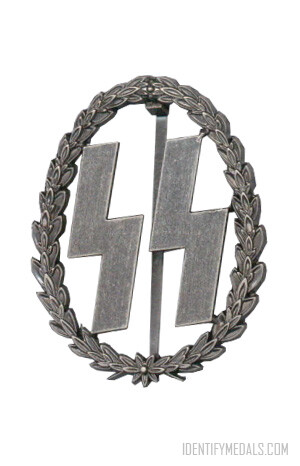
The SS Dutch Sports Badge

The SS Dutch Sports Badge was awarded to members of the Dutch SS for demonstrating athletic prowess and physical fitness.

The SS Dutch Sports Badge was awarded to members of the Dutch SS for demonstrating athletic prowess and physical fitness.

This badge was part of the efforts to promote physical conditioning among the SS members.

The design typically included elements symbolizing strength and athletic achievement, often incorporating Nazi insignia and symbols to reflect the regime’s ideology. These badges were awarded during World War II, making them historical artifacts of that era. Collectors value them for their historical significance and the insight they provide into the period’s propaganda and values.

Note: I could only find limited information about this medal. If you know more, please use the contact form to let me know.

The Doggersbank Medal

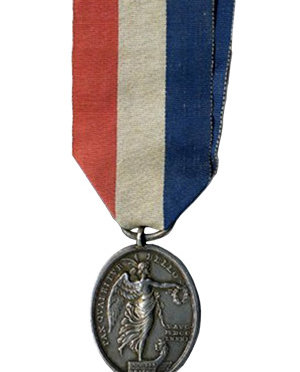
The Doggersbank Medal was awarded to the officers who took part in the battle of Doggersbank, a naval battle that took place in 1781.

The Doggersbank Medal was awarded to the officers who took part in the battle of Doggersbank, a naval battle that took place on 5 August 1781 during the Fourth Anglo-Dutch War.

Both sides claimed victory although no ships were captured and both convoys escaped. Casualties were high on both sides, considering the number of ships involved. Because the Dutch merchantmen reached the harbor and the British fleet first left the battlefield, it was a victory in the eyes of the Dutch.

The Netherlands honored the fleet with numerous parades, receptions, poems and plays. As well as receiving a monetary reward, surviving officers, midshipmen and non-commissioned officers weew awarded a commemorative medal, the Doggersbank Medaille. Nineteen gold medals with a red, white and blue ribbon were awarded to Admiral Zoutman, his first officer (Van Kinsbergen) and the 17 captains of the escorting fleet. Willem V personally hung them around the neck of the flag and supreme officers.

The Doggersbank Medal Design

The Doggersbank medal is oval in shape and thirty-six millimeters high.

On the obverse, the winged Goddess Victoria is depicted on the bow of a warship. In her right hand she holds a wreath of leaves and on the hull of the ship is written “DOGGERSBANK“. Beginning at her right foot and ending at the wreath of  foliage, the left side of the medal reads “PAX QVAERITVR BELLO” (Latin for: “Peace is achieved through war“). The date of the battle “V AVG MDCCLXXXI” (August 5, 1781) is indicated on the right side of the medal.

The reverse of the medal features the text “EXI MIÆ VIRTU TIS PRÆM IVM” (“As a reward for outstanding prowess“) in a wreath of orange tree leaves.

The senior officers received silver medals on the same ribbon. The lieutenants received a silver medal on an orange ribbon.

The Lombok Cross

The Lombok Cross is a military award established to commemorate service in the Dutch intervention in Lombok and Karangasem.

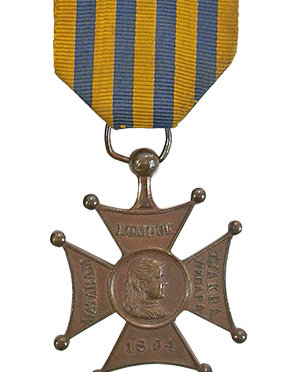
The Lombok Cross (or Lombokkruis in Dutch) is a military award of the Kingdom of the Netherlands, established to commemorate service in the Dutch intervention in Lombok and Karangasem which took place between June and December 1894.

The medal was established on 13 April 1895 by Queen Regent Emma of the Netherlands, acting for the underage Queen Wilhelmina.

The Lombok Cross Medal Design

The medal is a bronze Cross pattée with concave ends on the arms and ball finials on the points.

The obverse of the cross bears the effigy of the young queen facing right in the center of the cross. Each arm bears an inscription: On the top is LOMBOKMATARAM, on the left: TJAKRA-NEGARA on the right, and 1894 on the bottom arm.

The reverse of the cross depicts the rampant Dutch lion in a wreath. The arms are inscribed HULDE AAN at the top, LEGER on the left, EN at the bottom, and VLOOT on the right (Homage to Army and Fleet). The medal hangs from a ring suspension on a ribbon 40 mm (1.6 in) wide of nine equal stripes, five in orange-yellow and four of Nassau blue.

The Expedition Cross

The Expedition Cross (or Expeditiekruis in Dutch) was a military decoration of Kingdom of the Netherlands created by King William III.

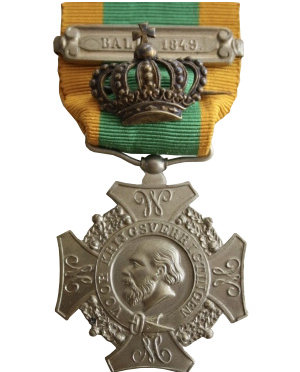
The Expedition Cross (or Expeditiekruis in Dutch) officially known as the Cross for Important Military Operations (Ereteken voor Belangrijke Krijgsbedrijven) was a military decoration of Kingdom of the Netherlands created by royal decree on 19 February 1869 by King William III.

The cross was awarded for participation in major military operations between 1846 and 1942.

The Expedition Cross Medal Design

The Expedition Cross is a four-armed silver metal cross measuring 39 millimeters (1.5 in) in diameter.

The obverse bears the effigy of King William III in a round center medallion, surrounded by a garter with the inscription VOOR KRIJGSVERRIGTINGEN (for military operations). Between the arms of the cross is a wreath of oak leaves. On each of the four the arms is a “W” monogram. The reverse is plain.

The ribbon is light green with yellow-orange borders.

The Cross for the Four Day Marches

The Cross for the Four Day Marches is a decoration awarded for successful participation in the International Four Days Marches Nijmegen.

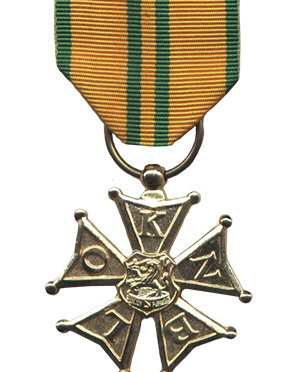
The Cross for the Four Day Marches (or Vierdaagsekruis in Dutch) is a Dutch decoration awarded for successful participation in the International Four Days Marches Nijmegen (Vierdaagse in Dutch) held annually at Nijmegen, The Netherlands.

The full title of the decoration is the Cross for Marching Proficiency (Kruis Voor Betoonde Marsvaardigheid). It is more commonly referred to as the Vierdaagse Cross or Vierdaagsekruis.

The cross was established in 1909 at the time of the first march, to award successful military participants of the Vierdaagse. Since 1910 it has been awarded to all participants who successfully complete all four days, both military and civilian.

The Cross is awarded by the Royal Dutch Walking League (KWBN or Koninklijke Wandel Bond Nederland) who organize the Nijmegen Marches. Prior to 2015 the League was known as the Royal Dutch League for Physical Education (KNBLO or Koninklijke Nederlandsche Bond Voor Lichamelijke Opvoeding) and before 1959, when it received the Royal (Koninklijke) prefix, as the NBVLO.

As well as the Vierdaagse at Nijmegen, the cross was also awarded to those who completed the four-day marches organized in various locations in the Dutch East Indies between 1935 and 1939.

Every year a walker successfully completes the march is marked either by a special cross, or a number to be attached to the ribbon of the last cross awarded. A cross is awarded in bronze for the first march, silver for the fifth and gold for the tenth, with a crown added above the cross for the year after each cross is awarded.

The Cross for the Four Day Marches Medal Design

The decoration is a five-armed cross, with each arm bearing an initial of the awarding organization. It has a width of 36 mm at its widest point and is suspended from a green-and-yellow (often orange-yellow) ribbon.

Until 1958 the initials on the five arms read: ‘NBVLO’, with ‘KNBLO’ since 1959 to reflect the Koninklijke (Royal) prefix. There have been other minor changes in design over the years. For example, in 1977 the previous silver-gilt and silver crosses were replaced by base metal versions, with other design modifications in order to reduce costs.

The reverse is plain except for the name of the manufacturer.

All medals were made by Koninklijke Begeer of the South Holland town of Voorschoten until 1976, when the contract moved to W. van Veluw of Zeist, near Utrecht.