The Fidelity Medallion

The Fidelity Medallion or André Capture Medal was created in 1780 and is the oldest decoration of the United States military.

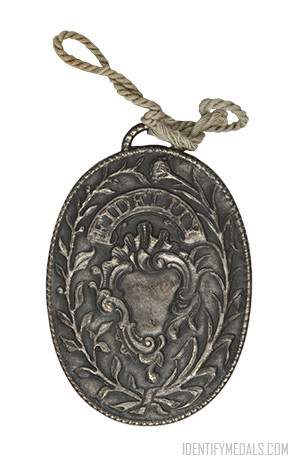
The Fidelity Medallion was created by act of the Continental Congress in 1780 and is the oldest decoration of the United States military. Also known as the “André Capture Medal“, the Fidelity Medallion was awarded to those soldiers who participated in the capture of Major John André, of the British army, who had been the contact to Benedict Arnold and had helped organize his defection.

Historical records indicate that three soldiers, all members of the militia of New York state, were awarded the Fidelity Medallion after its first issuance:

The Fidelity Medallion was never again bestowed and it quickly became regarded as a commemorative decoration. For this reason, the Badge of Military Merit is generally considered the first decoration of the U.S. military, even though it was created two years after the Fidelity Medallion, in 1782.

All three of the original Medallions were thought to be lost. Isaac Van Wart’s example was thought to be lost at the time of his death in 1828, but is actually in the hands of a descendant in Westchester County, NY. John Paulding’s and David Williams’ medallions were both donated to the New-York Historical Society in 1905 which displayed them in a locked, glass-topped case. In mid-1975, the two Medallions were stolen, along with the pocket watch originally belonging to Major John André. The Historical Society did not go public with the loss at the time, and none of the items have been recovered.

The Fidelity Medallion Design

The Fidelity Medallion measures 55mm. x 41mm. The obverse of the medallion was inscribed “Fidelity“; the reverse, with the motto, “Amor Patriæ Vincit“, which means, “The love of country conquers.”

In the two centuries since the original Fidelity Medallions were issued, replicas have occasionally been produced in metals including silver, pewter, lead and bronze and in varying degrees of historical accuracy. The American Numismatic Society has six different specimens in their collection.
The Badge of Military Merit

The Badge of Military Merit is considered the first military award of the U.S. Armed Forces. Its official successor is The Purple Heart.

The Badge of Military Merit is considered the first military award of the United States Armed Forces. The Purple Heart is its official successor decoration.

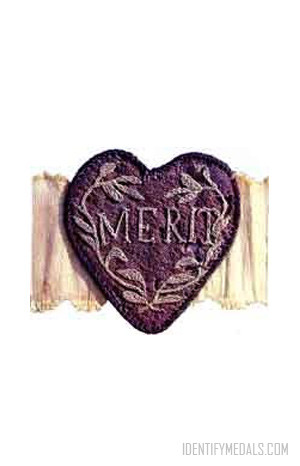
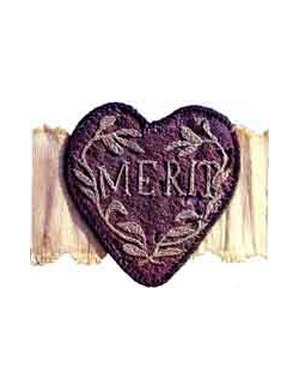
The Badge of Military Merit was first announced in General George Washington‘s general orders to the Continental Army issued on August 7, 1782 at the Headquarters in Newburgh. Designed by Washington in the form of a purple heart, it was intended as a military order for soldiers who exhibited, “not only instances of unusual gallantry in battle, but also extraordinary fidelity and essential service in any way.”

This is thought to be the first time in modern history that military awards had been presented to common soldiers. The practice in Europe was to honor high-ranking officers who had achieved victory, rather than honoring common soldiers. But in America, as General Washington said, the “road to glory in a patriot army and a free country is…open to all.”

Most historians indicate that only three people received the Badge of Military Merit during the American Revolutionary War, all of them non-commissioned officers, and the only ones who received the award from General Washington himself.

Those soldiers are:

On May 3, 1783

On June 10, 1783

Of the Badge of Military Merit, Washington said:

The General ever desirous to cherish virtuous ambition in his soldiers, as well as to foster and encourage every species of Military merit, directs that whenever any singularly meritorious action is performed, the author of it shall be permitted to wear on his facings over the left breast, the figure of a heart in purple cloth, or silk, edged with narrow lace or binding. Not only instances of unusual gallantry, but also of extraordinary fidelity and essential service in any way shall meet with a due reward. Before this favour can be conferred on any man, the particular fact, or facts, on which it is to be grounded must be set forth to the Commander in chief accompanied with certificates from the Commanding officers of the regiment and brigade to which the Candadate for reward belonged, or other incontestable proofs, and upon granting it, the name and regiment of the person with the action so certified are to be enrolled in the book of merit which will be kept at the orderly office. Men who have merited this last distinction to be suffered to pass all guards and sentinals which officers are permitted to do. The road to glory in a patriot army and a free country is thus open to all. This order is also to have retrospect to the earliest stages of the war, and to be considered as a permanent one.

The Badge of Military Merit Medal Design

The medal was designed by Washington in the form of a purple heart. The writings of General Washington indicate that three badges, two Honorary Badges of Distinction and a Badge of Military Merit, were created on August 7, 1782. 

Brown’s badge (image above) was found in a Deerfield, New Hampshire barn in the 1920s. There is disagreement in published sources about what became of Brown’s badge after that. A badge on display at the American Independence Museum in Exeter, New Hampshire on behalf of the Society of the Cincinnati, New Hampshire Branch is stated to be Brown’s. Other sources say that Brown’s badge was reported lost in 1924 while in the possession of Bishop Paul Matthews, and that the badge on display in Exeter belongs to a fourth, unknown recipient.

As of 2015, Churchill’s badge was owned by the National Temple Hill Association and on display at the New Windsor Cantonment State Historic Site. Churchill’s badge was rediscovered when H. E. Johnson, a Michigan farmer and one of Churchill’s descendants, wrote to the National Temple Hill Association about the badge.

Bissell’s badge was reportedly lost when his house burned in July 1813.

The Purple Heart

The Purple Heart is a military decoration from the United States awarded to those wounded or killed while serving with the U.S. military.

The Purple Heart is a military decoration from the United States awarded in the name of the president to those wounded or killed while serving, on or after April 5, 1917, with the U.S. military. 

The Purple Heart is the oldest military award still given to U.S. military members. The Purple Heart differs from most other decorations in that an individual is not “recommended” for the decoration; rather he or she is entitled to it upon meeting specific criteria.

Criteria: [For] “Being wounded or killed in any action against an enemy of the United States or as a result of an act of any such enemy or opposing armed forces”

The Establishment of the Purple Heart (1782)

The original Purple Heart was established by George Washington on August 7, 1782. The (then called) Badge of Military Merit was only awarded to three Revolutionary War soldiers by Gen. George Washington himself. From then on, as its legend grew, so did its appearance. 

On October 10, 1927, Army Chief of Staff General Charles Pelot Summerall directed that a draft bill be sent to Congress “to revive the Badge of Military Merit“. A number of private interests sought to have the medal re-instituted in the Army and on January 7, 1931, Summerall’s successor, General Douglas MacArthur, confidentially reopened work on a new design, involving the Washington Commission of Fine Arts.

The Purple Heart Revived (1932)

By Executive Order of the President of the United States, the Purple Heart was revived on the 200th Anniversary of George Washington’s birth, out of respect to his memory and military achievements, by War Department General Order No. 3, dated February 22, 1932. The first Purple Heart was awarded to MacArthur. During the early period of American involvement in World War II (December 7, 1941 – September 22, 1943), the Purple Heart was awarded both for wounds received in action against the enemy and for meritorious performance of duty. 

After the award was re-authorized in 1932 some U.S. Army wounded from conflicts prior to the first World War applied for, and were awarded, the Purple Heart: “…veterans of the Civil War and Indian Wars, as well as the Spanish–American War, China Relief Expedition (Boxer Rebellion), and Philippine Insurrection” also were awarded the Purple Heart.

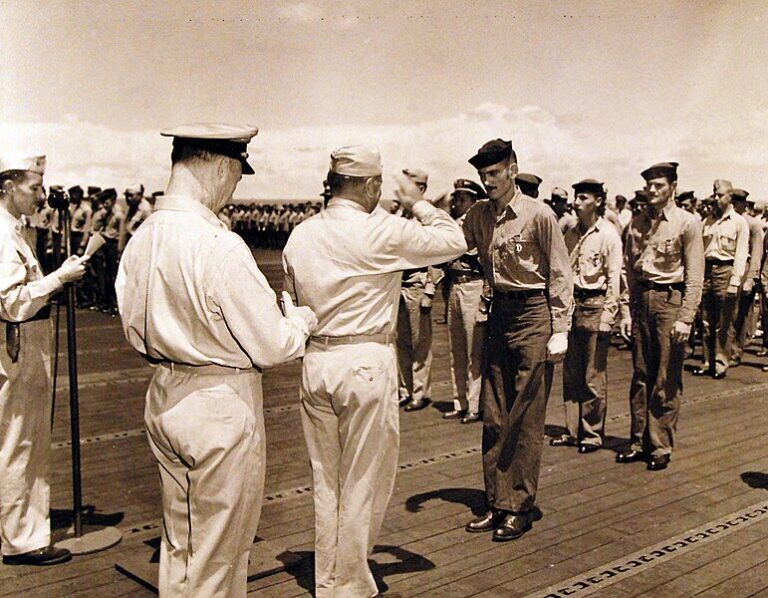
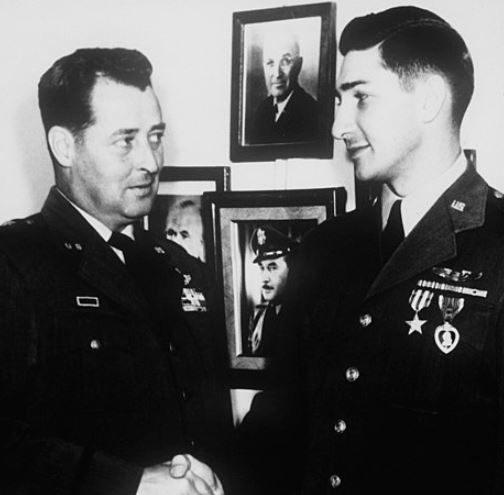
Rear Admiral Ralph Davidson presenting the Purple Heart to personnel onboard a carrier in July 7, 1944. Image courtesy of the National Archives.

The Purple Heart Medal Design

Elizabeth Will, an Army heraldic specialist in the Office of the Quartermaster General, was named to redesign the newly revived medal, which became known as the Purple Heart. Using general specifications provided to her, Will created the design sketch for the present medal of the Purple Heart. The new design, which exhibits a bust and profile of George Washington, was issued on the bicentennial of Washington’s birth. Will’s obituary, in the edition of February 8, 1975 of The Washington Post newspaper, reflects her many contributions to military heraldry. The Commission of Fine Arts solicited plaster models from three leading sculptors for the medal, selecting that of John R. Sinnock of the Philadelphia Mint in May 1931.

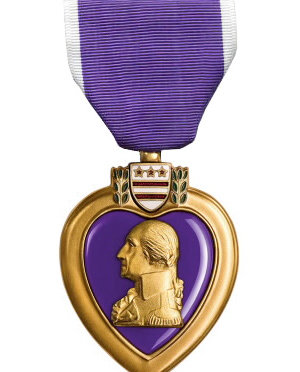
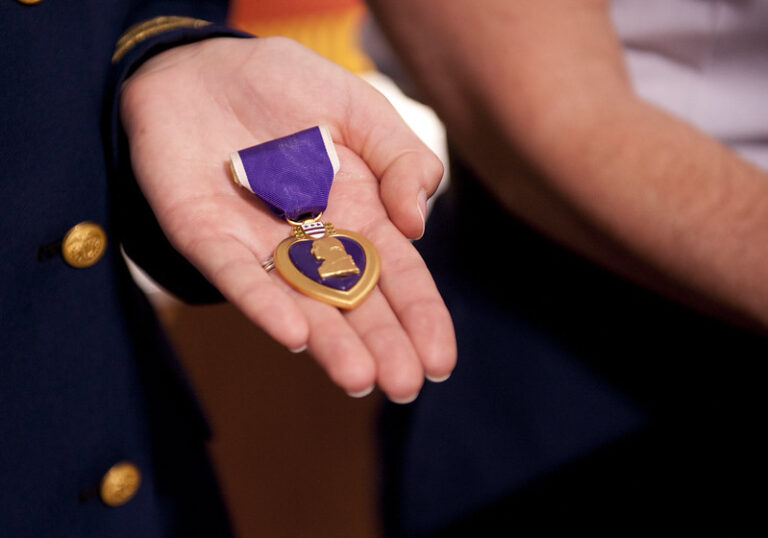
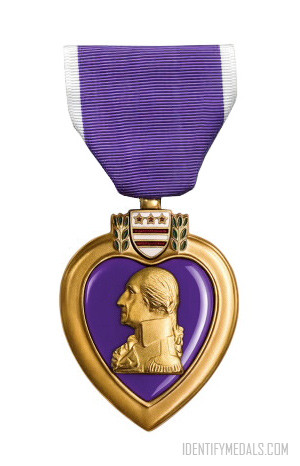
The Purple Heart award is a heart-shaped medal within a gold border, 1 38 inches (35 mm) wide, containing a profile of General George Washington. On the obverse and above the heart appears a shield of the coat of arms of George Washington (a white shield with two red bars and three red stars in chief) between sprays of green leaves. The reverse consists of a raised bronze heart with the words FOR MILITARY MERIT below the coat of arms and leaves.

The ribbon is 1 38 inches (35 mm) wide and consists of the following stripes: 18 inch (3.2 mm) white 67101; 1 18 inches (29 mm) purple 67115; and 18 inch (3.2 mm) white 67101. Additional awards of the Purple Heart are denoted by oak leaf clusters in the Army and Air Force, and additional awards of the Purple Heart Medal are denoted by ​516 inch stars in the Navy, Marine Corps, and Coast Guard.

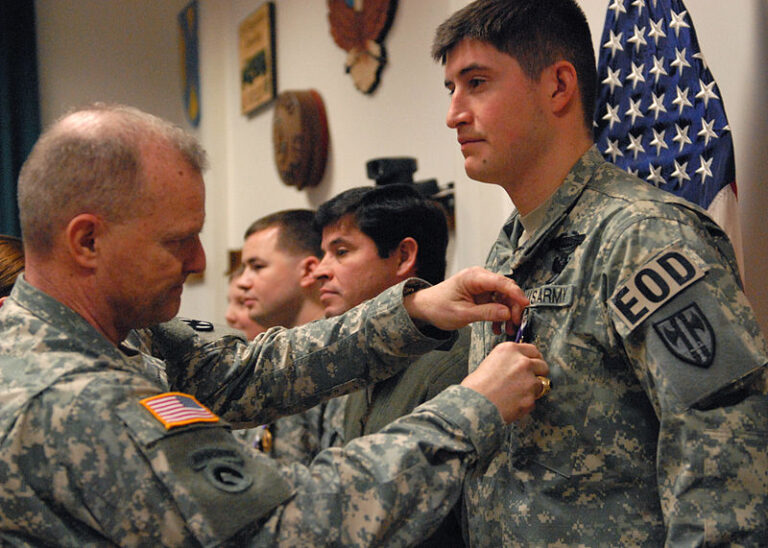
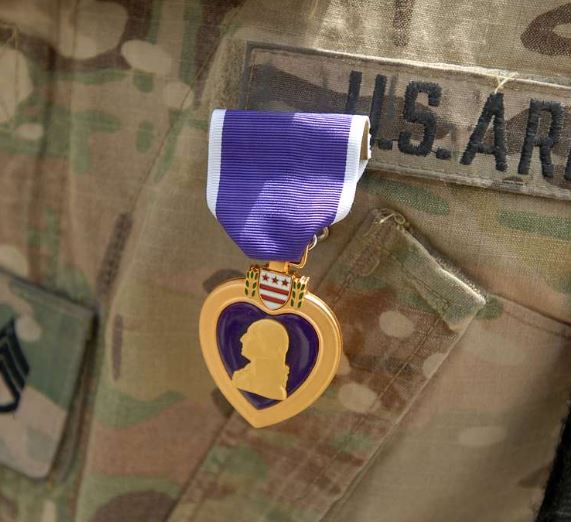
A soldier is awarded the Purple Heart during a ceremony on Coleman Barracks.
A soldier is awarded the Purple Heart during a ceremony on Coleman Barracks. Image courtesy of Wikipedia.

More About the Purple Heart

Do you want to learn more about this prestiguous American award? Here are some details that explore the history of the medal, its design,a nd symbolism:

Related Medals and Awards

The Purple Heart has a long history. So, it’s no surprise there were previous versions or medals that served as inspiration to establishing the 1932 version. These include:

Find This Medal

Right Now on eBay 
Clicking a link to eBay may result in a referral commission being paid if a purchase is made.
Loading...

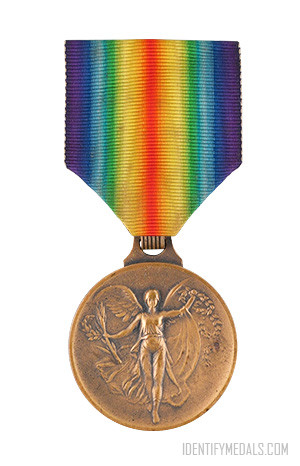
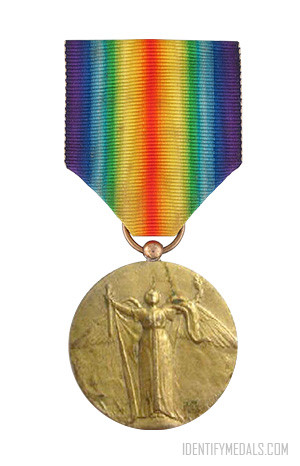
The Inter Allied Victory Medal (Romania)

The Romanian Victory Medal was awarded to those who had taken part in a battle between 28 August 1916 and 31 March 1921 or served as a medic.

  • Time Period: World War I
  • Institution: 1919
  • Country: Romania

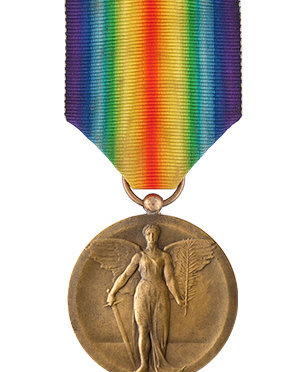
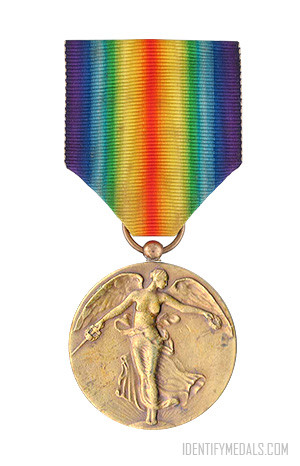
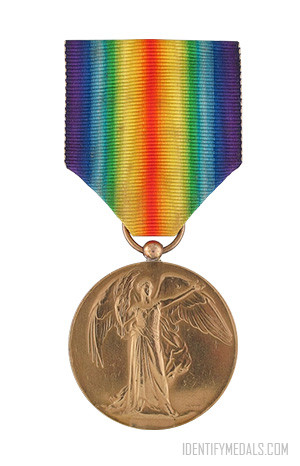
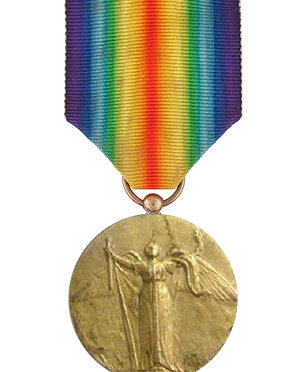
The Allied Victory Medal was recommended by an inter-allied committee in March 1919. Fourteen victorious countries finally awarded the medal after World War I, and each allied nation would design a ‘Victory Medal’ for award to their own nationals. Certain features were to be shared: a winged figure of Victory on the obverse and the same ribbon.

To qualify for the Romanian Victory Medal, recipients of any rank had to be mobilized for war service and to have taken part in a battle between 28 August 1916 and 31 March 1921, or to have served as an army medic. Also included were the combatants from the Hungarian–Romanian War.

The Romania Inter-Allied Victory Medal Design

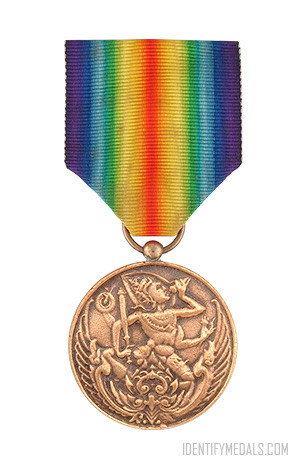
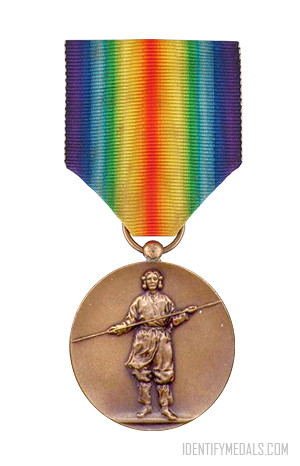
The Victory Medal measures 36 millimetres (1.4 in) in diameter and was designed by William McMillan. The design and ribbon was also adopted by Belgium, Brazil, Cuba, Czechoslovakia, France, Greece, Italy, Japan, Portugal, Romania, Siam, Union of South Africa and the USA. Each allied nation would design a ‘Victory Medal’ for award to their own nationals, all issues having certain common features, including a winged figure of victory on the obverse and the same ribbon.

The obverse of the Romanian medal was selected from a set of proposals submitted to an international jury. The jury selected the design of Lt. Col. Constantin Kristescu, who was also put in charge of its sculpting. The medal was manufactured in Paris, where Kristescu used to work with La Maison Arthus-Bertrand.

The reverse shows the words ‘THE GREAT / WAR FOR / CIVILISATION / 1914-1919’ surrounded by a laurel wreath.

The 39 millimeters (1.5 in) wide watered ribbon has an iridescent color scheme, with the violet moving through to a central red stripe where both schemes meet. It attaches to the medal through a ring suspender. The recipient’s name, rank, service number and unit were impressed on the edge of the medal. The name of the regiment or corps was omitted on medals awarded to Army officers.

All the Inter-Allied Victory Medal Variations

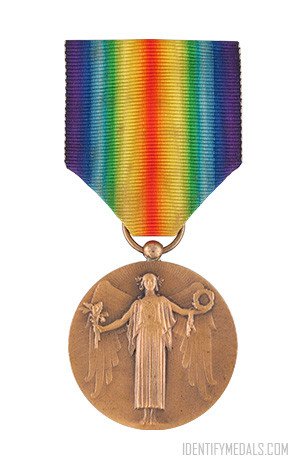
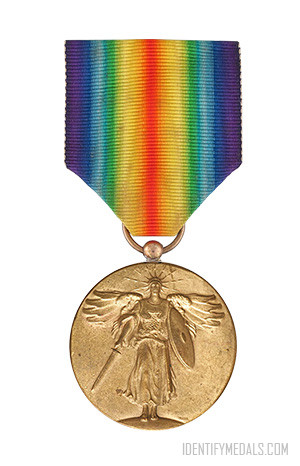
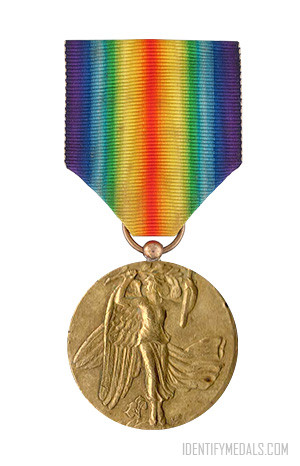
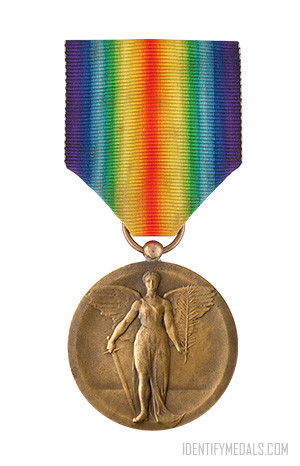
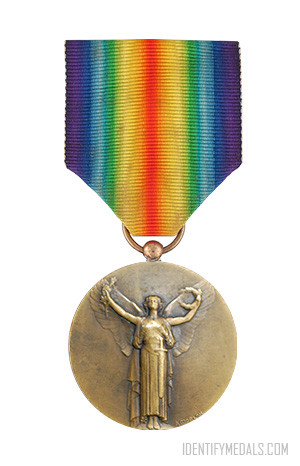
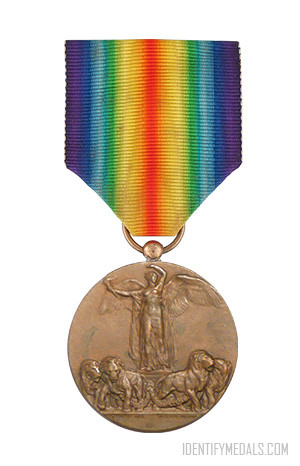
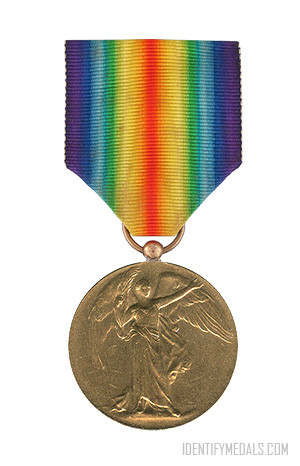
Although each country designed its own version of the Inter-Allied Victory Medal, all of them shared some common elements, such as a winged victory figure on the obverse and a similar ribbon with rainbow colors symbolizing unity among the Allies. Here are the versions for all countries:

Find an Inter-Allied Victory Medal Online

Right Now on eBay 
Clicking a link to eBay may result in a referral commission being paid if a purchase is made.
Loading...

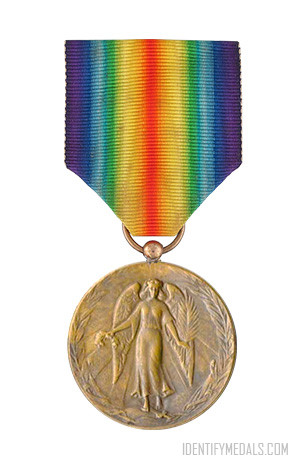
The Inter Allied Victory Medal (Cuba)

The Cuban Victory Medal was awarded to all military personnel or civilians who have been employed in war service between 1917 and 1919.

The Allied Victory Medal was recommended by an inter-allied committee in March 1919. Fourteen victorious countries finally awarded the medal after World War I, and each allied nation would design a ‘Victory Medal’ for award to their own nationals. Certain features were to be shared: a winged figure of Victory on the obverse and the same ribbon.

The President of the United States of Brazil, adopted the proposal of Marshal Foch in January 24, 1919 so that all the fighters of the Great War received a commemorative medal.

The Cuba Inter-Allied Victory Medal Design

The Victory Medal measures 36 millimetres (1.4 in) in diameter and was designed by William McMillan. The design and ribbon was also adopted by Belgium, Brazil, Cuba, Czechoslovakia, France, Greece, Italy, Japan, Portugal, Romania, Siam, Union of South Africa and the USA. Each allied nation would design a ‘Victory Medal’ for award to their own nationals, all issues having certain common features, including a winged figure of victory on the obverse and the same ribbon.

The obverse of the Cuban Victory Medal featured a symbolic figure of Victoria with her hands up on a plain background.

The reverse shows the words ‘THE GREAT / WAR FOR / CIVILISATION / 1914-1919’ surrounded by a laurel wreath.

The 39 millimeters (1.5 in) wide watered ribbon has an iridescent color scheme, with the violet moving through to a central red stripe where both schemes meet. It attaches to the medal through a ring suspender. The recipient’s name, rank, service number and unit were impressed on the edge of the medal. The name of the regiment or corps was omitted on medals awarded to Army officers.

All the Inter-Allied Victory Medal Variations

Although each country designed its own version of the Inter-Allied Victory Medal, all of them shared some common elements, such as a winged victory figure on the obverse and a similar ribbon with rainbow colors symbolizing unity among the Allies. Here are the versions for all countries:

Find an Inter-Allied Victory Medal Online

Right Now on eBay 
Clicking a link to eBay may result in a referral commission being paid if a purchase is made.
Loading...

The George Cross (Great Britain)

The George Cross is the second highest award of the UK honors system and it’s awarded for acts of the greatest heroism or courage.

The George Cross (also known as GC) is the second highest award of the United Kingdom honors system and it’s awarded “for acts of the greatest heroism or for most conspicuous courage in circumstance of extreme danger“, not in the presence of the enemy, to members of the British armed forces and to British civilians.

The medal may be awarded to a person of any military rank in any service and to civilians including police, emergency services and merchant seamen. Many of the awards have been personally presented by the British monarch to both recipients and in the case of posthumous awards to next of kin. These investitures are usually held at Buckingham Palace.

The George Cross was instituted on 24 September 1940 by King George VI. At this time, during the height of the Blitz, there was a strong desire to reward the many acts of civilian courage. The existing awards open to civilians were not judged suitable to meet the new situation, therefore it was decided that the George Cross and the George Medal would be instituted to recognize both civilian gallantry in the face of enemy action and brave deeds more generally.

Posthumous awards have been allowed since it was instituted.

The George Cross Criteria

The George Cross is awarded for acts of the greatest heroism or the most conspicuous courage in circumstances of extreme danger. It is intended to recognize acts that exemplify selfless bravery

It can be awarded to both military personnel and civilians and is the highest gallantry award for civilians, as well as for military personnel in situations where military honors would not typically be granted. The GC may also be awarded posthumously.

The cross has been awarded to several foreigners for their acts of exceptional bravery. Examples include:

  1. Malta: Awarded to the entire island of Malta in 1942 for the collective bravery of its citizens during sustained aerial bombardment in World War II.
  2. Rustum Sohrabji Ghandhi: An Indian naval officer awarded in 1952 for his gallantry during a rescue operation.
  3. Michael Pratt: An Australian police officer awarded in 1978 for his actions during a bank robbery.

The George Cross Design

The medal was designed by Percy Metcalfe. The Warrant for the GC (along with that of the George Medal), dated 24 September 1940, was published in The London Gazette on 31 January 1941.

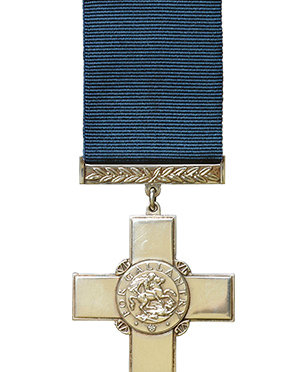
It measures 48 mm in height, with a maximum width of 45 mm. The obverse is a plain silver cross with circular medallion in the center depicting the effigy of St. George and the Dragon, surrounded by the words “FOR GALLANTRY“. In the angle of each limb is the Royal Cypher GVI.

The reverse is plain, with a center engraved with the name of recipient and date of award. The cross is attached by ring to bar ornamented with laurel leaves, through which the ribbon passes.

Find a George Cross

Right Now on eBay 
Clicking a link to eBay may result in a referral commission being paid if a purchase is made.
Loading...

The (Mexican) War Cross

The Mexican War Cross was instituted in 1949 in three classes to be awarded to military in time of war or armed conflict for acts of bravery. 

The War Cross (or Cruz de Guerra in Spanish) was instituted by Presidential Decree on 25 July 1949 in three classes to be awarded to military in time of war or armed conflict for acts of bravery.

Cuauhtémoc was an early 16th Century Aztec ruler who fought heroically against the Spanish conquistadors and was tortured and then unjustly executed by Cortés. Today, Cuauhtémoc is revered in Mexico whilst the world has largely forgotten the victorious Cortés.

The War Cross Design

The medal is a gilt and deep red enamel cross pattée with concave stepped ends to the arms and a loop for ribbon suspension.

The obverse shows the gilt head of Cuauhtémoc in eagle war headdress imposed on a circular central deep red enamel medallion within a gilt ring inscribed in red letters ‘CRUZ DE GUERRA PRIMERA CLASE’ (War Cross First Class). The reverse is plain, with a ribbon with laurel-decorated gilt top bar mounted for wear.

The Decoration for Heroic Valor

The Decoration of Heroic Valor (or Condecoración al Valor Heroico in Spanish) is a Mexican award given to military personnel for exceptional acts of heroism at risk of their own life. The medal may be awarded in both war and peace.

There are three classes:

  • 1st class – solid red ribbon
  • 2nd class – five equal stripes, three red and two white
  • 3rd class – white ribbon with medium width red edges

The Decoration for Heroic Valor Design

The medal is a gilt-edged red-enameled “Lancer Cross” (equilateral cross whose arms resemble lance heads) resting on a gilt “star” of multiple rays that resembles a square with points at the cardinal points.

The oval red central medallion has the number 12, or 3 according to class, surrounded by a white band inscribed Valor Heroico in gold, wit the word Valor in the upper part and Heroico on the bottom, separated by a dash. Between the cross’ arms, and covering the space between them, are four aces that coincide with the square where the inscription is written. The remaining aces augment in longitude towards the center.

The plaque is slightly convex in the exterior part. It has a ring for hanging it and a sixteen-side star in the reverse with the legend Creada en 1926 (Created in 1926) en highlighted uppercase letters.

The medal is suspended from a red and white ribbon (three vertical bands o 10 millimeters each) according to class, with a gilt bar at top inscribed Mexico.

The Mexican Legion of Honor

The  Mexican Legion of Honor is an order of merit awarded to soldiers, veterans, and others who have made outstanding contributions to Mexico.

The modern Mexican Legion of Honor (or Legión de Honor Mexicana in Spanish) is an order of merit awarded to soldiers, veterans, and others who have made outstanding contributions to the national defense, security, or sovereignty of Mexico.

An earlier, post-revolutionary version was organized as a military reserve force, a forerunner to the modern Legion that was founded in 1917 under President Venustiano Carranza to provide an “honorable location for excess officers of the Constitutional Army.” It was available for use as a reserve force in case of national emergency, and also provided training for new recruits.

The modern Mexican Legion of Honor was created in a 1949 decree by President Miguel Alemán Valdés to “honor soldiers during their lifetime” who had contributed to the national defense, or who had contributed in some form to the social achievements enshrined in the Constitution. Eligibility changes included admission for those who had served the country, or completed at least thirty years of active military service.

A 1994 amendment to the original act established some organizational changes, including an official name change to Legión de Honor Militar Mexicana, and added eligibility to those who had “participated in the most preeminent events” of Mexican history, carried out “heroic actions“, or in some way contributed to the military defense of the nation, to guaranteeing national security, or to maintain national sovereignty and independence.

The 1949 reorganization opened the membership first to civilians, and then to women. Although some women were recognized as members, without recognizing either their military rank or their pensions.

The Imperial Order of Guadalupe

The Imperial Order of Guadalupe (originally known as “National Order of Our Lady of Guadalupe”) was established by Emperor Agustín I of Mexico in the fall of 1821 – although its statutes would not be published until February 1822.

The order was originally divided into two classes: Grand Cross and Numerary Member. After the death of the Agustin I, the Order fell out of use and remained inactive for 30 years until Antonio López de Santa Anna convinced Pope Pius IX to recognize it in 1854. It fell into disuse again in August of that same year after the successful Ayutla Revolution and the ousting of Santa Anna from government.

The third and last period of the Order began on June 30, 1863, before the arrival of Maximilian I, by decree of the Provisional Imperial Government. Maximilian I modified the statutes of the Order for the last time on April 10, 1865, renaming the order “Imperial” (instead of “National”) and divided it into four ranks, each with civilian and military divisions:

  • Grand Cross, limited to 30 recipients.
  • Grand Officer, limited to 100 recipients.
  • Commander, limited to 200 recipients.
  • Knight, limited to 500 recipients.