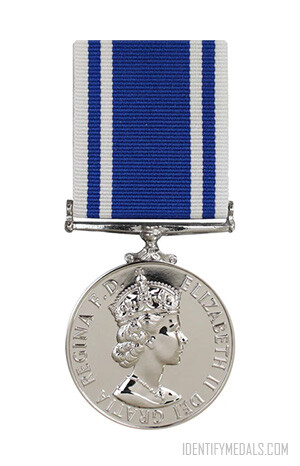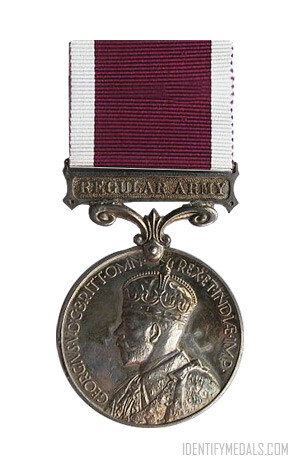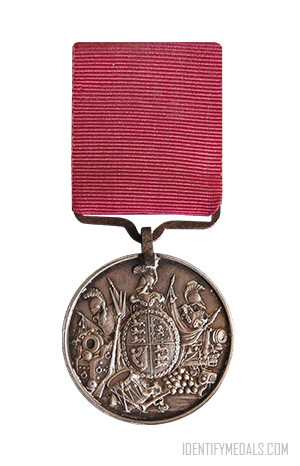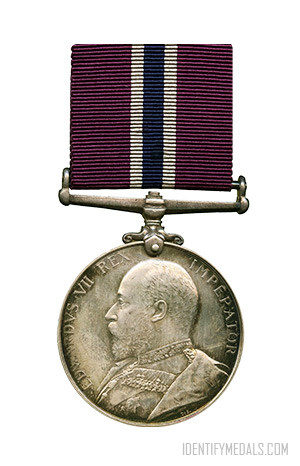
A List of All British Long Service and Good Conduct Medals

Explore the comprehensive list of medals awarded to military personnel for their dedication, exemplary service, and good conduct.

Throughout history, the British Armed Forces have recognized the unwavering dedication, exemplary service, and impeccable conduct of their personnel through a series of distinguished medals. These Long Service and Good Conduct Medals serve as symbols of honor and commitment, celebrating the careers of those who have dedicated significant portions of their lives to military service.

Long service and good conduct medals emerged as a means to recognize the sustained dedication and exemplary behavior of military personnel. Initially, such recognition was informal, but by the 19th century, formalized awards were introduced. These medals not only honored individual commitment but also served to encourage high standards of professionalism and discipline within the ranks.

The purpose of this article is to provide a comprehensive list of these medals, highlighting their historical significance and the criteria for their award. 

Long Service and Good Conduct Medals:
The Historical Context

The tradition of awarding medals in the British military dates back to the 17th century, with the earliest recorded medals given for acts of valor and significant military achievements. Over time, these awards evolved to include various categories, such as campaign medals, gallantry awards, and long service and good conduct medals.

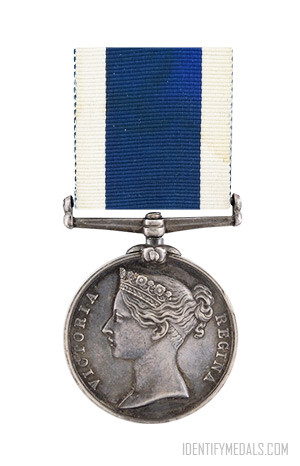
In fact, it was the introduction of the Victoria Cross in 1856 that marked a significant milestone, setting a high standard for gallantry awards. In terms of service and conduct, the Naval Long Service and Good Conduct Medal, established in 1830, was one of the first of its kind, followed by similar medals for the army and volunteer forces. 

Long Service and Good Conduct Medals from the UK

Let’s take an in-depth look at the various medals awarded to recognize the dedication and professionalism of service personnel. From the prestigious Naval Long Service and Good Conduct Medal, established in the early 19th century, to other significant awards.

Find British Long Service and Good Conduct Medals Online

Right Now on eBay 
Clicking a link to eBay may result in a referral commission being paid if a purchase is made.
Loading...

Special Service Commissions Medal (Portugal)

Special Service Commissions Medal was established on 28 May 1946 to recognise service during ‘non-warlike’ operations.

The Commemorative Medal for Special Service Missions of the Portuguese Armed Forces (or Medalha comemorativa de comissões de serviço especiais in Portuguese), established on May 28, 1946, is awarded to military personnel who have completed service missions abroad, whether as part of national or multinational forces.

Initially, this decoration was part of the 1946 Campaign Commemorative Medal of the Portuguese Armed Forces, differing only in its ribbon, which was white with red edges. It was awarded in “cases of simple expeditions or actions of any nature where the circumstances did not require the conduct of war operations” (Art. 43 of the 1946 Regulations).
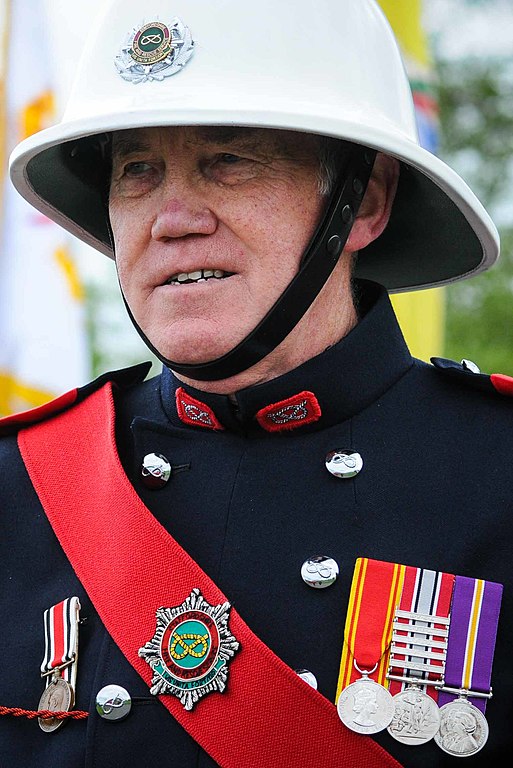
This medal is given to soldiers and sailors who participate in multinational forces under NATO, the UN, and the EU, as well as in technical-military cooperations.

Special Service Commissions Medal Design

Since 1971, there has been a clear distinction between the Medal for Special Service Commissions and the Campaign Medal, although the design of both remains the same, with only the ribbon colors differing. The ribbon for this medal is white, edged with red. The design, since 2002, is as follows:

The obverse features the national emblem surrounded by a circular strip with the inscription “CAMPANHAS E COMISSÕES ESPECIAIS DAS FORÇAS ARMADAS PORTUGUESAS” in uppercase Elzevir type letters. This inscription is encircled by two laurel branches, with fruits, tied at the proximal ends with a wide bow. Above this ensemble is a mural crown with five towers.

The reverse is a disc featuring a National Flag at the top. Superimposed on the flag, and occupying nearly the entire diameter, are the figures of an Army soldier (right), an Air Force soldier (center), and a Navy sailor (left), standing on a pedestal. The disc is surrounded by the inscription “ESTE REINO É OBRA DE SOLDADOS” (“This kingdom is the work of soldiers”), a quote from Joaquim Augusto Mouzinho de Albuquerque in a letter to Prince Royal D. Luís Filipe, in uppercase Elzevir type letters, within a circular strip, concluded at the bottom by a wide bow. Above this ensemble is a mural crown identical to the one on the obverse.

The Campaign Service Medal (Portugal)

The Campaign Service Medal was established on 30 November 1916 to recognize wartime service and issued with a clasp for each campaign.

The Campaign Commemorative Medal (or in Portuguese) was created on November 30, 1916, by Decree No. 2870, alongside the War Cross, commemorates the campaigns of the Portuguese Armed Forces outside mainland Portugal, particularly in the context of Portugal’s entry into World War I.

The medal is awarded to military personnel who have served in a campaign situation (Art. 46 of the 2002 Regulations).

This medal functions as a general campaign medal, with each specific campaign indicated by a clasp on the ribbon, with the most recent campaign above the older ones. The following clasps have been approved:

  • South Angola, 1914-1915 (Decree No. 2941, 18/1/1917)
  • Mozambique, 1897-1898 (Decree No. 2965, 1/2/1917)
  • Timor, 1912-1913 (Decree No. …, 23/9/1918)
  • Mozambique, 1914-1918 (Decree No. 5060, 30/11/1918)
  • At Sea, 1916-1917-1918 (Decree No. 5086, 3/1/1919)
  • France, 1917-1918 (Decree No. 5400, 12/4/1919)
  • Lunda, 1911 (Decree No. …, 14/5/1919)
  • Congo, 1914-1915 (Decree No. …, 14/5/1919)
  • Maritime Defense, 1914-1918 (Decree No. 5799, 28/5/1919)
  • At Sea, 1916-1917-1918 + Maritime Defense, 1914-1918 (Decree No. 5983, 31/7/1919)
  • Occupation of Mozambique District, 1906-1913 (Decree No. 6546, 8/4/1920)
  • Cuanza-Sul, 1917-1918 (Decree No. …, 30/4/1920)
  • Cuanhama, 1915 (Decree No. 7433, 25/6/1920)
  • Beyond Cunene, 1904 (Decree No. 6731, 8/7/1920)
  • Satary, 1912 (Decree No. 7434, 18/7/1920)
  • Bissau, 1915 (Decree No. …, 10/9/1920)
  • CEL, Maritime Defense, 1916-1918 + Funchal, Maritime Defense, 1916-1918 + Ponta Delgada, Maritime Defense, 1916-1918 (Decree No. 1123, 4/3/1921)
  • Cape Verde, 1917-1918 (Decree No. 8613, 3/2/1923)
  • Dembos, 1918-1919 (Decree No. 8791, 1/5/1923)
  • Lunda, 1922-1923 (Decree No. …, 12/7/1924)
  • Lunda, 1920 (Decree No. 10442, 31/12/1924)
  • Congo, 1918 (Decree No. 15026, 13/1/1928)
  • Northern Angola (since 15/3/1961) (Decree No. 19683, 4/2/1963)
  • Guinea (since 1/3/1963) (Decree No. 20564, 7/5/1964)
  • Mozambique (since 1/8/1965) (Decree No. 21941, 6/4/1966)
  • Angola (since 23/12/1966) (Decree No. 22838, 21/8/1967) (extinguishes the legend Northern Angola)
  • Afghanistan 2008 (Decree No. …, …)
  • Somalia / Africa 2009-2013 (Anti-Piracy Operations) (Decree No. …, …)
  • Kosovo 2012-2013 (Decree No. …, …)
  • Central African Republic 2012-2019 (Civil War) (Decree No. …, …)

The Campaign Service Medal Design

The obverse features the national emblem surrounded by a circular strip with the inscription “CAMPANHAS E COMISSÕES ESPECIAIS DAS FORÇAS ARMADAS PORTUGUESAS” in capital Elzevir type letters, encircled by two laurel branches with fruits, tied at the top with a wide bow. Above this ensemble is a mural crown with five towers.

The reverse bears a disc featuring a National Flag at the top. Superimposed on the flag are the figures of an Army soldier (right), an Air Force soldier (center), and a Navy sailor (left), standing on a pedestal. The disc is surrounded by the inscription “ESTE REINO É OBRA DE SOLDADOS” (“This kingdom is the work of soldiers“), a quote from Joaquim Augusto Mouzinho de Albuquerque in a letter to Prince Royal D. Luís Filipe, in capital Elzevir type letters, within a circular strip, concluded at the bottom by a wide bow. Above this ensemble is a mural crown identical to the one on the obverse.

The Exemplary Behavior Medal (Portugal)

The Exemplary Behavior Medal was created on October 2, 1863 and distinguishes military personnel who have served with exemplary moral.

The Exemplary Behavior Medal (or Medalha de Comportamento Exemplar in Portuguese) is a Portuguese military award established on October 2, 1863, by decree of the Secretary of State for the Affairs of War.

The medal is awarded in three grades—gold, silver, and copper—and recognizes military personnel who have demonstrated exemplary moral and disciplinary conduct, as well as a proven spirit of loyalty to the Portuguese Republic throughout their careers.

The Distinguished Service Medal Grades

The Exemplary Behavior Medal is awarded in the following grades:

  • Gold Medal (MOCE): Awarded to military officers with at least thirty years of service, who have never received any criminal or disciplinary punishment, and who have consistently demonstrated a high sense of virtue, obedience, and military discipline.
  • Silver Medal (MPCE): Granted to military officers with at least fifteen years of effective service, who have maintained a spotless record without any criminal or disciplinary punishment.
  • Copper Medal (MCCE): Awarded to officers, sergeants, and enlisted personnel who have completed at least six years of effective service and have never suffered any criminal or disciplinary punishment.

The Aeronautical Merit Medal 

The Aeronautical Merit Medal was created on 11 October 1985 to reward military and civilian personnel for performance in the Air Force.

The Aeronautical Merit Medal (or Medalha de Mérito Aeronáutico in Portuguese) is a military decoration established on October 11, 1985.

It is awarded to military and civilian personnel, both national and foreign, who demonstrate exceptional technical-professional competence, extraordinary performance, and significant personal qualities, thereby contributing to the efficiency, prestige, and mission fulfillment of the Portuguese Air Force.

This medal was one of the first three branch-specific medals created in 1985 for each branch of the Armed Forces. It preceded the Medal of the Cross of Saint George, established by the General Staff of the Armed Forces in 2000, and the Medal of National Defense, created by the Ministry of National Defense in 2002.

The Aeronautical Merit Medal is awarded according to the following criteria:

  • 1st Class (MPMA): Awarded to general officers and colonels.
  • 2nd Class (MSMA): Awarded to lieutenant colonels and majors.
  • 3rd Class (MTMA): Awarded to other officers and sergeant majors.
  • 4th Class (MQMA): Awarded to other sergeants and enlisted personnel.

The Wounded on Operations Medal (Portugal)

The Wounded on Operations Medal was created in 1946 and is awarded to military personnel who were wounded in a campaign.

The Medal for Wounded in Campaign (or Medalha dos Mutilados em Campanhain Portuguese) was established on May 28, 1946 and is awarded to military personnel who suffer permanent impairment during a campaign or in directly related circumstances, resulting in damage or loss of an organ or function. This award is conferred by the Minister of National Defense.

Originally introduced as an insignia on October 5, 1918, by decree no. 4886, it was initially known as the Insignia of Mutilated and Crippled by War and consisted of a simple ribbon.

The Wounded on Operations Medal Design

The medal is a five-pointed, chiseled star, with each point ending in a small armillary sphere. On the obverse and in the center is a disc bearing the National Emblem, encircled by a band with the inscription “FERIDOS EM CAMPANHA” (“WOUNDED IN CAMPAIGN“) in capital Elzevir type letters.

The reverse is identical to the obverse, but with a central disc inscribed with the phrase “MORRER MAS DEVAGAR” attributed to King Sebastião I of Portugal during the Battle of Alcácer Quibir. This inscription is arranged in three lines and surrounded by two laurel branches, with fruit and crossed at the base.

The ribbon is red with two vertical green lines.

The D. Afonso Henriques Medal

The D. Afonso Henriques Medal is a Portuguese military medal established in 1985 and awarded for high competence within the Portuguese Army.

The Medal of D. Afonso Henriques – Army Merit is a Portuguese military decoration, established on October 11, 1985, originally named the Medal of D. Afonso Henriques – Patron of the Army.

The award recognizes military personnel and civilians, both national and foreign, who demonstrate exceptional technical-professional competence, extraordinary performance, and significant personal qualities, thereby contributing to the efficiency, prestige, and mission fulfillment of the Portuguese Army.

This medal is one of the first three branch-specific medals created in 1985 for each branch of the Armed Forces. It preceded the Medal of the Cross of Saint George, established in 2000 by the General Staff of the Armed Forces, and the Medal of National Defense, introduced by the Ministry of Defense in 2002.

The medal is awarded according to the recipient’s rank and contributions. General officers and colonels are eligible for the 1st Class (MPAH), while lieutenant colonels and majors can receive the 2nd Class (MSAH). The 3rd Class (MTAH) is designated for other officers and sergeant majors, and the 4th Class (MQAH) is for other sergeants and enlisted personnel.

The Naval Cross (Portugal)

The Naval Cross Medal is a Portuguese military decoration created in 1985 and awarded for contributions to the Portuguese Navy.

The Naval Cross Medal is a Portuguese military decoration established on October 11, 1985. It is awarded to military personnel and civilians, both national and foreign, who demonstrate exceptional technical-professional competence, extraordinary performance, and significant personal qualities. Recipients of this medal contribute substantially to the efficiency, prestige, and mission fulfillment of the Portuguese Navy.

One of the first three branch-specific medals created in 1985, the Naval Cross Medal preceded the Medal of the Cross of Saint George, introduced in 2000 by the General Staff of the Armed Forces, and the Medal of National Defense, introduced by the Ministry of Defense in 2002.

The Naval Cross Medal is awarded according to the recipient’s rank and the nature of their contributions. General officers and captains of the sea and war receive the 1st Class (MPCN). Frigate captains and lieutenant captains are eligible for the 2nd Class (MSCN). The 3rd Class (MTCN) is designated for other officers and sergeant majors, while the 4th Class (MQCN) is for other sergeants and enlisted personnel.

The St George’s Cross (Portugal)

The St George’s Cross is a Portuguese military medal created in 2000 and awarded for extraordinary performance and personal qualities.

The Medal of the Cross of Saint George is a Portuguese military decoration, established on December 22, 2000. It is awarded to military personnel and civilians, both national and foreign, who demonstrate exceptional technical-professional competence, extraordinary performance, and significant personal qualities. Recipients of this medal contribute substantially to the efficiency, prestige, and mission fulfillment of the General Staff of the Armed Forces (EMGFA).

The Medal of the Cross of Saint George was the penultimate of five specialized medals created to recognize services to the General Staff of the Armed Forces. It was established after the three branch-specific medals created in 1985 and before the Ministry of National Defense’s private medal, which was introduced in 2002.

The Medal of the Cross of Saint George is awarded according to the following criteria:

  • 1st Class (MPCSJ): General officers and captains or colonels.
  • 2nd Class (MSCSJ): Frigate captains or lieutenant colonels and lieutenant captains or majors.
  • 3rd Class (MTCSJ): Other officers and sergeant majors.
  • 4th Class (MQCSJ): Other sergeants and enlisted personnel.

The St George’s Cross Design

The insignia of the Medal of the Cross of Saint George is designed to reflect the esteemed service and contributions of its recipients. Each class features a distinct design, symbolizing the level of achievement and rank of the awardee.

  • 1st Class (MPCSJ): This class features an elaborate medal adorned with intricate details, typically worn on a neck ribbon or sash. The design includes elements such as gold accents and the national coat of arms, symbolizing high honor and leadership.
  • 2nd Class (MSCSJ): Similar to the 1st Class but slightly less elaborate, this medal is also worn on a neck ribbon. It maintains prestigious design elements to denote significant contribution and command.
  • 3rd Class (MTCSJ): A medal worn on a neck ribbon, reflecting the commendable service of officers and sergeant majors. The design is simpler than the higher classes but retains important symbols of military excellence.
  • 4th Class (MQCSJ): The most basic design, worn on a chest ribbon. It recognizes the valuable contributions of sergeants and enlisted personnel, featuring essential elements like the national emblem.

The National Defense Medal (Portugal)

The National Defense Medal is a Portuguese military medal created in 2002 and awarded to military and civilian personnel for high competence.

The National Defense Medal is a Portuguese military decoration established on December 27, 2002. It is awarded in four classes to honor military and civilian personnel, both national and foreign, who demonstrate exceptional technical-professional competence, extraordinary performance, and significant personal qualities. These individuals contribute substantially to the efficiency, prestige, and mission fulfillment of the Ministry of National Defense.

The medal was the latest addition among five specialized medals created to recognize services to the Ministry of National Defense. It followed the creation of three branch-specific medals in 1985 and the General Staff of the Armed Forces’ private medal, the Cross of Saint George, which was established two years earlier.

The National Defense Medal is awarded according to the following criteria:

  • 1st Class (MPDN): General officers and captains or colonels.
  • 2nd Class (MSDN): Frigate captains or lieutenant colonels and lieutenant captains or majors.
  • 3rd Class (MTDN): Other officers and sergeant majors.
  • 4th Class (MQDN): Other sergeants and enlisted personnel.

The National Defense Medal Design

The insignia of the National Defense Medal is designed to reflect the distinguished service and contributions of its recipients. The medal’s design varies according to its class, symbolizing the level of achievement and rank of the awardee.

  • 1st Class (MPDN): Features an ornate medal with intricate details, typically worn on a neck ribbon or sash. The design includes elements such as gold accents and the national coat of arms, signifying high honor and leadership.
  • 2nd Class (MSDN): Similar to the 1st Class but slightly less elaborate, worn on a neck ribbon. It maintains the prestigious design elements to denote significant contribution and command.
  • 3rd Class (MTDN): A medal worn on a neck ribbon, reflecting the commendable service of officers and sergeant majors. The design is simpler than the higher classes but retains important symbols of military excellence.
  • 4th Class (MQDN): The most basic design, worn on a chest ribbon. It recognizes the valuable contributions of sergeants and enlisted personnel, featuring essential elements like the national emblem.