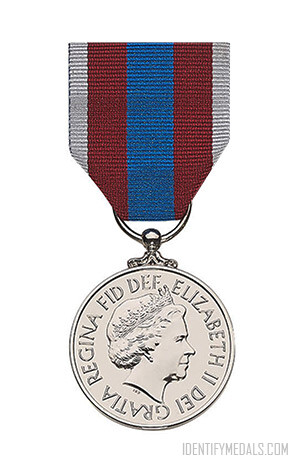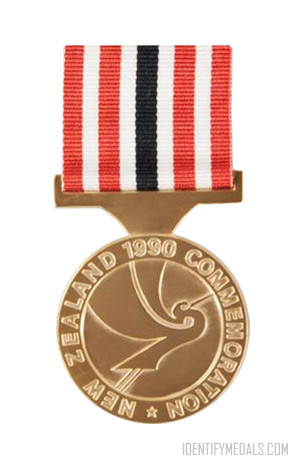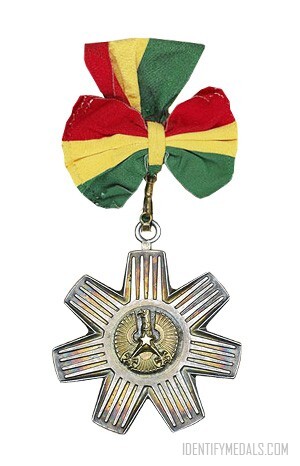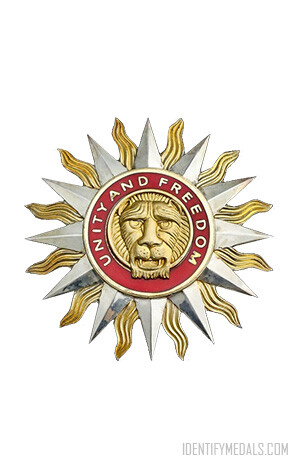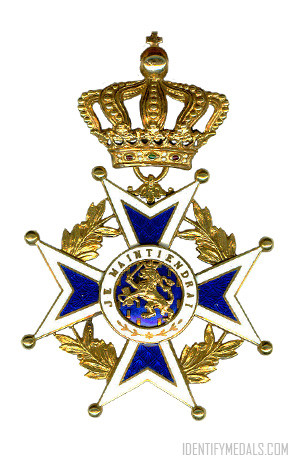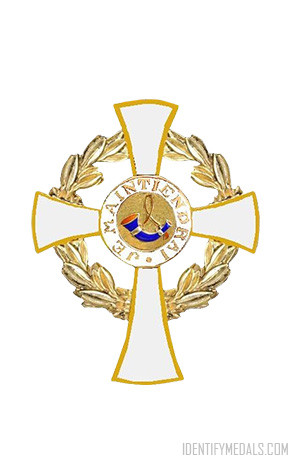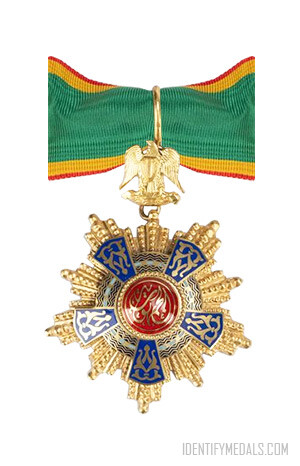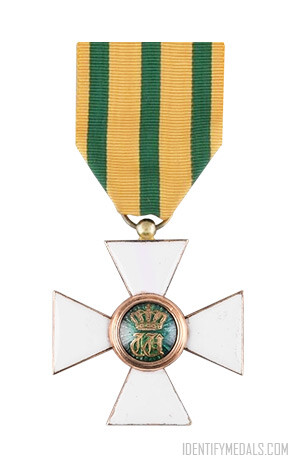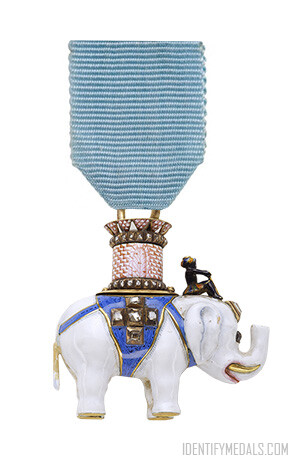
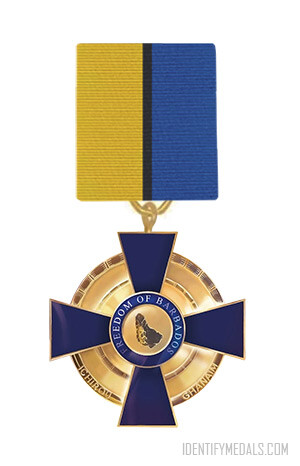
The Order of Freedom of Barbados

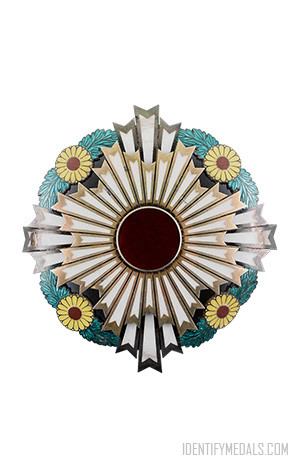
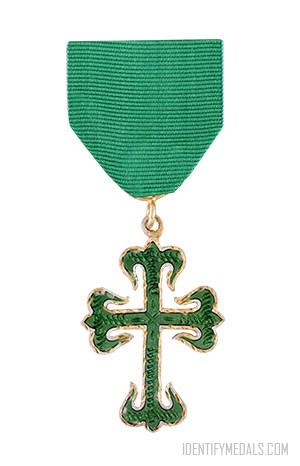
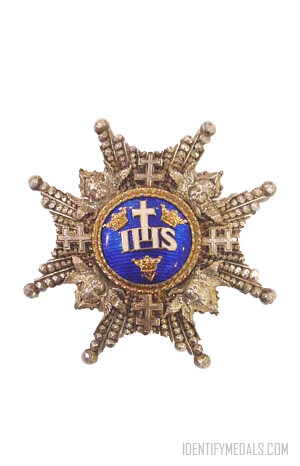
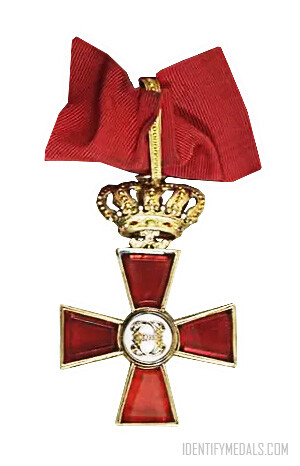
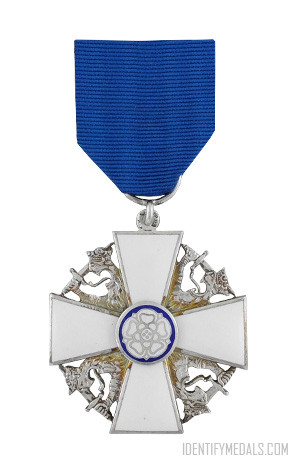
The Order of Freedom of Barbados is a national honor established in 2019 by the Parliament of Barbados. It has one class.

  • Time Period: Post-WW2
  • Institution: 19 August 2019
  • Country: Barbados

The Order of Freedom of Barbados is a national honor established by the Parliament of Barbados through the Order of Freedom of Barbados Act 2019. It is part of the broader Order of Barbados, ranking above the Order of the Republic but below the supreme Order of National Heroes.

Officers and Classes

The Order consists of a single class, unnamed in the Act. There is no annual limit on appointments to this class, except for honorary members, which are capped at two per year. Appointments are made by the president on the advice of the Prime Minister and announced annually on Independence Day (30 November).

Recipients of the Order are entitled to use the post-nominal letters “FB” (Freedom of Barbados) and the honorific style “The Most Honourable.” The insignia of the Order is determined by the Prime Minister.

Eligibility for Conferment of Order

A person who:

  • was born in Barbados;
  • is a citizen of Barbados;
  • or is entitled to be registered as a citizen of Barbados

and who has distinguished himself by extraordinary service to Barbados, the Caribbean, the Caribbean Diaspora or to humanity at large is eligible to be
conferred with the Order of Freedom of Barbados.
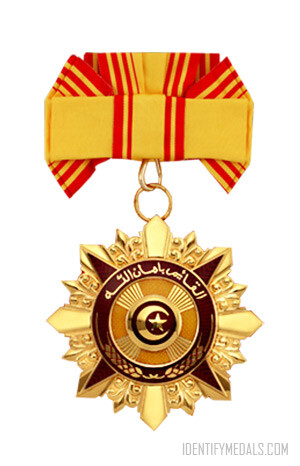
The Family Order of Laila Utama

The Most Esteemed Family Order of Laila Utama is an order of Brunei established on 1 March 1954 by Sultan Omar Ali Saifuddien III.

  • Time Period: Post-WW2
  • Institution: 1 March 1954
  • Country: Others (Brunei)

The Most Esteemed Family Order of Laila Utama (or Darjah Kerabat Laila Utama Yang Amat Dihormati in Malay) is a prestigious order of Brunei, established on 1 March 1954 by Sultan Omar Ali Saifuddien III.

Recipients of this order are entitled to use the post-nominal letters “DK” or “DK I” and the honorary title “Dato Laila Utama.”

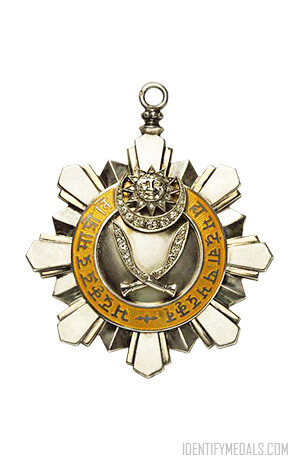
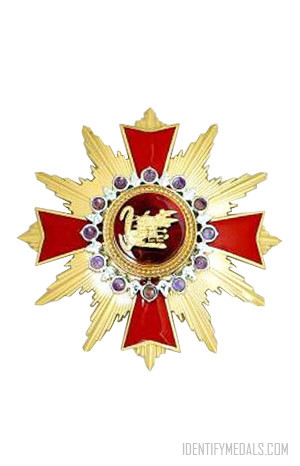
The Family Order of Laila Utama Design

Initially, the order’s design featured a painted bust of Sultan Omar Ali Saifuddien III. However, since 1975, this has been replaced by a star and crescent moon motif.

The emblems of the order are crafted from gold or silver with enamel accents. The order confers the right to use the post-nominal letters “DK I” and the title “Dato Laila Utama.
The Naval Long Service and Good Conduct Medal

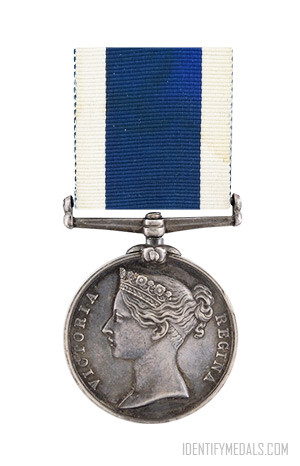
This long service medal, established in 1848, is still awarded to regular members of His Majesty’s Naval Service.

The Naval Long Service and Good Conduct Medal (1848) is awarded to regular members of His Majesty’s Naval Service for long service. Instituted by Queen Victoria to replace the 1830 version, it initially honored other ranks and men in the Royal Navy and Royal Marines. Since 2016, the medal is awarded to all regular members, including officers, after completing fifteen years of service.

The original 1830 medal, known as the “anchor type,” was introduced by King William IV and awarded after 21 years of service. It was used until 1847, during Queen Victoria’s reign.

Initially requiring 21 years of service, the qualifying period was reduced to ten years in 1874, then increased to fifteen years in 1884. Despite some confusion regarding changes, the regulations were last updated on 1 October 2016, confirming the fifteen-year service requirement.

The Naval Long Service and Good Conduct Medal Design

The medal is struck in silver, measuring 36 millimeters (1.42 inches) in diameter, slightly larger than the earlier “anchor type” medal from 1830, which is 34 millimeters (1.34 inches) in diameter.

The obverse features the effigy of the reigning monarch. Since its institution in 1848, seven versions have been issued, including two versions each during the reigns of Queen Victoria and King George V.

The reverse depicts a starboard broadside view of HMS Victory, Lord Nelson’s flagship at the Battle of Trafalgar in 1805. The ship is encircled by a rope tied with a reef knot at the bottom, with the inscription “FOR LONG SERVICE AND GOOD CONDUCT” around the circumference. The design has remained mostly unchanged, though early Queen Victoria versions with a wide suspender featured a larger flag at the masthead, while later versions had a more triangular flag.

The clasp features a laurel leaf design. When only the ribbon bar is worn, a silver rosette on the ribbon indicates the award of a clasp.

The original 1848 ribbon, paired with the wide suspender version of the medal, was 38 millimeters wide and Navy blue with 7 millimeter wide white edges. With the introduction of the narrower suspender version in 1874, the ribbon was changed to 32 millimeters wide and Navy blue with 6½ millimeter wide white edges.

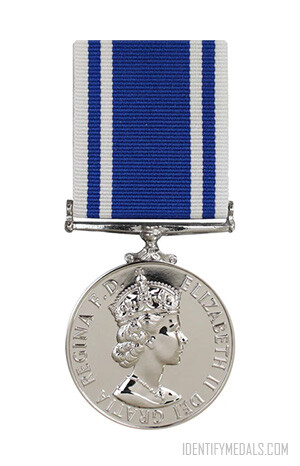
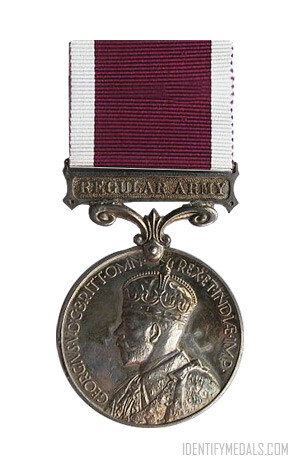
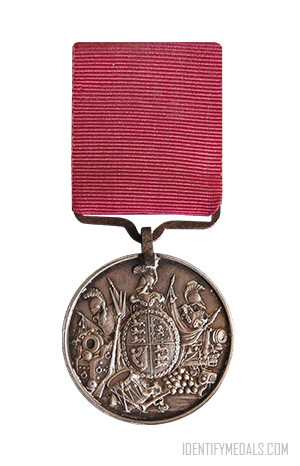
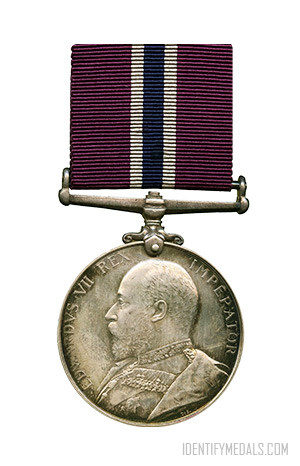
More British Long Service and Good Conduct Decorations

The British military has instituted several Long Service and Good Conduct Decorations, each honoring the dedication and exemplary service of its personnel across different branches. Here are some other ones from different time periods:

Find these medals online:

Right Now on eBay 
Clicking a link to eBay may result in a referral commission being paid if a purchase is made.
Loading...

The Medals of Charles III King of the United Kingdom

Explore the illustrious array of medals and honors bestowed upon Charles III, King of the United Kingdom and discover their rich heritage.

Kings and queens receive medals for several reasons, reflecting their unique roles and contributions both within their own countries and on the international stage. The Medals of Charles III, King of the United Kingdom, serve as a testament to a life dedicated to public service, duty, and the rich traditions of the British monarchy.

From his early days as the Prince of Wales to his ascension as King, Charles III has been honored with a myriad of medals that not only celebrate his personal achievements but also symbolize the enduring legacy of the British royal family. For instance, receiving medals from other countries is a sign of respect and recognition from foreign nations. These honors often symbolize strong diplomatic ties, mutual respect, and international cooperation.

So, let’s delve into the history and significance of each medal awarded to King Charles III and explore the storied past and the ceremonial grandeur that accompany these prestigious honors. 

Royal Titles as Prince Charles

Charles was initially titled “His Royal Highness Prince Charles of Edinburgh” according to letters patent issued by his grandfather, George VI. Upon his mother’s ascension to the throne, Charles, as the eldest son, automatically became the Duke of Cornwall in England and the Duke of Rothesay, Earl of Carrick, Baron of Renfrew, Lord of the Isles, and Prince and Great Steward of Scotland. He was styled “His Royal Highness The Duke of Cornwall” in England and “His Royal Highness The Duke of Rothesay” in Scotland.

In 1958, Charles was made Prince of Wales and Earl of Chester through letters patent from the sovereign, and on 1 July 1969, he was formally invested with these titles during a ceremony. In 2021, following the death of his father, Prince Philip, Charles inherited the titles Duke of Edinburgh, Earl of Merioneth, and Baron Greenwich. When Charles became the British sovereign on 8 September 2022, these titles merged with the Crown.

In an announcement following the death of Queen Elizabeth II, Prime Minister Liz Truss referred to Charles as King Charles III, marking the first official use of that name. Shortly thereafter, Clarence House confirmed that he would indeed use the regnal name Charles III.

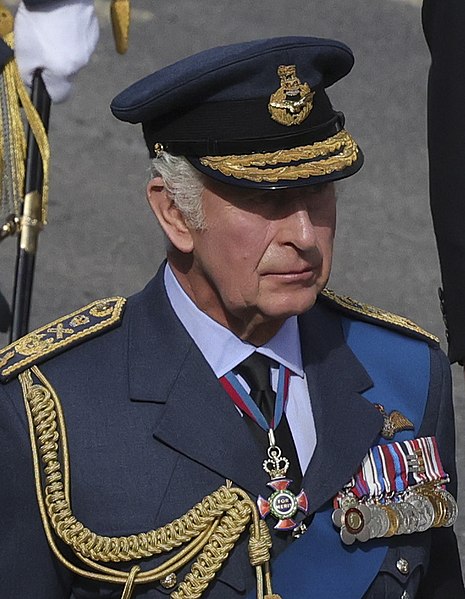
King Charles III's procession to Lying-in-State of Elizabeth II
King Charles III's procession to Lying-in-State of Elizabeth II. Image courtesy of Wikipedia.

Charles III's Decorations and Medals

The decorations and medals awarded to Charles III reflect his extensive contributions and commitments over the decades. Each medal and decoration holds significant historical and symbolic value, showcasing his dedication to various causes and his roles within the British monarchy.

Medals from the United Kingdom

The United Kingdom has a rich tradition of bestowing honors and medals upon its royalty, and King Charles III is no exception. Throughout his life, King Charles III has been awarded numerous medals by the United Kingdom in recognition of his service, dedication, and contributions to the nation.

Here are the medals from the United Kingdom:

Medals and Appontments from Commonwealth Countries

Throughout his life, King Charles III has been honored with numerous medals from Commonwealth countries, reflecting his significant contributions to fostering international relations, promoting charitable causes, and supporting the shared values of the Commonwealth. 

Foreign Honors Bestowed on King Charles III

King Charles III has also been recognized internationally for his contributions to diplomacy, charity, and global cooperation.

Pre-WW1 Medals and Awards: The Legion of Honour

The Legion of Honor

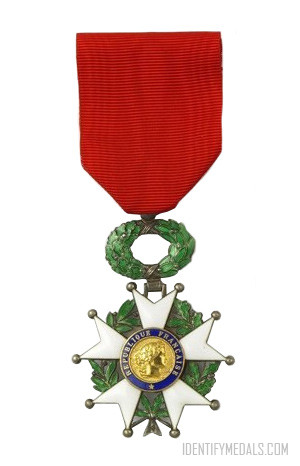
The Legion of Honor (or Ordre national de la Légion d’honneur in French) is the highest French order of merit for military and civil merits.

Read More »

More medals (I’m working on these as they are countries that still don’t have their own page on the site):

  • Bahrain 16 November 1986 Member, 1st Class, of the Order of Sheikh Isa bin Salman Al Khalifa
  • Qatar 14 November 1986 Collar of the Order of Merit
  • Kuwait 9 November 1993 Member, 1st Class, of the Order of Mubarak the Great
  • Hungary 3 March 2010 Grand Cross of the Order of Merit of the Republic of Hungary
  • Romania 29 March 2017 Grand Cross of the Order of the Star of Romania
  • Armenia 19 October 2018 Order of Friendship

The New Zealand Armed Forces Award

The New Zealand Armed Forces Award was established on 6 May 1985 and is awarded for 15 years of unblemished service.

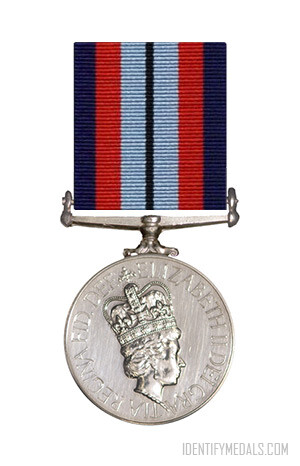
The New Zealand Armed Forces Award is a long service decoration designated for Regular Force Officers of the New Zealand Defence Force.

It was instituted on 6 May 1985, originally recognizing 15 years of exemplary service. However, on 14 August 2020, updated criteria were announced, reducing the service requirement to 14 years for the initial award, and making clasps available for every subsequent seven years of service.

The New Zealand Armed Forces Award Design

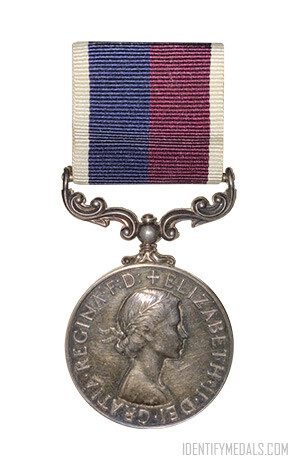
The New Zealand Armed Forces Award is a circular silver medal. The obverse features the crowned effigy of Her Majesty The Queen, encircled by the inscription “ELIZABETH II DEI GRATIA REGINA FID. DEF.”

The reverse displays an eagle with spread wings superimposed over two crossed swords pointing upwards, topped by a Naval Crown. Two fern fronds, with stems crossed at the base, lie behind the swords. The design is bordered by the inscription “New Zealand” at the top and “Armed Forces Award” at the bottom. The symbols on the reverse represent the three branches of the New Zealand Defence Force: the Army, the Royal Navy, and the Air Force.

The medal hangs from a ribbon colored dark blue, crimson, and light blue, representing the three services, with a central black stripe symbolizing New Zealand. Subsequent awards are indicated by a clasp on the medal’s suspension ribbon or a rosette on the service ribbon worn in undress.

Find This Medal

Right Now on eBay 
Clicking a link to eBay may result in a referral commission being paid if a purchase is made.
Loading...

The Commemorative Medal for the Centennial of Saskatchewan

A commemorative medal struck to celebrate the first 100 years since the province’s entrance into Canadian Confederation.

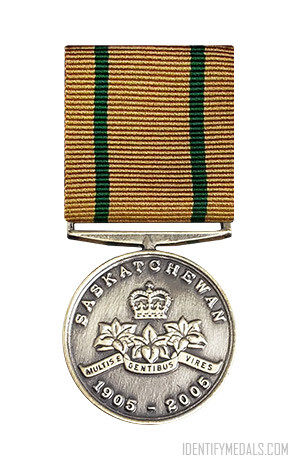
The Commemorative Medal for the Centennial of Saskatchewan, also known as the Saskatchewan Centennial Medal, was created to celebrate Saskatchewan‘s 100th anniversary of joining the Canadian Confederation.

This medal honors individuals who have made significant contributions to society and recognizes outstanding achievements, including leadership, volunteerism, community involvement, and exceptional personal achievements. Only individuals (not groups) were eligible, and posthumous nominations were not accepted.

Certain individuals received the medal automatically by virtue of their positions, such as provincial and federal elected officials, judges, aboriginal leaders, and community and municipal leaders. Additional recipients were selected based on recommendations from governmental and non-governmental organizations and Members of the Legislative Assembly.

About 4,200 medals were produced.

The Saskatchewan Centennial Medal Design

The medal features, on the obverse, the provincial motto beneath a wreath of western red lilies, topped by the St. Edward’s Crown. The inscription “Saskatchewan 1905–2005” encircles the edge.

On the reverse side, the provincial shield of arms is displayed.

The medal is attached to a gold-colored ribbon with two narrow green diagonal stripes.

The Canadian Forces’ Decoration

The Canadian Forces’ Decoration is awarded to members of the Canadian Armed Forces who have completed twelve years of military service.

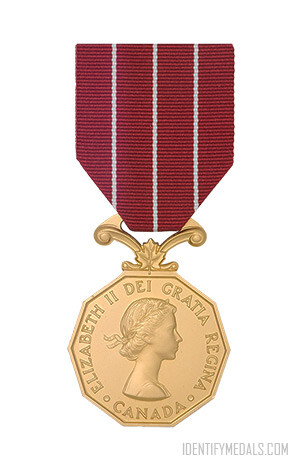
The Canadian Forces’ Decoration (post-nominal letters “CD”) is a Canadian award granted to members of the Canadian Armed Forces who have completed twelve years of military service (under specific conditions).

The decoration is awarded to officers and non-commissioned members of the Regular and Reserve forces, including honorary appointees within the Canadian Armed Forces, excluding time on the Supplementary Reserve List. It can be granted to individuals who already hold long service, good conduct, or efficiency awards, as long as the full qualifying periods for each are completed and service for one award does not count towards another.

Service in the regular and reserve or auxiliary forces of the Commonwealth nations is eligible if the final five years are with the Canadian Armed Forces, and no other similar medal has been awarded for that service.

The first governor general to receive the CD was Viscount Alexander of Tunis in 1951. Initially, the medal was awarded to all members of the Royal Family who served in the Canadian Forces, regardless of whether they had completed twelve years of service; however, this practice has not been automatic since 1953.

The Canadian Forces’ Decoration Design

The medal is ten-sided, representing the ten provinces, and measures 36 millimeters across. The King George VI version is made of .800 fine silver and gilded, featuring an uncrowned bust of the King facing left with the inscription “Georgivs VI D: G: Britt: omn: Rex Fid: Def” around the edge.

The Queen Elizabeth II version, made of tombac (a copper-zinc alloy) and later introduced in a gilded copper variant in 2008, has an uncrowned bust of the Queen facing right with “Elizabeth II Dei gratia Regina” around the edge and “Canada” at the bottom.

The reverse of both medals features a naval crown, three maple leaves, and an eagle representing the navy, army, and air force, respectively, with the word “service” on a scroll at the base and a fleur-de-lis on each side of the crown. The King George VI medal includes the royal cypher in the center, which is omitted from the Queen Elizabeth II medal. The King George VI medal has the recipient’s name and rank engraved on the reverse of the solid bar, while the Queen Elizabeth II medal has them engraved around the edge, with early versions stamped rather than engraved.

A clasp, or bar, is awarded for every 10 years of additional service. The clasp is tombac, 1⁄4 inch (6.4 mm) high, with the Canadian coat of arms in the center, crowned and gold in color. On the undress ribbon, this is indicated by a rosette.

The Papua New Guinea Independence Medal

The Papua New Guinea Independence Medal was established to commemorate the transition to the full independence of Papua New Guinea.

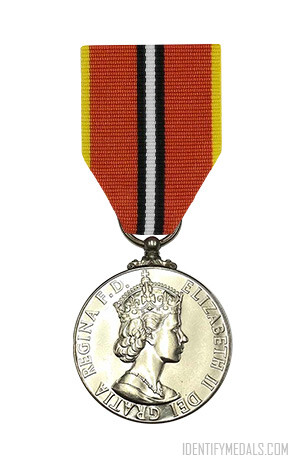
The Papua New Guinea Independence Medal was established in 1975 to mark Papua New Guinea’s transition from self-government to full independence from Australia.

It is part of the Papua New Guinea honors system.

Notable recipients of this medal include:

The Papua New Guinea Independence Medal Design

There are three versions of the Papua New Guinea Independence Medal.

The first version was introduced in 1975 and features the inscriptions “ELIZABETH II DEI GRATIA REGINA F.D.” and “PAPUA NEW GUINEA INDEPENDENCE 1975.” It was awarded from 1973 to 1975 to defense force members and citizens in recognition of outstanding service. This medal has a ring suspension and a smooth surface.

The second version was introduced in 1985 to commemorate the 10th anniversary of independence. It was awarded to civilian and military personnel who made significant contributions to the state since independence. This version bears the inscriptions “PAPUA NEW GUINEA ELIZABETH II DEI GRATIA REGINA F.D.” and “INDEPENDENCE 1975-1985.” It also has a ring suspension and a smooth surface.

The third version was introduced in 2005 to mark the 30th anniversary of independence. The obverse inscription reads “30TH INDEPENDENCE ANNIVERSARY 1975-2005.” This version features a bar suspension and a rayed surface.

The Queen Elizabeth II Platinum Jubilee Medal

The Queen Elizabeth II Platinum Jubilee Medal was established to celebrate the 70th anniversary of the Queen’s accession.

The Queen Elizabeth II Platinum Jubilee Medal (or Médaille du jubilé de platine de la reine Elizabeth II in French), also known as the Queen’s Platinum Jubilee Medal, is a commemorative medal established to celebrate the 70th anniversary of Queen Elizabeth II’s accession in 1952.

The medal was awarded in the United Kingdom to individuals working in public service, including the Armed Forces, emergency services, and prison services.

In Canada, six out of ten provinces issued their own medals, marking the first time a royal occasion has been commemorated with provincial medals. These medals were awarded to outstanding volunteers, members of the Canadian Armed Forces and emergency services, and others who made significant contributions to society, with particular emphasis in some provinces on the response to the COVID-19 pandemic, reconciliation with First Nations and Inuit, and environmental protection.

The Queen’s Caribbean realms also established a medal program for the Platinum Jubilee, recognizing members of the emergency services who responded to hurricanes and the COVID-19 pandemic, as well as members of the defense and police forces.

The Queen Elizabeth II Platinum Jubilee Medal Design

In the United Kingdom, the medal, made of nickel silver, features the Ian Rank-Broadley effigy of Her Majesty on the obverse. The reverse displays the helm, crest, and mantling of the royal coat of arms of the United Kingdom, excluding Scotland.

The ribbon incorporates silver edges to represent the Silver Jubilee, blue from the Golden Jubilee medal’s ribbon, and red from the Diamond Jubilee ribbon. The Worcestershire Medal Service is responsible for manufacturing the medal.

In Canada, the designs of the medals are similar across all the provinces that produced one, differing only in the depiction of the shield from each province’s coat of arms and the province’s official flower. The wild rose represents Alberta, the prairie crocus for Manitoba, the purple violet for New Brunswick, the mayflower for Nova Scotia, the pink lady’s slipper for Prince Edward Island, and the western red lily for Saskatchewan.

All medals are silver in color, 32mm in diameter, and feature a ring suspension. The obverse shows the same crowned effigy of the Queen used for the Canadian Queen Elizabeth II Diamond Jubilee Medal. The reverse displays the Queen’s royal cypher with the dates of her reign—1952 and 2022—at the top, the provincial shield of arms in the center, flanked by renderings of the province’s official flower, and the motto “VIVAT REGINA” (“long live the Queen!”) at the base.

The Queen Elizabeth II Diamond Jubilee Medal

The Queen’s Diamond Jubilee Medal was created in 2012 to commemorate the 60th anniversary of Queen Elizabeth II’s accession in 1952.

The Queen Elizabeth II Diamond Jubilee Medal (or Médaille du jubilé de diamant de la reine Elizabeth II in French), also known as The Queen’s Diamond Jubilee Medal, was created in 2012 to commemorate the 60th anniversary of Queen Elizabeth II’s accession in 1952.

There are four versions of this medal: one issued by the United Kingdom, another by Canada, a third for the Caribbean realms (including Antigua and Barbuda, the Bahamas, Barbados, Grenada, Jamaica, Saint Kitts and Nevis, Saint Lucia, and Saint Vincent and the Grenadines), and a fourth issued by Papua New Guinea.

These different versions of the medal were awarded to tens of thousands of recipients across the Commonwealth realms during the jubilee year.

The Queen Elizabeth II Diamond Jubilee Medal Design

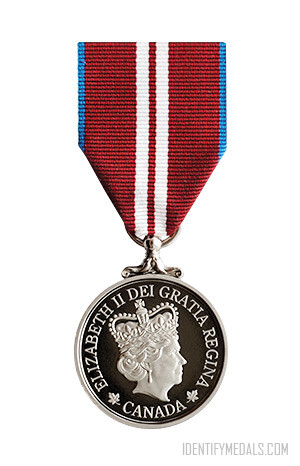
The Queen Elizabeth II Diamond Jubilee Medal, named by Order in Council, was designed by Cathy Bursey-Sabourin and manufactured by the Royal Canadian Mint. The Canadian medal features a crowned effigy of the Queen with the inscription “ELIZABETH II DEI GRATIA REGINA • CANADA” on the obverse. The reverse displays the Queen’s royal cypher on a diamond shield, surrounded by maple leaves and the dates 1952 and 2012, with “VIVAT REGINA” below.

In the UK, the medal, designed by Timothy Noad, shows the Queen’s effigy by Ian Rank-Broadley on the obverse with the inscription “ELIZABETH II DEI GRATIA REGINA FID DEF.” The reverse has a faceted hexagon with a crowned royal cypher and the years 1952 and 2012.

Eight Caribbean Commonwealth realms issued their own Diamond Jubilee medals, featuring the Queen’s effigy and the inscription “DIAMOND JUBILEE HM QUEEN ELIZABETH II” on the obverse. The reverse shows the royal cypher with “CARIBBEAN REALMS” above and the years 1952–2012 below. These medals are rhodium-plated.

Papua New Guinea also issued its version, similar to the Caribbean medal but with “PAPUA NEW GUINEA” above the royal cypher.

The Canadian and British medals are suspended from a broad red ribbon with blue outer stripes and central double white stripes with a red stripe between. The Caribbean medal ribbon has a black stripe between the white stripes, and the Papua New Guinea ribbon features a lighter red with yellow replacing blue, reflecting the national flag colors.

All four versions of the medal were awarded unnamed.