The Medal of Military Duty (Egypt)

The Medal of Military Duty is an Egyptian military order established in 1953 and awarded for services outside of the battlefield.

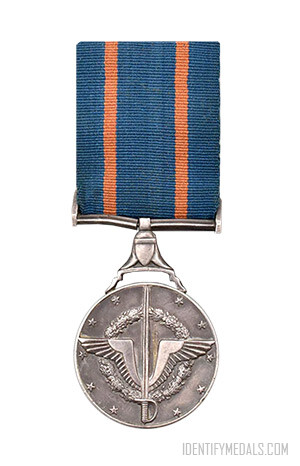
The Medal of Military Duty (نوط الواجب العسكري) is an Egyptian military order established in 1953 and awarded for military services outside of the battlefield.

Established on July 9, 1953, this prestigious accolade recognizes acts of extraordinary gallantry and intrepidity and symbolizes the unwavering dedication and sacrifice of its recipients in the pursuit of national security and defense.

Throughout its history, the Medal of Military Duty has served as a distinguished honor, acknowledging the remarkable achievements and contributions of military personnel in safeguarding the nation’s interests. Beyond domestic borders, this prestigious medal is also extended to deserving foreigners who have displayed unwavering commitment and dedication to supporting Egypt’s military endeavors.

The medal has a three-degree classification representing varying levels of distinction:

  • First Class (in gold)
  • Second Class (in silver)
  • Third Class (in bronze)

The Medal of Military Duty Design

Crafted from silver, the medal’s obverse showcases a sword adorned with wings and a wreath, complemented by ten small stars encircling the periphery. On the reverse side, an Arabic inscription translates to ‘The Military Medal of Duty,‘ alongside establishment dates.

The Egyptian Medal of Military Duty measures 36.9mm in width and 53.6mm in height, and weighs 29.3 grams.

The ribbon is blue with narrow red edge stripes.
The Order of The Sciences and Arts (Egypt)

The Order of The Sciences and Arts is an Egyptian presidential decoration created in 1972 for excellent services in science, art and knowledge.

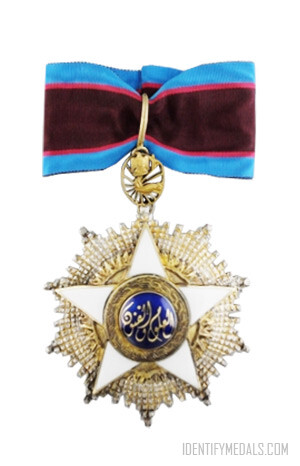
The Order of The Sciences and Arts (وسام العلوم والفنون) is an Egyptian presidential decoration created in 1972 for excellent services in science, art and knowledge.

The Order is an esteemed honor from Egypt and celebrates individuals who have made significant contributions to the fields of science and the arts. It was, in fact, established to recognize excellence and innovation in these domains, and has been bestowed upon a select few whose accomplishments have left a lasting impact on Egyptian culture and society.

Examples of recipients of the Order of Sciences and Arts include renowned scholars, scientists, artists, and cultural figures whose groundbreaking work has enriched Egypt’s intellectual and artistic landscape. From pioneering researchers and inventors to visionary artists and writers, each recipient has contributed to advancing knowledge, creativity, and cultural heritage in their respective fields.

The medal has three degrees:

  • First class – Grand Cordon
  • Second class
  • Third class

The Order of The Sciences and Arts Design

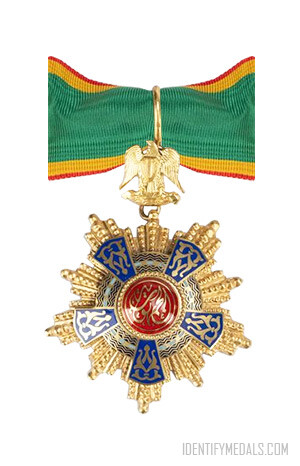
The Commander insignia bears an Arabic inscription on its obverse, which translates to the title of the Order, “Science and Arts.”

The medal is worn from a neck ribbon.

The Order of The Virtues

The Order of The Virtues is an Egyptian order of knighthood founded in 1915 and awarded to women for merit.

The Order of the Virtues (or Nishan al-Kamal, وسام الكمال) is an Egyptian order of knighthood awarded to women for merit. It was established in 1915 and brought back in 1953 under the Egyptian Republic.

Women who render valuable services to the nation or humanity may be eligible for the Order’s recognition. 

The order is composed of the following classes of merit:

  • Supreme Class
  • 1st Class
  • 2nd Class
  • 3rd Class

The highest distinction, the Supreme Class, is reserved for the world’s first ladies and may also be conferred upon the spouses of crown princes or vice-presidents. The First Class of the medal is designated for the spouses of prime ministers, ministers, and individuals in similar roles, while the Second Class is bestowed upon the spouses of ambassadors and other distinguished individuals.

The Order of The Virtues Design

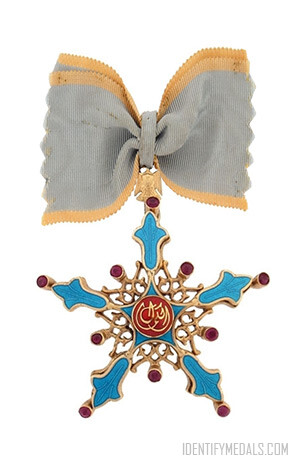
The Supreme Class of the medal is worn on the left side of the chest and features a medallion embellished with red sapphires, turquoise, and blue sapphires. This class is also draped with an 8-centimeter-wide sash crafted from gray silk and accented by two yellow golden welts. Completing this ensemble is a smaller medallion, also adorned with red sapphires, at the end of the sash.

The First Class of the medal mirrors the Supreme Class in design but omits the sapphires and turquoise. The Second and Third Classes of the medal are worn on the left side of the chest, too, but suspended by a knotted ribbon measuring 3.1 centimeters in width. These classes feature medallions akin to those of the First Class, albeit smaller in size.

The ribbon is light grey with yellow/gold edges.

The Order of Merit (Egypt)

The Order of Merit is an Egyptian order of merit established in 1953 on behalf of King Ahmad Fuad for meritorious service.

The Order of Merit (وسام الاستحقاق), established in 1953 by the Regent acting on behalf of King Ahmad Fuad, serves as a distinguished Egyptian honor recognizing meritorious service.

This prestigious order comprises multiple classes of merit, each representing varying degrees of distinction.

At its apex lies the First Class, known as the Grand Cordon, followed by the Second, Third, Fourth, and Fifth Classes. These classes encapsulate the diverse spectrum of contributions and achievements deserving of recognition within the Egyptian nation.

The Order of Merit Design

Crafted by Fahmy T. Bichay of Cairo, this medal is composed of silver, gilt, and enamels.

The neck badge, measuring 60mm in diameter, and the breast star, measuring 80mm, feature intricate details. At the heart of the medal lies a gold Arabic inscription, ensconced within a raised blue oval set amidst a backdrop of blue and white arabesque patterns forming a five-pointed star. Radiating outwards, the star is adorned with the Eagle of the Republic at its pinnacle, symbolizing strength and sovereignty.

On the reverse side is the maker’s name in Arabic and hallmarks.

The Order of The Republic (Egypt)

The Order of The Republic is an Egyptian order of knighthood established in 1953 to celebrate the rebirth of the Republic of Egypt.

The Order of the Republic (وسام الجمهورية) was stablished initially under law no. 528/1953, later replaced by law no. 12/1972. It now falls under the authority of the President. 

This prestigious Egyptian order is bestowed upon heads of ministries, as well as Egyptian and foreign individuals who have rendered invaluable services to Egypt.

The Order comprises five classes, each based on the recipient’s contributions and social standing:

  • First Class (adorned with the grand sash)
  • Second Class
  • Third Class
  • Fourth Class
  • Fifth Classes.

The Order of The Republic Design

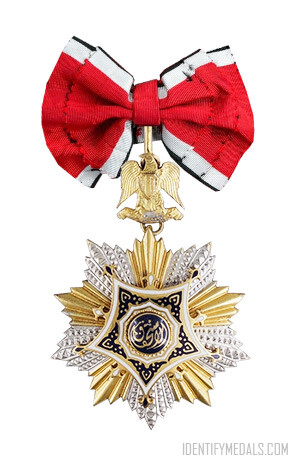
The insignia of the Egyptian Order of the Republic features a five-pointed star adorned with blue enamel and embellished with Islamic inscriptions.

At its core lies a circular gold emblem adorned with red enamel, within which the Arabic word “Republic” is inscribed. Gilded silver rays emanate from the star’s corners. Similarly, the order resembles the medallion but is of a smaller size.

The medal is fastened to the sash via a clip bearing Islamic inscriptions.

The Order of Honor Star

The Order of Honor Star is a military decoration of Egypt, awarded to officers, non-commissioned officers and soldiers of the Armed Forces.

The Order of the Honor Star (وسام نجمة الشرف) stands as one of Egypt’s premier military honors, bestowed upon officers, non-commissioned officers, and soldiers of the Egyptian Armed Forces in recognition of their extraordinary bravery and valor exhibited in direct combat against the enemy.

Recipients of this esteemed order are granted special privileges, including:

  • A monthly stipend of twenty thousand Egyptian pounds, which remains in effect for the duration of the recipient’s service. This stipend continues even if the recipient transitions to a civilian occupation or upon retirement.

  • Exemption from educational fees for their children across various levels of schooling in state-owned educational institutions. These beneficiaries are also exempted from age and total score requirements for admission.

The Order of Honor Star Design

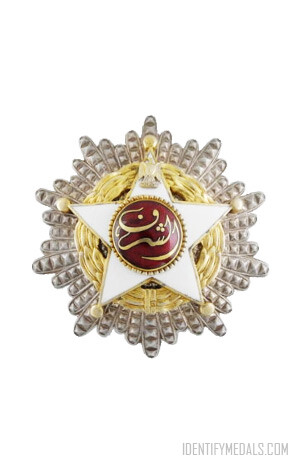
The medal is a silver star adorned with deep crimson enamel at its center. On the obverse, it showcases the Arabic inscription of the medal’s name, “Honor“.

The ribbon is blue with narrow red, white and black edge stripes. 

The Order of the Sinai Star

The Order of the Sinai Star is Egypt’s highest military honor, awarded for personal acts of extraordinary gallantry in direct combat.

The Order of the Sinai Star (وسام نجمة سيناء) is a prestigious military distinction in Egypt, comprising two levels of recognition. Serving as Egypt’s highest military accolade, it is conferred for individual acts of exceptional bravery and valor demonstrated in direct combat against the enemy.

Eligible recipients include officers, non-commissioned officers, and soldiers of the Egyptian Armed Forces. Since its establishment in 1972, a total of 68 officers and soldiers have been honored with this esteemed order. 

The Order of the Sinai Star has two classes: First Class and Second Class.

The Order of the Sinai Star Design

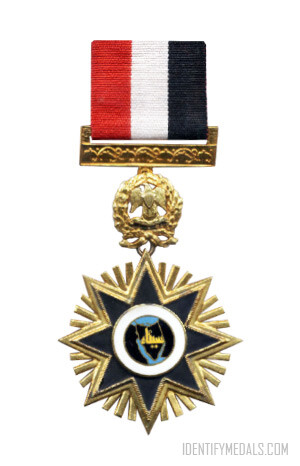
The insignia of the order consists of a ribbon and a medal. On the obverse, there is an inscription that reads سيناء‎‎ (Sinai Peninsula, or simply Sinai).

The ribbon design for both the first and second degrees features three horizontal stripes in red, white, and black. Additionally, first-degree recipients are distinguished by the inclusion of a golden eagle emblem affixed to the ribbon.

The Order of the Nile

The Order of the Nile was an Egyptian decoration established in 1915 and one of the principal orders of the Kingdom of Egypt.

Established in 1915, the Order of the Nile (Kiladat El Nil, قلادة النيل) stood as a prominent honor of the Kingdom of Egypt until the monarchy’s dissolution in 1953. Subsequently, it was reinstated as the highest state honor of the Republic of Egypt.

Established in 1915 by Sultan Hussein Kamel of Egypt, the Order was intended for individuals who had provided valuable service to the nation. Positioned below the Order of Ismail, it was frequently bestowed upon British officers and officials serving in Egypt, alongside esteemed Egyptian citizens.

The order consisted of five classes:

  • Grand Cordon: The badge was worn from a sash over the right shoulder, with a star displayed on the left chest.
  • Grand Officer: The badge was worn around the neck, accompanied by a smaller star on the left chest.
  • Commander: The badge was worn around the neck.
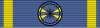
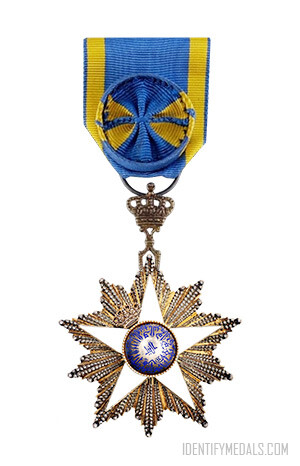
  • Officer: The badge was worn on the left chest, suspended from a ribbon adorned with a rosette.
  • Knight: The badge was worn on the left chest, suspended from a plain ribbon.
Following Egypt’s transition to a republic in 1953, the Order of the Nile underwent reconstitution to assume the role of Egypt’s premier state distinction. Presently, it comprises:

  • Collar: Reserved for the President of the Republic, and possibly conferred upon other Heads of State.
  • Grand Cordon: Conferred in recognition of exceptional contributions to the nation. In this category, the order’s insignia is worn from a sash, with the order’s star displayed on the left chest.

The Order of the Nile Design

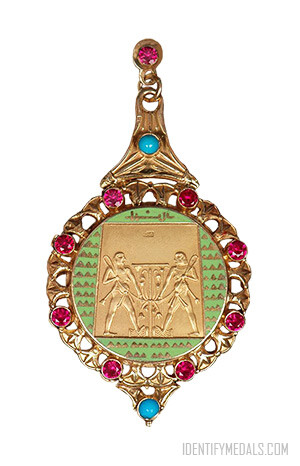
The Order of the Nile comprises a collar crafted from pure gold, adorned with three square gold units embellished with Pharaonic symbols.

Each unit symbolizes distinct concepts: the first unit embodies the idea of safeguarding the state from adversities, the second unit represents the prosperity and joy brought forth by the Nile, while the third unit signifies wealth and resilience. These units are intricately linked by a circular gold flower ornamented with turquoise and ruby gemstones.

Suspended from the collar is a hexagonal pendant adorned with Pharaonic-style floral motifs, accented with turquoise and ruby gems. At the center of the pendant, a prominent symbol depicting the Nile unites the representations of the North (portrayed by the Papyrus) and the South (embodied by the Lotus).

The Order of the Nile - Collar.
The Order of the Nile - Collar. Obverse.
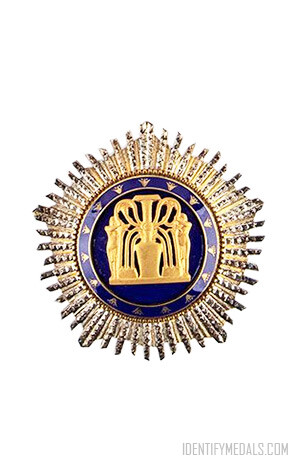
The Order of the Nile - Grand Cross. Obverse.
The Order of the Nile - Grand Cross Insignia. Obverse.

The Highest Military Decorations Awarded by the United States in Order

Discover the hierarchy of the highest military decorations in the United States, and learn about the bravery recognized by these honors.

In the United States, military decorations are awarded to recognize acts of bravery, heroism, and exceptional service by members of the armed forces. Among these honors, some stand out as the highest and most prestigious awards, symbolizing the utmost courage and sacrifice in service to the nation.

At the pinnacle of the hierarchy is the Medal of Honor, the highest military decoration awarded by the United States government. Established in 1861, it is presented to members of the armed forces who have demonstrated conspicuous gallantry and intrepidity at the risk of life above and beyond the call of duty.

Following closely behind the Medal of Honor are the Distinguished Service Cross (Army), Navy Cross (Navy and Marine Corps), and Air Force Cross (Air Force), awarded for extraordinary heroism in combat, recognizing acts of valor that fall just short of the criteria for the Medal of Honor.

USA's Highest Military Medals

Let’s see the complete ranking of highest American military medals in order.

#1: The Medal of Honor

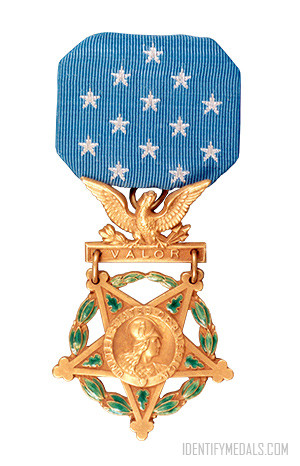
The Medal of Honor is the highest and most prestigious military decoration awarded by the United States government. It is presented to members of the armed forces who have demonstrated conspicuous gallantry and intrepidity at the risk of life above and beyond the call of duty.

The design of the Medal of Honor consists of a gold star surrounded by a wreath of laurel leaves, suspended from a blue ribbon with white stars. The star is adorned with a depiction of Lady Liberty wearing a helmet and holding a shield and sword, symbolizing courage and defense of freedom.

The reverse of the medal features an eagle with wings spread, clutching arrows and an olive branch, representing both the readiness for war and the desire for peace. The words “United States of America” are inscribed around the edge, along with the motto “Valor,” signifying the exceptional bravery of the recipient.

Since its establishment during the Civil War in 1861, the Medal of Honor has been awarded to thousands of individuals from all branches of the armed forces for their extraordinary acts of heroism and selflessness in combat. It is a symbol of the highest honor and recognition bestowed upon those who have gone above and beyond the call of duty to serve their country.

Three Medals of Honor

  1. Audie Murphy: A World War II hero who single-handedly held off an entire company of German soldiers while wounded, eventually leading a successful counterattack.

  2. Alvin York: A World War I soldier who captured 132 German soldiers and killed 28 machine gunners, earning him the nickname “Sergeant York” and the Medal of Honor.

  3. Desmond Doss: A conscientious objector who served as a medic in World War II and saved 75 men during the Battle of Okinawa, becoming the first conscientious objector to receive the Medal of Honor.

#2: Distinguished Service Cross,
Navy Cross, and Air Force Cross

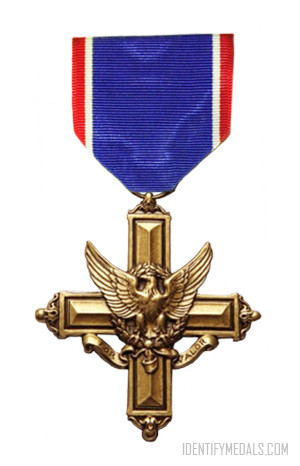
The Distinguished Service Cross (Army), Navy Cross (Navy and Marine Corps), and Air Force Cross are prestigious military decorations awarded by the United States government. These medals are presented to members of the armed forces who have displayed extraordinary heroism and valor in combat situations.

The Distinguished Service Cross was established in 1918 and is awarded by the Army to soldiers who have demonstrated exceptional bravery in action against an enemy of the United States. The medal features a bronze cross with a center medallion depicting an eagle grasping arrows and a shield, surrounded by a wreath.

The Navy Cross, established in 1919, is awarded by the Navy and Marine Corps to sailors and Marines who have exhibited gallantry and valor in combat. The medal features a cross pattée with a center medallion depicting an eagle, anchor, and shield, surrounded by a wreath.

The Air Force Cross, established in 1960, is awarded by the Air Force to airmen who have shown extraordinary courage and heroism in aerial combat or under conditions of significant risk. The medal features a cross pattée with a center medallion depicting an eagle with wings spread, surrounded by a wreath.

Three Distinguished Crosses

  1. Admiral William H. McRaven: A former Navy SEAL, received the Distinguished Navy Cross for his heroic leadership during a hostage rescue operation in Iraq.
  2. Lieutenant Colonel James H. “Jimmy” Doolittle: He was awarded the Navy Cross for his leadership and bravery as the commander of the Doolittle Raid, a daring air raid on Japan during World War II.
  3. Sergeant Dakota Meyer: He was awarded the Medal of Honor for his heroic actions during the Battle of Ganjgal in Afghanistan.

#3: Defense Distinguished Service Medal

The Defense Distinguished Service Medal is a prestigious military decoration conferred by the United States Department of Defense. It is awarded to members of the United States Armed Forces in recognition of their exceptionally distinguished performance of duty, which significantly contributes to the national security or defense of the United States.

Established on July 9, 1970, by President Richard Nixon through Executive Order 11545, the first medal was presented on the same day to General Earle Wheeler. General Wheeler, retiring from the US Army after serving as Chief of Staff of the United States Army and Chairman of the Joint Chiefs of Staff, received this honor in acknowledgment of his exemplary service.

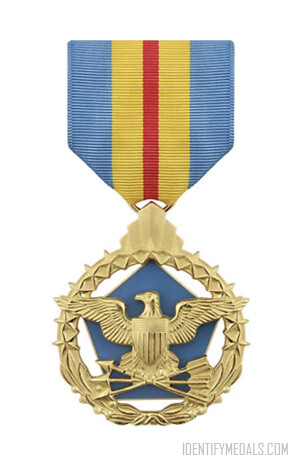
The medal displays a medium blue enameled pentagon with its point facing upwards. Overlaid on this pentagon is an American bald eagle with outspread wings facing left, clutching three crossed arrows in its talons, and bearing a shield of the United States on its breast. Encircling the pentagon and eagle is a gold segmented circle adorned with 13 five-pointed stars in the upper half and a wreath of laurel on the left and olive on the right in the lower half. On the reverse side, the inscription “For Distinguished Service” is prominently raised at the top, while within the pentagon, the inscription “FROM THE SECRETARY OF DEFENSE TO” is also raised. 

Three Defense Distinguished Service Medals

  1. General David Petraeus: He was awarded the Defense Distinguished Service Medal for his exceptional leadership and strategic contributions during his tenure as Commander of the Multi-National Force in Iraq.

  2. Admiral Mike Mullen: He received the Defense Distinguished Service Medal for his outstanding service as Chairman of the Joint Chiefs of Staff, where he provided crucial leadership during a challenging period for the U.S. military.

  3. Secretary of Defense Robert Gates: He was awarded the Defense Distinguished Service Medal in recognition of his distinguished leadership and tireless efforts in guiding the Department of Defense through complex and critical national security issues.

#4: Distinguished Service Medal, Navy Distinguished Service Medal,
and Air Force Distinguished Service Medal

The Distinguished Service Medal, Navy Distinguished Service Medal, and Air Force Distinguished Service Medal are prestigious military decorations awarded by the United States government to recognize exceptional meritorious service and leadership.

The Distinguished Service Medal, established in 1918, is awarded by the Army to members of the armed forces who have demonstrated outstanding performance and distinguished service in a duty of great responsibility. The medal features a bronze cross with a center medallion depicting an eagle surrounded by a wreath, suspended from a ribbon with alternating red and white stripes.

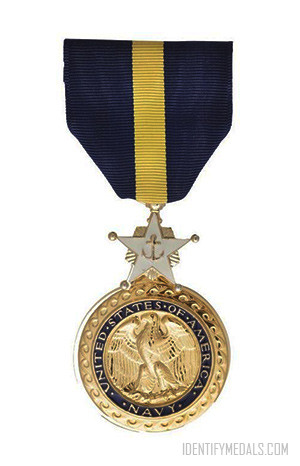
The Navy Distinguished Service Medal, established in 1919, is awarded by the Navy and Marine Corps to sailors and Marines who have displayed exceptionally meritorious service in a duty of great responsibility. The medal features a cross pattée with a center medallion depicting an eagle, anchor, and shield, suspended from a ribbon with blue edges and a white center stripe.

The Air Force Distinguished Service Medal, established in 1960, is awarded by the Air Force to airmen who have exhibited outstanding leadership and meritorious service in a position of great responsibility. The medal features a cross pattée with a center medallion depicting an eagle with wings spread, suspended from a ribbon with blue edges and a white center stripe.

Three Distinguished Service Medals

  1. Admiral Chester W. Nimitz: He was awarded the Navy Distinguished Service Medal for his exceptional leadership as Commander in Chief of the U.S. Pacific Fleet during World War II.

  2. General Curtis E. LeMay: He received the Air Force Distinguished Service Medal for his distinguished service as Chief of Staff of the United States Air Force, where he played a key role in shaping the modern Air Force.

  3. General Dwight D. Eisenhower: He was awarded the Army Distinguished Service Medal for his outstanding leadership as Supreme Commander of the Allied Expeditionary Force during World War

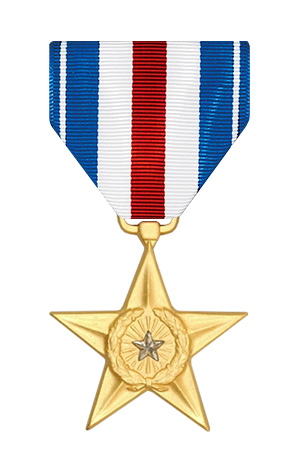
#5: Silver Star Medal

The Silver Star Medal is a prestigious military decoration awarded by the United States government to members of the armed forces who have displayed gallantry in action against an enemy of the United States, but not to the degree that would warrant the Medal of Honor or a service cross.

Established in 1918, the Silver Star Medal features a silver star surrounded by a wreath on its obverse side. The star is suspended from a ribbon with alternating stripes of red, white, and blue.

The reverse side of the medal bears the inscription “For Gallantry in Action” and provides space for the recipient’s name to be engraved.

Awarded for acts of bravery and valor in combat situations, the Silver Star Medal is a symbol of the courage and selflessness displayed by members of the armed forces in the face of adversity. It is one of the highest awards for valor that can be bestowed upon military personnel.

Three Silver Stars

  1. Captain John P. Cromwell: He was awarded the Silver Star for his outstanding bravery as the commanding officer of the USS Sculpin during World War II, where he continued to fight after his submarine was sunk, ultimately sacrificing his life.
  2. Lieutenant Colonel Robert L. Howard: He was awarded the Silver Star for his courageous leadership and actions during the Vietnam War, where he repeatedly exposed himself to enemy fire to rescue wounded soldiers and lead successful counterattacks against enemy positions.
  3. Sergeant First Class Paul Ray Smith: He posthumously received the Silver Star for his courageous actions during the Battle of Baghdad Airport in Iraq, where he sacrificed his life to save his fellow soldiers.

Do You Need Help Claiming a US Medal?

To claim a US military medal, follow these general steps. First, ensure that you meet the eligibility criteria for the specific medal you are seeking. Eligibility requirements can vary based on factors such as service branch, time of service, and specific actions or service accomplishments.

Then, collect any documentation that supports your eligibility for the medal. This may include service records, commendation letters, eyewitness statements, or other relevant documents. Contact the appropriate military branch or agency to request an application for the medal you are seeking. The specific process and forms required may vary depending on the medal and the circumstances of your service.

Lastly, fill out the application form completely and accurately, providing all requested information and supporting documentation and submit the completed form and supporting documents to the designated address or office. If your application is approved, you will be notified of the decision and provided with instructions for receiving the medal. 

The Defense Distinguished Service Medal

The Defense Distinguished Service Medal is a military decoration of the USA presented for exceptionally distinguished performance of duty.

The Defense Distinguished Service Medal is a prestigious military decoration conferred by the United States Department of Defense. It is awarded to members of the United States Armed Forces in recognition of their exceptionally distinguished performance of duty, which significantly contributes to the national security or defense of the United States.

Established on July 9, 1970, by President Richard Nixon through Executive Order 11545, the first medal was presented on the same day to General Earle Wheeler. General Wheeler, retiring from the US Army after serving as Chief of Staff of the United States Army and Chairman of the Joint Chiefs of Staff, received this honor in acknowledgment of his exemplary service.

The Defense Distinguished Service Medal Design

The medal displays a gold hue, with its obverse showcasing a medium blue enameled pentagon with its point facing upwards. Overlaid on this pentagon is an American bald eagle with outspread wings facing left, clutching three crossed arrows in its talons, and bearing a shield of the United States on its breast.

Encircling the pentagon and eagle is a gold segmented circle adorned with 13 five-pointed stars in the upper half and a wreath of laurel on the left and olive on the right in the lower half. Suspended from the top is a five graduated gold rays suspender.

On the reverse side, the inscription “For Distinguished Service” is prominently raised at the top, while within the pentagon, the inscription “FROM THE SECRETARY OF DEFENSE TO” is also raised. Additional awards of the Defense Distinguished Service Medal are represented by oak leaf clusters.

Find This Medal Online

Right Now on eBay 
Clicking a link to eBay may result in a referral commission being paid if a purchase is made.
Loading...