The River Niger Star Design
The medal is a six-sided star and bears the inscription “Federal Republic of Nigeria – Gallantry” in the obverse.
The ribbon is green with white edge stripes and a black-edged red central stripe.

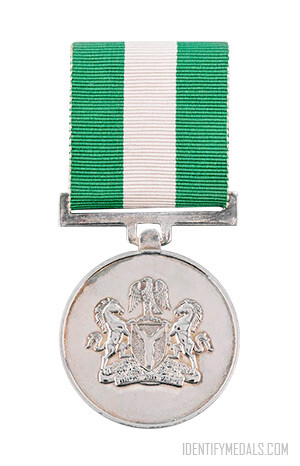
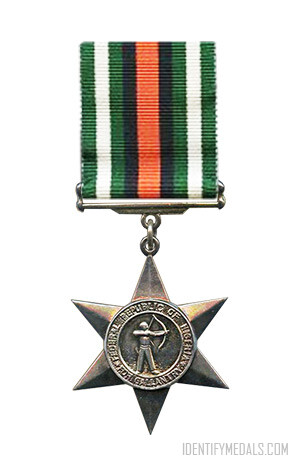
The River Benue Star is a Nigerian medal awarded to commissioned officers for distinguished acts of gallantry in the course of duty.
The medal is a six-sided star and bears the inscription “Federal Republic of Nigeria – Gallantry” in the obverse.
The ribbon is green with white edge stripes and a black-edged red central stripe.
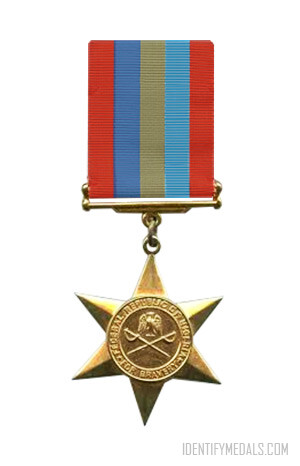
The River Niger Star is a Nigerian medal awarded to officers of the Nigerian Armed Forces in recognition of outstanding bravery.
The medal is a star. The front side bears an inscription, although limited information about this decoration is accessible.
The ribbon is red, dark blue, khaki, and light blue/green.
The Nigerian Independence Medal is a medal established in 1960 and awarded to those who aided in the transition toward independence.
The Nigerian Independence Medal was sanctioned by Queen Elizabeth II to mark Nigeria’s independence on October 1, 1960. It was designed to honor the individuals serving in the Royal Nigerian Military Forces, Royal Nigerian Navy, and the Nigeria Police Force on that historic day.
Additionally, it extended recognition to members of the British Army who were temporarily assigned to the Royal Nigerian Military Forces.
The Nigerian Independence Medal, crafted from cupro-nickel, bears the crowned effigy of Queen Elizabeth II on its circular surface. On the reverse side, it showcases the Nigerian Coat of Arms alongside the inscription “Nigeria Independence, 1st October 1960.”
Its ribbon is adorned with three vertical stripes in green, white, and green.
The Armed Forces Service Star is a Nigerian order awarded to members of the armed forces who have completed twelve years of service.
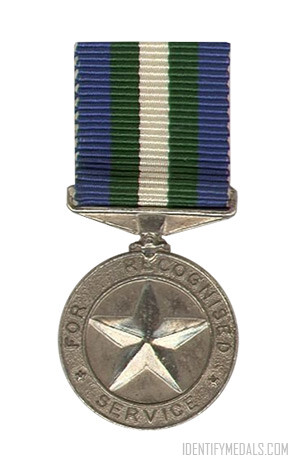
The Armed Forces Service Star is a Nigerian medal awarded to members of the armed forces for twelve years of service. During the time period, the person must also have maintained an exemplary record.
Recipients of this honor have demonstrated excellent conduct, professionalism, and loyalty throughout their military service.
The insignia is circular and features a star and a central disc with the inscription “For recognised Service“. The reverse is plain.
The ribbon is blue, green, and white.
The Order of the Federal Republic is a Nigerian order of merit and one of the highest honors bestowed by the country.
The Order of the Federal Republic (OFR), established in 1963 by the Federal Republic of Nigeria and stands as one of the country’s two prestigious orders of merit, with precedence over the Order of the Niger.
At the apex of this honor is the Grand Commander in the Order of the Federal Republic and the Grand Commander in the Order of the Niger, reserved for the President and Vice-President, respectively. Notably, the Presiding Judge in the Supreme Court and the Chairman of the Senate hold ex officio positions as Commanders in the Order of the Niger.
The order has four grades:
The insignia of the order varies considerably depending on the grade, but consists of a star and a central disc with the inscription “Order of the Federal Republic”.
The ribbon is green and white. The Military Division has an additional thin red line in the center.
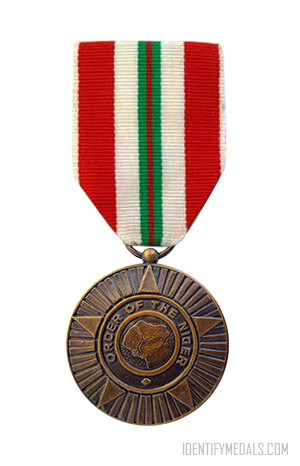
The Order of the Niger was one of the two orders of merit established by Nigeria after it became an independent country.
The Order of the Niger is an order of merit with a Civil Division and a Military Division established in 1960.
Nigeria achieved independence on October 1, 1960, and subsequently became the Federal Republic of Nigeria in 1963. Following this transition, two prestigious orders of merit were established: the Order of the Niger and the Order of the Federal Republic.
The highest distinctions, the Grand Commander in the Order of the Federal Republic and the Grand Commander in the Order of the Niger, are conferred upon the President and Vice-President respectively. Additionally, the presiding judge of the Supreme Court and the chairman of the Senate are automatically invested as Commanders in the Order of the Niger by virtue of their positions.
The grades of the Order of the Niger are:
The insignia of the order varies considerably depending on the grade, but consists of a star and a central disc with the inscription “Order of the Niger”.
The ribbon is red, white, and green. The Military Division has an additional thin red line in the middle.
The medals and honors awarded to individuals and groups who played pivotal roles in Africa’s struggle for independence from colonial rule.
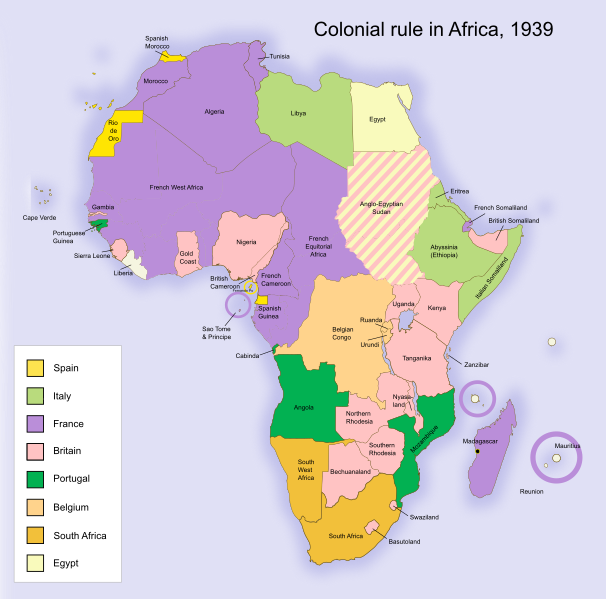
Africa’s struggle for independence from colonial rule marked a pivotal chapter in the continent’s history, characterized by resilience, unity, and the pursuit of freedom. Central to this transformative period were the individuals and groups who dedicated themselves to liberation movements, seeking to overthrow colonial regimes and establish self-governance.
In recognition of their sacrifices and contributions, medals and honors were bestowed upon these heroes of independence, serving as tangible symbols of courage, leadership, and perseverance. So, let’s take a look at some of these awards, their stories, and meaning.
During the colonial era in Africa, which spanned from the late 19th century to the mid-20th century, European powers such as Britain, France, Belgium, Portugal, and Germany imposed their rule over vast territories on the African continent. This period was characterized by the systematic exploitation of Africa’s natural resources, forced labor, cultural suppression, and the imposition of colonial administrations that favored European interests.
The impact of colonialism on Africa was profound and far-reaching. Indigenous populations were subjected to harsh treatment, including forced displacement, enslavement, and violence. Economic systems were structured to benefit colonial powers, too, leading to the extraction of wealth from Africa to European countries.
In response to these injustices, liberation movements began to emerge across Africa. These movements were fueled by a desire for self-determination, freedom from foreign domination, and the restoration of African sovereignty.
The medals awarded during Africa’s struggle for independence reflected the diverse nature of liberation movements and the individuals involved. Criteria for receiving these honors often included acts of bravery, leadership, and dedication to the cause. Medals were designed to embody the spirit of liberation, featuring motifs such as freedom symbols, national emblems, and cultural icons.
Among the recipients of these medals were iconic leaders such as Nelson Mandela, Julius Nyerere, and Kwame Nkrumah, whose visionary leadership and unwavering commitment to liberation inspired generations. Additionally, grassroots activists, freedom fighters, and ordinary citizens were recognized for their contributions to the struggle, underscoring the collective effort that drove Africa towards independence.
Here are some example of such medals (in his case, all from South Africa):

The Order of Mendi for Bravery is a South African order created to award citizens who have performed acts of bravery to save lives or property.
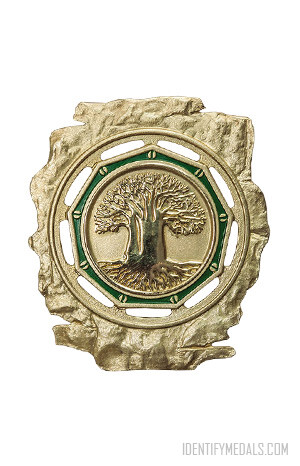
The Order of The Baobab is a South African order created to award citizens for services to democracy, human rights, arts, and sciences.
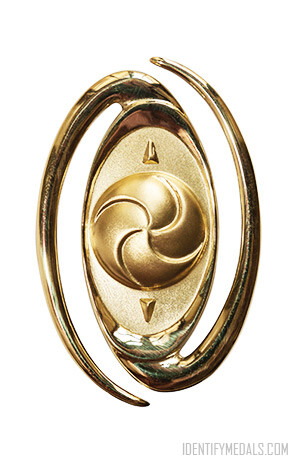
The Order of the Companions of O.R. Tambo is a South African order created to award heads of state and senior diplomats for friendship to SA.
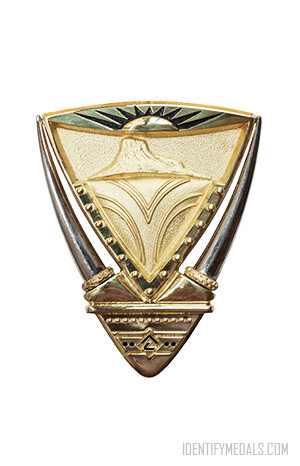
The Order of Luthuli is a South African order created to award citizens or contributions to democracy, human rights, and justice.
Other medals established to celebrate the independence of African countries include:

The Order of the Niger was one of the two orders of merit established by Nigeria after it became an independent country.
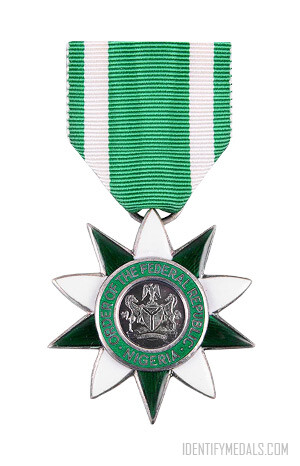
The Order of the Federal Republic is a Nigerian order of merit and one of the highest honors bestowed by the country.
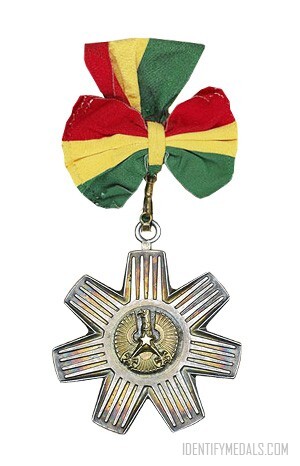
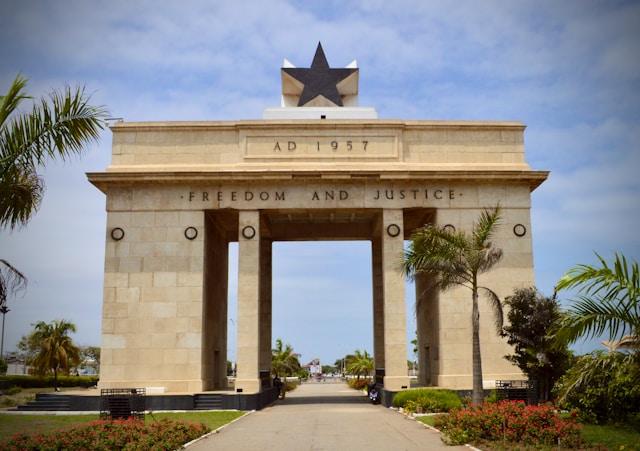
The Order of the Star of Ghana is a Ghanaian award given to individuals who have helped the cause of the country.
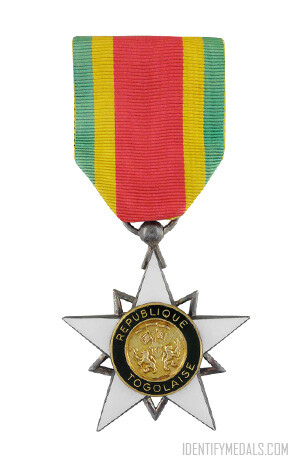
The Order of Mono is the highest order of chivalry in Togo. It is conferred upon Togolese civilians and military personnel.
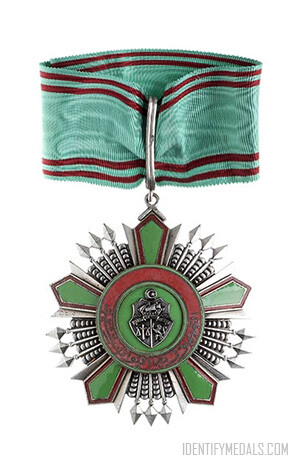
The Order of the Republic of Tunisia is a decoration awarded to those who have contributed to the establishment of the Republic.
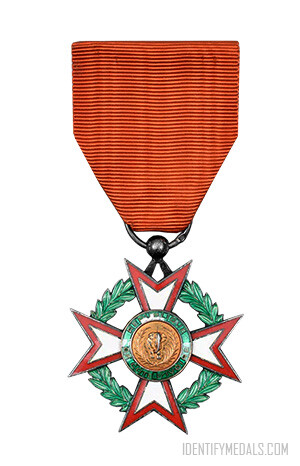
The National Order of the Republic of Ivory Coast is the country’s highest state honor and awarded for high distinction.
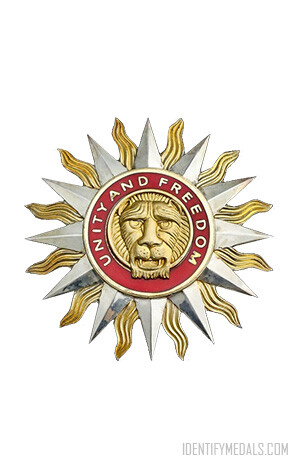
The Order of the Lion of Malawi is the highest state order and the second-highest honor bestowed by the government of Malawi.
The Order of Mendi for Bravery is a South African order created to award citizens who have performed acts of bravery to save lives or property.
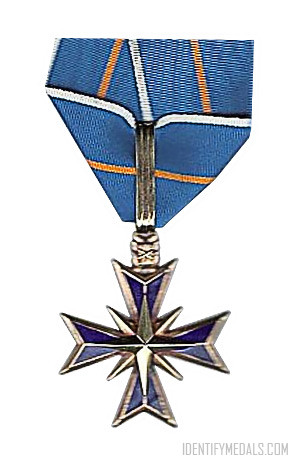
The Order of Mendi for Bravery is a civilian honor in South Africa bestowed upon individuals who have displayed acts of bravery in endeavors to rescue lives or property. Authorized by the President of South Africa, this recognition is conferred upon South African citizens for their courageous actions, regardless of the location of the incident. Established on November 30, 2003, initially known as the Mendi Decoration for Bravery, it was later designated as an order on October 22, 2004.
The order pays homage to the SS Mendi, a troopship tragically sunk in 1917 following a collision, resulting in the loss of over 600 black South African troops. Despite being a civilian distinction, it has been presented to military units, including those involved in the rescue operations during the 1991 MTS Oceanos disaster and the 2000 Mozambican floods.
The Order of Mendi has three classes:
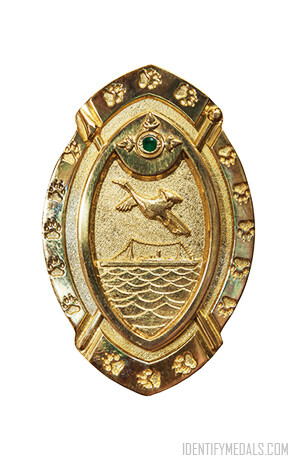
The insignia of the order is designed in the shape of a traditional African shield, oval in form. Its front side features an image of the SS Mendi, accompanied by a blue crane flying overhead. Above this depiction, a green emerald is sealed, encircled by depictions of the bitter aloe on three sides. Crossed assegai and knobkierrie adorn the background of the shield, while lion pawprints decorate the border.
The reverse side showcases the Coat of Arms of South Africa. Alongside the neck badge, the award includes a miniature medallion and a lapel rosette.

The Order of The Baobab is a South African order created to award citizens for services to democracy, human rights, arts, and sciences.

The Order of Mendi for Bravery is a South African order created to award citizens who have performed acts of bravery to save lives or property.

The Order of the Star of South Africa is a South African National Order instituted by the Republic of South Africa and discontinued in 2002.
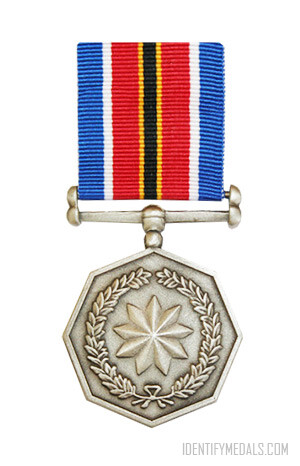
The Tshumelo Ikatelaho General Service Medal is granted to all ranks who have taken part in military campaigns or operations with the UDF.
The Order of the Companions of O.R. Tambo is a South African order created to award heads of state and senior diplomats for friendship to SA.
The Order of the Companions of O. R. Tambo (SCOT/GCOT/COT) is a distinguished South African accolade. Established on December 6, 2002, it is conferred by the President of South Africa upon foreign citizens who have advanced South African interests and aspirations through cooperation, solidarity, and support.
Named in honor of the late Oliver Tambo, who served as the president-in-exile of the African National Congress for numerous years, the order pays tribute to his enduring legacy and commitment to the advancement of South Africa’s ideals.
There are currently three classes of appointment. In descending order of precedence, they are:
The insignia of the order is oval-shaped and features a symbol reminiscent of the Taijitu, flanked by two arrowheads and framed by two mole snakes. This symbolizes the convergence of diverse spiritual energies, while the snakes represent unity and assistance. On the reverse side, the South African coat of arms is prominently displayed.
The ribbon, worn around the neck, is white and adorned with recurring grey symbols down the center. All three classes of the order are worn in this manner.
In addition to the badge, recipients are presented with a carved wooden walking stick. The walking stick is embellished with a serpent winding around the shaft and a spoon-shaped head displaying the order’s emblem and the national coat of arms. This walking stick serves as a symbol of support, solidarity, and a commitment to stand by the recipient in return.

The Order of The Baobab is a South African order created to award citizens for services to democracy, human rights, arts, and sciences.
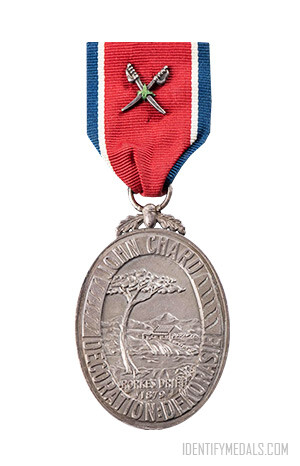
The John Chard Decoration was a military accolade for long service, established by the Union of South Africa on April 6, 1952.
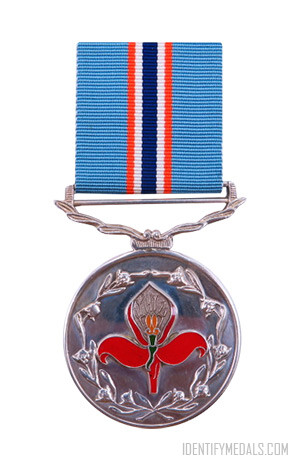
The South African Pro Merito Medal was conferred upon the South African Defence Force in recognition of exceptional devotion to duty.
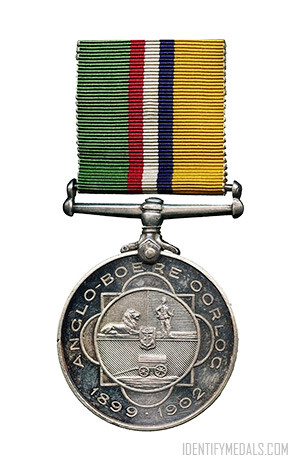
The Medalje voor de Anglo-Boere Oorlog is a retrospective South African military campaign medal instituted on 21 December 1920.
The Order of Mapungubwe is a South African order created to award citizens who have served the interests of the country internationally.
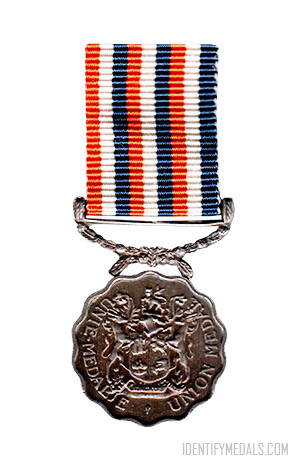
The Order of the Mapungubwe is a prestigious South African civilian accolade order established in 2002. It honors South African citizens whose accomplishments resonate on an international scale and contribute to the advancement of South Africa’s interests.
Regarded as South Africa’s most esteemed honor, the order derives its name from the ancient civilization of Mapungubwe, situated in present-day South Africa. Established on December 6, 2002, its inaugural recipient in the highest class was the esteemed former president, Nelson Mandela.
The order (which originally had three classes) was enlarged to four in 2004. These are:
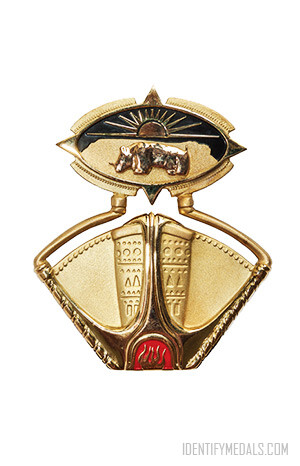
The insignia of the order consists of a horizontal oval positioned above an inverted trapezium. Within the oval frame, a golden rhinoceros is depicted against the backdrop of the sun rising above Mapungubwe Hill. The convex upper edge of the trapezium features a decorative beadwork pattern, while the sides are adorned with sceptres.
At the center is an intricate crucible from which molten gold cascades down into a red furnace. On the reverse side, the South African coat of arms is prominently featured.
The ribbon, worn around the neck, is crafted in gold and embellished with a line of cream-colored bead-like dots along each edge. In the center, recurring cream-colored rhinoceros silhouettes add a distinctive touch to the design. All four classes of the order are worn in this manner

The South African Union Medal honored Permanent Force members who exhibited eighteen years of exemplary service and conduct.
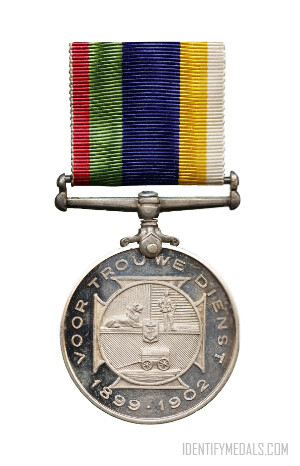
The Dekoratie voor Trouwe Dienst is a South African military decoration established in 1920 for Boer officers of the Second Boer War.

The Order of Mendi for Bravery is a South African order created to award citizens who have performed acts of bravery to save lives or property.
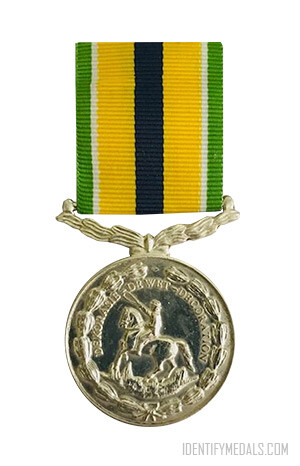
The De Wet Decoration was established by the Republic of South Africa in 1965 as a military long service award.