The Order of Luthuli

The Order of Luthuli is a South African order created to award citizens or contributions to democracy, human rights, and justice.

The Order of Luthuli is a South African order established in 2003 and conferred by the President of South Africa in recognition of outstanding contributions to the fight for democracy, human rights, nation-building, justice, peace, and conflict resolution.

Named after Chief Albert Luthuli, a prominent leader of the African National Congress and South Africa’s first Nobel Peace Prize laureate, the order pays homage to his legacy and commitment to advancing social justice and equality.

The Order of Luthuli has three classes:

  • Gold (OLG), for exceptional contributions,
  • Silver (OLS), for excellent contributions,
  • Bronze (OLB), for outstanding contribution.

The Order of Luthuli Design

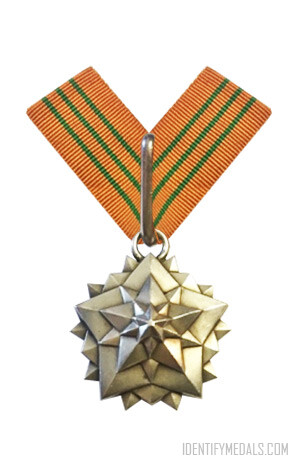
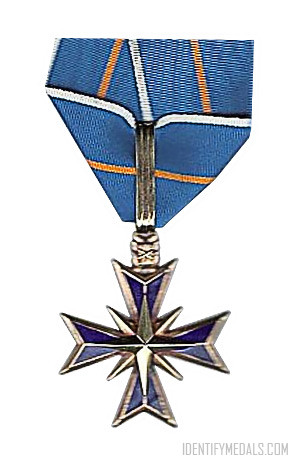
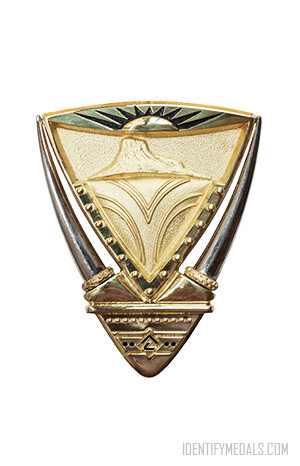
The emblem of the order features an equilateral triangle, with a flintstone positioned above a clay pot. The flintstone symbolizes the rising sun over Isandhlwana and the national flag, flanked by two animal horns emerging from the clay pot, bearing the initials AL. Isandhlwana represents peace and tranquility, while the leopard-skin bands around the bases of the horns represent Chief Luthuli’s headdress. On the reverse side, the South African coat of arms is prominently displayed.

The ribbon, worn around the neck, is adorned with a golden hue and is embellished with cream-colored AL monograms along each edge. In the center, recurring cream-colored outlines of the flintstone, depicting the national flag, add a distinctive element to the design. All three classes of the order are worn in this manner.

More South African Orders

The Order of Ikhamanga

The Order of Ikhamanga is a South African order created to award citizens who have excelled in the arts, literature, music, sport, and more.

The Order of the Ikhamanga (abbreviated as OIG/OIS/OIB) is a South African order established in 2003 to recognize and honor outstanding achievements in the fields of arts, culture, literature, music, journalism, and sport.

Named after the Xhosa word for the strelitzia flower, a symbol of endurance and resilience, the order celebrates individuals who have made significant contributions to the enrichment and advancement of South African society through their talent, creativity, and dedication.

The order has three classes:

  • Gold (OIG), for exceptional achievement,
  • Silver (OIS), for excellent achievement,
  • Bronze (OIB), for outstanding achievement.

The Order of Ikhamanga Design

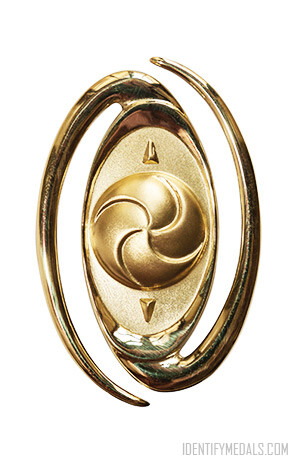
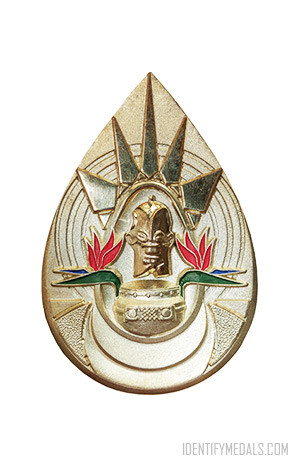
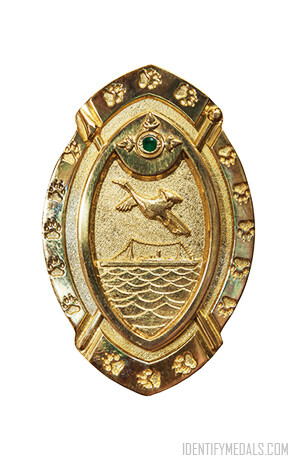
The oval-shaped emblem features various symbolic elements, including a rising sun, a “Lydenburg head”, two strelitzia flowers, a drum, three circles, and two roadways. Each of these elements carries significance: the head symbolizes the arts, the sun represents glory, the circles signify sport, and the roads symbolize the journey towards excellence. The reverse side of the badge displays the South African coat of arms.

The ribbon, worn around the neck, is adorned with a golden hue and is embellished with four cream-colored lines along each edge. In the center, a recurring pattern of stylized dancing figures adds a dynamic touch to the design.

Designed by Charles Peter Gareth Smart, a graphic designer based in Pretoria, South Africa, the Order of Ikhamanga embodies the nation’s cultural richness and celebrates excellence across various fields of endeavor.

More South African Orders

The Order of The Baobab

The Order of The Baobab is a South African order created to award citizens for services to democracy, human rights, arts, and sciences.

The Order of the Baobab (abbreviated as SCOB/GCOB/COB) is a South African order established in 2002 to honor and recognize outstanding contributions made by South African citizens in various fields, including democracy, human rights, arts and sciences, and community service.

The order is named after the baobab tree, an iconic symbol of resilience, strength, and longevity in African culture. It embodies the values of endurance and steadfastness, reflecting the qualities sought in recipients of the award.

The Order of the Baobab Grades

The Order of the Baobab is divided into three grades to distinguish the level of achievement and impact of the recipients’ contributions:

  1. Gold (GCOB): This highest grade is awarded to individuals who have made exceptional and distinguished contributions to the advancement of democracy, the promotion of human rights, the enrichment of arts and sciences, or the improvement of communities. Recipients of the Gold Order of the Baobab are recognized as trailblazers and leaders in their respective fields, whose efforts have had a profound and lasting impact on South African society.

  2. Silver (SCOB): The Silver grade is bestowed upon individuals who have demonstrated significant achievements and contributions in their chosen areas of endeavor. These recipients have made notable contributions to the advancement of democracy, the promotion of human rights, the development of arts and sciences, or the enhancement of community welfare. Their efforts have made a meaningful difference and have inspired others to follow in their footsteps.

  3. Bronze (COB): The Bronze grade is awarded to individuals who have shown dedication, commitment, and service in their respective fields. While their contributions may be more modest in scope compared to Gold and Silver recipients, Bronze Order of the Baobab recipients are valued for their dedication to the principles of democracy, human rights, arts and sciences, and community service. Their efforts contribute to the overall betterment of South African society and serve as examples of citizenship and civic responsibility.

The Order of the Baobab Design

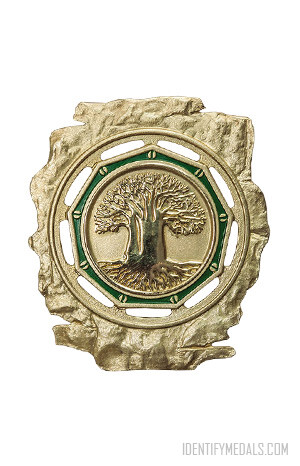
The inspiration behind this Order stems from the Baobab, an African tree renowned for its significance and symbolism in indigenous cultures. The name “Baobab” is steeped in the legends and mysteries of Africa, often described for its vitality, magical properties, and deep-rooted symbolism. Its remarkable endurance and resilience as it ages reflect the enduring and exceptional service honored by this Order, which contributes to the ongoing growth and prosperity of South Africa.

The Baobab holds a pivotal role in African agroforestry systems, offering a multitude of resources essential for daily life. Its bark provides materials for cloth and rope, while its fruits serve as food and fuel, among other valuable products. The tree’s iconic, expansive root system supports its imposing stature, making it a focal point for important gatherings and a symbol of protection in traditional African societies.

The components are:

  • The Baobab (Adansonia digitata), renowned for its extensive roots and remarkable longevity, serves as a central motif in the design. It not only offers shade and serves as a gathering place but also plays a vital role in supporting the communities where it grows.
  • The nonagon shape, representing a nine-sided polygon, symbolizes the diverse range of potential contributions and services toward building a prosperous and advancing nation. Additionally, it reflects the nine provinces of our country.
  • The exterior organic holding shape features a textured finish reminiscent of Baobab bark, often utilized in the crafting of mats and hats, embodying the rich cultural heritage and practical utility found within South African traditions.

More South African Orders

The Order of Montesa

The Order of Montesa is a Christian military order linked to the old Crown of Aragon (today Spain) and named after the order’s headquarters.

The Order of Montesa (or Orden de Montesa in Spanish) is a Christian military order linked to the old Crown of Aragon and named after the castle of the same name, which was the order’s headquarters. 

The Order of Montesa played a significant role in the ongoing struggle against Muslim forces in the Iberian Peninsula. Its knights participated in military campaigns, fortifications, and border defense, contributing to the Christian reconquest of Spain.

Founded in the 14th century, the order emerged as a merger between two prominent military orders: the Knights Templar and the Order of Saint George of Alfama.

The Order of Montesa traces its origins to the aftermath of the suppression of the Knights Templar in the early 14th century. Seeking to preserve the legacy and assets of the Templars, King James II of Aragon facilitated the transfer of their estates and holdings to the newly formed Order of Montesa in 1317. This merger allowed for the continuation of the Templar tradition within the framework of a new order.

With its headquarters established in the castle of Montesa, located in the province of Valencia, the order quickly garnered royal patronage and papal approval. It adopted the rule of the Knights Templar and pledged itself to the defense of the Kingdom of Valencia and the Christian faith.

The Order of Montesa Design

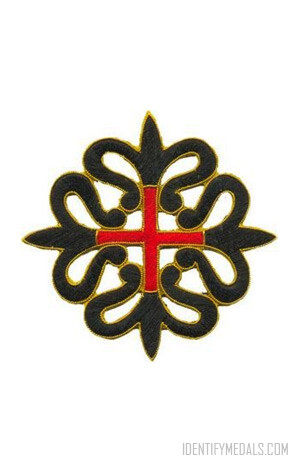
At the heart of the insignia is the distinctive cross of Montesa, which serves as the primary emblem of the order. This cross typically features arms of equal length, often adorned with ornate details and embellishments

The Spanish Orders of Knighthood

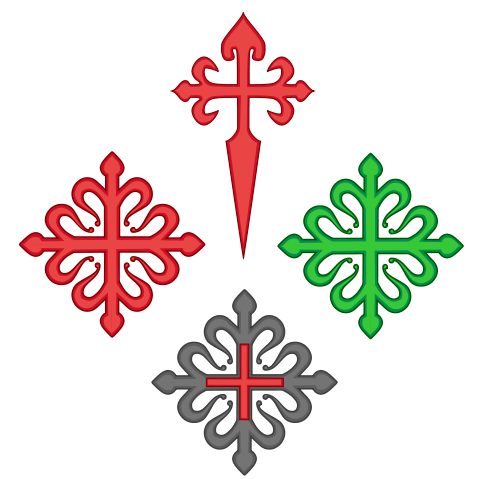
Collectively, the four Spanish military orders (the Order of Santiago, the Order of Calatrava, the Order of Montesa, and the Order of Alcántara) exemplified the spirit of medieval chivalry and Christian knighthood, dedicating themselves to the defense of the faith and the protection of Christian lands.

Their legacies endure as enduring symbols of Spain’s rich heritage and the enduring ideals of honor, valor, and service.

The Spanish military orders.
Badges of the Order of Santiago (top), the Order of Calatrava (left), the Order of Montesa (bottom) and the Order of Alcántara (right).

The Order of Alcántara

The Order of Alcántara or Knights of St. Julian was a military order founded in 1166 and confirmed by Pope Alexander III in 1177.

The Order of Alcántara (or Orden de Alcántara in Spanish), sometimes referred to as the Knights of St. Julian, was a military order of León (today Spain) and was founded in 1166. The Order was then confirmed in 1177 by Pope Alexander III.

Founded in the 12th century during the Reconquista, the order played a pivotal role in the Christian reconquest of the Iberian Peninsula from Muslim rule. 

The origins of this order are shrouded in mystery, yet according to a somewhat dubious tradition, St. Julian de Pereiro, a hermit from the region of Salamanca, played a pivotal role. It is said that upon his counsel, several knights constructed a fortress on the banks of the Tagus River to resist Muslim incursions. References to these knights appear as early as 1176, in a charter issued by King Fernando of León, although their military nature is not explicitly mentioned. It wasn’t until 1177, with the issuance of a papal bull by Pope Alexander III, that they were officially recognized as a military order.

The Order of Alcántara Design

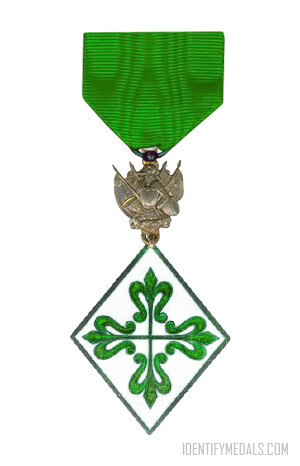
The insignia of the Order of Alcántara is a symbol of the order’s noble ideals and martial heritage. At the heart of the obverse is the distinctive cross of Alcántara, characterized by its unique shape and design. This cross features arms that widen towards the ends, often adorned with intricate details and embellishments. 

Surrounding the cross of Alcántara, the insignia may include additional elements that further enhance its visual appeal and symbolic significance, or inscriptions or mottoes that reflect the order’s ethos and mission.

The Spanish Orders of Knighthood

Collectively, the four Spanish military orders (the Order of Santiago, the Order of Calatrava, the Order of Montesa, and the Order of Alcántara) exemplified the spirit of medieval chivalry and Christian knighthood, dedicating themselves to the defense of the faith and the protection of Christian lands.

Their legacies endure as enduring symbols of Spain’s rich heritage and the enduring ideals of honor, valor, and service.

The Spanish military orders.
Badges of the Order of Santiago (top), the Order of Calatrava (left), the Order of Montesa (bottom) and the Order of Alcántara (right).

The Order of Santiago

The Order of Santiago was a religious and military order founded in the 12th century and one of the four Spanish military orders.

The Order of Santiago (or Orden de Santiago in Spanish) is one of the most renowned and prestigious chivalric orders in Spanish history.

Founded in the 12th century during the Reconquista, its origins are deeply intertwined with the Christian struggle to reclaim the Iberian Peninsula from Moorish rule.

Initially established as a religious and military brotherhood to protect the pilgrims journeying to the shrine of Saint James the Apostle in Santiago de Compostela, the order quickly evolved into a formidable military force. Comprised of noble knights known as Santiago Cavaliers, its members were bound by vows of chivalry, including the defense of the Catholic faith, the protection of pilgrims, and the expulsion of Moors from Christian territories.

Despite experiencing periods of decline and resurgence over the centuries, the Order of Santiago has maintained its status as a symbol of chivalry and honor in Spanish history. Today, it remains active as a dynastic order, preserving its traditions and heritage while continuing to uphold the values of courage, loyalty, and service to the Catholic Church and the Spanish nation.

The Order of Santiago Design

The insignia design of the Military Order of Santiago is rich in symbolism and tradition.

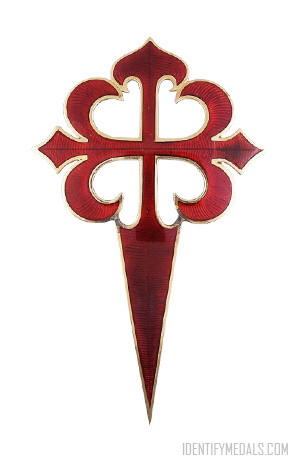
Central to the insignia is the distinctive red cross pattée, which serves as the primary emblem of the order. This cross, often depicted in a vibrant red hue, is characterized by its equal-length arms that taper slightly towards the ends. 

Surrounding the cross pattée, and depending on the insignia, you can often find additional elements of heraldic imagery, such as heraldic lions, castles, or fleur-de-lis, which symbolize various aspects of the order’s history, lineage, and mission.

The Spanish Orders of Knighthood

Collectively, the four Spanish military orders (the Order of Santiago, the Order of Calatrava, the Order of Montesa, and the Order of Alcántara) exemplified the spirit of medieval chivalry and Christian knighthood, dedicating themselves to the defense of the faith and the protection of Christian lands.

Their legacies endure as enduring symbols of Spain’s rich heritage and the enduring ideals of honor, valor, and service.

The Spanish military orders.
Badges of the Order of Santiago (top), the Order of Calatrava (left), the Order of Montesa (bottom) and the Order of Alcántara (right).

The Order of Calatrava

The Order of Calatrava was the first military order founded in Castile and one of the first four Spanish military orders.

The Order of Calatrava, known as Orden de Calatrava in Spanish and Ordem de Calatrava in Portuguese, stood as one of the four Spanish military orders and notably served as the premier military order established in Castile, albeit being the second to gain papal endorsement. Pope Alexander III officially sanctioned the Order of Calatrava through a papal bull issued on September 26, 1164. While much of the order’s political and military influence waned by the late 15th century, its assets were not fully dissolved until 1838.

The Order of Calatrava holds a distinguished place in the history of medieval Spain as one of the foremost military orders. Founded in the 12th century, it played a crucial role in the Reconquista, the centuries-long effort by Christian kingdoms to retake the Iberian Peninsula from Muslim rule.

Initially established as a military brotherhood to protect the Calatrava fortress in the Kingdom of Castile, the order quickly expanded its mission to defend Christian territories and combat Moorish incursions. Its members, known as knights or cavaliers, took vows of poverty, chastity, and obedience, dedicating themselves to the defense of Christendom.

The Order of Calatrava gained papal approval in 1164, solidifying its status as an official institution of the Catholic Church. With the backing of both secular and ecclesiastical authorities, it grew in power and influence, attracting nobles and warriors from across Europe to join its ranks.

In the present day, the fundamental objective of the Spanish Orders remains unchanged from their inception: the protection and promotion of the Catholic faith. While the use of the sword has ceased, their commitment to doctrine, exemplary conduct, spiritual growth, and religious observance persists, alongside their engagement in cultural and social endeavors.

The Order of Calatrava Design

In recognition of their service and valor, members of the Order of Calatrava were awarded various honors and distinctions, including medals and insignia.

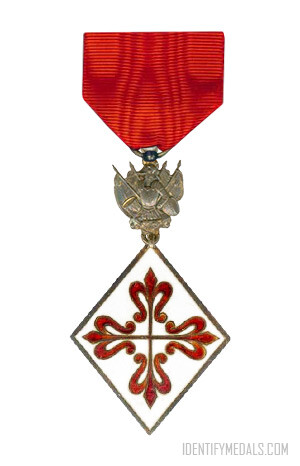
These medals often featured the emblem of the order, which typically included symbols such as a cross, sword, and shield, representing the order’s martial and religious mission.

The Spanish Orders of Knighthood

Collectively, the four Spanish military orders (the Order of Santiago, the Order of Calatrava, the Order of Montesa, and the Order of Alcántara) exemplified the spirit of medieval chivalry and Christian knighthood, dedicating themselves to the defense of the faith and the protection of Christian lands.

Their legacies endure as enduring symbols of Spain’s rich heritage and the enduring ideals of honor, valor, and service.

The Spanish military orders.
Badges of the Order of Santiago (top), the Order of Calatrava (left), the Order of Montesa (bottom) and the Order of Alcántara (right).

The Lorient Shield (Projected)

The Lorient Shield (Lorientschild) was a projected WW2 Third Reich decoration planned for participants in the Siege of Lorient (1944–45).

The Lorient Shield (or Lorientschild in German) was a projected World War II German military decoration to be awarded to German forces that took part in the Siege of Lorient, 1944–45.

Although some Lirient Shields were awarded, they were never officially instituted. So, they are very hard to authenticate and there is a lot of discussion online about which ones might be real. 

The Lorient Shield Design

The original Lorient Shields were made crudely in a besieged town. They are believed to be made of stamped brass sheets and even copper, old fish cans, and the bodywork of cars abandoned in the siege. 

More Nazi Germany Shields (Ärmelschilde)

These campaign shields were awarded to members of the Wehrmacht (the unified armed forces of Nazi Germany from 1935 to 1945). They were given for participation in specific battles or campaigns and worn on the left upper arm of the uniform jacket.

The Narvik Shield - German WW2 Medals, Badges and Awards

The Narvik Shield

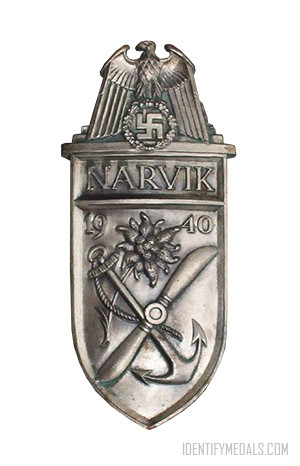
The Narvik Shield (Narvikschild) is a WW2 German military decoration awarded to German forces that took part in the battles of Narvik.

Read More »
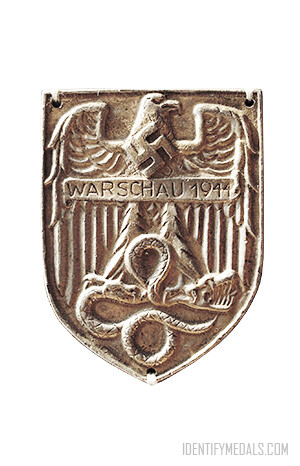
German WW2 Nazi Awards: The Warsaw Shield

The Warsaw Shield

The Warsaw Shield (Ärmelschild Warschau) is a German military decoration for those who took part in the suppression of the Warsaw uprising.

Read More »

The Dunkirk Shield (Projected)

The Dunkirk Shield (Dünkirchenschild) was a projected WW2 Third Reich decoration planned for participants in the Siege of Dunkirk (1944–45).

The Dunkirk Shield (or Dünkirchenschild in German) was a projected World War II German military decoration to be awarded to German forces that took part in the Siege of Dunkirk (1944–45).

In a directive dated September 4, 1944, Adolf Hitler had Dunkirk declared a fortress (this included the port itself and the city of Dunkirk). As part of the defense of the Dunkirk Fortress, which began with the Allied invasion of Normandy, the idea soon arose under the leadership of Vice Admiral Friedrich Frisius to create a kind of memorial shield for the trapped 12,000 to 15,000 German defenders.

Dunkirk Fortress finally surrendered to French, British and Czech units on May 9, 1945. During the siege, Frisius had the so-called Dunkirk Shield made from makeshift metal supplies and distributed to the soldiers of the army, navy and probably also an unknown number of Wehrmacht followers in order to strengthen their sense of community. The “award” of the shield was confirmed by its entry in the pay book.

The Dunkirk Shield Design

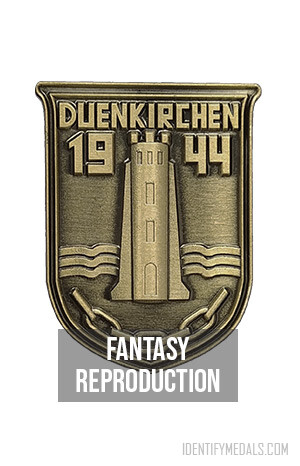
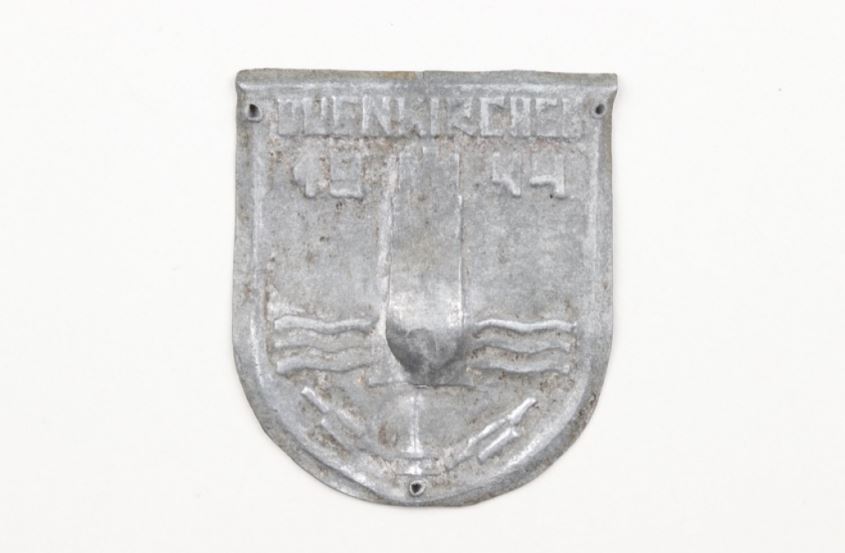
The Dunkirk Shield was made from the remaining siege metal supplies (sheet iron and non-ferrous metal). Its width is approximately 34 mm, and its height is 41 mm. The shape corresponds to the shape of a shield, with the Dunkirk lighthouse depicted in the middle. 

The number 19 is stamped on the left, and the year 44 is stamped on the right (1944). You can read DUENKIRCHEN in capital letters about the lighthouse0. On the lower side of the shield, there is an anchor chain and relief from raised sea waves.

An original Dunkirk Shield auctioned by Ratisbon's.
An original Dunkirk Shield auctioned by Ratisbon's in 2017.

More Nazi Germany Shields (Ärmelschilde)

These campaign shields were awarded to members of the Wehrmacht (the unified armed forces of Nazi Germany from 1935 to 1945). They were given for participation in specific battles or campaigns and worn on the left upper arm of the uniform jacket.

German WW2 Nazi Awards: The Warsaw Shield

The Warsaw Shield

The Warsaw Shield (Ärmelschild Warschau) is a German military decoration for those who took part in the suppression of the Warsaw uprising.

Read More »

The Budapest Shield (Projected)

The Budapest Shield (Budapestschild) was a projected WW2 Third Reich decoration planned for participants in the Siege of Budapest.

The Budapest Shield (or Budapestschild in German) was a projected World War II German military decoration to be awarded to German forces that took part in the Siege of Budapest from December 1944 to February 1945.

The Budapest Shield was apparently approved by Adolf Hitler but abandoned with the loss of the city (as there was seemingly no hope of a reqconquest). 

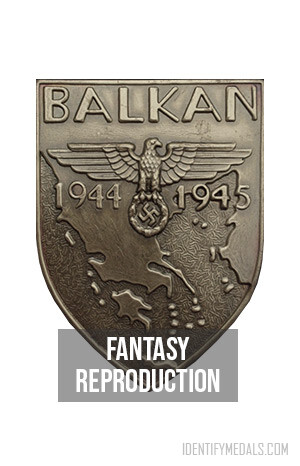
The Balkans Shield Design

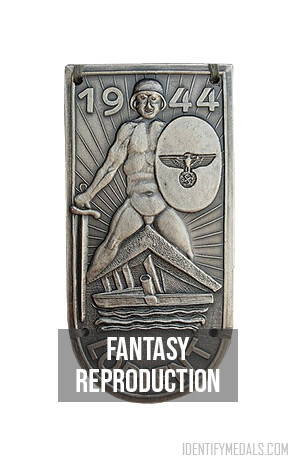
There are no descriptions of this proposed shield. All the ones you will see online are fantasy replicas made after WW2.

More Nazi Germany Shields (Ärmelschilde)

These campaign shields were awarded to members of the Wehrmacht (the unified armed forces of Nazi Germany from 1935 to 1945). They were given for participation in specific battles or campaigns and worn on the left upper arm of the uniform jacket.

The Crimea Shield - German WW2 Medals, Badges and Awards

The Crimea Shield

The Crimea Shield (Krimschild) is a WW2 German military decoration awarded to military personnel who fought against Soviet Red Army forces.

Read More »